Certified Functional Medicine Clinician, CFMC
I first completed the Kharrazian Institute's Certified Functional Medicine Clinician, or CFMC, requirements. The Institute currently lists this track as 68 hours across six foundational courses.
Functional medicine consultant focused on psoriasis, autoimmunity, and complex chronic health concerns.
Advanced Functional Medicine Clinician, Kharrazian Institute · Flame of Knowledge Award Recipient, 2024 · Apollo Health ReCODE 2.0 Practitioner
My work centers on helping clients make sense of complex health information, identify what matters most, and build a practical plan around the factors that may be most relevant to their situation.
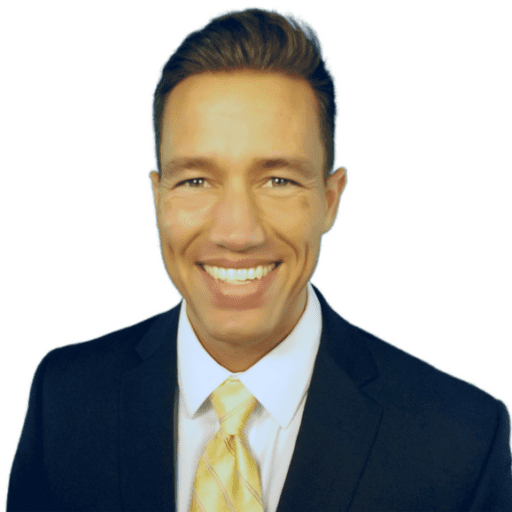
My interest in functional medicine and autoimmunity began with my own health.
In 2005, I was dealing with psoriasis and irritable bowel syndrome, and I wanted to better understand why I was having these problems and what I could do to improve my health. That led me into a much deeper study of autoimmunity, immune regulation, gut health, nutrition, environmental influences, and functional medicine. I also began to see how differently the same diagnosis can affect different people, and why a plan that helps one person may do very little for someone else.
That experience changed the direction of my education and has shaped the way I work with clients ever since.
One of the most important things I learned is that chronic health problems are rarely explained by one thing. Autoimmune and inflammatory conditions are usually more complicated than that. Genetic susceptibility, immune activity, environmental exposures, metabolic health, diet, sleep, stress, gastrointestinal function, medications, and other factors can interact in different ways in different people.
The question I usually ask is not, “What is the one cause?” It is, “Which factors seem most relevant for this person, which of those can we actually work on, and what should we focus on first?”
I have worked with clients since 2006. I earned my bachelor's degree from Appalachian State University and my Doctor of Chiropractic degree from Sherman College of Chiropractic.
Over the years, my postgraduate education has increasingly focused on functional medicine, autoimmunity, inflammatory conditions, gastrointestinal physiology, metabolic health, functional blood chemistry, neuroinflammation, thyroid physiology, environmental health, genomics, epigenetics, and individualized clinical decision-making.
Today, my consulting work is focused on functional medicine, especially psoriasis, autoimmunity, and complex chronic health concerns.
I hold the Kharrazian Institute's Advanced Functional Medicine Clinician credential, or AFMC, for licensed healthcare practitioners.
The Kharrazian Institute describes the AFMC track as 300 hours of graduate clinical education. That includes 200 hours of postgraduate coursework across 19 courses, including the foundational 68-hour track, plus 100 hours in the Institute's Clinical Mastership Training Program.
I first completed the Kharrazian Institute's Certified Functional Medicine Clinician, or CFMC, requirements. The Institute currently lists this track as 68 hours across six foundational courses.
AFMC is the more extensive 300-hour Kharrazian Institute clinician track and is my current advanced functional medicine certification.
The Kharrazian Institute notes that its certification recognizes education, knowledge, and skill in functional medicine and does not expand a clinician's legal scope of practice.
In November 2024, I received the Kharrazian Institute's Flame of Knowledge Award. In the award notification, Institute Director Datis Kharrazian, PhD, DHSc, DC, MS, MMSc, FACN, explained that the Institute's flame represents an ongoing commitment to learning and expanding knowledge.
The award recognized my commitment to learning, expanding knowledge, and clinical excellence.
“You are among the best of the best in our community.” Datis Kharrazian, PhD, DHSc, DC, MS, MMSc, FACN · Director, Kharrazian Institute
That recognition means a great deal to me because continued learning has been central to my work from the beginning. I continue to study because the science changes, testing improves, and every person responds differently. There is always more to learn.
Beyond the Kharrazian Institute, I have completed extensive postgraduate education through several functional medicine and clinical education organizations.
I completed Apollo Health's ReCODE 2.0 Practitioner training, which includes advanced education related to cognitive decline, risk-factor assessment, and personalized health strategies.
My training has included the clinical application of functional medicine along with advanced study in gastrointestinal health, environmental health, bioenergetics, and hormone-related topics.
I have also completed advanced education in metabolic health, epigenetics, genomics, human performance, and related areas.
I have also completed training through Functional Medicine University, Cyrex practitioner education, and many other continuing education programs.
Over the years, I have continued studying autoimmunity, gastrointestinal clinical strategies, diabetes and dysglycemia, neuroinflammation, thyroid physiology, cardiovascular and neurovascular health, chronic fatigue and pain syndromes, environmental health, functional blood chemistry, brain chemistry, and the clinical use of nutrition and lifestyle interventions.
A diagnosis matters, but it does not tell us everything we need to know about the person who has that diagnosis.
Two people can have the same diagnosis and still be very different in their symptoms, other health conditions, metabolic health, diet, sleep, stress, medications, exposures, gastrointestinal function, what they are realistically able to change, and how they have responded to previous care.
That is why I use an individualized framework rather than assuming everyone with psoriasis or autoimmunity has the same underlying problem.
Inherited susceptibility can influence risk and immune behavior, but genes are only part of the picture.
Diet, exposures, infections, lifestyle, medications, stress, and other environmental factors may affect disease activity differently from one person to another.
The goal is to understand how these different pieces may be interacting in that person.
This is the foundation of my Environmentally Induced Autoimmunity framework. It does not assume that every autoimmune condition comes from one environmental trigger, one food, one infection, or a universal gut problem. It gives me a practical way to think through the interaction between genetic susceptibility, environmental influences, and the person's immune response.
I use a simple three-step process: Detect, Support, and Reassess. The details can be complex, but the overall process should be easy to understand.
We start by gathering the right information about your history, symptoms, timeline, previous testing, diet, lifestyle, medications, exposures, gastrointestinal health, and how you have responded to things you have already tried. When useful, we may also look at foundational laboratory data and other relevant markers.
Next, we decide which areas are most worth working on first. That may include nutrition, diet, sleep, exercise, stress, supplementation, metabolic health, gastrointestinal function, reducing relevant exposures, and coordinating with your existing medical care.
Then we look at what happened. What improved? What did not? What was difficult to follow? Did we learn anything new? When appropriate, we may repeat or review laboratory data and decide whether the plan should be simplified, changed, stopped, or expanded.
Specialized testing can be very useful, but it is not automatically the first step. I use testing when it can answer an important question and when the answer is likely to change what we do next.
My role is to help organize a lot of complex information into a practical strategy. I do not want to overwhelm clients with every possible theory, test, diet, supplement, or intervention. I want to identify the priorities and put them in an order that makes sense.
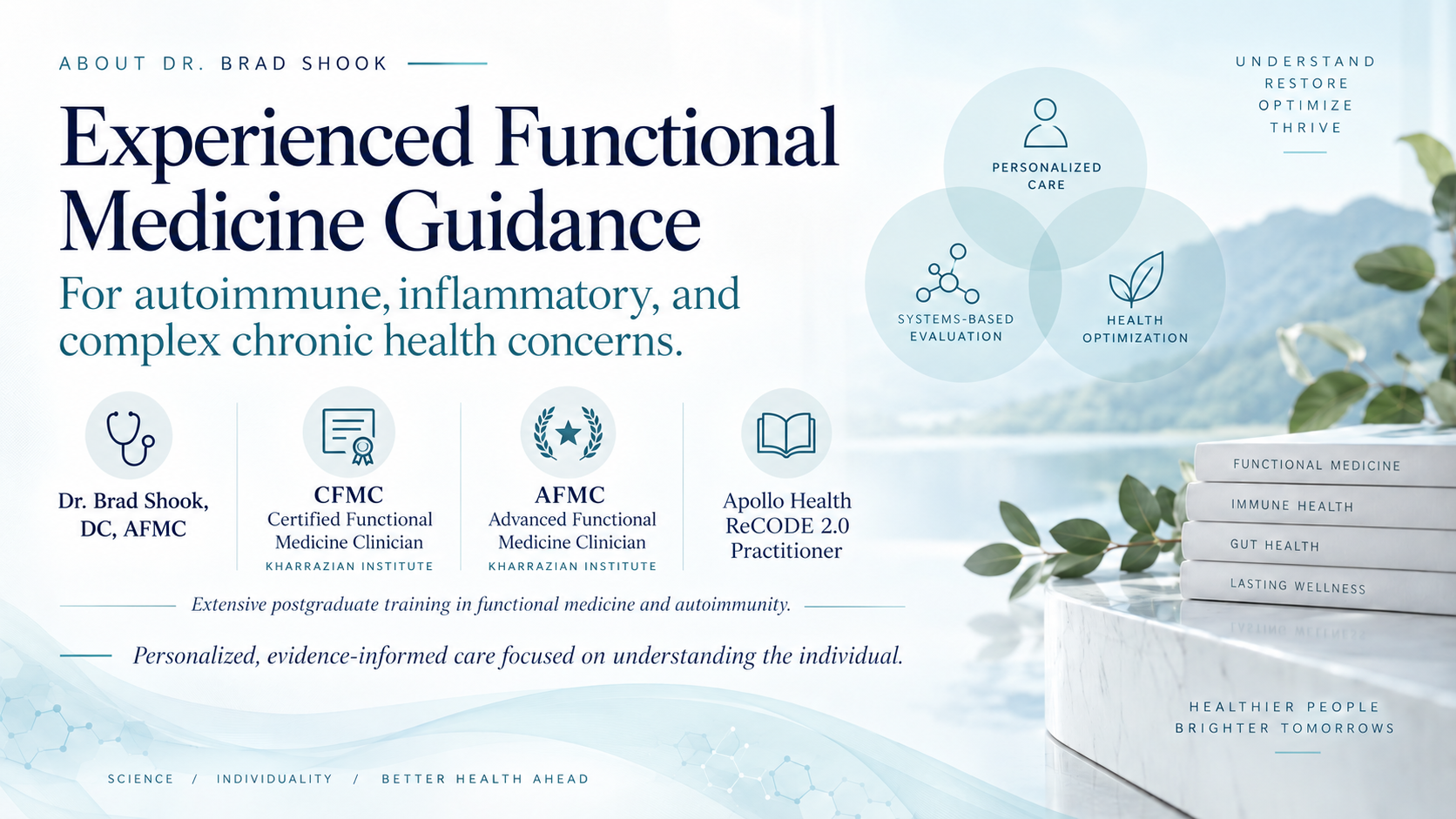
Working with me begins with an Application for Care. There is no charge to apply. I personally review each application to decide whether I believe this approach may be helpful for the person's goals and situation.
If I believe we may be a good fit, the next step is a private Initial Consultation and Case Review. Before that consultation, clients complete a detailed intake and provide relevant prior laboratory work or health records through a secure portal. I review the case before we meet so we can spend the consultation focusing on the important questions and priorities rather than simply collecting basic information.
Depending on what we find, recommendations may include diet and lifestyle changes, nutrition or supplementation, questions to discuss with your existing healthcare professionals, and optional laboratory testing when it is likely to provide useful information. Follow-up gives us a chance to see what is changing, integrate new findings, and decide what deserves attention next.
My work is designed to complement dermatology, primary care, endocrinology, rheumatology, gastroenterology, and other appropriate medical care. Diagnosis, medication decisions, urgent concerns, and condition-specific medical treatment should remain with the appropriate licensed medical professional.
I am selective about the clients I accept because this process works best when someone is ready to participate, has realistic expectations, and is willing to work through priorities over time.
This approach may be worth considering if you:
The first step is the Application for Care. There is no charge to apply, and Dr. Shook personally reviews each application.
Learn About Applying for CareAFMC stands for Advanced Functional Medicine Clinician. The Kharrazian Institute currently lists its AFMC certification for licensed healthcare practitioners as a 300-hour program consisting of 200 hours of postgraduate coursework across 19 courses plus 100 hours in the Clinical Mastership Training Program.
Dr. Shook completed the Certified Functional Medicine Clinician track first and later completed the more extensive Advanced Functional Medicine Clinician requirements. AFMC is his current advanced Kharrazian Institute clinician certification, while CFMC remains part of his training history.
Dr. Shook received the Kharrazian Institute Flame of Knowledge Award on November 4, 2024. The award notification recognized his commitment to learning, expansion of knowledge, and clinical excellence.
No. Functional medicine consulting is designed to complement appropriate medical care. Clients should continue working with their prescribing and treating clinicians, especially for diagnosis, medication decisions, urgent concerns, and condition-specific treatment.
No. Testing is used selectively when it can answer a meaningful question and when it is practical for the client. History, symptoms, existing records, foundational laboratory data, diet, lifestyle, medications, exposures, and response to prior interventions can all be important parts of the assessment.
Psoriasis is a major focus of DrBradShook.com and is personally meaningful to Dr. Shook. His broader functional medicine work also includes autoimmune, inflammatory, metabolic, gastrointestinal, thyroid, and other complex chronic health concerns when he believes this approach may be helpful.
Start with the Application for Care. There is no charge to apply. Dr. Shook personally reviews applications before private scheduling information is provided to accepted applicants.
The links below provide public information about selected credentials and educational organizations referenced on this page.
The Flame of Knowledge Award information on this page is based on the award notification sent to Dr. Shook by the Kharrazian Institute on November 4, 2024.
Page updated September 6, 2026.