A Different Way to Understand Psoriasis
Psoriasis is visible on the skin, but the disease process is not simply a skin problem.
It is primarily an immune-system problem, and the changes you see in the skin are a symptom of what is happening immunologically underneath.
In psoriasis, immune signaling becomes dysregulated, and inflammatory pathways stimulate skin cells to turn over much more rapidly than normal. The plaques, scaling, redness, itching, cracking, and discomfort that you see on the outside are the visible expression of this underlying immune activity.
That changes the question.
If we only focus on the plaque, we are looking at the end result. We are looking at the symptom.
Functional medicine asks us to step farther upstream.
What is causing this immune response?
Why does one person flare after an infection, another during prolonged stress, another after specific dietary exposures, and another with no obvious trigger at all?
Why does psoriasis sometimes remain relatively quiet and then suddenly become active?
Those questions move us away from treating psoriasis as though it is one uniform problem and toward understanding your individual triggers and the factors contributing to your expression of psoriasis. My guide to psoriasis causes and triggers explores those factors in more detail.
The visible symptom may look similar from one person to another, but the factors influencing that symptom can be very different.
That is one of the most important shifts in thinking that functional medicine gives us.
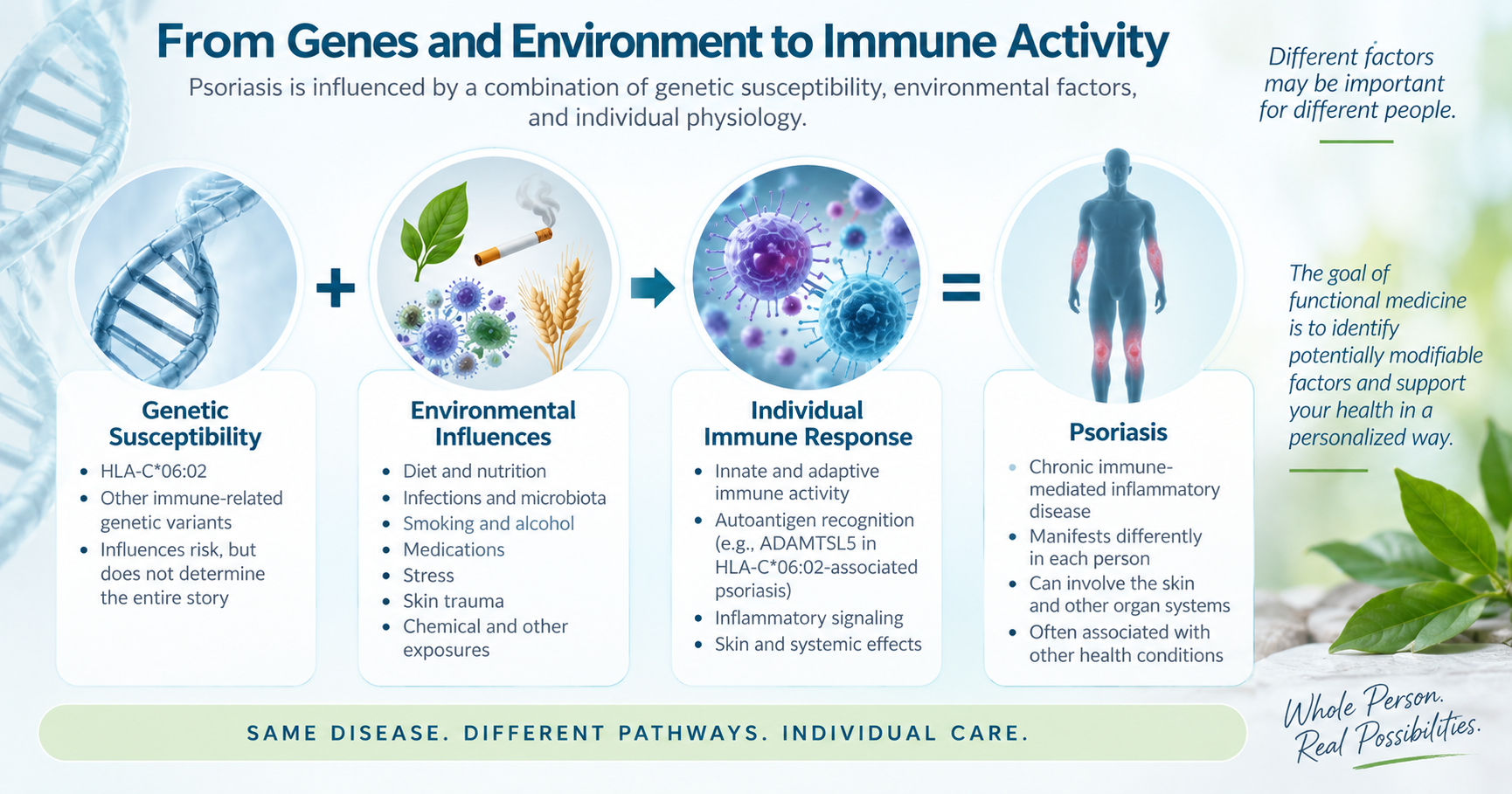
Genetics Plus Environment
Psoriasis has a strong genetic component.
But having genetic susceptibility does not mean that genetic susceptibility alone determines whether, when, or how strongly psoriasis will be expressed.
You cannot rewrite the genetic code you were born with.
But your genetic code is not operating independently of the environment around it.
Environmental and physiological signals influence gene expression, immune behavior, inflammation, and ultimately how disease may be expressed in a genetically susceptible person.
That is where the opportunity is.
We may not be able to change your genetic susceptibility, but we can work with many of the environmental factors interacting with that susceptibility.
And when we change meaningful environmental inputs, we have an opportunity to influence the physiology and immune activity contributing to disease expression.
The word environment here means much more than pollution or something outside your house.
- foods and food proteins
- microorganisms and infections
- chemicals and environmental exposures
- hormones and metabolic signals
- stress chemistry
- sleep
- nutrients
- the health of your biological barrier systems
- the enormous number of signals produced by the gut microbiome
If you want to go deeper into how these influences may affect psoriasis activity, my guide to psoriasis causes and triggers explains these factors in more detail.
This is one of the reasons functional medicine is so exciting to me.
It gives us somewhere to look.
It gives us questions to ask.
And it gives us potential areas to work on that go far beyond simply waiting for the next flare and reacting to it.
The Environmentally Induced Model of Autoimmunity
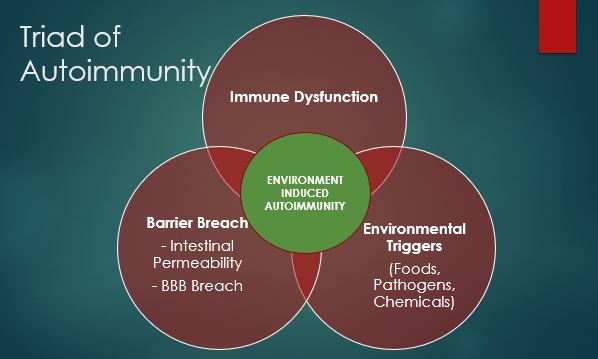
One of the most useful frameworks I have studied comes from the field of functional immunology and what is often referred to as the environmentally induced model of autoimmunity.
I use this framework because it helps organize an incredibly complicated immune system into areas that we can actually investigate and do something about.
There are three broad areas I think about.
1. Environmental Immune Triggers
The immune system is designed to respond to its environment.
That includes food proteins, bacteria, viruses and other microorganisms, chemicals, pollutants, and many other substances.
In a genetically susceptible person, certain exposures may contribute to abnormal immune activation or perpetuate an already active inflammatory process.
This does not mean that every person with psoriasis has the same food trigger, infection, or chemical exposure.
Quite the opposite.
What may be driving your particular immune response and contributing to your psoriasis activity or outbreaks?
2. Barrier-System Integrity
Your immune system interfaces with the outside world through several important biological barriers.
The intestinal barrier is one.
So are the skin, respiratory tract, and other mucosal barriers.
These are not passive walls. They are highly active parts of immune regulation.
When barrier systems are disrupted, the immune system can be exposed to environmental signals differently than it would be under healthy conditions.
This is why gut health can matter.
That is too simplistic.
The real question is whether barrier dysfunction is part of your immunological picture and, if so, what may be contributing to it.
If it is relevant, then it becomes another area we may be able to work on.
3. Immune Dysregulation
The immune system has to do much more than create inflammation.
- when to respond
- how strongly to respond
- what to respond to
- what to tolerate
- when to shut the response back down
That regulation can be influenced by many things, including nutrient deficiencies, infections, metabolic health, sleep, stress, hormones, chemical exposures, nervous-system signaling, and other physiological factors.
This is where functional immunology becomes especially valuable.
We are trying to understand the biological environment in which that inflammation is occurring.
The combination of environmental triggers, barrier integrity, and immune regulation creates an individual immunological picture.
That is the landscape we are trying to understand.
And when we understand that landscape, we can begin identifying the areas we may actually be able to influence.
That can mean meaningful changes in the signals affecting the immune system and, potentially, meaningful changes in psoriasis activity and flare susceptibility.
This Is Why There Is No Single Psoriasis Protocol
If psoriasis were caused by one universal factor, we could give everyone the same diet, the same supplement, and the same laboratory panel.
It does not work that way.
One person may have a very clear relationship between psoriasis and stress.
Another may have metabolic dysfunction and significant excess body fat contributing to a highly inflammatory environment. Adipose tissue is biologically active and releases inflammatory signaling molecules, including adipokines, which can become part of that inflammatory picture.
Another person may have persistent gastrointestinal symptoms that warrant investigation.
Another may have a history suggesting celiac disease.
Another may have an infection that coincides with the onset or worsening of psoriasis.
Another may notice very specific food reactivity.
Another may have a meaningful chemical or occupational exposure.
And another person may have none of those things.
I want to understand the person. I want to understand the environment interacting with that person's genetic susceptibility and immune system. That is the real meaning of personalized functional medicine.
A New Approach for Psoriasis Care
For many people, this is a completely new way of looking at psoriasis.
They may have spent years thinking almost entirely in terms of:
Functional medicine adds another layer:
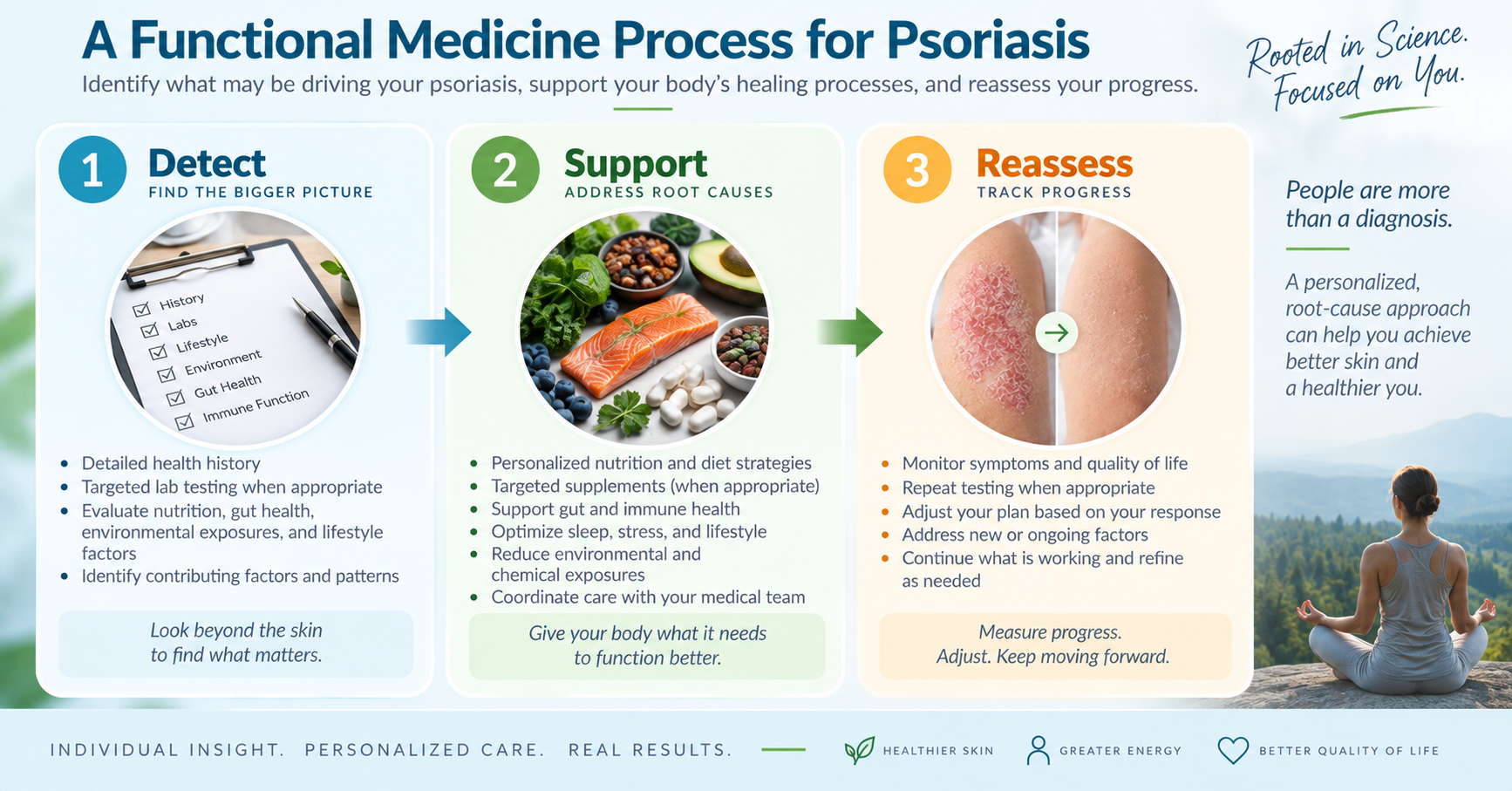
Detect
We begin by trying to understand the physiology.
That means looking carefully at your history, your symptoms, and the timing and pattern of your psoriasis.
We look at known flares, diet, digestion, metabolic health, stress, sleep, medications, other immune-related conditions, family history, environmental exposures, and anything else that may help us identify meaningful patterns.
Then we decide what additional information is actually worth gathering.
Sometimes that means laboratory testing.
Sometimes some of the most important clues are already sitting in the history.
The goal is not to order every test available.
The goal is to gather the information that helps us make better decisions.
Support
Once we have identified the most important areas that we can work on, we work on them.
That might mean supporting metabolic health.
It might mean changing the diet.
It might mean addressing a nutrient deficiency.
It might mean investigating a suspected food-related immune response.
It might mean evaluating persistent gastrointestinal problems.
It might mean investigating a clinically relevant infection.
It might mean reducing a meaningful chemical exposure.
It might mean improving sleep, building stress resilience, changing exercise or recovery patterns, or addressing another physiological stressor.
And it may involve several of these areas at the same time.
The strategy comes from the person in front of us.
Reassess
Then we look at what happens.
Has the psoriasis changed?
Are flares becoming less frequent or less intense?
Has digestion improved?
Has sleep improved?
Has energy improved?
Are relevant metabolic or laboratory markers moving in the right direction?
Does the information we gather support our original hypothesis?
Or do we need to change direction?
Functional medicine should be a process of learning from the individual, not blindly continuing a protocol because it sounded good on paper.
I created a 12-week psoriasis supplement protocol that focuses on the SUPPORT part of this framework, bringing together foundational supplementation, diet, and lifestyle guidance in one organized plan.
Three Levels of Autoimmune Support
Another framework that has greatly influenced how I think about autoimmune disease is the three-level management model taught in functional immunology.
Each level has a different purpose.
Education and Ongoing Management
This is where we learn your individual susceptibility.
What foods seem to matter? What infections or pathogens may be relevant? What chemical exposures matter? How does stress affect you? How important is sleep?
What happens when you overtrain, miss meals, travel, become sick, go through an unusually stressful period, or get away from the habits that normally help you feel your best?
What is happening with your diet, metabolic health, barrier systems, lifestyle, recovery, and immune regulation?
This is the foundation.
The more you understand your own immune system, the better you become at recognizing the factors that tend to push it in the wrong direction.
Active Flare-Up Management
When psoriasis or another autoimmune condition becomes more active, the strategy may need to become more focused and more intensive for a period of time.
We may need to ask what changed. Was there an infection? Major stress? Sleep disruption? A dietary exposure? Travel? Overtraining? A medication change? A major life event? A change in digestion? A new environmental exposure?
Then we focus more aggressively on the areas most likely to help stabilize the physiology.
The goal is not simply to wait for the flare to pass. It is to learn from it.
Pharmaceutical Management
There are times when medication is appropriate and necessary.
Psoriasis can become severe. Psoriatic arthritis can damage joints. Significant inflammation sometimes needs to be controlled quickly and effectively.
But needing medication does not make Levels 1 and 2 irrelevant.
Medication may help control the active inflammatory disease process.
Functional medicine continues asking what can be done to improve the biological environment in which that disease is occurring.
I believe the best opportunity to preserve long-term health comes from combining medical management, when it is needed, with ongoing functional medicine work focused on dietary, environmental, metabolic, lifestyle, and immunological factors.
How My Experience With Psoriasis Led Me to Functional Medicine

This work is personal to me.
I developed psoriasis years ago, and it eventually became extensive enough that I was dealing with plaques in multiple areas of my body.
I went through the same process many people go through.
I saw dermatologists. I used topical treatments. I tried light-based approaches.
And I repeatedly asked: "Why is this happening?"
The answer I kept getting was essentially that psoriasis was an immune problem, but there was very little discussion about what might be influencing that immune system or what I could do beyond treating the outward manifestation.
That answer was not good enough for me.
It drove me into functional medicine and eventually much deeper into functional immunology.
I wanted to understand the physiology. I wanted to understand the immune system. I wanted to understand why immune tolerance can fail, what perpetuates inflammation, how environmental exposures interact with genetic susceptibility, and what could realistically be changed.
That pursuit has shaped a large part of my professional education ever since.
And it completely changed the way I think about psoriasis and autoimmune conditions.
Food Can Be an Immunological Signal
Diet is not simply about calories.
Food is information.
The proteins, fats, carbohydrates, micronutrients, and other compounds you consume interact with your metabolism, gastrointestinal system, microbiome, and immune system.
Food proteins can also become immunologically important in certain people.
We see an obvious example with celiac disease, where an immune response to gluten contributes to tissue injury in genetically susceptible individuals.
There are also well-described immunological mechanisms such as molecular mimicry and antibody cross-reactivity, in which a foreign antigen may resemble a human protein closely enough that an immune response directed at the foreign antigen can potentially recognize similar structures in human tissue.
That does not mean every food protein causes autoimmune disease.
It means that food can be an immunological signal, and individual susceptibility matters.
Are foods contributing to this person's immune activity, and if so, which ones?
Some people notice very obvious food relationships.
Others have celiac disease or a true food allergy that requires a medically appropriate dietary change.
Others benefit most from improving overall diet quality, blood-sugar regulation, body composition, and metabolic health.
And sometimes a carefully structured elimination followed by systematic food reintroduction can help identify patterns that were difficult to see before. For a broader evidence-based overview, see my psoriasis diet and nutrition guide.
Testing can also be useful when it answers a defined question.
For example, validated testing exists for celiac disease and for suspected IgE-mediated food allergy when the clinical history supports it.
Other commercial food-reactivity panels, including broad food-IgG testing, are more controversial and should not be treated as definitive proof that a particular food is driving psoriasis.
The goal is not food fear.
The goal is to build the clearest possible picture of your susceptibility and then make dietary decisions based on the best information available.
That is when nutrition becomes much more powerful than simply handing everyone the same list of foods to avoid.
Pathogens and the Immune System
The relationship between infections and autoimmunity is an important part of functional immunology.
Certain infections can trigger or amplify immune activity through several mechanisms.
The broader immunological literature also explores relationships involving viral activation, bacterial antigens, molecular mimicry, superantigens, persistent immune stimulation, and other mechanisms capable of altering immune responses.
This does not mean that everyone with psoriasis has a hidden infection.
It means that infection history matters and should be part of the investigation.
Did psoriasis begin after an infection?
Do flares repeatedly follow infections?
Are there persistent symptoms suggesting something else needs to be evaluated?
Has the person had unusual infectious exposures?
Even ordinary laboratory work can sometimes give us clues.
A complete blood count with differential, for example, can show patterns in white blood cells that may support further investigation.
Those patterns are clues, not diagnoses. A CBC by itself cannot tell us that someone has a hidden infection or identify what organism is present.
But when laboratory patterns, symptoms, history, and timing begin pointing in the same direction, infection may become an important area to investigate.
The point is to ask the question.
Chemicals and Environmental Exposure
Your immune system does not exist separately from the chemical environment around you.
Research continues to show us how pollutants, occupational exposures, smoking, medications, endocrine-disrupting chemicals, and other environmental substances can interact with inflammatory pathways, immune signaling, oxidative stress, and normal cellular regulation.
It is useful here to make a distinction between two words that are often used interchangeably.
Toxins
A toxin is generally a toxic substance produced by a living organism.
Examples can include substances produced by bacteria, fungi, plants, animals, and other biological organisms.
Toxicants
A toxicant is a harmful chemical or agent, and the term is commonly used for substances associated with human activity or environmental chemical exposure.
Examples may include certain pesticides, industrial chemicals, solvents, persistent pollutants, combustion by-products, heavy metals, and other environmental chemicals.
Why might these exposures matter to the immune system?
One fascinating mechanism involves haptenation.
Some chemicals are too small to trigger a conventional immune response by themselves.
But certain chemicals can bind to one of your own proteins.
Once that happens, the chemical-plus-protein complex can look different to the immune system.
That modified self-protein may become a neoantigen, something the immune system now recognizes as immunologically different.
Some chemicals are also pro-haptens. They may first undergo metabolic transformation inside the body and become reactive intermediates capable of binding proteins.
This mechanism is well established in areas such as allergic contact dermatitis and some drug hypersensitivity reactions, and researchers continue studying its importance in broader inflammatory and autoimmune-like conditions.
Chemicals can affect physiology through many other mechanisms as well.
- receptor signaling
- oxidative stress
- endocrine signaling
- inflammatory pathways
- cellular membranes
- mitochondrial function
- immune-cell behavior
- normal regulatory processes
This is why environmental exposure belongs in the conversation.
That does not mean every symptom should be blamed on "toxins."
It means that if someone has a meaningful occupational exposure, smoking history, unusual chemical exposure, contaminated environment, or another relevant exposure pattern, I do not want to ignore it simply because the symptom happens to be showing up on the skin.
Gut Health and the Microbiome
The gastrointestinal system is one of the largest interfaces between the outside world and your immune system.
It is home to an enormous microbial ecosystem.
It is involved in digestion, nutrient absorption, microbial metabolism, immune signaling, maintenance of the intestinal barrier, and communication between microorganisms and the immune system.
That is why the gut has become such an important area of research in immune-mediated disease. My gut health and psoriasis guide takes a deeper look at this part of the picture.
The better question is whether gastrointestinal function, the microbiome, intestinal inflammation, infection, nutrient absorption, or barrier integrity are relevant in this particular person.
Does the person have persistent bloating?
Diarrhea?
Constipation?
Reflux?
Abdominal pain?
A history of intestinal infection?
Celiac disease?
Inflammatory bowel disease?
Significant food reactions?
A long history of antibiotic exposure?
Those clues may change the questions we ask.
There are also laboratory tests that can help us investigate specific gastrointestinal questions.
Some can evaluate inflammation, infection, digestion, malabsorption, celiac disease, and other defined conditions.
There are specialized tests intended to assess aspects of intestinal barrier function or microbiome composition as well, although their clinical usefulness varies considerably depending on the test and the question being asked.
We can also learn a tremendous amount from symptoms and history when extensive testing is not necessary or available.
The point is not to test everyone's gut.
The point is to recognize that the gastrointestinal system is deeply integrated with immune physiology and to investigate it when the individual picture tells us it matters.
Stress, Sleep and Your Immune System
Stress is not just "in your head."
Your nervous system, endocrine system, and immune system communicate continuously.
Major emotional stress, chronic work stress, poor sleep, overtraining, inadequate recovery, infections, and major life disruptions can all change the physiological environment in which your immune system is functioning.
Many people with autoimmune disease can identify a major stressor or accumulation of stressors that occurred before their first significant symptoms or before a major flare.
Sometimes the association is striking.
That does not mean stress alone created the genetic susceptibility.
It means stress physiology may have been part of what helped push a susceptible immune system toward greater inflammatory activity.
This is why I take sleep, recovery, exercise, relationships, workload, and stress seriously.
Sometimes the most sophisticated intervention is not another supplement.
Sometimes it is recognizing the repeated physiological stressor that keeps pushing your system in the wrong direction and finally doing something about it.
Nutrients and Immune Regulation
Your immune system requires nutrients to function normally.
Vitamin D, essential fatty acids, zinc, selenium, iron, B vitamins, magnesium, and many other nutrients participate in immune signaling, antioxidant systems, energy production, tissue repair, enzyme activity, and normal physiology.
That does not mean more is always better.
It means deficiency and balance matter.
If someone's history, diet, symptoms, medications, or laboratory findings give us reason to suspect a nutrient problem, identifying and correcting that problem may become part of improving the physiological environment in which their immune system is operating.
Supplements are tools.
They can be extremely useful when they have a clear purpose.
The goal is not to see how many supplements we can put someone on.
The goal is to identify the right tools for the right person and understand why we are using them.
If you want to see how I organize those tools into a practical starting point, you can review my 12-week psoriasis supplement protocol. It is designed as foundational support, not as a replacement for individualized investigation or appropriate medical care.
The Right Testing Starts With the Right Question
Testing can be extremely helpful in functional medicine.
But a test is only useful when it helps us answer a meaningful question or changes what we do.
The starting point is not:
The starting point is:
- metabolic dysfunction?
- blood-sugar regulation?
- cardiovascular risk?
- nutrient deficiency?
- celiac disease?
- thyroid function?
- anemia?
- gastrointestinal dysfunction?
- a specific infection?
- another autoimmune condition?
- an inflammatory pattern?
- an exposure suggested by the person's history?
The history helps determine the questions.
The questions help determine the testing.
Sometimes ordinary blood work gives us an enormous amount of useful information.
Sometimes specialized testing is reasonable because we have a specific question conventional testing does not answer well.
Sometimes additional testing adds very little.
I am not interested in ordering tests simply because they are available.
Psoriasis Is More Than a Skin Condition
One reason I take psoriasis so seriously is that the inflammatory process can extend far beyond the visible plaques.
I have experienced that personally with joint involvement.
Some people with psoriasis develop psoriatic arthritis, and untreated inflammatory joint disease can become destructive.
Psoriasis is also associated with important metabolic and cardiovascular concerns.
That is why looking at things such as body composition, blood pressure, blood sugar, insulin resistance, cholesterol and other lipids, smoking, physical activity, sleep, stress, and overall metabolic health is not a distraction from psoriasis.
It is part of understanding the whole person living with an inflammatory disease.
Could Your Joint Symptoms Be Psoriatic Arthritis?
Joint pain, swelling, prolonged morning stiffness, heel pain, swollen fingers or toes, and certain nail changes deserve appropriate evaluation.
Learn About Psoriatic Arthritis SymptomsWhere Functional Medicine Fits
I do not see functional medicine as an alternative universe competing with every other form of healthcare.
I see it as an essential first line of education and physiological support that is almost always missing from chronic immune-mediated care.
A dermatologist may help control skin inflammation.
A rheumatologist may be critically important when joints are involved.
Medication may sometimes be necessary.
But none of those things make nutrition, sleep, stress, metabolic health, environmental exposures, immune triggers, barrier-system health, pathogens, or individual susceptibility unimportant.
In some individuals, one or more of those factors may be contributing to the activation or perpetuation of the inflammatory process itself.
That is the opportunity.
We can respect the role of medical treatment without stopping the investigation into the physiology of the person who has the disease.
For me, that is what functional medicine is about.
It is also asking, "What can we learn about the biology producing the symptom, and what parts of that biology can we influence?"
A New Opportunity for People With Psoriasis
You may have been told that psoriasis is genetic and that there is very little you can do except manage the symptoms when they appear.
I believe that leaves out an enormous part of the story.
Genetics matter.
But genes express themselves inside an environment.
Your immune system is constantly interacting with that environment.
And many parts of that environment are modifiable.
That gives us an opportunity.
- An opportunity to investigate.
- An opportunity to understand your individual susceptibility.
- An opportunity to identify patterns.
- An opportunity to identify triggers.
- An opportunity to improve the physiological environment in which your immune system is functioning.
- An opportunity to become much more educated about your own autoimmune condition.
- An opportunity to participate much more actively in your long-term health instead of simply waiting for the next flare.
For some people, systematically identifying and working on these factors can make a substantial difference in symptoms, overall health, and the pattern of disease activity.
That is why I believe functional medicine and functional immunology deserve to be a core part of the conversation for people living with psoriasis and other immune-mediated conditions.
What Working With Me Looks Like
When I review someone with psoriasis from a functional medicine perspective, I am not looking for a prewritten psoriasis protocol.
I am trying to understand your pattern.
What is your history? What changed before this started? What makes it worse? What makes it better? What else is happening physiologically?
What does your diet look like? What is happening with your digestion? Your metabolic health? Your sleep? Your stress? Your exposures? Your medications? Your other diagnoses? Your laboratory findings?
We gather the information.
We identify the areas that appear most important.
We decide what is worth investigating.
We work on the most meaningful modifiable factors.
And then we reassess what actually happens.
It is a process of investigation, intervention, observation, and refinement.
Frequently Asked Questions About Natural Psoriasis Treatment
Is psoriasis genetic or environmental?
Psoriasis has an important genetic component, but environmental and physiological factors influence when and how the disease expresses itself.
Functional medicine focuses heavily on these potentially modifiable influences with the goal of changing the biological environment, influencing immune activity, and potentially changing how actively the disease is expressed.
This is the opportunity we have been discussing throughout this page.
We cannot change the genetic susceptibility you were born with, but we can investigate and work on many of the environmental and physiological factors interacting with that susceptibility.
What kinds of environmental factors can influence autoimmunity?
The functional immunology framework I use considers areas such as dietary proteins, infections and pathogens, chemical exposures, stress, sleep and recovery, metabolic health, nutrient status, barrier-system integrity, gastrointestinal and microbiome-related factors, and individual immune regulation.
Which of these matters, and how much it matters, can vary tremendously from one person to another.
That is why the goal is not to assume that every person with psoriasis has the same triggers.
The goal is to understand your susceptibility and your individual immune environment.
Can functional medicine be used if I am taking psoriasis medication?
Yes.
Functional medicine and pharmaceutical treatment can be used together.
Medication may be helping control an active inflammatory process while functional medicine investigates and works on the dietary, metabolic, environmental, lifestyle, and immunological factors that may be influencing the larger physiological picture.
If you are taking prescription medication, medication decisions should remain between you and the clinician responsible for prescribing it.
Does everyone with psoriasis need food-sensitivity testing?
No.
Testing should follow a clinical question.
Food-related immune reactivity can be important in some people, but the goal is not to order the same panel on everyone with psoriasis.
We first look at the history, symptoms, dietary patterns, known reactions, digestive health, and other clues.
From there, we determine whether dietary investigation, an elimination and reintroduction strategy, established testing for a particular condition, or some other approach is likely to provide useful information.
Does psoriasis start in the gut?
That is too simplistic.
The intestinal barrier, gastrointestinal immune system, and microbiome can influence immune regulation, but psoriasis is a complex autoimmune and inflammatory disease.
Gut health is one possible part of a much larger immunological picture.
For some people, gastrointestinal function or barrier integrity may be highly relevant.
For others, another part of their physiology may deserve much more attention.
The question is not whether every case of psoriasis "comes from the gut."
Is the gastrointestinal system contributing to this person's immune environment, and is there something meaningful we can do about it?
Can infections trigger psoriasis?
Yes.
Infections can alter immune activity, and certain infections are recognized triggers for psoriasis.
Streptococcal infection is a particularly clear example because it is strongly associated with guttate psoriasis.
The broader field of immunology also examines mechanisms such as molecular mimicry, superantigens, persistent immune stimulation, and other ways pathogens can influence immune responses.
That does not mean everyone with psoriasis has an infection driving their condition.
It means infection history is one of the areas worth considering when the person's history and other findings point us in that direction.
Why look at stress and sleep?
Because your nervous system, endocrine system, and immune system are interconnected.
Stress and sleep disruption can change the physiological environment in which your immune system is operating and may contribute to flare susceptibility in some people.
Many people with autoimmune conditions can identify periods of major stress, sleep disruption, illness, overtraining, or other physiological stress that occurred before a flare.
That is why stress management, sleep, recovery, and lifestyle are part of understanding the environment influencing the immune system.
Your Next Step
If this is the first time you have heard psoriasis explained this way, start by learning.
You do not need to chase every possible trigger.
You need a framework.
You need to understand your own susceptibility.
You need to understand the different environmental and physiological factors that can influence immune activity.
And then you need a way to determine which of those factors are actually relevant to you.
That is the work.
Important Health Information
This information is educational.
Psoriasis and psoriatic arthritis can require medical treatment, particularly when disease is severe, rapidly worsening, or joints are involved.
Functional medicine can be incorporated alongside medical care.
Medication decisions should be made with the clinician responsible for prescribing them.
Selected References & Further Reading
- American Academy of Dermatology. Psoriasis: Causes.
- American Academy of Dermatology. Are triggers causing your psoriasis flare-ups?
- National Psoriasis Foundation. About Psoriasis.
- National Psoriasis Foundation. Psoriasis Guidelines and Comorbidities.
- American Academy of Dermatology. Psoriatic arthritis: Symptoms.
- Silva PM, et al. The triad psoriasis-obesity-adipokine profile. J Eur Acad Dermatol Venereol. 2016.
- Sikora M, et al. Gut Microbiome in Psoriasis: An Updated Review. Pathogens. 2020.
- Chipinda I, et al. Haptenation: Chemical Reactivity and Protein Binding. J Allergy. 2011.
- National Institute of Diabetes and Digestive and Kidney Diseases. Diagnosis of Celiac Disease.
- American Academy of Allergy, Asthma & Immunology. The myth of IgG food panel testing.