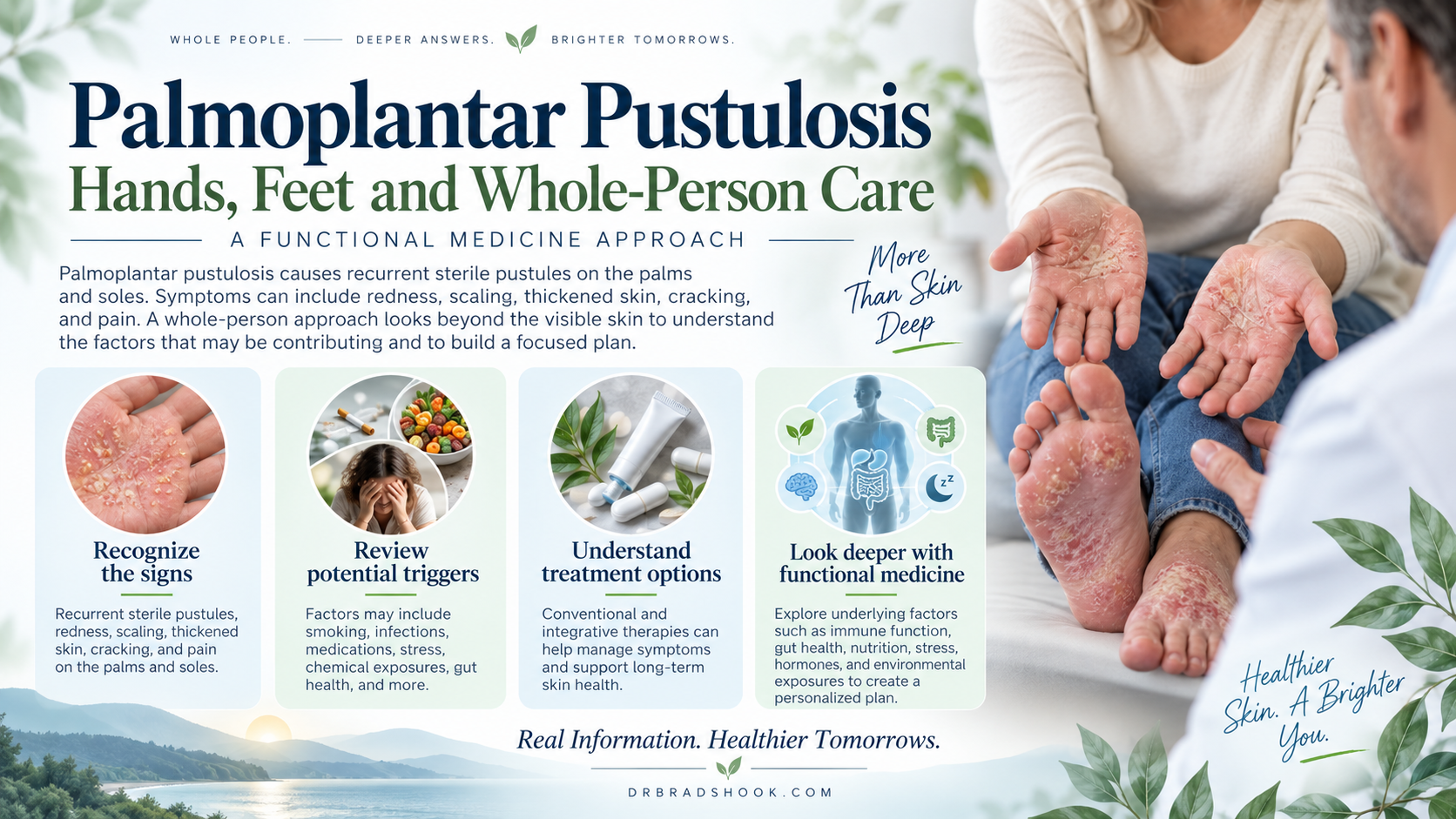
Understanding Palmoplantar Pustulosis
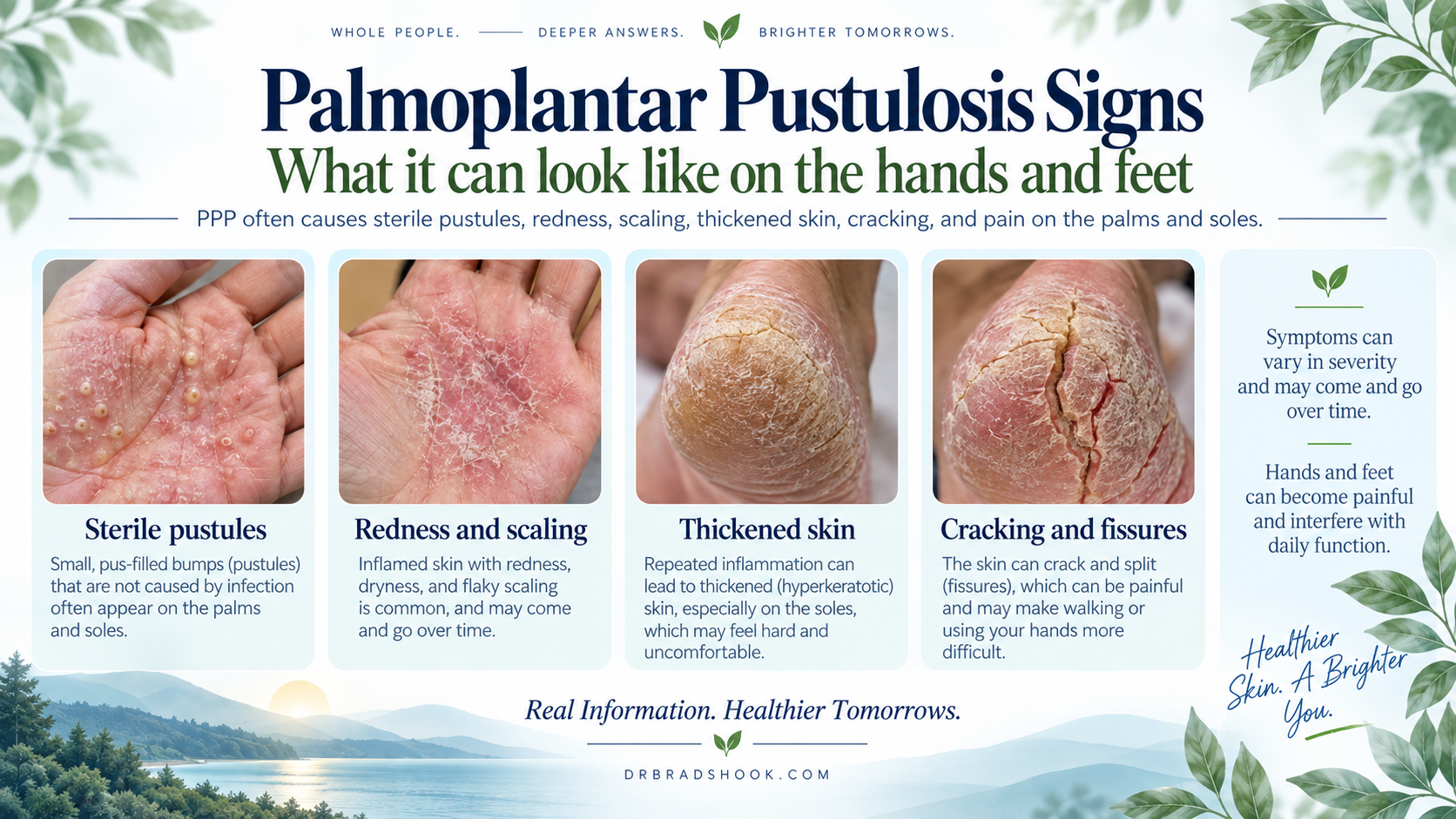
PPP produces crops of small, noninfectious pustules that often turn yellow-brown and scale as they dry. The surrounding skin may become red or darkened, thick, tender, and deeply cracked.
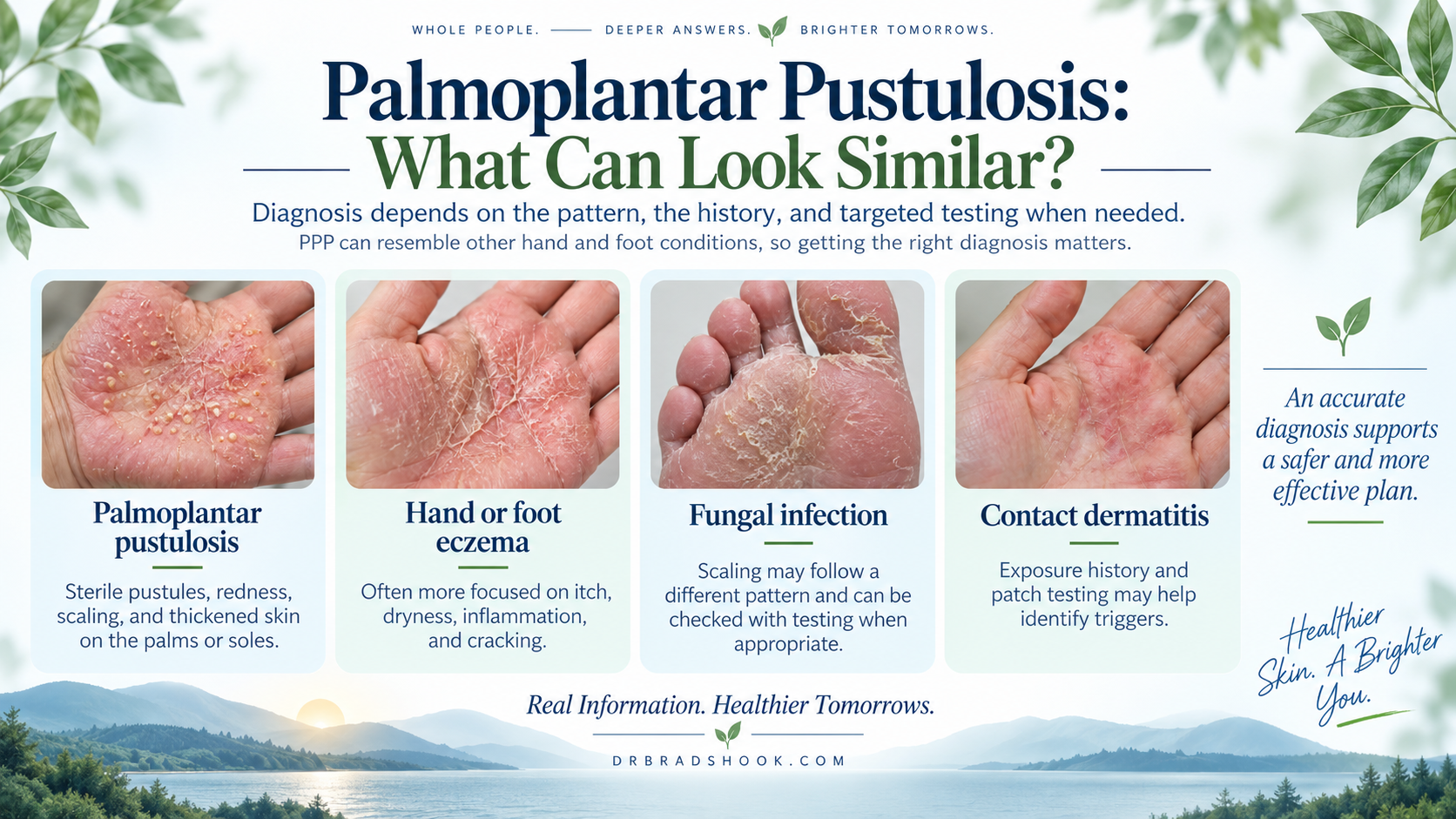
Diagnosis and Conditions That Can Look Similar
Hand eczema, contact dermatitis, fungal infection, dyshidrotic eczema, bacterial infection, and other pustular disorders can resemble PPP. A dermatologist may use skin examination, fungal scraping or culture, bacterial testing, patch testing, or biopsy when needed.
Sterile does not mean harmless. The pustules are not typically caused by infection, but damaged skin can develop secondary infection. Increasing warmth, spreading redness, drainage, fever, or rapidly escalating pain needs medical review.
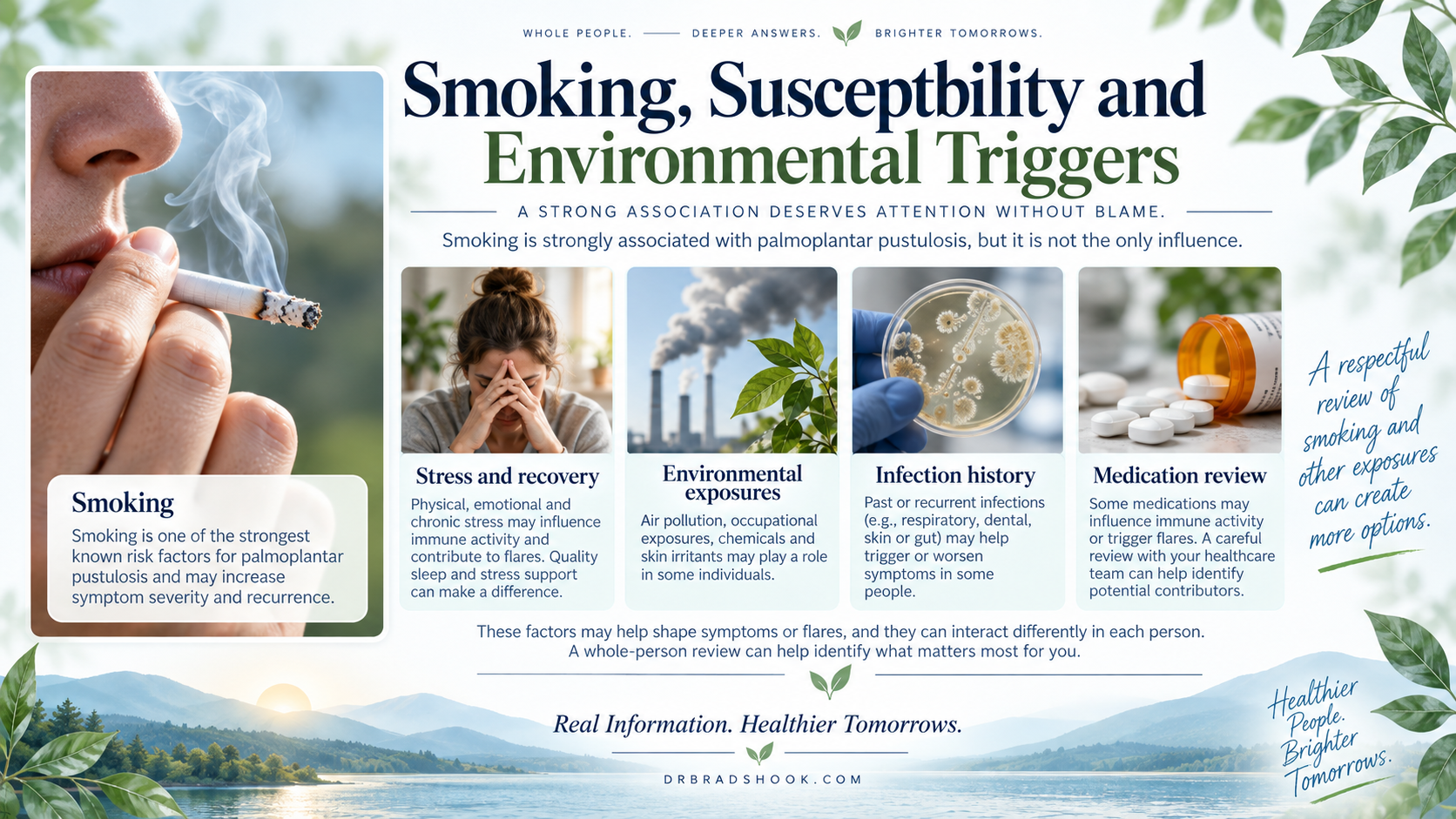
Smoking, Susceptibility and Environmental Triggers
Current and former smoking are strongly overrepresented among people with PPP, and newer population research supports risk reduction after smoking cessation. That association is important, but it should not be used to shame anyone or imply that tobacco explains every case.
Other factors under study or clinical review include genetic susceptibility, friction and repetitive trauma, metal sensitivity, focal infections, medication effects, and broader immune pathways. Smoking cessation is valuable for skin and whole-body health, even when the effect on an established flare is not immediate.
Conventional Palmoplantar Pustulosis Treatments
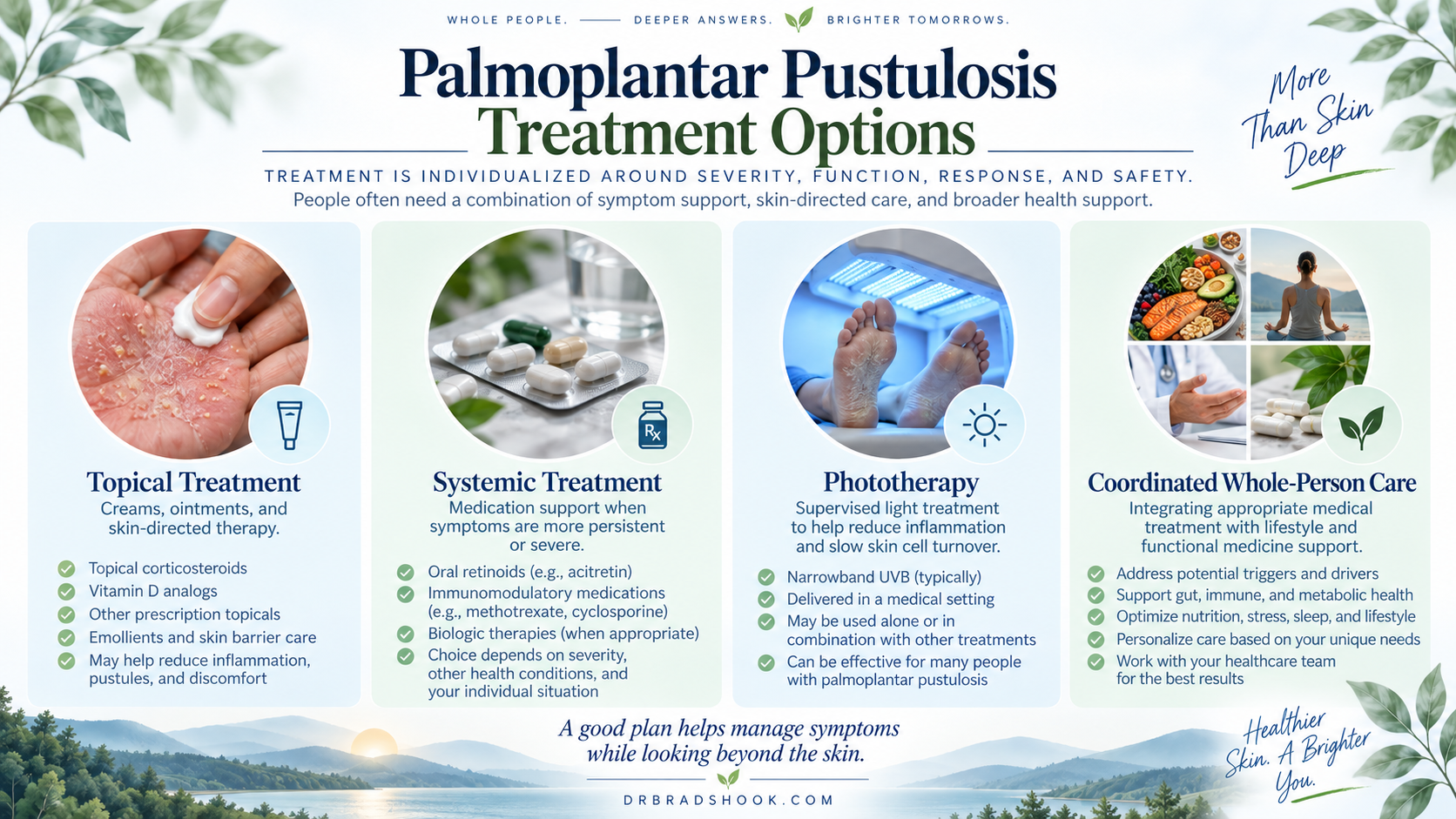
Because palm and sole skin is thick, topical treatment may need occlusion or a carefully supervised regimen. Options can include potent topical corticosteroids, vitamin D-related treatments, keratolytics, emollients, phototherapy, and systemic medicines. Evidence is more limited than for plaque psoriasis, and response varies.
Pregnancy and monitoring matter. Retinoids and several systemic treatments have major pregnancy, liver, kidney, infection, or interaction considerations. Medication choice and monitoring belong with the prescribing clinician.
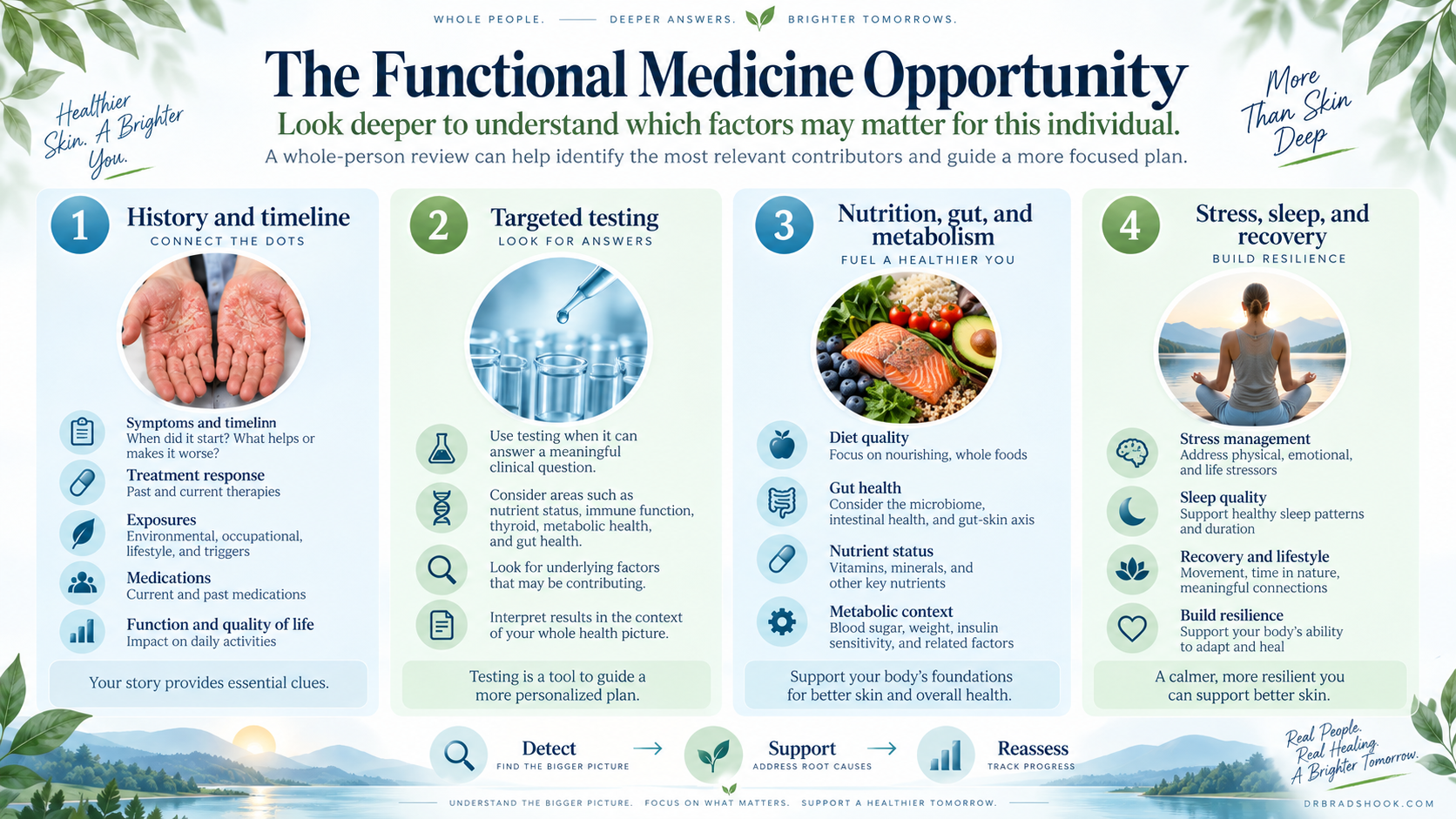
The Functional Medicine Opportunity
Environmentally Induced Autoimmunity is especially relevant when disease sits at the interface of susceptibility, smoking or other exposures, skin trauma, infection history, and systemic physiology.
Exposures and habits
Smoking, secondhand exposure, occupational irritants, footwear, repetitive friction, and alcohol.
Infection and dental history
Document relevant symptoms and confirmed findings without defaulting to indiscriminate antimicrobial treatment.
Metabolic, diet, and nutrient context
Review weight trajectory, glucose regulation, overall diet, and deficiencies when testing is indicated.
Stress, sleep, and function
Measure pain, mobility, hand function, sleep, and recovery so the plan targets what matters.
A Personalized Plan: DETECT → SUPPORT → REASSESS
DETECT
Establish the baseline and identify the highest-value patterns. Review history, timeline, environment, diet, gut health, metabolism, nutrient status, stress, sleep, infections, exposures, medications, and current care.
SUPPORT
Support the most relevant modifiable factors without disrupting needed care. Keep the plan specific, safe, and realistic.
REASSESS
Change a manageable number of variables and document the response. Reassess symptoms, function, labs when relevant, and the next safest step.
Frequently Asked Questions
Is palmoplantar pustulosis the same as psoriasis?
It overlaps with localized pustular psoriasis, but classification differs across medical systems and research. The practical priority is an accurate diagnosis and an individualized treatment plan.
Are the pustules infectious?
They are usually sterile, meaning infection is not the cause of the pustules. Cracked or damaged skin can still develop a secondary infection and should be evaluated when warmth, drainage, spreading redness, or fever occurs.
Is palmoplantar pustulosis caused by smoking?
Smoking is strongly associated with PPP and can be an aggravating factor, but it is not the only influence and not every person with PPP smokes. Smoking cessation supports skin and whole-body health without assigning blame.
How is palmoplantar pustulosis diagnosed?
A dermatologist uses the pattern and examination and may use fungal tests, cultures, patch testing, or biopsy when eczema, infection, contact allergy, or another pustular disorder is possible.
What treatments are used for palmoplantar pustulosis?
Options may include potent topical treatment, keratolytics and emollients, phototherapy, or systemic medicines. Evidence and response are variable, so treatment often requires reassessment.
Why can a small affected area be severe?
The palms and soles are high-impact sites. Pain, fissures, and pustules can limit walking, standing, work, sleep, and hand function even when the total body surface area is small.
What does functional medicine investigate for PPP?
It reviews smoking and other exposures, friction, infection history, medications, diet, gut health, metabolism, nutrient status, stress, sleep, and measurable individual response.
When should I seek urgent care?
Seek prompt care for fever, rapidly spreading redness, severe pain, drainage, systemic illness, or widespread pustules beyond the palms and soles.
Ready for a More Individualized Psoriasis Evaluation?
My process looks beyond the visible skin while respecting the role of appropriate dermatology and rheumatology care. We DETECT the most relevant patterns, SUPPORT the highest-priority needs, and REASSESS what changes.
References and Clinical Resources
- National Psoriasis Foundation. Palmoplantar psoriasis.
- American Academy of Dermatology. Psoriasis clinical guideline.
- PubMed. Palmoplantar pustulosis: systematic review of risk factors and treatment.
- PubMed. Effect of smoking cessation on psoriasis vulgaris and palmoplantar pustulosis.