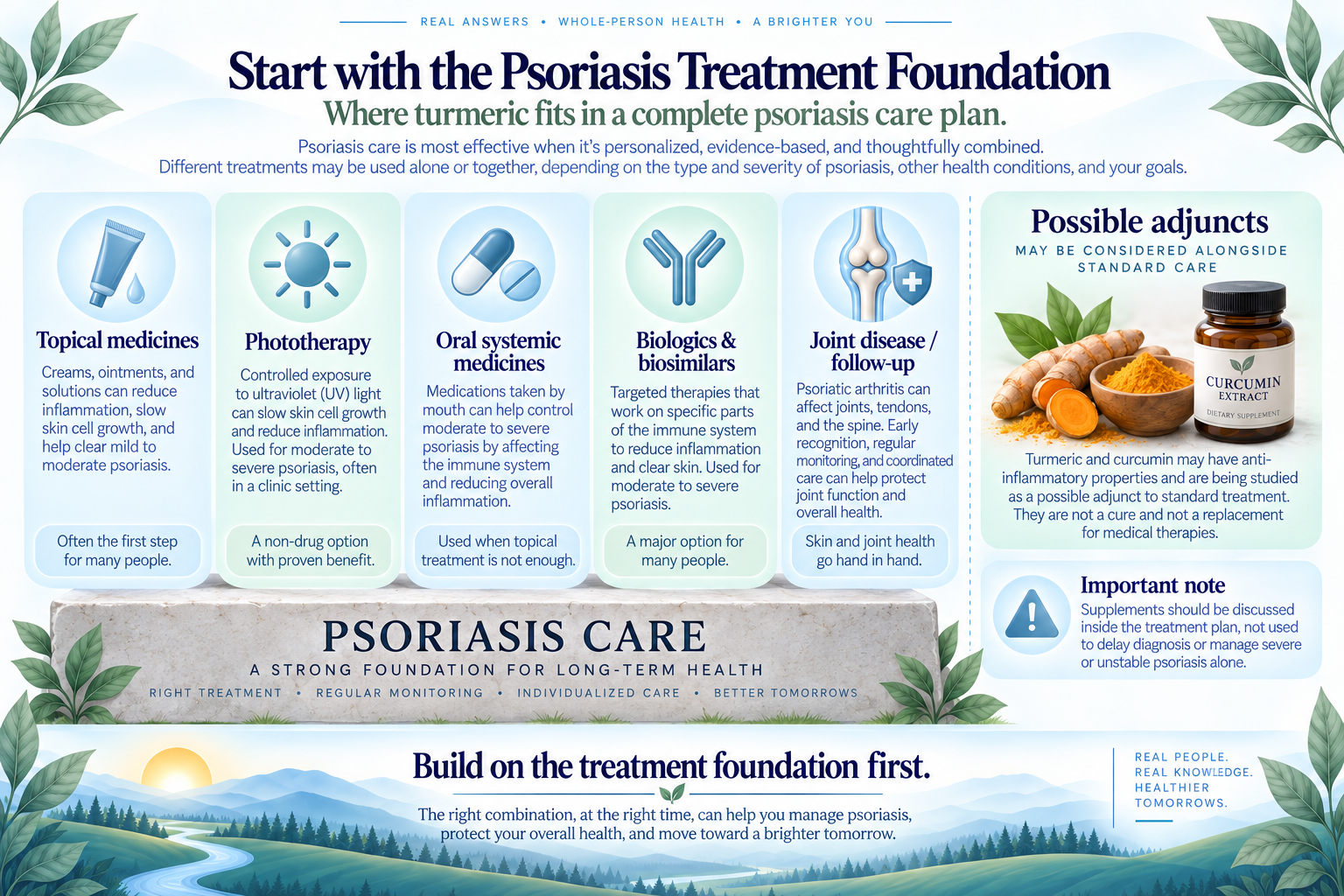
Start with the Psoriasis Treatment Foundation
Psoriasis treatment may include topical medicines, phototherapy, oral systemic medicines, biologics, and biosimilars. Supplements should be discussed inside that plan, not used to delay diagnosis, ignore joint disease, or manage severe or unstable psoriasis alone.
See the full treatment options guide for the medical foundation.
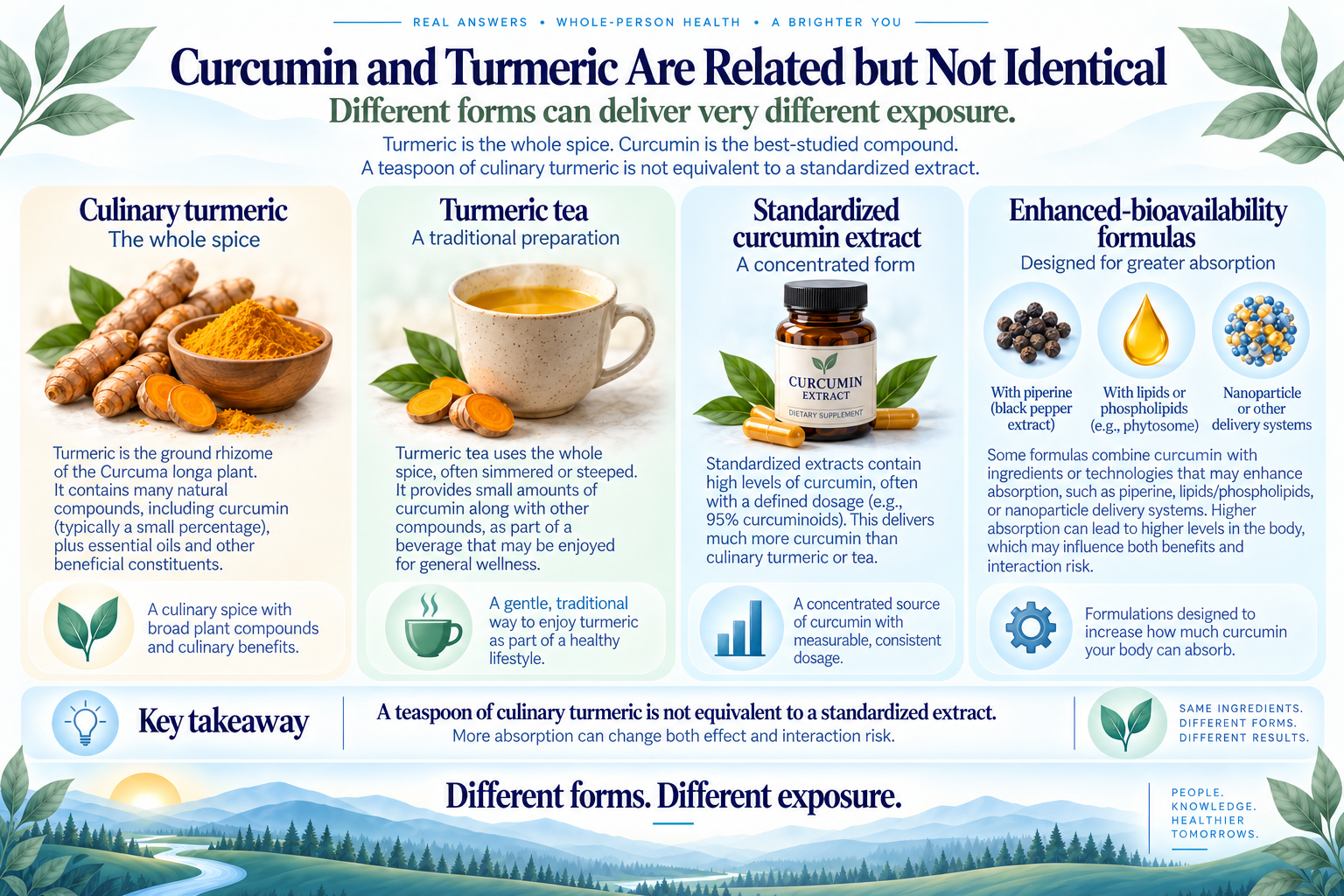
Curcumin and Turmeric Are Related but Not Identical
Turmeric is the whole spice from Curcuma longa. Curcuminoids are compounds within it, and curcumin is the best studied. A teaspoon of culinary turmeric does not provide the same exposure as a standardized extract. Products that add piperine or use lipid, phospholipid, or nanoparticle delivery can change absorption and may also change interaction risk.
What the Psoriasis Evidence Shows
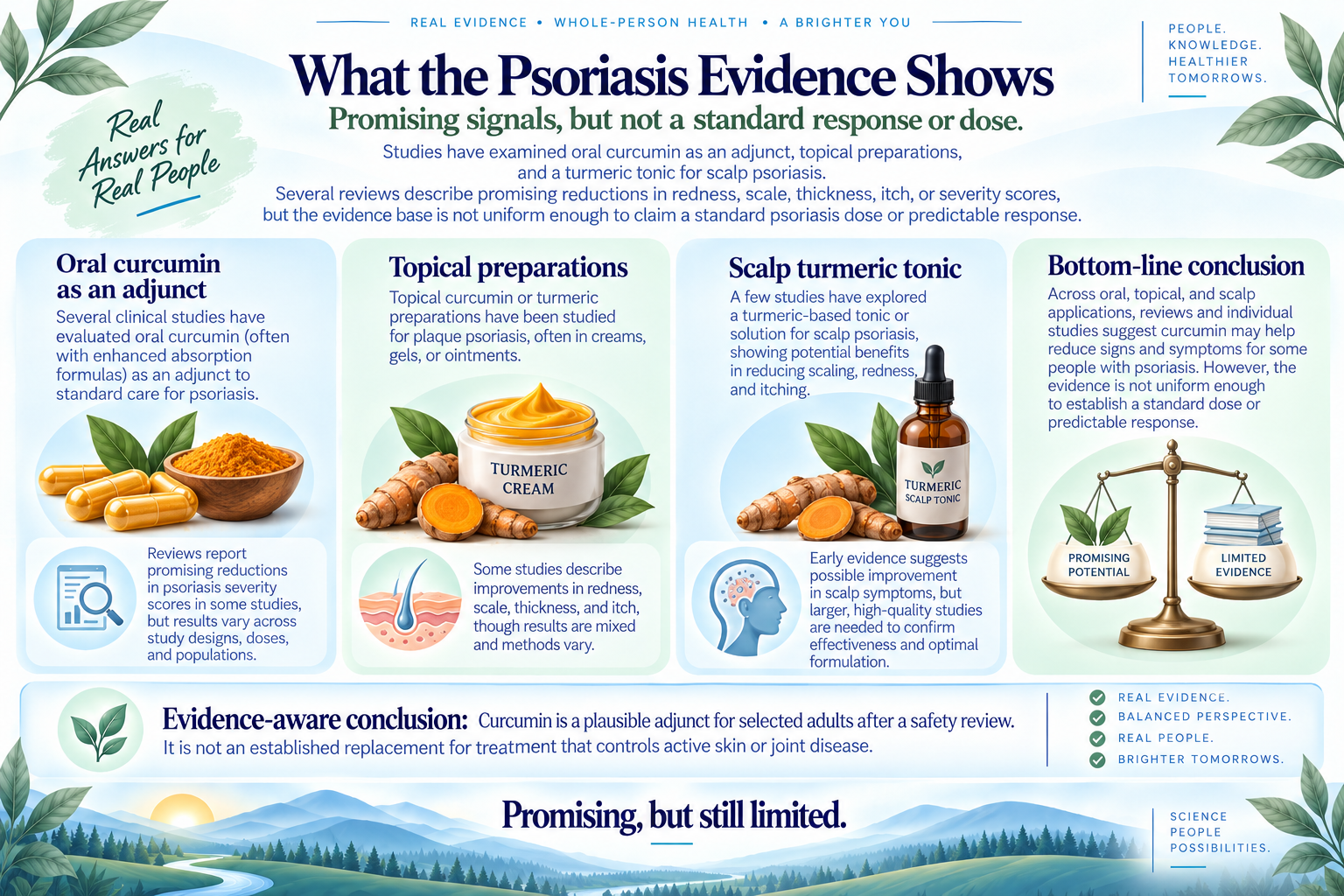
Trials have examined oral curcumin as an adjunct, topical preparations, and a turmeric tonic for scalp psoriasis. Several reviews describe promising reductions in redness, scale, thickness, itch, or severity scores. However, the evidence base is not uniform enough to claim a standard psoriasis dose or predictable response.
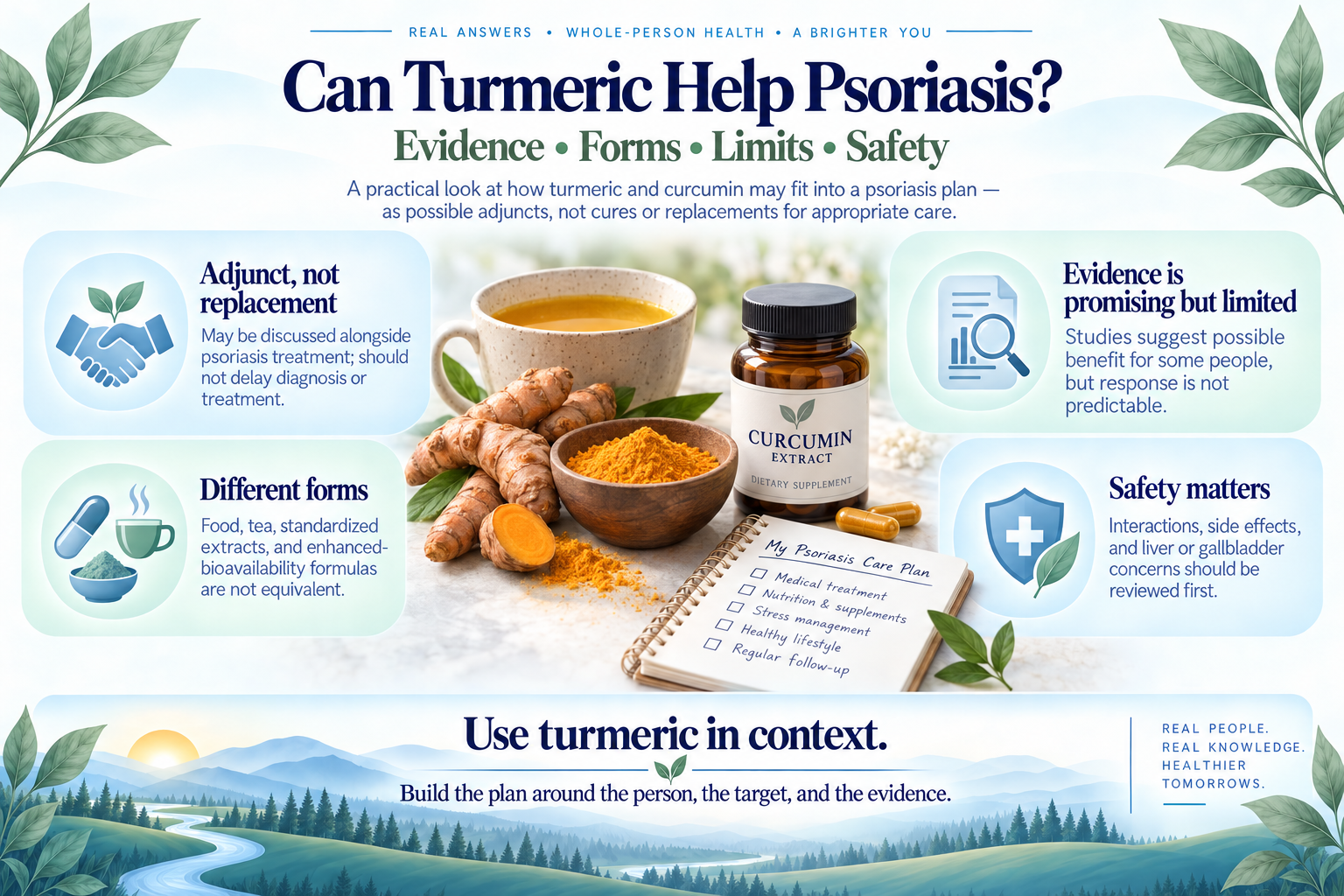
Evidence-aware conclusion: Curcumin is a plausible adjunct for selected adults after a safety review. It is not an established replacement for treatment that controls active skin or joint disease.
Topical Turmeric, Curcumin Gel and Paste
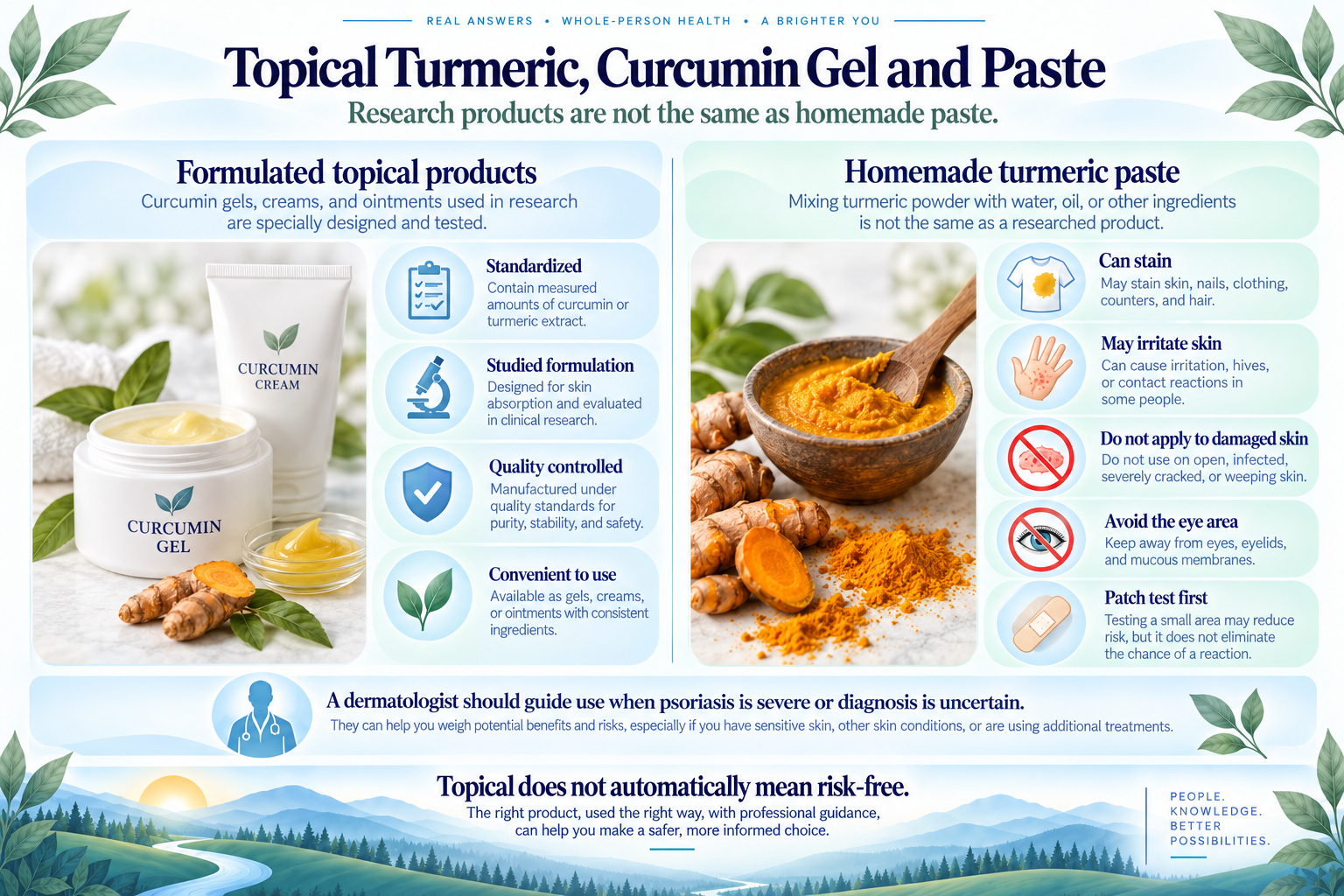
Research products are formulated and standardized. A homemade paste is not equivalent. Turmeric can stain skin, nails, clothing, counters, and hair. Topical preparations can also irritate skin or cause hives and contact reactions.
Do not apply turmeric to open, infected, severely cracked, or actively weeping skin. Avoid the eye area. Patch testing a small area reduces but does not eliminate risk, and a dermatologist should guide use when psoriasis is severe or diagnosis is uncertain.
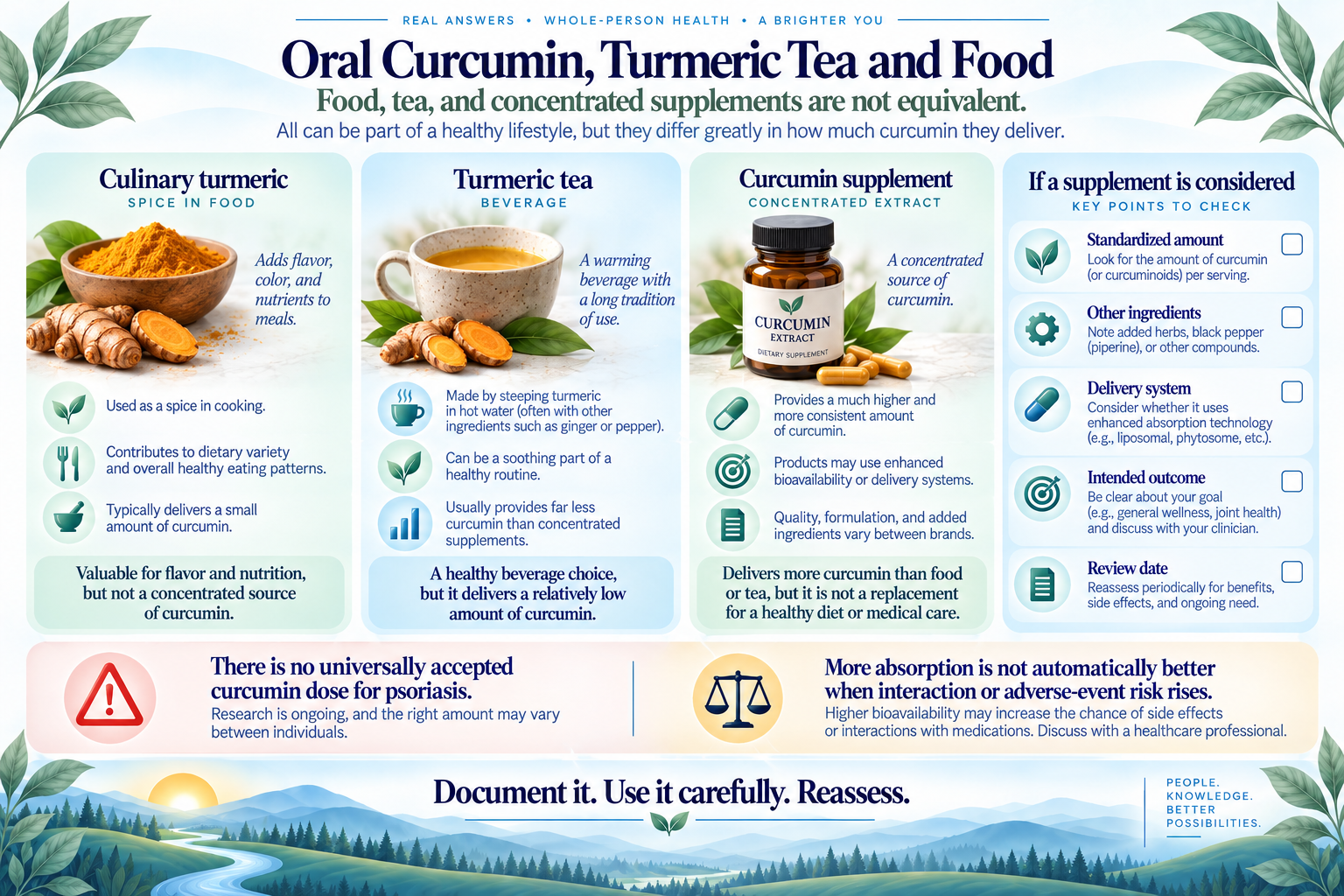
Oral Curcumin, Turmeric Tea and Food
Turmeric used as a culinary spice or tea contributes flavor and dietary variety but delivers far less curcumin than many supplements. A concentrated capsule is pharmacologically different. There is no universally accepted curcumin dose for psoriasis.
If a supplement is considered, document the standardized amount, other ingredients, delivery system, intended outcome, and review date. More absorption is not automatically better when interaction or adverse-event risk also rises.
Limitations, Side Effects and Interactions
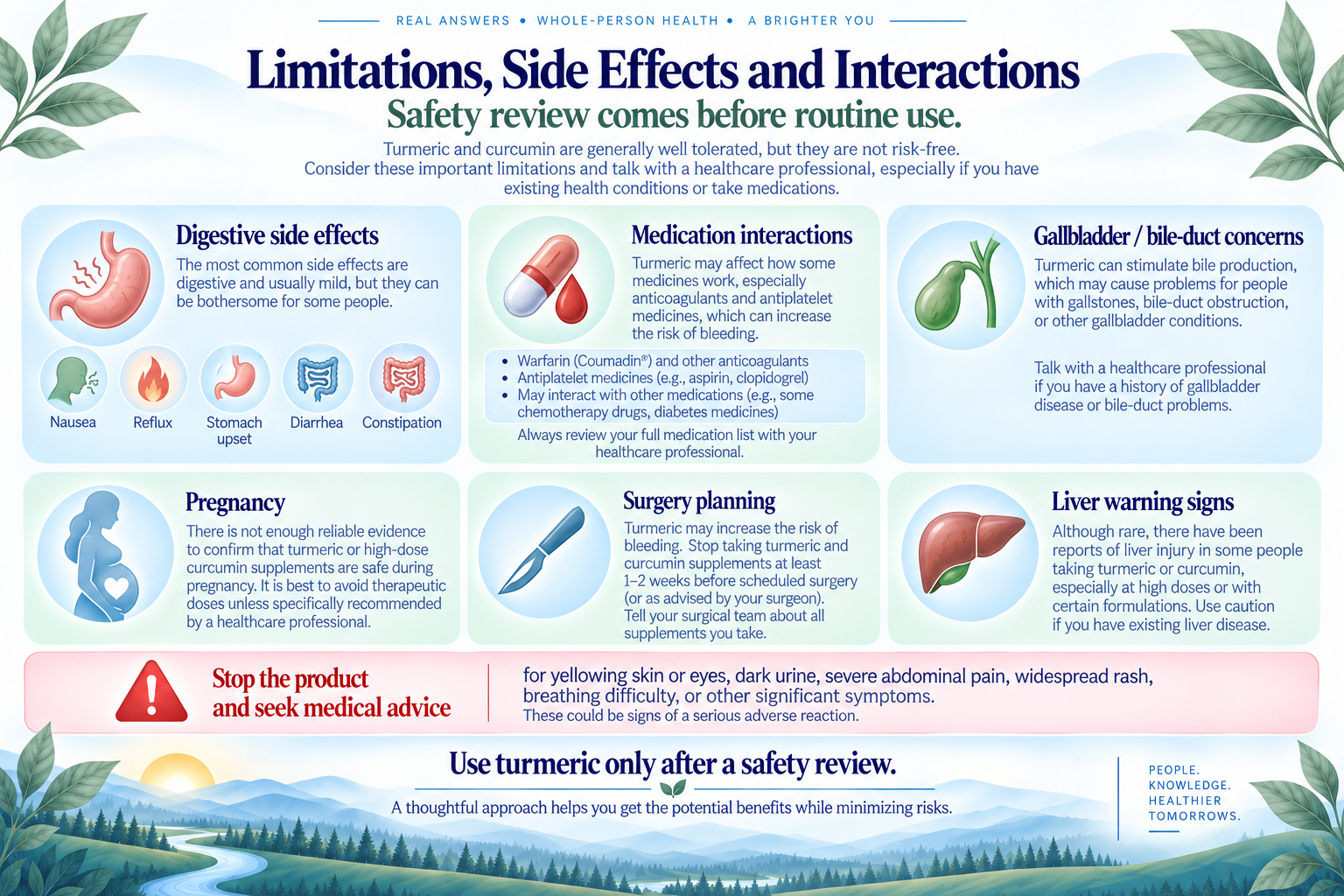
Safety review required: Oral turmeric or curcumin can cause nausea, reflux, stomach upset, diarrhea, or constipation. Highly bioavailable products have been linked to liver injury in some people. Discuss use if you take anticoagulants or antiplatelet medicines, have gallbladder or bile-duct disease, are pregnant, are preparing for surgery, or use medicines affected by supplement interactions.
Stop the product and seek medical advice for yellowing skin or eyes, dark urine, severe abdominal pain, widespread rash, breathing difficulty, or other significant symptoms.
Turmeric vs. Fish Oil for Psoriasis
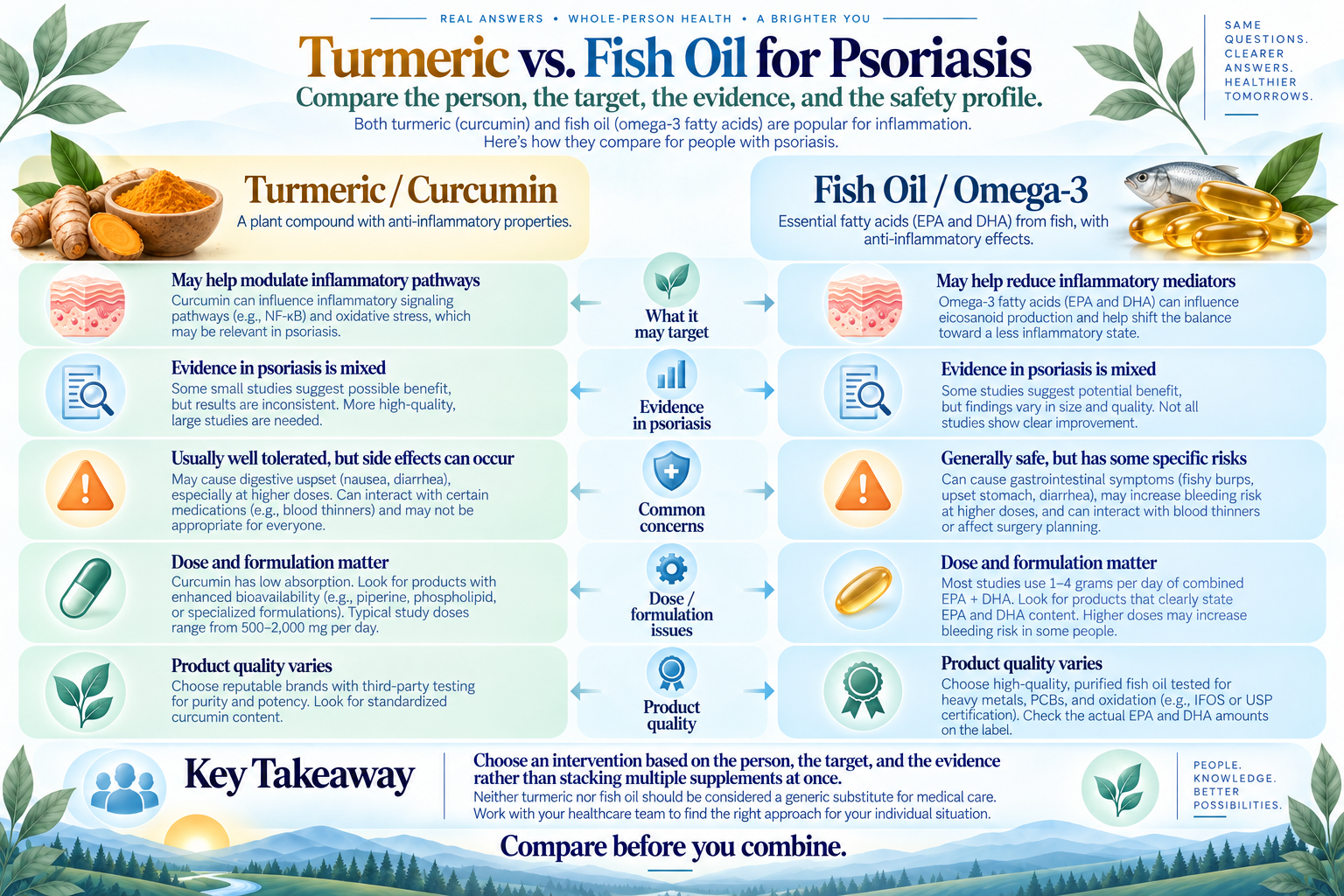
Both are marketed for inflammation, but neither should be treated as a generic substitute for medical care. Fish-oil evidence in psoriasis is mixed, and concentrated omega-3 products also have dosing, gastrointestinal, bleeding, and product-quality considerations. Choose an intervention based on the person, the target, and the evidence rather than stacking multiple supplements at once.
The Functional Medicine Decision Process
In the Environmentally Induced Autoimmunity model, turmeric is one possible support, not the foundation. The foundation is understanding the interaction among environment, diet, gut health, metabolism, nutrient status, stress, sleep, infections, exposures, medications, and individual response.
DETECT
Define the clinical target and safety screen. Review history, timeline, environment, diet, gut health, metabolism, nutrient status, stress, sleep, infections, exposures, medications, and current care.
SUPPORT
Support the highest-priority drivers. Keep the plan specific, safe, and realistic.
REASSESS
Introduce one justified change at a time. Reassess skin, joints, symptoms, labs, and treatment use.
Frequently Asked Questions
Can turmeric cure psoriasis?
No. Turmeric and curcumin have promising but limited evidence as adjuncts. They have not been shown to cure psoriasis or replace treatment that controls active skin or joint disease.
What is the difference between turmeric and curcumin?
Turmeric is the whole spice. Curcumin is one of its best-studied compounds. Culinary turmeric, tea, standardized extracts, and enhanced-bioavailability supplements can deliver very different exposures.
What dose of curcumin should I take for psoriasis?
There is no universally accepted psoriasis dose. Studies use different formulations and amounts, so dosing should not be copied without considering the product, medicines, health conditions, and clinical goal.
Can I put turmeric paste on psoriasis?
Homemade paste is not equivalent to a studied topical formulation. It can stain and may irritate skin or cause contact reactions. Do not apply it to open, infected, severely cracked, or eye-area skin.
Is turmeric tea enough to treat psoriasis?
Turmeric tea can be part of a normal diet but provides a different and usually much lower exposure than standardized curcumin used in research. It should not be expected to treat psoriasis by itself.
What are turmeric supplement side effects?
Possible effects include nausea, reflux, stomach upset, diarrhea, constipation, rash, or hives. Highly bioavailable products have also been linked to liver injury in some people.
Who should discuss turmeric with a clinician first?
People using anticoagulant or antiplatelet medicines, preparing for surgery, pregnant, managing gallbladder or bile-duct disease, taking multiple medicines, or living with liver disease should obtain individualized advice.
Is fish oil better than turmeric for psoriasis?
Evidence for both is mixed and product-specific. Neither is universally better. A decision should be based on the target, evidence, safety, product quality, other treatments, and measurable response.
Ready for a More Individualized Psoriasis Evaluation?
Dr. Shook's process looks beyond the visible skin while respecting the role of appropriate dermatology and rheumatology care. We DETECT the most relevant patterns, SUPPORT the highest-priority needs, and REASSESS what changes.