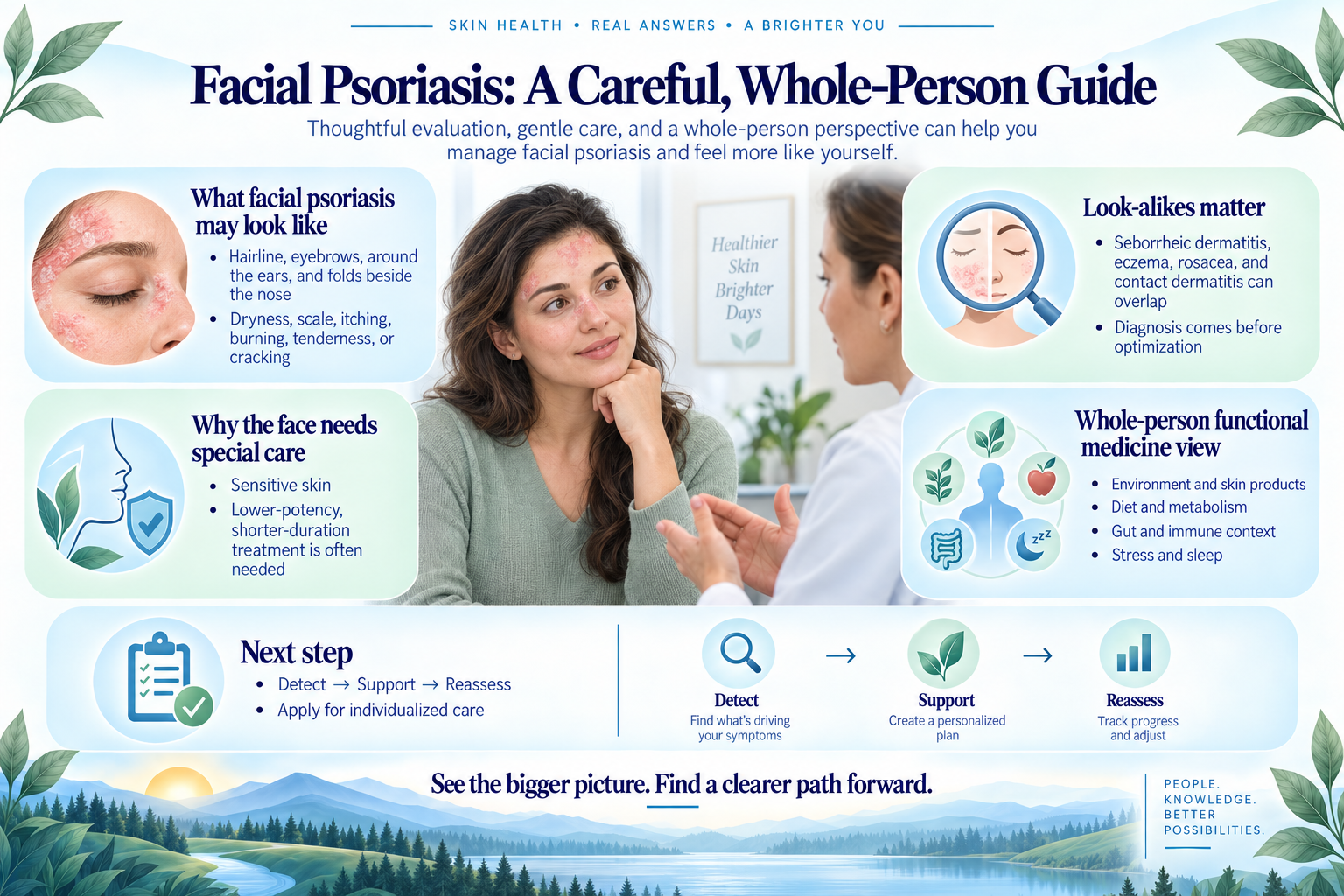
Recognizing Facial Psoriasis
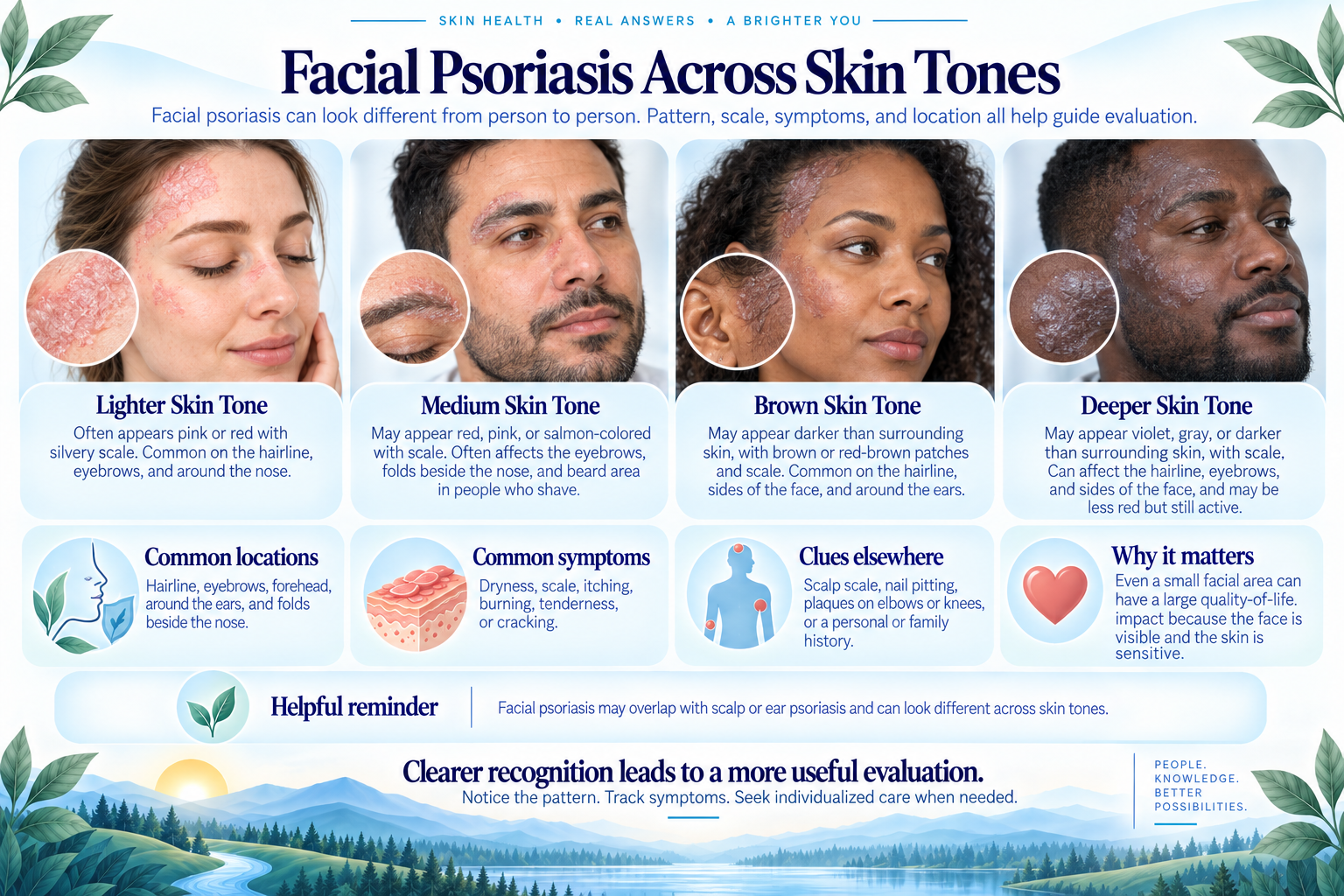
Facial psoriasis often appears with psoriasis on the scalp, ears, elbows, knees, nails, or other sites. It may look red or pink on lighter skin and violet, gray, brown, or darker than surrounding skin on deeper skin tones. Scale may be fine rather than thick.
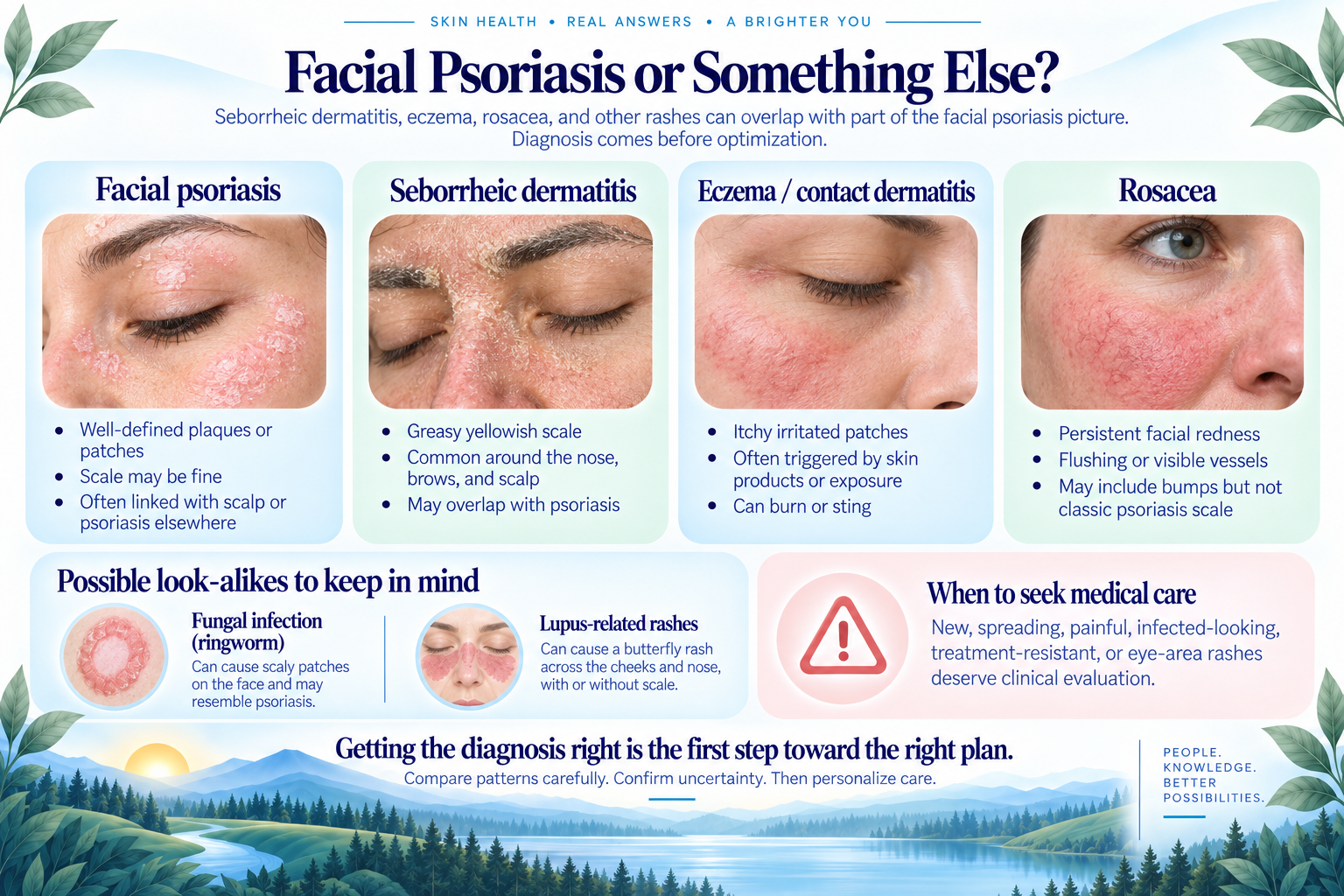
Conditions That Can Look Like Facial Psoriasis
Seborrheic dermatitis, eczema, contact dermatitis, rosacea, fungal infection, and lupus-related rashes can overlap with part of the facial psoriasis picture. Some people have features of psoriasis and seborrheic dermatitis together, sometimes called sebopsoriasis.
Diagnosis comes before optimization. New, spreading, painful, blistering, infected-looking, eye-area, or treatment-resistant rashes deserve clinical evaluation. A clinician may diagnose psoriasis by history and examination and use testing or biopsy when the pattern is unclear.
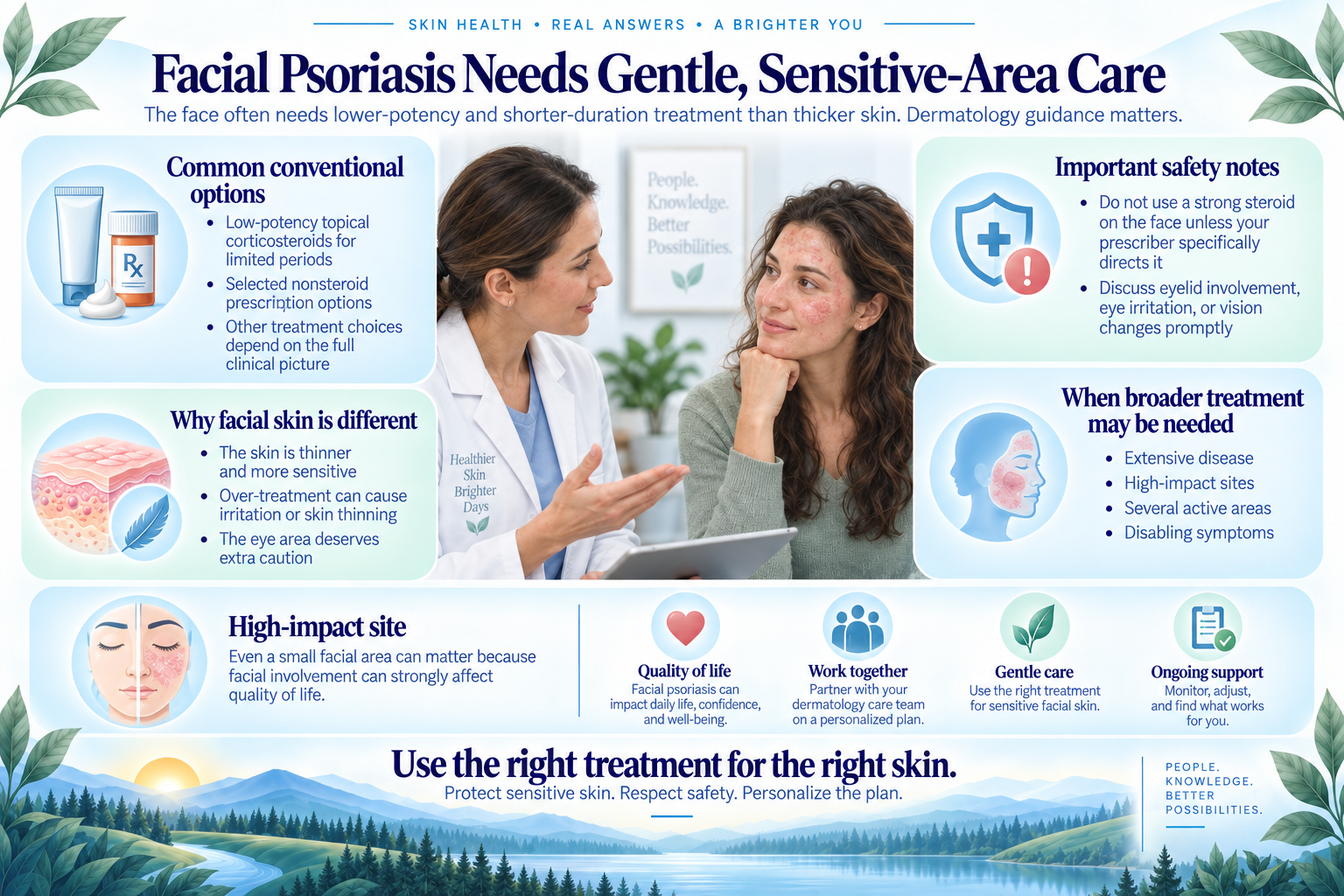
Traditional Treatments for Mild Facial Psoriasis
Conventional care is not one-size-fits-all. The face often needs lower-potency and shorter-duration treatment than thicker skin. Dermatologists may consider low-potency topical corticosteroids for limited periods, vitamin D analogs in selected situations, calcineurin inhibitors used off label, or other nonsteroid prescription therapies. When psoriasis is extensive, disabling, or active in several high-impact sites, phototherapy or systemic treatment may be appropriate.
Medication safety: Do not use a strong steroid on the face or around the eyes unless the prescriber specifically directs it. Prolonged or inappropriate use can thin skin and cause other complications. Eye irritation, vision changes, or eyelid involvement should be discussed promptly.
The Limitations of Treating Only the Visible Rash
Topical treatment can be highly useful, but it does not answer every question. Why did the flare begin now? Is scalp disease continuously reseeding the hairline? Is a cosmetic, fragrance, shaving product, mask, or occupational exposure adding irritation? Are weight, metabolic health, smoking, alcohol, sleep, stress, or medication changes affecting disease activity?
The goal is not to blame one trigger or promise a cure. It is to separate known aggravators from assumptions, then work on the factors that are measurable, changeable, and relevant to that person.
The Functional Medicine Opportunity for Facial Psoriasis
My model is Environmentally Induced Autoimmunity. Genetics can create susceptibility, but expression is influenced by the environment interacting with immune, metabolic, gastrointestinal, hormonal, neurologic, and barrier physiology.
Environment and exposures
Skin products, fragrance, workplace irritants, tobacco exposure, alcohol, and medications that may aggravate psoriasis.
Diet and metabolism
Overall dietary pattern, weight trajectory, blood sugar regulation, cardiometabolic risk, and nutrient adequacy.
Gut and immune context
Digestive symptoms, inflammatory bowel disease clues, celiac risk when indicated, infection history, and unnecessary restriction.
Stress and sleep
Itch-sleep cycles, chronic stress load, coping capacity, and routines that can be tracked without claiming that stress is the sole cause.
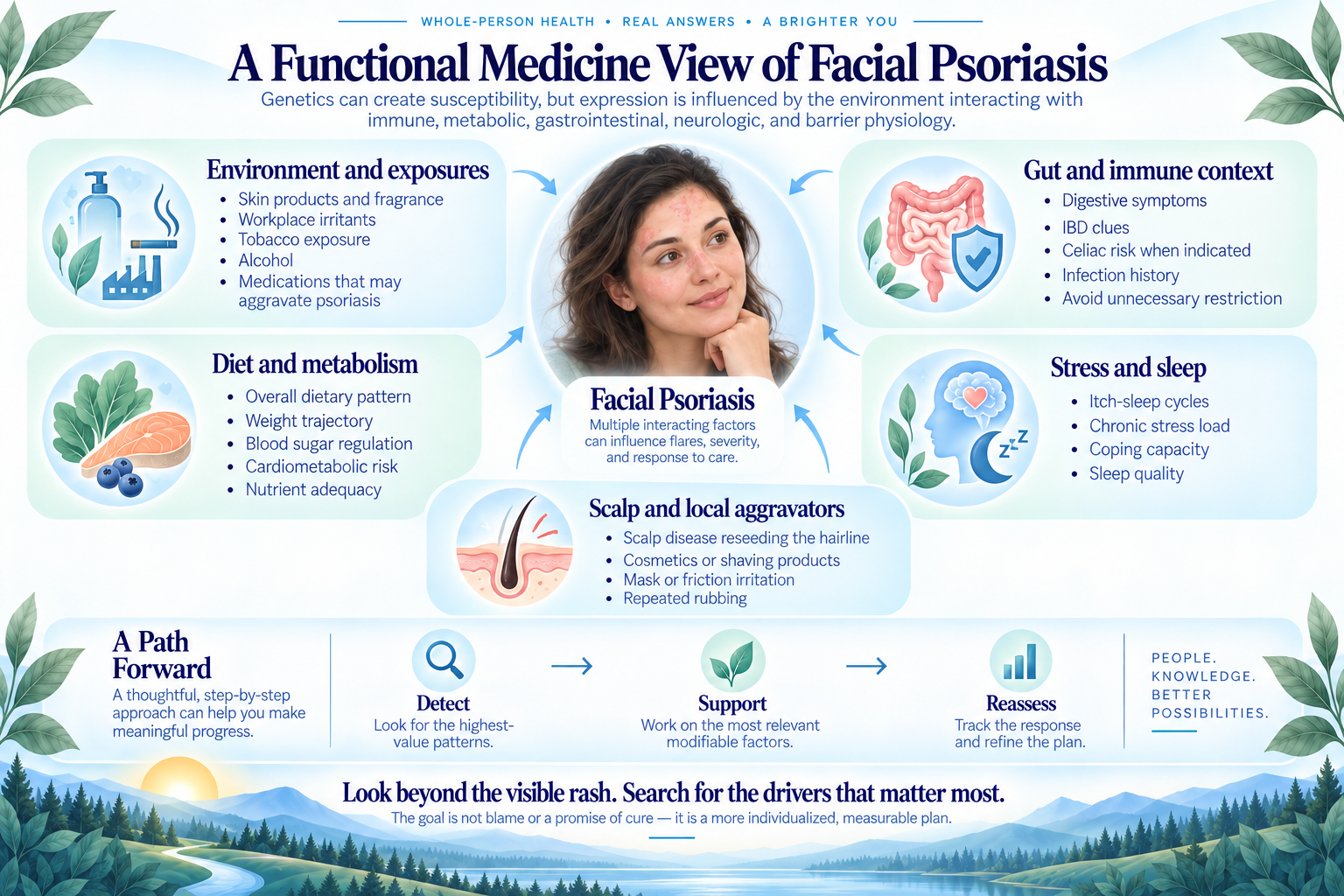
DETECT → SUPPORT → REASSESS
DETECT
Establish the baseline and identify the highest-value patterns. Review history, timeline, environment, diet, gut health, metabolism, nutrient status, stress, sleep, infections, exposures, medications, and current care.
SUPPORT
Support the most relevant modifiable factors without disrupting needed care. Keep the plan specific, safe, and realistic.
REASSESS
Change a manageable number of variables and document the response. Reassess symptoms, function, labs when relevant, and the next safest step.
When to Get Medical Help
Seek prompt medical care for a rapidly spreading rash, extensive redness, fever, dehydration, severe pain, pus or crusting that suggests infection, eye involvement, or new joint swelling. Facial involvement can also qualify as high-impact disease even when total body surface area is small.
If you have joint stiffness, heel pain, swollen fingers or toes, or persistent back pain, review the psoriatic arthritis guide and arrange an appropriate evaluation.
Frequently Asked Questions
Is facial psoriasis common?
Psoriasis can affect the face, often together with scalp or ear involvement. Even a small facial area can be clinically important because the skin is sensitive and the condition can have a large effect on daily life.
Can facial psoriasis look like seborrheic dermatitis?
Yes. Facial psoriasis, seborrheic dermatitis, eczema, contact dermatitis, rosacea, fungal infection, and other rashes can overlap in appearance. A clinician should evaluate an uncertain or persistent rash.
What can be used on facial psoriasis?
Treatment may include carefully selected low-potency topical corticosteroids for limited periods or nonsteroid prescription options. The exact choice depends on location, age, severity, other sites, medical history, and prior response.
Can I use the same steroid on my face that I use on my elbows?
Not unless your prescriber directs it. Facial skin is thinner, and an overly strong or prolonged topical steroid can cause complications.
Is facial psoriasis considered severe if the area is small?
It can still be high-impact disease. Current treatment recommendations consider sensitive or high-impact sites, symptoms, and quality-of-life burden, not only total body surface area.
Can makeup or skin care trigger a facial flare?
Irritating or sensitizing products can aggravate facial skin even if they did not cause the underlying psoriasis. Fragrance, harsh exfoliation, and repeated rubbing are common factors to review.
How does functional medicine approach facial psoriasis?
It uses DETECT → SUPPORT → REASSESS to investigate diet, gut health, metabolism, nutrient status, stress, sleep, infections, exposures, medications, and individual response while maintaining appropriate dermatology care.
Can functional medicine cure facial psoriasis?
No responsible approach can promise a cure. The aim is to identify modifiable contributors, improve whole-person health, reduce avoidable aggravators, and measure whether the plan changes symptoms or resilience over time.
Ready for a More Individualized Psoriasis Evaluation?
My process looks beyond the visible skin while respecting the role of appropriate dermatology and rheumatology care. We DETECT the most relevant patterns, SUPPORT the highest-priority needs, and REASSESS what changes.
References and Clinical Resources
- American Academy of Dermatology. Psoriasis diagnosis and treatment.
- American Academy of Dermatology. Tacrolimus and pimecrolimus for psoriasis.
- National Psoriasis Foundation. Psoriasis on high-impact sites.
- NIAMS. Psoriasis: symptoms, causes, and risk factors.