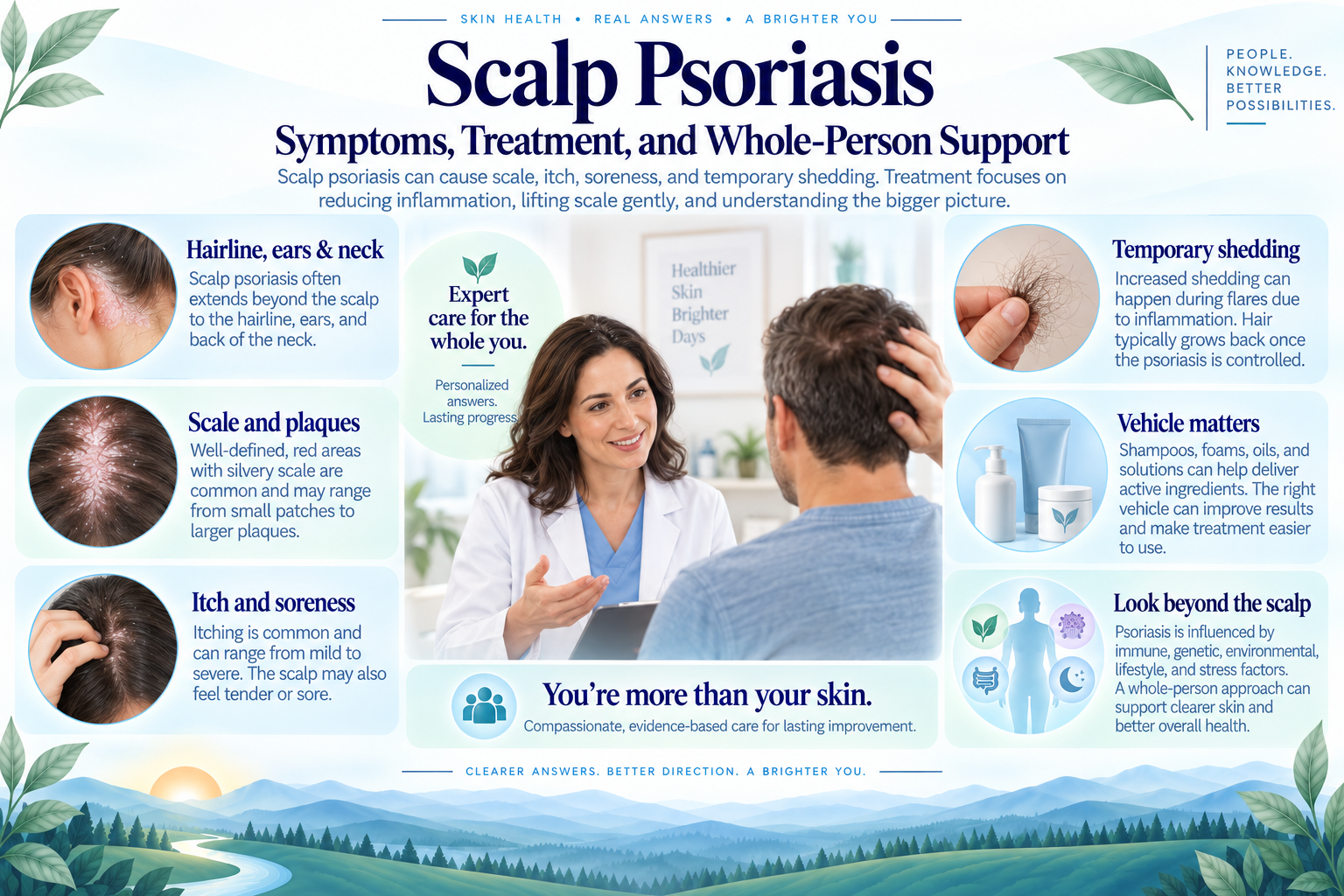
What Scalp Psoriasis Looks and Feels Like
Scalp psoriasis may involve one small area or most of the scalp. Scale can be fine and dandruff-like or thick and adherent. It can extend onto the forehead, behind the ears, or onto the back of the neck.
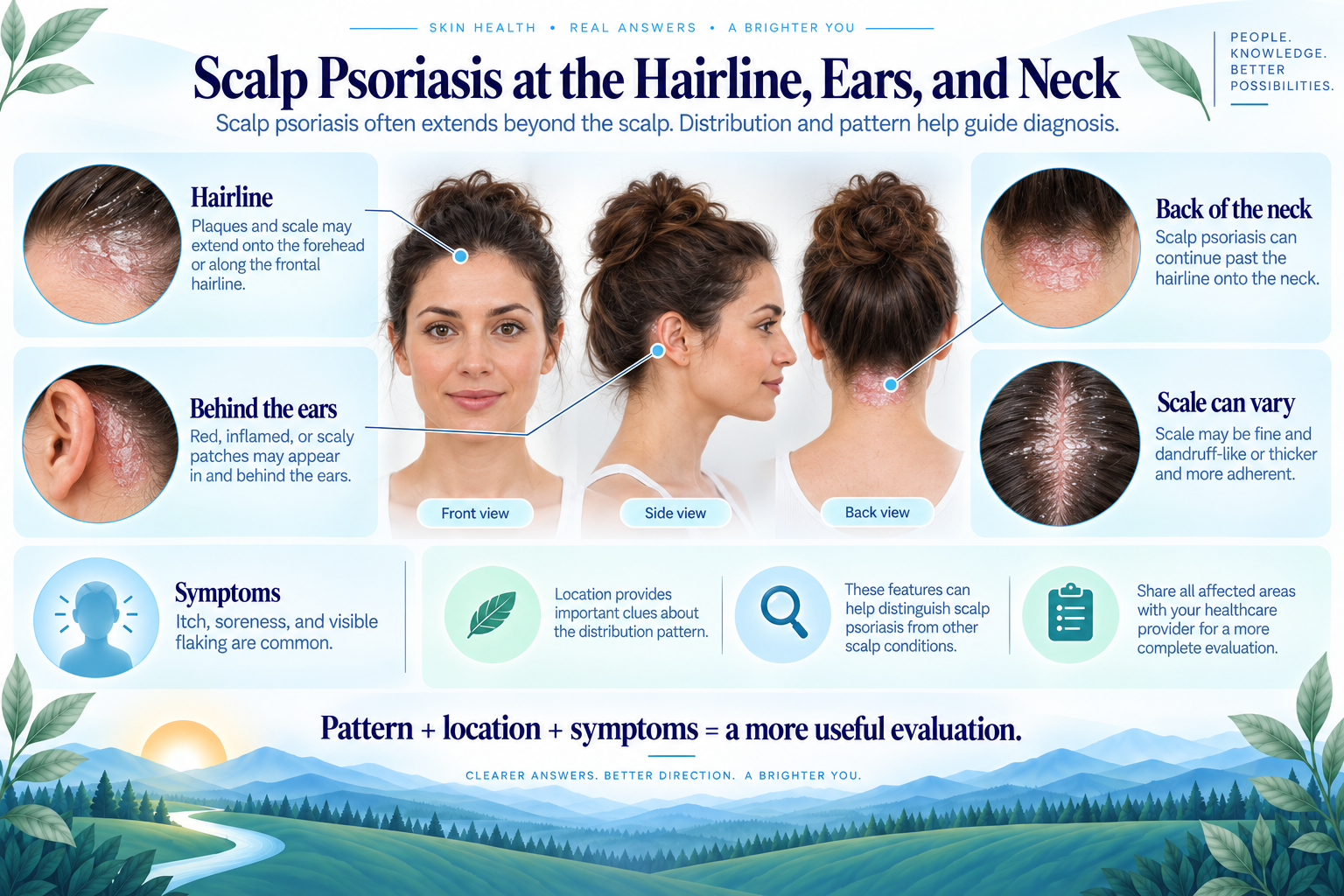
Scalp Psoriasis vs. Dandruff and Seborrheic Dermatitis
| Feature | Scalp psoriasis | Seborrheic dermatitis |
|---|---|---|
| Border | Often sharply defined | Often less clearly defined |
| Scale | May be thicker, dry, silvery, gray, or darker | Often finer, yellowish, or greasy |
| Beyond hairline | Common | Possible, often in oily facial areas |
| Overlap | Sebopsoriasis can share features of both, so appearance alone is not always decisive. | |
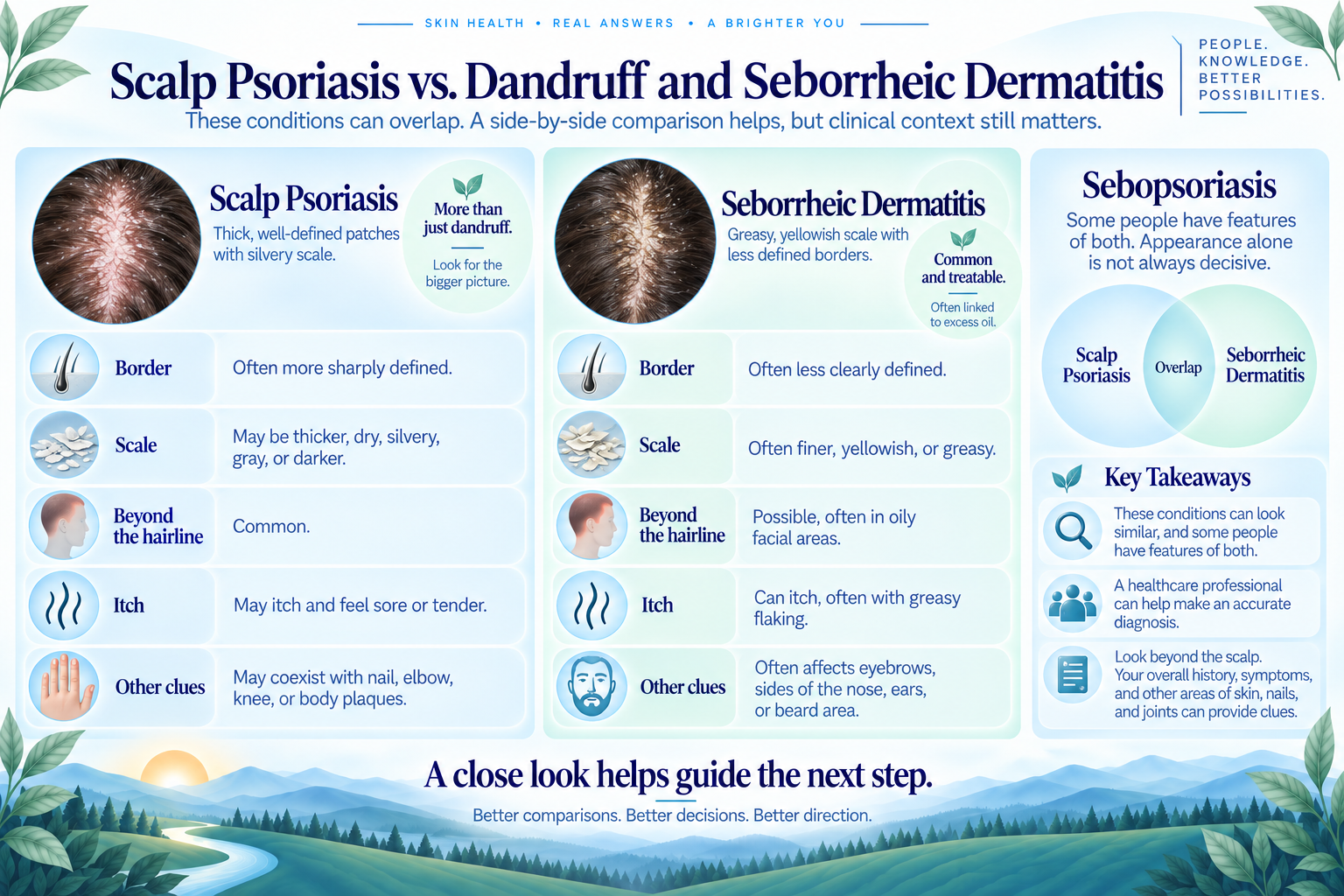
Scalp Psoriasis Treatment Options
Hair changes how medication reaches skin, so vehicle matters. Shampoos, solutions, foams, oils, gels, and sprays may be easier to use than thick ointments. Dermatologist-directed options can include topical corticosteroids, vitamin D analogs, combination products, salicylic acid scale softeners, coal tar, and other nonsteroid medicines. Medical phototherapy or systemic treatment may be considered when scalp disease is extensive, resistant, or substantially affects quality of life.
Protect the scalp: Scrubbing, picking, and forcefully lifting scale can cause bleeding, worsen the Koebner response, and increase temporary hair loss. Some medicated products also interact with hair color or texture, so follow the label and the treatment plan.
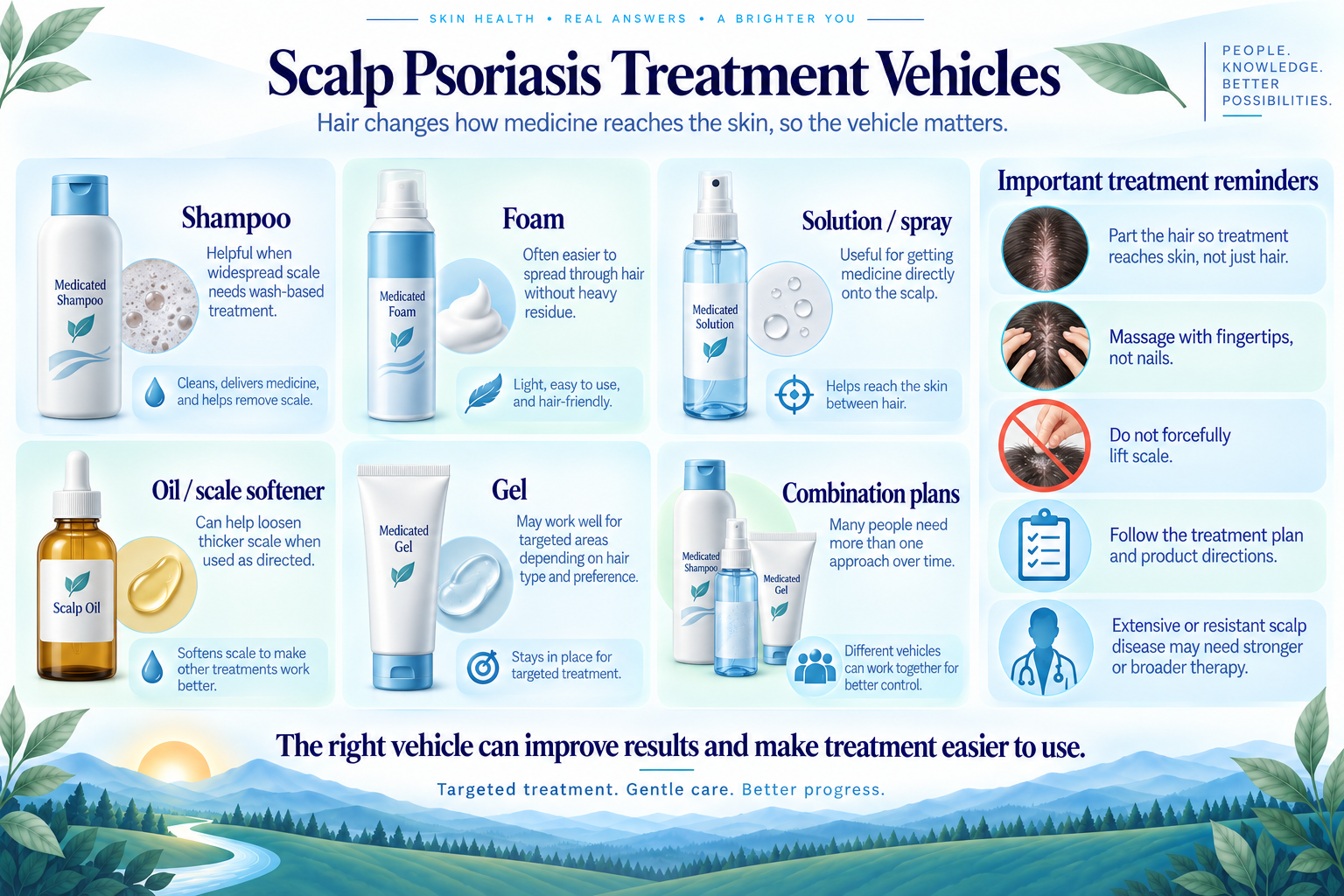
A Practical Scalp-Care Routine
- Part the hair so treatment reaches skin rather than coating hair.
- Use scale-softening products only as directed and allow them time to work.
- Massage gently with fingertips, not nails.
- Rinse thoroughly and alternate medicated and gentle products if advised.
- Track itch, scale, sleep, shedding, and how often rescue medication is needed.
If you have sudden patchy hair loss, scarring, drainage, fever, or a painful tender scalp, arrange a clinical evaluation rather than assuming psoriasis is responsible.
The Functional Medicine Opportunity
Scalp psoriasis is still systemic immune-mediated disease, not simply a shampoo problem. My Environmentally Induced Autoimmunity model asks how inherited susceptibility is interacting with exposures and physiology.
Trigger timeline
Recent infections, skin injury, major stress, medication changes, smoking, alcohol, and seasonal patterns.
Metabolic context
Weight trajectory, glucose regulation, cardiovascular risk, movement, and overall dietary pattern.
Gut and nutrient context
Digestive symptoms, inflammatory bowel disease or celiac clues when indicated, and nutrient adequacy before supplementing.
Sleep and nervous system
The itch-scratch-sleep cycle, stress capacity, and realistic routines that can be sustained.
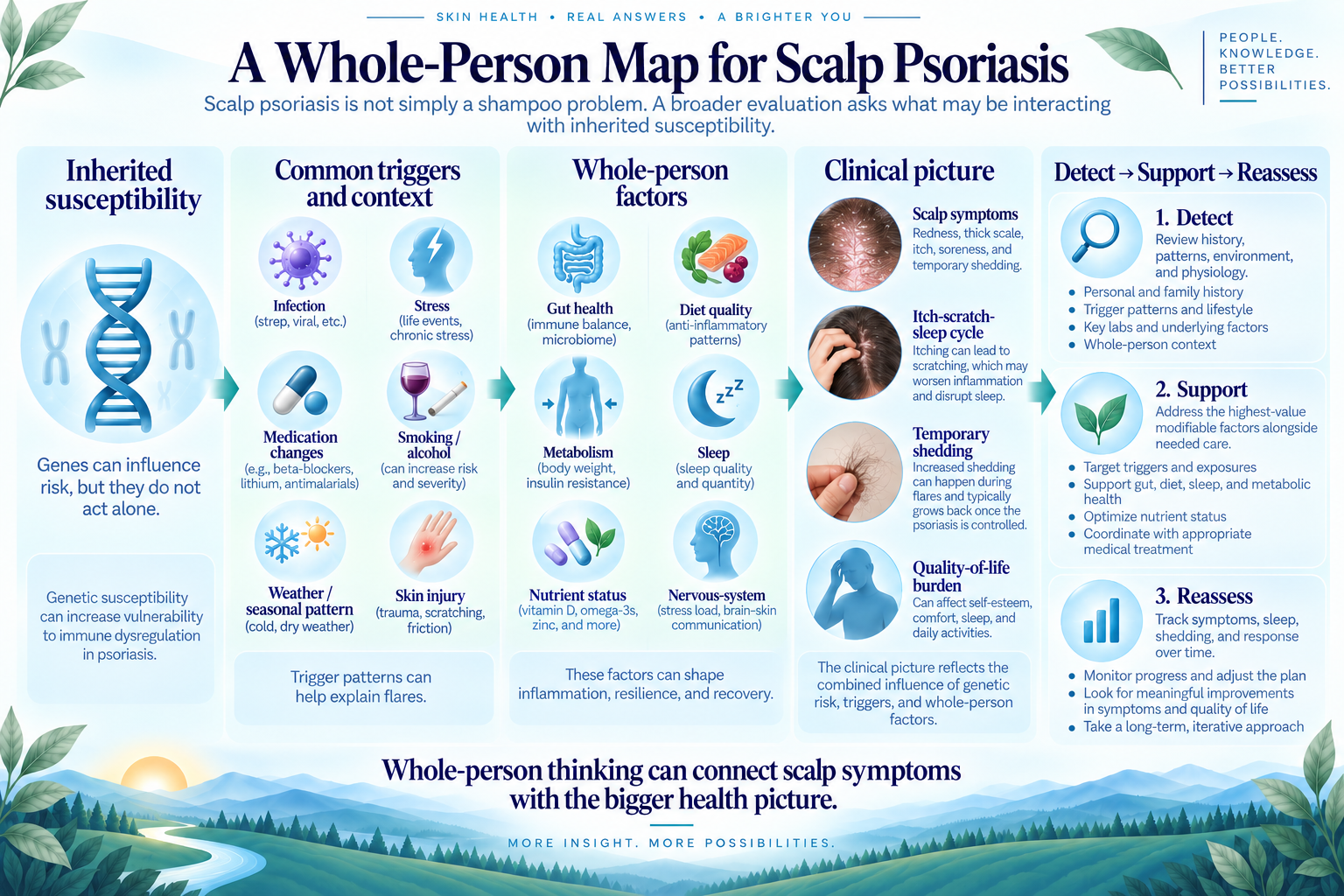
DETECT → SUPPORT → REASSESS
DETECT
Establish the baseline and identify the highest-value patterns. Review history, timeline, environment, diet, gut health, metabolism, nutrient status, stress, sleep, infections, exposures, medications, and current care.
SUPPORT
Support the most relevant modifiable factors without disrupting needed care. Keep the plan specific, safe, and realistic.
REASSESS
Change a manageable number of variables and document the response. Reassess symptoms, function, labs when relevant, and the next safest step.
Frequently Asked Questions
Is scalp psoriasis the same as dandruff?
No. Dandruff is usually related to seborrheic dermatitis. Scalp psoriasis often has more defined plaques and may extend beyond the hairline, but overlap is possible and a clinician can confirm the diagnosis.
Can scalp psoriasis cause hair loss?
It can contribute to temporary shedding through inflammation, scratching, and forceful scale removal. Psoriasis usually does not permanently destroy hair follicles, but sudden, patchy, or scarring loss needs evaluation.
What shampoo helps scalp psoriasis?
Products containing salicylic acid or coal tar may help some people, and prescription shampoos or other scalp formulations may be needed. The best product depends on scale thickness, hair type, other treatments, and skin sensitivity.
Should I scrape scale from scalp psoriasis?
No. Picking or aggressive scraping can injure skin, worsen psoriasis, cause bleeding, and increase temporary hair loss. Scale should be softened and removed gently as directed.
Can scalp psoriasis be severe even if it covers a small area?
Yes. The scalp is a high-impact site, and intense itch, sleep loss, visible flaking, pain, or treatment difficulty can justify escalation even when body surface area is limited.
Can scalp psoriasis and seborrheic dermatitis occur together?
Yes. Some people have overlapping features called sebopsoriasis. Diagnosis matters because the most useful treatment plan may need to address both patterns.
What does functional medicine investigate for scalp psoriasis?
It reviews infections, exposures, medication changes, diet, gut health, metabolism, nutrient status, stress, sleep, smoking, alcohol, and individual response using DETECT → SUPPORT → REASSESS.
When should scalp psoriasis be evaluated urgently?
Seek prompt care for fever, rapidly spreading redness, severe pain, pus or drainage, eye involvement, or symptoms suggesting generalized pustular or erythrodermic psoriasis.
Ready for a More Individualized Psoriasis Evaluation?
My process looks beyond the visible skin while respecting the role of appropriate dermatology and rheumatology care. We DETECT the most relevant patterns, SUPPORT the highest-priority needs, and REASSESS what changes.
References and Clinical Resources
- American Academy of Dermatology. Scalp psoriasis overview.
- American Academy of Dermatology. Scalp psoriasis treatment.
- American Academy of Dermatology. Scalp psoriasis self-care.
- National Psoriasis Foundation. Psoriasis on high-impact sites.