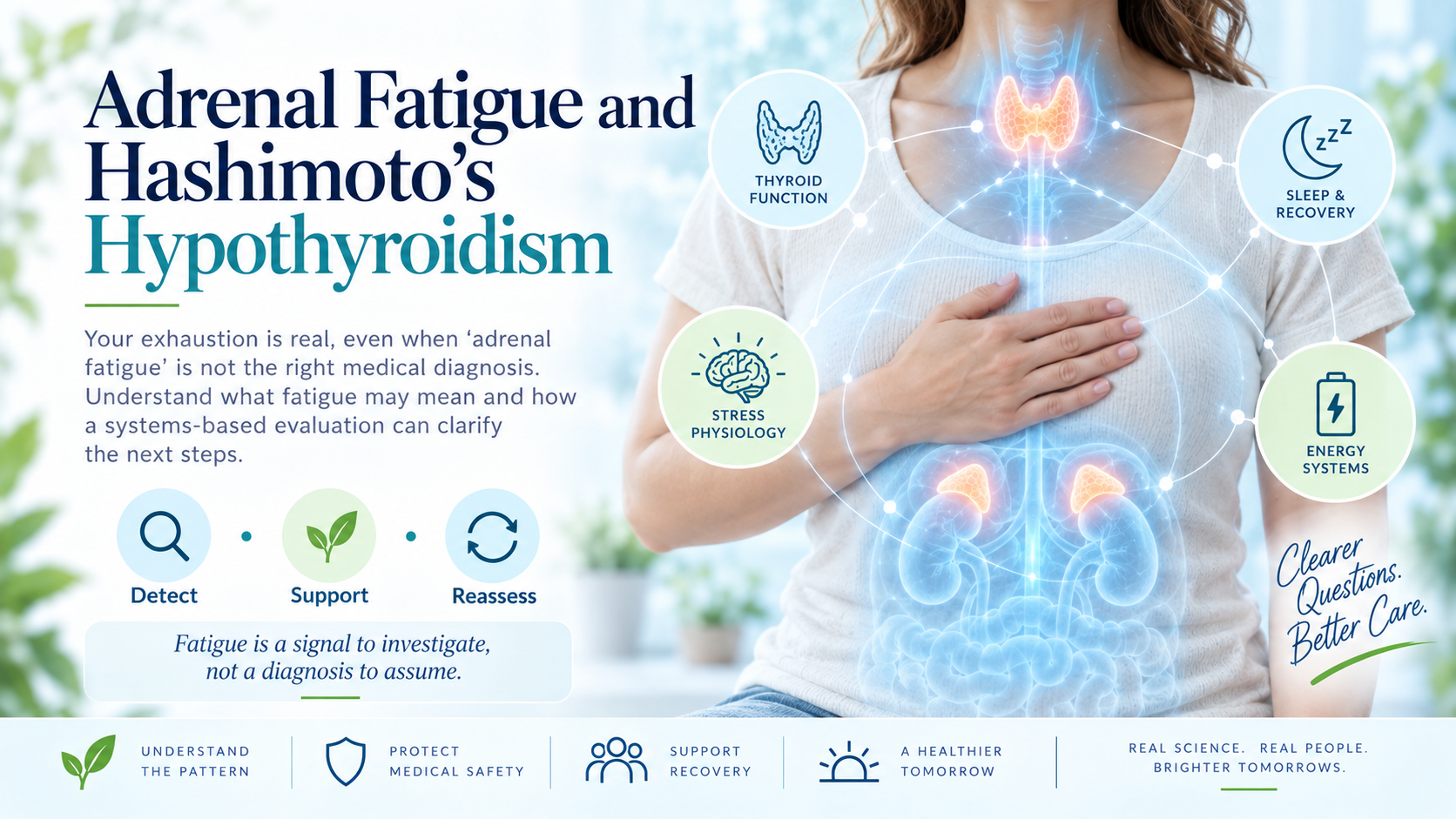
Listen: The Hidden Connection Between Fatigue and Hashimoto’s
This original episode is preserved as the starting point. The guide below adds current terminology, medical safety, and a more complete way to organize the possibilities.
The Name May Be Imperfect, but the Experience Is Not
People often use the phrase adrenal fatigue to describe waking unrefreshed, crashing in the afternoon, feeling wired at night, relying on caffeine, or losing resilience under stress. Those experiences should not be dismissed simply because the label is imprecise.
The adrenal glands do not usually become “tired” in the way the popular phrase suggests. They are part of a larger stress-response network that includes the hypothalamus, pituitary gland, autonomic nervous system, immune signaling, sleep-wake rhythms, metabolism, and the adrenal glands themselves. In established physiology, this is often described as the hypothalamic-pituitary-adrenal axis.
One useful functional medicine theory is that prolonged or repeated stressors may change the timing and regulation of this network without producing classic adrenal failure. That theory may help organize questions, but it should not be treated as proof of a single disease. In practice, the same symptom pattern can arise from several different problems, which is why the timeline and objective findings matter.
A better question than “Are my adrenals fatigued?” is: What is disrupting energy production, sleep, hormonal signaling, recovery, or the ability to adapt to ordinary demands?
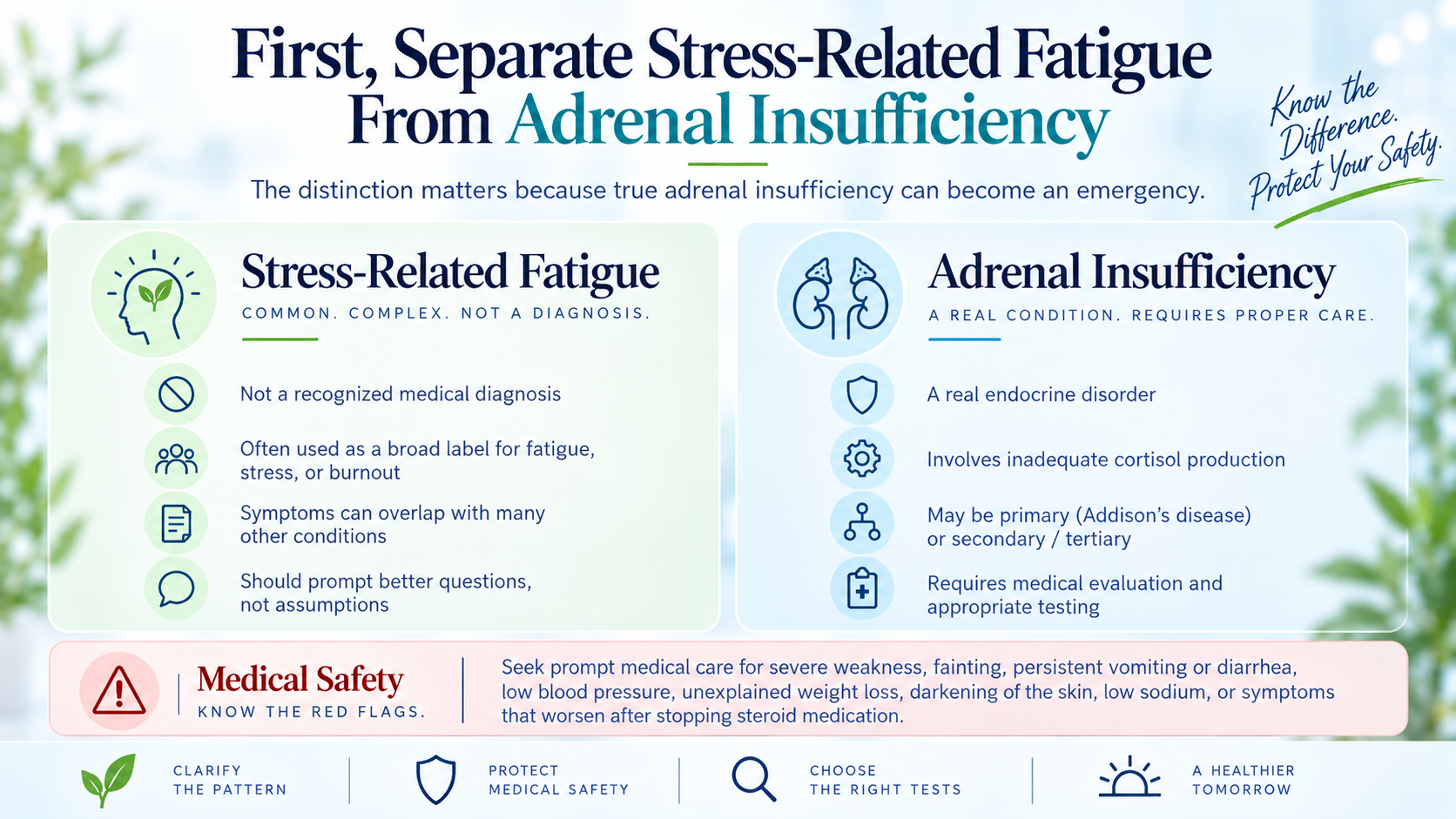
First, Separate Stress-Related Fatigue From Adrenal Insufficiency
Adrenal insufficiency is a real endocrine disorder in which the body does not make enough cortisol. Primary adrenal insufficiency, also called Addison's disease, involves the adrenal glands. Secondary or tertiary forms may involve pituitary or hypothalamic signaling, and corticosteroid medications can suppress the system.
Seek urgent medical care
Severe weakness with persistent vomiting or diarrhea, dehydration, fainting, confusion, very low blood pressure, severe abdominal pain, or a known adrenal condition with rapid worsening can signal an adrenal crisis. This is a medical emergency. Do not try to manage it with supplements or dietary changes.
More gradual warning signs can include unexplained weight loss, low blood pressure, salt craving, nausea, darkening of the skin in primary adrenal insufficiency, recurrent low sodium, or symptoms that worsen after stopping steroid medication. These findings deserve medical evaluation. Functional medicine should never be used to delay cortisol testing or prescribed hormone replacement when adrenal insufficiency is suspected.
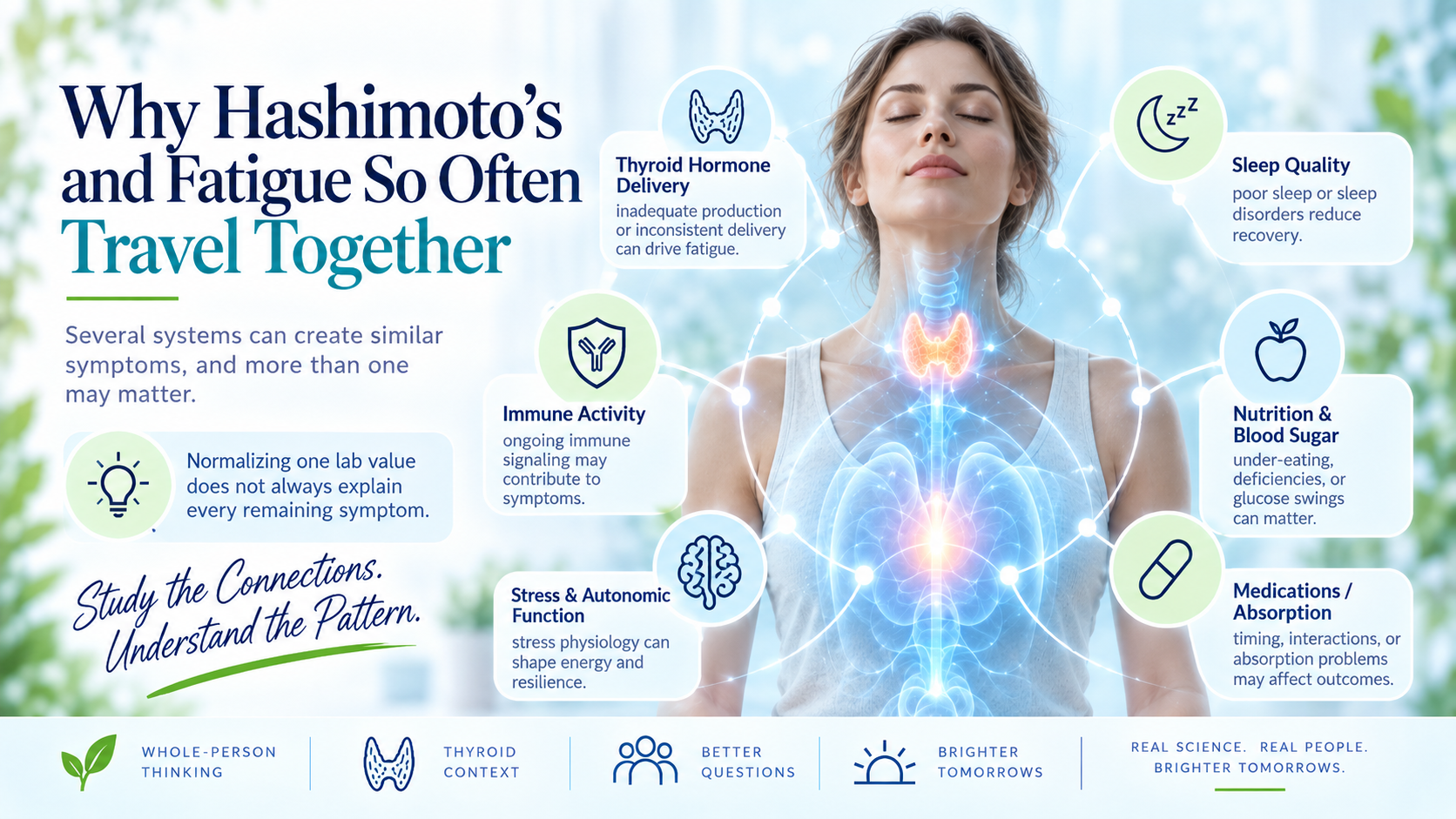
Why Hashimoto's and Fatigue So Often Travel Together
Hashimoto's can contribute to fatigue when thyroid hormone production is inadequate or replacement is not reaching the body consistently. Yet normalizing a thyroid result does not automatically explain every remaining symptom. Fatigue can persist because more than one system is involved.
Thyroid status and delivery
TSH and free T4, medication dose, missed doses, absorption, timing with food or supplements, formulation changes, and pregnancy-related needs can all change the picture.
Sleep and circadian rhythm
Insomnia, sleep apnea, restless legs, shift work, pain, and inconsistent light exposure can create a daily pattern that feels hormonal.
Fuel and blood
Iron deficiency, anemia, inadequate calories or protein, B12 or folate problems, glucose dysregulation, and dehydration can reduce physical and cognitive endurance.
Immune and inflammatory load
Autoimmune activity, infection, another inflammatory condition, or the recovery period after illness may change energy and exercise tolerance.
Brain and nervous system
Anxiety, depression, trauma, dysautonomia, chronic pain, and prolonged hypervigilance can alter sleep, heart rate, digestion, and recovery without making symptoms imaginary.
Medication and life stage
Sedating or stimulating medications, corticosteroids, menopause, pregnancy, postpartum changes, and other endocrine conditions can overlap with thyroid symptoms.
Considering the relationship between various systems of the body and how the physiology of one system can affect another system is critical. A seemingly unrelated system can also cause the exact symptoms you might see with dysfunction in another system. A good example is how hypothyroidism can cause fatigue, but so can anemia, low blood sugar, and low hormones, just to name a few.
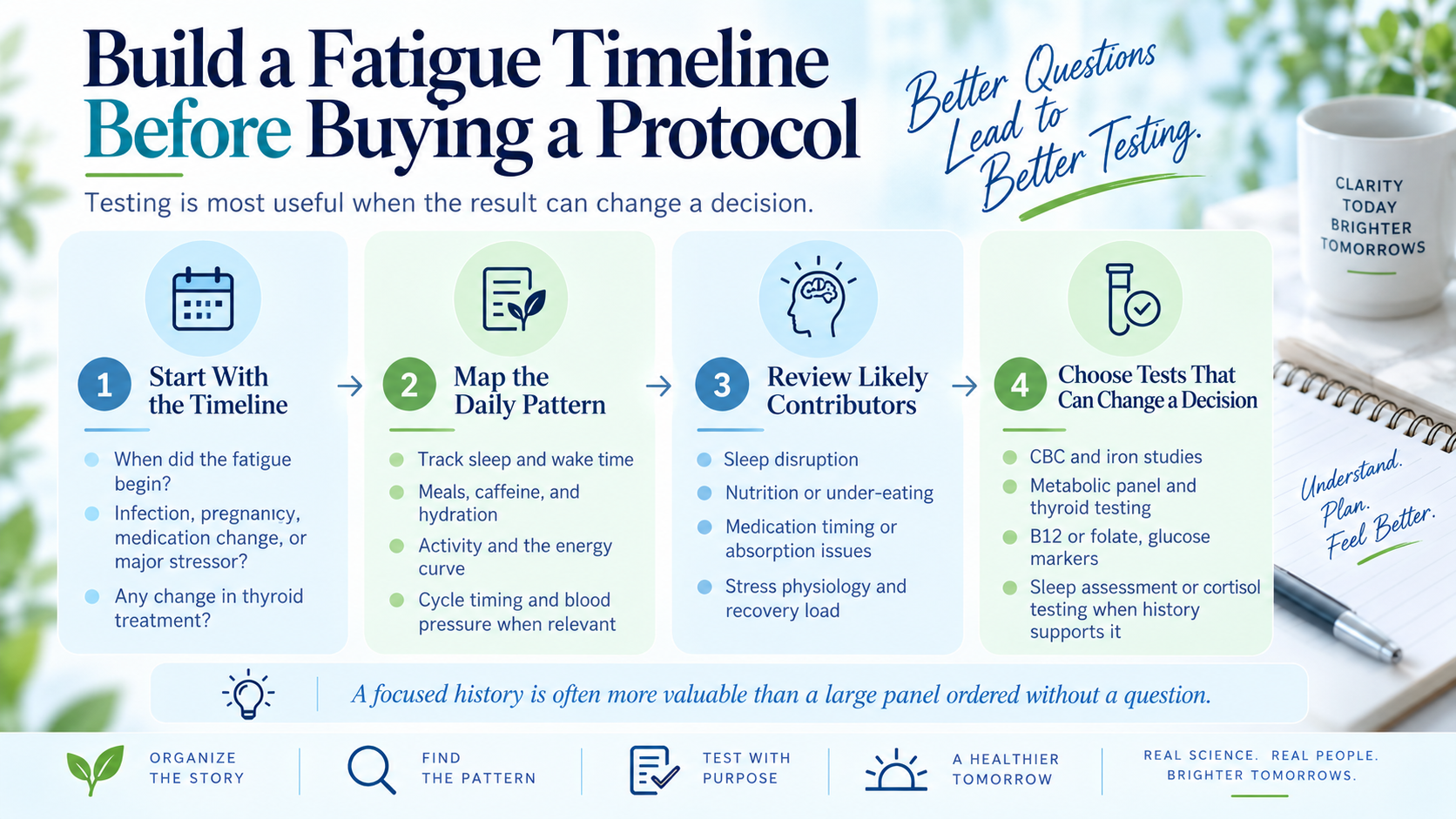
Build a Fatigue Timeline Before Buying a Protocol
A focused history is often more valuable than a large panel ordered without a question. Note when the problem began, whether it followed an infection, pregnancy, medication change, major stressor, dietary restriction, or change in thyroid treatment. Track sleep, meals, caffeine, cycle timing, blood pressure, activity, and the shape of the energy curve.
Medical evaluation may include a physical examination and selected testing such as a complete blood count, iron studies, metabolic panel, thyroid function, B12 or folate, glucose markers, sleep assessment, or cortisol testing when the history supports it. The right test is the one that can change a decision.
About salivary cortisol and commercial “adrenal” panels: cortisol follows a daily rhythm, and specialty testing can be useful for a defined clinical question. An abnormal curve does not, by itself, diagnose adrenal insufficiency, prove that stress caused every symptom, or determine a supplement protocol.
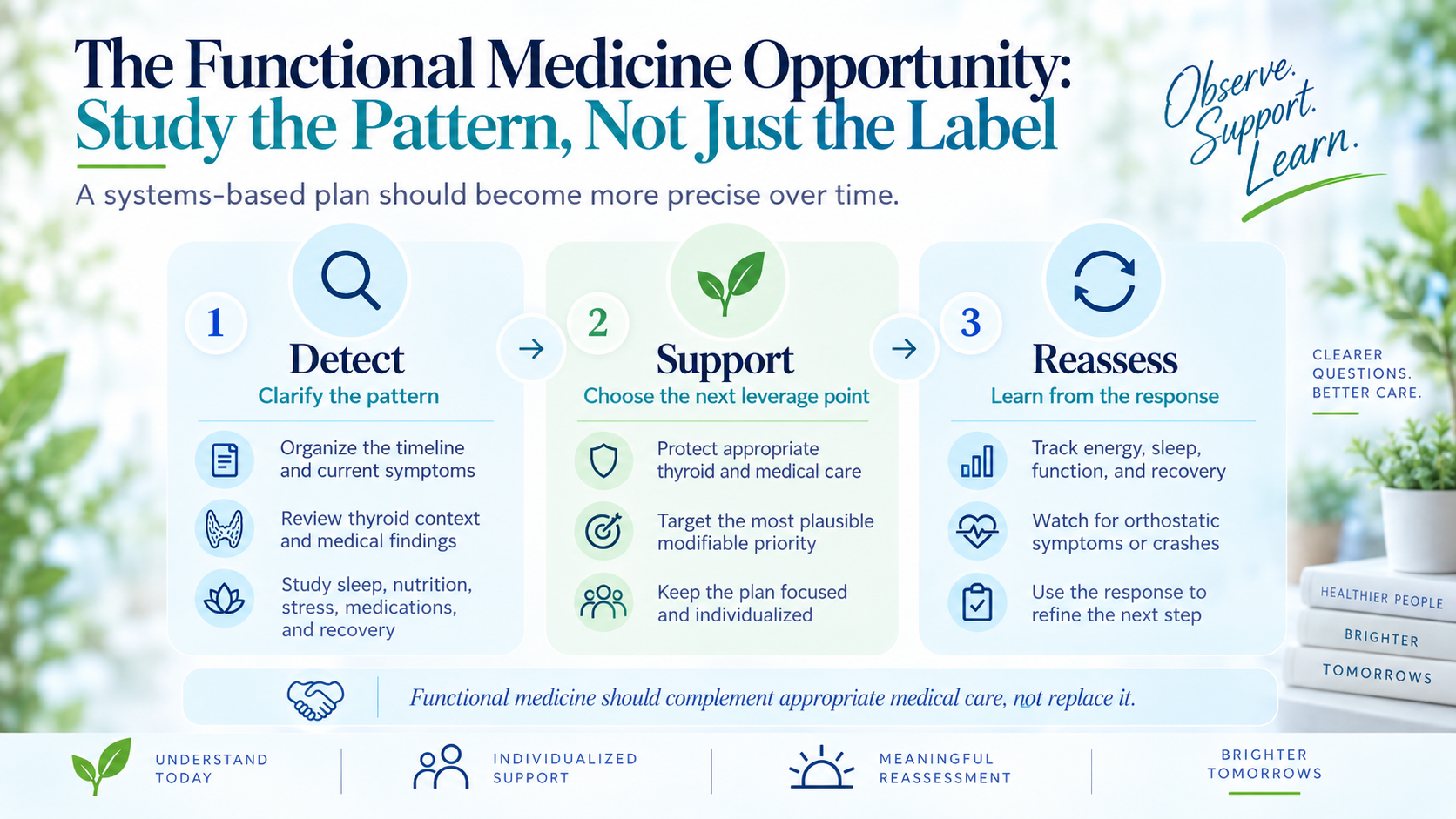
The Functional Medicine Opportunity: Study the Pattern, Not Just the Label
Conventional medicine is essential for diagnosing adrenal disease, managing thyroid hormone, investigating anemia and sleep disorders, and treating serious illness. Functional medicine offers a different but complementary opportunity: more time to connect the symptom timeline, daily inputs, physiological systems, and response to carefully chosen changes.
Clinical observation matters in this process. Over years of working with people who have Hashimoto's, I have seen that two people with the same diagnosis may have very different fatigue patterns. One may need medication timing corrected. Another may be under-eating. Another may be living with untreated sleep apnea. Another may have a post-viral change in exercise tolerance. The observation does not prove a universal mechanism. It tells us to investigate the person in front of us.
Clarify the pattern
Organize the timeline, medical findings, sleep, nutrition, stress physiology, medications, movement, and immune context.
Choose the next leverage point
Protect thyroid and medical care while targeting the most plausible, modifiable priority.
Learn from the response
Track energy, sleep, function, orthostatic symptoms, and recovery before adding more.
The aim is not to force every person into an “adrenal” program. It is to become a better student of your physiology and build a plan that can change as new information appears.
Foundational Support That Does Not Pretend to Be a Cure
Useful foundations may include a consistent sleep and wake time, morning light, adequate calories and protein, hydration, regular meals when long fasting worsens symptoms, gradual activity matched to current capacity, and a plan to reduce excessive caffeine or alcohol. If exercise produces a delayed crash, the answer may be pacing and medical evaluation, not more intensity.
Supplements should follow a question. Iron, B vitamins, vitamin D, magnesium, herbs, and “adrenal support” products can be inappropriate or interact with medications. Licorice can raise blood pressure and potassium risk. Glandular products may contain active hormones or other compounds. Pregnancy, kidney disease, heart disease, and endocrine disorders change what is safe.
A simple plan that produces interpretable feedback is more valuable than a large stack that makes it impossible to know what helped or harmed.

Ready to Understand Your Fatigue More Clearly?
If you have Hashimoto's and your fatigue story has been reduced to a single lab value or a vague adrenal label, I can help you organize the full pattern. I personally review applications for one-on-one telemedicine consulting and work alongside appropriate medical care to identify the most useful next questions.
Frequently Asked Questions
Is adrenal fatigue a real medical diagnosis?
Adrenal fatigue is not a recognized medical diagnosis. The symptoms described by the term can still be real and deserve evaluation for thyroid dysfunction, sleep disorders, anemia, medication effects, mood conditions, metabolic problems, post-viral illness, adrenal insufficiency, and other causes.
Can Hashimoto’s cause adrenal fatigue?
Hashimoto's can contribute to fatigue through hypothyroidism, immune activity, sleep disruption, medication-delivery problems, or related conditions. It does not prove that the adrenal glands are failing.
What is the difference between adrenal fatigue and adrenal insufficiency?
Adrenal insufficiency is a defined endocrine disorder involving inadequate cortisol production and requires medical diagnosis and treatment. Adrenal fatigue is a popular label for a nonspecific symptom pattern and has no accepted diagnostic test.
What tests may help evaluate persistent fatigue?
Testing should follow the history. Depending on the case, a clinician may consider blood counts, iron studies, metabolic testing, thyroid function, nutrient markers, glucose measures, sleep evaluation, or medically appropriate cortisol testing.
Can stress change how I feel with Hashimoto’s?
Yes. Stress can affect sleep, autonomic function, appetite, glucose regulation, pain, and symptom perception. That does not mean stress is the only cause or that symptoms are imagined.
Should I take adrenal supplements?
Not automatically. Ingredients may affect blood pressure, potassium, sedation, stimulation, pregnancy, or medications. The product should have a defined purpose, safety review, time frame, and reassessment plan.
Can thyroid medication timing contribute to fatigue?
Yes. Missed doses, inconsistent timing, food, calcium, iron, formulation changes, and absorption problems can affect thyroid hormone delivery. Review medication changes with the prescribing clinician.
When is fatigue an emergency?
Seek urgent care for severe weakness with fainting, confusion, persistent vomiting or diarrhea, dehydration, very low blood pressure, severe abdominal pain, chest pain, stroke symptoms, or rapid deterioration.
Sources and Further Reading
- Endocrine Society: Adrenal Fatigue. Terminology and distinction from adrenal insufficiency.
- NIDDK: Adrenal Insufficiency and Addison’s Disease. Symptoms, causes, diagnosis, and treatment.
- American Thyroid Association: Hashimoto’s Thyroiditis. Thyroid testing and treatment context. Brad Shook, DC, AFMC. Clinical observations from individualized thyroid and autoimmune consulting, presented as observations rather than universal proof.