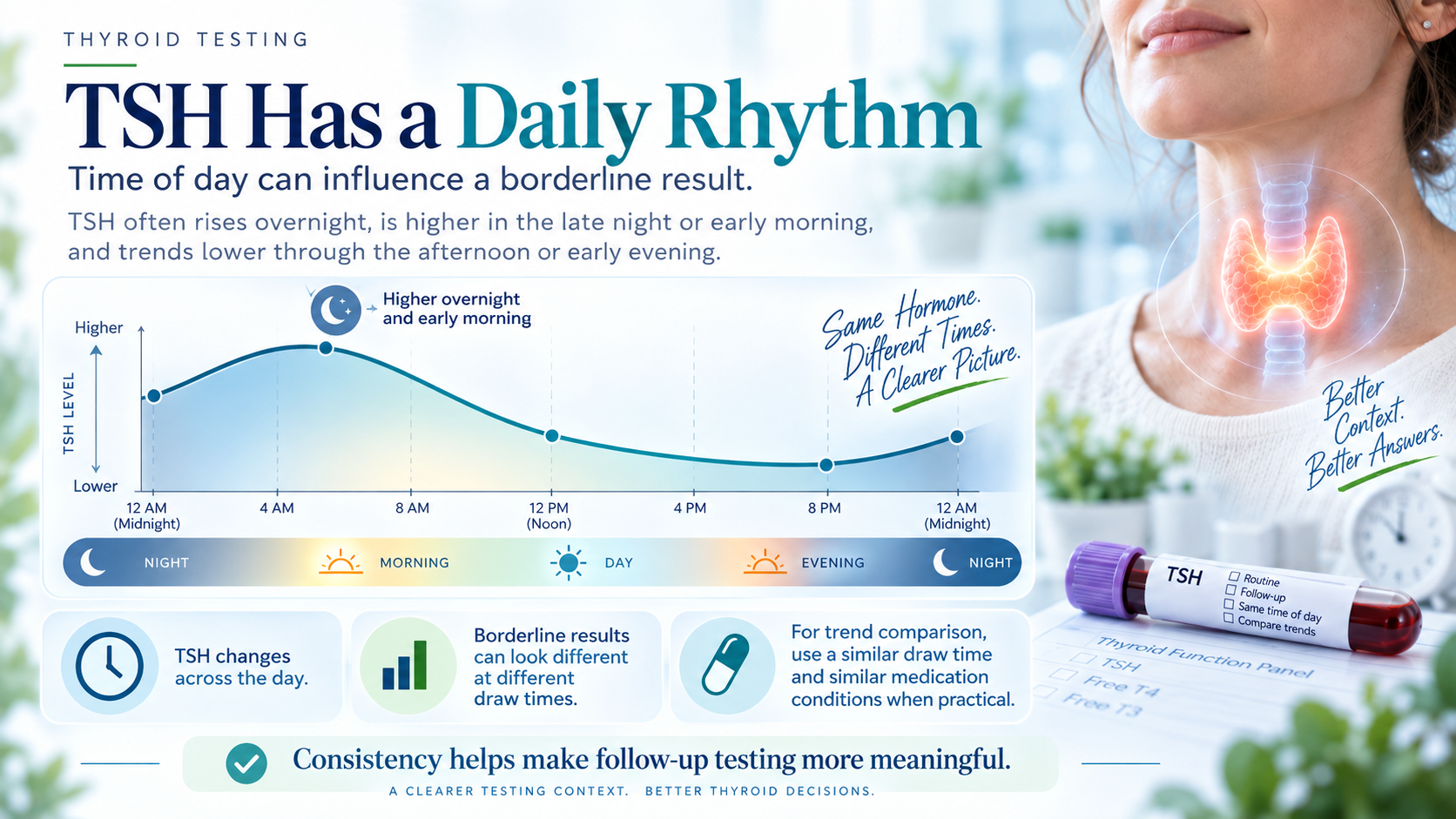
TSH Has a Daily Rhythm
TSH is a signal from the pituitary gland that tells the thyroid how strongly to work. That signal is released in pulses and changes across the day. In many people, TSH rises overnight, reaches a higher level during the late night or early morning, and falls toward the afternoon or early evening.
This does not make afternoon testing “wrong.” It means a result near a decision threshold can look different when sampled at a different time. The effect is usually less important when TSH is clearly normal or clearly abnormal, and more important when a diagnosis or dose decision depends on a small difference.
The practical lesson is consistency. If a clinician is following a trend, drawing blood at roughly the same time of day and under similar medication conditions can make comparisons more meaningful.
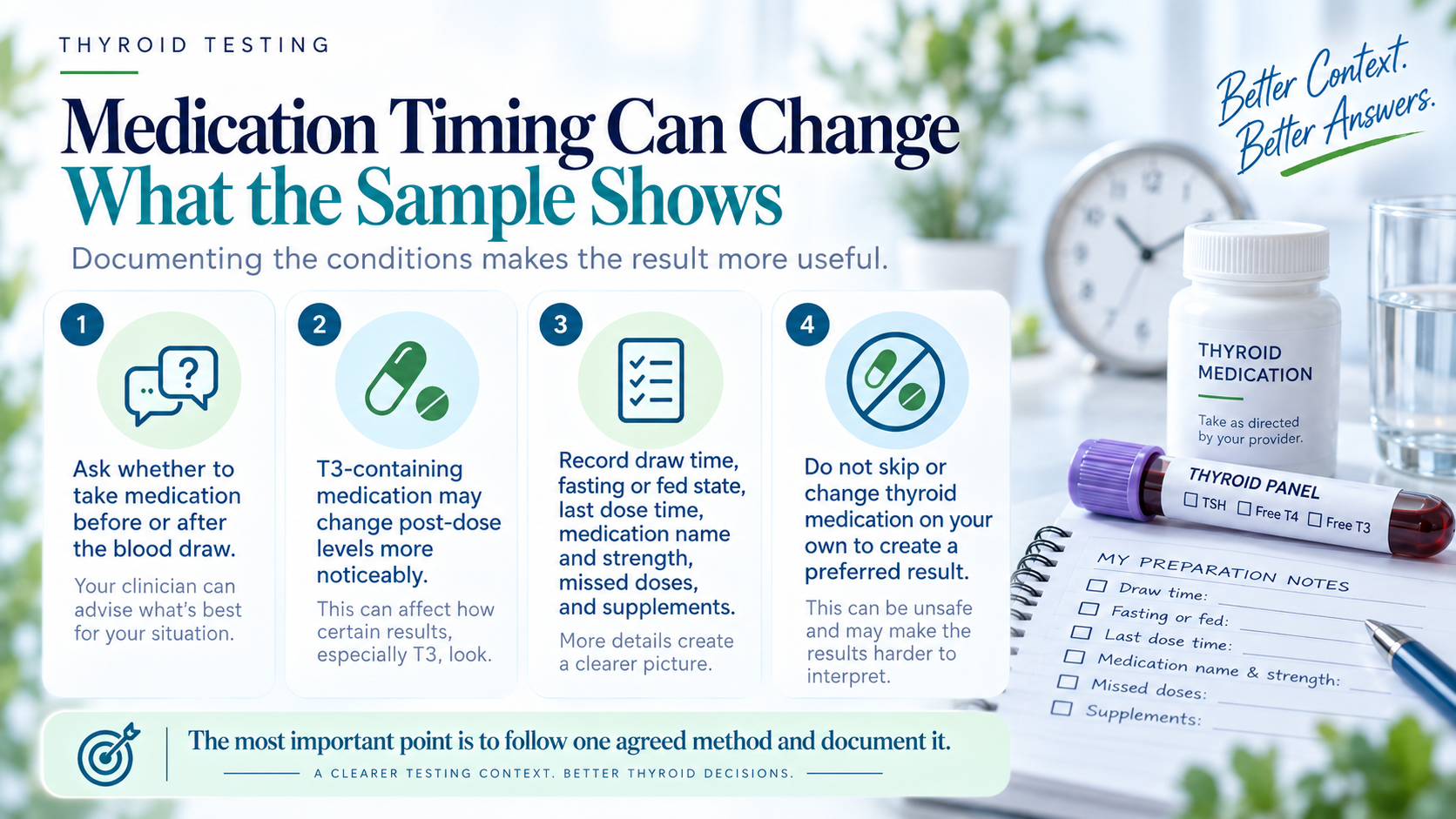
Medication Timing Can Change What the Sample Shows
If you take levothyroxine, liothyronine, or desiccated thyroid, the relationship between the dose and the blood draw matters. T4 changes more gradually, while T3-containing medication can produce a more noticeable post-dose rise in serum T3. That does not automatically mean the dose is too high or too low.
Ask the ordering clinician whether the laboratory expects you to take medication before or after the draw. The most important point is to follow one agreed method and document it. Do not skip or change thyroid medication on your own to create a preferred result.
Write it down: blood-draw time, fasting or fed state, time of the last thyroid dose, medication name and strength, recent missed doses, and supplements taken during the prior week.
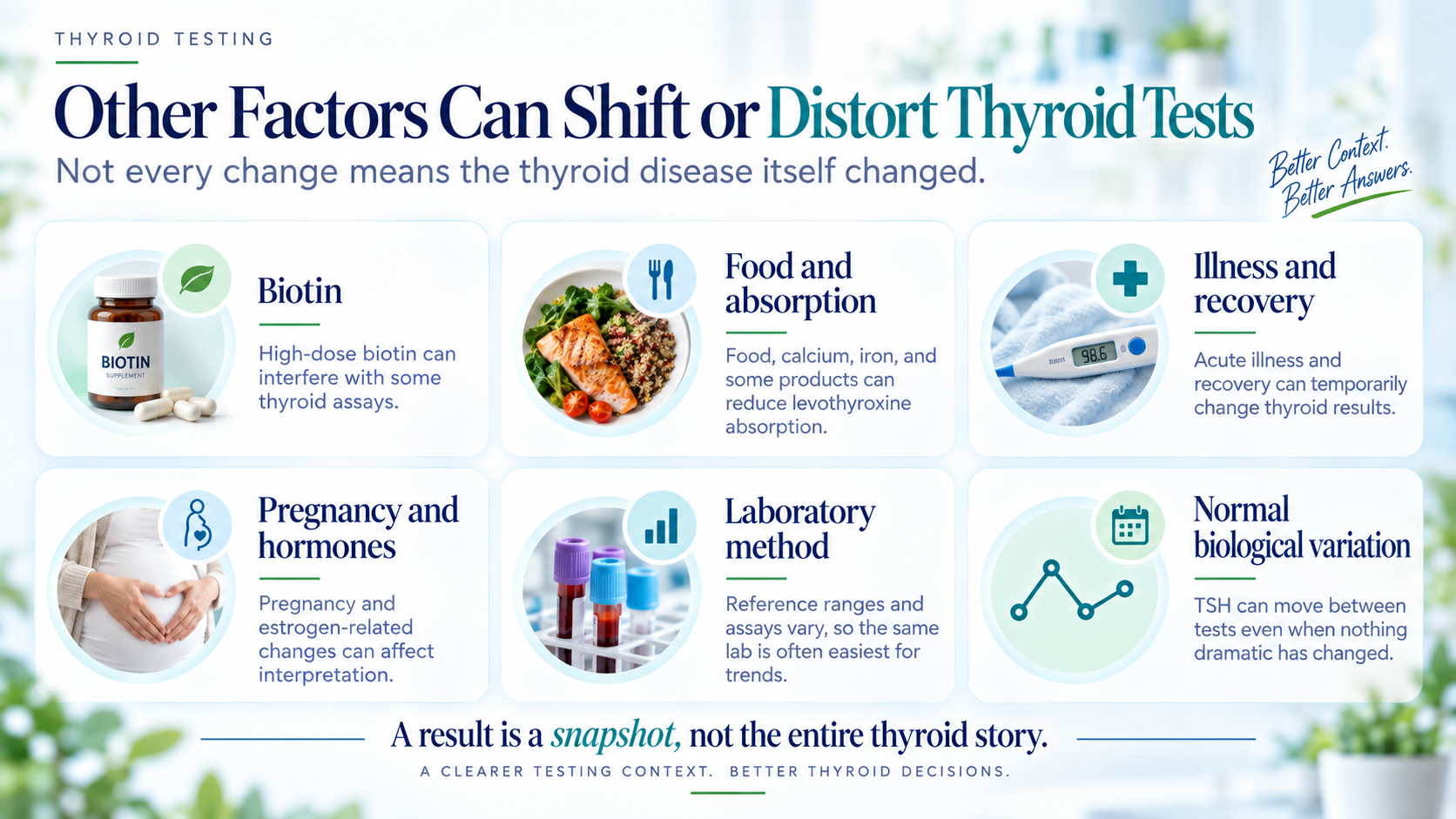
Other Factors Can Shift or Distort Thyroid Tests
Biotin
High-dose biotin can interfere with some laboratory methods and create misleading thyroid results. Tell the clinician and laboratory what you take and follow their instructions about pausing it.
Food and absorption
Food, calcium, iron, certain antacids, bile-acid binders, and other products can reduce levothyroxine absorption when taken too close together.
Illness and recovery
Acute illness and the recovery period can temporarily change thyroid tests. A result may need to be repeated after the clinical situation stabilizes.
Pregnancy and hormones
Pregnancy changes thyroid physiology and treatment targets. Estrogen and binding-protein changes can also affect total hormone measurements.
Laboratory method
Reference ranges and assays vary. Trends are easiest to interpret when the same laboratory and method are used when practical.
Normal biological variation
TSH can move between tests even when nothing dramatic has changed. One number is a snapshot, not the entire thyroid story.
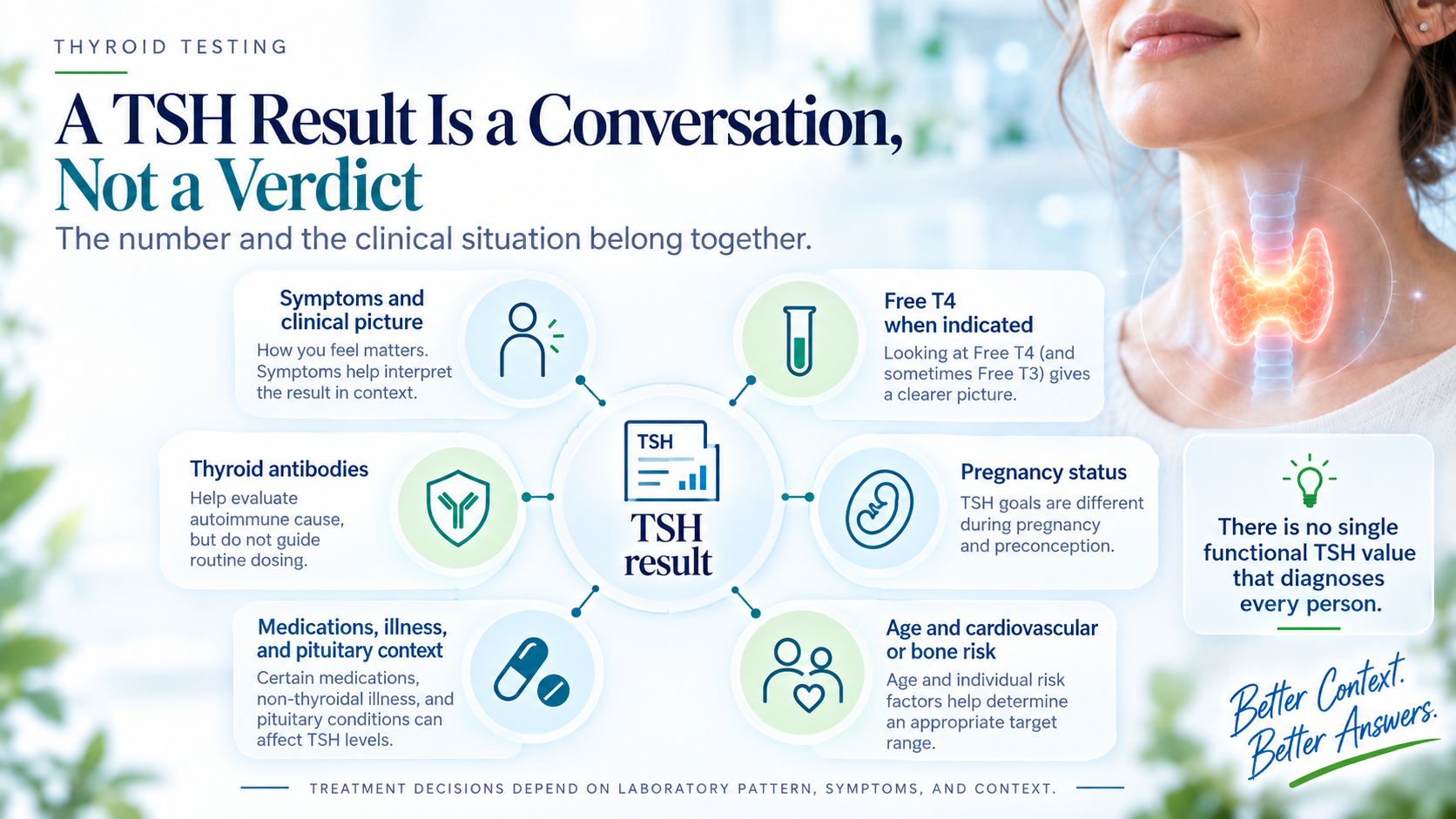
A TSH Result Is a Conversation, Not a Verdict
TSH is usually the best first screening test for primary thyroid dysfunction, but it should be interpreted with the clinical context and, when indicated, free T4. Pregnancy, pituitary disease, severe illness, and certain medications can change the usual interpretation.
There is no single “functional” TSH value that diagnoses every person. Reference intervals are laboratory and population based. Treatment decisions also depend on symptoms, free T4, age, pregnancy status, cardiovascular and bone risk, cause of thyroid disease, and whether the person is already taking medication.
Thyroid antibodies help investigate autoimmune cause. They are not a substitute for measuring thyroid function, and repeated antibody testing usually does not guide routine hormone dosing.
Do not adjust medication from one result alone. Too much thyroid hormone can increase the risk of palpitations, atrial fibrillation, anxiety, sleep disruption, and bone loss. Too little can leave hypothyroidism undertreated.
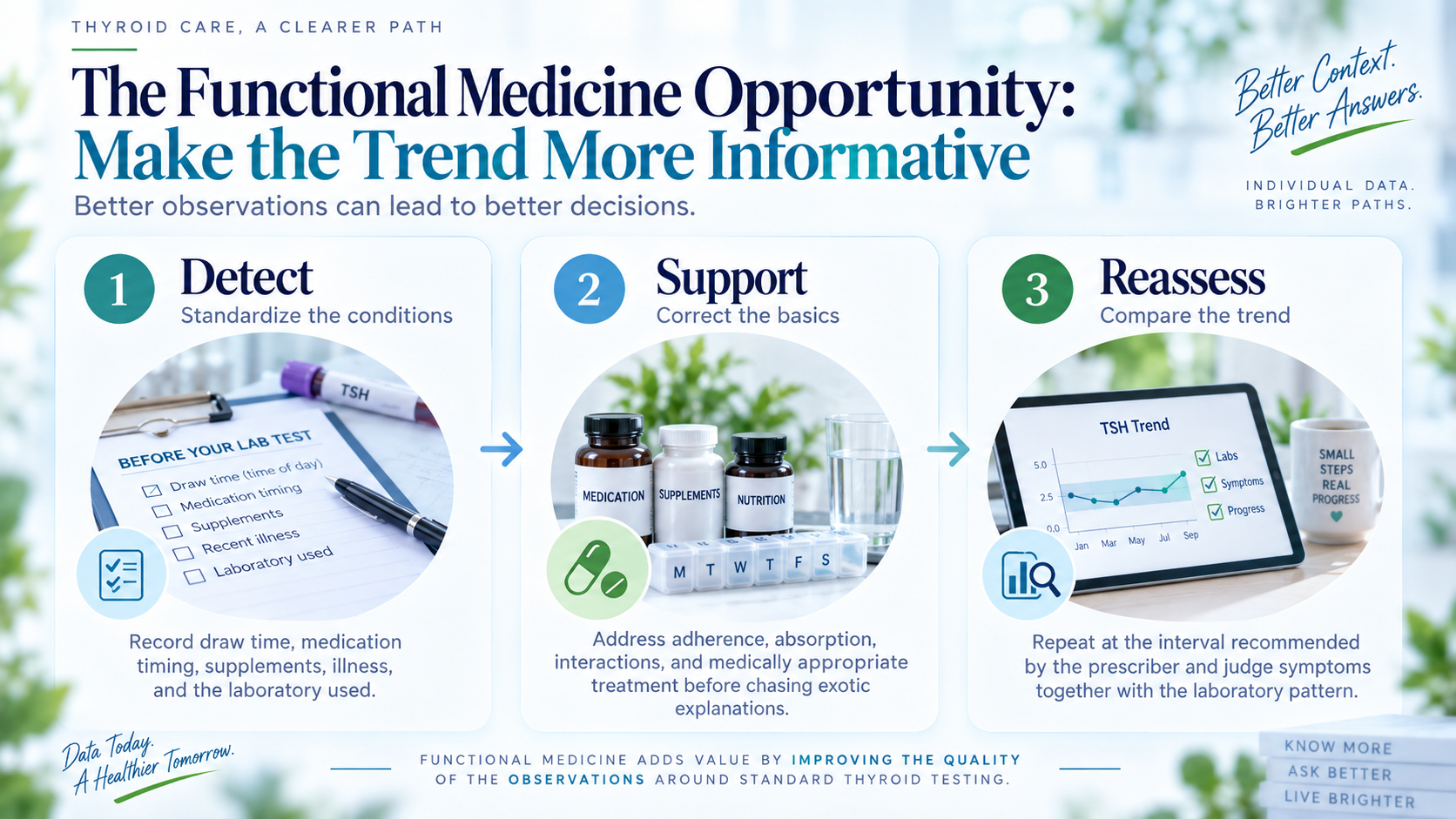
The Functional Medicine Opportunity: Make the Trend More Informative
Conventional thyroid testing gives us an essential foundation. A functional medicine approach can add value by improving the quality of the observations around that testing. We can compare like with like, review medication delivery, map symptoms against sleep and meals, and ask whether another condition could explain what thyroid numbers do not.
Standardize the conditions
Record draw time, medication timing, supplements, illness, and the laboratory used.
Correct the basics
Address adherence, absorption, interactions, and medically appropriate treatment before chasing exotic explanations.
Compare the trend
Repeat at the interval recommended by the prescriber and judge symptoms with the laboratory pattern.
A Better Thyroid Blood-Draw Checklist
- Confirm which thyroid tests were ordered and why.
- Ask whether to take thyroid medication before or after the draw.
- Schedule follow-up tests at a similar time of day when practical.
- Tell the clinician and laboratory about biotin and all supplements.
- Document recent illness, pregnancy, formulation changes, and missed doses.
- Review results with the prescribing clinician before changing treatment.
If a result and your clinical picture do not agree, the next step may be repeat testing under standardized conditions, a free T4 measurement, or evaluation for another explanation. The answer is not automatically a larger panel.
Want Your Thyroid Results Put Into Context?
If your results seem to change without explanation, or your symptoms and laboratory pattern do not line up, I can help you organize the testing conditions, medication-delivery questions, and wider physiological context. My telemedicine work complements the decisions made with your prescribing clinician.
Frequently Asked Questions
What time of day is TSH usually highest?
TSH commonly rises overnight and is often higher in the late night or early morning, then lower in the afternoon or early evening. Individual patterns vary.
Should thyroid blood tests always be done in the morning?
Not always, but consistent timing is helpful when comparing borderline results or following treatment. Follow the ordering clinician’s instructions.
Should I take thyroid medication before a blood test?
Ask the ordering clinician. T3-containing medication can change post-dose levels more noticeably. The chosen method should be documented and kept consistent.
Does fasting affect TSH?
Food and time of day may both influence results, and food can affect levothyroxine absorption. Follow the laboratory and clinician’s preparation instructions.
Can biotin affect thyroid test results?
Yes. Biotin can interfere with some immunoassays and create misleading results. Tell the clinician and laboratory what dose you take and follow their instructions.
Can illness temporarily change thyroid results?
Yes. Acute illness and recovery can alter thyroid hormone patterns. A clinician may repeat testing after the illness stabilizes.
Can one TSH test diagnose hypothyroidism?
A clearly abnormal result may be highly informative, but borderline findings are often confirmed and interpreted with free T4, symptoms, medications, pregnancy status, and clinical context.
Should TPO antibodies determine my thyroid medication dose?
No. Thyroid hormone dosing is generally guided by thyroid function, clinical context, and response, not by trying to force antibody levels down.
Sources and Further Reading
- NIDDK: Thyroid Tests. Core testing and interpretation.
- American Thyroid Association: Thyroid Function Tests. TSH, T4, T3, and antibody context.
- Mahadevan et al. Does Time of Sampling or Food Intake Alter Thyroid Function Test? Circadian and food-related variation.
- American Thyroid Association: Biotin Interference With Thyroid Tests.