
How Lifestyle Can Influence Psoriasis
Lifestyle changes are not about blame or perfection. They are a practical way to reduce known aggravators, support immune and metabolic health, and learn which patterns matter for you.
Start with what you can repeat. Choose one or two changes that fit your current health, energy, schedule, and resources. A simple plan that you can follow will teach you more than an overwhelming plan that quickly falls apart.
Focus on changes you can feel or measure: itch, sleep, pain, daily function, flare frequency, blood pressure, glucose, cholesterol, mood, quality of life, and your ability to follow the plan. Do not judge success by a perfect diet or step count.
Track Patterns Without Becoming Consumed by Them
A short daily record can include skin severity, itch, sleep, stress, infection symptoms, medicines, supplements, alcohol, tobacco, unusual foods, skin injury, weather, and menstrual or hormonal context. Review two to four weeks at a time.
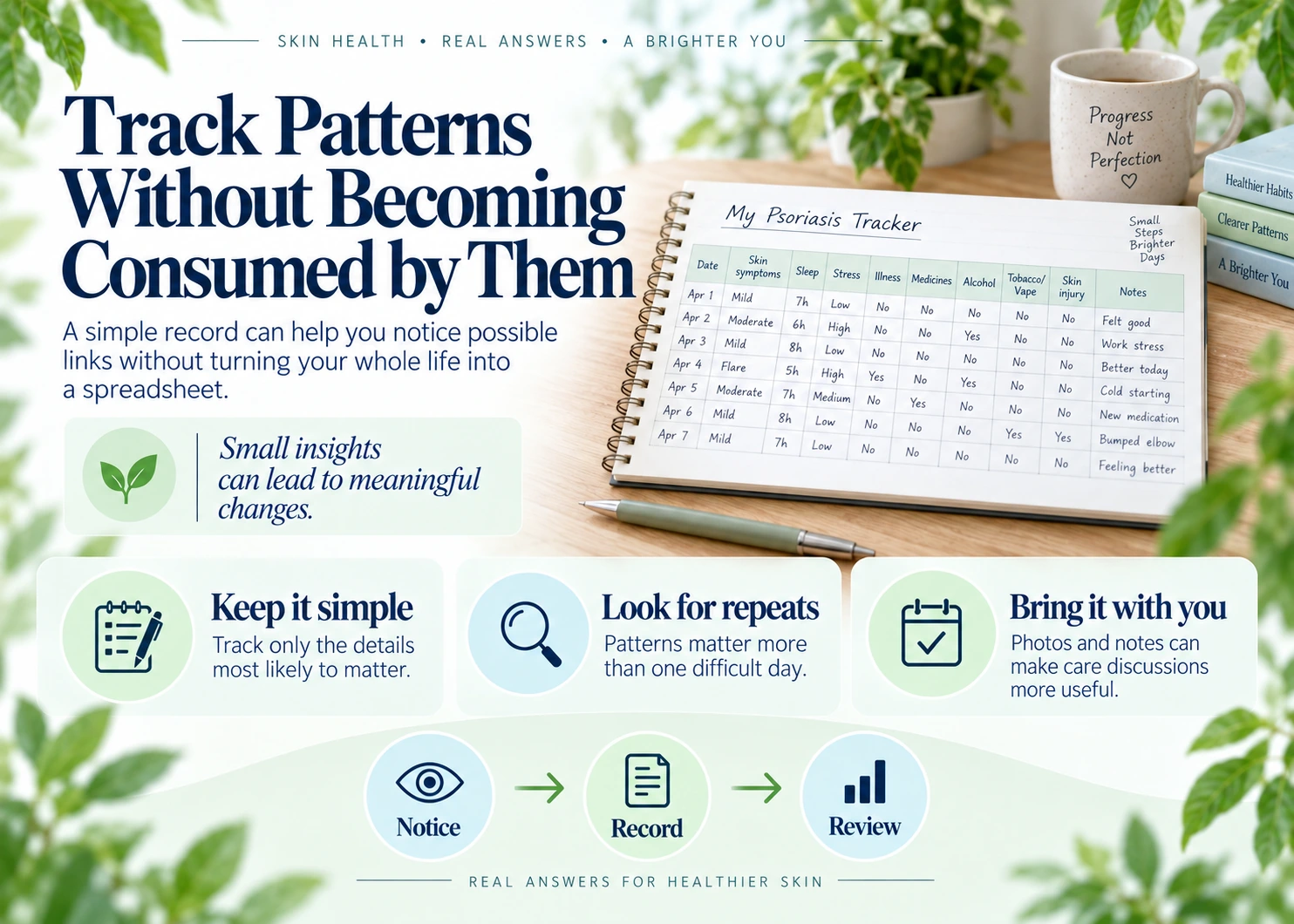
Change only one or two things at a time and decide what improvement you hope to see, such as less itching or better sleep. Choose a date to review how you are doing. The causes and triggers guide explains common triggers in more depth.
Stress and Sleep Form a Two-Way Cycle
Stress can precede flares in some people. Psoriasis can also create stress through itch, pain, visibility, treatment burden, and uncertainty. Poor sleep can make it harder to cope with symptoms, regulate appetite, manage pain, and follow through with healthy changes.
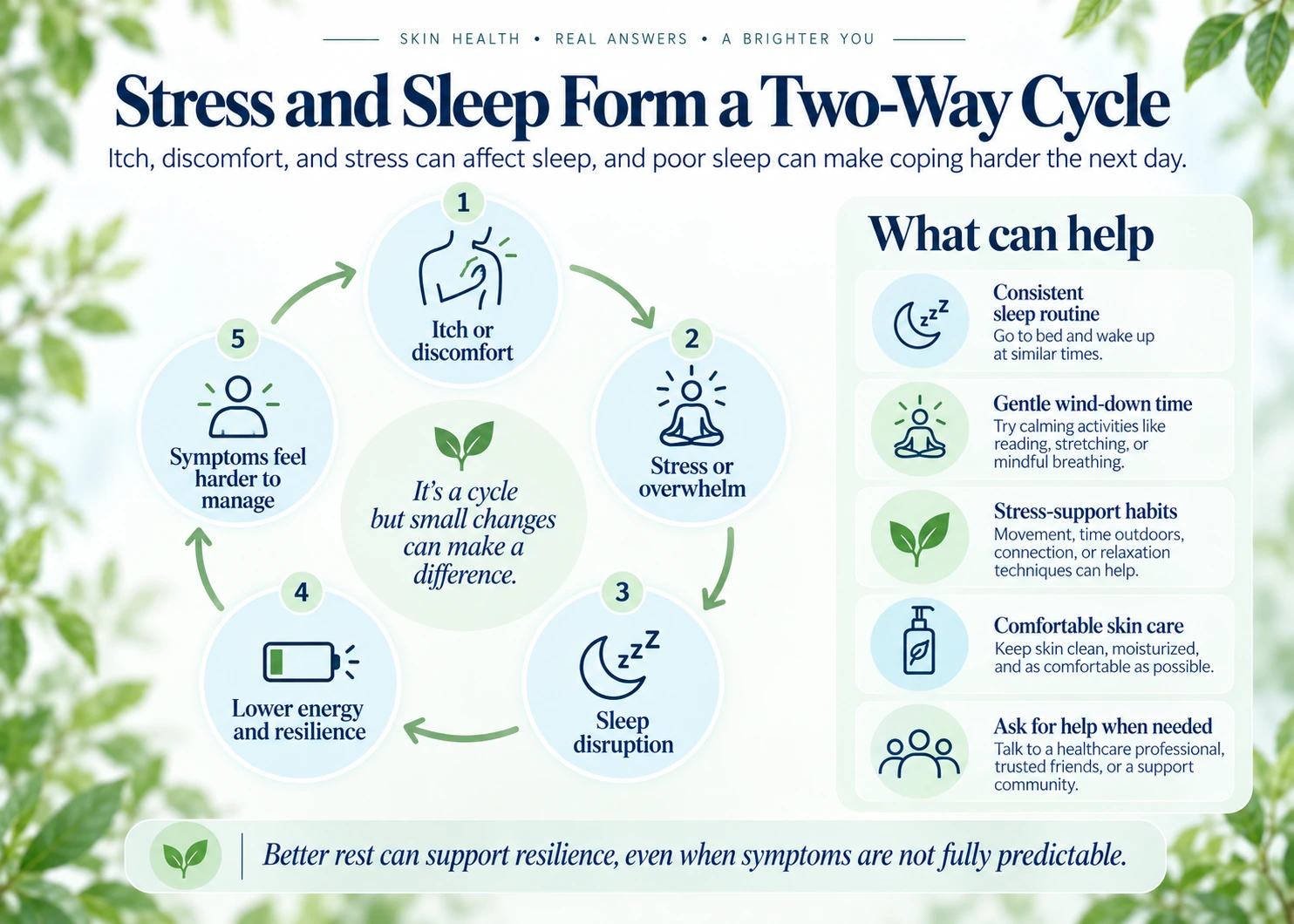
- Keep a consistent wake time and protect a realistic sleep window.
- Treat nighttime itch rather than relying only on willpower.
- Use brief breathing, mindfulness, progressive relaxation, counseling, or another practice you can repeat.
- Screen for sleep apnea when snoring, witnessed pauses, or daytime sleepiness are present.
- Address depression, anxiety, and stigma as health issues, not personal weakness.
Movement, Weight, and Metabolic Health
Regular movement supports cardiovascular, metabolic, musculoskeletal, sleep, and mental health. Choose walking, cycling, resistance training, water exercise, mobility work, or another format that fits joints, feet, skin sensitivity, and current fitness.

Weight is not a character judgment and is not the sole cause of psoriasis. For people with overweight or obesity, sustainable weight reduction may improve overall health and sometimes psoriasis severity or treatment response. The plan should prioritize adequate nutrition, strength, sleep, and changes you can maintain.
Smoking, Vaping, and Alcohol
Tobacco exposure is associated with psoriasis risk and severity. Support for quitting can include counseling, medications, quit lines, and repeated attempts. Vaping is not a proven psoriasis solution and still exposes the lungs and body to substances that can affect health.
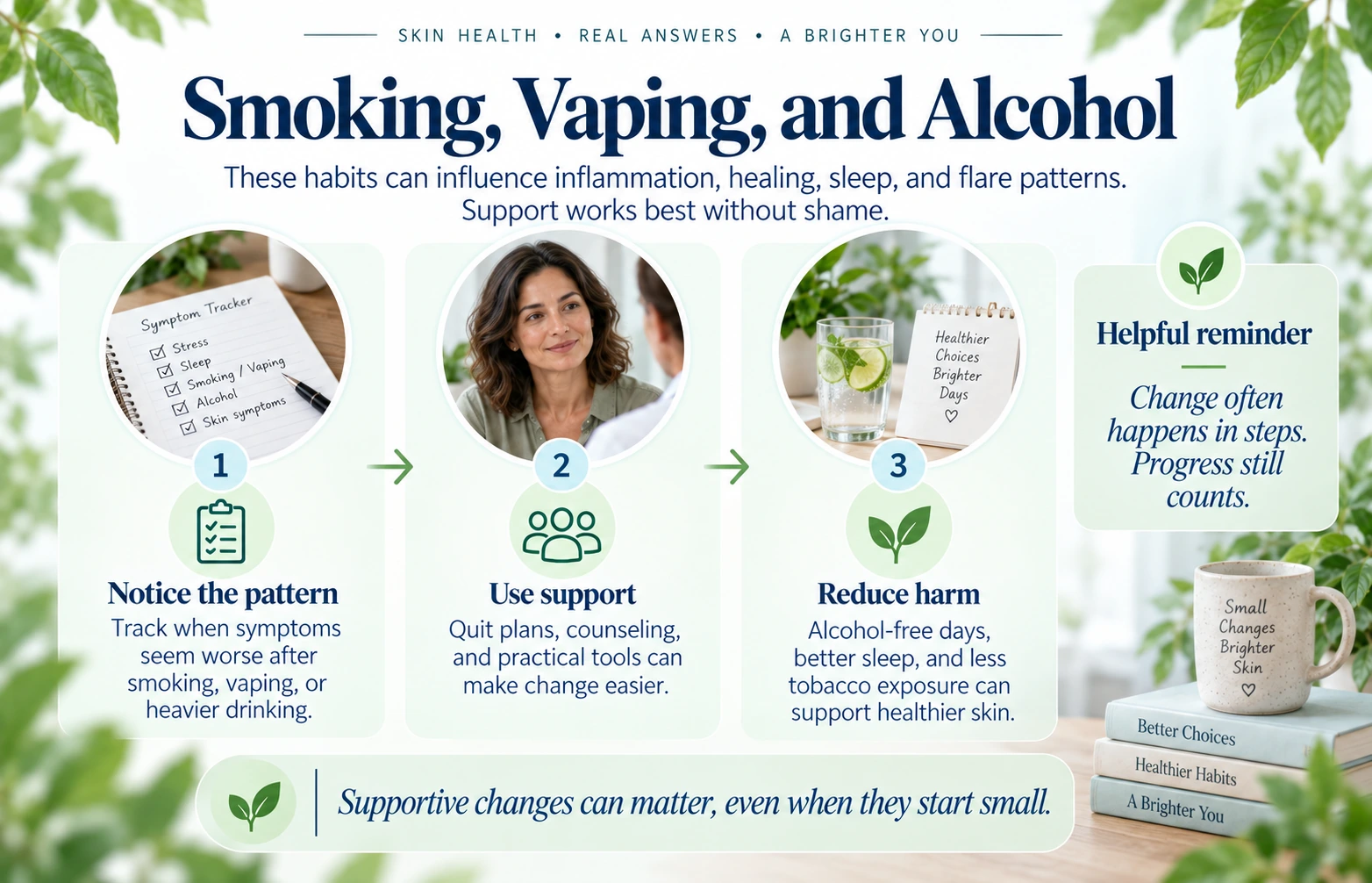
Alcohol may worsen symptoms or make it harder to follow a care plan for some people. It can also interact with medicines or add to liver risk. Ask what amount is appropriate for your health history and current treatment. If stopping suddenly could cause withdrawal, seek medical guidance.
Skin Injury, Work, Weather, and Daily Exposures
Use fragrance-free moisturizer, lukewarm water, gentle cleansing, and sun protection. Reduce friction, scratching, harsh solvents, and repeated skin trauma. At work, consider gloves, breathable clothing, barrier protection, and product substitutions when safe and practical.
Cold dry weather can worsen symptoms. Sunburn can also trigger psoriasis. Do not use sunlight or tanning beds as unsupervised phototherapy. For practical care, see the psoriasis skin-care guide.
A 90-Day Lifestyle Plan
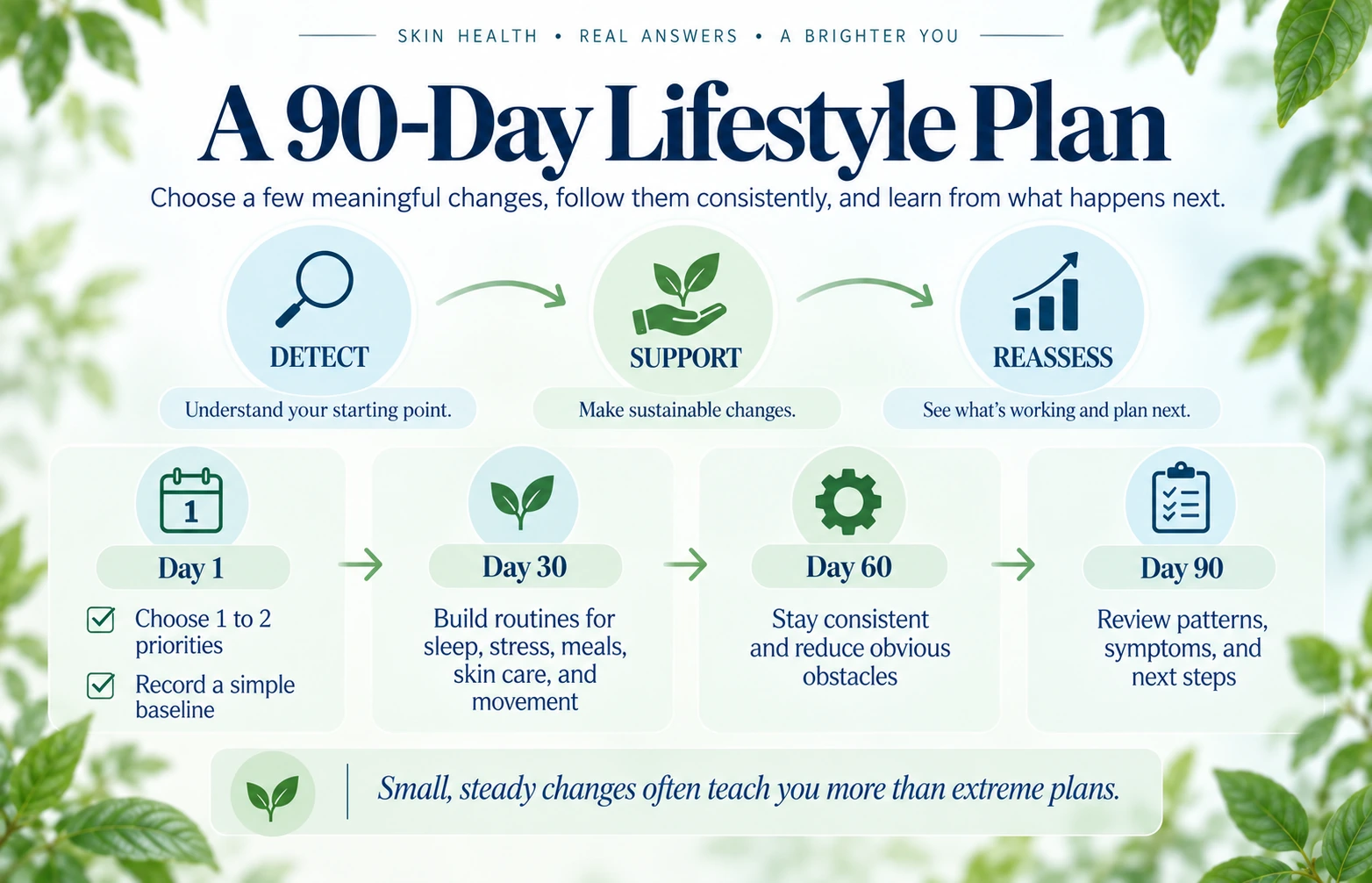
Choose two priorities
Examples include sleep consistency plus smoking cessation, or skin-barrier care plus regular walking.
Define the minimum action
Make the action specific enough to repeat on difficult days.
Measure response
Track itch, sleep, daily function, flare days, mood, your ability to follow the plan, and any relevant lab results.
Adjust without blame
Keep what helps, simplify what fails, and investigate barriers before adding more tasks.
Lifestyle in the Environmentally Induced Autoimmunity Model
Dr. Shook uses the Environmentally Induced Autoimmunity model to understand how environment, diet, gut health, metabolism, nutrient status, stress, sleep, infections, exposures, medications, and individual response may influence the immune process. Lifestyle becomes a practical way to investigate patterns and support the person, not just the visible skin symptoms.
DETECT
Establish a baseline and identify possible triggers using your history, timeline, symptoms, health records, and lab tests.
SUPPORT
Optimize diet, lifestyle, and supplementation based on your triggers and individual needs.
REASSESS
Track your symptoms, how your skin is changing, any side effects, and your ability to follow through with the recommended changes. Then continue, adjust, or stop parts of the plan based on how you are doing.
Frequently Asked Questions
Can lifestyle changes cure psoriasis?
No lifestyle change is proven to cure psoriasis. Lifestyle can support health, reduce avoidable irritation, and sometimes improve severity or treatment response.
Does stress cause psoriasis?
Stress can trigger or worsen psoriasis in some people, but psoriasis has many possible influences and is not simply caused by stress.
How much exercise is safe with psoriasis?
The right amount depends on your fitness, joints, skin pain, feet, heart health, and current care plan. Start at a tolerable level and progress gradually.
Should I lose weight for psoriasis?
If overweight or obesity is present, sustainable weight reduction may improve overall health and sometimes psoriasis outcomes. The discussion should be individualized and free of blame.
Does alcohol make psoriasis worse?
It can for some people and may interact with medicines or liver risk. Track your pattern and discuss safe intake with a clinician.
Will quitting smoking help psoriasis?
Quitting improves major health risks and may support psoriasis management, though skin response varies. Use evidence-based cessation support.
Should I avoid sunlight?
Avoid sunburn and tanning beds. Some supervised ultraviolet treatment helps psoriasis, but casual sun exposure is difficult to dose safely.
How does DETECT → SUPPORT → REASSESS apply to lifestyle?
DETECT repeated patterns and possible triggers, SUPPORT a small number of changes that fit your needs, and REASSESS your skin, symptoms, sleep, energy, and ability to follow the plan before adding more.
Ready for a Lifestyle Plan Built Around Your Patterns?
Dr. Shook's process looks at how your environment, diet, gut health, metabolism, nutrient status, stress, sleep, infections, exposures, medications, and daily routines may be affecting you. We DETECT possible triggers and patterns, SUPPORT your individual needs, and REASSESS the plan based on how you are doing.
References and Clinical Resources
- American Academy of Dermatology. Healthy diet and other lifestyle changes that can improve psoriasis.
- American Academy of Dermatology. Psoriasis resource center.
- NIAMS. Psoriasis symptoms, causes, and risk factors.