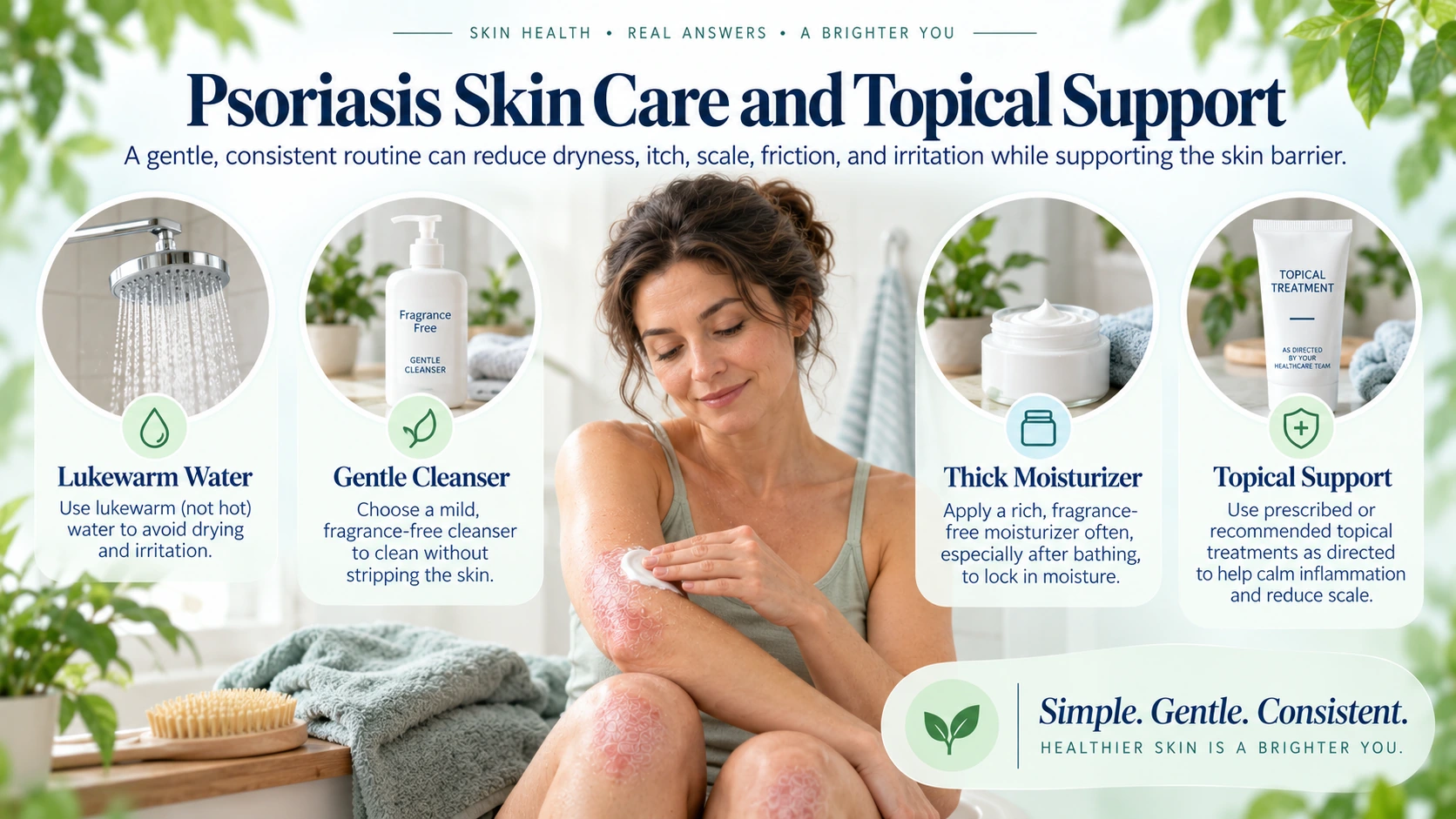
A Simple Daily Psoriasis Skin-Care Routine
Keep water lukewarm
Use a brief bath or shower. Hot water and long soaking can increase dryness and itch.
Clean gently
Use a mild fragrance-free cleanser where needed. Avoid deodorant soaps, abrasive tools, and vigorous rubbing.
Pat dry
Leave a little moisture on the skin instead of rubbing with a towel.
Moisturize promptly
Apply a thick fragrance-free cream or ointment while skin is still slightly damp.
Use prescribed topicals correctly
Follow the order, amount, body-site limits, duration, and follow-up instructions from the prescriber.
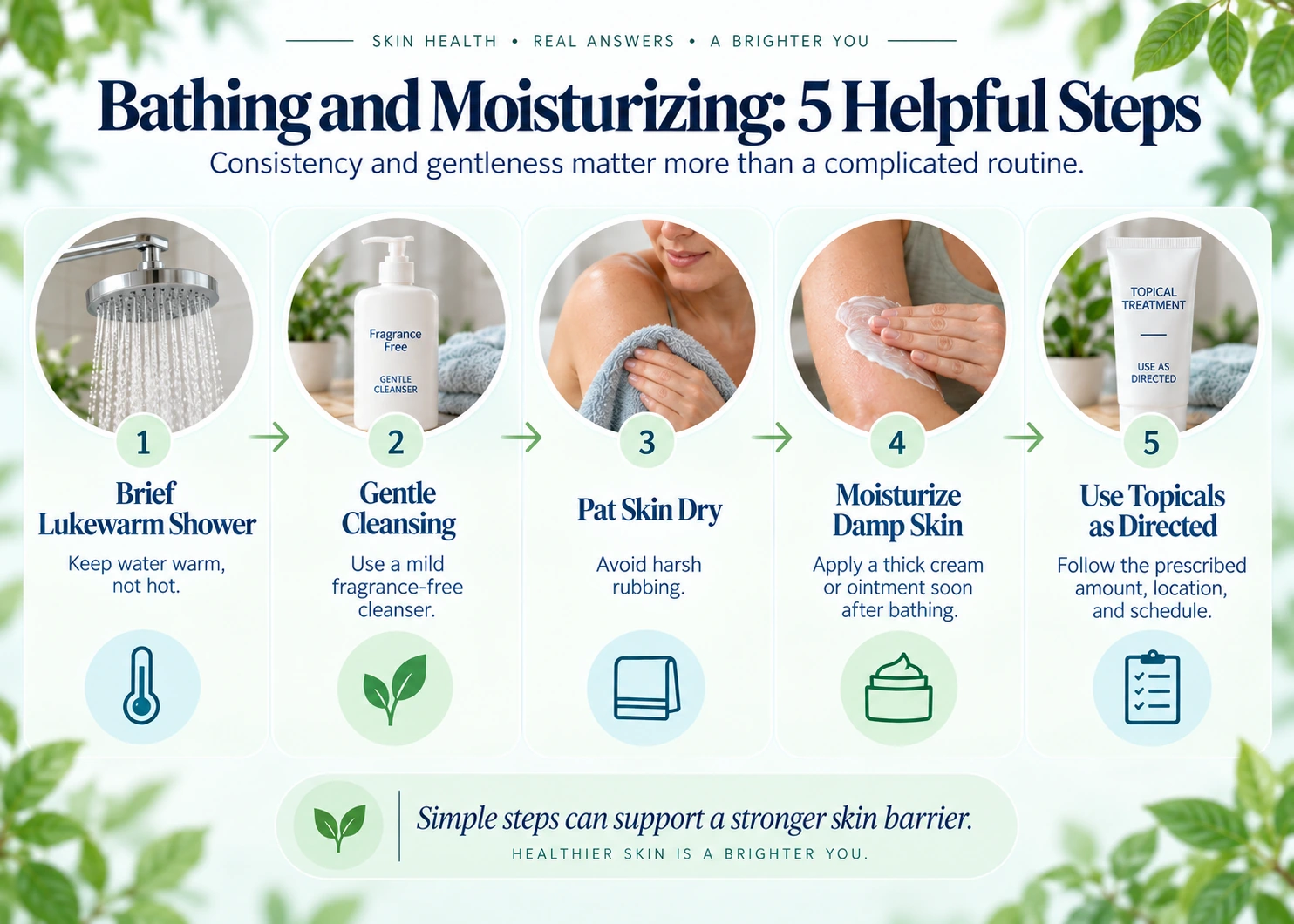
Relieving Itch and Softening Scale
A cool damp cloth, thick moisturizer, humidifier in dry weather, and treatment of active inflammation can help. Refrigerating a fragrance-free moisturizer may feel soothing. Keep nails short and use soft clothing or a sleep barrier when unconscious scratching is a problem.
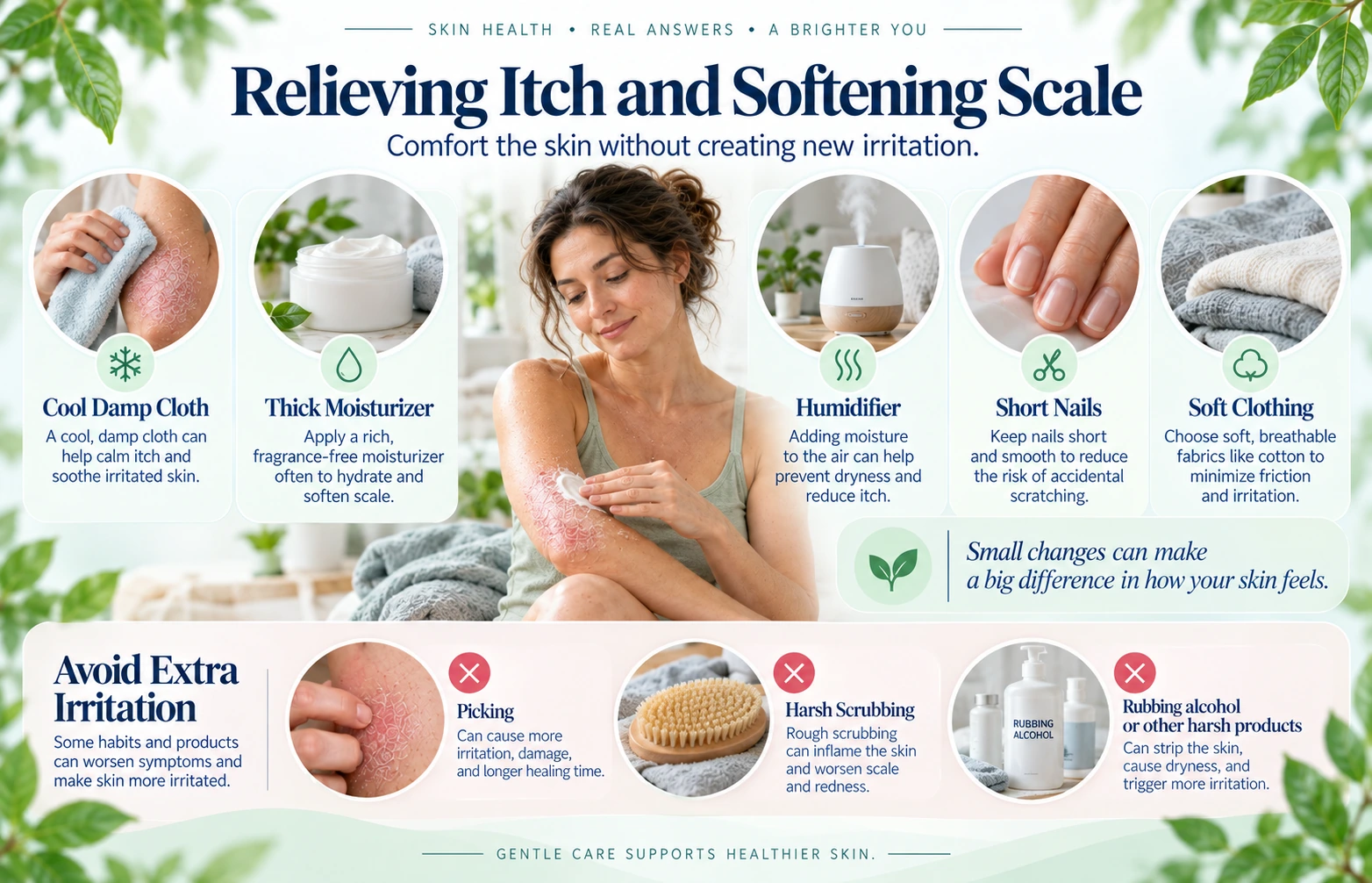
Do not pick, scrape, or aggressively scrub scale. For thick scale, ask about a keratolytic such as salicylic acid or urea and how to combine it safely with prescription treatment. Large-area use and use in children require extra caution.
Face, Folds, Genitals, Palms, and Soles
Thin or occluded skin absorbs medicines differently. Products suitable for elbows may be too irritating or potent for the face, groin, or folds. Friction, moisture, yeast, fungal infection, and contact dermatitis can complicate the picture.
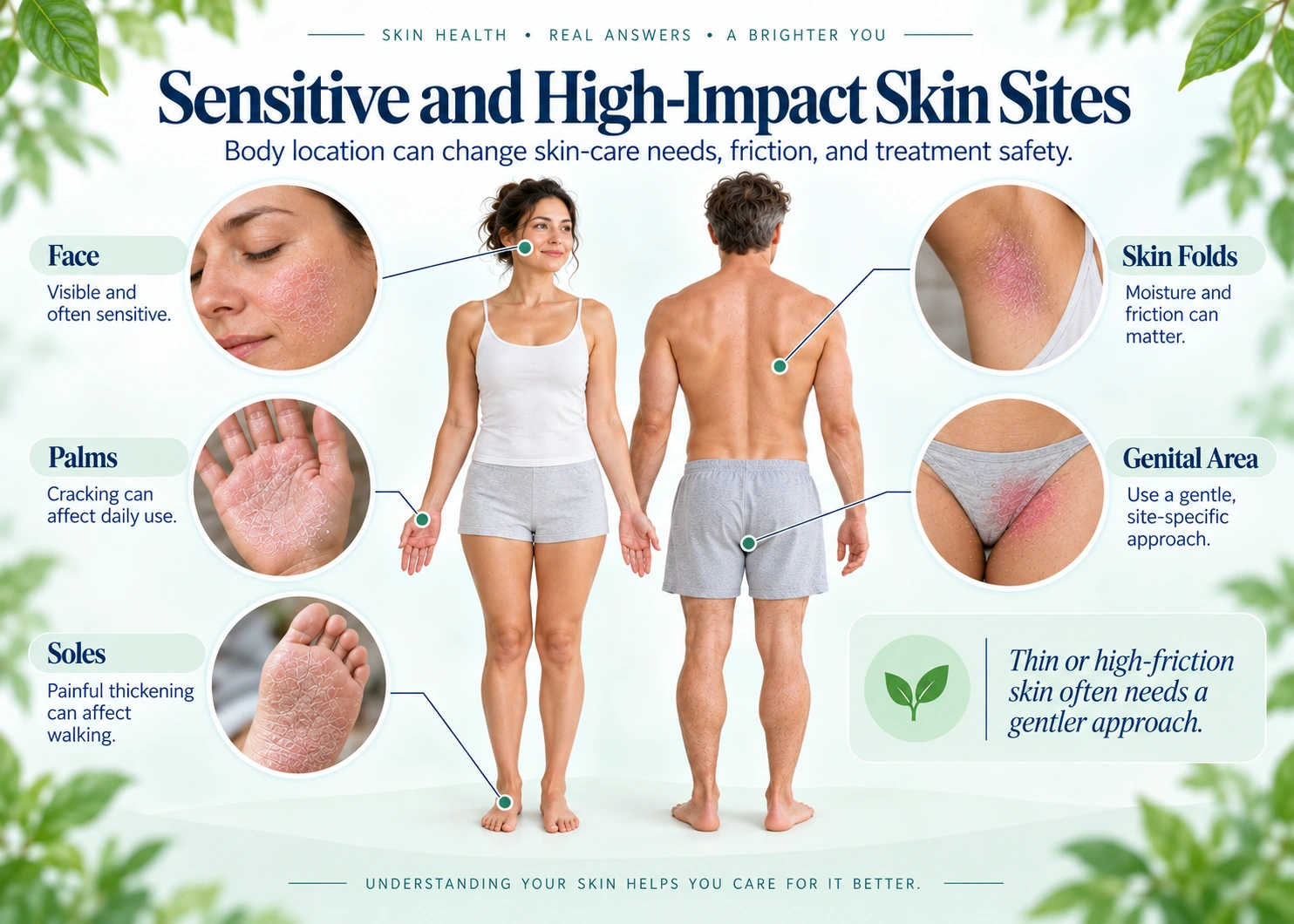
For genital or fold symptoms, choose a fragrance-free cleanser, moisturize gently, reduce chafing, and obtain a diagnosis before using strong steroids, acids, antifungals, or essential oils.
Scalp and Nail Care
Loosen scalp scale gently and avoid picking. Apply scalp treatments to the skin rather than only the hair. Solutions, foams, oils, shampoos, and other vehicles each have different instructions. See the scalp psoriasis guide.
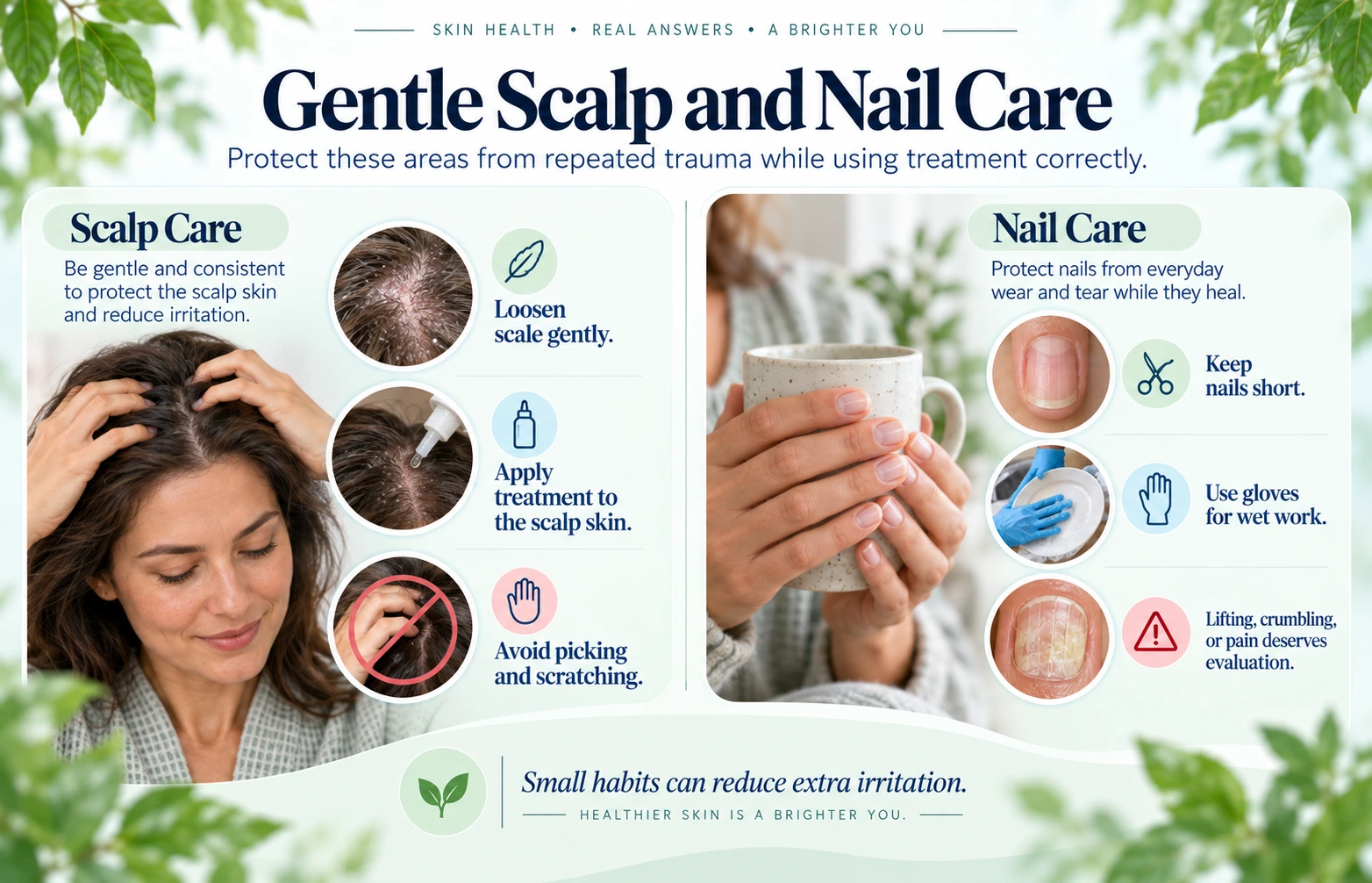
Keep nails short, avoid digging under them, and protect hands during wet work. Nail psoriasis can resemble fungus and can be associated with psoriatic arthritis, so persistent pitting, lifting, crumbling, or pain deserves evaluation.
Choosing Moisturizers, Cleansers, and Topicals
Look for fragrance-free rather than merely unscented products. Ointments are most occlusive, creams are often practical, and lotions are lighter but may not be enough for very dry plaques. Patch test new cosmetic products on a small unaffected area when appropriate.
Coal tar and salicylic acid are found in some nonprescription psoriasis products, but concentration, body location, pregnancy, age, sun exposure, and other treatment matter. Prescription options are reviewed in the treatment options guide.
Sun, Phototherapy, and Skin Injury
Some controlled ultraviolet therapy helps psoriasis, but natural sunlight is difficult to dose and sunburn can trigger a flare. Tanning beds are not a substitute for medical phototherapy. Use sun protection on unaffected and vulnerable skin and follow the treatment team's guidance for exposed plaques.
Tattoos, piercings, shaving, cuts, burns, friction, and scratching can provoke lesions in some people. Plan skin procedures when disease is stable and discuss infection and medication considerations.
When Skin Care Is Not Enough
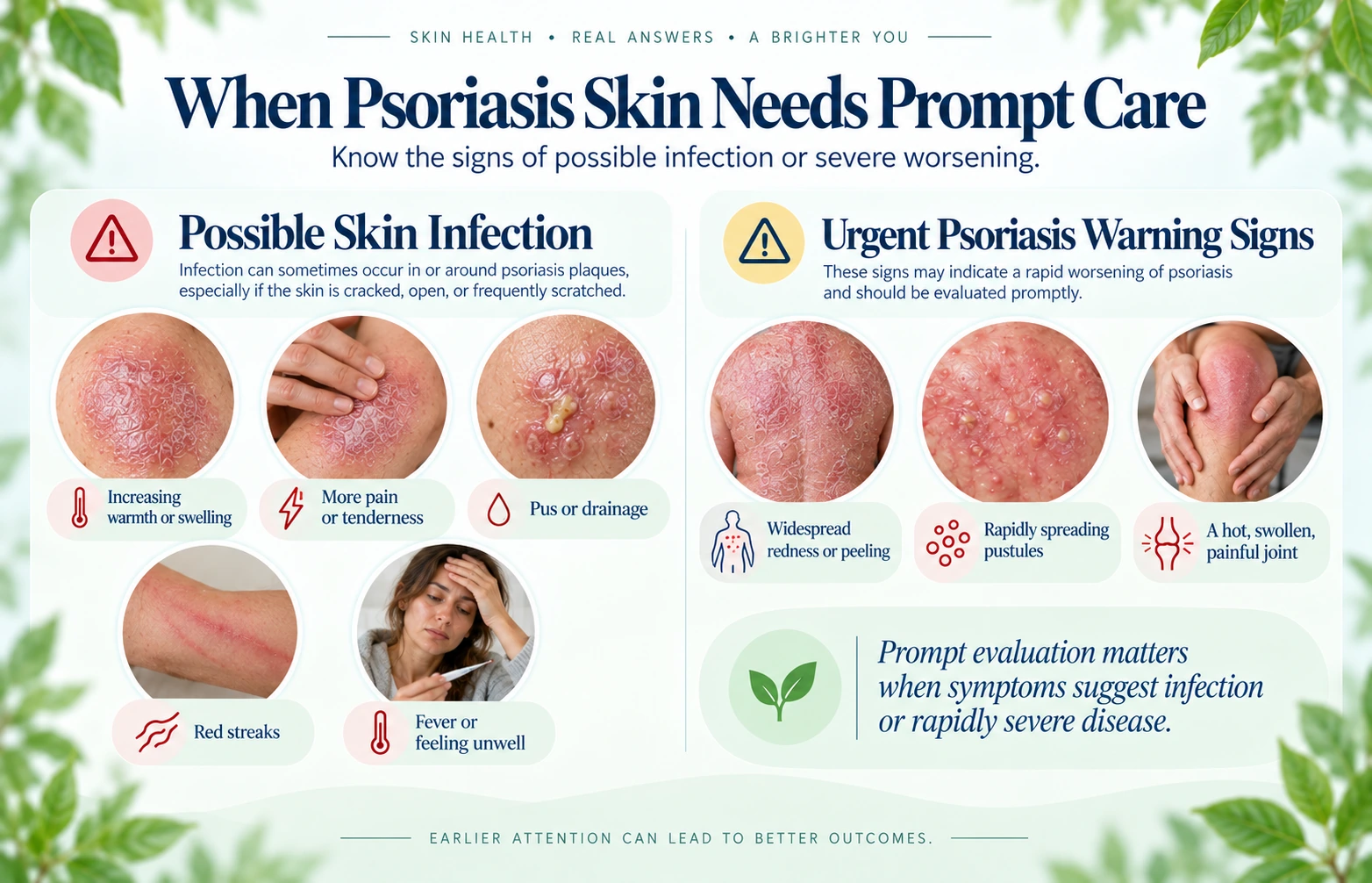
Seek prompt care for pus with increasing pain, warmth, swelling, drainage, red streaks, fever, or rapidly worsening skin. Seek urgent or emergency care for widespread redness or peeling, rapidly spreading pustules, severe illness, dehydration, eye pain, or a hot swollen joint.
Skin Care Within a Whole-Person Plan
Functional medicine looks beyond surface symptoms to understand why barrier stress, itching, flares, and treatment response differ. Dr. Shook's Environmentally Induced Autoimmunity model examines environment, diet, gut health, metabolism, nutrient status, stress, sleep, infections, exposures, medications, and individual response.
DETECT
Establish a baseline and identify possible triggers using your history, timeline, symptoms, health records, and lab tests.
SUPPORT
Optimize diet, lifestyle, and supplementation based on your triggers and individual needs.
REASSESS
Track your symptoms, how your skin is changing, any side effects, and your ability to follow through with the recommended changes. Continue, adjust, or stop parts of the plan based on how you are doing.
Frequently Asked Questions
How often should I moisturize psoriasis?
Moisturize after bathing and whenever skin feels dry. A thick fragrance-free cream or ointment usually holds moisture better than a light lotion.
Should I exfoliate psoriasis scale?
Avoid aggressive exfoliation, scraping, and picking. Ask about gentle scale-softening and keratolytic products appropriate for the body area and your treatment plan.
Is a hot bath good for psoriasis?
Hot water and long bathing can worsen dryness and itch. Brief lukewarm bathing is usually more skin friendly.
Can I use essential oils on psoriasis?
Essential oils can irritate skin or cause allergic contact dermatitis and are not proven psoriasis treatments. Do not apply them undiluted.
Is sunlight a safe psoriasis treatment?
Sunburn can worsen psoriasis and raise skin-cancer risk. Medical phototherapy is controlled and should not be replaced with tanning beds or unmeasured sun exposure.
What moisturizer ingredients should I look for?
Fragrance-free creams or ointments with simple emollient and occlusive ingredients are practical. The best choice is one you tolerate and will use consistently.
How do I know if psoriasis is infected?
Increasing warmth, swelling, pain, pus, drainage, red streaks, or fever suggests possible infection and needs medical assessment.
How does functional medicine relate to topical support?
Skin care can reduce dryness, cracking, itch, friction, and scale. Functional medicine adds a deeper investigation of the triggers and drivers that may be shaping immune activity, skin-barrier stress, and the way your psoriasis responds over time.
Ready for a More Individualized Psoriasis Evaluation?
Dr. Shook's process looks beyond visible symptoms to investigate potential triggers and drivers. DETECT establishes a baseline, SUPPORT builds an individualized plan, and REASSESS tracks how you are doing so the plan can change with you.
References and Clinical Resources
- American Academy of Dermatology. Skin, hair, and nail care for people who have psoriasis.
- American Academy of Dermatology. Seven ways to relieve itchy psoriasis.
- American Academy of Dermatology. Nonprescription psoriasis treatments.