
What Is an Autoimmune Disease, and Why Does Treatment Differ?
When you have an autoimmune disease, your immune system is reacting against parts of your own body. But Hashimoto's, rheumatoid arthritis, lupus, multiple sclerosis, celiac disease, and other autoimmune diseases do not affect the same tissues or create the same risks. Psoriasis is also a closely related, immune-driven inflammatory disease.

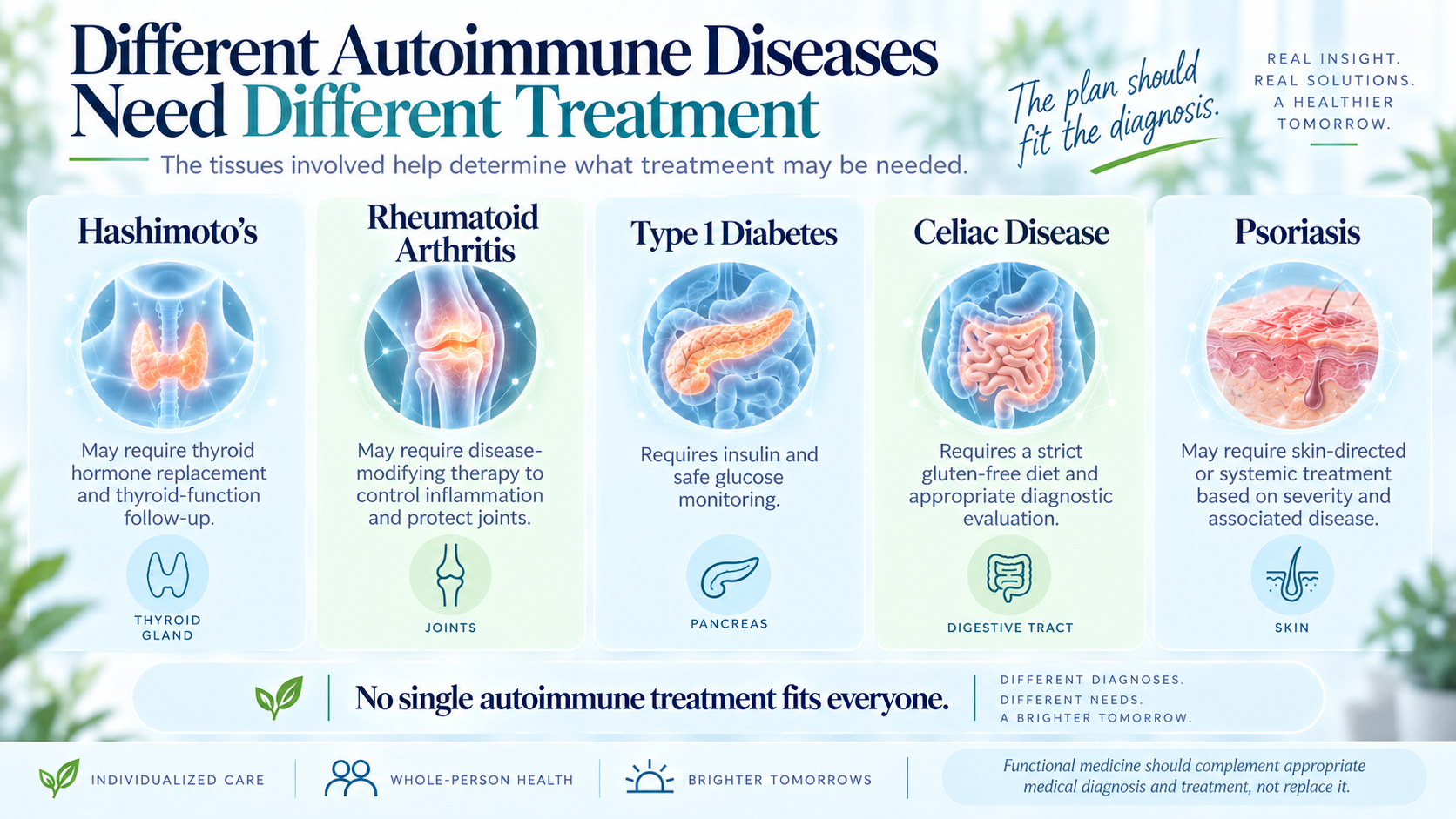
That is why there is no single autoimmune treatment. Someone with type 1 diabetes needs insulin. Someone with Hashimoto's may need thyroid hormone. Someone with rheumatoid arthritis may need a medicine that changes the course of the disease. The medical plan must fit the diagnosis and protect the organs involved.
Yet the diagnosis is only one part of your story. I also want to understand what may be influencing your immune system, how the condition affects the rest of your body, and what your history and test results tell us about where to begin.
What Could Be Driving Your Autoimmune Disease?
Here is the question I want you to consider: if we know the name of your disease, do we also know everything that is influencing it? Usually, there is more to investigate.
I use an approach I call Environmentally Induced Autoimmunity to organize the questions. In many autoimmune diseases, inherited susceptibility interacts with experiences and exposures over time. Research examines infections, smoking, certain workplace exposures, hormonal changes, and other influences on immune tolerance. Their importance varies by disease, and we may not be able to identify one original trigger in an individual person.
Genetic susceptibility is part of the picture
Family history can help us understand risk, but genes are not your entire story. An autoimmune disease can develop even when no relative has a known diagnosis. The goal is not to change your genes. It is to understand what else may be relevant to you now.

Environmental triggers and ongoing drivers are different questions
A past infection or exposure might be relevant to how a condition developed. A current sleep problem, ongoing tobacco exposure, nutrient deficiency, or difficulty absorbing a prescribed medication may be a separate issue affecting how you feel today. We need to distinguish the history of the disease from the factors we can reasonably evaluate and address now.

Immune tolerance and barrier systems deserve thoughtful attention
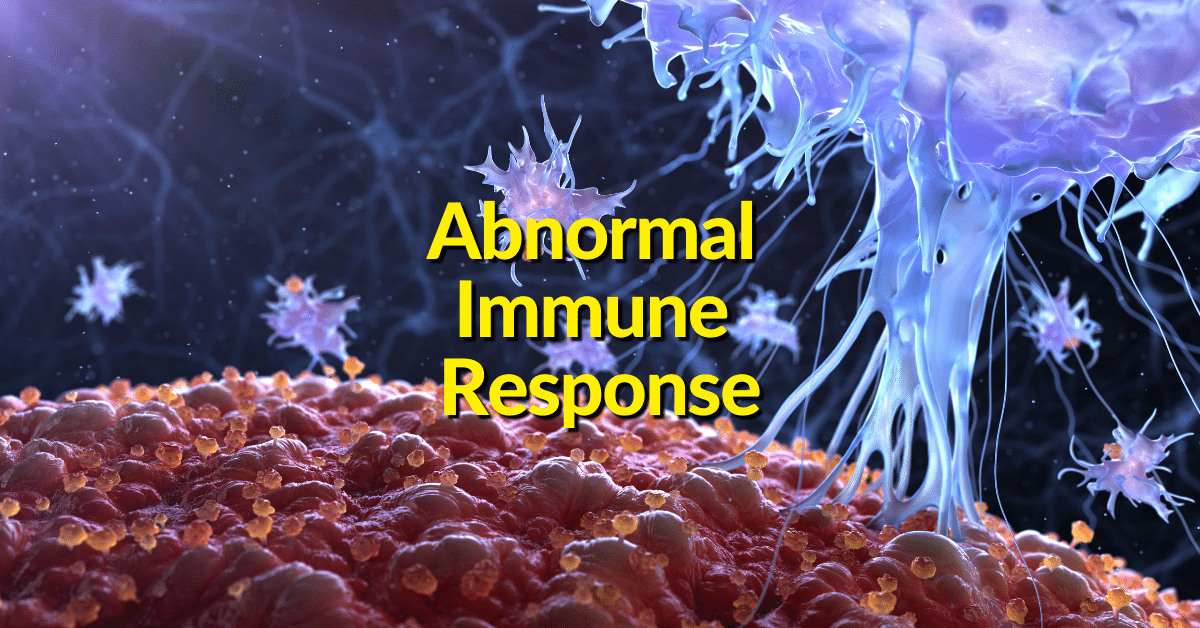
Your immune system normally learns what to respond to and what to leave alone. Scientists study how immune regulation, altered proteins, infections, and the body's gut, skin, and respiratory barriers may relate to that process. These mechanisms help us ask better questions. A proposed mechanism or positive antibody result does not, by itself, prove what caused your disease.
My starting point: I do not assume everyone has the same trigger. I look at your timeline, symptoms, history, available medical records, and relevant findings to decide which questions deserve attention first.
Why are some autoimmune diseases more common in women?
Several autoimmune diseases affect women more often than men. Researchers study sex-related genetic, hormonal, and immune differences, among other factors. The pattern is not the same for every disease, and it cannot establish an individual's cause. Your own history, including hormonal transitions when relevant, can still help us ask more useful questions. I discuss related questions in more depth in my article on how hormonal transitions may relate to autoimmunity.
For more context, explore my articles on categories of immune triggers and food-related trigger questions. Those topics are possibilities to evaluate, not a checklist of causes everyone has.
How Are Autoimmune Diseases Medically Treated?
Medical treatment is specific to the disease. Depending on your diagnosis, the plan may involve disease-modifying drugs, biologics, other targeted medicines, corticosteroids, insulin, thyroid hormone, rehabilitation, surgery, or monitoring. The purpose may be to control immune activity, replace a function the body has lost, prevent tissue damage, or preserve your ability to live well.
These treatments are not all interchangeable, and many do much more than relieve symptoms. Your prescribing clinician monitors their benefits and risks. Functional medicine should work alongside that care, not ask you to abandon medication that protects your health.
| Example | What treatment may need to do | What we can also explore |
|---|---|---|
| Hashimoto's | Check thyroid function and replace thyroid hormone when needed. | Medication timing, absorption concerns, nutrient status, digestive symptoms, and fatigue. |
| Rheumatoid arthritis | Control inflammatory disease activity and prevent joint damage. | Movement, smoking, sleep, nutrition, and cardiovascular health. |
| Type 1 diabetes | Provide insulin and monitor glucose safely. | Nutrition, activity, sleep, and practical support for daily management. |
| Psoriasis | Use skin-directed or systemic treatment according to severity and associated disease. | Personal triggers, metabolic health, lifestyle, and symptoms that warrant assessment for psoriatic arthritis. |

When symptoms need urgent medical attention
Chest pain, stroke symptoms, severe shortness of breath, sudden vision loss, rapidly worsening weakness, new confusion, severe dehydration, or a high fever while taking immune-suppressing medication need prompt medical evaluation. Do not wait for a telemedicine consultation.

For condition-specific questions, see my Hashimoto's guide and psoriasis resources.
Why Look at the Whole Body When You Have an Autoimmune Disease?
You can have a well-defined diagnosis and still struggle with fatigue, brain fog, digestive symptoms, poor sleep, or changes in your energy. Some symptoms may come from the autoimmune disease, while others may involve thyroid function, anemia, medication effects, a second condition, or another problem that deserves its own assessment.
This is where I see an important opportunity in functional medicine. Instead of assuming one symptom has one cause, I look at how different systems interact. Digestion can influence nutrition and medication absorption. Sleep and activity can affect energy and function. Thyroid function can influence metabolism and bowel habits. These relationships give us practical questions to investigate, not a promise that one intervention will fix everything.
I want you to understand which findings we have, which explanations are still possibilities, and which factors we may be able to change. We can then build a focused plan around your priorities and learn from the results.
Could Your Gut, Nutrition, or Other Body Systems Be Part of the Picture?
Gut health and intestinal barriers
The digestive tract helps absorb nutrients, interacts with a large part of the immune system, and provides a barrier between the body and material inside the intestine. Scientists are studying how gut microbes, barrier function, and immune regulation interact in autoimmune disease.

That does not mean everyone with autoimmunity has "leaky gut" or that a stool or antibody test can prove a gut problem caused their autoimmune disease. But symptoms such as persistent diarrhea, constipation, abdominal pain, or unexplained nutritional problems may give us a good reason to investigate a specific digestive question.
Food reactions, nutrient status, and individual nutrition
Nutrition affects health, but not every person needs to avoid gluten, dairy, nightshades, or other entire food groups. A gluten-free diet is required for celiac disease. Other changes should have a clear reason, a practical plan, and a way to evaluate whether they help. If celiac disease is suspected, appropriate testing should usually happen before starting a gluten-free diet.

I also look for relevant concerns such as low iron or vitamin B12, inadequate intake, digestive conditions that affect absorption, or interactions between food, supplements, and prescribed medicines. The right starting point depends on what your history and findings show.
Sleep, stress, movement, and metabolic health
Sleep, stress, exercise capacity, tobacco exposure, and blood sugar or cardiovascular risk can matter to how you feel and function. Some have disease-specific evidence, while others primarily support overall health. We prioritize the changes that make sense for your diagnosis, daily life, and medical circumstances.



If digestive symptoms or food reactions are part of your experience, you can read more about intestinal barrier questions and food sensitivity testing in Hashimoto's. Findings still need to be interpreted in light of your diagnosis and history.
What Can Functional Medicine Testing Tell Us?
Testing can help when it answers a specific question. I start by reviewing the results you already have and identifying what is still unclear. Sometimes basic blood work or a disease-specific test gives us the information we need. Other times, additional assessment may be worth discussing.

What is the disease doing?
Disease-specific examination, laboratory tests, imaging, and organ-function measures belong in the appropriate medical evaluation.
Could something else explain a symptom?
Depending on the person, questions about anemia, thyroid function, blood sugar, nutrient status, or medication effects may be relevant.
Is a digestive or exposure question worth exploring?
Your symptoms and history guide whether specific, clinically useful investigations make sense.
What would we do differently with the result?
Before ordering a test, I want to know how the result could inform a decision and how we would reassess.

Specialized antibody panels can measure responses to selected proteins or antigens, but an antibody result is not automatically a diagnosis, an active infection, a measure of chemical burden, or proof of an autoimmune trigger. We interpret each result according to what the test actually measures and the evidence supporting its use.
Read my guide to functional medicine testing for a closer look at how I think through these decisions.
Is the Autoimmune Protocol Diet Right for Everyone?
No. The Autoimmune Protocol, or AIP, is a structured elimination diet that some people choose to explore with professional guidance. Research on its benefits is still limited and varies by condition. It has not been established as a cure or a necessary diet for everyone with autoimmune disease.
If a diet change is worth trying, I want it to answer a question, support adequate nutrition, and include a thoughtful plan for reassessment or food reintroduction when appropriate. A restrictive diet that does not address your actual needs is not automatically a better plan.
How I Work With You: Detect, Support, Reassess
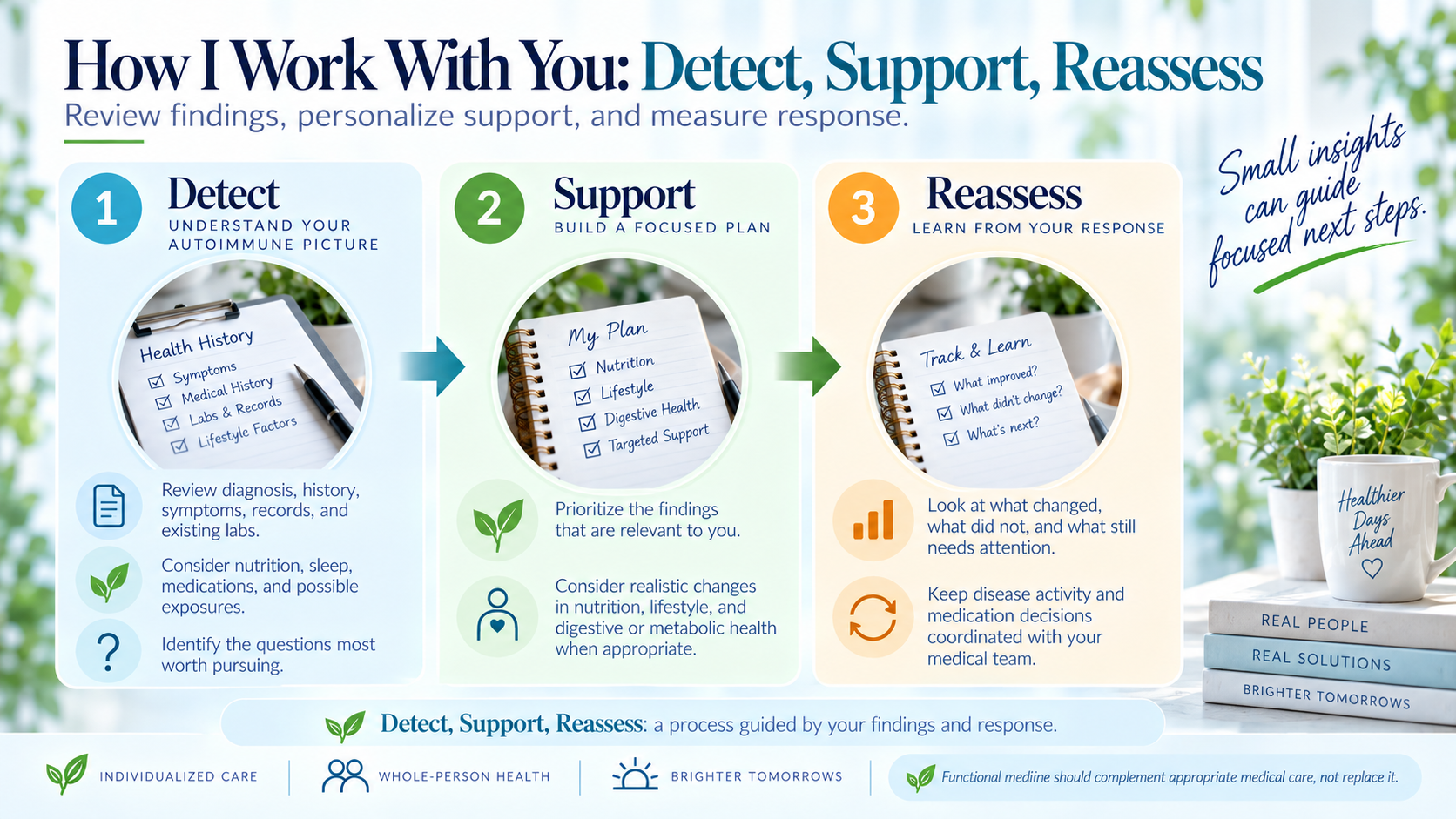
My process is built around a simple idea: learn enough about your individual physiology to make focused decisions, then use your response to decide what comes next.
Understand your autoimmune picture
We review your diagnosis, history, symptoms, medical records, existing labs, nutrition, sleep, medications, and possible exposures. We identify the questions most worth pursuing.
Build a focused plan
We prioritize the findings that are relevant to you and consider realistic changes in nutrition, lifestyle, digestive or metabolic health, and other areas when appropriate.
Learn from your response
We look at what changed, what did not, and what still needs attention. Disease activity and medication decisions remain coordinated with your medical team.
What Does a Good Autoimmune Treatment Outcome Mean?
Improvement can mean fewer flares, better day-to-day function, steadier energy, improved sleep, or more confidence in your plan. Depending on the disease, your medical team may also assess remission, low disease activity, organ function, or prevention of tissue damage.
Feeling better and controlling autoimmune activity are not always the same thing. You can feel better while a disease still needs medical monitoring. You can also have improved disease markers and still need help with fatigue, sleep, digestion, or another health issue. Both perspectives deserve attention.
Disease control
Are appropriate disease-specific markers, organ function, and clinical findings stable or improving?
Daily function
Can you do more of what matters to you, with fewer symptoms or less disruption?
Treatment fit
Are benefits, adverse effects, monitoring needs, and practical barriers being addressed with the appropriate clinician?
What we learn next
Which changes appear helpful, which did not, and what question deserves attention now?

Questions Worth Asking About Your Autoimmune Care
- What are we measuring to see whether my disease is controlled?
- Which symptoms may have another explanation worth checking?
- Are there relevant nutritional, digestive, metabolic, or medication-related issues we have not yet evaluated?
- What do we know about possible triggers for my specific disease, and what remains uncertain?
- Which changes are practical for me, and how will we tell whether they are helpful?
- When should I follow up with my prescribing clinician or specialist?
You do not have to solve every question at once. I would rather help you identify a few useful priorities than overwhelm you with a long protocol.
Let's Explore What May Be Driving Your Autoimmune Picture
If you know your diagnosis but still have unanswered questions about your symptoms, physiology, or what else you can do to support your health, I would welcome the opportunity to review your case.
I work with clients by telemedicine. Start with an Application for Care. I review applications personally, and if I believe my consulting approach may be a fit, you receive the next steps and a private scheduling link. Your existing medical treatment remains an important part of your care.
Frequently Asked Questions About Autoimmune Treatment
Can autoimmune disease be cured?
There is no scientifically established cure for most autoimmune diseases. Some conditions can reach remission or periods of low activity, and treatment can protect health and function. What is possible depends on the disease and the individual.
Can autoimmune disease go into remission?
Yes, some autoimmune diseases can enter remission, but remission means different things in different conditions. It may involve symptoms, examination findings, laboratory results, or other disease-specific measures. Remission does not necessarily mean a permanent cure.
What treatments are used for autoimmune diseases?
Treatment depends on the diagnosis and may include disease-modifying drugs, biologics, targeted medicines, corticosteroids, insulin, thyroid hormone, rehabilitation, surgery, or monitoring. Your medical team chooses and monitors treatment based on your disease and risks.
What can functional medicine do for autoimmune disease?
Functional medicine can help organize an individualized investigation of symptoms, history, nutrition, gut health, metabolic health, sleep, relevant exposures, and other physiological patterns. The goal is to identify useful opportunities for support and reassess how you respond alongside appropriate medical care.
Can functional medicine identify the root cause of my autoimmune disease?
Not always. Autoimmune diseases can involve genetic susceptibility and several environmental or biological influences. We may identify relevant, addressable factors, but no single test can prove one universal root cause in every person.
Does everyone with autoimmune disease have leaky gut?
No. Gut and intestinal-barrier biology are important research areas, but increased intestinal permeability is not established as the cause of every autoimmune disease. Digestive evaluation should be guided by specific symptoms and clinical questions.
Do I need food sensitivity testing or an elimination diet?
Not automatically. Testing and diet changes should answer a clear question and have a sensible plan for interpretation and follow-up. Celiac disease requires its own diagnostic approach, and a positive food antibody result alone does not prove that food caused your autoimmune disease.
Is the Autoimmune Protocol diet proven to treat every autoimmune disease?
No. Research on the Autoimmune Protocol diet is limited and disease-specific. It is not a universal treatment or cure, and restrictive eating can have nutritional and practical costs.
Should I stop autoimmune medication if I start feeling better?
No. Do not stop or adjust prescribed treatment on your own. Work with the prescribing clinician, who can assess disease activity, organ protection, and medication safety.
Can I work with Dr. Shook through telemedicine?
Yes. I work with consulting clients by telemedicine. Submit an Application for Care first. I review your application, and if your case appears appropriate for my approach, you receive the next steps and a private scheduling link.
Research and Further Reading
The references below provide background on autoimmune disease, environmental research, and disease-specific treatment. The value of an intervention depends on the condition and the quality of evidence for that use.
- National Institute of Environmental Health Sciences: Autoimmune Diseases. Genetic and environmental contributors to autoimmune disease.
- National Institute of Allergy and Infectious Diseases: Autoimmune Diseases Research. Autoimmune mechanisms and research.
- National Institute of Arthritis and Musculoskeletal and Skin Diseases: Health Topics. Condition-specific information.
- American College of Rheumatology guideline for exercise, rehabilitation, diet, and additional integrative interventions in rheumatoid arthritis (2023). Evidence and disease-specific recommendations.
- Environmental exposures in autoimmune inflammatory rheumatic diseases: evidence map (2026). Reviews exposure associations and limitations in human immune-mechanism evidence.