
What Is Psoriasis?
Psoriasis is a chronic immune-mediated condition that speeds the growth and turnover of skin cells. It can cause raised or finely scaly areas that itch, burn, crack, or bleed. Common locations include the scalp, elbows, knees, lower back, palms, soles, nails, skin folds, and genital skin. Psoriasis is not contagious.
The condition can also be associated with psoriatic arthritis. Joint swelling, persistent morning stiffness, heel pain, back stiffness, or an entire swollen finger or toe should not be assumed to be part of a skin flare. Those symptoms deserve a separate evaluation.
What Research Can and Cannot Tell Us
Apple cider vinegar contains acetic acid, and researchers have explored vinegar in relation to microbes, glucose response, appetite, and other metabolic questions. Those areas of study do not establish apple cider vinegar as a psoriasis treatment. Direct trials showing meaningful plaque clearance, durable control, or prevention of psoriatic arthritis are lacking.
Vinegar research in other settings cannot simply be transferred to psoriasis. A small study of diluted apple cider vinegar soaks in atopic dermatitis did not improve skin barrier integrity, and participants commonly reported mild irritation. Psoriasis has a different disease process and needs its own evidence.
Evidence summary: apple cider vinegar may be a food or a home remedy someone is curious about, but current evidence does not support presenting it as a treatment for psoriasis or psoriatic arthritis.
Where Apple Cider Vinegar Fits Among Psoriasis Options
Psoriasis care is individualized to the type, location, severity, symptoms, health history, and whether joints are involved. Options may include moisturizers and skin-barrier support, prescription topical medicines, phototherapy, oral systemic medicines, or biologic therapies. Lifestyle and nutrition can also be used to support overall health and investigate patterns that may influence flares.
Apple cider vinegar does not replace those options. If a person chooses to use small culinary amounts, that is different from using concentrated shots or placing acid directly on inflamed skin. See the complete psoriasis treatment options guide for a broader comparison.
Can Apple Cider Vinegar Be Used as a Topical Psoriasis Treatment?
Acetic acid can damage skin. Published case reports describe chemical burns after topical apple cider vinegar or other vinegar preparations. Risk rises with stronger concentration, prolonged contact, occlusion, repeated use, and application to damaged skin.
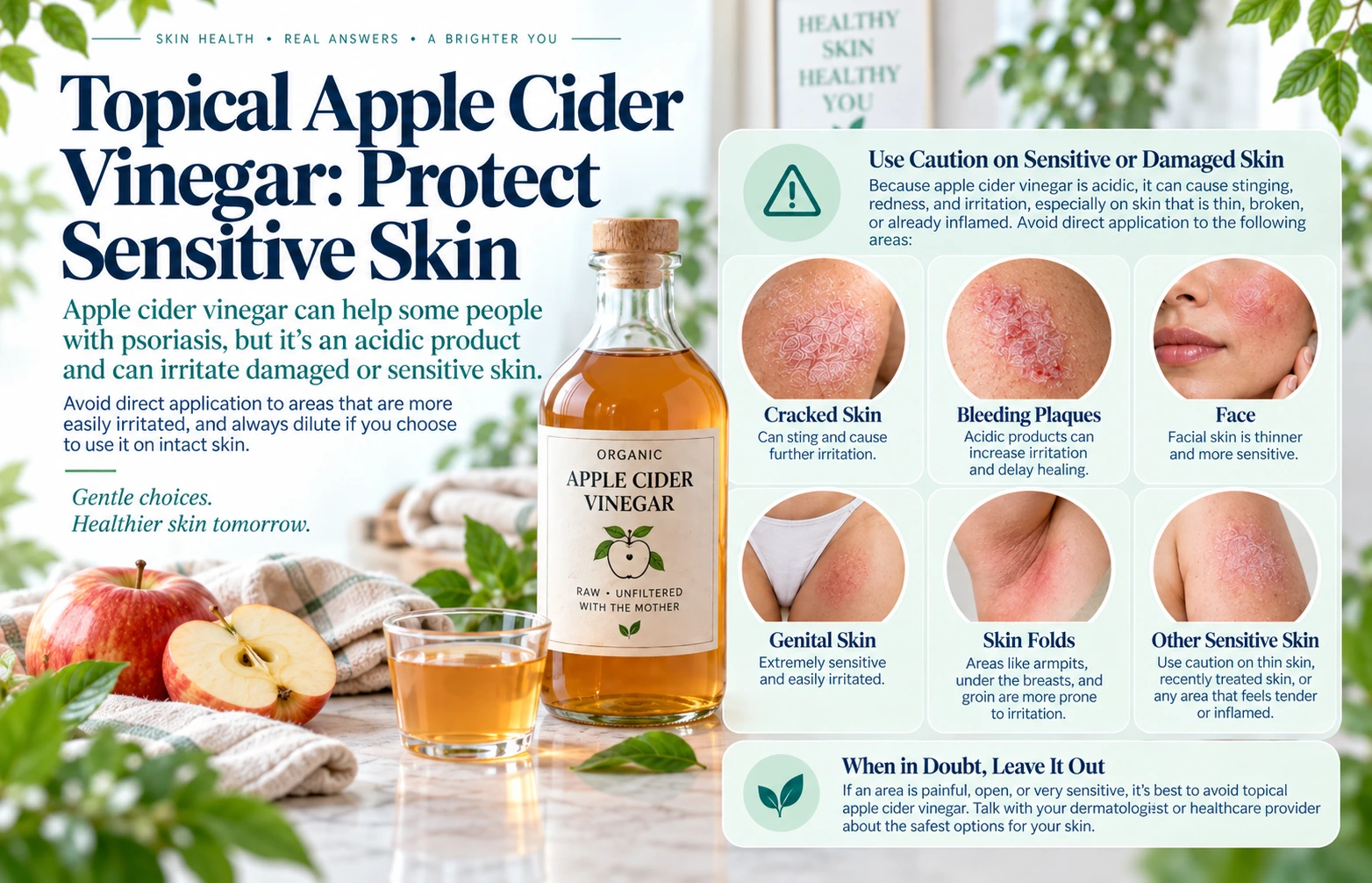
Avoid applying vinegar to open cracks, bleeding plaques, suspected infection, the face, genitals, skin folds, or a child's skin. Stop and rinse with cool running water if burning develops. Seek care for blistering, severe pain, spreading redness, or drainage.
What about the scalp?
Scalp psoriasis is often confused with dandruff, seborrheic dermatitis, allergic contact dermatitis, or fungal infection. Burning an inflamed scalp can worsen symptoms and complicate diagnosis. Use the scalp psoriasis guide and ask about scalp-specific vehicles such as solutions, foams, oils, shampoos, or other prescribed options.
Consuming Apple Cider Vinegar
Claims about detoxification, immunity, hair growth, digestive health, and direct psoriasis control exceed the evidence. Vinegar is acidic and can erode tooth enamel, irritate the throat or esophagus, worsen reflux or nausea, and interact with medicines or conditions that affect glucose or potassium.

Using small culinary amounts in food is different from concentrated shots, gummies, or repeated medicinal dosing. If you take insulin, glucose-lowering medicine, a diuretic, digoxin, or have kidney, potassium, swallowing, stomach-emptying, or reflux problems, discuss concentrated use with a qualified clinician.
Can Apple Cider Vinegar Help Psoriatic Arthritis?
No reliable evidence shows that apple cider vinegar treats joint inflammation or prevents joint damage. Persistent morning stiffness, a swollen finger or toe, heel pain, back stiffness, or an unexplained swollen joint deserves medical evaluation. The psoriatic arthritis guide explains early signs and next steps.

Dead Sea Salt, Epsom Salt, and Comfort-Focused Skin Care
A brief lukewarm bath can soften scale and reduce discomfort for some people. Salt baths may feel soothing, but they do not correct the immune pathways that drive psoriasis. Pat rather than rub dry, then apply a fragrance-free moisturizer while skin is still damp. Stop if salt stings cracked skin.

Functional Medicine: Looking Beyond a Single Remedy
Apple cider vinegar is only one possible input. Dr. Shook's Environmentally Induced Autoimmunity model focuses on understanding what may be driving the immune process, not simply adding one remedy for the outward symptoms. The evaluation considers environment, diet, gut health, metabolism, nutrient status, stress, sleep, infections, exposures, medications, and your individual response.
DETECT
Establish a baseline and identify possible triggers using your history, timeline, symptoms, health records, and lab tests.
SUPPORT
Optimize diet, lifestyle, and supplementation based on your triggers and individual needs.
REASSESS
Track your symptoms, how your skin is changing, any side effects, and your ability to follow through with the recommended changes. Then continue, adjust, or stop parts of the plan based on how you are doing.
Frequently Asked Questions
Does apple cider vinegar cure psoriasis?
No. There is no cure for psoriasis and apple cider vinegar has not been shown to control the disease reliably.
Can I put apple cider vinegar directly on plaques?
Undiluted vinegar can irritate or chemically burn skin. Do not apply it to cracked, bleeding, infected, facial, genital, folded, or otherwise sensitive skin.
Does apple cider vinegar help scalp psoriasis?
There is no strong evidence that it treats scalp psoriasis. Because scalp conditions can look alike, confirm the diagnosis and use scalp-appropriate treatment.
Can drinking apple cider vinegar reduce inflammation?
Research on vinegar and metabolic outcomes does not prove that it controls psoriasis inflammation. Concentrated use can also cause adverse effects or medicine interactions.
Can apple cider vinegar help psoriatic arthritis?
No reliable evidence shows that it treats joint inflammation or prevents joint damage. New or persistent joint symptoms need appropriate evaluation.
Are apple cider vinegar gummies safer?
Gummies avoid direct acid contact with plaques but still vary in dose, sugar, ingredients, and quality. They are not proven psoriasis treatments.
Are Epsom salt or Dead Sea salt baths useful?
Some people find brief lukewarm salt baths soothing and helpful for scale. They are comfort measures, not disease-modifying treatment, and can sting cracked skin.
How should I assess a natural psoriasis remedy?
Start with what you want the remedy to help, look at the strength of the evidence, consider skin risks and possible interactions, and track how your skin and symptoms respond over time.
Ready for a More Individualized Psoriasis Evaluation?
Dr. Shook's process looks beyond the visible skin to understand the triggers, drivers, physiology, and health patterns that may be influencing your immune system. The process is organized around DETECT, SUPPORT, and REASSESS so your plan can respond to what is actually changing.