Graves Disease Has Two Connected Layers
Graves disease involves both the immune system and the thyroid gland. Understanding that relationship makes the answer much clearer.
In Graves disease, the immune system produces antibodies known as TSH-receptor antibodies, often reported as TRAb or TSI. These antibodies attach to receptors on thyroid cells and act like an abnormal “on” signal. The gland responds by making and releasing more thyroid hormone than the body needs.
The excess hormone can accelerate heart rate, increase heat production, disrupt sleep, weaken muscles, affect mood and concentration, reduce body weight, and place significant stress on the cardiovascular system. Medical treatment is not optional when hyperthyroidism is clinically important. Antithyroid medication, radioactive iodine, surgery, beta-blockers, and specialist monitoring each have legitimate roles depending on the person and the circumstances.
A thyroidectomy removes the organ receiving the signal. A total thyroidectomy therefore stops that gland from producing excessive hormone. The immune cells and antibodies that created the signal, however, do not necessarily disappear the moment the gland is removed.
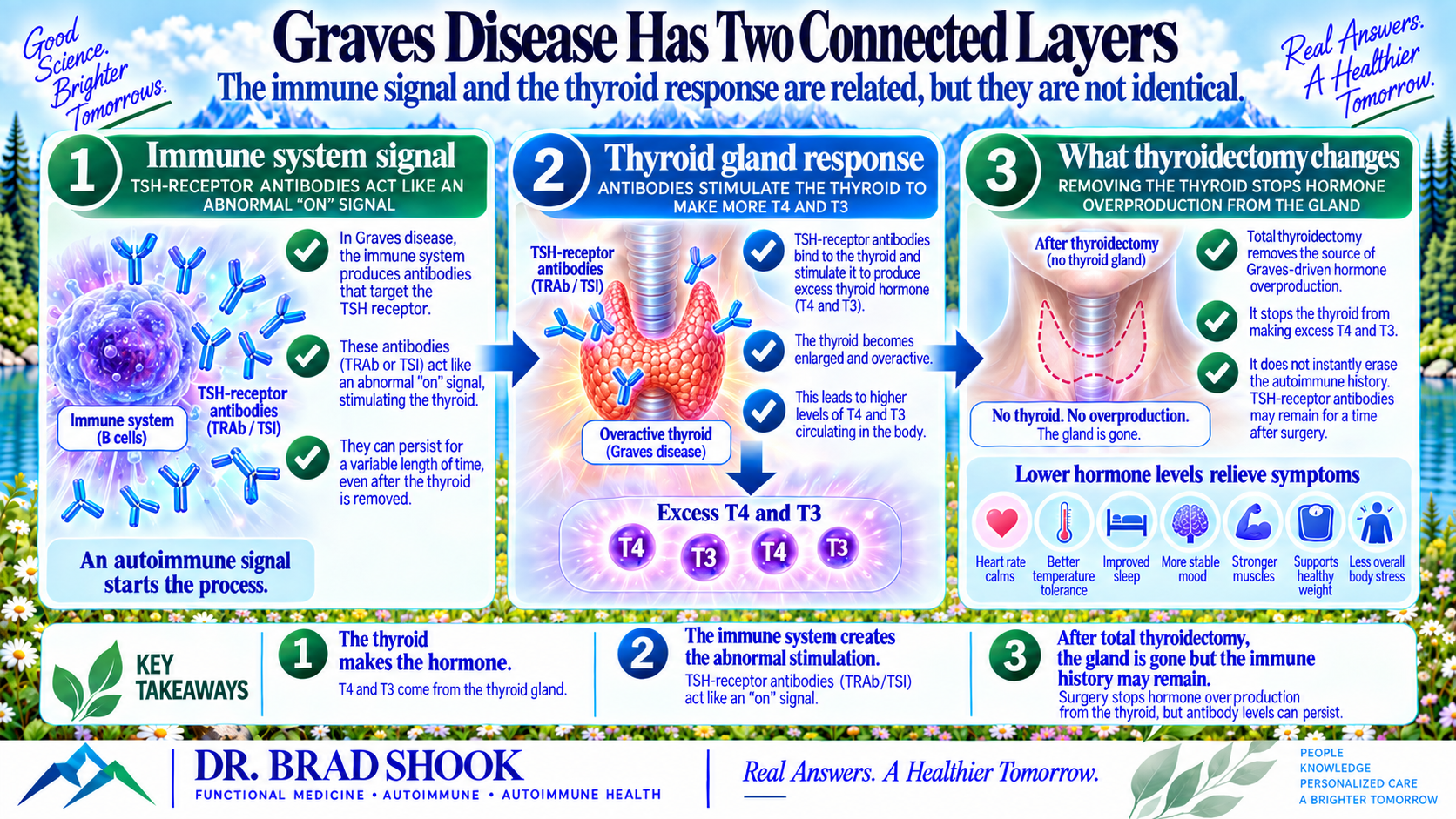
This is not an argument against surgery. For the right person, thyroidectomy may be the safest and most effective way to control hyperthyroidism. The point is simply that hormone overproduction, antibody activity, eye disease, replacement needs, and whole-person health are related but distinct questions.
Medical Care Is Essential With Graves Disease
Functional medicine can add a valuable perspective, but Graves disease must first be respected as a potentially dangerous medical condition. Uncontrolled hyperthyroidism can contribute to abnormal heart rhythms, heart failure, bone loss, pregnancy complications, and, in rare cases, thyroid storm.
Thyroid storm is a medical emergency
Seek emergency care for a combination of severe racing or irregular heartbeat, high fever, marked agitation or confusion, severe vomiting or diarrhea, fainting, collapse, or rapidly worsening symptoms. Call 911 or go to an emergency department. Do not try to manage possible thyroid storm with supplements, diet, online advice, or a telemedicine wellness visit.
If you have already had a complete thyroidectomy, Graves-driven hormone production from the gland is no longer expected. Even so, sudden severe symptoms still require prompt evaluation. Medication excess, infection, heart problems, postoperative complications, or another condition can produce symptoms that should never be self-diagnosed.
Your endocrinologist, prescribing clinician, surgeon, ophthalmologist, and obstetric team each may have an important role. Functional medicine belongs alongside that team, never in place of it.
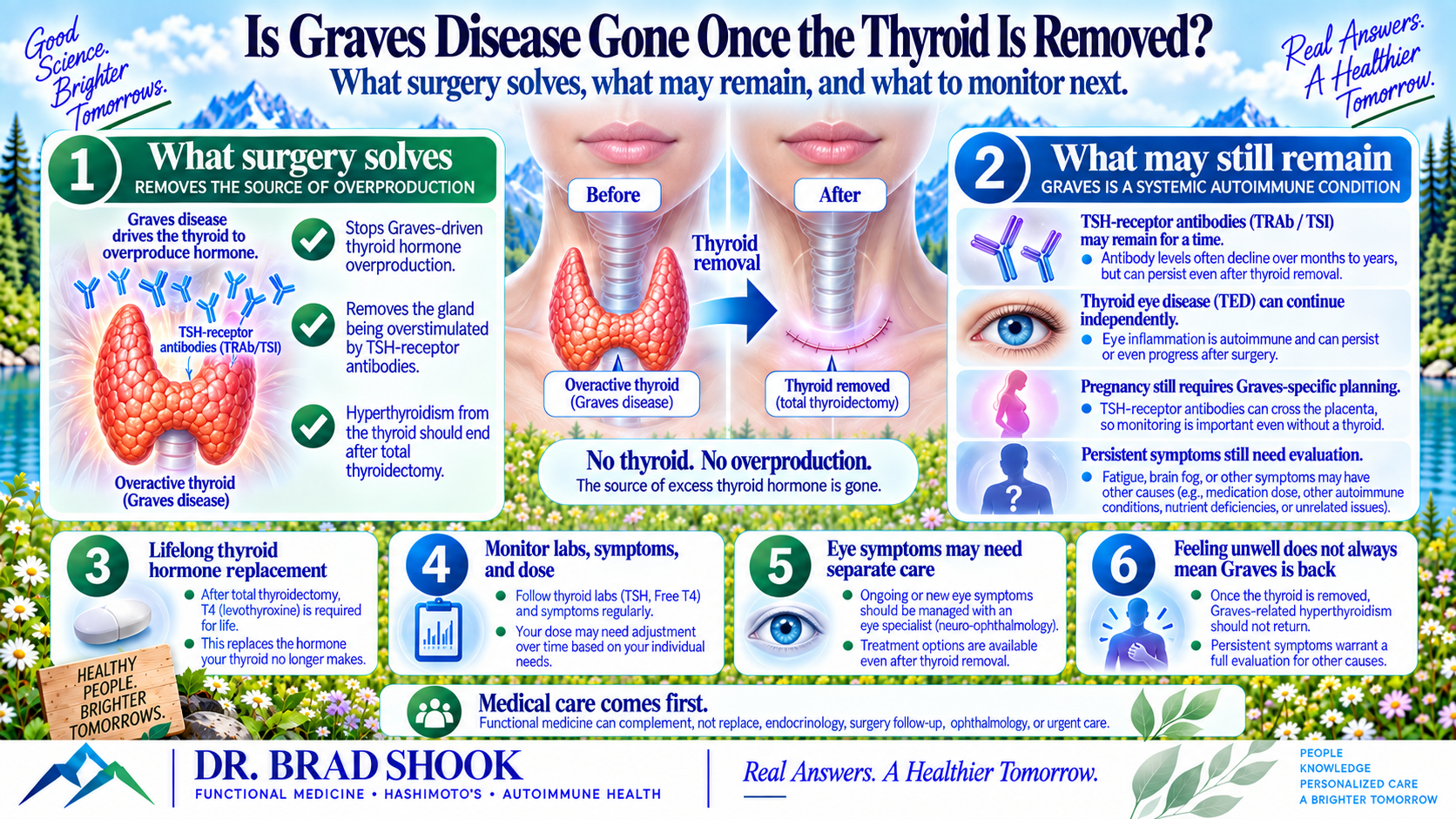
What Total Thyroidectomy Changes
Once the entire thyroid gland is removed, several important things become true.
The gland cannot overproduce hormone
Without functioning thyroid tissue, Graves antibodies no longer have a thyroid gland to stimulate into producing excessive T4 and T3.
Hormone replacement becomes lifelong
Your body still needs thyroid hormone. Daily replacement and ongoing monitoring become necessary after total thyroidectomy.
Antibodies can remain for a time
TRAb or TSI levels often decline after surgery, but the rate varies and they do not always disappear immediately.
Eye disease still needs attention
Thyroid eye disease affects tissues around the eyes and does not always follow thyroid hormone levels.
The word “gone” can therefore mean different things. If you mean, “Can my fully removed thyroid become overactive again?” the answer is generally no. If you mean, “Does every autoimmune marker, eye symptom, and health concern end immediately?” the answer is also no.
Total, Near-Total, and Partial Thyroidectomy Are Not the Same
Before interpreting symptoms or laboratory results, find out exactly which procedure you had. The operative report is more reliable than remembering that your thyroid was simply “removed.”
| Procedure | What it means for Graves disease |
|---|---|
| Total thyroidectomy | The entire gland is removed. Lifelong thyroid hormone replacement is required, and Graves-driven hormone production from the thyroid should end. |
| Near-total or subtotal thyroidectomy | A small amount of thyroid tissue remains. That tissue may still respond to thyroid-stimulating antibodies, although these procedures are now used less often for Graves disease. |
| Lobectomy or partial thyroidectomy | A larger amount of thyroid tissue remains. Hormone production may continue, and recurrent hyperthyroidism remains a more meaningful possibility. |
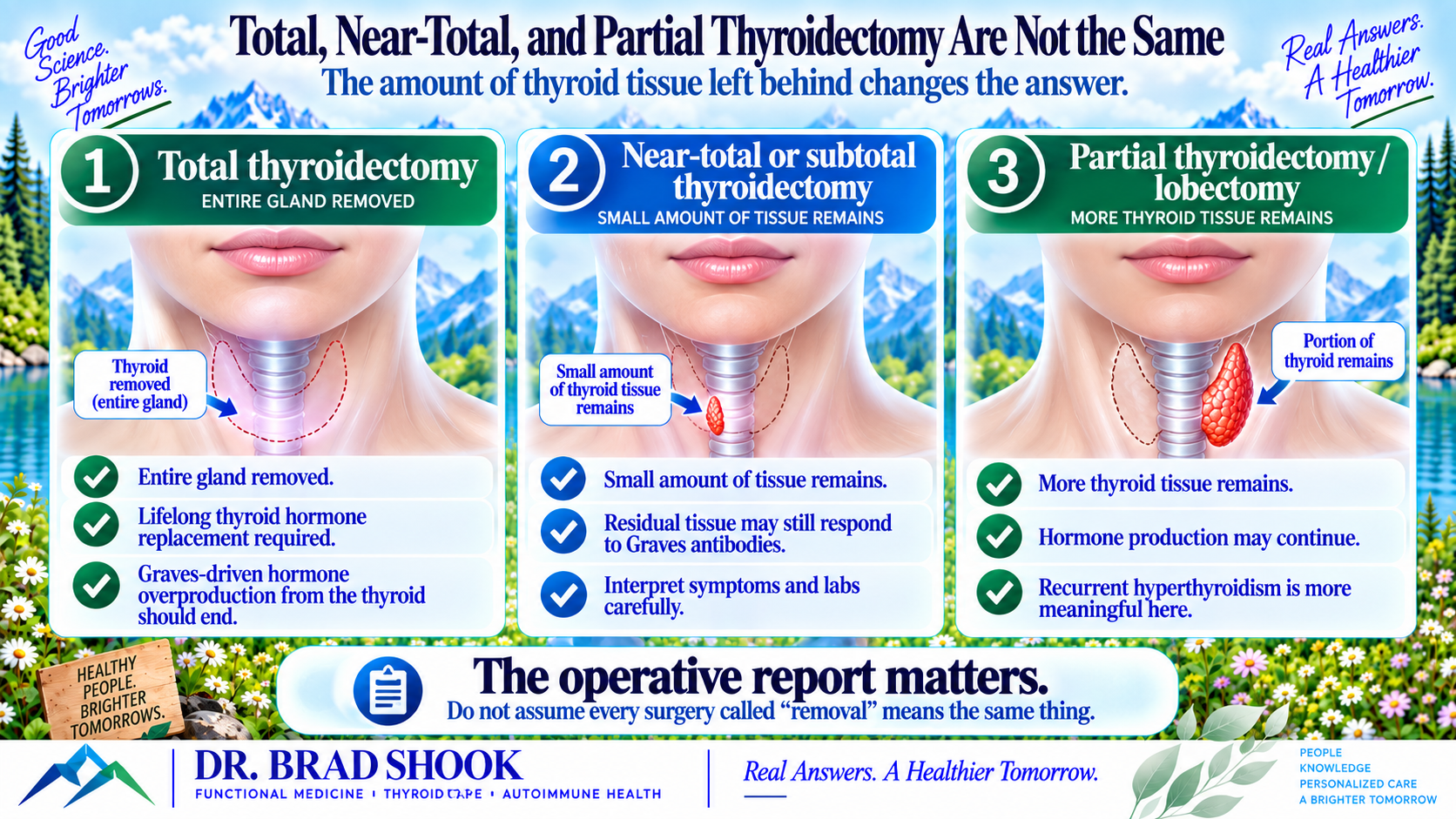
True recurrence after a documented total thyroidectomy is uncommon, but rare cases involving residual or ectopic thyroid tissue have been reported. A suppressed TSH or symptoms of excess hormone after surgery should be evaluated rather than attributed automatically to “Graves coming back.”
What Happens to Graves Antibodies After Surgery?
TRAb and TSI are made by the immune system, not by the thyroid gland. Removing the thyroid may reduce an important source of antigenic stimulation, and research suggests antibody levels often decline after total thyroidectomy. The decline is not immediate or identical in every person.
This is why antibody testing should be connected to a clinical question. Repeating TRAb simply to watch a number may not change the plan. Testing becomes especially relevant when:
- you are pregnant or planning pregnancy;
- thyroid eye disease is active or worsening;
- your clinician is evaluating unexpected hyperthyroidism after surgery; or
- the result would change monitoring or treatment.
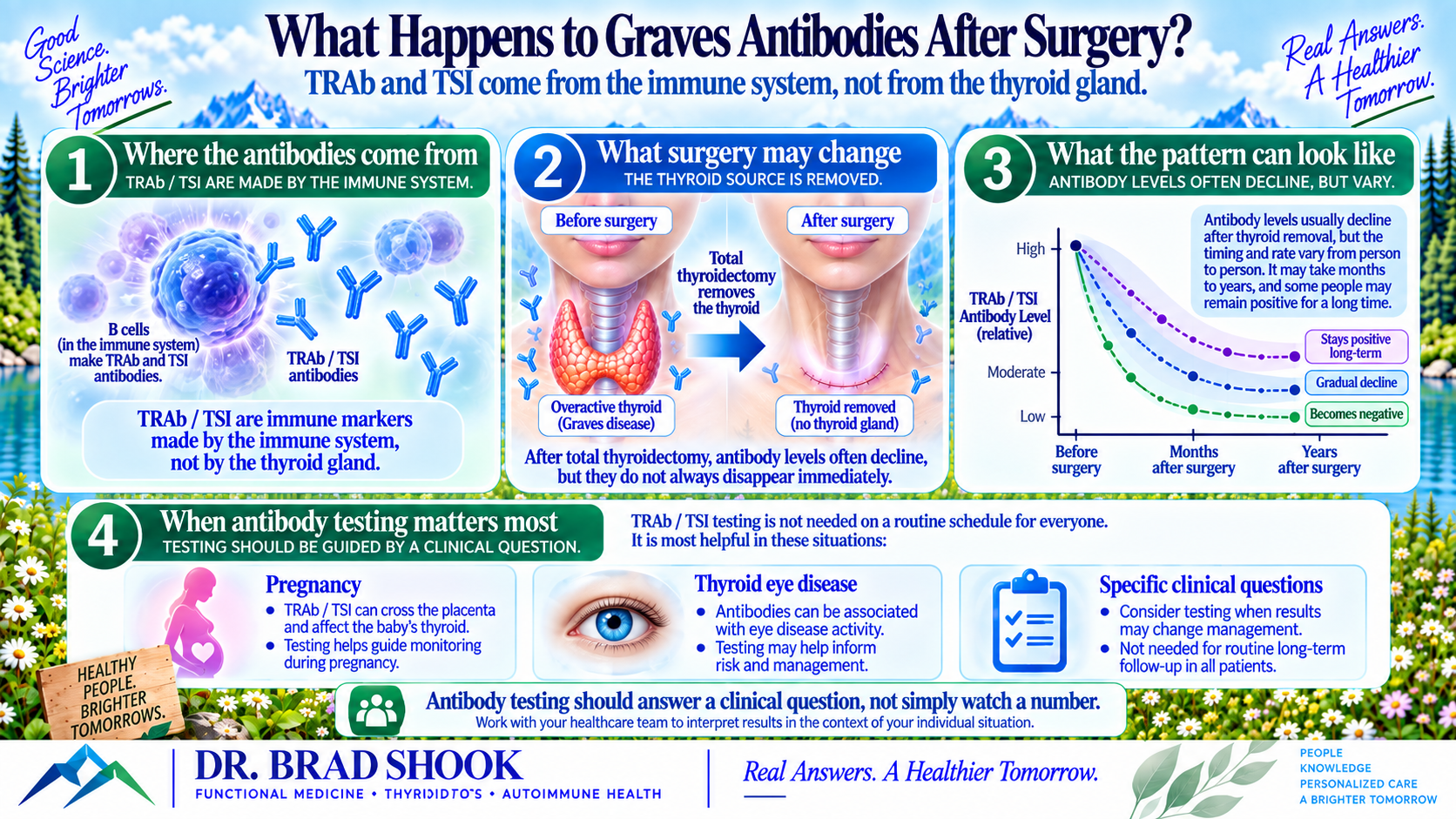
A lower antibody result can be encouraging, but it is not a complete health score. Symptoms, thyroid hormone status, eye findings, pregnancy considerations, medical history, and quality of life still matter.
Thyroid Eye Disease Can Continue After Thyroid Removal
Thyroid eye disease, also called Graves orbitopathy or Graves ophthalmopathy, is an autoimmune process involving the muscles, connective tissue, and fat around the eyes. It can occur when thyroid hormone levels are high, normal, or low. This is why removing the thyroid does not guarantee that eye disease will immediately stop.
Many cases are mild, but eye disease deserves its own evaluation. Symptoms may include dryness, grittiness, redness, swelling, pressure or pain behind the eyes, light sensitivity, bulging, or double vision. Smoking and secondhand smoke are important modifiable risk factors, and keeping thyroid hormone levels stable is part of protecting eye health.
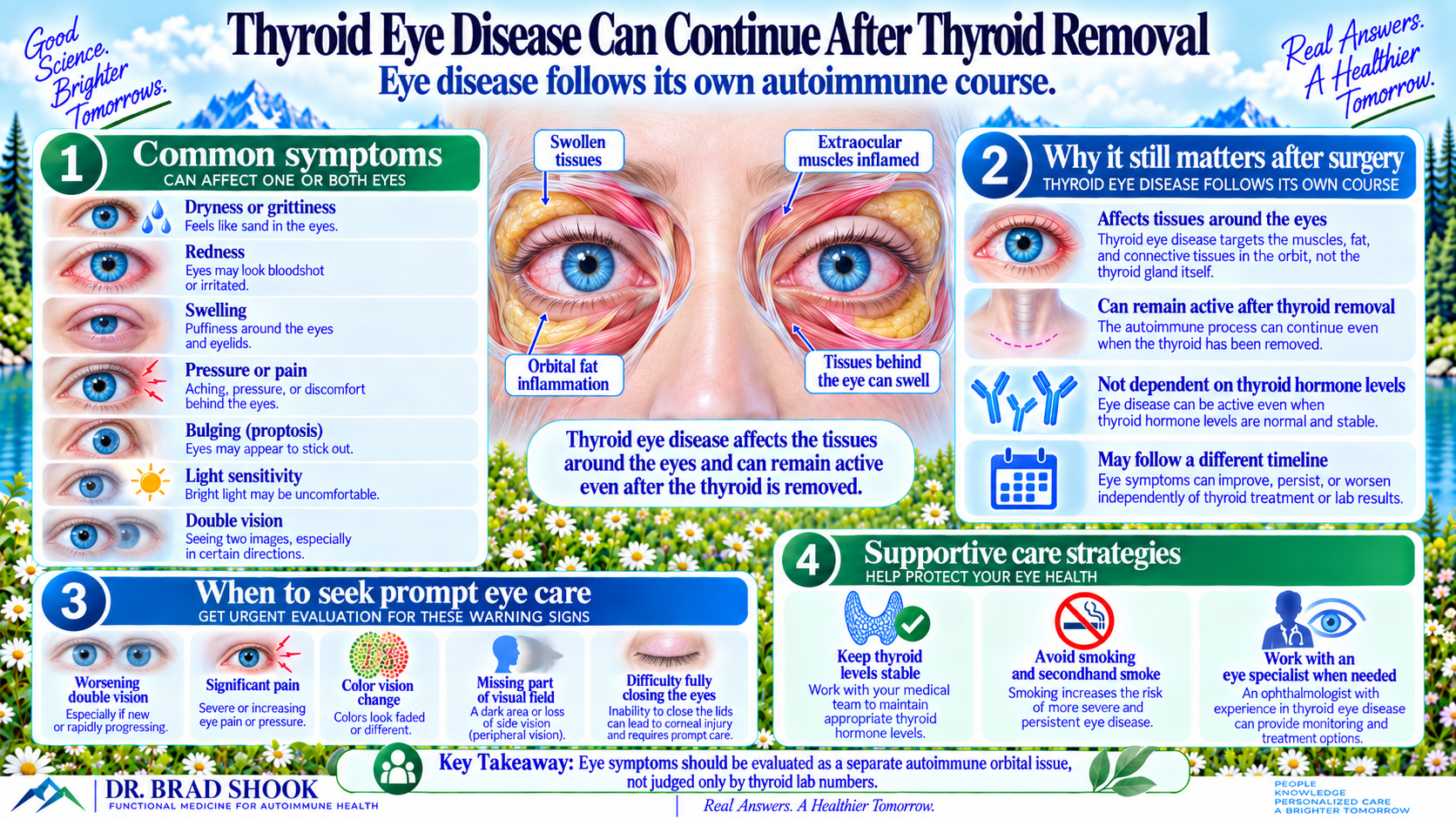
Contact your doctor promptly if your eyelids cannot close fully, double vision is worsening, pain is significant, colors look different, or part of your visual field seems missing. Changes in color vision or visual field can signal pressure on the optic nerve and require urgent ophthalmic assessment.
Life After Total Thyroidectomy Requires Thyroid Hormone Replacement
After total thyroidectomy, thyroid hormone is not optional. Replacement provides the T4 your tissues need for energy regulation, temperature control, cardiovascular function, digestion, muscles, brain function, and many other processes.
The initial dose is a starting point. Your prescriber may adjust it based on TSH and other appropriate thyroid tests, symptoms, age, body size, heart health, pregnancy, medication timing, absorption, and changes in other prescriptions or supplements. Calcium, iron, certain antacids, food timing, and some digestive conditions can affect absorption.
If you still feel unwell after surgery, avoid the assumption that every symptom proves either persistent Graves disease or an incorrect thyroid dose. Both too much and too little replacement can cause symptoms, but so can thyroid eye disease, anemia, sleep disruption, metabolic conditions, nutrient deficiencies, mood disorders, medication effects, another autoimmune disease, and problems unrelated to the thyroid.
Symptoms worth discussing promptly
- New palpitations or tremor
- Marked heat or cold intolerance
- Unexplained weight change
- Severe fatigue or weakness
- Constipation or frequent bowel movements
- New anxiety, agitation, or sleep disruption
Details that improve the review
- Exact medication and dose
- How and when you take it
- Calcium, iron, biotin, or antacid use
- Timing of symptoms and blood draws
- Recent dose or pharmacy changes
- Pregnancy plans or hormonal changes
Do not stop or change prescribed thyroid hormone on your own. Medication decisions belong with the prescribing clinician.
Pregnancy Still Requires Graves-Specific Planning
A past thyroidectomy does not erase your history of Graves disease. Thyroid-stimulating antibodies can remain in the bloodstream and cross the placenta. If antibody levels are high, they may stimulate the developing baby's thyroid even though your own thyroid has been removed.
Tell your obstetric and thyroid care teams that you have had Graves disease and thyroid surgery. Ideally, have that conversation before pregnancy or as early as possible. Your clinicians can determine when to check TRAb or TSI, how to monitor thyroid hormone replacement, and whether maternal-fetal medicine involvement is appropriate.
Pregnancy often changes thyroid hormone requirements. Prompt communication and scheduled laboratory monitoring protect both parent and baby. This is one area where normal thyroid hormone levels in the mother do not automatically make the antibody history irrelevant.
If You Still Do Not Feel Well, Start With Better Questions
Persistent symptoms deserve investigation, but they do not tell us the cause by themselves.
Confirm what surgery you had
Review the operative report and pathology. Know whether the procedure was total, near-total, subtotal, or partial.
Review the medical foundations
Confirm the replacement dose, timing, adherence, interactions, blood-draw timing, thyroid tests, calcium history, eye symptoms, and any postoperative concerns.
Build a symptom timeline
Record what changed after surgery, after medication adjustments, and during periods of stress, illness, pregnancy, dietary change, or altered sleep.
Investigate the most plausible contributors
Use history and examination to guide focused testing for anemia, nutrient status, metabolic health, sleep disorders, digestive or absorption problems, and other autoimmune or medical conditions.
Reassess instead of accumulating treatments
Define what you are trying to improve, measure the response, and use what happens to guide the next decision.
Why Functional Medicine Is Worth Strongly Considering
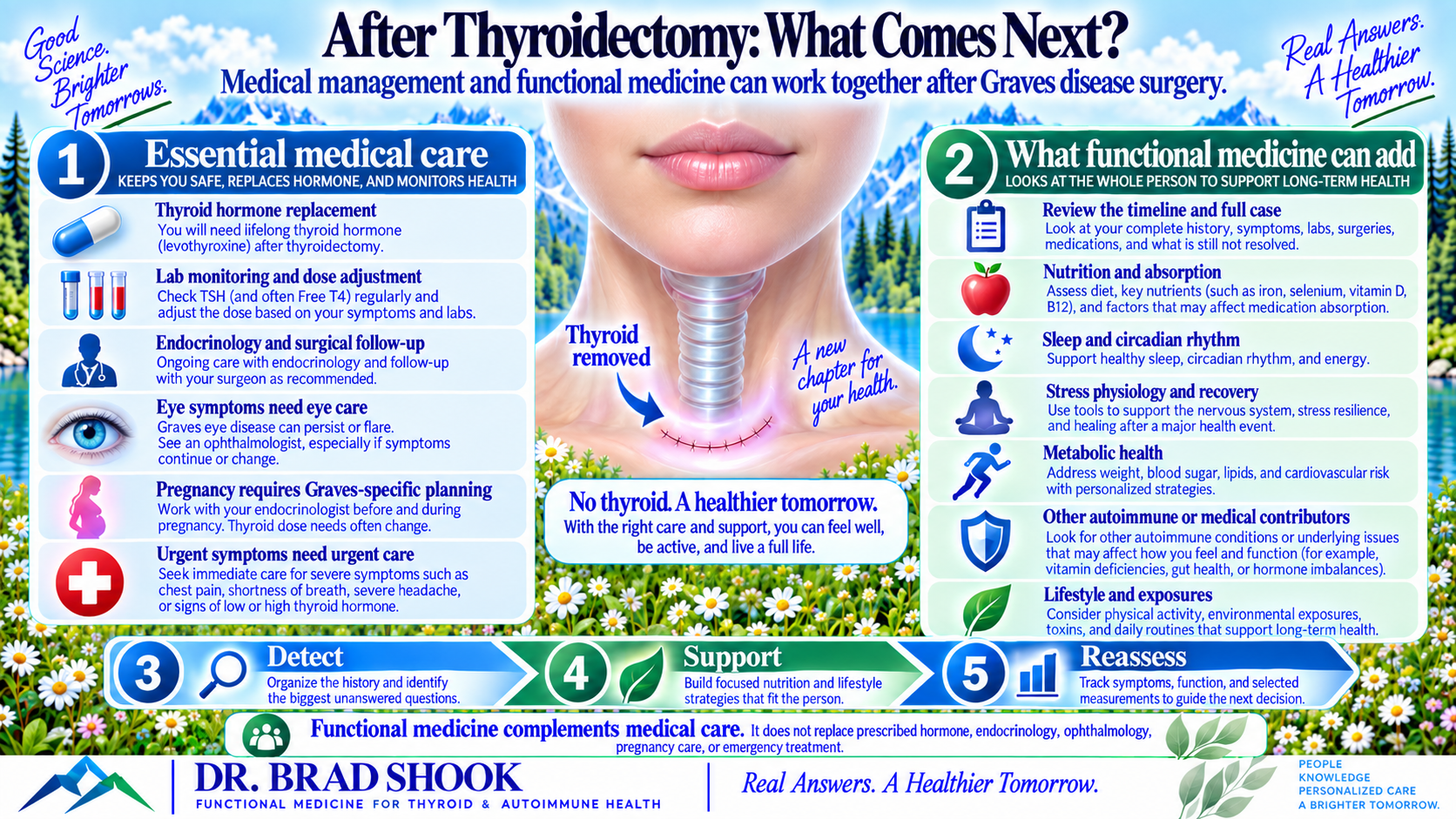
Once urgent hyperthyroidism is controlled and the medical foundations are in place, I believe functional medicine is worth strongly considering. Surgery answers a critical question: how do we stop the thyroid from producing too much hormone? Functional medicine creates room for another question: how can we understand and support the person living with the autoimmune history, the surgery, the medication, and the rest of their physiology?
This does not mean searching for one hidden “root cause” or assuming every symptom is autoimmune. It means becoming better students of physiology. We can review how immune regulation, digestion and absorption, nutrient status, sleep and circadian rhythm, stress physiology, metabolic health, tobacco or other exposures, movement, recovery, and coexisting conditions may be influencing health and quality of life.
The value is not in ordering every possible test. The value is in organizing the case, identifying the most important unanswered questions, choosing measurements that can change a decision, and reassessing what happens next.
Understand the pattern
Review the timeline, medical records, medication routine, symptoms, nutrition, digestion, sleep, metabolic health, stressors, exposures, and other diagnoses.
Prioritize what matters
Build a focused nutrition and lifestyle strategy around the person's findings, needs, readiness, and medical plan.
Learn from the response
Track symptoms, function, appropriate laboratory findings, and quality of life so the next step becomes more personal and precise.
Functional medicine cannot regrow a removed thyroid, replace prescribed hormone, treat thyroid storm, or substitute for an endocrinologist or ophthalmologist. Its opportunity is to help you understand the bigger picture and support the healthiest physiology possible within the reality of your medical history.
Would a Deeper Review of Your Case Help?
If your thyroid has been removed but you still feel that important pieces of your health have never been brought together, you can tell me what you are experiencing. I personally review applications to determine whether my one-on-one telemedicine consulting process is a good fit. This work is designed to complement the clinicians responsible for your medication, eye care, pregnancy care, and urgent medical needs.
Frequently Asked Questions
Is Graves disease cured after total thyroidectomy?
Total thyroidectomy removes the thyroid tissue that Graves antibodies stimulate, so the gland can no longer cause Graves hyperthyroidism. However, the autoimmune history does not instantly disappear. TSH-receptor antibodies may remain for a time, thyroid eye disease can require separate care, and lifelong thyroid hormone replacement is required.
Can Graves antibodies remain after the thyroid is removed?
Yes. TSH-receptor antibodies often decline after total thyroidectomy, but they do not always disappear immediately and the timing varies. Antibody results matter most when they answer a specific clinical question, especially during pregnancy or when thyroid eye disease is present.
Can thyroid eye disease continue after thyroidectomy?
Yes. Thyroid eye disease is an autoimmune process affecting tissues around the eyes, so it can remain active even after the thyroid is removed and even when thyroid hormone levels are normal. New eye pain, color-vision change, loss of visual field, worsening double vision, or inability to close the eyes needs prompt medical evaluation.
Can Graves disease come back after total thyroidectomy?
Recurrent thyroid overproduction is not expected when the entire gland has been removed, although rare cases involving residual thyroid tissue have been reported. Recurrence is a more relevant concern when thyroid tissue was intentionally left behind after a partial, subtotal, or near-total procedure.
What is the difference between total and partial thyroidectomy for Graves disease?
A total thyroidectomy removes the entire gland and requires lifelong thyroid hormone replacement. A partial, subtotal, or near-total operation leaves some thyroid tissue behind. The remaining tissue may produce hormone, but it may also remain responsive to Graves antibodies, so the operative report matters.
Why do I still have symptoms after my thyroid was removed?
Persistent symptoms can have several explanations, including the thyroid hormone dose or routine, absorption problems, thyroid eye disease, calcium or parathyroid issues after surgery, anemia or nutrient deficiencies, sleep problems, metabolic conditions, another autoimmune disease, or an unrelated diagnosis. A focused evaluation is more useful than assuming one cause.
Will I need thyroid medication for life after total thyroidectomy?
Yes. After total thyroidectomy, your body can no longer make thyroid hormone, so lifelong replacement is necessary. Your prescribing clinician will monitor thyroid tests, symptoms, pregnancy status, medication timing, interactions, and dose needs over time.
Do Graves antibodies matter during pregnancy after thyroid removal?
They can. Thyroid-stimulating antibodies may remain after surgery and can cross the placenta. Anyone with a history of Graves disease should tell the obstetric and thyroid care teams before or early in pregnancy so antibody levels, thyroid hormone replacement, and fetal risk can be monitored appropriately.
What should I monitor after thyroid surgery for Graves disease?
Follow the schedule provided by your surgeon and thyroid clinician. Monitoring commonly includes thyroid function and replacement dose, medication timing and interactions, symptoms of too much or too little hormone, eye symptoms, and early postoperative concerns such as voice changes or low-calcium symptoms. Pregnancy requires additional planning.
Can functional medicine help after thyroid removal?
Functional medicine can add a systems-based review of history, nutrition, digestion, sleep, stress physiology, metabolic health, exposures, immune patterns, and other conditions that may affect health and quality of life. It should complement, not replace, thyroid hormone replacement, endocrinology, ophthalmology, pregnancy care, or emergency treatment.
Sources and Further Reading
- National Institute of Diabetes and Digestive and Kidney Diseases: Graves' Disease. Autoimmune mechanism, diagnosis, complications, treatment, surgery, eye disease, and iodine guidance.
- NIDDK: Thyroid Disease and Pregnancy. Graves antibodies after definitive treatment, pregnancy monitoring, and thyroid-storm risk.
- American Thyroid Association: Graves' Disease. TRAb and TSI, hyperthyroidism, thyroid eye disease, diagnosis, and treatment.
- American Thyroid Association: Thyroid Surgery. Total and partial thyroidectomy, lifelong replacement, and postoperative risks.
- American Thyroid Association: Thyroid Eye Disease. Symptoms, urgent vision changes, smoking, monitoring, and treatment.
- Ross et al. 2016 American Thyroid Association Guidelines for Diagnosis and Management of Hyperthyroidism and Other Causes of Thyrotoxicosis.
- Kahaly et al. 2018 European Thyroid Association Guideline for the Management of Graves' Hyperthyroidism.
- Bartalena et al. 2021 EUGOGO Clinical Practice Guidelines for Graves' Orbitopathy.
- Anees et al. TSH receptor autoantibody levels post-total thyroidectomy in Graves' ophthalmopathy: a meta-analysis.
- Kharrazian Institute. Autoimmunity and thyroid professional coursework used for physiological-web thinking, case prioritization, and reassessment.