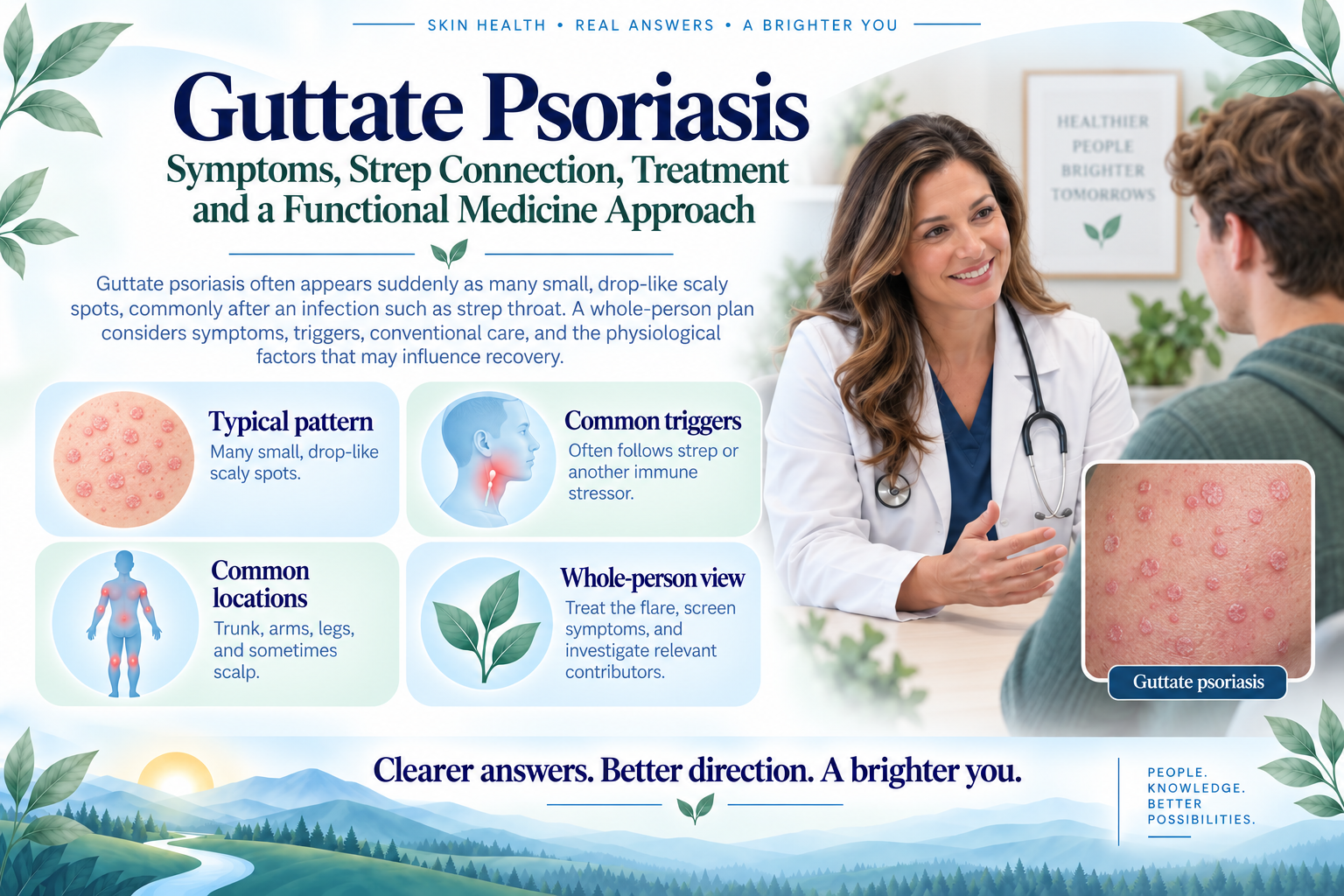
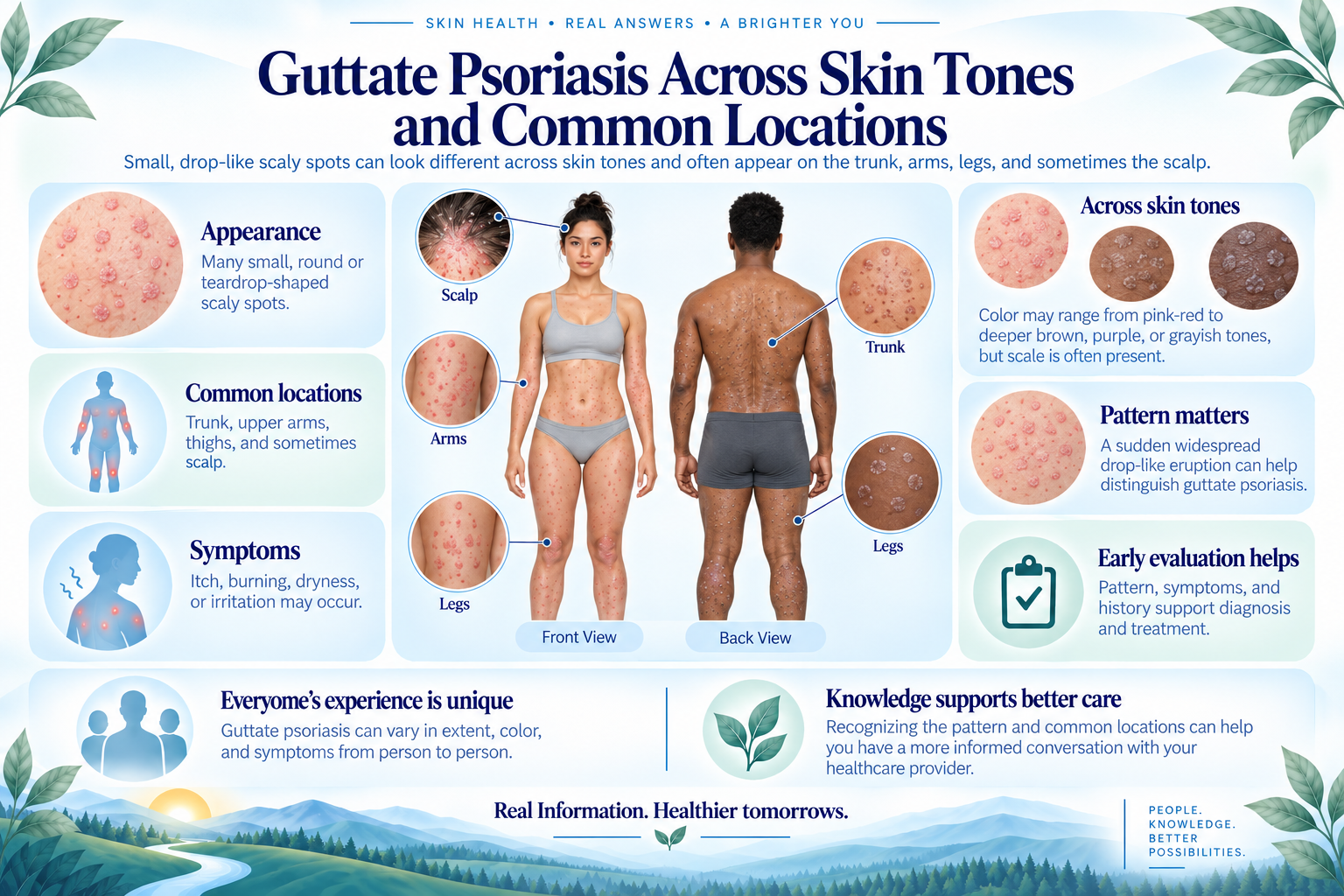
How to Recognize Guttate Psoriasis
The word guttate refers to the drop-like pattern. Lesions are usually smaller and less thick than classic plaques and can appear quickly over the trunk and limbs. The face, scalp, and ears may also be involved.
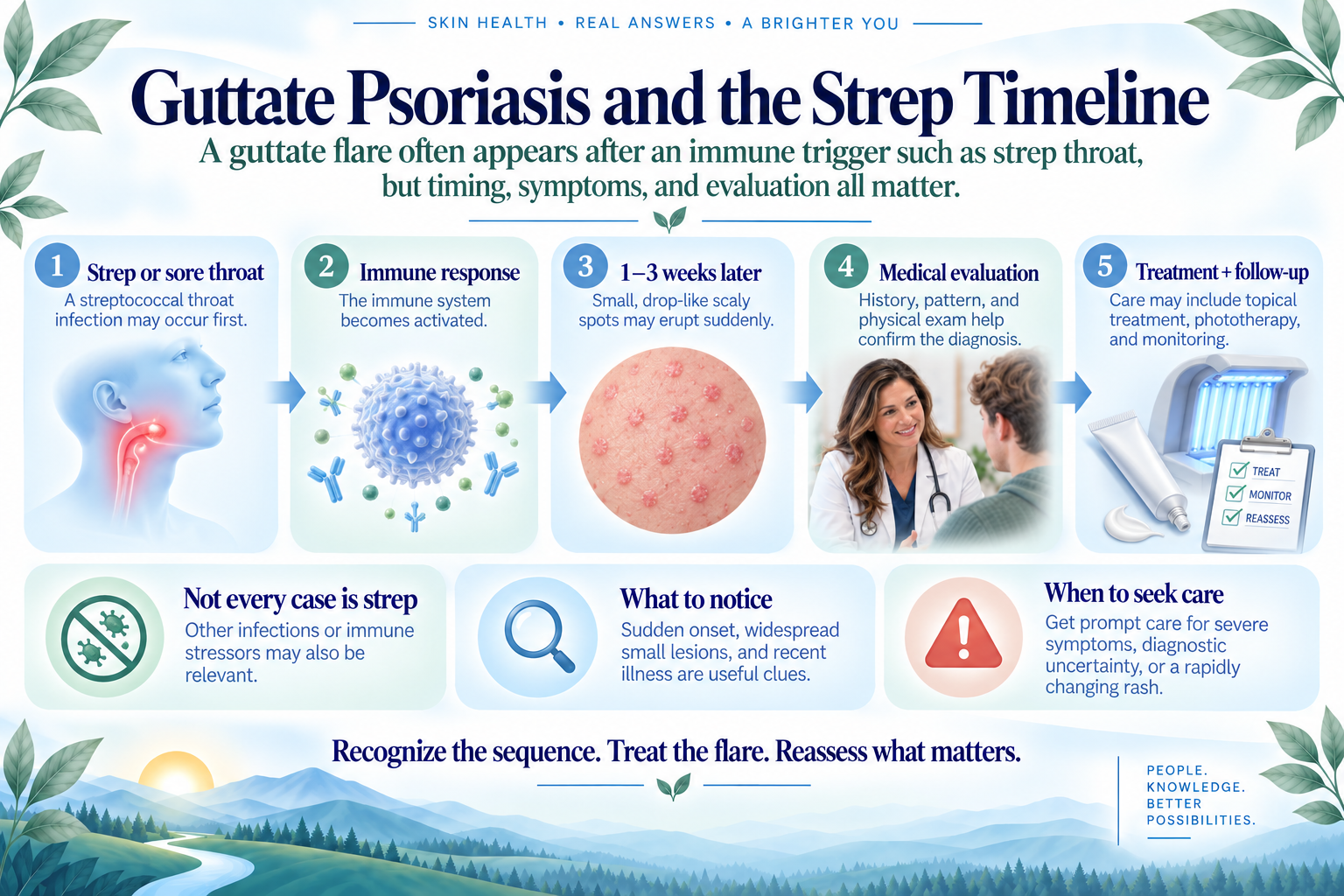
The Strep Connection
Guttate psoriasis has a well-recognized association with streptococcal infection, especially in children and younger adults. A clinician may ask about recent sore throat, fever, school or household exposure, and timing. Throat testing or other evaluation is based on symptoms and clinical judgment.
Important distinction: Treating confirmed strep is important for the infection and its complications. It does not guarantee that the skin eruption will immediately clear, and antibiotics should not be used without an appropriate indication.
Diagnosis and Look-Alikes
A clinician usually diagnoses guttate psoriasis through the distribution, lesion shape, history, and examination of skin, scalp, and nails. Pityriasis rosea, viral exanthems, medication eruptions, secondary syphilis, tinea, and other papulosquamous rashes may need consideration. Biopsy is not always needed but can help when the pattern is uncertain.
Seek urgent care for severe illness, extensive redness, fever, dehydration, painful pustules, mouth or eye involvement, or a rapidly changing rash after a new medicine.
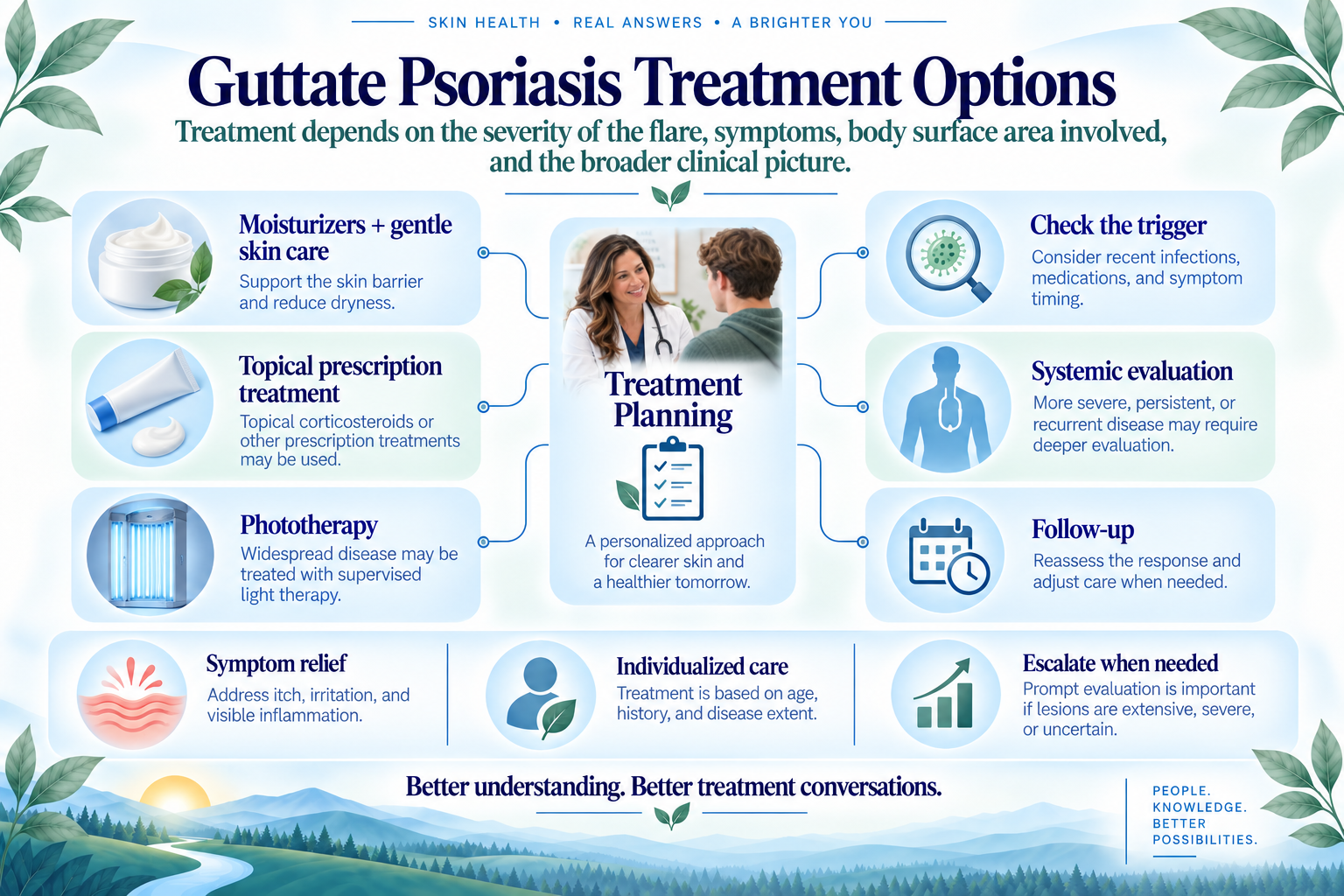
Guttate Psoriasis Treatment
Mild localized disease may be managed with moisturizers and topical prescription treatment. Phototherapy can be useful for widespread guttate psoriasis because applying medicine to hundreds of small spots is difficult. Severe, persistent, or evolving disease may lead a dermatologist to discuss systemic options.
Some episodes resolve over weeks to months, especially in children, while others recur or evolve into chronic plaque psoriasis. Follow-up matters if lesions persist, return, or become thicker.
A Functional Medicine Evaluation After a Guttate Flare
The infection link makes guttate psoriasis a clear example of Environmentally Induced Autoimmunity: susceptibility interacting with a real-world exposure. That does not mean every positive test is causal or that broad antimicrobial treatment is appropriate.
Infection history
Document symptoms, testing, treatment, dental issues, household patterns, and recurrence rather than guessing.
Immune and gut context
Review digestive symptoms, inflammatory bowel or celiac clues when indicated, and recovery after infection.
Metabolic and nutrient status
Assess overall diet, weight trajectory, glucose regulation, and suspected deficiencies using clinically appropriate testing.
Stress, sleep, and exposures
Track sleep disruption, stress load, skin injury, medications, smoking, alcohol, and seasonal change.
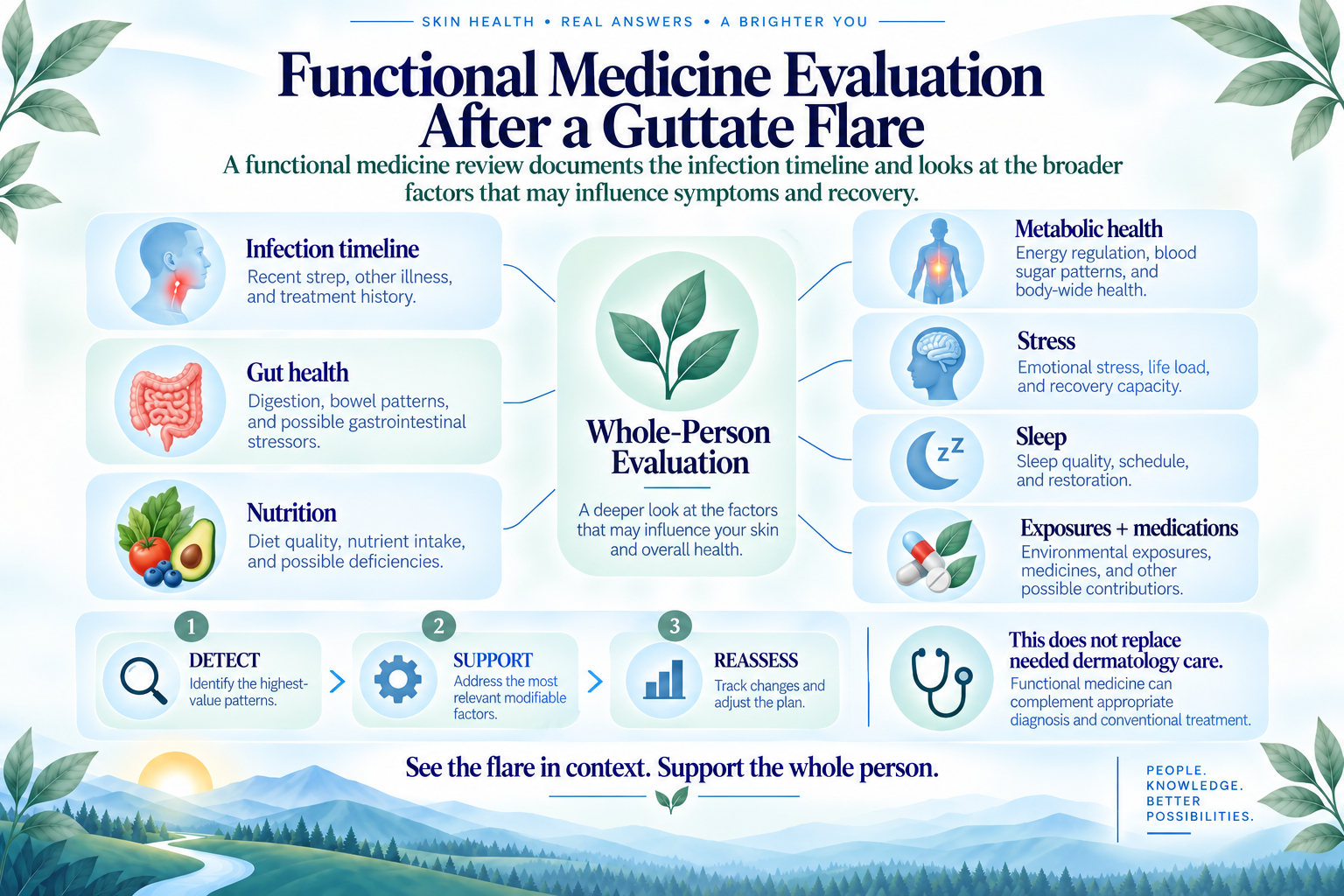
DETECT → SUPPORT → REASSESS
DETECT
Establish the baseline and identify the highest-value patterns. Review history, timeline, environment, diet, gut health, metabolism, nutrient status, stress, sleep, infections, exposures, medications, and current care.
SUPPORT
Support the most relevant modifiable factors without disrupting needed care. Keep the plan specific, safe, and realistic.
REASSESS
Change a manageable number of variables and document the response. Reassess symptoms, function, labs when relevant, and the next safest step.
Frequently Asked Questions
What does guttate psoriasis look like?
It usually appears as many small, round or drop-like scaly spots on the torso, arms, and legs. Color and contrast vary by skin tone, and lesions are often thinner than plaque psoriasis.
Is guttate psoriasis caused by strep throat?
It can begin after a streptococcal infection, but not every case has a confirmed infection. Genetics, immune susceptibility, and other factors also influence who develops psoriasis.
Do antibiotics cure guttate psoriasis?
Antibiotics treat a confirmed bacterial infection. They are not a guaranteed treatment for the skin eruption and should not be used without an appropriate indication.
Is guttate psoriasis contagious?
No. Psoriasis is not contagious. The infection that preceded a flare, such as strep throat, may be contagious, but the psoriasis rash is not.
Does guttate psoriasis go away?
Some episodes, especially in children, clear over weeks to months. Other cases recur or develop into chronic plaque psoriasis, so follow-up is appropriate when lesions persist or return.
How is widespread guttate psoriasis treated?
Depending on age, extent, symptoms, and medical history, treatment may include moisturizers, topical prescription treatment, phototherapy, or systemic therapy. A dermatologist should individualize the plan.
What does functional medicine evaluate after a guttate flare?
It documents infection timing and treatment, then reviews gut health, diet, metabolic and nutrient status, stress, sleep, exposures, medications, and response without assuming one unproven root cause.
When is a sudden rash an emergency?
Seek prompt care for severe illness, fever, dehydration, widespread redness, painful pustules, mouth or eye involvement, or a rapidly changing rash after a new medicine.
Ready for a More Individualized Psoriasis Evaluation?
My process looks beyond the visible skin while respecting the role of appropriate dermatology and rheumatology care. We DETECT the most relevant patterns, SUPPORT the highest-priority needs, and REASSESS what changes.
References and Clinical Resources
- National Psoriasis Foundation. Guttate psoriasis.
- American Academy of Dermatology. Types of psoriasis.
- American Academy of Dermatology. Psoriasis treatment.
- NIAMS. Psoriasis overview.