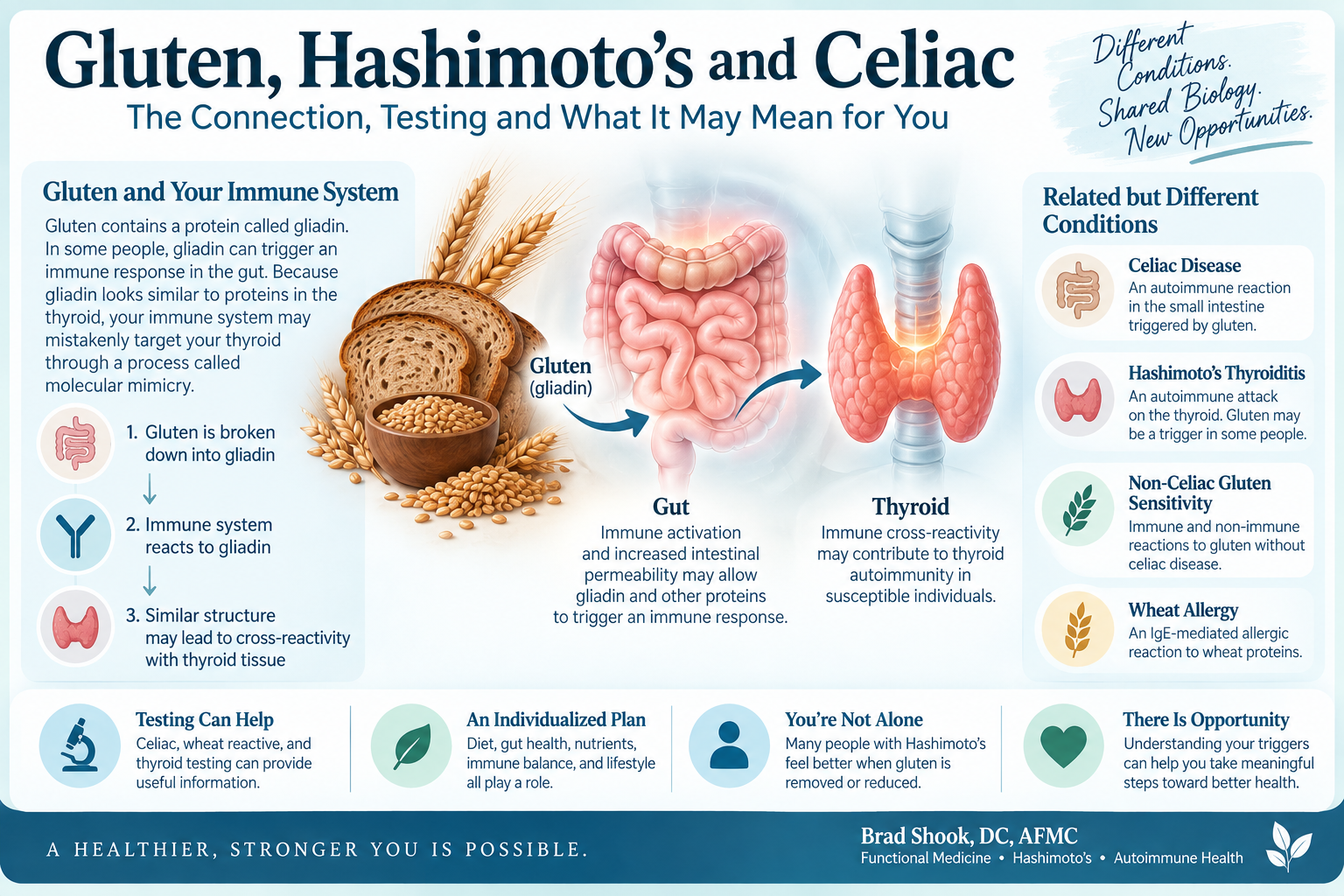
What Is the Connection Between Gluten and Hashimoto's?
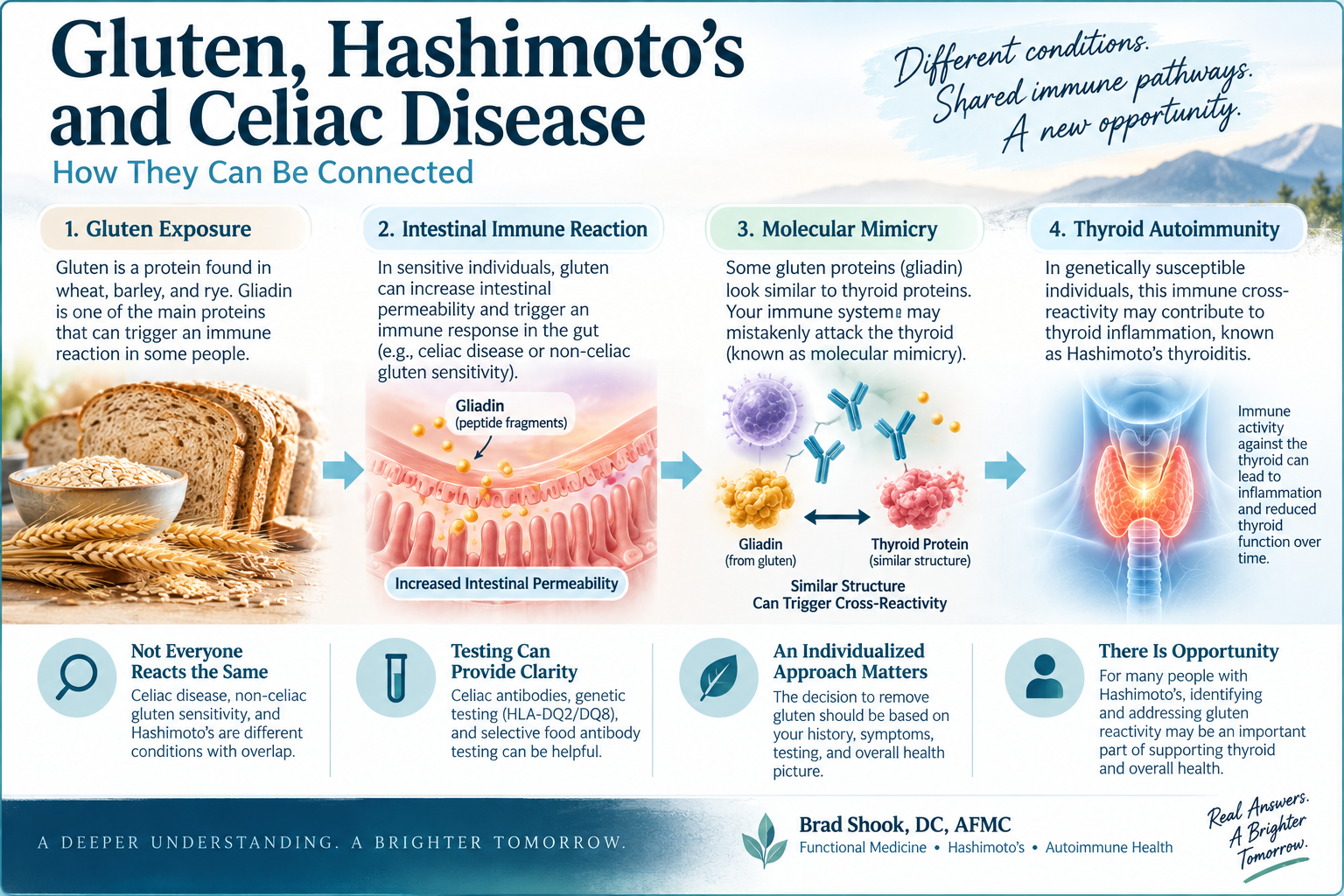
The connection is not limited to celiac disease. It may involve immune cross-reactivity between a gluten-related response and targets associated with thyroid tissue, a shared tendency to develop autoimmune disease, celiac disease occurring alongside Hashimoto's, intestinal damage that affects absorption, or another immune response to wheat or gluten.
Plausible Immune Cross-Reactivity
Gliadin and the immune response surrounding gluten may generate antibodies that recognize more than their original target. Laboratory findings suggest that certain gluten-related antibodies can bind to targets associated with thyroid tissue. This offers a plausible pathway through which gluten-related immunity could influence thyroid autoimmunity, but current testing cannot prove that the mechanism is occurring in one particular person.
A Shared Autoimmune Tendency
When someone has one autoimmune disease, the possibility of developing another autoimmune condition increases. Hashimoto's and celiac disease share part of that autoimmune susceptibility. Research has found biopsy-confirmed celiac disease in about 1.6% of people with autoimmune thyroid disease, which is higher than expected in the general population.
Two Different Immune Attacks
In Hashimoto's, the immune system reacts against thyroid tissue. In celiac disease, eating gluten activates an immune response that damages the small intestine. Gluten is the established trigger for celiac disease. When both conditions are present, continuing to eat gluten keeps that intestinal autoimmune process active, even though it does not prove that gluten originally caused the Hashimoto's.
Thyroid Nutrients and Medication Absorption
Damage to the small intestine can interfere with the absorption of iron and other nutrients needed for healthy physiology. It can also make levothyroxine and other thyroid medication harder to absorb consistently. This may contribute to persistent symptoms, unstable laboratory results, or a need for more medication than expected.
Immune Reactions Outside Celiac Disease
Some people who do not have celiac disease still react to wheat or gluten through allergy, non-celiac sensitivity, or broader antibody responses. These patterns may contribute to digestive, neurological, skin, joint, energy, or inflammatory symptoms. Their significance has to be evaluated individually because they are not all the same condition and do not all affect Hashimoto's in the same way.
This is why gluten can matter in Hashimoto's. It may represent a second autoimmune disease, a barrier and absorption problem, or another source of immune activation. Once you understand which connection may be present, you can choose the right testing, build a more individualized plan, and measure whether the intervention actually helps.
Before you remove gluten: For gluten-related antibody tests to be accurate, you generally need to be consuming gluten, especially when you are being evaluated for celiac disease. If you have already removed gluten, antibody levels may fall and testing can produce false-negative results or become harder to interpret. Begin by considering celiac disease, then evaluate wheat allergy and broader wheat or gluten immune reactions when appropriate. If symptoms continue, you may also investigate foods that can cross-react with gluten antibodies, intestinal barrier health, and your response to a structured dietary trial. The goal is to gather useful information so you have a clearer, more individualized starting point.
Hashimoto's and Gluten: Four Different Questions
People often use the words celiac disease, gluten sensitivity, wheat allergy, and gluten cross-reactivity as if they mean the same thing. They do not. Mixing them together can create false reassurance when testing was too limited to answer the real question. It can also lead someone to unnecessarily avoid foods for life after interpreting one result as proof of a permanent problem.
| Question | What it means | How it is evaluated |
|---|---|---|
| Celiac disease | A defined autoimmune response to gluten that can injure the small intestine and affect the rest of the body. | Celiac serology, total IgA, clinical history, and often intestinal biopsy. Testing is most reliable while gluten is still being eaten. |
| Wheat allergy | An allergic response to wheat proteins that may cause rapid or delayed allergic symptoms. | Allergy history and appropriate IgE, skin, or supervised challenge testing. |
| Broader wheat or gluten immune reactivity | Antibody recognition of selected gluten or non-gluten wheat proteins outside the standard celiac markers. | Selected IgG and IgA immune-reactivity testing interpreted with symptoms and the rest of the evaluation. No single specialty panel independently diagnoses celiac disease or non-celiac gluten sensitivity. |
| Gluten-associated cross-reactive foods | Antibodies directed at one antigen may also recognize a structurally similar antigen in another food. | Targeted cross-reactivity testing can identify a hypothesis to investigate. It does not prove that every listed food is a clinical trigger. |
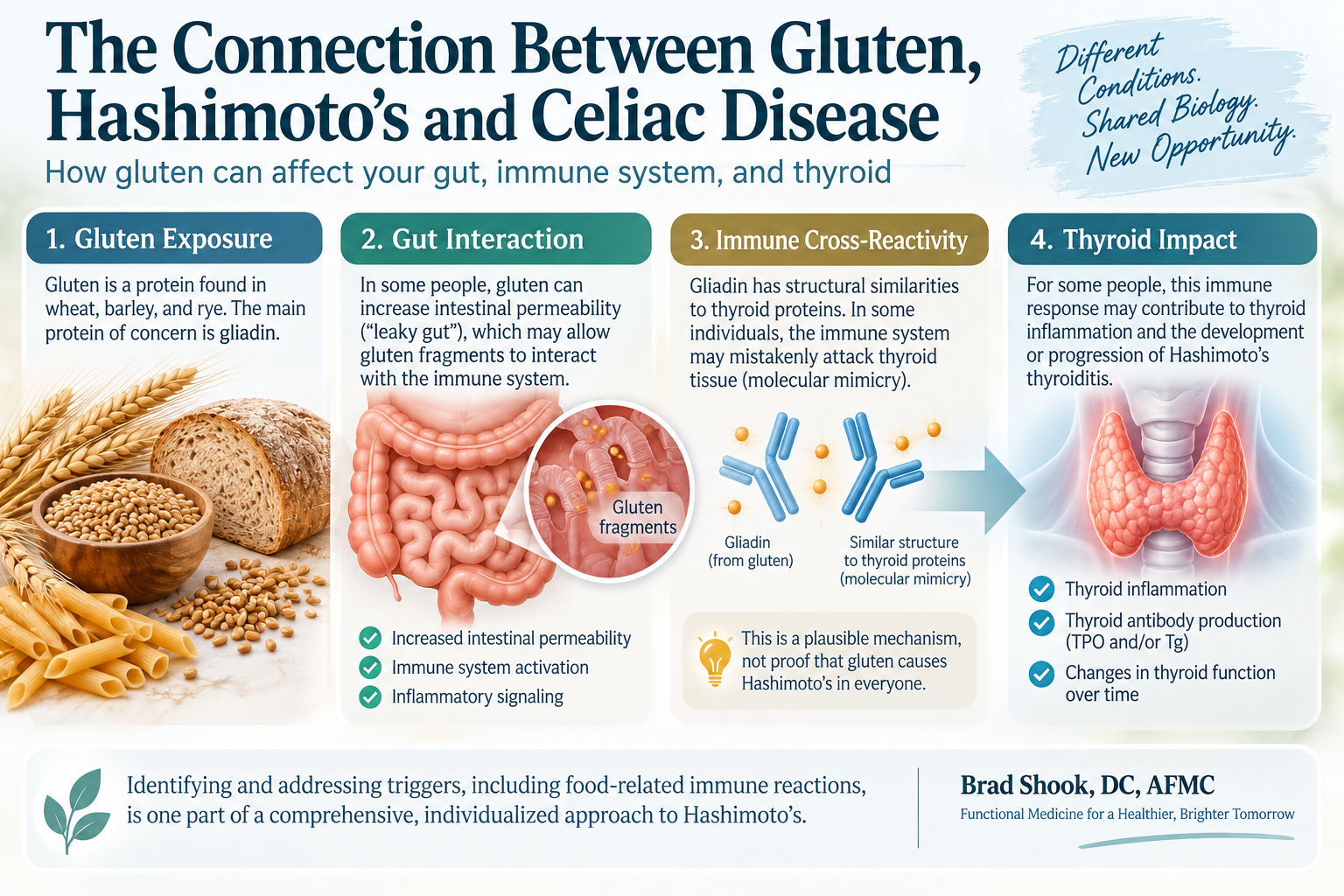
Why Standard Celiac Testing May Not Provide All the Information About Gluten
Standard celiac testing is designed to answer a specific and important question: is there evidence of the autoimmune process that defines celiac disease? Tissue transglutaminase IgA is commonly used for screening, usually alongside total IgA so an IgA deficiency is not missed. Depending on the situation, clinicians may also use endomysial antibodies, deamidated gliadin peptide antibodies, HLA-DQ2 or HLA-DQ8 testing, or an upper endoscopy with small-intestinal biopsies.
That pathway is essential when celiac disease is possible, but wheat is not one protein and gluten is not one peptide. Wheat contains multiple gliadin families, glutenins, non-gluten proteins, wheat germ agglutinin, enzyme-related complexes, and other antigenic targets. Research has demonstrated that antibody responses to wheat can be heterogeneous, meaning two reactive people may recognize different components.
This creates an important distinction. A properly performed negative celiac evaluation can make celiac disease less likely. It does not automatically prove that a person has no wheat allergy, no non-celiac wheat response, and no measurable immune reactivity to any other wheat component. Broader immune testing may expand the map, but it cannot replace the celiac diagnostic pathway or turn one antibody into a diagnosis.
The practical takeaway: Do not use a broader wheat antibody panel to diagnose celiac disease. At the same time, a negative celiac panel does not tell you whether you have a wheat allergy, non-celiac wheat or gluten sensitivity, or another immune response to wheat or gluten-containing grains. Each of these questions requires the appropriate type of testing and interpretation.
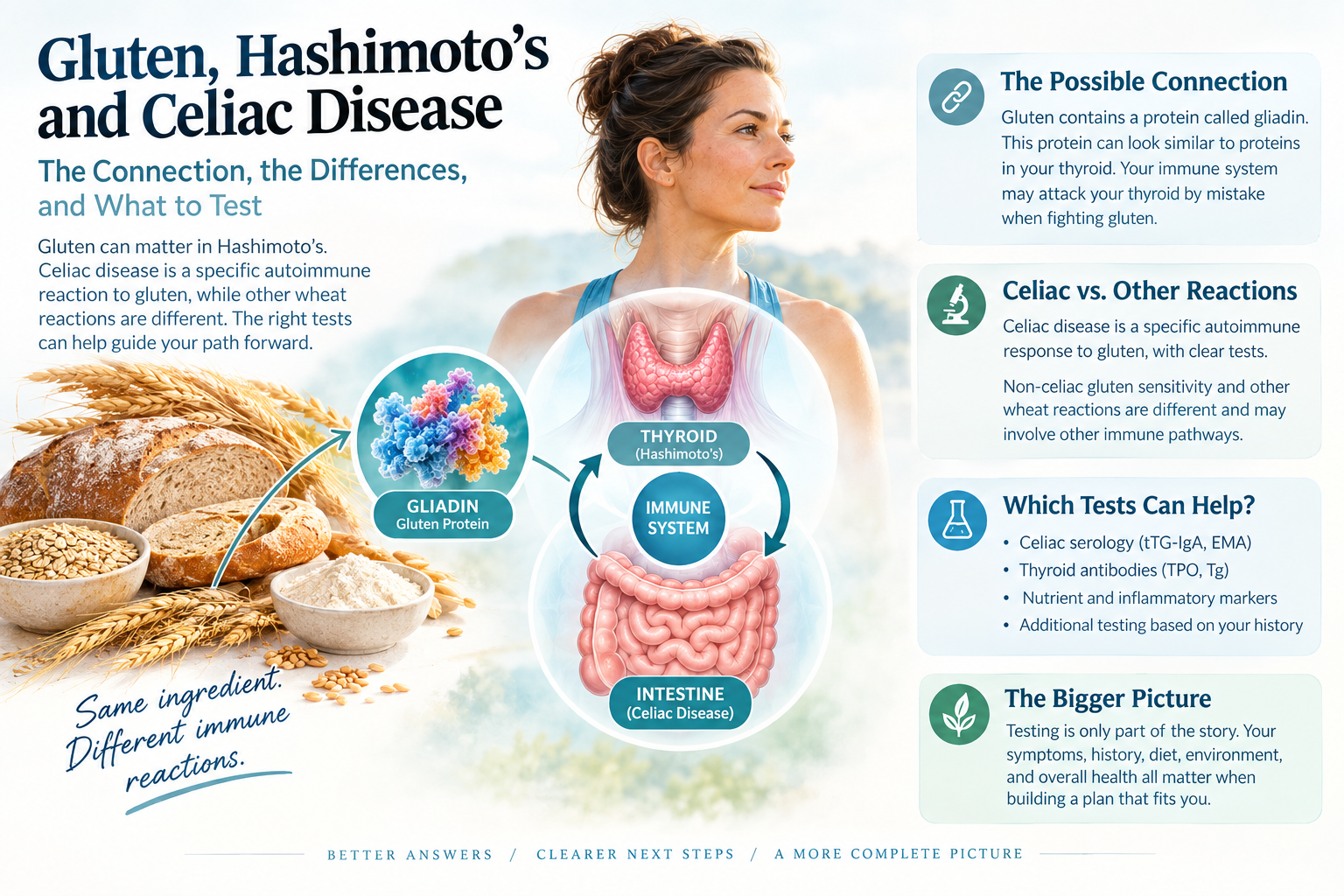
What Gluten Cross-Reactivity Actually Means
Cross-reactivity starts with the shape of a protein. The immune system makes an antibody that recognizes a small part of a protein, called an epitope. If part of a second protein has a similar shape, that antibody may bind to the second protein too. In plain language, an antibody created in response to gluten may sometimes recognize a similar-looking protein in another food.
Three conditions matter. The person must make the relevant antibody, the second antigen must be similar enough for that antibody to bind, and the reaction must be meaningful in the person rather than only measurable in a laboratory. This is why cross-reactivity is not a universal food list. The same food can be irrelevant for one person and important for another.
Laboratory studies using purified gliadin antibodies have reported binding to selected milk proteins, yeast, oats, corn, millet, rice, and instant coffee. Other research using patient sera did not demonstrate casein-gliadin cross-reactivity. These findings are not necessarily incompatible because the antibodies, antigen preparations, digestion, and laboratory methods were different. They do show why a laboratory mechanism should be treated as a targeted clinical hypothesis, not automatic proof of symptoms or thyroid injury.
Cross-reactivity is not the same as contamination. Rye, barley, and spelt contain gluten. Oats can be contaminated during growing or processing unless they are properly controlled. Instant coffee has appeared in older laboratory work partly because of possible manufacturing contamination. Those situations differ from an antibody recognizing a structurally similar non-gluten protein.
Where Cross-Reactive Antibody Testing Fits Into the Investigation
Cross-reactive antibody testing may be considered when someone has known or suspected gluten reactivity but continues to have symptoms, has limited improvement on a gluten-free diet, or needs a more individualized food assessment. These tests measure antibody reactions to selected food proteins. Their value is not in creating one giant list of foods that imitate gluten. Instead, the results may help separate several different questions.
Gluten-containing foods or possible contamination
Rye, barley, spelt, Polish wheat, and instant coffee are grouped because actual gluten exposure or contamination may be the issue.
Foods that may cross-react with gliadin antibodies
The current panel includes selected dairy proteins plus yeast, oats, millet, rice, and corn because laboratory work has reported antibody binding or related cross-reactivity.
Common gluten-free substitute foods
Buckwheat, sorghum, hemp, sesame, amaranth, quinoa, tapioca, teff, and potato may become dietary staples after wheat is removed. Reactivity here may reflect sensitization or repeated exposure, not necessarily molecular mimicry with gluten.
Other commonly reactive foods
Egg and soy are included as common food antigens. A reaction to them is a separate food-immune question and should not automatically be called gluten cross-reactivity.
Why Dairy Reactions Are Not All the Same
Milk contains several different proteins and peptides, including alpha- and beta-casein, casomorphin, milk butyrophilin, and whey protein. Some antibody panels evaluate these components separately because a person may react to one milk protein and not another.
It also means that a negative result does not rule out every possible dairy problem. The panel does not test every milk protein or every preparation, and it does not diagnose lactose intolerance or an immediate IgE-mediated milk allergy. A positive result indicates measurable antibody reactivity to the tested antigen preparation. It does not, by itself, prove that dairy caused Hashimoto's or that permanent avoidance is required.
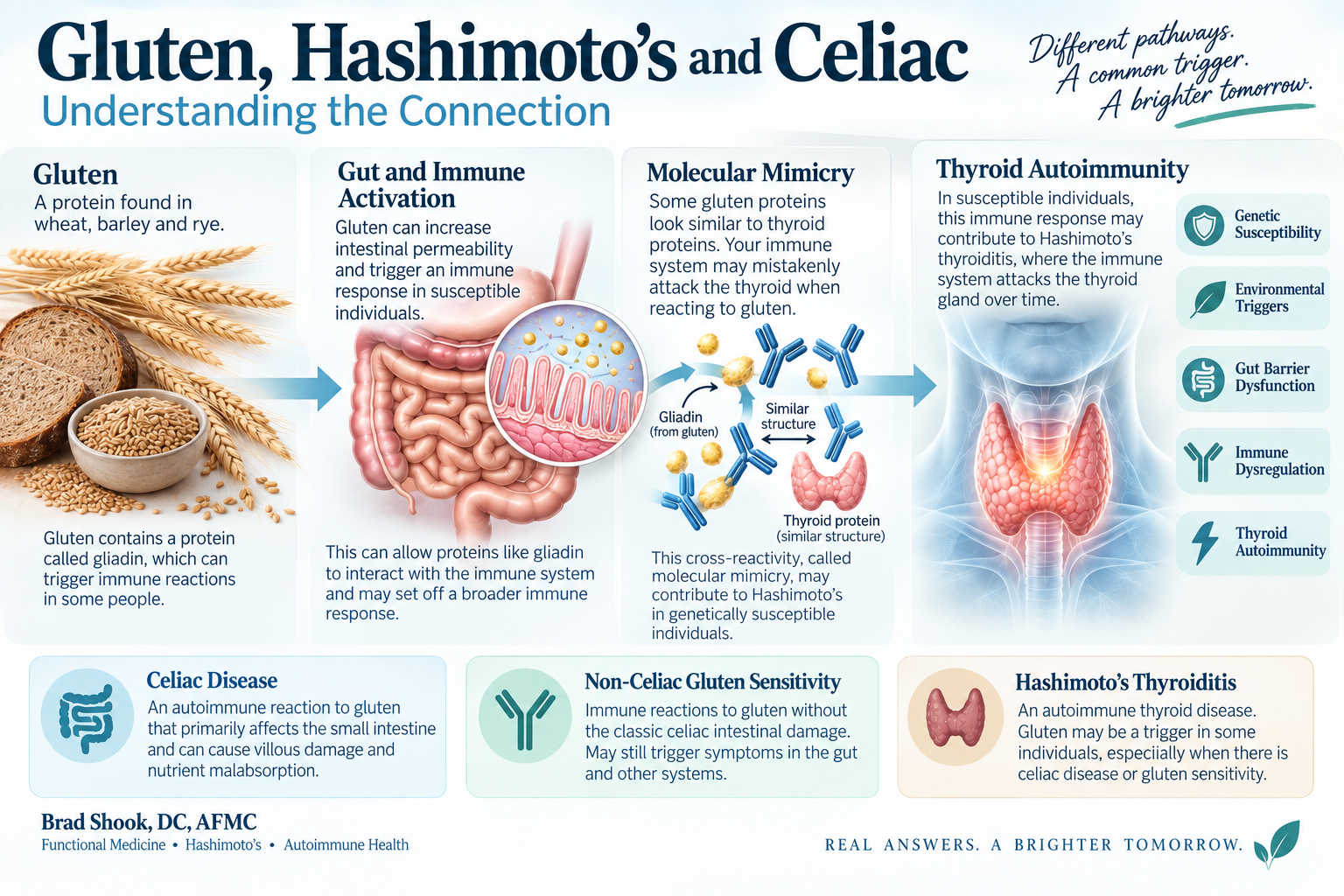
How These Immune Patterns May Connect With Hashimoto's
Hashimoto's is not simply a thyroid-hormone problem. It is an autoimmune process occurring inside an interconnected system that includes immune tolerance, the intestinal barrier, digestion, the microbiome, liver metabolism, blood-sugar regulation, nutrient status, stress physiology, sleep, hormones, infections, and environmental exposures.
Shared autoimmune susceptibility
Autoimmune thyroid disease and celiac disease occur together more often than expected by chance. A meta-analysis found biopsy-confirmed celiac disease in about 1.6% of people with autoimmune thyroid disease. The absolute number is not enormous, but the association is strong enough that symptoms, iron deficiency, family history, other autoimmune disease, or unexpectedly high thyroid-hormone requirements should raise the testing question.
Barrier function and loss of oral tolerance
The intestinal barrier does more than keep food inside the digestive tract. It helps decide which molecules can cross, how dietary proteins are broken down, and whether the immune system learns to tolerate them. Inflammation, intestinal injury, altered digestion, and microbial products can change that environment. The Kharrazian Institute gastrointestinal and Hashimoto's frameworks treat barrier function, oral tolerance, and systemic immune activity as connected but distinct parts of the physiological web.
This does not mean that every person with Hashimoto's has one condition called leaky gut or that healing the gut will restore damaged thyroid tissue. It means that intestinal symptoms, nutrient absorption, food reactions, celiac disease, medication absorption, microbial balance, and barrier-associated immune findings can provide different clues worth investigating.
Food-to-thyroid cross-reactivity is biologically plausible but not universal
A 2017 laboratory study examined whether antibodies directed at thyroid-axis targets reacted with 204 dietary proteins. Reactivity was observed for some targets, including thyroglobulin, thyroid hormones, and the 5-deiodinase enzyme. The study did not find dietary-protein reactivity with thyroid peroxidase or the TSH receptor. This is an important boundary: food-to-thyroid cross-reactivity is a plausible mechanism for selected targets, but the laboratory evidence does not justify saying that every gluten or food antibody attacks the thyroid.
Testing can measure antibodies to selected wheat, gluten, celiac, food, and thyroid targets. It cannot test every possible thyroid target or prove that molecular mimicry is actively causing thyroid damage in one person. That is why I consider the complete pattern: history, timing, symptoms, standard thyroid tests, celiac or allergy evaluation, food-immune findings when appropriate, digestive and barrier clues, and the response to a carefully designed intervention.
Clinically, gluten is one of the most common food-related immune patterns I encounter in people with autoimmunity, and its removal commonly makes a positive difference when it is relevant to the individual. That observation does not establish gluten as the cause of every case of Hashimoto's. It does make gluten an important potential trigger to investigate rather than dismissing the question after a negative celiac test.
What the Gluten-Free Diet Research Shows in Hashimoto's
For confirmed celiac disease, the decision is clear. Strict lifelong gluten avoidance is treatment for celiac disease, supports intestinal healing, reduces ongoing immune activation from gluten, and can improve nutrient and medication absorption.
For Hashimoto's without celiac disease, the research is much less settled. Small trials and meta-analyses have reported mixed changes in thyroid antibodies, TSH, and thyroid hormones. A 2023 meta-analysis concluded that the evidence was not sufficient to recommend a gluten-free diet to every person with Hashimoto's. A 2025 systematic review found no significant improvement in TSH, free T3, or free T4 and reported opposite directions of change for thyroglobulin and thyroid peroxidase antibodies.
That uncertainty does not mean gluten can never matter. It means the average result from a small, mixed study population cannot tell you which mechanism is present in one person. Celiac disease, wheat allergy, broader wheat immune reactivity, food substitution, diet quality, medication absorption, and true symptom response must be separated rather than averaged into one universal rule.
What to Do Before Removing Gluten
Complete Celiac Testing Before Going Gluten-Free
If celiac disease is possible, complete the appropriate testing while you are still eating gluten. Removing gluten first can lower antibody levels and allow the intestine to begin healing. That may produce false-negative results or make later testing more difficult to interpret.
Define the immune question
Decide whether you are evaluating celiac disease, wheat allergy, broader wheat immune reactivity, selected gluten-associated foods, intestinal barrier patterns, or more than one category. One test cannot answer all of them.
Establish a baseline
Record digestive symptoms, energy, cognition, skin or joint patterns, bowel function, diet quality, thyroid medication timing, and relevant laboratory findings before changing several variables at once.
Change the plan with a purpose
Confirmed celiac disease requires strict avoidance. A non-celiac trial should have a defined goal, adequate nutrition, a realistic time frame, and a reassessment point. When safe, reintroduction can help determine whether the response is reproducible.
Do not perform an unsupervised gluten challenge if you have had a severe reaction, significant illness, major weight loss, neurologic symptoms, or another reason that re-exposure may be unsafe. Work with the appropriate clinician.
A Gluten-Free Diet Still Has to Be a Healthy Diet
Removing gluten can eliminate fortified grains and sources of fiber, iron, folate, and B vitamins. Replacing wheat with the same few highly processed starches can narrow food diversity and create a new problem. This is especially relevant when rice, corn, oats, potato, tapioca, or other substitutes become daily staples.
Restrictive diets should not collapse into eating the same foods every day. A better plan protects protein intake, micronutrients, plant diversity, bowel function, and the ability to sustain the diet. If additional food reactions are suspected, evaluate them deliberately instead of removing gluten, dairy, grains, eggs, soy, and nightshades all at once.
For the larger nutrition framework, continue to the Hashimoto's diet guide. For a focused milk discussion, see dairy and Hashimoto's.
My Functional Medicine Approach to Gluten and Hashimoto's
I use the Environmentally Induced Autoimmunity model to understand why the immune system may be reacting and what may be helping the pattern continue. Gluten is considered inside the larger physiological picture, not as the automatic answer for every person with Hashimoto's.
DETECT
Establish a baseline and identify the most relevant triggers and patterns using your history, symptom timeline, diet, thyroid and celiac testing, allergy evaluation, broader immune testing when useful, digestive and barrier findings, nutrient status, medication absorption, exposures, stress, and sleep.
SUPPORT
Build an individualized plan around the highest-priority findings. This may include strict gluten avoidance for celiac disease, a focused gluten or food trial, improved digestion and barrier support, better food diversity, targeted nutrients, metabolic support, and lifestyle changes chosen for your pattern.
REASSESS
Track your symptoms, energy, digestion, skin, joints, cognition, thyroid findings, nutrition, side effects, and ability to follow the plan. Continue what is helping, adjust what is incomplete, and stop restrictions that are not supported when reintroduction is safe.
To understand how this fits into the complete autoimmune model, visit the Hashimoto's hub, the Hashimoto's causes and triggers guide, the functional medicine testing guide, or see how I use DETECT → SUPPORT → REASSESS.
Frequently Asked Questions
Why can gluten matter when you have Hashimoto's?
One plausible direct connection is immune cross-reactivity, sometimes called molecular mimicry. In a susceptible person, antibodies produced during a gluten-related immune response may recognize related targets associated with thyroid tissue. Celiac-related antibodies against tissue transglutaminase have also been shown in laboratory research to bind thyroid tissue. No routine clinical test can prove that this mechanism is occurring in a particular person or evaluate every possible thyroid target. Hashimoto's and celiac disease also share autoimmune susceptibility, and celiac-related intestinal damage can interfere with nutrient and thyroid-medication absorption.
Can a negative celiac test rule out every problem with wheat or gluten?
No. A negative celiac evaluation makes celiac disease less likely when testing was complete and performed while gluten was being eaten. It does not diagnose or exclude wheat allergy, non-celiac wheat or gluten sensitivity, or immune reactivity to every wheat protein.
Why might broader wheat testing look at more than alpha-gliadin?
Wheat contains many gluten and non-gluten proteins and peptides. A broader immune-reactivity assessment may examine several of them, but it does not replace the standard medical evaluation used to diagnose celiac disease or wheat allergy.
What are gluten-associated foods?
They are foods evaluated alongside gluten because they may contain gluten, become contaminated with gluten, be commonly eaten after gluten is removed, cause a separate immune reaction, or contain proteins that certain gluten-directed antibodies may recognize. These possibilities do not all represent the same immune process.
Why are dairy proteins included in a gluten cross-reactivity evaluation?
Milk contains several distinct antigens, including casein fractions, casomorphin, butyrophilin, whey, and whole-milk proteins. Some have shown laboratory cross-reactivity with gliadin, while dairy can also cause separate immune or digestive reactions.
Does a positive cross-reactive food antibody result diagnose a food allergy or prove a Hashimoto's trigger?
No. Cross-reactive food antibody testing measures IgG and IgA immune reactivity to selected food proteins. It does not diagnose an immediate IgE food allergy, celiac disease, thyroid damage, or prove that a food caused Hashimoto's. Results require clinical interpretation.
Does a negative cross-reactive food antibody result prove dairy or every listed food is safe for me?
No. A negative result means the panel did not detect elevated antibodies to the specific preparations it tested. It cannot exclude lactose intolerance, IgE allergy, reactions to untested proteins, or every symptom response.
Should I test for celiac disease before going gluten-free?
Yes, when celiac disease is possible. Celiac blood tests and biopsy interpretation are most reliable while gluten is still being eaten. Discuss the diagnostic plan before changing your diet.
Should everyone with Hashimoto's avoid gluten and dairy?
Not automatically. Confirmed celiac disease requires strict lifelong gluten avoidance. Outside celiac disease, decisions about gluten, dairy, or other foods should be based on the individual pattern, testing when useful, nutritional impact, and measured response.
Can a gluten-free diet replace thyroid medication?
No. If Hashimoto's has reduced thyroid hormone production, diet does not replace missing hormone. Medication needs should be monitored with the prescribing clinician, especially if intestinal absorption or diet changes.
Ready to Understand Your Hashimoto's Pattern More Clearly?
If you are stuck between conflicting advice such as “everyone must avoid gluten” and “a negative celiac test means gluten cannot matter,” I can help separate the questions, establish a better baseline, and build a plan around your individual findings.
References and Clinical Resources
- Rubio-Tapia A, et al. American College of Gastroenterology Guidelines Update: Diagnosis and Management of Celiac Disease.
- Roy A, et al. Prevalence of Celiac Disease in Patients with Autoimmune Thyroid Disease: A Meta-Analysis.
- Vojdani A. The Characterization of the Repertoire of Wheat Antigens and Peptides Involved in Humoral Immune Responses.
- Vojdani A, Tarash I. Cross-Reaction Between Gliadin and Different Food and Tissue Antigens.
- Naiyer AJ, et al. Tissue Transglutaminase Antibodies in Individuals with Celiac Disease Bind to Thyroid Follicles and Extracellular Matrix and May Contribute to Thyroid Dysfunction.
- Kharrazian D, Herbert M, Vojdani A. Immunological Reactivity of Autoimmune Thyroid Target Sites with Dietary Proteins.
- Paranos S, et al. Lack of Cross-Reactivity Between Casein and Gliadin in Sera of Patients with Celiac Disease.
- Piticchio T, et al. Effect of a Gluten-Free Diet on Autoimmune Thyroiditis Progression.
- Araújo EMQ, et al. Effects of a Gluten-Free Diet in Non-Celiac Hashimoto's Thyroiditis.