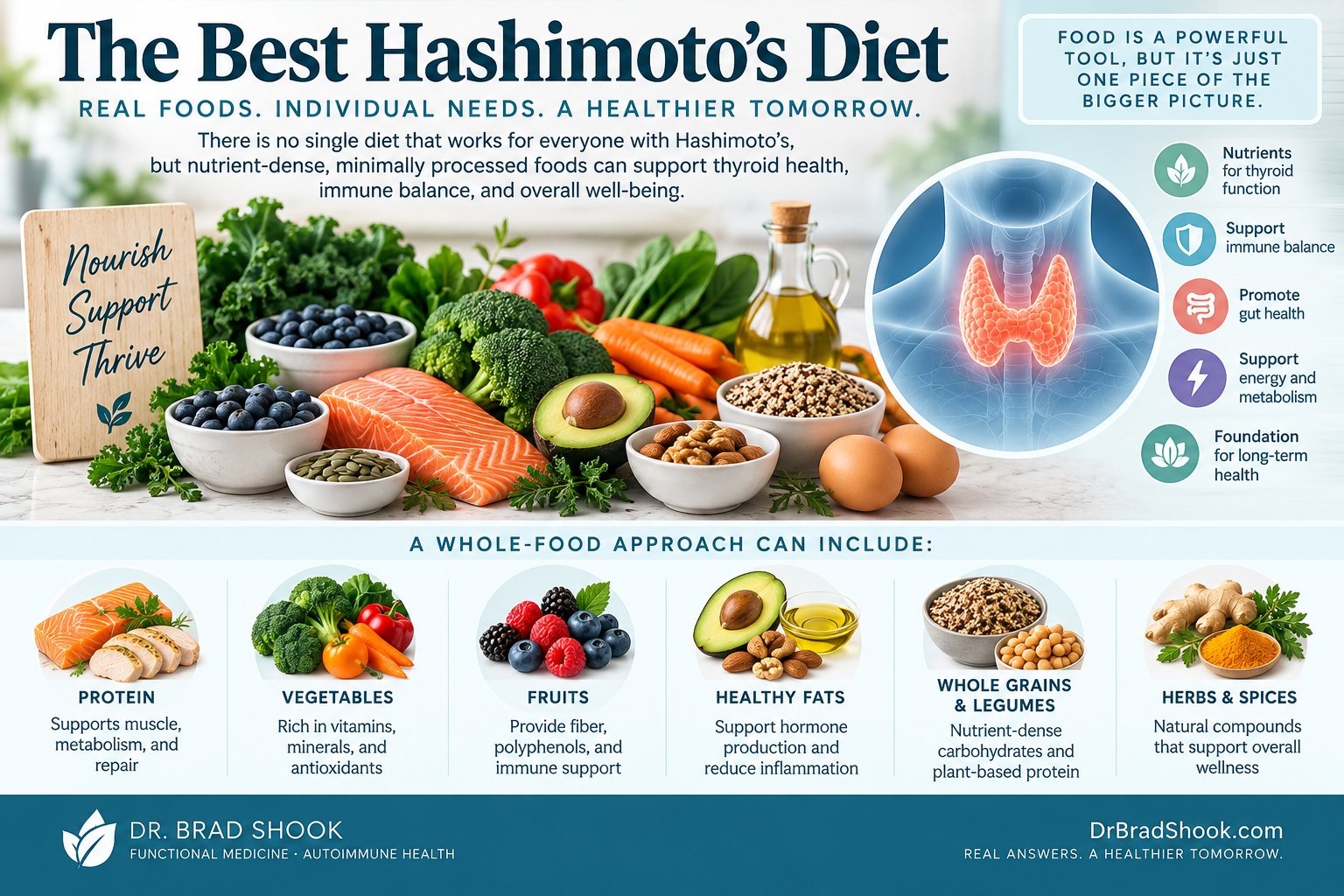
A practical starting point: Begin with the essentials. Then move from a generic Hashimoto's diet to a plan based on your actual pattern. The goal is not to remove more foods. The goal is to learn which changes give you the best return and which restrictions are no longer necessary.
Why the Best Hashimoto's Diet Is Not One Diet
Hashimoto's is an autoimmune thyroid condition, but food can intersect with it through several different pathways. That is why two people with the same diagnosis may need very different diets.
One person may have celiac disease and need lifelong gluten avoidance. Another may have a non-celiac immune response to wheat, a milk-protein reaction, lactose intolerance, unstable blood sugar, low iron or vitamin D, poor digestion, or a diet that has become so restrictive that it creates new nutritional problems. A third person may discover that food is only a small part of the case because sleep, stress physiology, infection history, chemical exposure, hormone changes, medication absorption, or another autoimmune condition is more important.
This is the central idea: the diagnosis tells you that thyroid autoimmunity is present, but it does not tell you which dietary strategy fits your physiology.
What diet can and cannot do
Diet can change antigen exposure, blood sugar, nutrient intake, digestive function, microbiome support, inflammatory signaling, and how you feel. Those are meaningful opportunities. Diet does not guarantee that thyroid antibodies will disappear, rebuild thyroid tissue that has already been lost, or replace thyroid hormone when the gland cannot produce enough.
The research does not identify one universal Hashimoto's diet. Small studies of gluten-free, Mediterranean, calorie-restricted, and Autoimmune Protocol diets suggest that selected people may improve symptoms, quality of life, metabolic markers, or some laboratory measures. The studies are still too small and inconsistent to prove that everyone should follow the same plan.
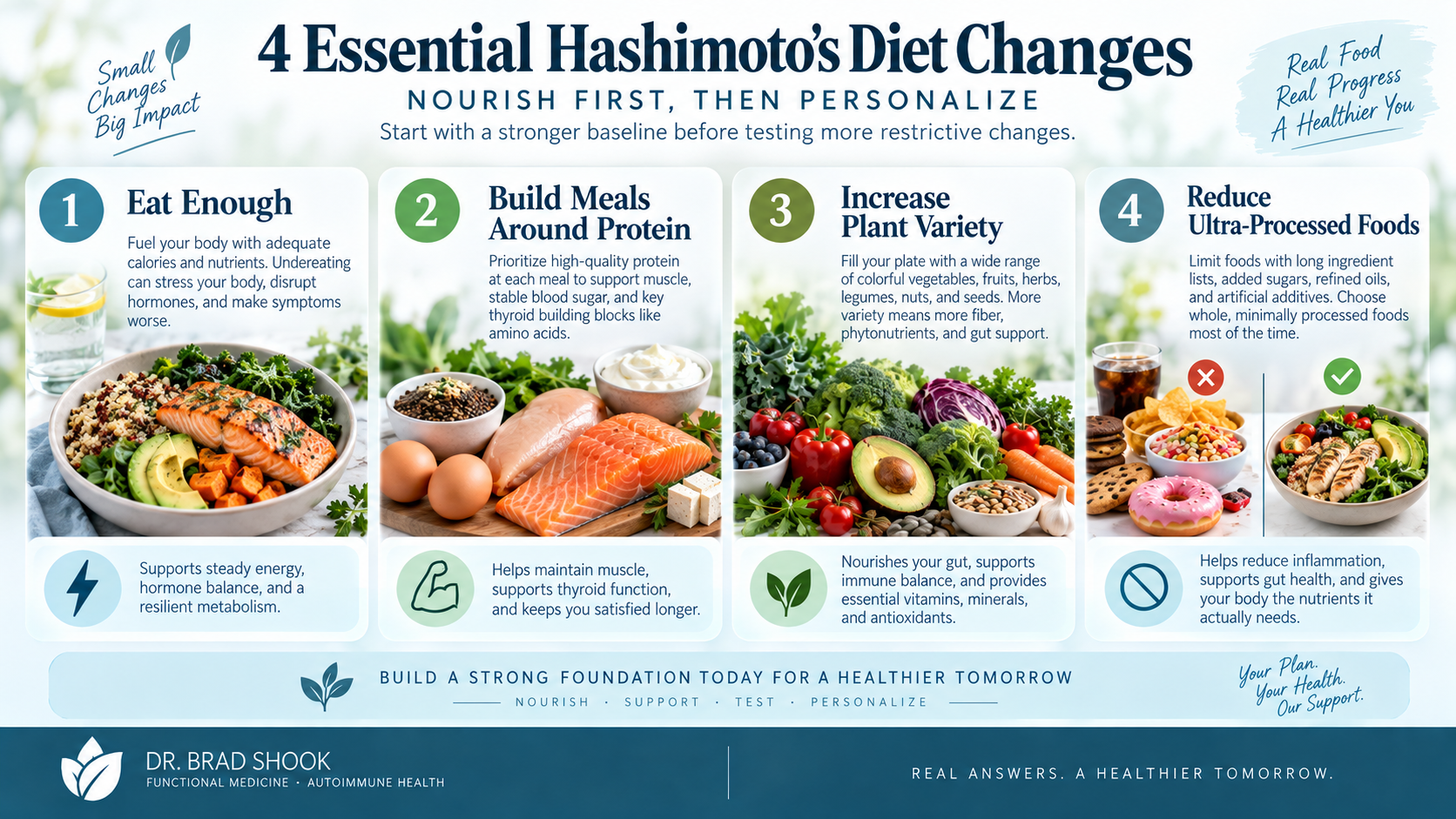
Hashimoto's Diet Essential Changes
Before focusing on a perfect protocol, make sure the diet is doing its basic jobs. These changes create a stronger baseline and make later testing or elimination trials easier to interpret.
Eat enough
Chronic under-eating can worsen fatigue, sleep, recovery, cravings, and nutrient intake. Weight loss may be a goal, but severe restriction is rarely a good long-term Hashimoto's strategy.
Build meals around protein
Protein supports muscle, appetite regulation, recovery, and steadier meals. Include a meaningful protein source at each main meal.
Increase plant variety
When tolerated, rotate vegetables, herbs, spices, fruit, legumes, nuts, seeds, and other fiber sources. Repeating the same few foods on a restrictive diet can work against dietary diversity.
Reduce ultra-processed foods
Make whole and minimally processed foods the default. This naturally reduces refined sugars, poor-quality fats, and additives without requiring a complicated rulebook.
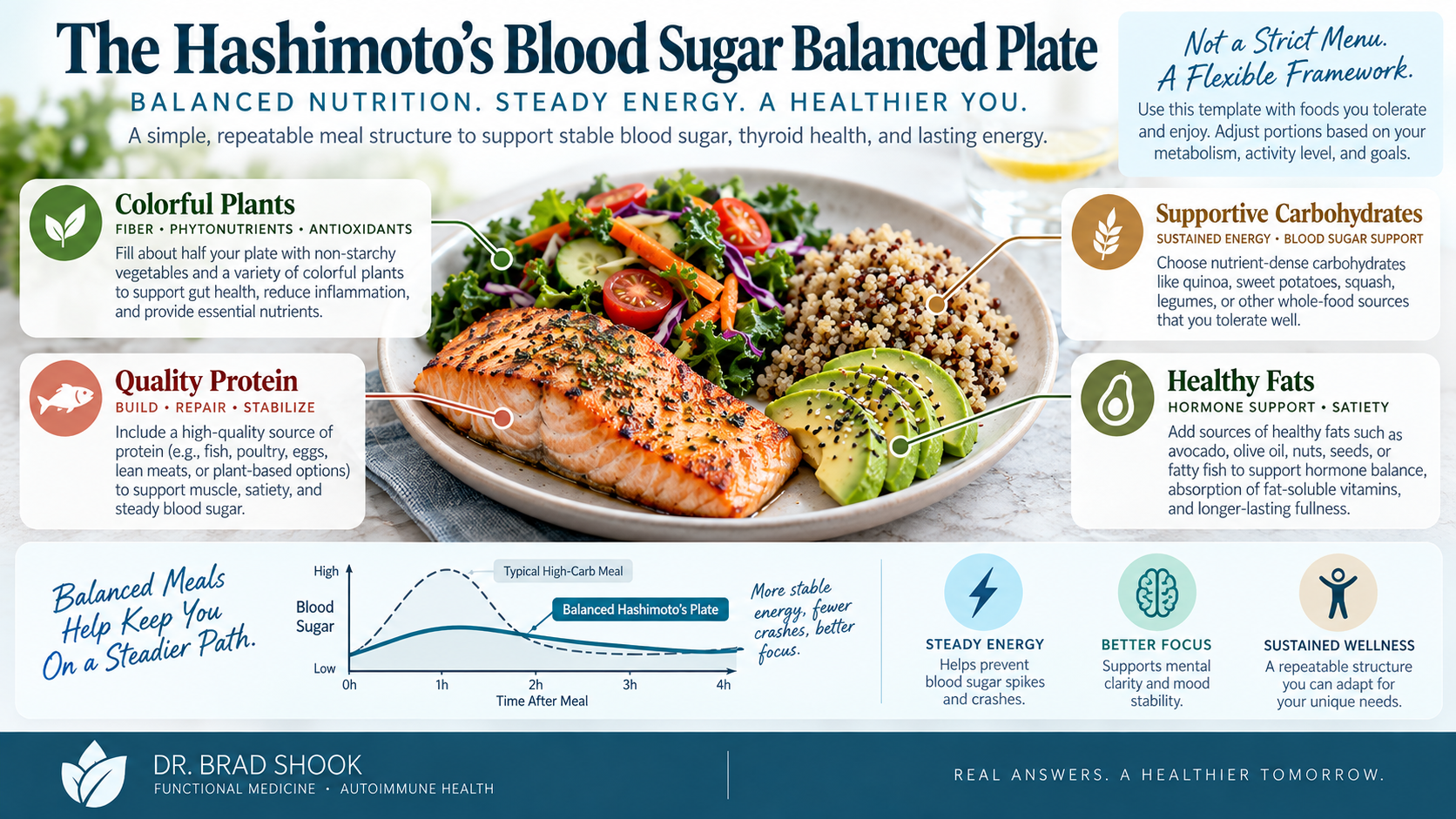
Best foods to build meals around
Protein
Fish, poultry, eggs when tolerated, lean meats, beans, lentils, tofu or tempeh when tolerated, and other protein sources that fit your needs.
Colorful plants
Vegetables, fruit, herbs, and spices provide fiber and a wide range of plant compounds. Cooked vegetables may be easier to tolerate when digestion is sensitive.
Supportive carbohydrates
Root vegetables, fruit, legumes, and intact grains when tolerated can support energy, exercise, sleep, and dietary variety. The right amount depends on your metabolic pattern.
Healthy fats
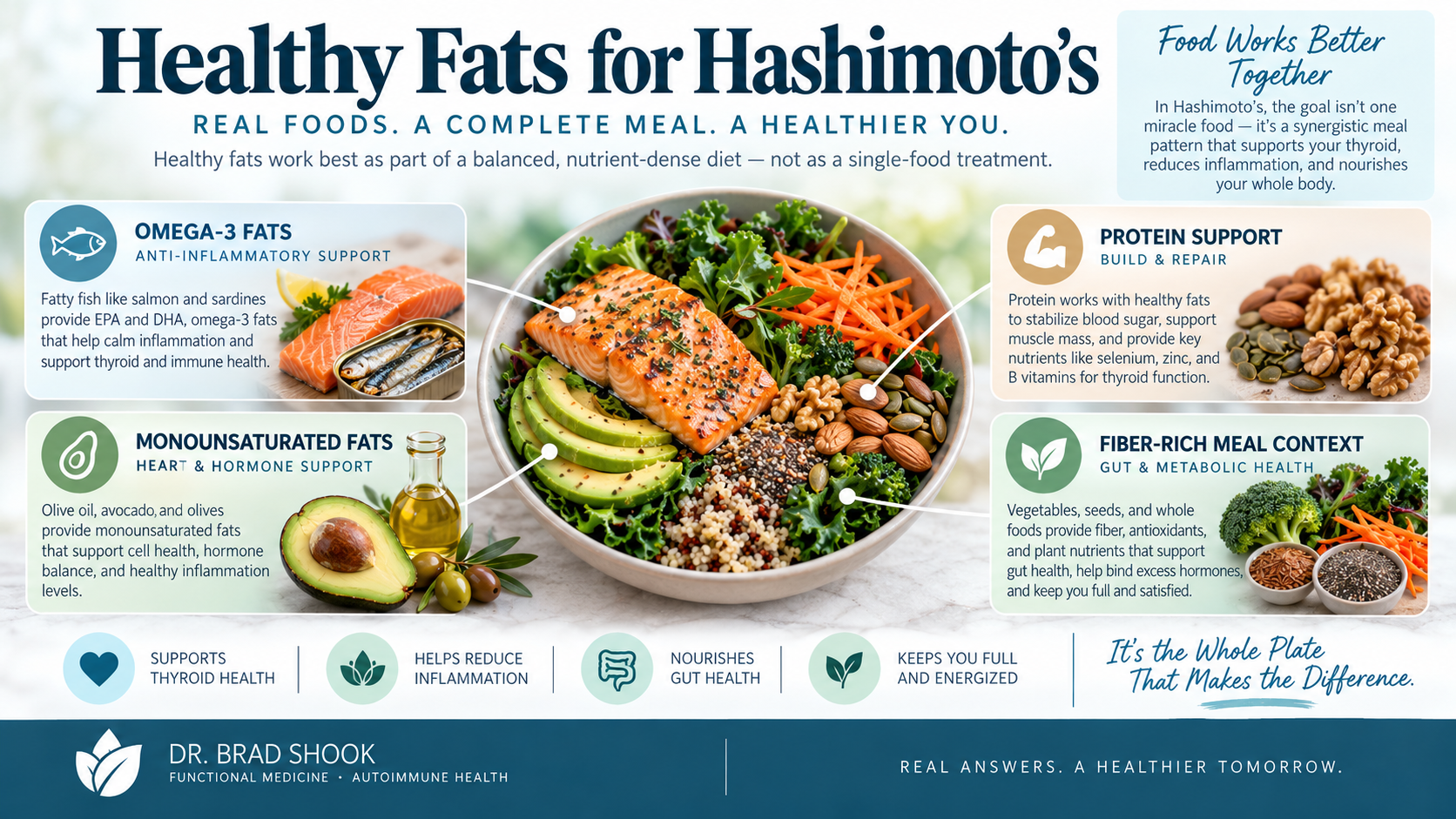
Extra-virgin olive oil, avocado, nuts, seeds, and omega-3-rich fish can help create satisfying, nutrient-dense meals.
Foods and exposures that may need investigation
The list is not the same for everyone. Common questions include gluten or wheat, dairy proteins, foods that produce immediate allergic symptoms, foods associated with repeatable digestive or systemic symptoms, highly processed foods, excess alcohol, and high-dose iodine or seaweed products. The right question is not simply, “Is this food inflammatory?” It is, “What response does this person have to this food, and what evidence supports changing it?”
A Simple 7-Day Hashimoto's Diet Framework
This is a flexible structure, not a prescription. Use foods you tolerate and rotate the protein, plants, and carbohydrate sources instead of eating the same meal every day.
| Day | Meal pattern | Personalization question |
|---|---|---|
| 1 | Eggs or another protein, leafy greens, berries; salmon, roasted vegetables, and sweet potato | Do eggs fit your current plan and response? |
| 2 | Protein smoothie with unsweetened ingredients; chicken, mixed vegetables, olive oil, and lentils | Are legumes tolerated and helpful for fiber? |
| 3 | Turkey and vegetable bowl; beef or tofu stir-fry with varied vegetables and rice if tolerated | Do grains fit your testing and symptom pattern? |
| 4 | Leftover protein with fruit; sardines or another fish with salad and roasted roots | Are you eating enough omega-3-rich seafood? |
| 5 | Chia or protein breakfast; chicken, herbs, vegetables, avocado, and quinoa if tolerated | Are seeds and pseudo-grains part of your plan? |
| 6 | Protein and vegetable hash; turkey burger, slaw, and baked potato or squash | Does the carbohydrate amount support stable energy? |
| 7 | A new protein and plant combination; flexible family meal built from the same template | Can the plan remain practical and socially sustainable? |
How Food May Influence Hashimoto's
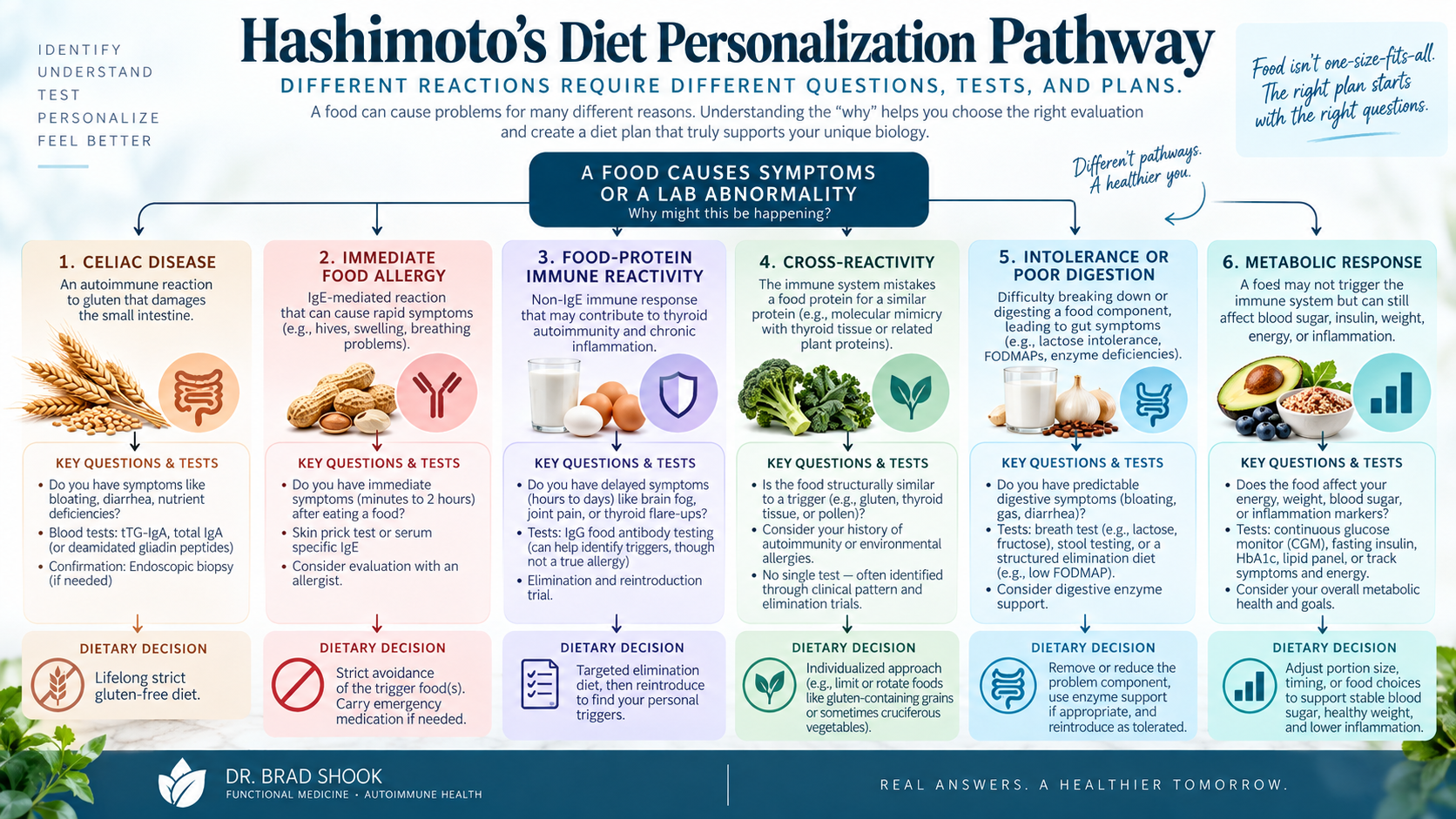
Food-related symptoms are often placed into one large category, but the mechanisms are different. Understanding the difference is what makes a diet more accurate.
| Pattern | What may be happening | How it is investigated |
|---|---|---|
| Celiac disease | An autoimmune response to gluten damages the small intestine in a susceptible person. | Celiac blood testing while gluten is still being eaten, with specialist evaluation when indicated. |
| Immediate food allergy | An IgE-mediated reaction can cause hives, swelling, wheezing, vomiting, or anaphylaxis. | Allergy-focused history and validated IgE testing or supervised challenge. |
| Food-protein immune reactivity | Antibodies may recognize selected food proteins without producing an immediate allergy. | Clinical history, selected IgG and IgA antibody patterns when useful, elimination, and reassessment. |
| Cross-reactivity | An antibody made against one antigen may bind a different antigen with a similar enough structure. | Targeted antibody testing can provide clues, but a result must be interpreted with symptoms and response. |
| Intolerance or poor digestion | A food may cause symptoms without an autoimmune or allergic mechanism, such as lactose intolerance. | History, breath testing when appropriate, and a structured trial. |
| Metabolic response | A meal pattern may produce large glucose changes, hunger, fatigue, or difficulty regulating weight. | Meal history, symptoms, metabolic labs, and sometimes glucose monitoring. |
These patterns can overlap. A negative celiac panel does not rule out every possible response to wheat. A positive specialty antibody result does not prove that a food caused Hashimoto's. The strongest decisions come from matching the test to the question and then confirming that the plan produces a meaningful change.
Hashimoto's Diet Options and When They May Fit
No protocol earns a permanent place simply because it has a popular name. A dietary protocol is a tool for a specific job.
| Approach | Potential role | Important limitation |
|---|---|---|
| Mediterranean-style | A strong whole-food foundation emphasizing vegetables, fruit, legumes, fish, olive oil, nuts, and minimally processed foods. | It still needs adjustment for celiac disease, allergy, individual reactions, blood sugar, and digestive tolerance. |
| Gluten-free | Required for celiac disease and potentially useful for selected non-celiac patterns. | It is not automatically necessary for every person with Hashimoto's, and gluten-free packaged foods can still be nutritionally poor. |
| Dairy-free | Appropriate for milk allergy and potentially useful when dairy proteins or lactose produce a meaningful response. | Milk-protein immunity and lactose intolerance are different. Calcium, protein, iodine, and vitamin D may need attention. |
| Autoimmune Protocol | A structured elimination approach that can help selected people identify food-related symptom patterns. | Research is preliminary. The diet is restrictive and should include a planned reintroduction phase. |
| Low-FODMAP | Can reduce fermentable-carbohydrate symptoms in selected gastrointestinal cases. | It is not a Hashimoto's treatment and should not remain maximally restrictive longer than necessary. |
| Lower-carbohydrate | May help selected people with insulin resistance, appetite dysregulation, or large glucose swings. | Very low carbohydrate intake is not automatically best and may be a poor fit for some people. |
Autoimmune Paleo can be a starting experiment, not a forever identity
The Autoimmune Protocol, often called AIP or Autoimmune Paleo, removes several food groups and later reintroduces them in a structured way. Small Hashimoto's studies have reported improvements in symptoms, quality of life, stress, or inflammation measures, but they have not established AIP as a universal treatment or shown consistent changes in thyroid hormones and antibodies.
If AIP is used, the plan should protect nutrient intake, dietary diversity, adequate calories, and a clear reintroduction schedule. People sometimes feel worse because they remove many foods, undereat, rely on the same small group of replacement foods, or never progress beyond elimination. See the AIP beginner's guide and the guide for people who feel worse on an AIP diet.
Gluten-Free and Grain-Free Diets
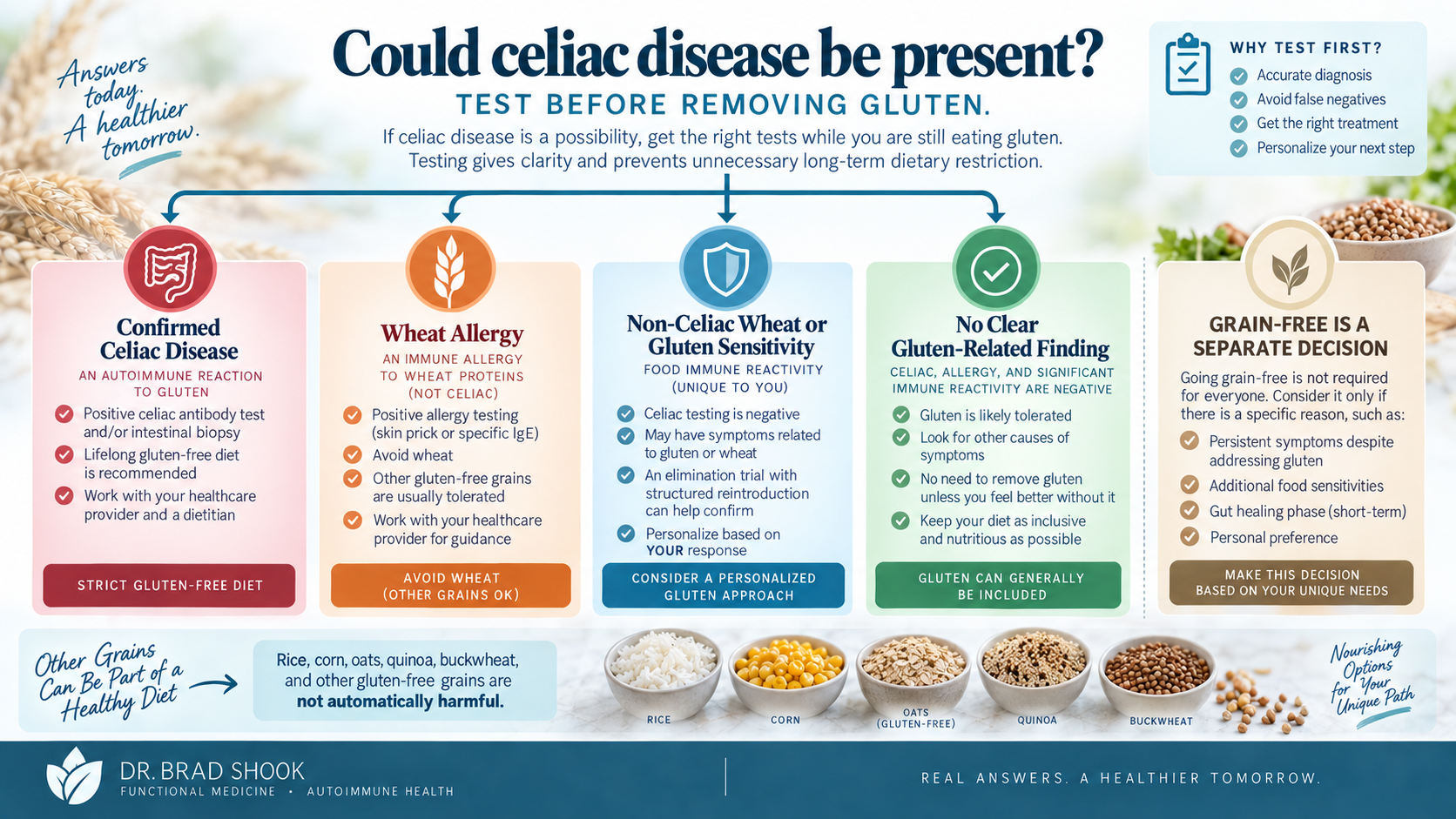
Gluten matters most clearly when celiac disease is present. Celiac disease and autoimmune thyroid disease occur together more often than would be expected by chance. In celiac disease, strict lifelong gluten avoidance is necessary.
Outside of celiac disease, the question is more individualized. A person may have a wheat allergy, non-celiac wheat or gluten sensitivity, immune reactivity to selected wheat proteins, or a response involving another food commonly eaten on a gluten-free diet. Current trials and meta-analyses do not support promising that every non-celiac person with Hashimoto's will improve by removing gluten.
If celiac disease is a possibility, complete appropriate testing before removing gluten. Once gluten has been removed, antibody and biopsy findings can become falsely reassuring because the immune system is no longer receiving the same exposure.
Grain-free is a separate decision. Rice, corn, oats, quinoa, buckwheat, and other gluten-free foods do not all become harmful because someone reacts to gluten. However, a person can have a separate response to a replacement food, and repeatedly eating the same substitutes may create a new pattern worth evaluating.
For a deeper explanation, read the connection between gluten, Hashimoto's disease, and celiac disease.
Should You Avoid Dairy With Hashimoto's?
Dairy is not one question. Milk allergy, lactose intolerance, immune reactivity to milk proteins, digestive symptoms, and thyroid medication excipients are different issues.
Some people feel better without dairy, but that response should be understood rather than automatically generalized. If dairy is removed, replace the protein, calcium, iodine, vitamin D, and convenience it provided. If an immediate allergy is suspected, do not perform an unsupervised home reintroduction. The complete Hashimoto's and dairy guide explains these distinctions.
Using Testing to Create a More Individualized Hashimoto's Diet
A diet becomes more useful when it answers a defined question. I may use history, symptom patterns, standard laboratory testing, specialty immune testing, and structured food trials to create a better starting point.
What a food immune fingerprint means
A food immune fingerprint is a practical description of the pattern of antibodies your immune system makes against the selected food proteins included in a test. Some advanced panels look at IgG and IgA recognition across foods, individual food proteins, gums, processing-related compounds, or raw, cooked, and modified preparations. That matters because heating and processing can change protein structure, and a whole food may not produce the same laboratory pattern as one isolated component.
This information can help narrow an elimination plan and reduce guesswork, but it must be interpreted carefully. An antibody result shows immune recognition. It does not automatically diagnose an immediate food allergy, prove that a food damaged the thyroid, measure symptom severity, or establish that the food must be avoided forever. Exposure history, symptoms, other findings, and response to removal and reintroduction still matter. For the broader testing framework, see my functional medicine testing guide.
Questions testing may help answer
- Is celiac disease a possibility, and was testing performed while gluten was still being eaten?
- Is the concern an immediate IgE-mediated allergy, a delayed antibody pattern, intolerance, or a metabolic response?
- Are antibodies recognizing selected wheat proteins, milk proteins, multiple foods, or foods heavily used as substitutes?
- Is there evidence that digestion, intestinal barrier function, or microbiome balance deserves further investigation?
- Are iron, vitamin D, vitamin B12, folate, zinc, selenium, essential fatty acids, glucose regulation, or other nutritional and metabolic factors affecting the plan?
When a structured dietary trial may add clarity
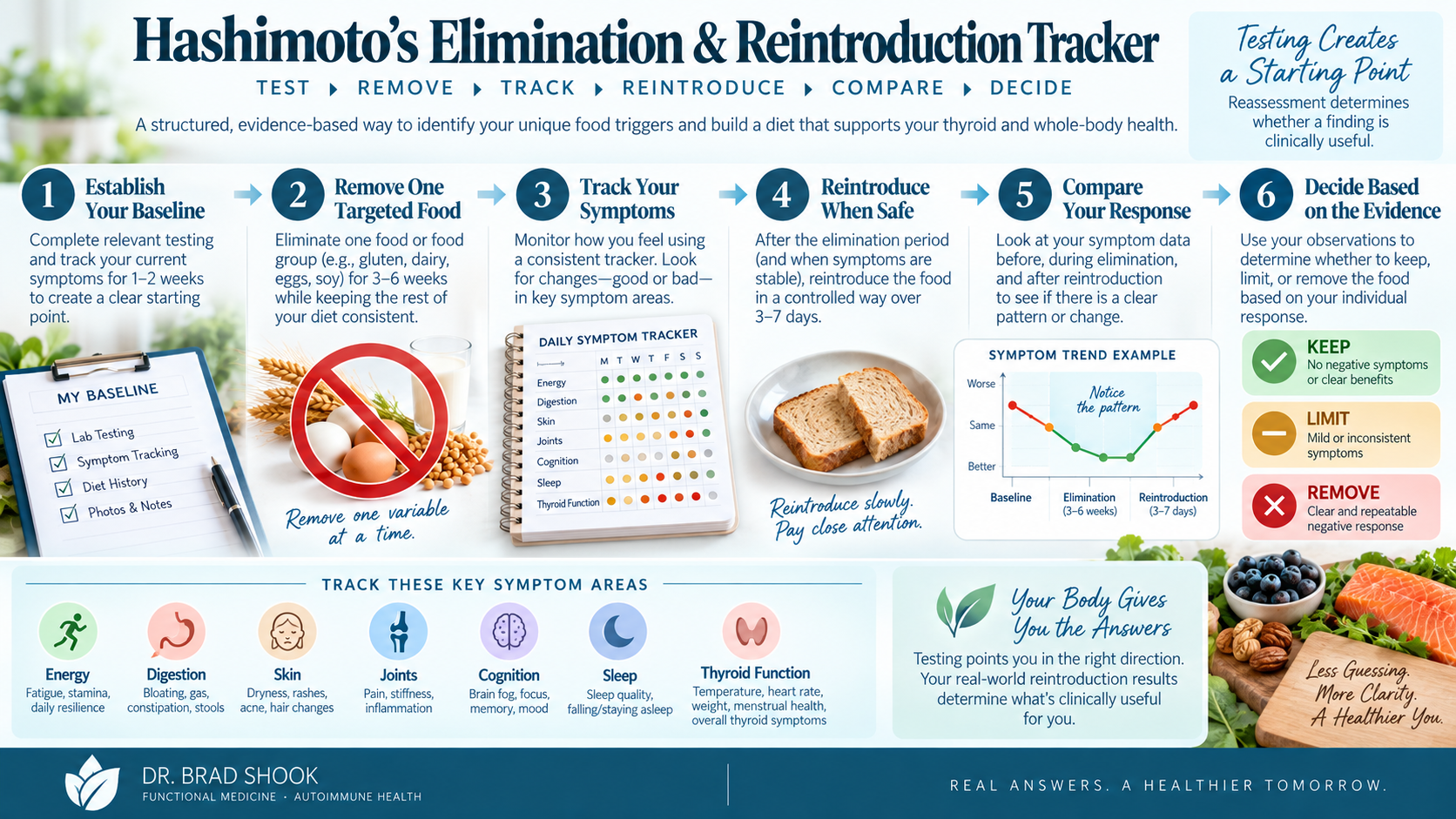
Testing is not the only path. A focused elimination and reintroduction trial can be useful when it is safe and the outcome is measurable. Keep the rest of the plan stable, track the symptoms that matter, remove the selected food completely for a defined period, then reintroduce it in a structured way. A repeatable response is more informative than a vague memory that you “felt inflamed.”
Hashimoto's, Diet and the Intestinal Barrier
The intestinal barrier helps decide what remains inside the digestive tract and what can interact with the immune system. Loss of oral tolerance means the immune system is reacting to food antigens that it would normally handle without an unnecessary response. Intestinal permeability, digestion, microbial balance, infections, medications, alcohol, stress physiology, and dietary patterns may all influence this environment.
Studies have found differences in intestinal permeability and microbiome patterns in some people with Hashimoto's, but that does not prove that every person has the same gut problem or that one stool or permeability test explains the disease. The opportunity is to investigate the barrier system when the history supports it, then connect findings to a practical plan.
A restrictive diet is not automatically a gut-supportive diet. If it reduces plant variety, fiber, calories, or nutrient intake for too long, it may create a different set of problems. Support the barrier with the widest variety of tolerated foods, adequate nutrition, and targeted work on the factors actually present.
Blood Sugar, Metabolism and Weight
Hashimoto's symptoms can make meal timing, activity, body composition, and weight regulation more difficult. At the same time, large swings in blood sugar can contribute to fatigue, irritability, cravings, poor sleep, and difficulty recovering from stress.
The answer is not always to remove all carbohydrates. Pair protein, fiber-rich plants, and healthy fats with the amount and type of carbohydrate that fits your glucose regulation, activity, sleep, and goals. Some people need fewer refined carbohydrates. Others need more total food or strategically placed carbohydrates to feel and function better.
For a deeper plan, see the hypothyroidism and weight guide.
Iodine, Selenium, Iron, Vitamin D and Healthy Fats
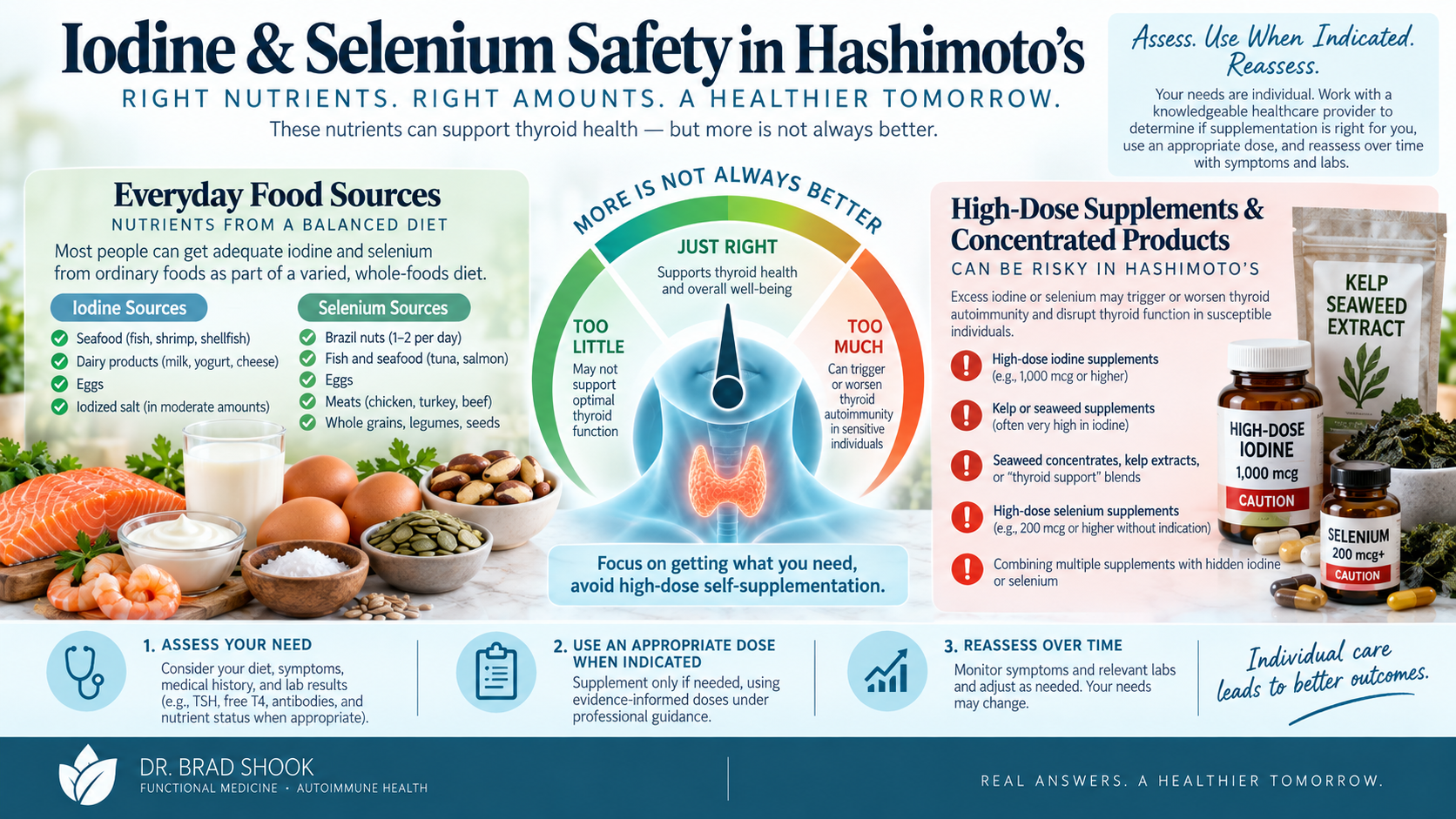
Nutrients matter to thyroid hormone production, conversion, immune regulation, energy, and recovery. More is not always better.
Iodine
Iodine is essential, but excess iodine can aggravate thyroid dysfunction in susceptible people. Be especially careful with high-dose iodine, kelp, and concentrated seaweed products. Do not assume that all ordinary iodine-containing foods must be removed.
Selenium
Selenium is involved in thyroid and antioxidant enzymes. Trials show possible modest changes in thyroid antibodies in some groups, but benefits are not universal and excess selenium is toxic.
Iron, B12 and folate
Low iron or anemia can mimic or magnify fatigue, hair changes, weakness, and poor exercise tolerance. The reason for a deficiency matters, including menstrual blood loss, diet, absorption, and gastrointestinal disease.
Vitamin D, zinc and fatty acids
These nutrients participate in immune and metabolic function. Assess the whole diet and objective findings before turning supplements into a long, uncoordinated list.
When Diet Is Only One Part of the Hashimoto's Case
Food is a common and important place to start, but focusing only on food can leave the largest drivers untouched. My Environmentally Induced Autoimmunity model looks at the interconnected systems that may influence how Hashimoto's begins and behaves, including:
- immune triggers and the timing of symptom changes
- intestinal barrier function, digestion, and microbiome patterns
- blood sugar regulation, insulin resistance, and metabolic health
- nutrient status and essential fatty acid balance
- sleep, stress physiology, exercise, and recovery
- infection history and current evidence of immune activation
- chemical and environmental exposures
- liver metabolism, hormone patterns, and the female endocrine system
- brain, cognitive, balance, neuropathy, or other neurological changes
- medication timing, absorption, and the possibility of another diagnosis
This wider view creates a new opportunity. Instead of endlessly cycling through diets, you can investigate the most plausible triggers and physiological weak points, use objective findings when they can improve the starting point, and build a plan around the highest priorities in your case. Learn more about Hashimoto's causes and triggers and my functional medicine approach to Hashimoto's.
My DETECT, SUPPORT and REASSESS Process
DETECT
Build your timeline, identify patterns, and use history, symptoms, food exposures, thyroid and metabolic labs, nutrient testing, immune testing, barrier assessment, and other targeted data to determine where to begin.
SUPPORT
Build a practical diet and lifestyle plan around the highest-priority findings. That may include nutritional repletion, an individualized elimination plan, gut and barrier support, blood sugar strategies, sleep and recovery work, and attention to other triggers and drivers identified in the case.
REASSESS
Track your symptoms, energy, digestion, sleep, cognition, weight pattern, food tolerance, ability to follow the plan, and relevant laboratory findings. Continue what is helping, adjust what is incomplete, and remove restrictions that no longer have a reason.
That is how a generic “Hashimoto's diet” becomes an individualized plan rather than another list of foods copied from the internet. For the larger clinical process, see the Hashimoto's Doctor Method.
My Livestream on the Best Hashimoto's Thyroid Disease Diet
In this livestream, I explain the practical thinking behind Hashimoto's dietary choices and why the plan must be adapted to the person rather than copied from a universal list.
Frequently Asked Questions
What is the best diet for Hashimoto's disease?
There is no single best diet for everyone. Start with enough protein and energy, colorful plant foods, healthy fats, minimally processed foods, and carbohydrates matched to your metabolism. Then personalize the plan using your history, testing when useful, and a structured elimination and reintroduction process.
What foods should I avoid with Hashimoto's?
Avoid foods that are unsafe because of a diagnosed condition, such as gluten with celiac disease or a confirmed food allergen. Other restrictions should be based on a repeatable response, relevant testing, and reassessment rather than a universal Hashimoto's food list.
What foods are best for Hashimoto's?
Build meals around quality protein, colorful vegetables and fruit, fiber-rich carbohydrates as tolerated, and healthy fats such as olive oil, avocado, nuts, seeds, and omega-3-rich fish. Dietary variety and adequate total nutrition are important.
Should everyone with Hashimoto's stop eating gluten?
No. Gluten must be avoided with celiac disease. People without celiac disease may still have a wheat allergy, non-celiac sensitivity, or another immune response worth investigating, but current research does not support a universal gluten-free prescription for every person with Hashimoto's.
Should I avoid dairy if I have Hashimoto's?
Not automatically. Milk allergy, lactose intolerance, immune reactivity to milk proteins, and digestive symptoms are different problems. If dairy is removed, replace the protein, calcium, iodine, and vitamin D it contributed and reassess whether the restriction is actually helping.
Is the Autoimmune Protocol diet proven for Hashimoto's?
Research is still limited. Small studies suggest that a personalized AIP program may improve symptoms or quality of life for selected people, but it has not been proven as a universal treatment and has not consistently changed thyroid hormones or antibodies.
Can food antibody testing identify my Hashimoto's triggers?
Selected IgG and IgA testing can show a pattern of immune recognition to the food proteins included in the panel and may help create a more focused starting point. A result does not diagnose an immediate food allergy, prove that a food caused Hashimoto's, or determine permanent avoidance by itself.
What is a food immune fingerprint?
It is a practical way to describe the pattern of measurable antibodies your immune system makes against selected food proteins. The pattern can help guide further investigation, but it must be interpreted with exposure, symptoms, other findings, and response to dietary changes.
Can diet cure Hashimoto's or replace thyroid medication?
Diet can support immune, digestive, metabolic, and nutritional health, but it cannot promise a cure or replace thyroid hormone when the thyroid cannot make enough. Medication changes should be based on appropriate testing and made with the prescribing clinician.
Why might I still feel poorly after changing my diet?
The diet may be too restrictive, nutritionally incomplete, poorly matched to your metabolism, or focused on the wrong foods. Diet may also be only one part of the case. Sleep, stress, infections, exposures, nutrient status, digestion, hormones, medication absorption, neurological changes, and other conditions may need investigation.
Ready to Move Beyond a Generic Hashimoto's Diet?
If you have already tried gluten-free, dairy-free, Paleo, AIP, supplements, or repeated elimination diets and still do not know what is driving your pattern, the next step may be a more complete investigation. I use the Environmentally Induced Autoimmunity model to connect food reactions with gut health, metabolism, nutrient status, stress, sleep, infections, exposures, hormones, medications, and your individual response.
The goal is to give you a clearer starting point and a plan that can be measured and adjusted.
References and Clinical Resources
- Osowiecka et al. The influence of nutritional intervention in the treatment of Hashimoto's thyroiditis: a systematic review.
- Araújo et al. Effects of gluten-free diet in non-celiac Hashimoto's thyroiditis: a systematic review and meta-analysis.
- Ülker et al. Gluten-free and Mediterranean dietary patterns in Hashimoto's thyroiditis.
- Abbott et al. Autoimmune Protocol diet as part of a supported lifestyle intervention for Hashimoto's thyroiditis.
- Ostrowska et al. Effects of a personalized Autoimmune Protocol diet on Hashimoto's symptoms and thyroid parameters.
- Zhao et al. Gut microbiota and intestinal permeability findings in Hashimoto's thyroiditis.
- Kharrazian et al. Antibody cross-reactivity between selected food proteins and thyroid-related targets.
- Kaličanin et al. Food-specific IgG antibodies and clinical findings in Hashimoto's thyroiditis.
- Roy et al. Prevalence of celiac disease in patients with autoimmune thyroid disease: meta-analysis.
- NIDDK. Hashimoto's Disease.
- NIH Office of Dietary Supplements. Iodine: Health Professional Fact Sheet and Selenium: Health Professional Fact Sheet.