What Are the First Signs of Psoriasis Symptoms?
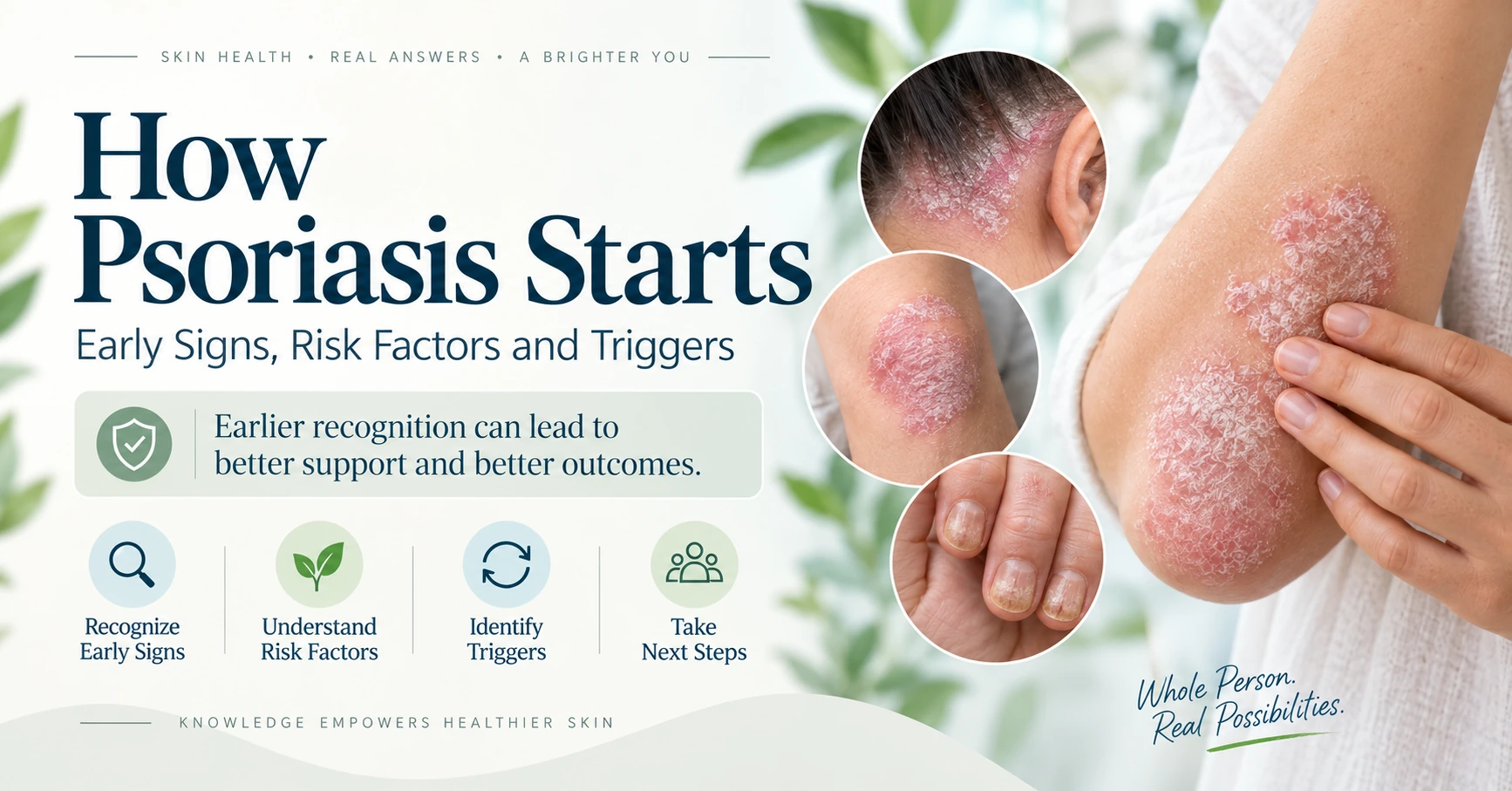
There is no single universal first lesion. The pattern matters more than one photograph or symptom.
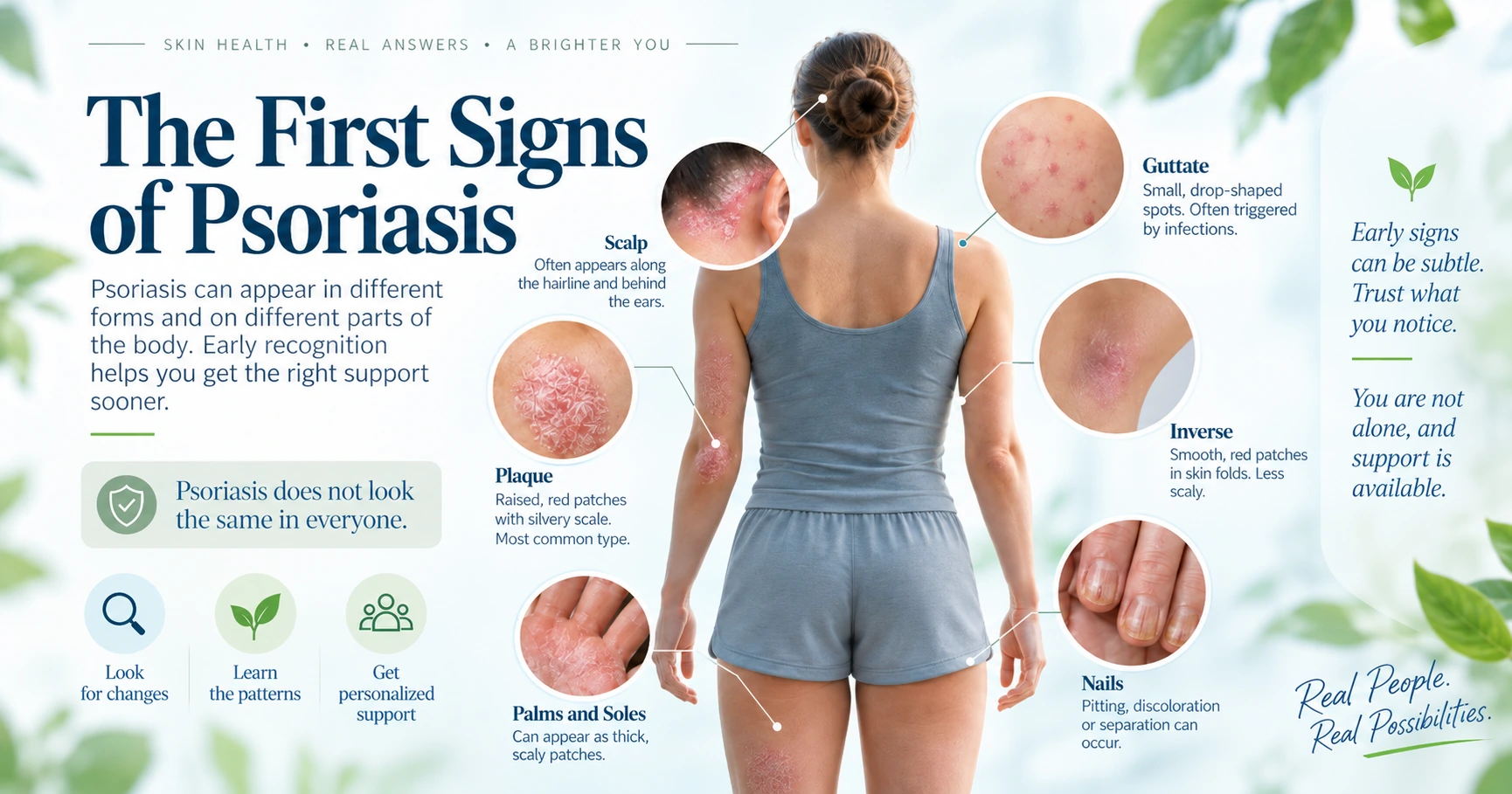
On lighter skin, active plaques often look pink or red. On richly pigmented skin, they may appear violet, gray, dark brown, or less visibly red. Color change can remain after inflammation improves. Compare patterns in the psoriasis types and symptoms guide and use the diagnosis guide to prepare for an evaluation.
Risk Factors
Psoriasis reflects a mix of genetic susceptibility and immune activity. A family history raises risk, but many people do not know of an affected relative. Obesity, smoking, certain infections, and some medicines are associated with psoriasis or more difficult disease in some people. A risk factor is not proof of one personal cause.
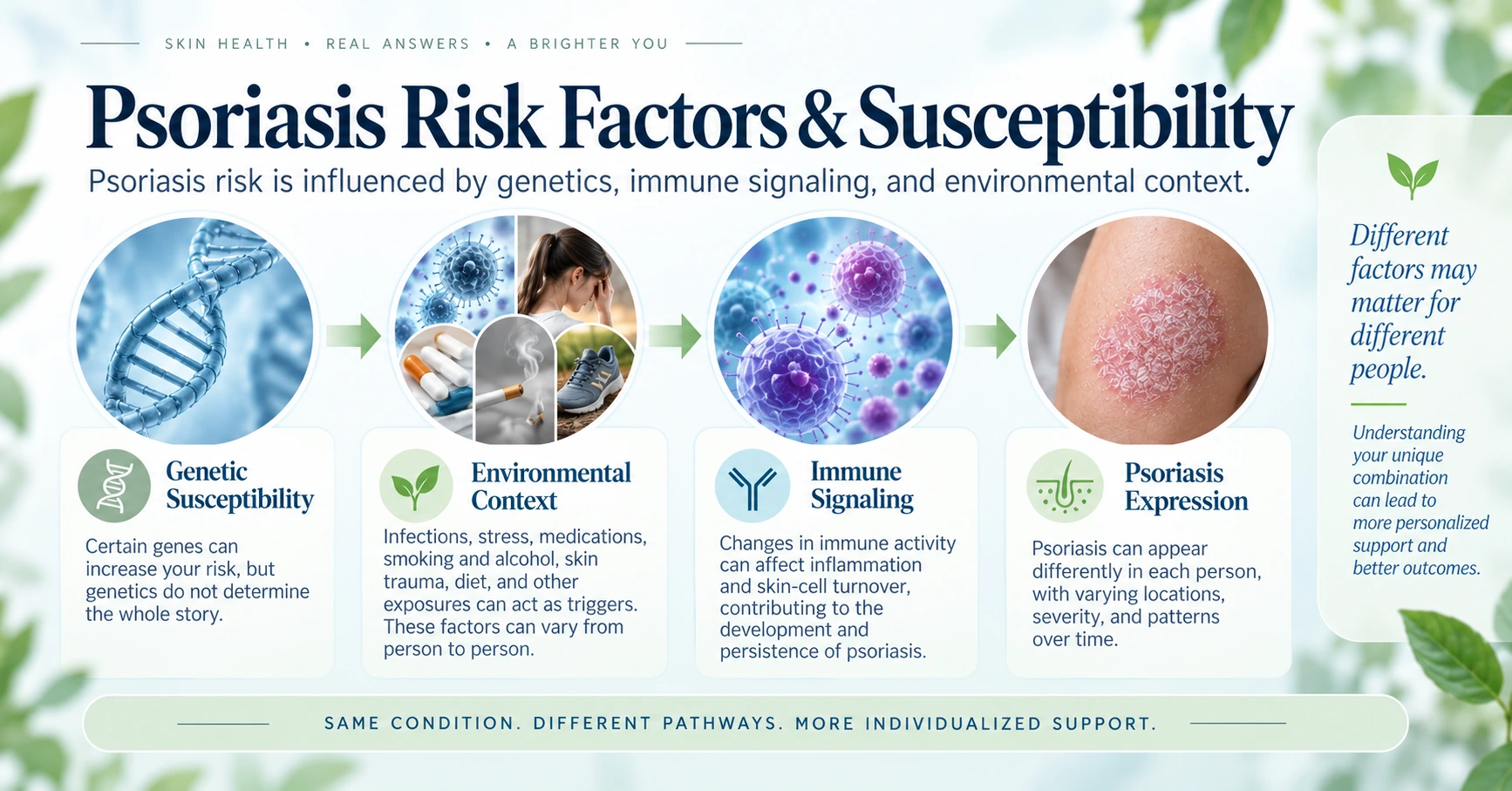
The psoriasis genetics guide explains why inheritance is complex rather than deterministic.
12 Most Common Psoriasis Triggers
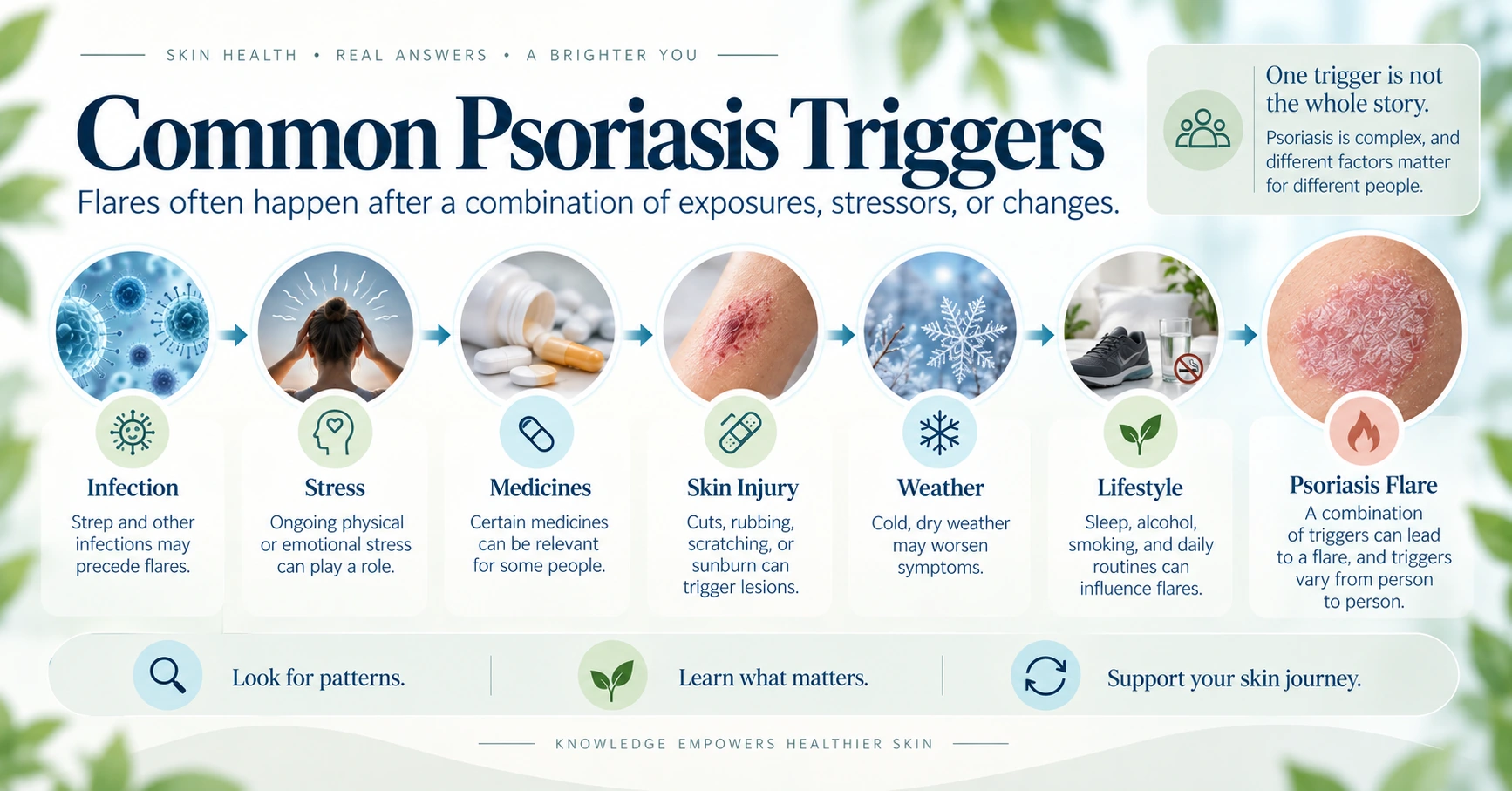
A trigger is something that precedes worsening in a susceptible person. It does not mean that one exposure created the entire disease.
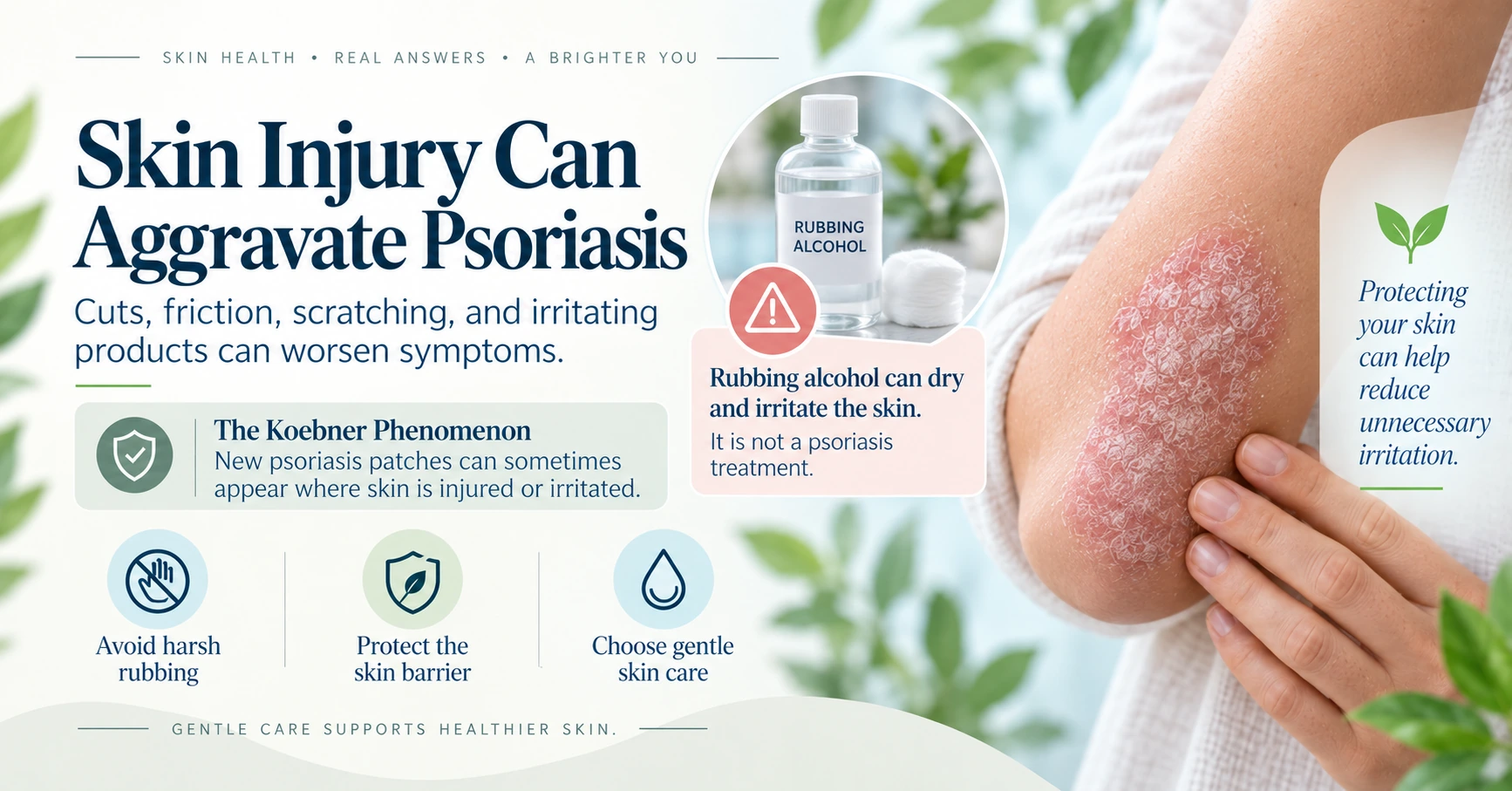
Rubbing Alcohol on Skin Can Trigger Psoriasis Irritation
Rubbing alcohol strips oils, stings cracked skin, and can intensify dryness and inflammation. It is not a psoriasis treatment. Repeated irritation or injury can contribute to lesions at the site in people who experience the Koebner phenomenon.
Seek prompt medical care for fever with widespread redness, rapidly spreading pustules, severe skin pain, dehydration, eye pain or light sensitivity, or a hot swollen joint. These patterns need more than trigger tracking.
Other Possible Triggers That Lead to Psoriasis Flares
Symptoms can also change after travel, a new product, occupational exposure, a change in sleep, pregnancy, a new supplement, or an infection that was never formally diagnosed. Keep alternative explanations open. Fungal infection, eczema, allergic contact dermatitis, seborrheic dermatitis, medication eruptions, and other conditions can look similar.
Photographs, dates, a medicine and supplement list, recent illnesses, and joint or nail symptoms give a clinician more useful information than a long unstructured list of possible causes.
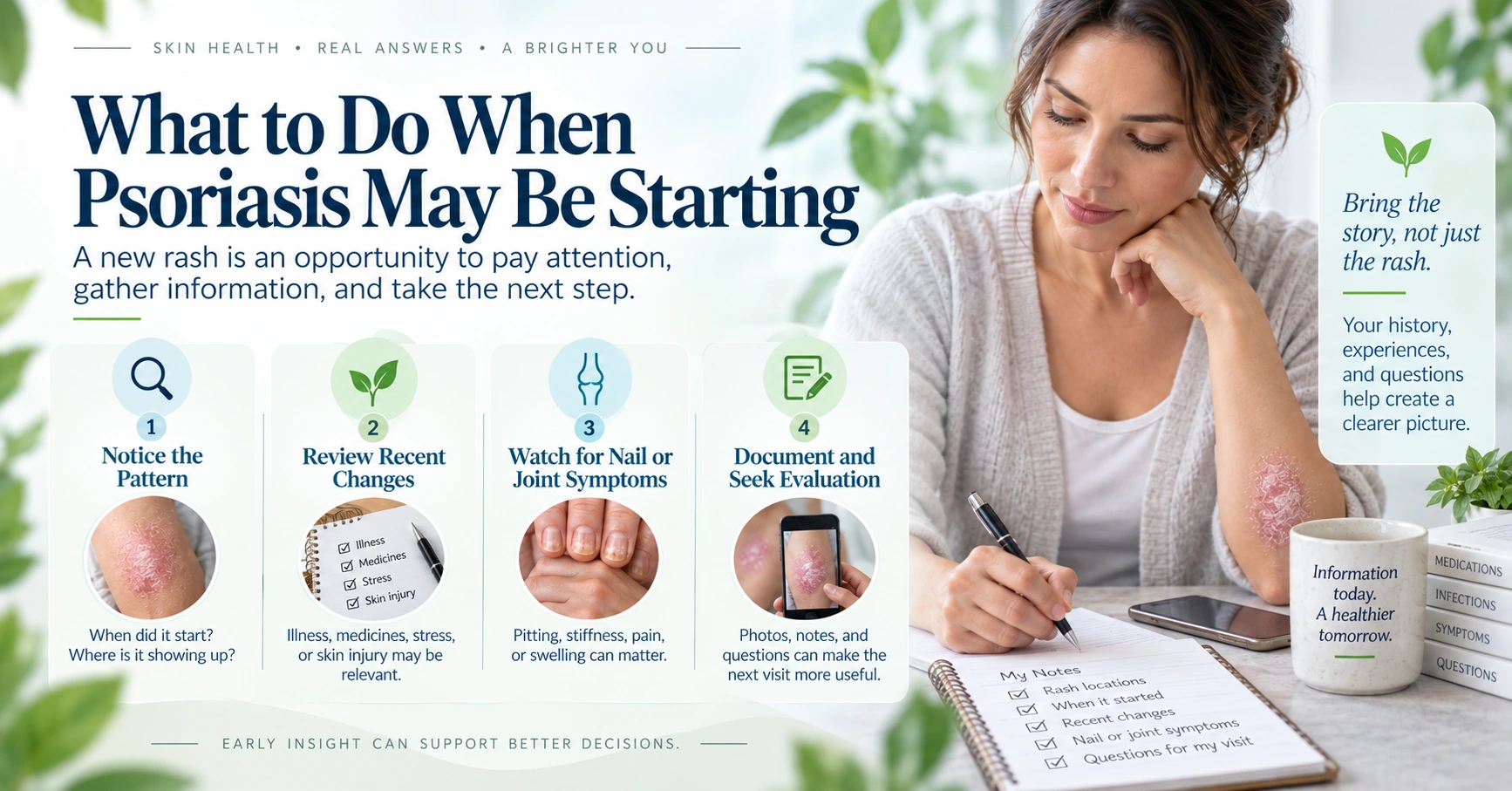
What to Do When Psoriasis May Be Starting
Document the pattern
Photograph the skin in consistent light, note locations and symptoms, and record when the change began.
Protect the skin barrier
Use brief lukewarm bathing, a gentle fragrance-free cleanser, and a thick fragrance-free moisturizer. Avoid picking and harsh home remedies.
Get the diagnosis right
See a qualified clinician when the rash is new, persistent, widespread, painful, infected, or associated with nail or joint changes.
Review the timeline
Discuss infections, medicines, stress, skin injury, smoking, alcohol, sleep, and other plausible context without assuming causation.
How Functional Medicine Investigates Psoriasis Triggers and Drivers
Dr. Shook's Environmentally Induced Autoimmunity model focuses on understanding what may be driving and triggering the immune process, not just the outward symptoms. His evaluation looks at your environment, diet, gut health, metabolism, nutrient status, stress, sleep, infections, exposures, medications, and individual response.
DETECT
Establish a baseline and identify potential triggers using your health history, symptom timeline, current symptoms, and laboratory testing.
SUPPORT
Optimize diet, lifestyle, and supplementation based on your individual triggers, needs, and response.
REASSESS
Track your symptoms, how your skin is changing, any side effects, and your ability to follow through with the recommended changes. Continue, adjust, or stop parts of the plan based on how you are doing.
For a deeper causes and triggers framework, continue to psoriasis causes and treatment.
Frequently Asked Questions
Can psoriasis start suddenly?
Yes. Guttate psoriasis can appear relatively quickly, often after an infection, while plaque or scalp psoriasis may emerge more gradually. Sudden widespread redness or pustules needs prompt evaluation.
Where does psoriasis usually start?
Common early sites include the scalp, elbows, knees, trunk, lower back, nails, palms, soles, and skin folds, but psoriasis can begin almost anywhere.
How can I tell early psoriasis from eczema?
Distribution, border, scale, itch, age, nails, family history, and treatment response can help, but overlap is common. A clinician should confirm an uncertain rash.
Can stress make psoriasis start?
Stress can precede a first recognized flare or later worsening in some people, but it is not proof of one cause and psoriasis is not simply a stress disorder.
Can an infection trigger psoriasis?
Yes. Strep infection is a recognized trigger for guttate psoriasis, especially in children and younger adults. Other infections may also affect disease activity or treatment decisions.
Can medicine trigger psoriasis?
Some medicines can trigger or worsen psoriasis in susceptible people. Do not stop a prescribed medicine abruptly. Ask the prescriber and dermatologist to review timing and alternatives.
Does psoriasis spread because I scratch it?
Psoriasis is not contagious. Scratching and skin injury can provoke lesions at injured sites in some people, but this is different from infection spreading.
What is the functional medicine approach when psoriasis starts?
It adds a structured review of environment, diet, gut health, metabolism, nutrient status, stress, sleep, infections, exposures, medications, and response, then uses DETECT → SUPPORT → REASSESS alongside appropriate diagnosis and treatment.
Ready for a More Individualized Psoriasis Evaluation?
Dr. Shook's process looks beyond visible symptoms to investigate potential triggers and drivers. DETECT establishes a baseline, SUPPORT builds an individualized plan, and REASSESS tracks how you are doing so the plan can change with you.
References and Clinical Resources
- NIAMS. Psoriasis symptoms, causes, and risk factors.
- American Academy of Dermatology. Are triggers causing your psoriasis flare-ups?.
- American Academy of Dermatology. Psoriasis diagnosis and treatment.