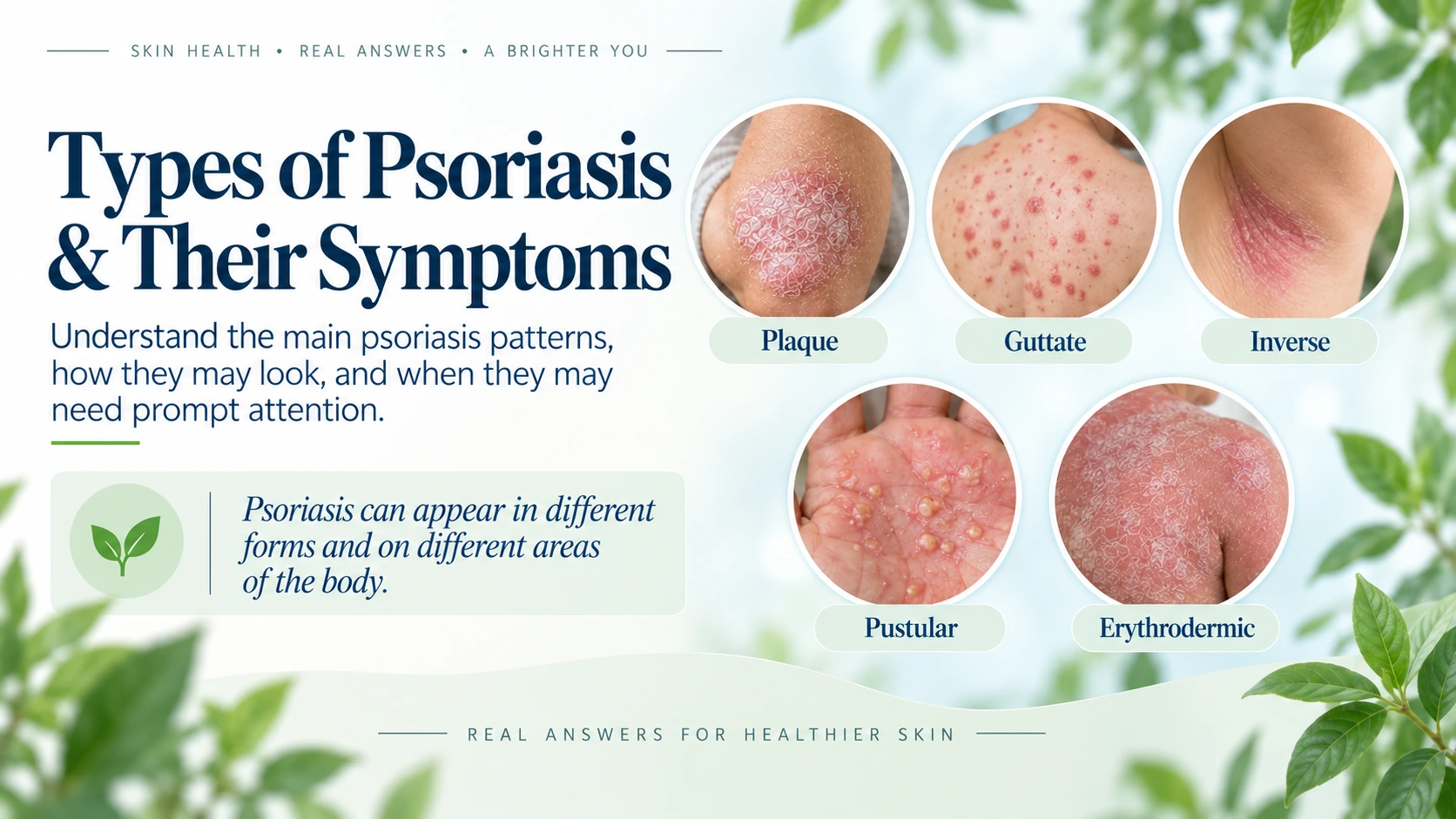
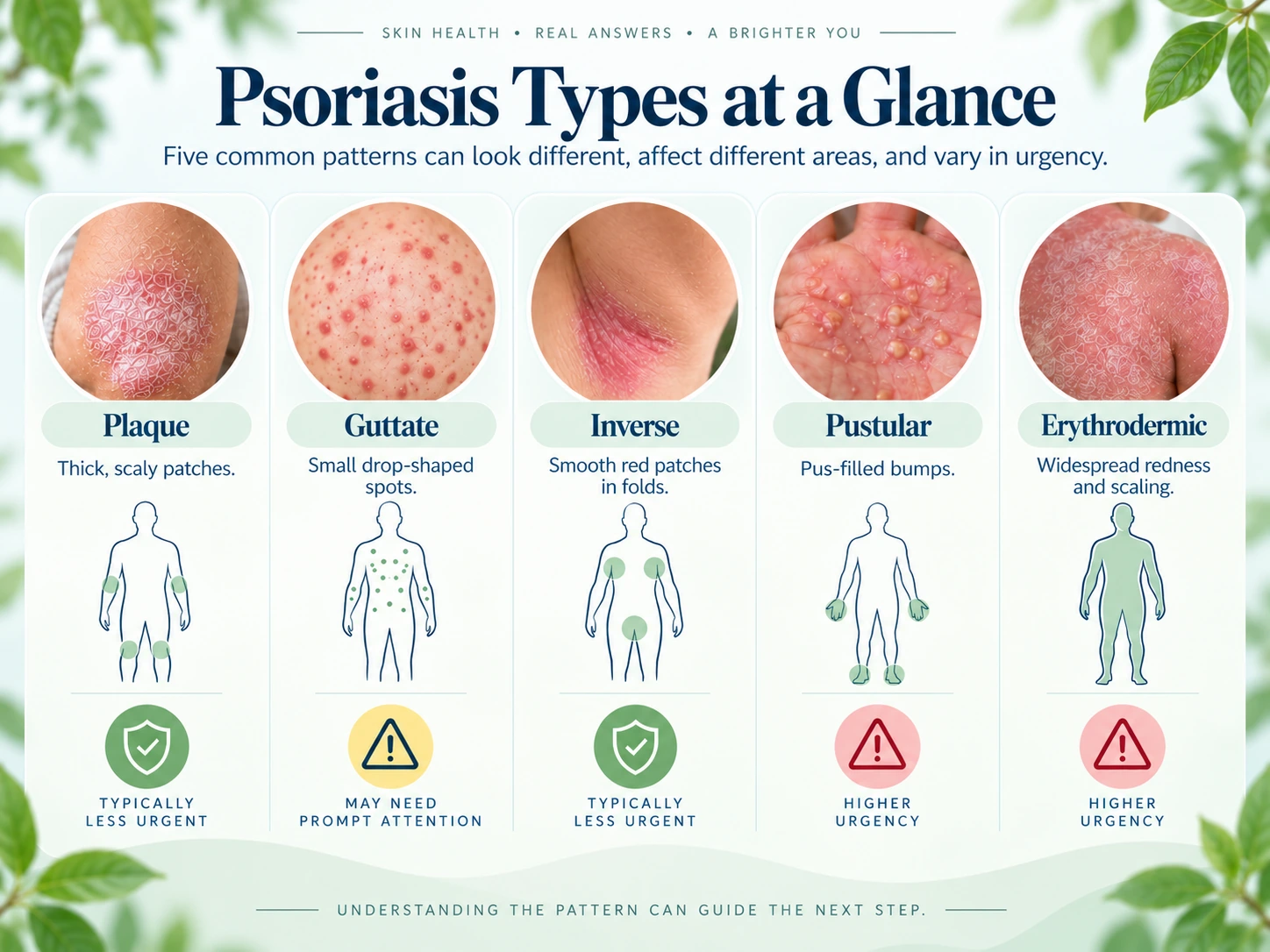
Psoriasis Types at a Glance
| Type | Typical pattern | Common locations | Key concern |
|---|---|---|---|
| Plaque | Well-defined thick or scaly areas | Scalp, elbows, knees, trunk, lower back | Most common type; can involve nails and joints |
| Guttate | Many small drop-like scaly spots | Trunk, arms, legs | Often follows infection, especially strep |
| Inverse | Smooth, sore, less scaly areas | Skin folds, groin, under breasts | Friction, moisture, infection look-alikes |
| Pustular | Sterile pus-filled bumps with inflamed skin | Localized palms and soles or widespread | Generalized disease can be an emergency |
| Erythrodermic | Widespread intense redness or discoloration and shedding | Most of the body | Medical emergency |
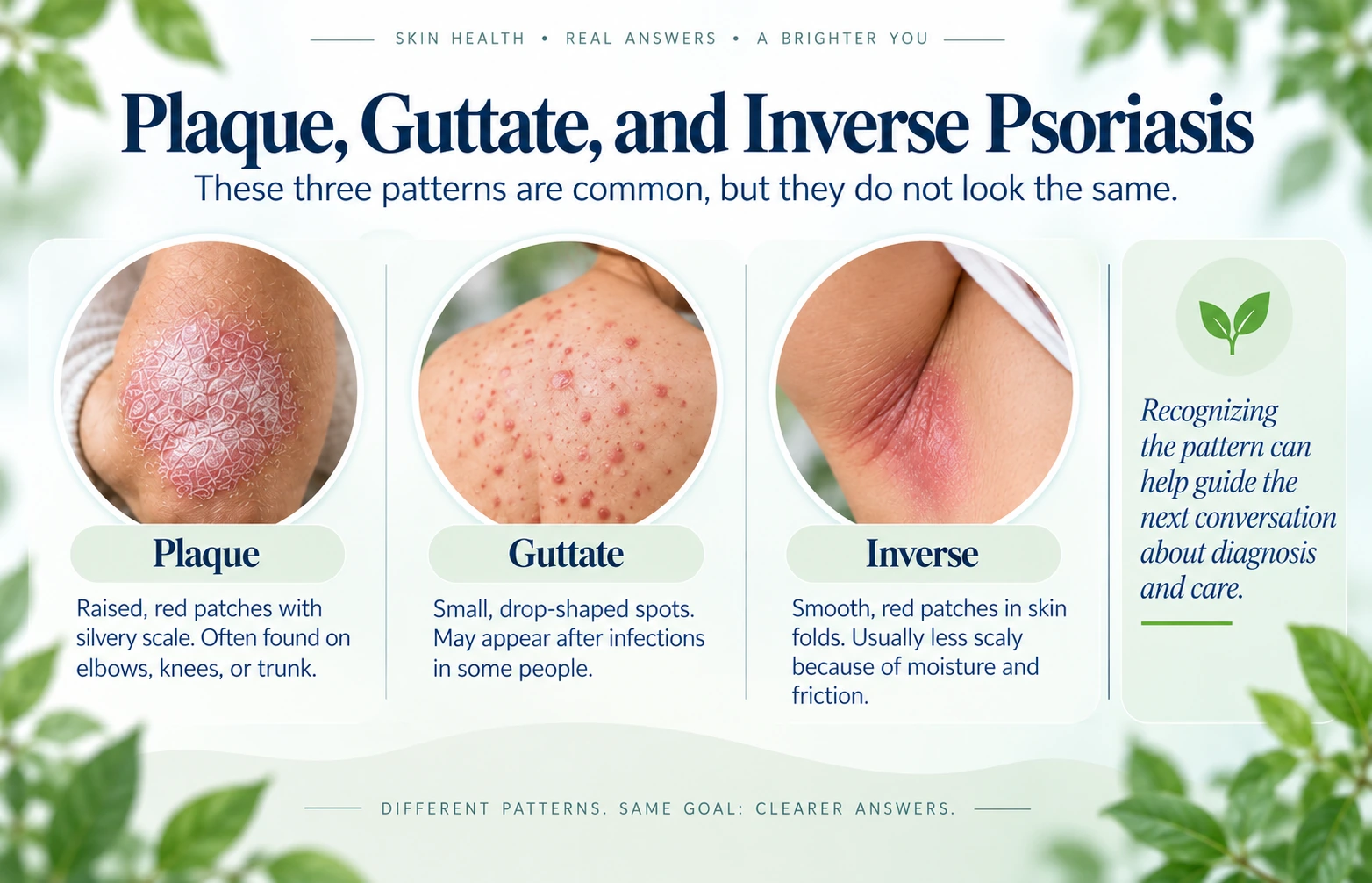
Plaque, Guttate, and Inverse Psoriasis
Plaque psoriasis, also called psoriasis vulgaris
Plaque psoriasis is the most common pattern. Lesions may itch, burn, crack, or bleed and can look different across skin tones. Read the plaque psoriasis guide.
Guttate psoriasis
Guttate psoriasis often appears as many small spots, sometimes after strep throat. It is common in children and young adults but can occur at other ages. Read the guttate psoriasis guide.
Inverse psoriasis
Inverse psoriasis affects folds where friction and moisture reduce visible scale. Yeast, fungal infection, bacterial infection, irritant dermatitis, and contact allergy can resemble or coexist with it.
Pustular and Erythrodermic Psoriasis
Localized pustular disease can affect the palms and soles. The exact classification of palmoplantar pustulosis remains debated, but its pain and functional impact justify dedicated care. Continue to the palmoplantar pustulosis guide.
Generalized pustular psoriasis and erythrodermic psoriasis can disrupt temperature control, fluid balance, and cardiovascular stability and can lead to serious complications.
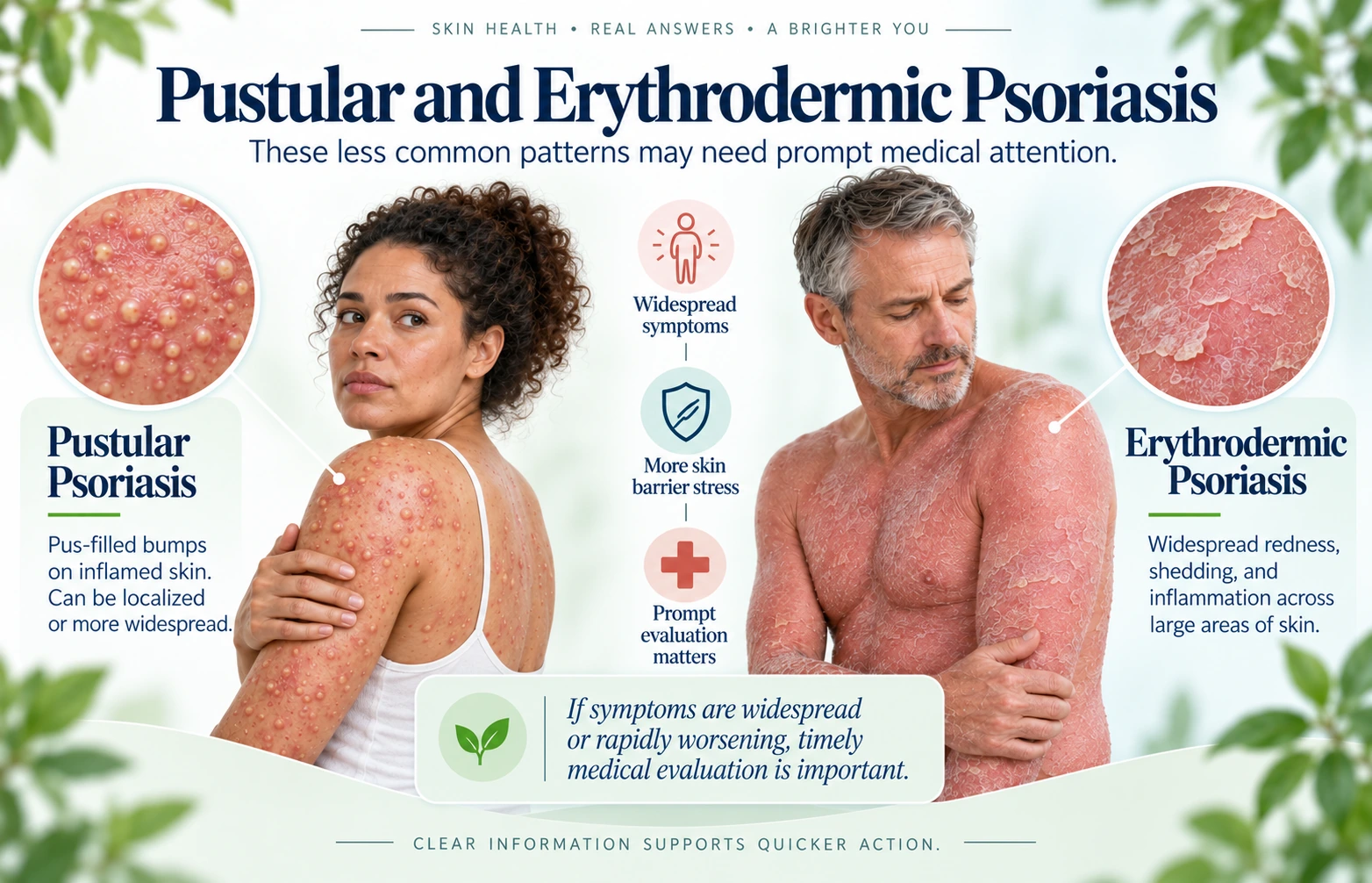
Seek urgent or emergency care for widespread redness or discoloration, extensive peeling, rapidly spreading pustules, fever, chills, weakness, dehydration, fast heart rate, or severe skin pain.
Scalp, Nail, Facial, Genital, Palm, and Sole Psoriasis
These are often body-location descriptions rather than separate major types. They matter because the safest treatment format, skin sensitivity, daily function, and emotional impact differ by site. A shampoo or foam may work better on the scalp, for example, while sensitive areas may require a different approach.
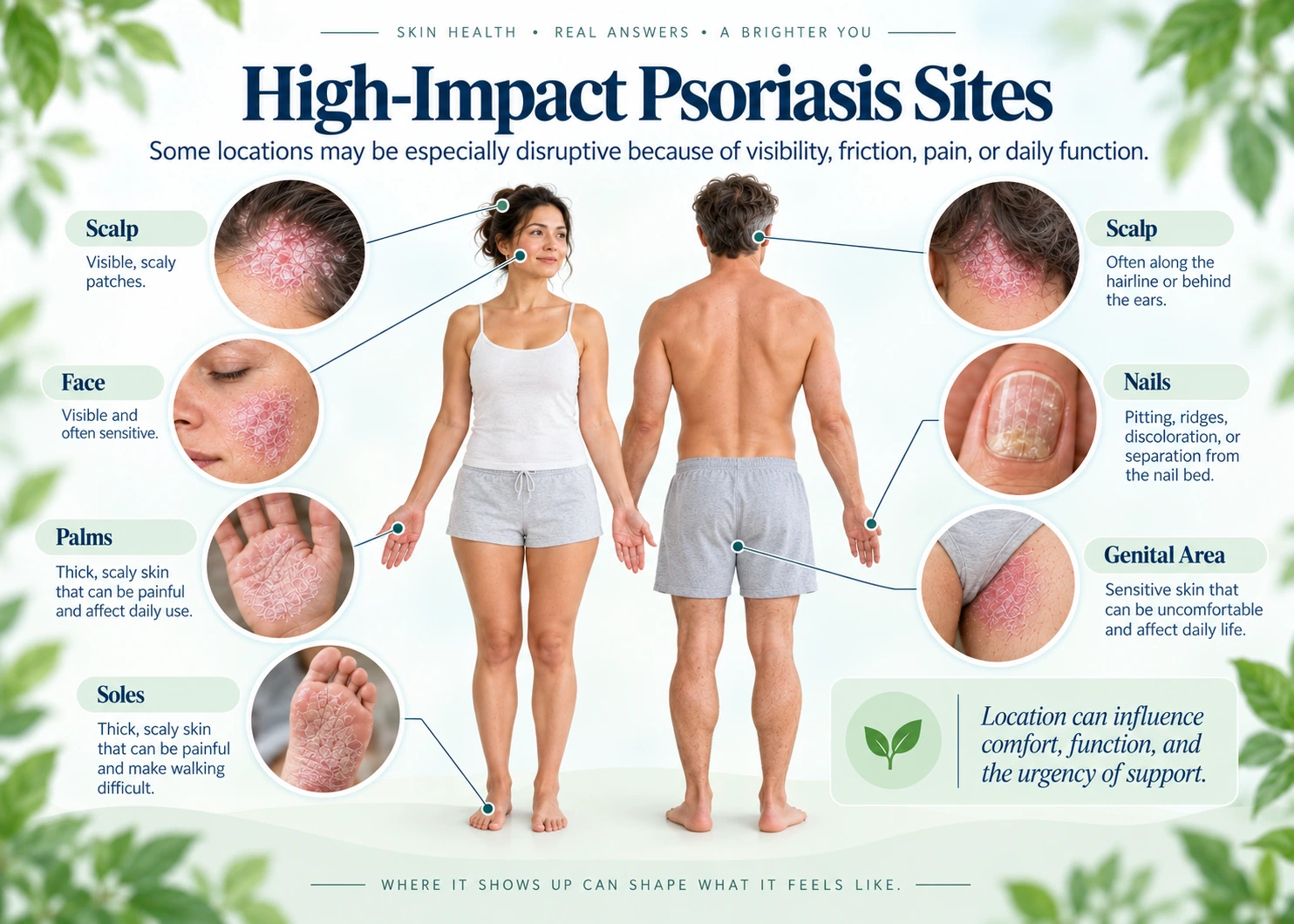
Nail pitting, separation, thickening, or crumbling should prompt evaluation. Nail disease can occur without extensive plaques and may be relevant when screening for psoriatic arthritis.
Psoriasis Symptoms Across Skin Tones
Active psoriasis may appear pink or red on lighter skin and violet, gray, dark brown, or less visibly red on richly pigmented skin. Scale can look white or gray. Post-inflammatory color change may outlast active inflammation and should not automatically be treated as an ongoing flare.
Diagnosis and Next Steps
A dermatologist usually diagnoses psoriasis by examining skin, scalp, and nails and reviewing history. A biopsy or targeted test may be used when another condition is possible. Type, location, symptoms, body surface area, quality of life, joints, health history, and treatment preference guide the plan.
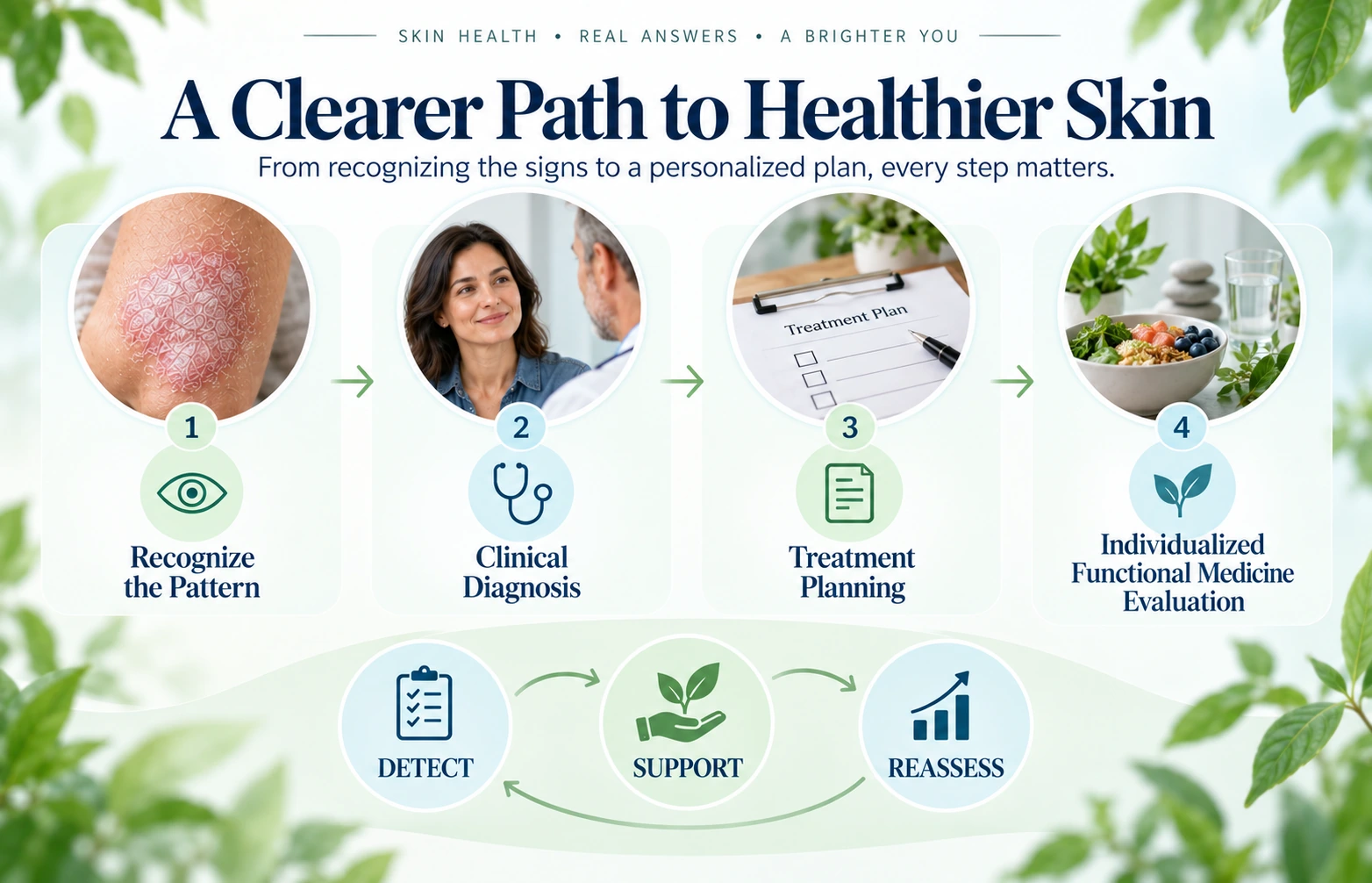
Review psoriasis treatment options. Tell your clinician about persistent morning stiffness, swollen joints, heel pain, or an entire swollen finger or toe because these symptoms may point to psoriatic arthritis.
Understanding More Than the Psoriasis Type
Identifying the type describes the pattern on the skin, but it does not explain why psoriasis behaves differently from one person to another. Dr. Shook uses the Environmentally Induced Autoimmunity model to investigate the drivers and triggers of the immune process, not just the outward symptoms. This includes environment, diet, gut health, metabolism, nutrient status, stress, sleep, infections, exposures, medications, and each person's individual response.
DETECT
Establish a baseline and identify possible triggers using your history, timeline, symptoms, health records, and lab tests.
SUPPORT
Optimize diet, lifestyle, and supplementation based on your triggers and individual needs.
REASSESS
Track your symptoms, how your skin is changing, any side effects, and your ability to follow through with the recommended changes. Then continue, adjust, or stop parts of the plan based on how you are doing.
Frequently Asked Questions
What is the most common type of psoriasis?
Plaque psoriasis, also called psoriasis vulgaris, is the most common type.
Can you have more than one type of psoriasis?
Yes. A person can have more than one pattern at the same time or different patterns over the course of life.
Is scalp psoriasis a separate type?
Scalp psoriasis is usually plaque psoriasis affecting the scalp rather than a separate major type. It still needs scalp-specific evaluation and treatment formats, such as shampoos, liquids, or foams.
Which psoriasis types are emergencies?
Erythrodermic psoriasis and generalized pustular psoriasis can be medical emergencies, especially with fever, weakness, dehydration, widespread shedding, or rapid progression.
What is inverse psoriasis?
Inverse psoriasis affects skin folds and often looks smooth, sore, and less scaly. Infection and contact or irritant dermatitis can look similar.
What is the difference between plaque and guttate psoriasis?
Plaque psoriasis creates larger well-defined thick or scaly areas. Guttate psoriasis causes many smaller drop-like spots and often follows an infection.
Does psoriasis look different on darker skin?
Yes. It may appear violet, gray, brown, or less visibly red, and color change can remain after active inflammation settles.
Why does functional medicine matter if the psoriasis type is already known?
Identifying the type describes the skin pattern. Functional medicine investigates possible triggers, drivers, and individual responses using DETECT → SUPPORT → REASSESS.
Ready to Understand More Than the Psoriasis Type?
Dr. Shook's process looks beyond the name and appearance of psoriasis to understand the patterns that may be influencing your immune health. We DETECT possible triggers and drivers, SUPPORT your individual needs, and REASSESS how your symptoms and skin respond.
References and Clinical Resources
- American Academy of Dermatology. Types of psoriasis: Can you have more than one?.
- American Academy of Dermatology. What does psoriasis look like?.
- NIAMS. Psoriasis symptoms, causes, and risk factors.