What Is the Main Cause of Psoriasis?
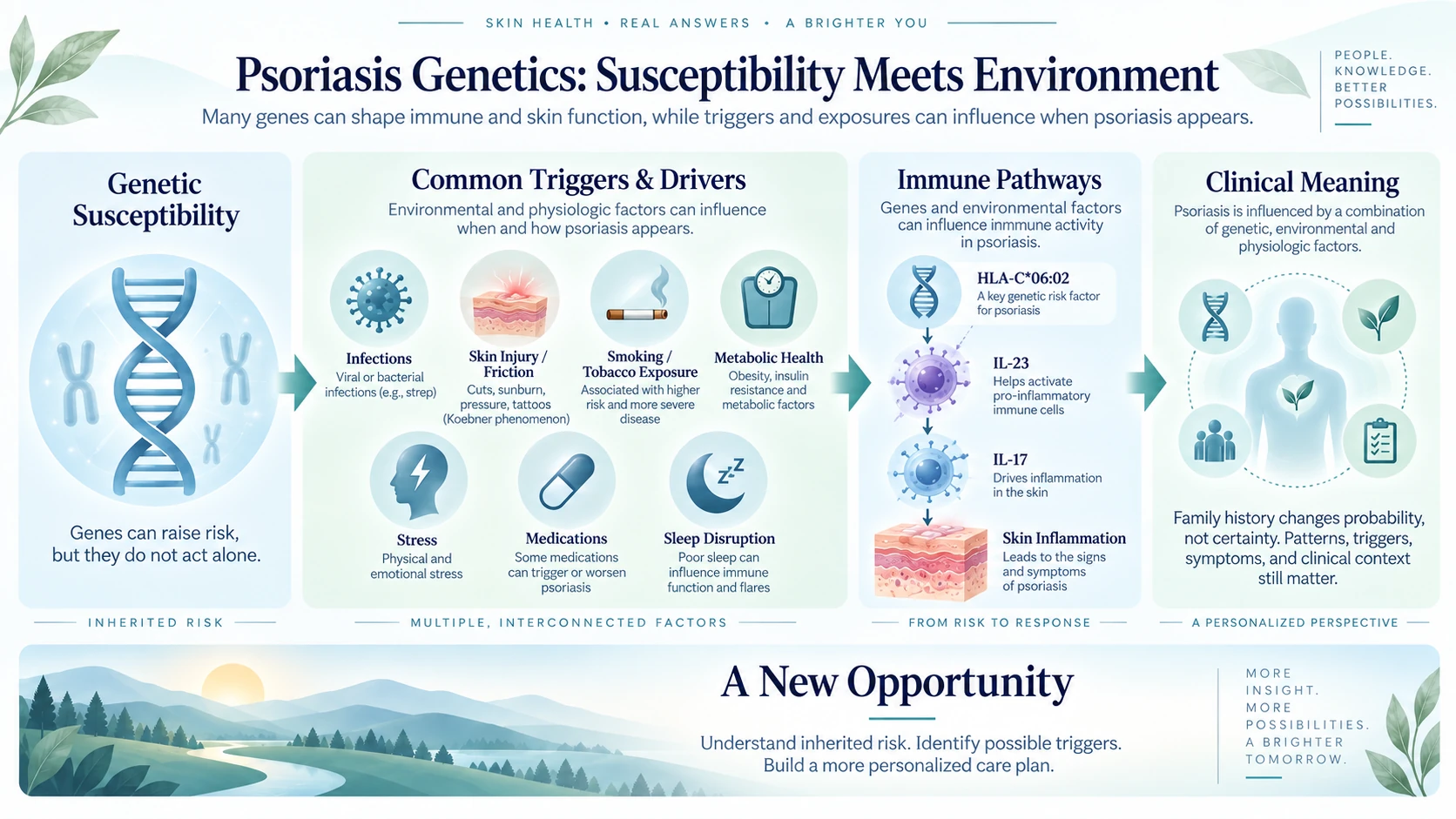
There is no single main cause. Psoriasis develops from a combination of genetic susceptibility, immune dysregulation, skin biology, and environmental or physiologic influences. This is why two relatives can have very different ages of onset, body locations, severity, and treatment response.
The modern picture centers on immune pathways including the IL-23 and IL-17 axis. Genetic discoveries helped identify these pathways and contributed to targeted treatments, but a risk variant is not the same as an inevitable disease.
Genes Are the Starting Point, Not the Whole Story
Learning that psoriasis has a genetic component can sound discouraging, but susceptibility is not the same as certainty. Dr. Shook uses the Environmentally Induced Autoimmunity model to understand how inherited susceptibility may interact with the person's environment, diet, gut health, metabolism, nutrient status, stress, sleep, infections, exposures, medications, and individual response.
Environmental Triggers of Psoriasis and Psoriatic Arthritis
Potential triggers and drivers can be different for every person. Infections, tobacco exposure, alcohol, metabolic dysfunction, chronic stress, sleep disruption, certain medications, and repeated skin irritation may help explain why psoriasis begins, returns, or changes over time. The goal is to investigate your pattern instead of assuming one trigger explains every case.
Skin Trauma and the Koebner Response
Psoriasis can sometimes appear at sites of skin injury or repeated friction, a pattern called the Koebner phenomenon. Cuts, burns, scratching, pressure, tattoos, or other trauma do not create genetic susceptibility, but they can influence where lesions develop in someone who is already susceptible.
DETECT
Establish a baseline and identify possible triggers using your history, timeline, symptoms, health records, and lab tests.
SUPPORT
Optimize diet, lifestyle, and supplementation based on your triggers and individual needs.
REASSESS
Track your symptoms, how your skin is changing, any side effects, and your ability to follow through with the recommended changes. Then continue, adjust, or stop parts of the plan based on how you are doing.
For the complete framework, continue with the psoriasis causes and triggers guide.
Inheritance and Risk Pattern: Is Psoriasis Hereditary?
Psoriasis can cluster in families, and twin studies support a meaningful inherited component. The pattern is complex rather than Mendelian: there is no single dominant or recessive "psoriasis gene" that predicts exactly who will develop it.
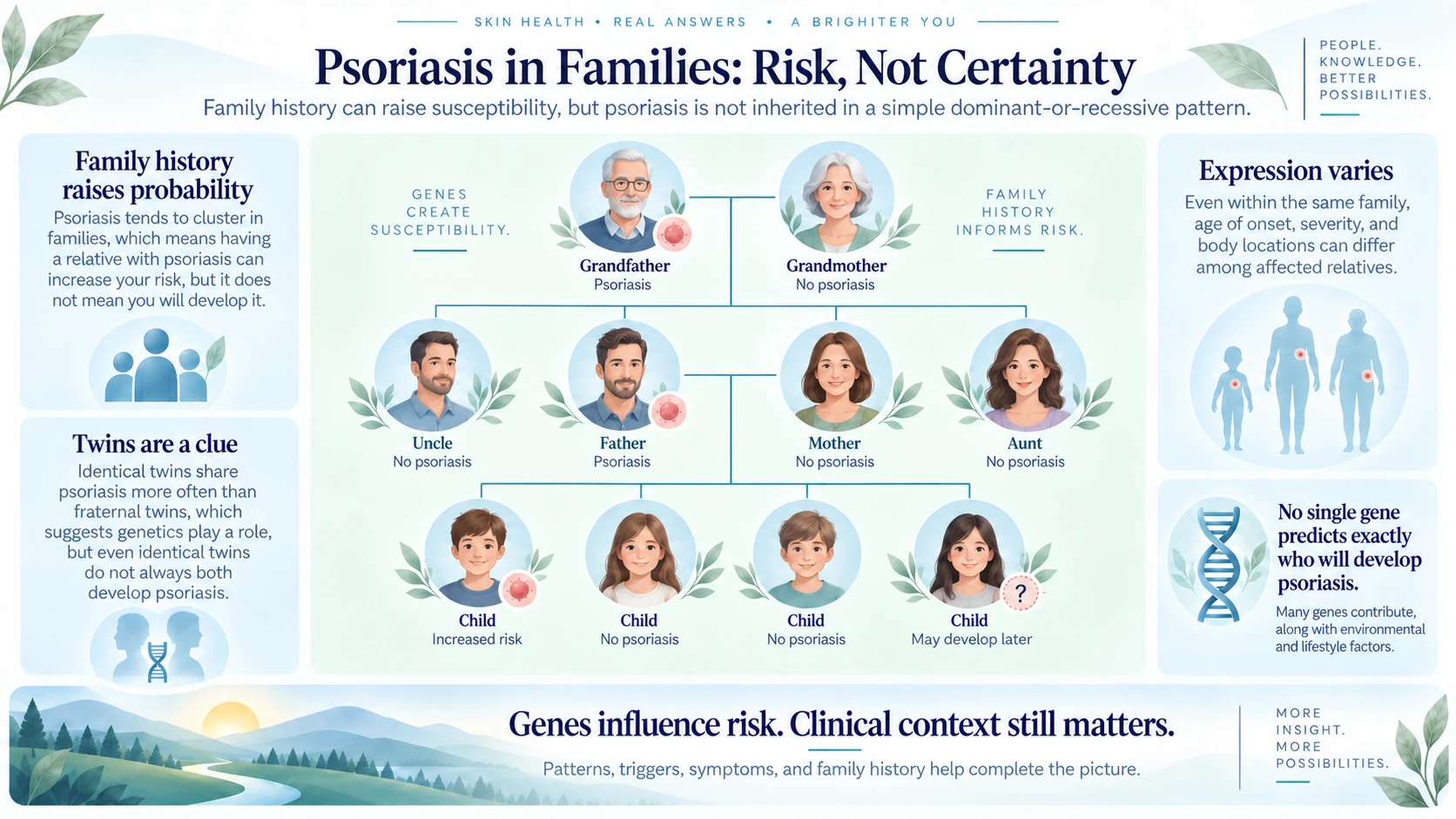
A practical family-history review includes psoriasis, psoriatic arthritis, inflammatory bowel disease, uveitis, and other immune-mediated conditions, plus the age and presentation of affected relatives.
Identical twins are more likely to share psoriasis than fraternal twins, but they are not always both affected. That gap is an important clue: inherited susceptibility matters, and non-genetic influences also help determine whether the condition is expressed.
HLA-C, IL-23, IL-17, and Other Immune Pathways
The HLA-C*06:02 allele within the PSORS1 region on chromosome 6 is the strongest widely recognized genetic association with psoriasis, especially earlier-onset plaque disease. Variants in IL12B, IL23R, TYK2, TNFAIP3, and other immune and skin-barrier genes also contribute.
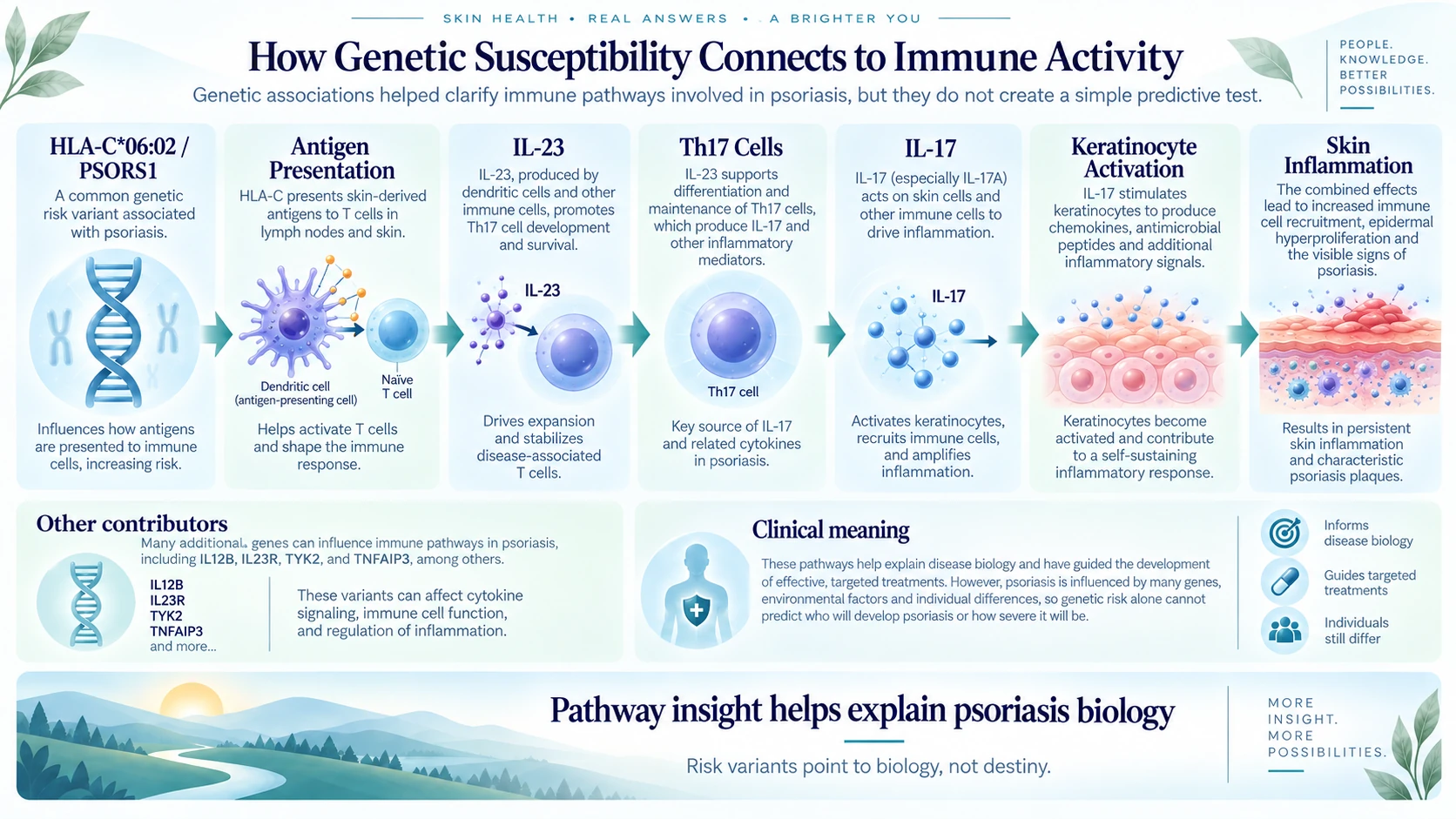
These associations help explain disease biology and have informed drug development. They do not prove that every person has the same pathway activity or that a supplement can safely manipulate a genetic pathway.
Genome-Wide Association Studies and Susceptibility Loci
Older research focused on a few linkage regions and candidate genes. Modern genome-wide association studies scan large populations and have identified many susceptibility loci. Findings vary across ancestry groups, and research samples have historically underrepresented some populations.
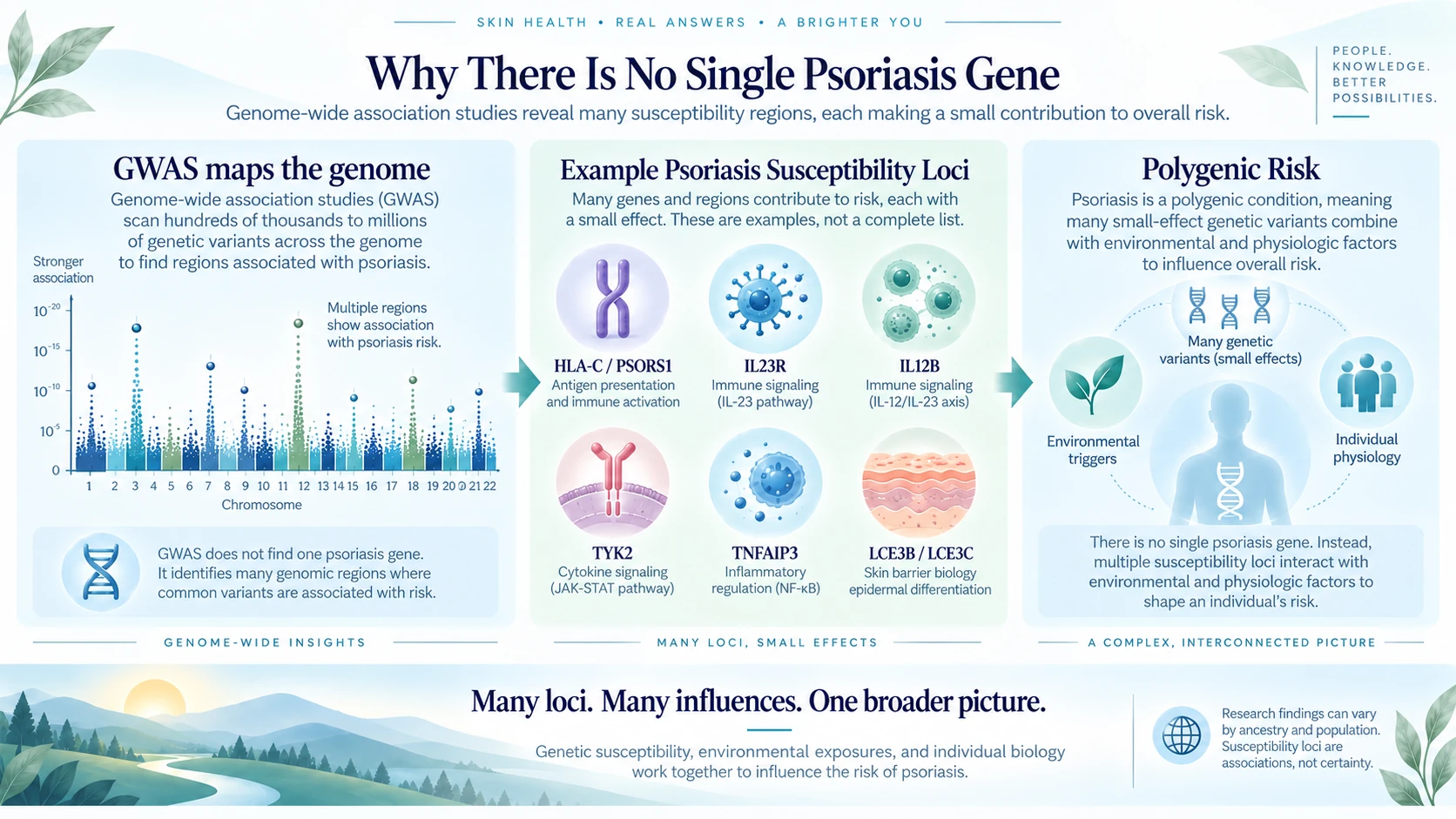
A susceptibility locus is a region associated with greater or lower probability, not proof that one gene caused a person's psoriasis. Population studies can reveal patterns that are valuable for research while still being too broad to predict an individual's age of onset, severity, or response.
What Animal Models Can and Cannot Tell Us
Animal models, including the flaky-skin mouse and HLA-B27 rat discussed in the legacy page, contributed to early research on immune signaling, skin changes, and inflammatory disease. They help researchers test mechanisms and explore possible treatments, but an animal model is not identical to human psoriasis and cannot predict an individual person's course.
Psoriatic Arthritis Genetics
Psoriasis and psoriatic arthritis share some immune-related susceptibility, but they are not genetically identical. HLA-B27 and other HLA patterns can relate to particular musculoskeletal presentations, while no current genetic result can reliably determine who will develop psoriatic arthritis.
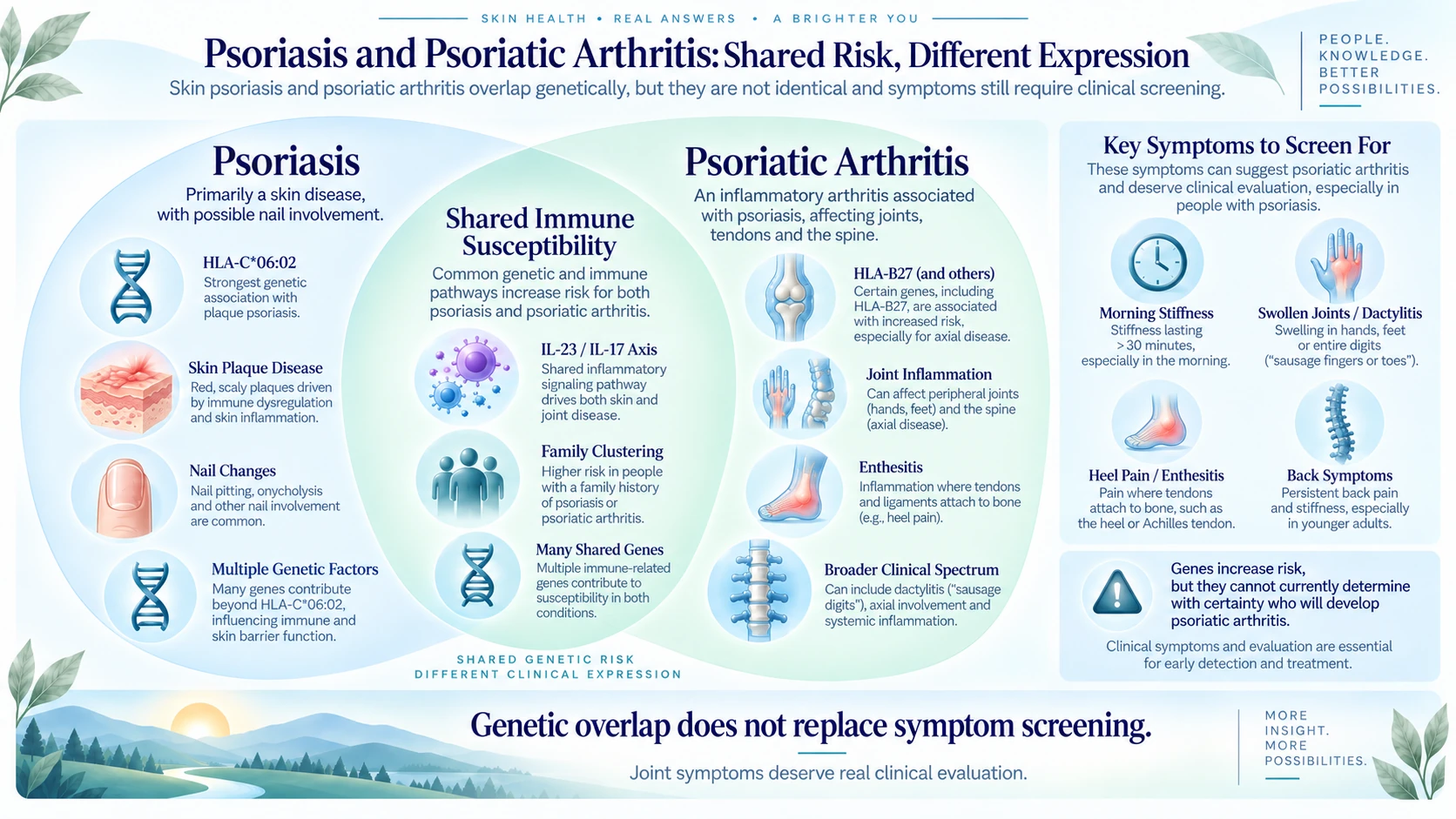
Clinical screening remains essential. Review persistent morning stiffness, swollen joints, dactylitis, heel pain, nail disease, and back symptoms with an appropriate clinician. See the psoriatic arthritis guide.
Can a Genetic Test Diagnose or Guide Psoriasis Treatment?
Routine direct-to-consumer genetic testing does not diagnose psoriasis, rule it out, identify a single root cause, or replace an examination. Pharmacogenomic research is active, but many reported treatment-response associations are inconsistent or not ready for routine decisions.
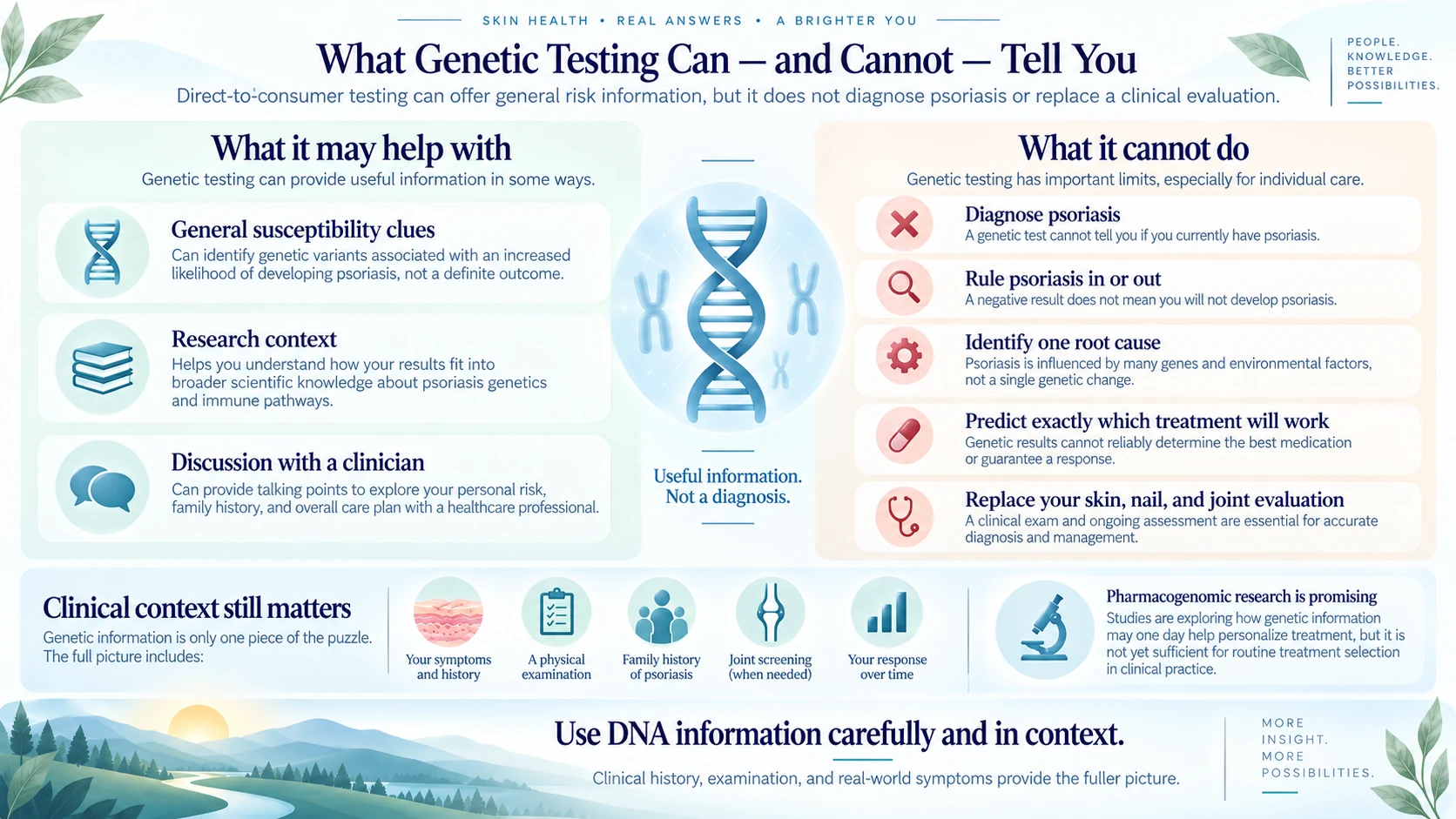
A genetic result is only one piece of information. Your symptoms, skin and nail examination, family history, joint screening, health history, exposures, and response over time create a much more complete picture.
How Genetics Changed the Understanding of Psoriasis Treatment
Genetic and immune research helped clarify that psoriasis is not simply a problem of skin cells growing too quickly. It involves immune signaling networks, including the IL-23 and IL-17 pathways, that communicate with the skin. This understanding contributed to the development of targeted systemic and biologic treatments.
Genetics alone does not select the right treatment for most people. The psoriasis type, body areas involved, symptom burden, joint disease, other health conditions, previous response, and individual goals all help shape treatment decisions. Review the psoriasis medication and treatment guide for a broader comparison.
Questions to Discuss With Your Psoriasis Doctor
Frequently Asked Questions
Is psoriasis genetic or environmental?
It is both. Many genetic variants influence susceptibility, while infections, skin injury, smoking, metabolic health, medications, stress, and other environmental factors can influence whether and how psoriasis appears.
What is the main psoriasis gene?
HLA-C*06:02 is the strongest widely recognized association, but psoriasis is polygenic and involves many immune and skin-related regions.
If my parent has psoriasis, will I get it?
Not necessarily. Family history raises probability, but inheritance is complex and many relatives never develop psoriasis.
Can psoriasis skip a generation?
A family may appear to have skipped generations because susceptible relatives never express disease, have mild unrecognized disease, or inherit a different combination of variants.
Are psoriasis and psoriatic arthritis genetically the same?
They overlap but are not identical. Some genetic patterns relate more strongly to particular joint or spine presentations, and symptoms still require clinical evaluation.
Should I order a direct-to-consumer psoriasis DNA test?
A direct-to-consumer DNA test cannot diagnose psoriasis or reveal one genetic cause. It may provide general risk information, but the result requires careful interpretation and does not replace a clinical evaluation.
Can genetics predict which medicine will work?
Research is promising, but genetic markers generally are not enough to select a psoriasis treatment. Your symptoms, disease pattern, health history, treatment goals, and response over time remain important.
What can I change if psoriasis is genetic?
Having genetic susceptibility does not mean every part of psoriasis is fixed. You can investigate possible triggers and support diet, gut health, metabolism, nutrient status, sleep, stress, environmental exposures, and your individual response.
Ready for a More Individualized Psoriasis Evaluation?
Dr. Shook's process looks beyond genetic susceptibility and visible skin symptoms to understand your individual autoimmune pattern. We DETECT your starting point and possible triggers, SUPPORT an individualized diet, lifestyle, and supplementation plan, and REASSESS how your skin and overall health are changing.
References and Clinical Resources
- Ovejero-Benito et al. The Genetic Susceptibility to Psoriasis and the Relationship of Linked Genes to Treatment Options.
- Ogawa and Okada. The current landscape of psoriasis genetics.
- Dand et al. Genetics of psoriasis: a basis for precision medicine.