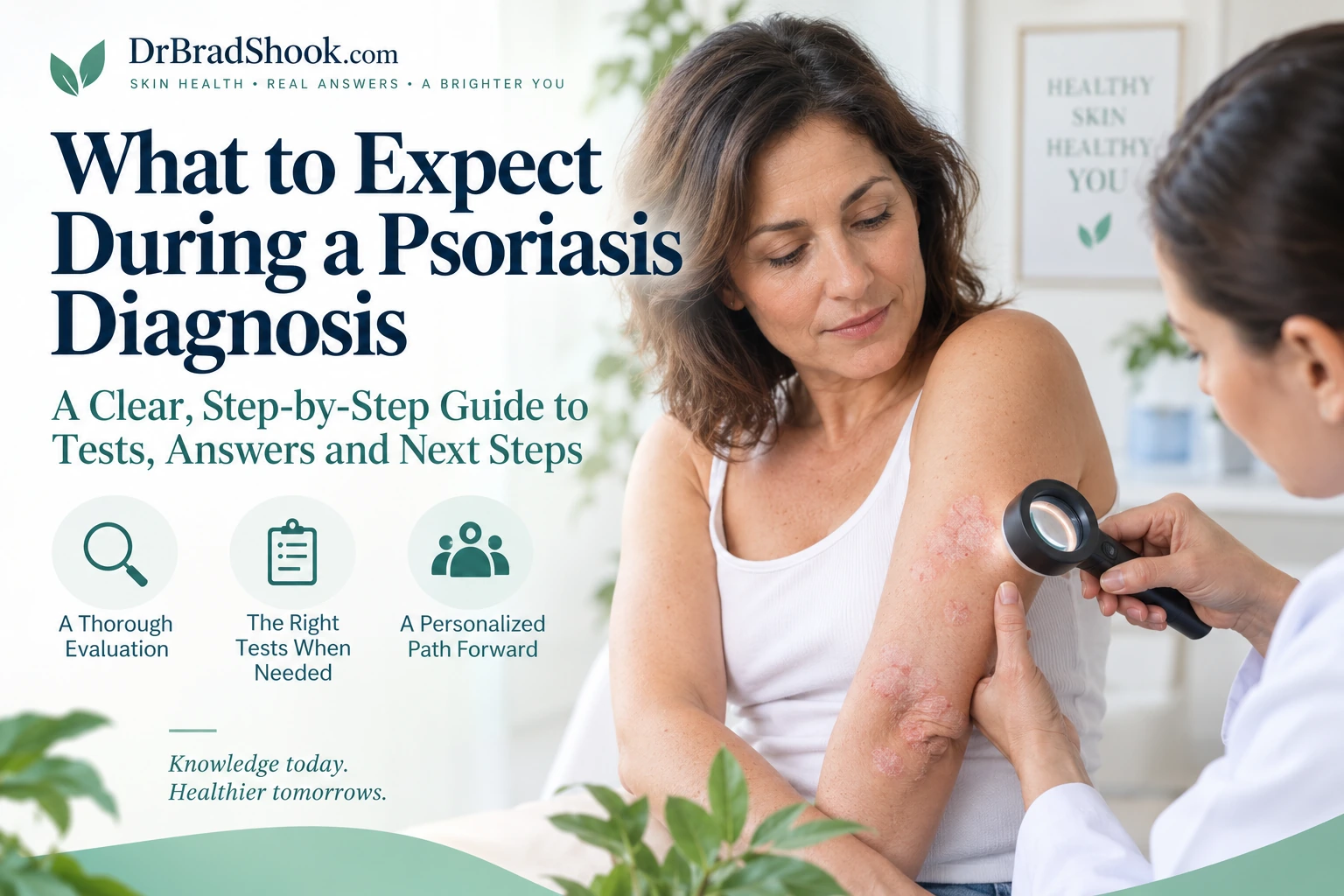
Who Can Develop Psoriasis?
Psoriasis can begin at any age and can affect people of every sex, ethnicity, and skin tone. A family history can increase susceptibility, but many people who develop psoriasis do not know of an affected relative. Psoriasis is not contagious.
The condition can affect much more than appearance. Itching, pain, sleep disruption, visible plaques, nail changes, and possible joint symptoms can influence work, exercise, relationships, and emotional health. Those effects belong in the diagnostic conversation even when the involved skin area appears small.
Symptoms and Body Areas a Clinician Will Review
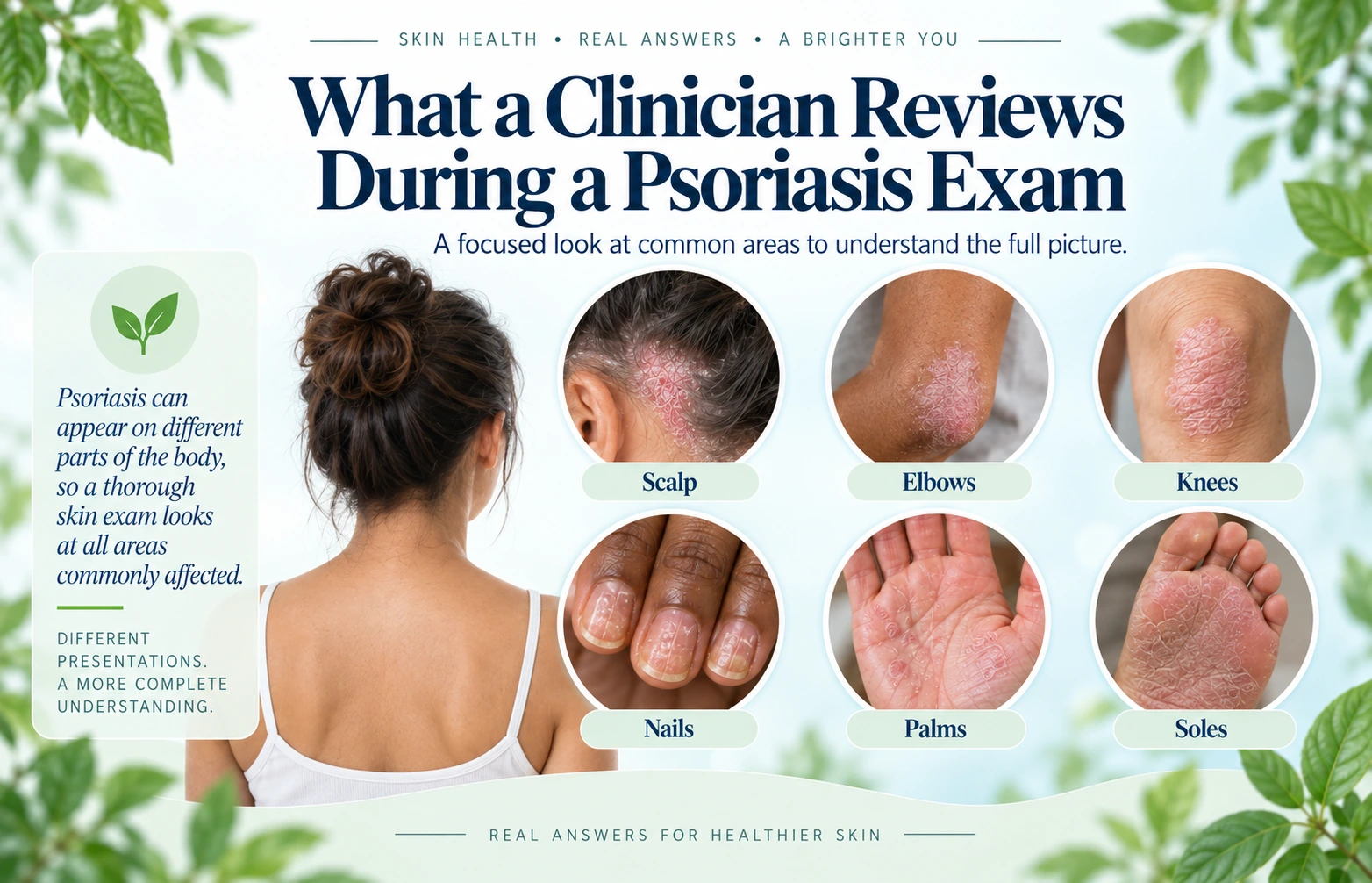
Psoriasis can look different by type, body location, skin tone, and prior treatment. A clinician is looking for the pattern as a whole, not one isolated feature.
Common sites include the scalp, elbows, knees, trunk, lower back, palms, soles, skin folds, and genital skin. Plaques may look red or pink on lighter skin and violet, gray, brown, or darker on richly pigmented skin. Temporary color change can remain after active inflammation settles.
What Are the Types of Psoriasis?
Plaque psoriasis is the most common type, but the shape and location of a flare can point toward other patterns. Guttate psoriasis often appears as many small spots and may follow an infection. Inverse psoriasis affects skin folds and may look smooth rather than heavily scaled. Pustular psoriasis produces pus-filled bumps that are not caused by infection. Erythrodermic psoriasis can involve widespread redness or discoloration and shedding and requires urgent evaluation.
Scalp, nail, facial, genital, palm, and sole psoriasis describe important locations that can change symptoms and treatment decisions. Learn how the patterns differ in the types of psoriasis and symptoms guide.
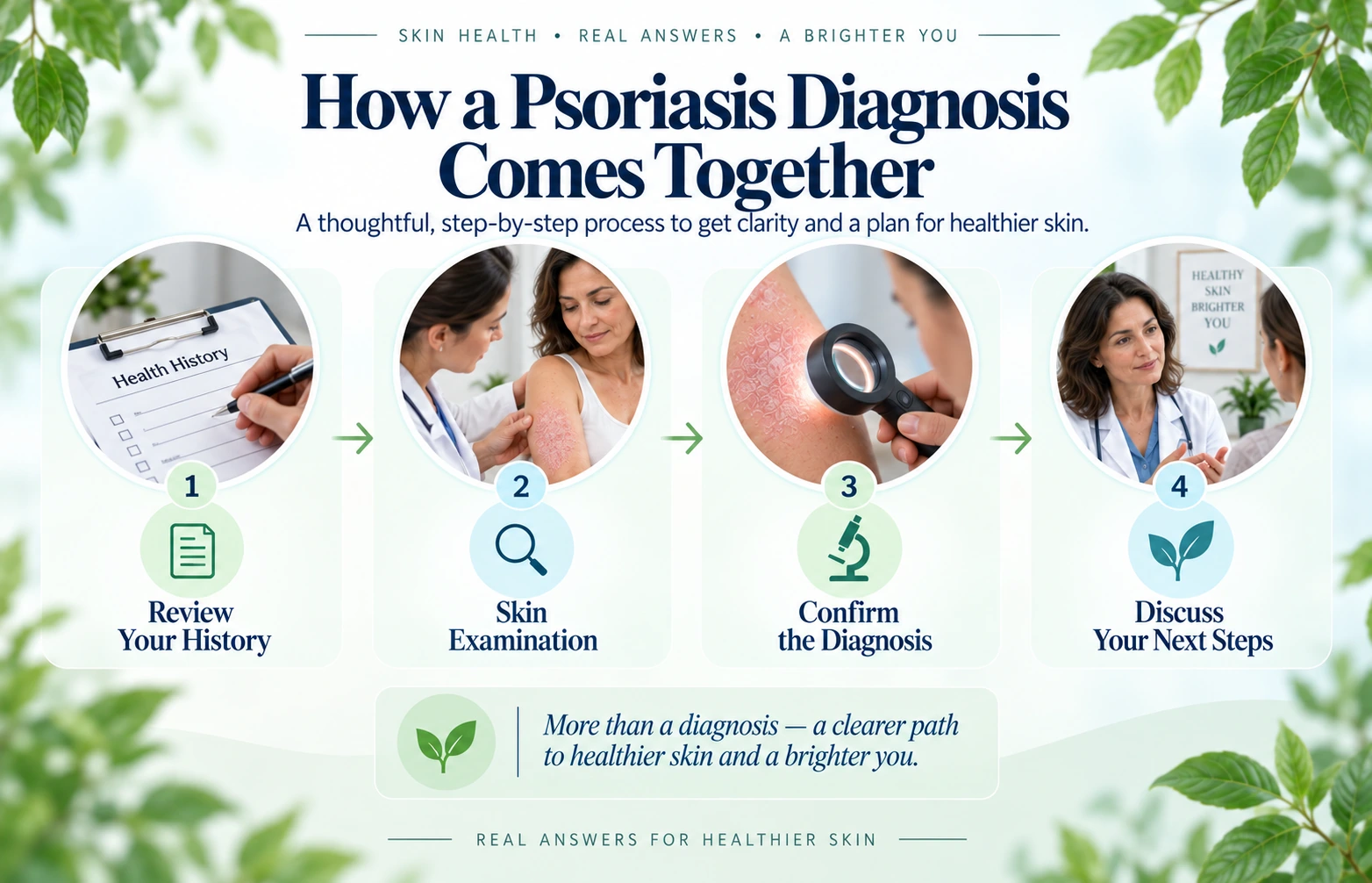
How Do You Diagnose Psoriasis?
Medical and family history
Expect questions about when the rash began, itch or pain, relatives with psoriasis, recent infections, skin injury, stress, smoking, alcohol, weight changes, and medicines that began before a flare.
Physical examination
The clinician examines affected and less obvious areas, including the scalp and nails. Distribution, border, scale, symmetry, and changes caused by scratching or treatment all help.
Targeted testing when needed
A skin biopsy can help when the appearance is atypical. Tests for fungus, infection, or another condition may be used when the history suggests them. There is no single routine blood test that confirms skin psoriasis.
Baseline and follow-up
The care team documents severity, high-impact locations, joint symptoms, prior treatments, quality of life, and photographs when useful, then chooses a follow-up interval.
Conditions That Can Look Like Psoriasis
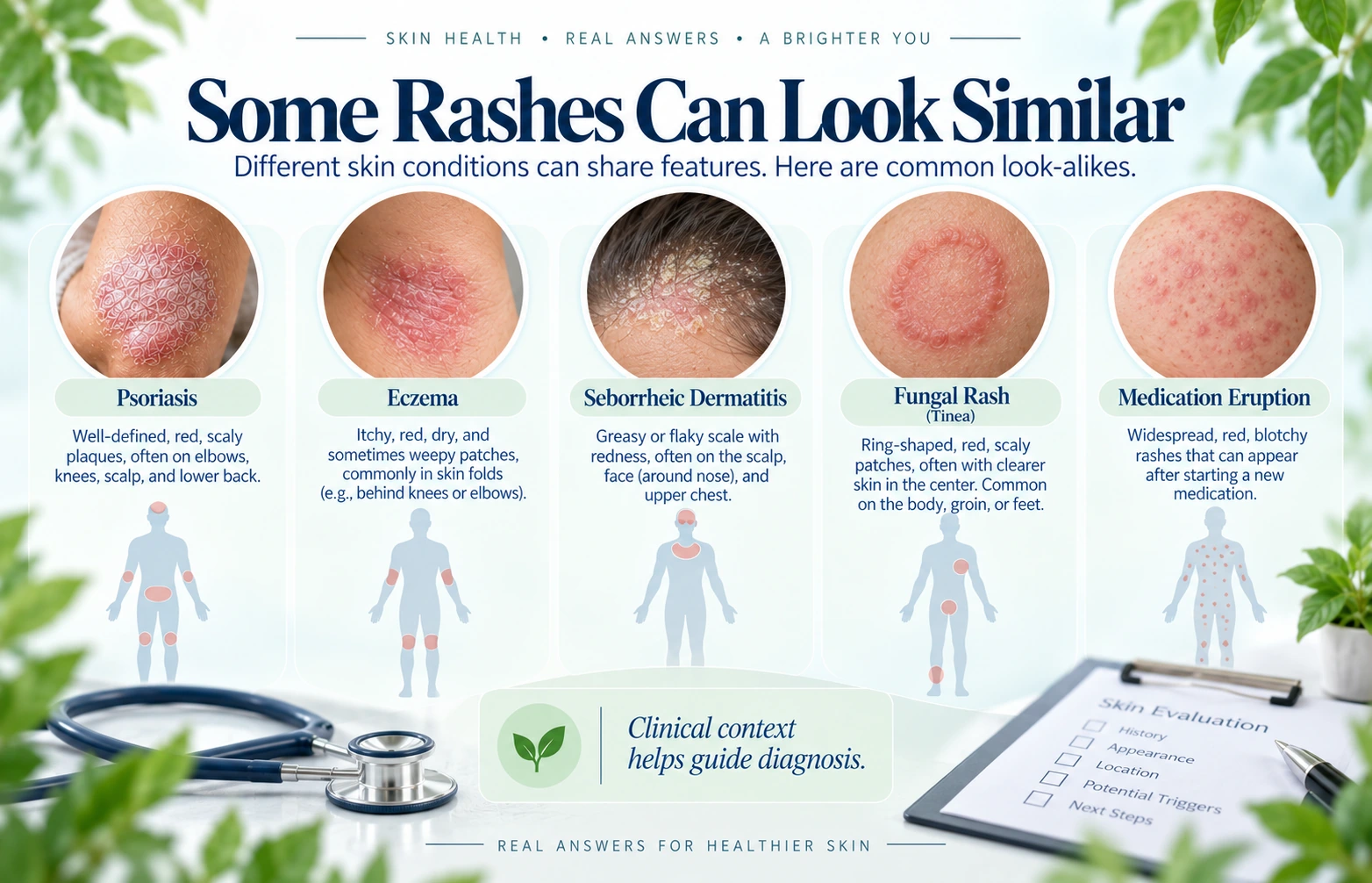
Eczema, seborrheic dermatitis, tinea or other fungal infection, pityriasis rosea, contact dermatitis, lichen planus, medication eruptions, and some less common diseases can resemble psoriasis. Facial and scalp disease can be especially difficult to distinguish by appearance alone.
When might a biopsy be used? A dermatologist may numb the area and remove a small skin sample when the pattern is uncertain, a treatment has failed unexpectedly, or another diagnosis needs to be excluded. A biopsy is not required for every patient.
Nail Changes and Joint Problems Matter
Psoriatic arthritis can affect peripheral joints, the spine, tendons, and the places where tendons attach to bone. Nail psoriasis and joint symptoms deserve deliberate review because early recognition can protect function. Imaging and blood tests are used to evaluate inflammatory arthritis or rule out another cause, not to confirm every case of skin psoriasis.
Do not wait for a routine skin follow-up if a joint is suddenly hot and severely swollen, you cannot bear weight, or pain occurs with fever. Urgent causes such as infection or crystal arthritis need prompt assessment.
How Psoriasis Severity Is Assessed
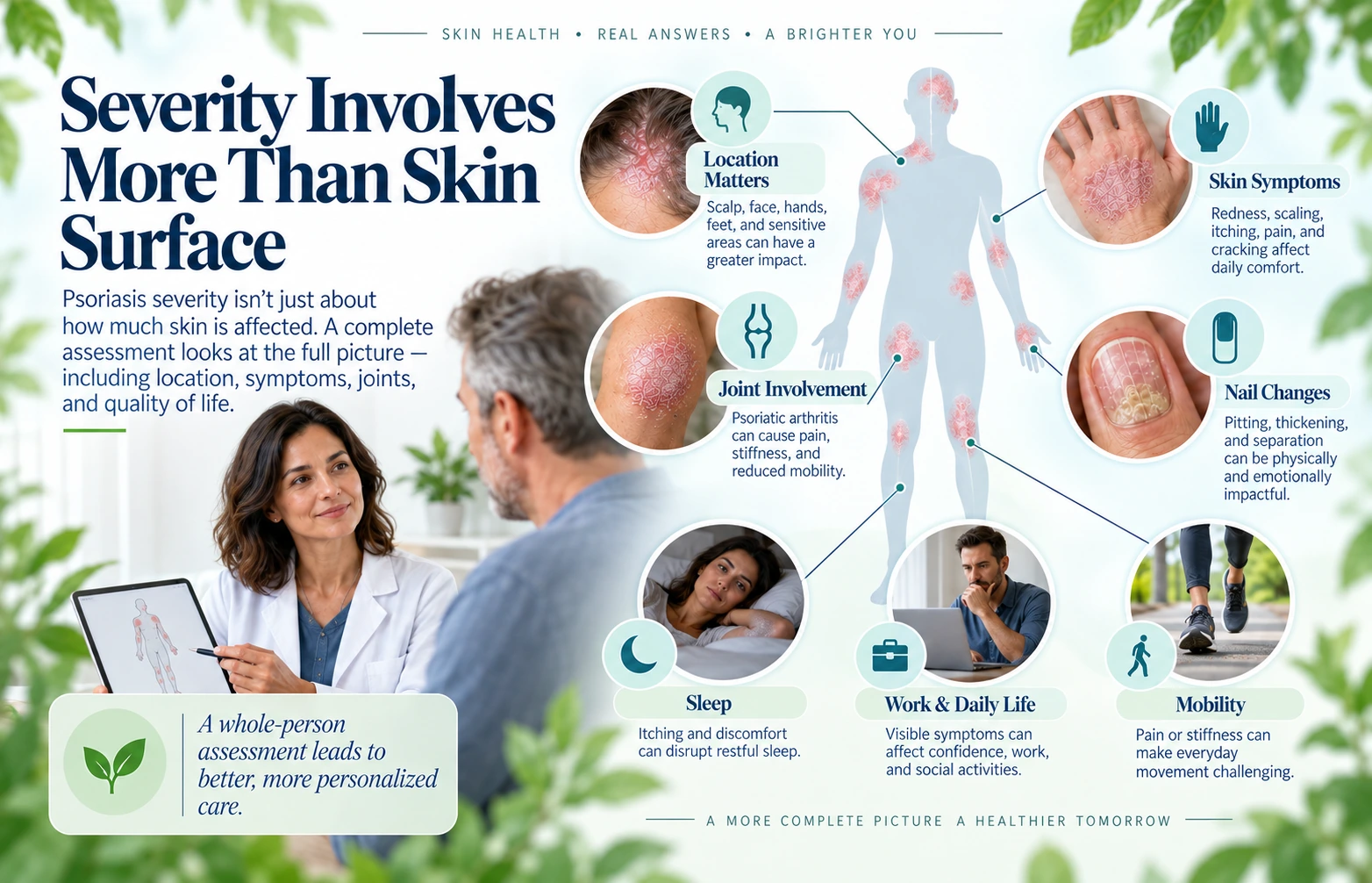
Body surface area is only one part of severity. Disease on the face, scalp, hands, feet, genitals, or nails can have a major impact even when the total area is small. Clinicians also consider thickness, redness, scale, itch, pain, sleep, work, relationships, treatment burden, and possible joint disease.
What Happens After a Psoriasis Diagnosis?
The treatment plan should match the type, location, extent, symptoms, health history, pregnancy plans, other medicines, and personal preferences. Options can include moisturizers, topical prescriptions, phototherapy, oral systemic medicines, and biologics. Review the current psoriasis treatment options guide for a fuller overview.
Ask how improvement will be measured, how long to try the plan, which side effects matter, and what would trigger a change. Report new joint symptoms, eye pain or light sensitivity, fever with widespread redness or pustules, or a severe reaction after a new medicine.

Understanding Psoriasis Beyond the Diagnosis
A diagnosis tells you what the skin condition is. Dr. Shook's Environmentally Induced Autoimmunity model provides a broader way to investigate why the immune process may be active and why psoriasis may behave differently from one person to another. This includes your environment, diet, gut health, metabolism, nutrient status, stress, sleep, infections, exposures, medications, and individual response.
DETECT
Establish a baseline and identify possible triggers using your history, timeline, symptoms, health records, and lab tests.
SUPPORT
Optimize diet, lifestyle, and supplementation based on your triggers and individual needs.
REASSESS
Track your symptoms, how your skin is changing, any side effects, and your ability to follow through with the recommended changes. Then continue, adjust, or stop parts of the plan based on how you are doing.
Frequently Asked Questions
Can a blood test diagnose psoriasis?
No. There is no single routine blood test that confirms skin psoriasis. Blood tests may be used to evaluate joint symptoms, establish a medication baseline, or rule out another condition.
Will I need a skin biopsy?
Most people do not. A biopsy may help when the appearance is atypical, another condition is possible, or the response to treatment is unexpected.
Who should diagnose psoriasis?
A primary care clinician may recognize psoriasis, but a dermatologist has specialized training in skin, scalp, and nail disease and can confirm difficult cases and guide treatment.
What should I bring to the appointment?
Bring a medicine and supplement list, photos of earlier flares, family history, a timeline of symptoms and possible triggers, prior treatment results, and notes about nail or joint changes.
Can psoriasis be mistaken for eczema or a fungal rash?
Yes. Several inflammatory and infectious rashes can resemble psoriasis. Distribution, scale, history, examination, and sometimes testing help distinguish them.
How are psoriatic arthritis symptoms evaluated?
The clinician reviews stiffness, swelling, back or heel pain, nails, and function. A rheumatology examination, imaging, or blood tests may be appropriate when inflammatory arthritis is suspected.
Does mild psoriasis still need evaluation?
Yes when the diagnosis is uncertain, symptoms persist, high-impact sites are involved, or there are nail or joint changes. A small body area can still have a large effect on daily life.
What does functional medicine add after diagnosis?
It creates a structured way to investigate possible triggers and patterns involving environment, diet, gut health, metabolism, nutrient status, stress, sleep, infections, exposures, medications, and your individual response. Those findings can guide a more personalized support plan.
Ready for a More Individualized Psoriasis Evaluation?
Dr. Shook's process looks beyond the visible skin to understand the triggers, drivers, physiology, and health patterns that may be influencing your immune system. The process is organized around DETECT, SUPPORT, and REASSESS so your plan can respond to what is actually changing.
References and Clinical Resources
- American Academy of Dermatology. Psoriasis: Diagnosis and treatment.
- NIAMS. Psoriasis: Diagnosis, Treatment, and Steps to Take.
- NIAMS. Psoriatic Arthritis: Diagnosis and Treatment.