
Listen: What Positive TPO Antibodies May Mean
Listen to my original discussion of positive TPO antibodies, hypothyroidism, and Hashimoto’s. Below, I explain how to put the result into context and what to explore next.
What Does a Positive TPO Antibody Test Mean?
If you have just opened your lab results and found a positive thyroid peroxidase (TPO) antibody test, you may be wondering whether you have Hashimoto’s, whether your thyroid is failing, and what you should do next. Those are reasonable questions, and the antibody result is only one part of the answer.
Thyroid peroxidase is an enzyme your thyroid uses to make thyroid hormone. TPO antibodies are proteins made by your immune system that recognize that enzyme. A positive result supports thyroid autoimmunity, a hallmark of Hashimoto’s thyroiditis, especially when your history and other thyroid findings fit. [1]
Here is the important distinction: your antibody test helps tell us about an autoimmune process. Your TSH and free T4 help tell us how your thyroid is functioning. You can have positive antibodies with normal thyroid function, or positive antibodies alongside hypothyroidism. The next step depends on which situation you are in. [2]
And there is another question I do not want you to miss: what else in your health may be influencing how you feel, and which of those factors can we investigate and support? A positive antibody test cannot answer that question by itself, but it can be the beginning of a more useful conversation.
Why I Look Beyond the TPO Antibody Number
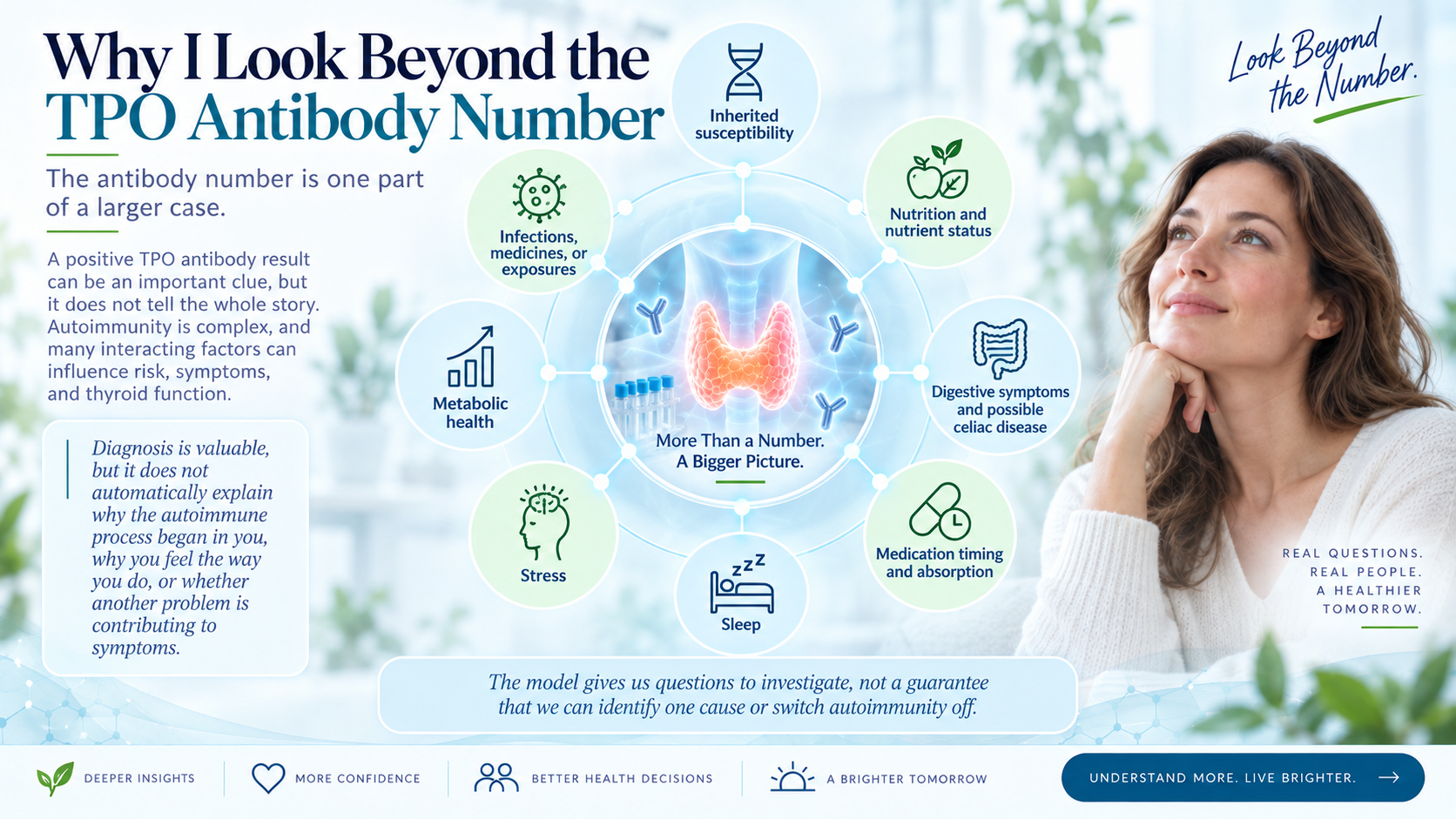
Getting a name for what may be happening in your thyroid is valuable. But a diagnosis does not automatically explain why the autoimmune process began in you, why you feel the way you do, or whether another problem is contributing to your symptoms.
My functional medicine approach uses an Environmentally Induced Autoimmunity model: inherited susceptibility and environmental or physiological influences can interact in complex ways. That gives us questions to investigate, not a guarantee that we can identify one cause or switch autoimmunity off.
Depending on your history, we might look at nutrition and nutrient deficiencies, digestive symptoms and possible celiac disease, thyroid medication timing and absorption, sleep, stress, metabolic health, life-stage changes, and relevant infections, medicines, or exposures. We start with what your story and established tests support. We do not assume everyone needs the same diet, supplement protocol, or large panel of specialty tests.
The opportunity: Instead of treating your antibody number as the entire story, we can ask what needs attention now, what may be contributing to the way you feel, and which changes are worth testing and reassessing.
If you want the broader explanation of how susceptibility, triggers, and drivers may interact in Hashimoto’s, read my guide to what may cause Hashimoto’s disease.
Four Common TPO Antibody and Thyroid Test Patterns
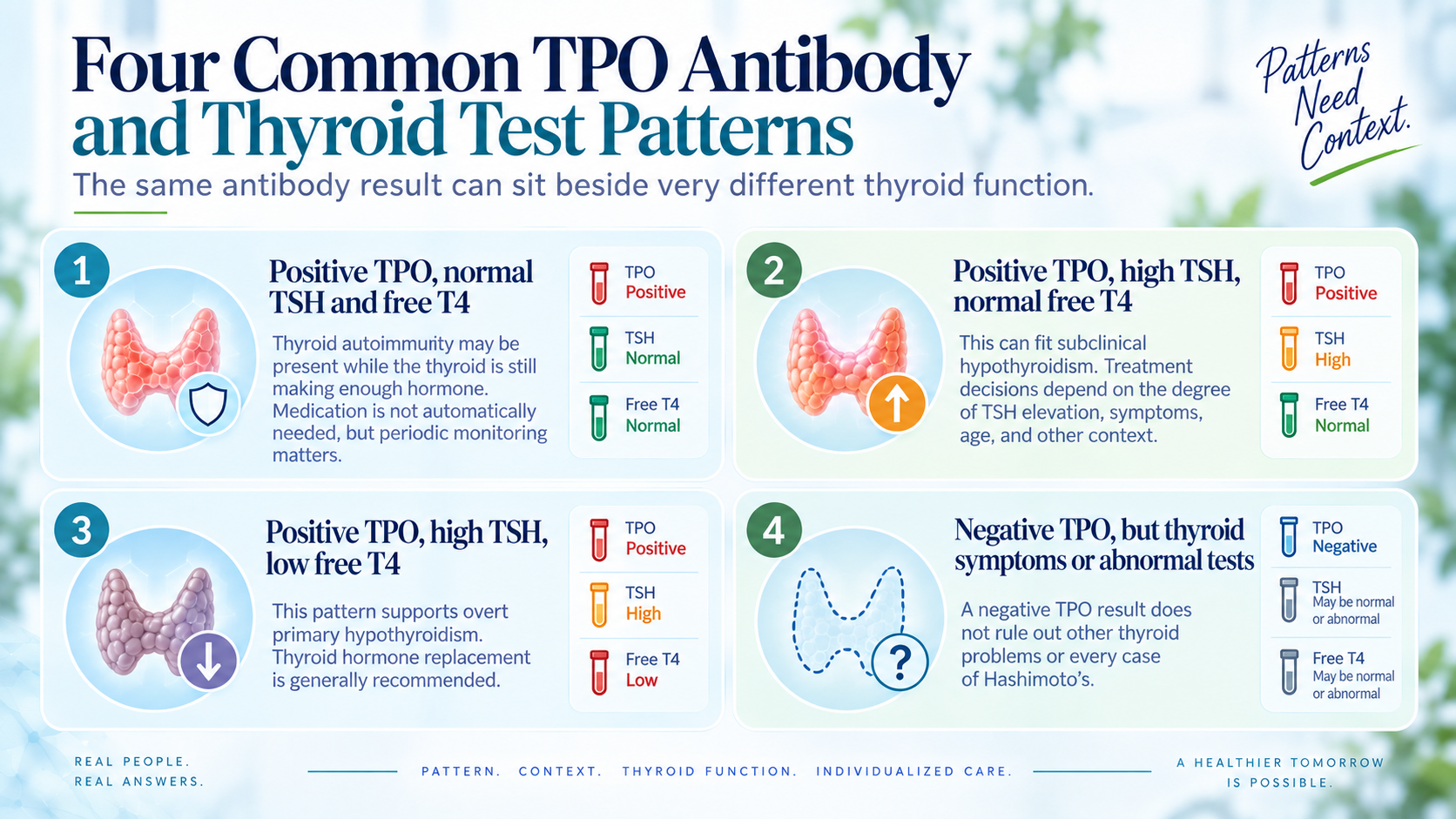
Your antibody result makes more sense when we look at it next to your thyroid-function tests. These are common patterns, not a substitute for interpreting your own laboratory reference ranges or medical history.
Positive TPO, normal TSH and free T4
Thyroid autoimmunity may be present while your thyroid is still making enough hormone. Medication is not automatically needed, but periodic TSH monitoring matters because thyroid function can change over time.
Positive TPO, high TSH, normal free T4
This can fit subclinical hypothyroidism. Your clinician considers how high the TSH is, symptoms, age, other health conditions, and pregnancy plans when deciding whether and when to treat.
Positive TPO, high TSH, low free T4
This pattern supports overt primary hypothyroidism. Thyroid hormone replacement is generally recommended, while an individualized plan can also address other relevant health concerns.
Negative TPO, but thyroid symptoms or abnormal tests
A negative TPO result does not rule out other thyroid problems or every case of Hashimoto’s. Your clinician may consider thyroglobulin antibodies, examination, other causes, or ultrasound when indicated.
For a fuller explanation of the disease and how thyroid function changes, visit my Hashimoto’s and autoimmune thyroid guide. [1, 2]
What TPO Antibody Levels Cannot Tell You
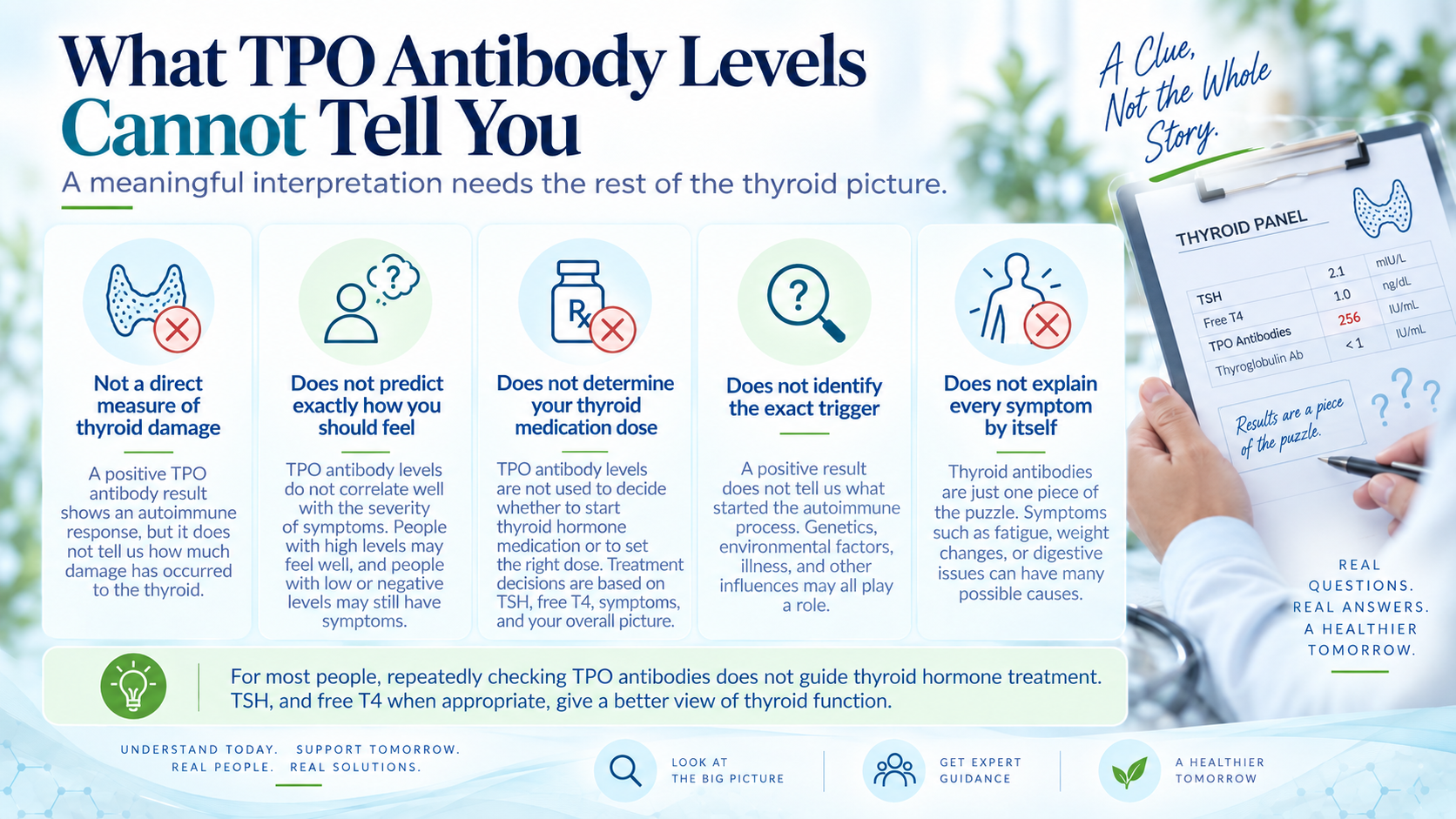
A result that is ten times the laboratory cutoff can be alarming. But the size of the number does not reliably measure the amount of thyroid damage, predict how you should feel, or tell your prescriber which medication dose you need.
It also cannot identify gluten, a chemical exposure, an infection, or a gut problem as your trigger. Even when a specialized test detects additional antibody reactivity, that finding needs to be evaluated alongside your symptoms, history, and more established clinical tests. A result is a clue to investigate, not automatic proof of the cause.
For most people, repeatedly checking TPO antibodies does not guide thyroid hormone treatment. Monitoring TSH, and free T4 when appropriate, gives a better view of thyroid function. If you feel unwell despite stable thyroid tests, we should widen the investigation rather than assume the antibody number explains every symptom. [1, 2]
Can Nutrition, Gut Health, or Supplements Help?
They can be worth exploring when there is a good reason. The aim is to identify meaningful needs and responses, not to give everyone with a positive TPO result the same list of foods to avoid or pills to take.
Start with medication delivery and everyday nutrition
If you take levothyroxine, changes in timing, meals, calcium or iron supplements, and some medicines can affect how consistently your body absorbs it. High-dose biotin can interfere with some thyroid blood tests. Bring your complete medication and supplement list to your prescribing clinician before changing how you take anything. [3]
Investigate gluten and digestive symptoms with a clear question
Hashimoto’s can occur alongside celiac disease. If your symptoms or history suggest celiac disease, discuss appropriate testing before you stop eating gluten. Everyone with a positive TPO test does not automatically need a gluten-free diet. A 2025 review of the small available trials in people with Hashimoto’s but without celiac disease found very uncertain evidence for thyroid benefits. [4, 5]
For the fuller discussion, see my gluten, Hashimoto’s, and celiac disease guide and Hashimoto’s diet guide.
Take the selenium findings seriously, without chasing a lab number
Studies of selenium supplementation have reported lower TPO antibody levels in some groups. A 2024 review included 35 randomized studies, but results varied substantially, and lowering antibodies is not the same as proving thyroid recovery or a cure. Excess supplementation can also be harmful. Whether selenium is appropriate depends on your diet, other supplements, medical history, and the question we are trying to answer. [6]
Iodine is also essential for thyroid hormone production, but high-dose iodine or kelp supplements can make Hashimoto’s-related thyroid problems worse. Pregnancy has its own iodine needs, so any supplementation should be discussed with the relevant clinician. [7]
What this means for you: a food, nutrient, digestive, or medication issue should be investigated because your history or findings make it relevant, not simply because an antibody test is positive.
Positive TPO Antibodies During Pregnancy or When Trying to Conceive
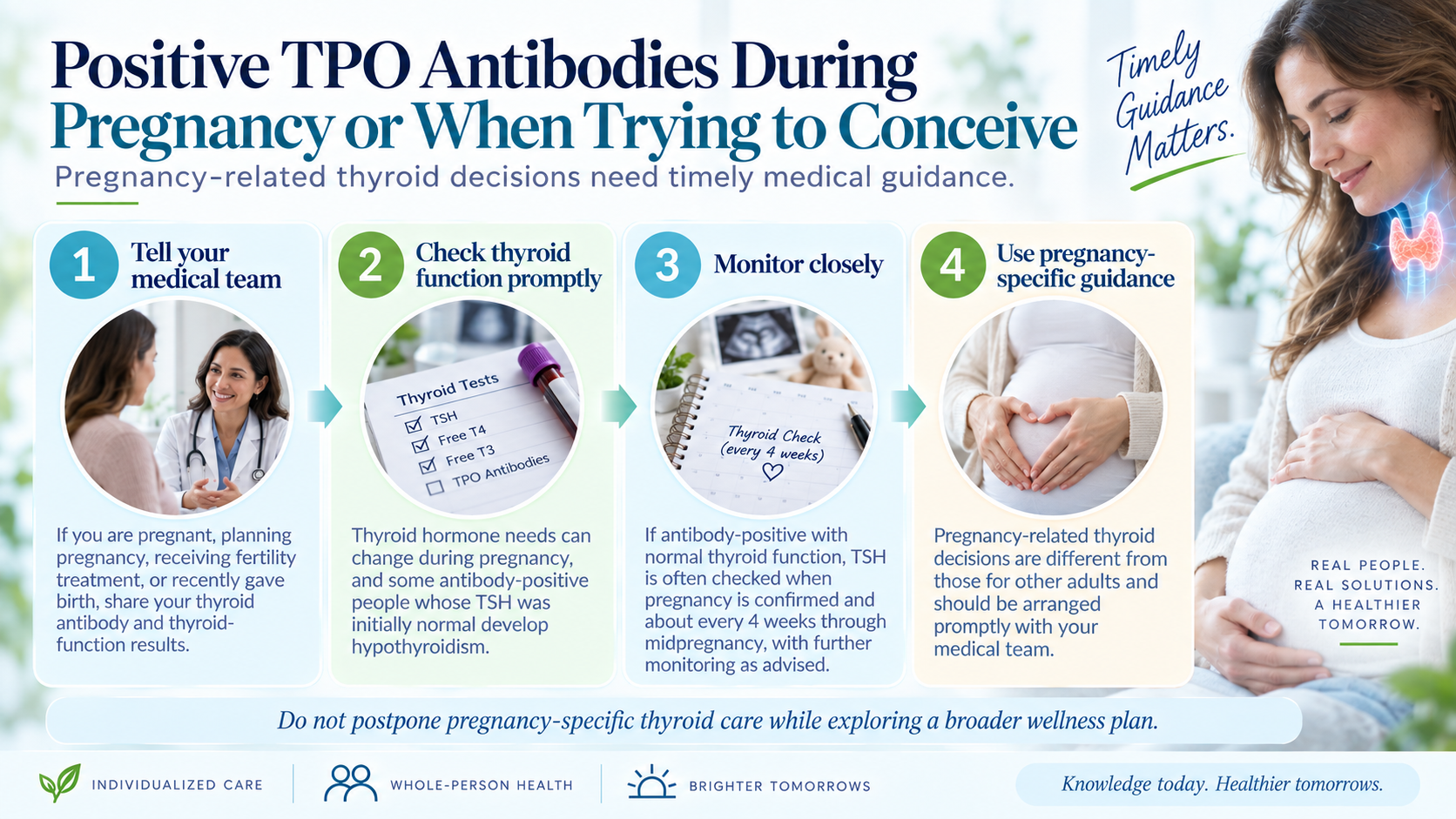
If you are pregnant, planning pregnancy, receiving fertility treatment, or recently gave birth, tell your obstetric and thyroid clinicians about positive thyroid antibodies and your thyroid-function results. Thyroid hormone needs can change during pregnancy, and some antibody-positive people whose TSH was initially normal develop hypothyroidism during pregnancy.
Pregnancy-specific monitoring and treatment decisions are different from those for other adults. The American Thyroid Association’s pregnancy guidance recommends checking TSH when pregnancy is confirmed and about every four weeks through midpregnancy for people who are antibody-positive and have normal thyroid function, with further monitoring as advised. This is something to arrange promptly with your medical team, not postpone while exploring a broader wellness plan. [8]
What I Would Want to Know About Your Positive TPO Result
A useful first conversation is less about ordering every available test and more about putting the results you already have into a clear sequence.
- What were your exact TPO, TSH, and free T4 results, including the laboratory ranges and dates?
- Has your TSH changed over time, and do you have previous thyroid antibody or ultrasound results?
- Which symptoms are affecting your life, and when did they begin?
- Do you take thyroid medication, iron, calcium, iodine, selenium, biotin, or other supplements?
- Do digestive symptoms, family history, or other findings suggest a reason to investigate celiac disease or nutrient deficiencies?
- Are pregnancy, postpartum changes, menopause, other conditions, or medicines relevant?
- Which questions need your prescribing clinician, an examination, ultrasound, or other medical evaluation?
My process: Detect, Support, Reassess
Understand your pattern
Review your history, symptoms, thyroid results, medications, nutrition, and any other findings that give us a reason to investigate further.
Build a focused plan
Prioritize the most relevant nutrition, lifestyle, medication-delivery, and physiological questions, working alongside your medical team where treatment is involved.
Learn from your response
Recheck the measures that matter, including appropriate thyroid-function tests, symptoms, daily functioning, and whether the plan is helping.
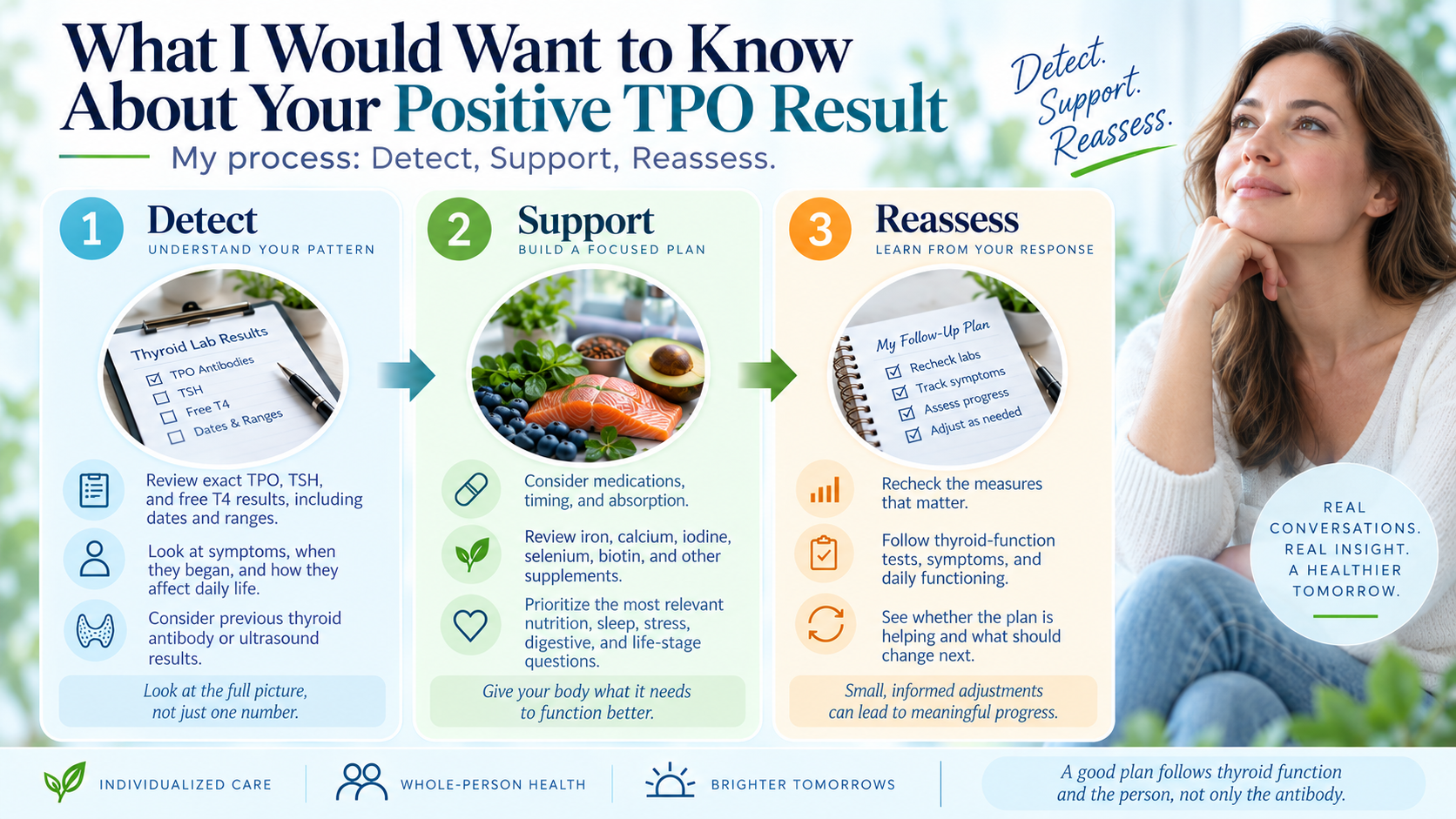
There is no single protocol that works for every person with Hashimoto’s. The value of this process is finding out which questions and next steps actually belong in your case.
Let’s Make Sense of Your Thyroid Results Together
If your TPO antibodies are positive and you still have questions about what the result means for you, I can help you organize the bigger picture. In a telemedicine consultation, we can review your existing records, symptoms, nutrition, medications, and history to identify which possible contributors deserve attention and build a focused plan around what we find.
My functional medicine work is designed to complement your thyroid and other appropriate medical care. I do not prescribe or adjust thyroid medication through this consultation.
Here is how to begin: submit an Application for Care. I personally review applications and, if I accept yours, send a private link to schedule your visit.
Frequently Asked Questions About Positive TPO Antibodies
Does a positive TPO antibody test mean I have Hashimoto’s?
A positive TPO antibody result supports autoimmune thyroiditis and is common in Hashimoto’s, but it is not a complete diagnosis by itself. Your TSH, free T4, history, examination, and sometimes other tests help establish what the result means for you.
Can TPO antibodies be positive when TSH is normal?
Yes. Thyroid autoimmunity can be present while your thyroid still makes enough hormone. Many people do not need thyroid medication at that stage, but they should discuss periodic TSH monitoring with their clinician.
Do high TPO antibodies mean severe thyroid damage?
No. A higher antibody number does not reliably tell you how much thyroid tissue has been damaged, how severe your symptoms are, or whether your thyroid is failing. Thyroid function and your clinical picture are more useful for those decisions.
Do positive TPO antibodies require thyroid medication?
Not on their own. Treatment depends mainly on thyroid function and your circumstances. An elevated TSH with a low free T4 generally calls for thyroid hormone replacement, and pregnancy requires different monitoring and treatment decisions.
Can I have Hashimoto’s with negative TPO antibodies?
Yes. Some people have thyroglobulin antibodies or other findings consistent with autoimmune thyroiditis. A negative TPO result does not rule out every thyroid condition.
Should I keep retesting TPO antibodies?
Usually not to guide thyroid hormone treatment. TSH, and free T4 when indicated, are generally more useful for monitoring thyroid function. Your clinician may repeat antibodies when there is a specific diagnostic question.
Can food or supplements lower TPO antibodies?
Some studies report lower TPO antibody levels after particular interventions, including selenium, but results vary and a lower antibody number does not prove that Hashimoto’s has reversed. Decisions should account for nutritional needs, safety, thyroid function, symptoms, and the quality of the evidence.
Why are TPO antibodies important in pregnancy?
People with thyroid antibodies may need closer thyroid-function monitoring during pregnancy, even when initial thyroid hormone levels are normal. If you are pregnant or planning pregnancy, discuss your results promptly with your obstetric and thyroid clinicians.
What should I do after a positive TPO antibody test?
Review your TSH and free T4 with your clinician, identify whether thyroid treatment or follow-up is needed, and bring together your symptoms, medication and supplement list, and relevant health history. An individualized functional medicine evaluation can then help prioritize additional questions without replacing medical thyroid care.
Can a functional medicine approach cure Hashimoto’s naturally?
There is no scientifically established natural cure for Hashimoto’s. Functional medicine can help investigate relevant nutrition, medication absorption, symptoms, lifestyle, and other possible contributors, then build and reassess a focused plan alongside appropriate medical treatment.
Do I need to stop eating gluten if my TPO antibodies are positive?
Not automatically. If celiac disease is suspected, get tested before removing gluten because dietary restriction can make testing less accurate. A gluten-free diet is essential for celiac disease, but evidence does not support recommending it to every person with Hashimoto’s.
What does a positive TPO antibody number mean on my lab report?
A result above your laboratory’s reference range is considered positive, but the cutoff and measurement method can vary. The number alone cannot diagnose hypothyroidism or tell you exactly which factors triggered thyroid autoimmunity.
Sources and Further Reading
These published references support the medical and research statements above. My individualized evaluation model is a way to organize clinical questions; it is not a validated test that identifies a unique cause of Hashimoto’s.
- American Thyroid Association: Hashimoto’s Thyroiditis. Diagnosis, thyroid-function monitoring, and treatment.
- American Thyroid Association: Thyroid Function Tests. What TSH, free T4, and thyroid antibodies measure.
- American Thyroid Association: Thyroid Hormone Treatment. Medication timing, interactions, and absorption.
- NIDDK: Diagnosis of Celiac Disease. Why celiac testing should precede gluten avoidance when celiac disease is suspected.
- Araújo EMQ, et al. (2025). Effects of Gluten-Free Diet in Non-Celiac Hashimoto’s Thyroiditis: A Systematic Review and Meta-Analysis. Small evidence base and very low certainty for thyroid outcomes.
- Huwiler VV, et al. (2024). Selenium Supplementation in Patients with Hashimoto Thyroiditis: A Systematic Review and Meta-Analysis of Randomized Clinical Trials. Antibody findings, variation between studies, and clinical outcomes.
- NIDDK: Hashimoto’s Disease. Dietary iodine considerations and medical overview.
- American Thyroid Association (2017). Guidelines for the Diagnosis and Management of Thyroid Disease During Pregnancy and the Postpartum. Antibody-positive pregnancy and TSH monitoring.