
Understanding Severe Psoriasis
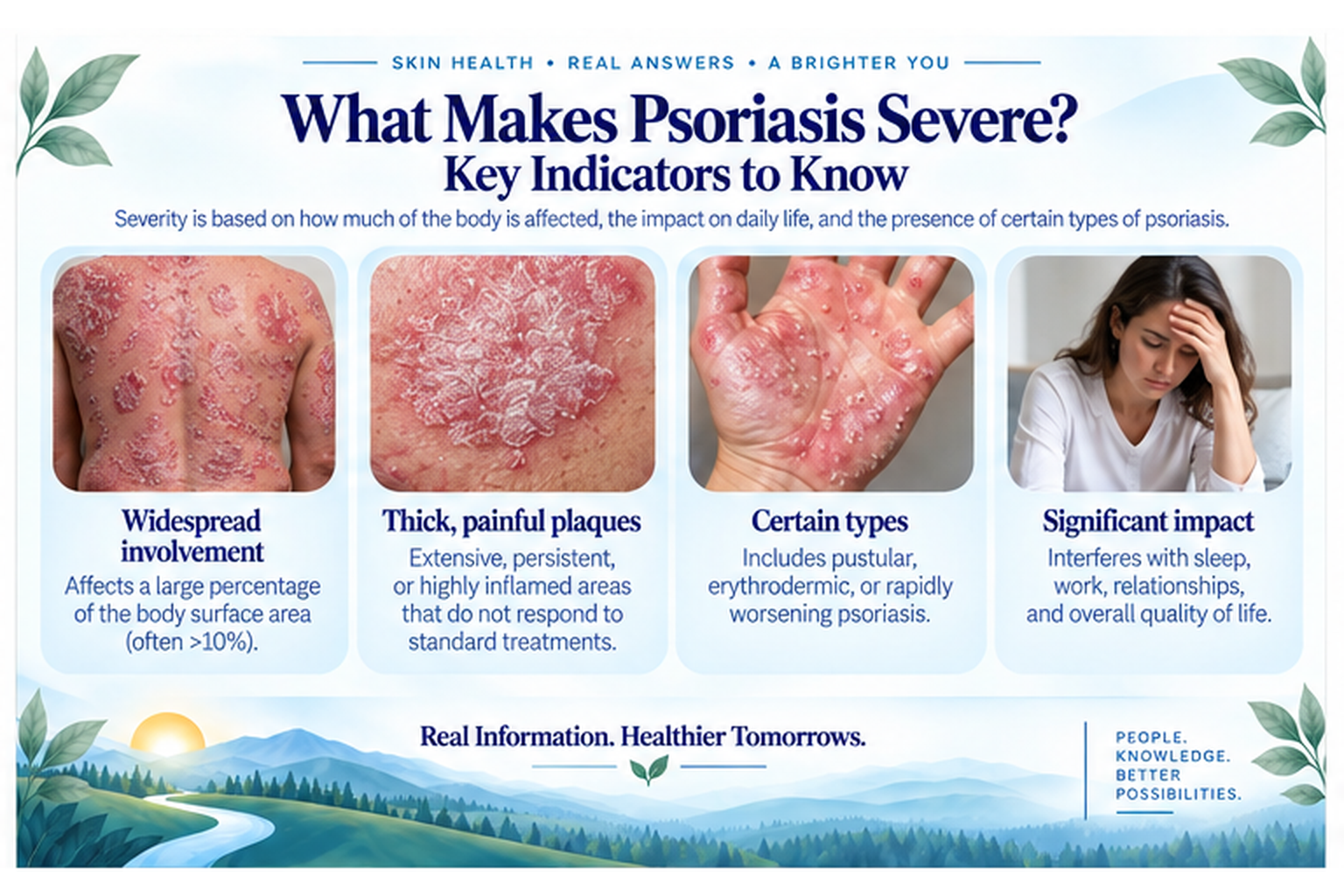
Severity is multidimensional. Body surface area matters, but so do location, symptom intensity, quality of life, failure of topical therapy, unstable forms, and joint disease.
Emergency Warning Signs
Get urgent medical help for widespread fiery redness, skin shedding, fever, chills, weakness, dehydration, rapid heart rate, severe pain, or widespread painful pustules. Erythrodermic and generalized pustular psoriasis can disrupt temperature and fluid balance and may be life-threatening.
Do not attempt to manage an unstable, rapidly worsening eruption with supplements or diet changes alone. Bring a complete medication list because abrupt withdrawal or changes in certain medicines can be relevant.
Conventional Severe Psoriasis Treatments
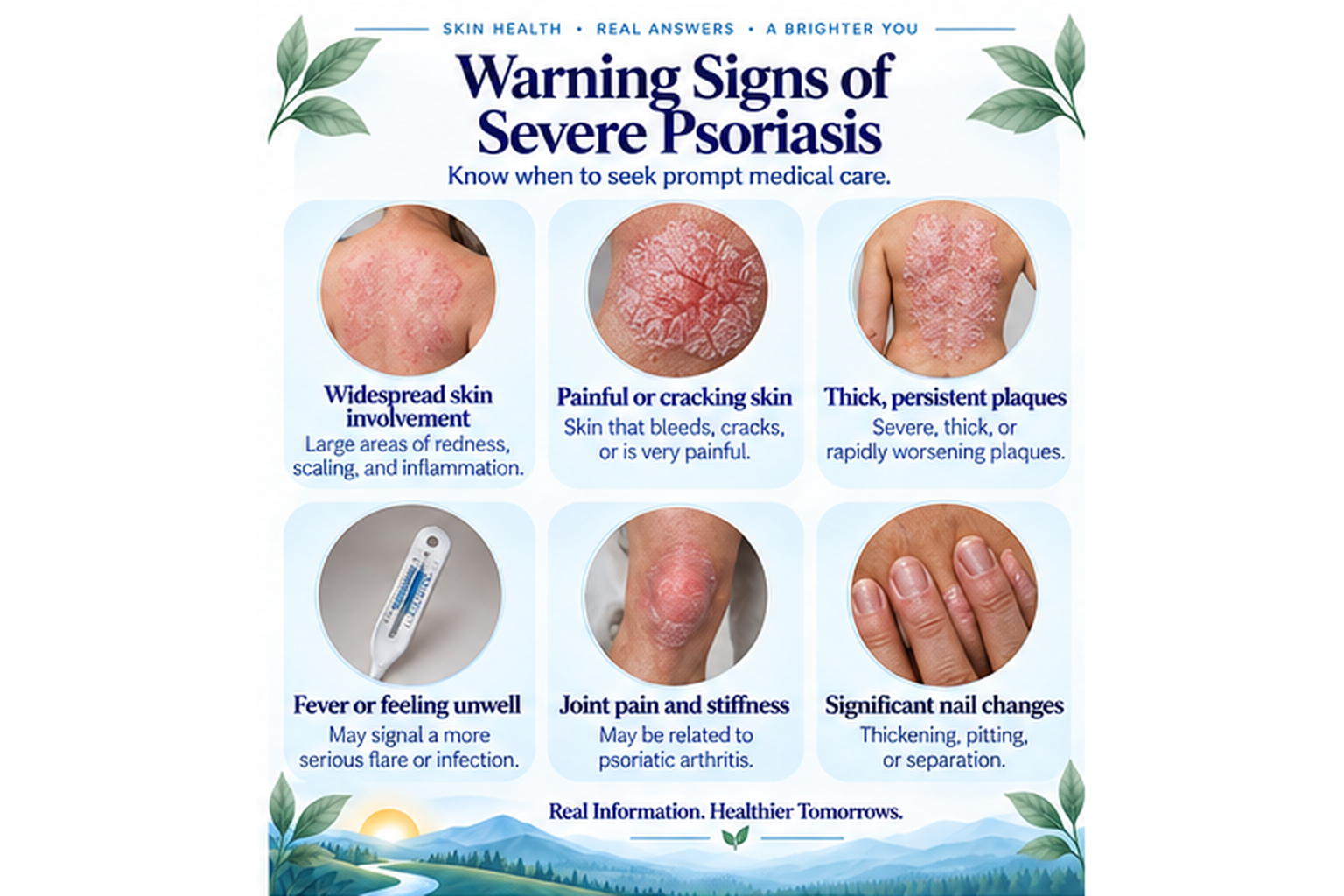
Systemic treatment can be essential. Depending on the form and urgency, dermatology care may include oral systemic medicines, biologics, biosimilars, phototherapy, or short-term rapid-control strategies followed by a maintenance plan. Screening, laboratory monitoring, infection risk, pregnancy considerations, liver and kidney health, cardiovascular risk, and other conditions affect the choice.
Use the complete treatment guide to understand the categories and questions to discuss with the prescriber.
Why Severe Psoriasis Requires Whole-Person Screening
Severe psoriasis is associated with a higher burden of psoriatic arthritis, cardiometabolic disease, depression and anxiety, sleep problems, and other inflammatory conditions. Appropriate screening is not optional wellness decoration. It can change risk, treatment selection, and long-term health.
Joint protection
Ask about swelling, morning stiffness, heel pain, dactylitis, and persistent back pain.
Cardiometabolic health
Review blood pressure, glucose, lipids, weight trajectory, activity, and smoking.
Mental health and sleep
Severe itch and visible disease can amplify insomnia, distress, isolation, and depression.
Medication safety
Coordinate monitoring, vaccination questions, infection risk, and interactions with the treatment team.
The Functional Medicine Opportunity in Severe Psoriasis
Environmentally Induced Autoimmunity frames severe disease as an interaction among inherited susceptibility, environment, and physiology. The work is not a substitute for disease control. It is a parallel, foundational investigation of why the immune system may be under additional pressure.
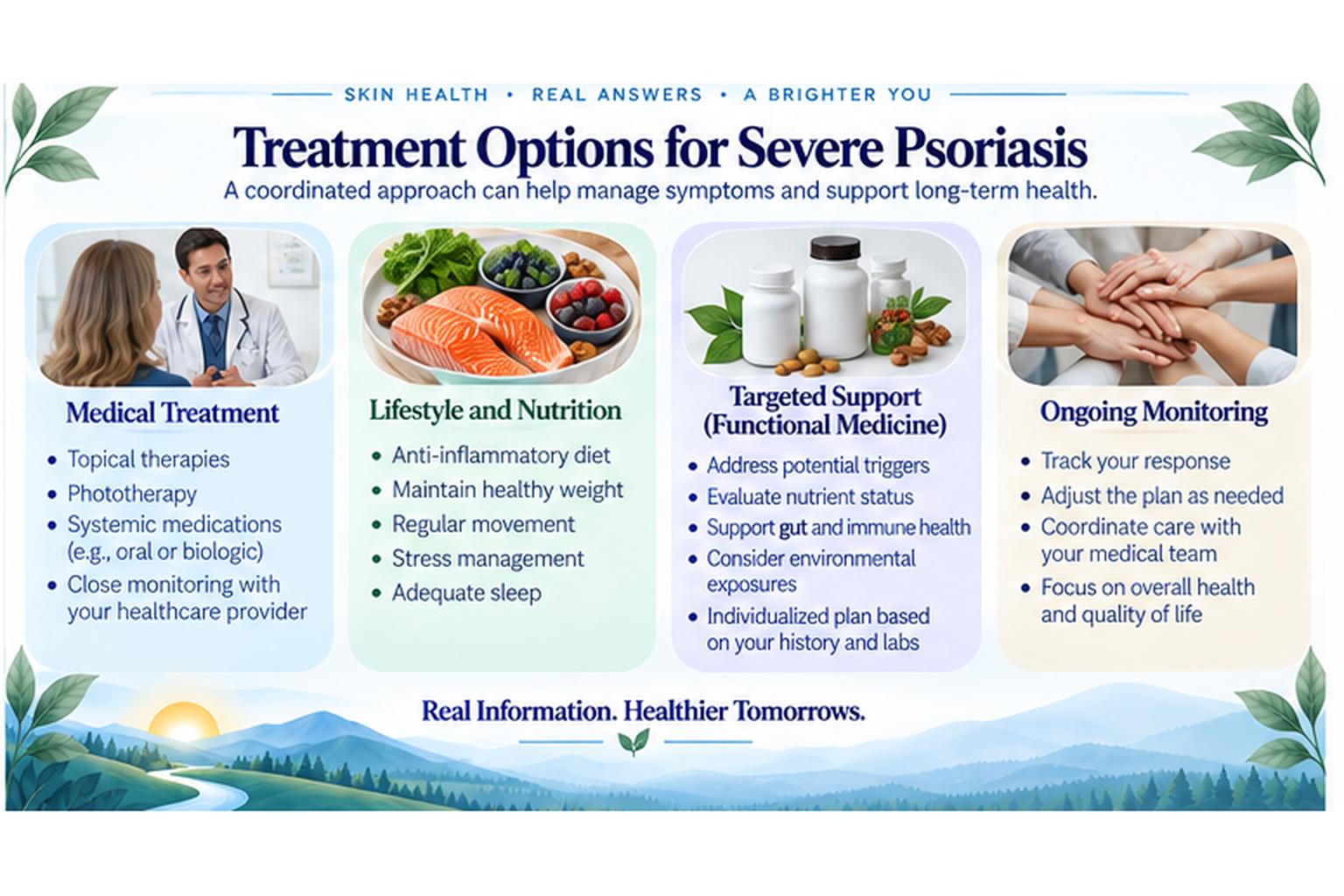
We examine diet, gut health, metabolism, nutrient status, stress, sleep, infections, exposures, medications, movement, and individualized response. Changes are prioritized for safety and potential impact, not for novelty.
A Personalized Plan: DETECT → SUPPORT → REASSESS
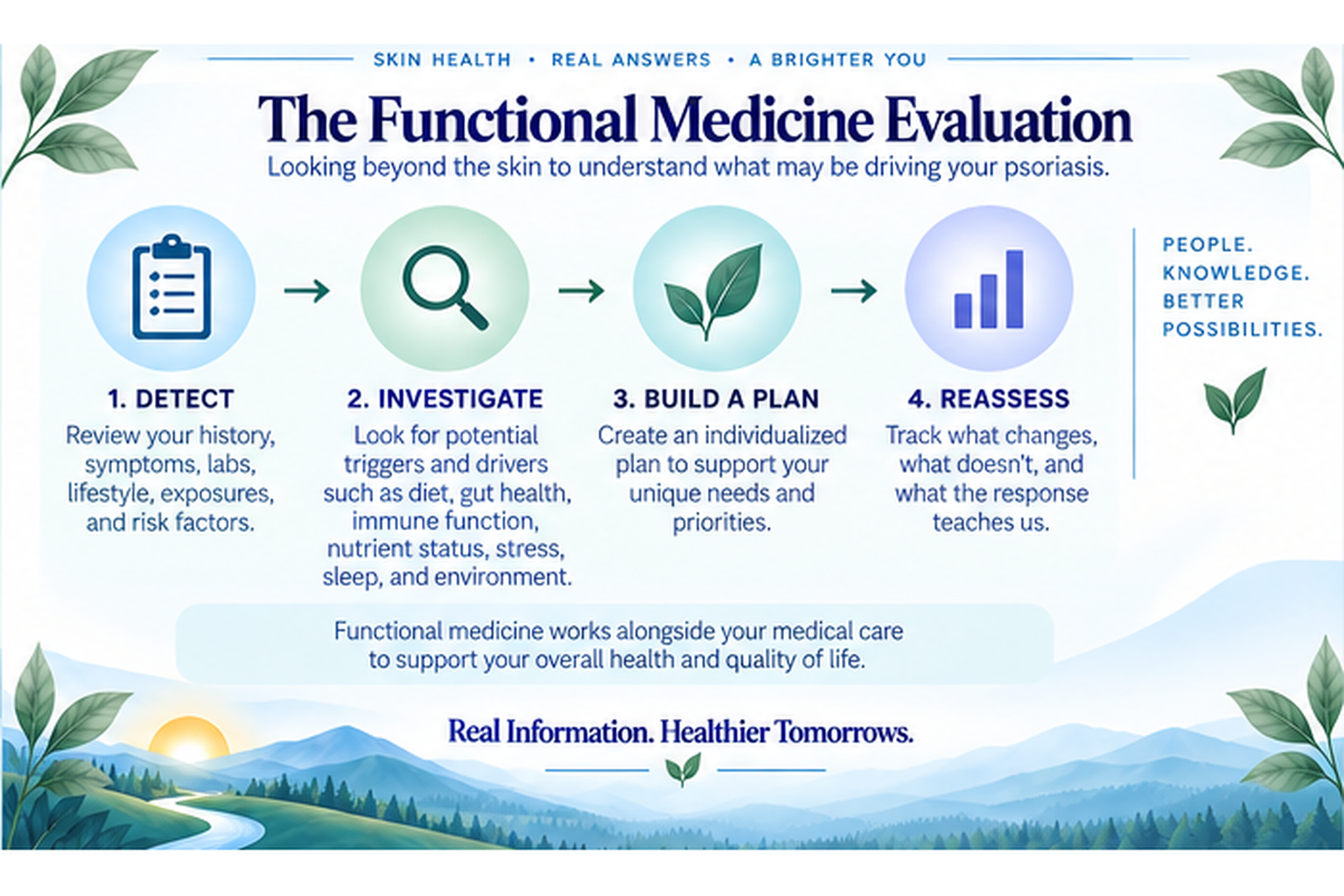
DETECT
Establish the baseline and identify the highest-value patterns. Review history, timeline, environment, diet, gut health, metabolism, nutrient status, stress, sleep, infections, exposures, medications, and current care.
SUPPORT
Support the most relevant modifiable factors without disrupting needed care. Keep the plan specific, safe, and realistic.
REASSESS
Change a manageable number of variables and document the response. Reassess symptoms, function, labs when relevant, and the next safest step.
Frequently Asked Questions
How do doctors define severe psoriasis?
Severity may reflect body surface area, high-impact location, symptom intensity, daily-life burden, treatment resistance, unstable forms, or psoriatic arthritis. No single percentage tells the whole story.
When is psoriasis a medical emergency?
Widespread redness or skin shedding, fever, chills, dehydration, weakness, rapid heart rate, severe pain, or widespread painful pustules require urgent medical evaluation.
Does severe psoriasis require biologic treatment?
Not always, but severe or disabling disease commonly requires phototherapy or systemic treatment. The best option depends on psoriasis type, urgency, joint disease, other conditions, risks, preferences, and prior response.
Can a small area of psoriasis be severe?
Yes. Disease on the face, genitals, scalp, palms, soles, or nails can be high impact even when total body surface area is small.
What related health conditions should be screened?
Important considerations include psoriatic arthritis, cardiovascular disease, metabolic syndrome, obesity, hypertension, diabetes, inflammatory bowel disease, smoking, alcohol use, and mental health conditions.
Can functional medicine replace systemic treatment for severe psoriasis?
No. Severe or unstable disease needs appropriate medical control. Functional medicine can investigate individual contributors and support whole-person health alongside dermatology or rheumatology care.
What does DETECT → SUPPORT → REASSESS mean for severe psoriasis?
It means establish the medical baseline and safety priorities, support the highest-value modifiable factors without disrupting needed care, then measure skin, joints, function, labs, and treatment response over time.
Should I stop psoriasis medicine if I improve?
Do not stop or change prescription treatment on your own. Discuss meaningful improvement and any adverse effects with the prescribing clinician so the plan can be reassessed safely.
Ready for a More Individualized Psoriasis Evaluation?
My process looks beyond the visible skin while respecting the role of appropriate dermatology and rheumatology care. We DETECT the most relevant patterns, SUPPORT the highest-priority needs, and REASSESS what changes.
References and Clinical Resources
- American Academy of Dermatology. Psoriasis clinical guideline.
- National Psoriasis Foundation. Psoriasis on high-impact sites.
- National Psoriasis Foundation. Related medical conditions.
- American Academy of Dermatology. Psoriasis diagnosis and treatment.