
The Link Between Psoriasis and PsA
About 30 percent of people with psoriasis develop psoriatic arthritis, although estimates vary across studies. Most people who develop PsA already have psoriasis, but joint symptoms can appear before obvious skin disease in some people.
The immune system is involved, but there is no single explanation for why one person with psoriasis develops arthritis and another does not. If you have psoriasis and develop new joint symptoms, one question is whether you have inflammatory arthritis that needs medical diagnosis and treatment. Another is what may be contributing to immune dysregulation and inflammatory burden in you specifically, including physiology, nutrition, metabolism, gut health, nutrient status, infections, sleep, stress, exposures, medications, activity, and other relevant parts of your history.
Two jobs, both important: Rheumatology is essential for diagnosis, disease control, and joint protection when psoriatic arthritis is suspected or confirmed. I consider functional medicine a foundational complementary strategy for autoimmune disease because it investigates the triggers, drivers, and physiological patterns that the diagnosis alone does not explain. The goal is not to replace medical treatment or claim one universal root cause. It is to understand which factors may be relevant and which of them can be changed.
For the broader psoriasis side of this discussion, see Psoriasis Causes and Treatment: The Functional Medicine Approach.
Symptoms of PsA Flare-ups
A PsA flare is a period when symptoms become more active. The pattern can vary from one person to another, and a flare may involve joints, entheses, the spine, skin, nails, fatigue, or several of these at the same time.
Get urgent medical attention for chest pain, significant shortness of breath, sudden neurologic symptoms, a hot severely swollen joint with fever, or other symptoms that could represent an emergency. Do not label these symptoms as an ordinary PsA flare at home.
What does a Psoriatic Arthritis flare feel like?
A psoriatic arthritis flare is a period when symptoms become more active. For some people it feels like a sudden increase in pain, stiffness, swelling, and fatigue. For others it is more gradual. A joint may feel hot or tender, a whole finger or toe may swell, heel pain may increase, or morning stiffness may last longer than usual.
Skin or nail symptoms may worsen at the same time, but they do not have to. There is no single flare duration. Symptoms can settle in days for one person and remain active much longer for another. New, persistent, or clearly worsening symptoms should be reported to the clinician managing your PsA so disease activity can be reassessed.
Joint Swelling from Psoriatic Arthritis Flares

Joint swelling can be one of the clearest signs that something more than skin psoriasis is happening. PsA can cause tenderness, warmth, swelling, stiffness, pain, and reduced range of motion. The pattern can be asymmetric and may change over time.
Treatment depends on the severity and pattern of disease. Medical care may include anti-inflammatory medicines, disease-modifying treatment, biologic or targeted therapies, physical or occupational therapy, and in advanced joint damage, sometimes orthopedic procedures.
Swollen Fingers or Toes are Signs of Psoriatic Arthritis
Yes, a swollen whole finger or toe can be an important sign of psoriatic arthritis. The medical term is dactylitis. People often describe it as a sausage digit.
If you have psoriasis and notice this kind of swelling, especially with morning stiffness, nail changes, heel pain, or other swollen joints, bring it to a physician's attention. Early recognition matters because PsA treatment is aimed not only at reducing pain but also at limiting ongoing inflammatory damage.
Skin Symptoms Often Seen During Psoriatic Arthritis Flares
Skin psoriasis and psoriatic arthritis can become more or less active on different timelines. A bad skin flare does not automatically mean your joints are equally active, and quiet skin does not rule out active arthritis.
You may notice thicker plaques, itching, burning, scaling, or new areas of psoriasis during a period when joint symptoms are also worsening. Skin changes still need to be evaluated on their own merits because infection, irritation, medication reactions, and other skin conditions can sometimes mimic or complicate psoriasis.
Nail Changes Can be Psoriatic Arthritis Symptoms
Nail pitting, crumbling, thickening, discoloration, ridges, or separation from the nail bed can occur with psoriatic disease. Nail psoriasis is useful information for the dermatologist or rheumatologist evaluating possible PsA.
For a broader discussion of skin treatment choices, see psoriasis treatment options and medications.
Lower Back Pain is an Underestimated Symptom of PsA Flare-Up

Back pain is common, so back pain by itself does not diagnose psoriatic arthritis. What raises concern is an inflammatory pattern, such as persistent lower-back or buttock stiffness that is worse after rest, lasts in the morning, or improves with movement.
PsA that affects the spine is often called axial psoriatic arthritis or psoriatic spondylitis. It belongs to the broader spondyloarthritis family, but it should not be casually labeled ankylosing spondylitis without proper evaluation.
If you have psoriasis plus chronic back or hip stiffness, tell your clinician about the psoriasis specifically. That context can affect the differential diagnosis and whether rheumatology evaluation or imaging is appropriate.
Eye Problems and Additional Symptoms in People with Psoriatic Arthritis
PsA can also coexist with other inflammatory problems, including inflammatory bowel disease in some people. That does not mean every digestive symptom is autoimmune, but it is another reason a complete history matters when clinicians are assessing the whole pattern.
Not Everyone with PsA Experiences Eye Inflammation
No, eye inflammation does not occur in everyone with PsA. Many people never develop uveitis. The reason to keep this topic prominent is that eye symptoms can be mistaken for ordinary irritation or dryness when they may require rapid ophthalmologic care.
If you develop eye pain, marked redness, light sensitivity, or blurred vision, seek prompt evaluation rather than trying to manage the problem as a routine flare symptom.
PsA Flare Triggers That Can Worsen Symptoms
Flares are not always predictable, and a trigger is not the same thing as a proven root cause. Some people notice repeatable patterns around infection, injury, stress, sleep disruption, changes in activity, or changes in medication.
| Possible pattern | What it can tell you |
|---|---|
| Illness or infection | Immune activation may coincide with worsening symptoms. Report significant infections and medication concerns to your medical team. |
| Joint or skin injury | Physical stress can sometimes precede worsening symptoms. The goal is appropriate recovery and treatment, not fear of normal movement. |
| Stress and poor sleep | These can influence pain, fatigue, recovery, behavior, and inflammatory signaling. They are worth supporting even when they are not the sole driver of a flare. |
| Medication changes | Stopping, missing, or changing treatment can allow disease activity to return in some people. Medication changes should be discussed with the prescribing clinician. |
| Activity changes | Too much load on an inflamed joint can aggravate symptoms, while too little movement can contribute to stiffness and deconditioning. The right level is individualized. |
Food can also be part of an individual's symptom pattern, but that is not the same as proving that a specific food caused PsA or a flare. I discuss that broader question in my psoriasis diet and nutrition guide. The useful question is which patterns are repeatable and relevant to the individual, not whether everyone needs the same restriction.
Avoiding Triggers to Prevent PsA Flare-up
Recognizing repeatable triggers may help some people reduce avoidable symptom aggravation, but it cannot guarantee that a PsA flare will be prevented. PsA is a complex inflammatory disease, and flares can occur even when someone is doing everything "right."
If you notice that several flares followed the same circumstance, that pattern is worth discussing with your medical team. Rest, sleep, stress support, sensible movement, and good general nutrition can support health without turning every flare into evidence that you failed to avoid a trigger.
Certain Medications Can Affect Psoriatic Skin Flares
Medications can improve psoriatic disease, worsen symptoms in some circumstances, or interact with other health conditions. The useful approach is to review medication changes and symptom changes together with your prescriber rather than trying to build a self-treatment list from the internet.
If you are reviewing the medication side of psoriasis, see psoriasis treatment options and medications.
Will Skipping or Stopping Psoriatic Arthritis Medication Cause a Flare Up?
It can. When effective treatment is stopped or missed, inflammatory disease activity can return in some people. Flares can also happen even when medication is taken exactly as prescribed.
Do not stop, start, or change prescription medication because of something you read on this page. If a medication seems ineffective, you are having side effects, or you are considering a change, contact the clinician who prescribed it.
Unhealthy Lifestyle and Chronic Illness: What This Does and Does Not Mean
Psoriatic arthritis is not caused simply by living an unhealthy lifestyle. Genetics, immune regulation, psoriasis, environmental influences, and other factors contribute to risk and disease expression. Blaming the person with PsA is both inaccurate and unhelpful.
Lifestyle can still matter. Nutrition quality, sleep, physical activity, smoking, alcohol, stress, body composition, and metabolic health can influence overall health and may affect symptoms or treatment response. These are opportunities for support, not a moral explanation for why someone became ill.
Injury or Illness can trigger Psoriatic Arthritis Flares
Some people notice that an infection, illness, or physical injury precedes worsening symptoms. That does not mean every flare has an identifiable trigger, and the biology is more complicated than saying the immune system simply attacks an injured area.
If symptoms worsen after illness or injury, report the pattern to the clinician managing your PsA, especially if there is fever, severe swelling, inability to use a joint, or another sign that could represent infection or a more urgent problem.
Skin Conditions and Skin Infections Related to Psoriatic Disease
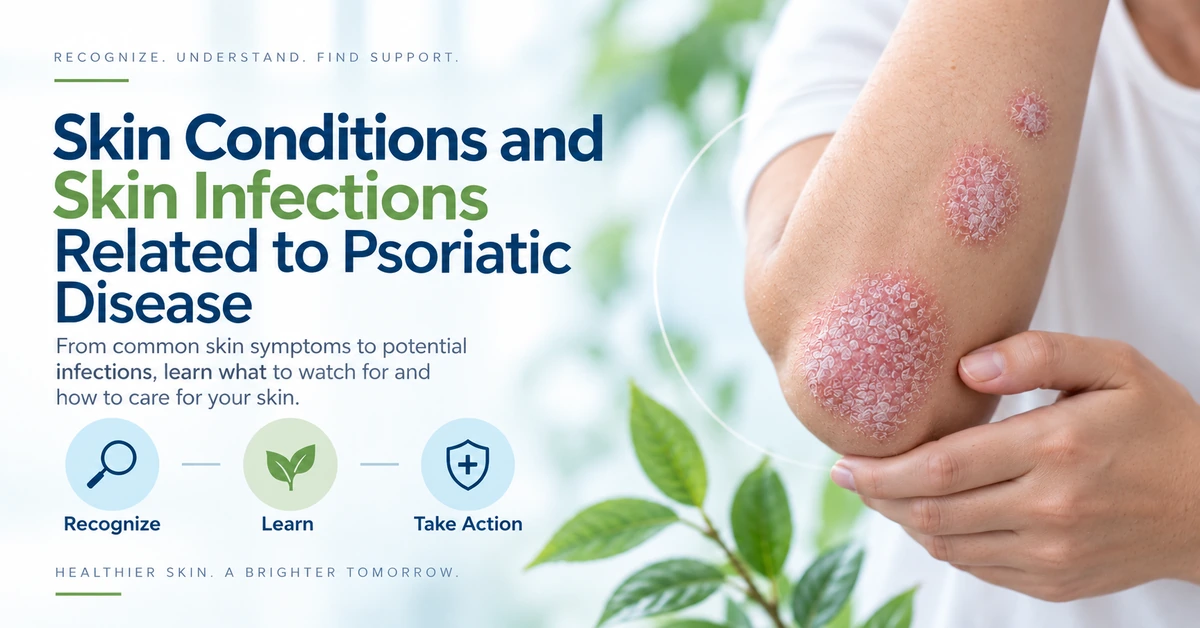
Psoriasis, nail disease, and scalp psoriasis may become more active around the same time as joint symptoms. Skin trauma and infection can also complicate the picture.
If an area becomes very painful, hot, rapidly red, draining, or associated with fever, seek medical care rather than assuming it is psoriasis. Severe or rapidly worsening skin disease has its own safety considerations. See Severe Psoriasis Treatment: The Functional Medicine Approach for that separate discussion.
Managing Psoriatic Arthritis Flares
Psoriatic arthritis does not have one treatment that works for everyone. The medical plan depends on which parts of the body are involved, how active the disease is, other health conditions, previous treatment response, side effects, and personal priorities.
If you are still trying to decide which kind of clinician you need for the skin side of psoriasis, see my guide to choosing a functional medicine psoriasis doctor.
Finding a Treatment Plan for a PsA Flare
A treatment plan for a PsA flare should be individualized and reassessed based on disease activity. Modern management often uses a treat-to-target approach, with the goal of reaching remission or low disease activity when possible.
Rheumatology
Evaluates inflammatory arthritis, disease activity, joint protection, imaging, and disease-modifying treatment.
Dermatology
Evaluates skin and nail psoriasis and coordinates treatments that may affect both skin and joints.
Physical or occupational therapy
Can help protect function, improve movement, adapt activities, and build an appropriate exercise plan.
Primary care and other specialists
Help coordinate general health, medication safety, cardiovascular and metabolic risk, eye symptoms, and other comorbidities.
I consider functional medicine a foundational part of a comprehensive autoimmune strategy, used alongside rheumatology rather than instead of it. Medical treatment can be critical for controlling active inflammatory disease and protecting joints. Functional medicine adds another layer: understanding why this person's immune system may be under greater load, which triggers or drivers may be relevant, and which areas of physiology, nutrition, metabolism, gut health, nutrient status, infections, sleep, stress, exposures, medications, and lifestyle deserve focused support.
Treatment Options to Manage Inflammation and Pain
Medical treatment for PsA can include anti-inflammatory medicines for some milder symptoms, disease-modifying antirheumatic drugs, biologic therapies, targeted oral therapies, corticosteroid injections in selected situations, and rehabilitation strategies. Which option fits depends on the disease pattern and the person.
| Approach | General role |
|---|---|
| NSAIDs and pain relief | May reduce pain and swelling in some milder situations, but they do not replace disease-modifying treatment when progressive inflammatory disease requires it. |
| DMARDs | Disease-modifying antirheumatic drugs are used for inflammatory arthritis such as PsA. They are not medications for osteoarthritis. |
| Biologic and targeted therapies | Target specific inflammatory pathways and may treat joints, skin, enthesitis, dactylitis, or axial disease depending on the therapy. |
| Physical therapy and exercise | Support mobility, strength, function, joint protection, and confidence with movement. |
| Lifestyle support | Nutrition, sleep, stress support, smoking cessation when relevant, weight management when appropriate, and movement can support overall health alongside medical treatment. |
For a broader treatment discussion, see Understanding Functional Medicine for Psoriasis.
Try Heat and Cold Therapy to Relieve Psoriatic Arthritis Inflammation
Heat or cold can provide short-term symptom relief for some people, but neither treats the underlying disease. Heat can feel helpful for stiffness and muscle tension. Cold can temporarily numb pain or calm a hot, swollen area.
Use whichever feels better, protect your skin from direct extreme temperatures, and ask your medical team if you have reduced sensation, circulation problems, or another reason heat or cold might be unsafe. There is no general rule that heat and cold can never be used in the same overall care plan.
People Diagnosed with Psoriatic Arthritis Can Manage Stress to Help Reduce Flare Risk
Stress management can support overall health and may help some people with symptom burden, but it cannot guarantee that PsA flares will be prevented. Stress can influence sleep, pain sensitivity, behavior, recovery, and inflammatory signaling.
Meditation, breathing exercises, counseling, social support, appropriate exercise, and better sleep can all be useful. The goal is not to tell someone that their arthritis is caused by stress. It is to reduce one potentially important source of physiologic load.
Modify Your Lifestyle to Support Overall Health and Immune Regulation

Balanced nutrition, adequate protein and micronutrients, hydration, regular sleep, appropriate activity, smoking cessation when relevant, and stress support can all contribute to better overall health. The plan should be individualized around the person's physiology, history, medical treatment, and priorities.
If you want to understand how I think through psoriasis and autoimmune health more broadly, see my guide to working with a functional medicine doctor for psoriasis and the Natural Psoriasis Treatment hub.
Reduce Your Activity Levels While Managing Psoriatic Disease Flares
During a painful flare, it can make sense to temporarily reduce activities that clearly aggravate an inflamed joint. That does not mean complete inactivity is usually the goal.
Prolonged inactivity can increase stiffness and deconditioning. Adjust the load, use rest strategically, and consider physical or occupational therapy if you need help deciding which activities are appropriate during and after a flare.
Incorporate Gentle Exercise Once Psoriatic Arthritis Symptoms Improve

Walking, water exercise, mobility work, Tai Chi, strength training, and other forms of exercise can be useful when they are scaled to your situation. A physical therapist can be especially helpful if you are not sure how to move safely around painful or swollen joints.
Take care of your Mental Health
Living with pain, visible skin disease, fatigue, uncertainty, and changing function can be difficult. Mental health support is not an admission that symptoms are "all in your head." It is part of taking care of the whole person while the inflammatory disease itself is treated appropriately.
Counseling, support groups, stress-management skills, and communication with family, friends, and your healthcare team can all be useful depending on what you need.
Antirheumatic Drugs: When a Medication Dose Needs Reassessment
Disease-modifying antirheumatic drugs, or DMARDs, are used to treat inflammatory diseases such as psoriatic arthritis. They are not standard treatment for osteoarthritis, and medication dose changes should be made by the prescribing clinician.
If symptoms remain active, side effects develop, or your health status changes, your rheumatologist may reassess the dose, medication, or treatment strategy. The right question is not whether you should change a dose on your own. It is whether the current treatment is reaching its target safely.
Where Functional Medicine Fits with Psoriatic Arthritis
A diagnosis tells us what disease has been identified. It does not automatically tell us what triggered the autoimmune process, which drivers may still be active, how barrier systems, metabolism, nutrition, infections, gut health, nutrient status, stress, sleep, medications, or exposures fit into the picture, or what the response to targeted support can teach us.
I refer to this broader framework as Environmentally Induced Autoimmunity. It does not mean there is one environmental cause or one protocol for everyone. It means genetic susceptibility can interact with a person's environment and physiology in different ways. That is why I want to detect the most relevant patterns, support the highest-priority findings, and reassess what changes.
The same model is central to how I think about other autoimmune conditions, including Hashimoto's and autoimmune thyroid disease. The diagnosis changes, but the underlying question remains useful: what may be driving the process in this person, and which factors can we change safely?
DETECT → SUPPORT → REASSESS
Review the history, symptom pattern, medical records, existing labs, diet, sleep, stress, exposures, medications, activity, and other relevant information. Testing should be question-driven rather than a blanket panel for everyone.
Build a focused plan around the highest-priority findings. That may include nutrition, sleep, movement, stress support, nutrient status, metabolic health, and other individualized needs while medical PsA treatment remains under the appropriate clinician.
Measure what changed, what did not, and what the response teaches us. The plan should evolve from evidence, not from attachment to a single theory or protocol.
If this complementary approach is what you are looking for, start with the Natural Psoriasis Treatment hub, read Understanding Functional Medicine for Psoriasis, or learn more about my broader Functional Medicine Practitioner Approach.
Frequently Asked Questions: Psoriasis and Psoriatic Arthritis
What is psoriatic arthritis?
Psoriatic arthritis is a chronic inflammatory arthritis associated with psoriasis. It can affect joints, the places where tendons and ligaments attach to bone, the spine, fingers and toes, skin, nails, and sometimes the eyes.
What triggers psoriasis flares?
Psoriasis flares can be influenced by factors such as stress, skin injury, infection, certain medications, smoking, and other individual exposures. Triggers vary from person to person, and a trigger is not the same thing as a universal root cause.
What is ankylosing spondylitis (AS)?
Ankylosing spondylitis is a form of axial spondyloarthritis that primarily affects the spine and sacroiliac joints. It can cause inflammatory back pain and stiffness, but it is not the same diagnosis as psoriatic arthritis.
Is there a psoriatic disease connection between spondylitis and ankylosing spondylitis (AS)?
Yes. Psoriatic arthritis can involve the spine, which is often called axial psoriatic arthritis or psoriatic spondylitis. Ankylosing spondylitis is another condition within the spondyloarthritis family. They are related inflammatory conditions, but one should not be assumed to be the other without proper evaluation.
Can knee pain be a symptom of psoriatic arthritis?
Yes. Psoriatic arthritis can affect the knee, but knee pain has many possible causes. Persistent pain, swelling, warmth, stiffness, or reduced motion should be medically evaluated rather than assumed to be PsA.
What is the National Psoriasis Foundation?
The National Psoriasis Foundation is a nonprofit organization focused on psoriasis and psoriatic arthritis through education, support, advocacy, and research.
What resources does the National Psoriasis Foundation provide?
The National Psoriasis Foundation provides educational resources, support and navigation tools, information about treatment and research, and programs for people living with psoriasis and psoriatic arthritis.
Are all joints affected by psoriatic arthritis?
No. Psoriatic arthritis can affect a few joints or many joints, and the pattern differs among individuals. It may involve fingers, toes, knees, ankles, hips, the spine, entheses, and other areas.
What are early signs of psoriatic arthritis?
Early signs can include persistent joint pain, swelling or stiffness, morning stiffness, heel or foot pain, a swollen whole finger or toe, nail pitting or separation, and inflammatory lower-back or hip stiffness. New joint symptoms in someone with psoriasis deserve medical evaluation.
What does a psoriatic arthritis flare feel like?
A flare is a period when psoriatic arthritis symptoms become more active. Joint pain, swelling, stiffness, fatigue, tendon or ligament pain, dactylitis, skin symptoms, nail changes, or back stiffness may worsen. The exact pattern varies from person to person.
What can trigger a psoriatic arthritis flare?
Flares are not always predictable. Some people notice patterns around infection, injury, stress, changes in sleep or activity, or changes in medication. A suspected trigger should be treated as a clue rather than proof of a single cause.
Can swollen fingers or toes be a sign of psoriatic arthritis?
Yes. Swelling of an entire finger or toe is called dactylitis and is an important feature of psoriatic arthritis. It should be evaluated, especially when it occurs with psoriasis, nail changes, or other joint symptoms.
Can lower back pain be a symptom of psoriatic arthritis?
Yes. Psoriatic arthritis can affect the spine and sacroiliac joints. Back or hip stiffness that is worse after rest, lasts in the morning, or improves with movement can raise concern for inflammatory spinal involvement, although many other conditions can also cause back pain.
Can psoriatic arthritis affect the eyes?
Yes. Psoriatic arthritis can be associated with uveitis. Eye pain, redness, light sensitivity, or blurred vision needs prompt medical evaluation because untreated uveitis can threaten vision.
Should I stop psoriatic arthritis medication during a flare?
Do not stop or change prescription medication on your own. A flare can mean the disease needs reassessment, but medication decisions should be made with the clinician managing your psoriatic arthritis.
How is psoriatic arthritis diagnosed?
There is no single definitive test. Diagnosis can include symptom and family history, examination of joints, skin and nails, blood tests to help exclude other conditions, and imaging such as x-rays, ultrasound, or MRI when appropriate.
Who treats psoriatic arthritis?
A rheumatologist is the key specialist for inflammatory arthritis and joint protection. Dermatologists often manage psoriasis of the skin and nails, and primary care, physical therapy, and other clinicians may also be part of the care team.
Is there a cure for psoriatic arthritis?
There is currently no established cure for psoriatic arthritis. Treatment can reduce disease activity, relieve symptoms, slow progression, and protect joints. Some people reach remission or low disease activity with appropriate treatment.
Medical Sources Used for This Update
The medical sections of this page were updated against current guidance from major government and nonprofit arthritis and psoriasis resources. These sources support early evaluation, rheumatology care, joint protection, individualized treatment, prompt evaluation of uveitis symptoms, and the estimate that roughly one in three people with psoriasis develop PsA.
- National Institute of Arthritis and Musculoskeletal and Skin Diseases: Psoriatic Arthritis
- NIAMS: Psoriatic Arthritis Diagnosis, Treatment, and Steps to Take
- Arthritis Foundation: Psoriatic Arthritis
- Arthritis Foundation: Treatment Guidelines for Psoriatic Arthritis
- National Psoriasis Foundation: About Psoriatic Arthritis
If You Suspect Psoriatic Arthritis, Start with the Right Medical Evaluation
If you have psoriasis plus new or persistent joint swelling, morning stiffness, dactylitis, heel pain, inflammatory back stiffness, or other concerning joint symptoms, talk with your doctor about whether rheumatology evaluation is appropriate. Early control of inflammatory disease matters.
If you are already receiving appropriate medical care and want to add a functional medicine strategy that investigates underlying triggers, drivers, physiology, nutrition, metabolism, gut health, nutrient status, sleep, stress, exposures, and other factors rather than stopping at the diagnosis, you can learn how my consulting process works.