
Start With What You Need to Understand
The first step is deciding what you want testing to clarify.
One of the most important places to start is with the barrier systems that are designed to keep outside substances from crossing into the bloodstream and interacting with the immune system. When intestinal or mucosal barriers become compromised, food proteins, microbial products, chemicals, and other antigens may have greater contact with the immune system. That can provide an important clue to a possible autoimmune mechanism and help determine what to investigate next.
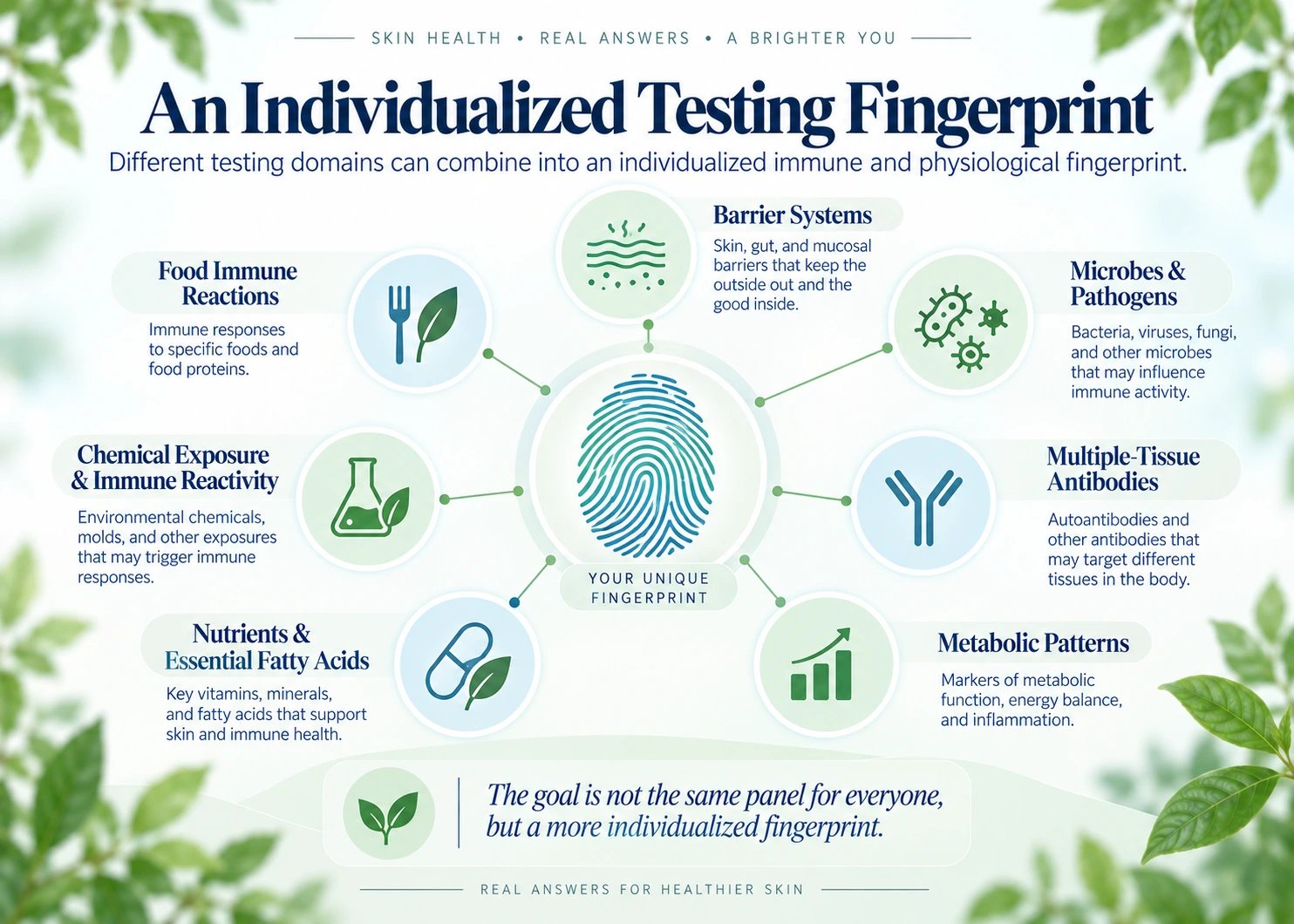
Other starting questions may involve immune reactions to foods, exposure to chemicals, microbial or pathogen patterns, nutrient insufficiency, essential fatty-acid balance, metabolic stress, or signs that immune reactivity may be expanding beyond one tissue. The goal is to build a baseline that reflects the individual rather than ordering the same panel for everyone.
Four Questions That Keep Testing Focused
Before ordering a test, ask: What pattern are we trying to understand? Which test best measures that pattern? How could the result shape an individualized plan? What will we track as the plan moves forward?
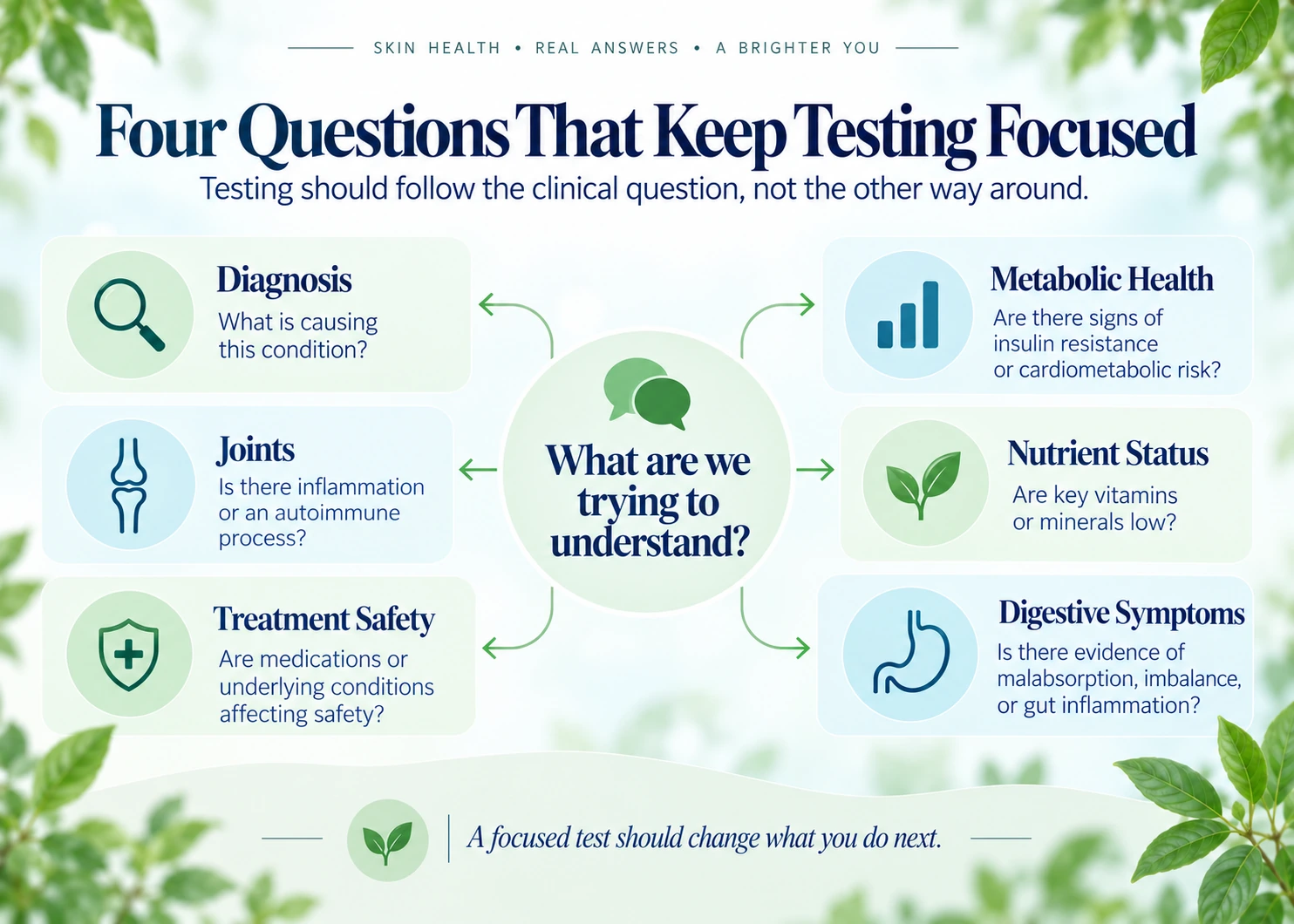
A well-designed testing plan connects each test to your history, symptoms, timeline, and the Environmentally Induced Autoimmunity model. This makes the results easier to combine into a useful picture instead of treating every marker as an isolated number.
Two Layers of Testing Can Build a More Complete Picture
General health and medical-care testing
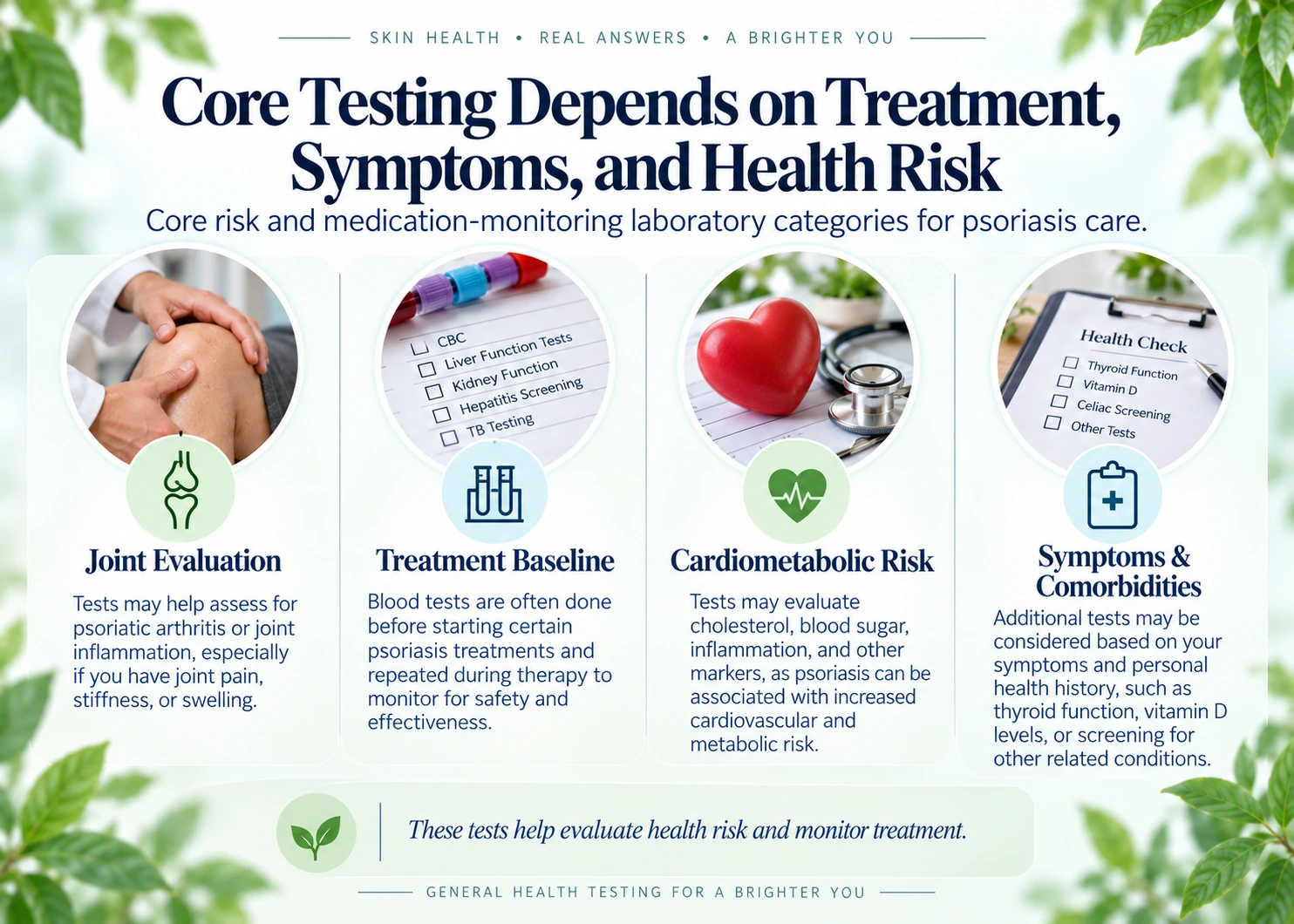
These tests help evaluate health risks and monitor specific treatments. They can be important, but they answer different questions from the functional immunology testing used to investigate possible triggers, drivers, barrier disruption, immune reactions, and individualized physiology.
Functional immunology and individualized-pattern testing
Depending on the question, Dr. Shook may use advanced functional immunology testing, including specialized Cyrex panels, alongside conventional blood, urine, stool, breath, or other laboratory testing. The laboratory is selected for the question being asked, not the other way around.
Functional Medicine Testing Opportunities for Psoriasis
Barrier-system assessment
The intestinal and mucosal barriers help regulate what comes into contact with the immune system. Testing may explore immune reactions to barrier proteins, bacterial endotoxins, mucosal immune markers, or other indicators of barrier disruption. This can provide a baseline for understanding whether barrier breakdown may be part of the larger autoimmune picture.
Comprehensive stool and pathogen assessment
Stool testing can examine digestion, absorption, inflammation, bacteria, fungi, parasites, and other microbial patterns. Other testing may look for specific pathogens, immune responses to microbial antigens, or small-intestinal bacterial overgrowth. The results can help connect digestive function, microbial burden, barrier health, and immune activation. Explore the broader connection in the gut health and psoriasis guide.
Food immune-reaction screening
Advanced food immune-reactivity panels can look beyond a short list of foods and evaluate reactions to raw, cooked, modified, or processed food antigens, food proteins, additives, gums, lectins, and cross-reactive compounds. These patterns can help build a more individualized nutrition strategy and may be followed with a structured food-removal and reintroduction process.
Chemical immune reactions and chemical exposure
Blood or urine testing can measure exposure to certain chemicals or toxic elements. Antibody-based testing asks a different question: whether the immune system appears to be reacting to chemicals that have bound to human proteins. Looking at both exposure and immune reactivity can create a more complete picture of how the environment may be affecting the person.
Multiple-tissue antibody testing
Multiple-tissue antibody panels can look for immune reactivity involving tissues beyond the skin. This may provide clues about loss of immune tolerance, autoimmune clustering, or expansion of immune reactivity. These results do not diagnose every autoimmune disease, but they can help identify patterns that deserve closer attention.
Vitamin, nutrient, and essential fatty-acid status
Vitamin D, iron, B12, folate, zinc, magnesium, antioxidant status, and other nutrients can influence immune regulation, tissue repair, and energy production. Essential fatty-acid testing can examine omega-3 and omega-6 patterns that affect inflammatory signaling. The findings can help personalize food choices and supplement support.

Metabolic and immune-regulatory patterns
Blood sugar, insulin, liver function, inflammatory markers, blood counts, immunoglobulins, immune-cell patterns, and other metabolic measures can help show how the body's regulatory systems are functioning. Strep testing may also matter when guttate psoriasis begins after a sore throat, while other pathogen or exposure testing can be selected from symptoms, timing, geography, occupation, travel, and home or work environment.
How to Make Sense of Your Results
A laboratory result is only one part of the picture. Your symptoms, health history, medications, supplements, whether you were fasting, normal day-to-day variation, and the laboratory method can all affect interpretation. One borderline value does not automatically mean you have a disease.

Work with an expert who can interpret how the findings relate to one another, explain what the patterns may mean, and use the results to develop an individualized plan. The purpose is to turn separate laboratory values into a clearer picture of what may be driving immune activation and what deserves attention first.
How Dr. Shook Uses Testing in a Functional Medicine Plan
Dr. Shook uses the Environmentally Induced Autoimmunity model to understand how environment, diet, gut health, metabolism, nutrient status, stress, sleep, infections, exposures, medications, and individual response may influence the immune process. Testing helps investigate those patterns and establish a baseline, but it works together with your history, symptoms, timeline, records, and daily experience. Read more about functional medicine for psoriasis.
DETECT
Establish a baseline and identify possible triggers using your history, timeline, symptoms, health records, and lab tests.
SUPPORT
Optimize diet, lifestyle, and supplementation based on your triggers and individual needs.
REASSESS
Track your symptoms, how your skin is changing, any side effects, and your ability to follow through with the recommended changes. Then continue, adjust, or stop parts of the plan based on how you are doing.
Sometimes your history, symptom timeline, food and exposure review, health records, and response to a carefully chosen change provide the most useful place to begin.
Frequently Asked Questions
Is there one functional medicine test that explains psoriasis?
No. Psoriasis can involve different combinations of barrier disruption, immune reactions, infections, exposures, nutrient needs, metabolism, genetics, and lifestyle patterns. Testing is selected to investigate the patterns that appear most relevant for the individual.
What can barrier-system testing show?
Barrier-system testing may look at immune reactions to intestinal or mucosal barrier proteins, bacterial endotoxins, and related markers. The results can provide clues about whether barrier breakdown may be increasing contact between outside antigens and the immune system.
Can testing identify food immune reactions?
Advanced food immune-reactivity panels can identify antibody patterns involving foods, food proteins, additives, gums, lectins, and raw or modified food antigens. The findings can help guide a structured, individualized nutrition plan rather than a generic psoriasis diet.
How can testing look for pathogens or microbial triggers?
Depending on the history and symptoms, testing may include comprehensive stool analysis, antigen or antibody testing, culture, molecular testing, breath testing, or immune-reactivity testing involving bacterial, fungal, parasitic, or other microbial patterns.
What is the difference between chemical exposure and chemical immune-reactivity testing?
Blood or urine exposure testing measures chemicals or their metabolites in the body. Chemical immune-reactivity testing looks for antibodies suggesting that the immune system is reacting to chemicals bound to human proteins. The two approaches answer different but potentially complementary questions.
What can multiple-tissue antibody testing reveal?
Multiple-tissue antibody testing can reveal patterns of immune reactivity involving tissues beyond the skin. These patterns may provide clues about loss of immune tolerance, autoimmune clustering, or expansion, but they must be interpreted with symptoms, history, and other findings.
Why test nutrients and essential fatty acids?
Vitamins, minerals, antioxidants, and essential fatty acids influence immune regulation, inflammatory signaling, energy production, and tissue repair. Testing can establish a baseline and help personalize diet and supplementation instead of relying on a standard protocol.
How does DETECT → SUPPORT → REASSESS guide testing?
DETECT establishes a baseline and looks for possible triggers, barrier disruption, immune reactions, nutrient needs, infections, exposures, and metabolic patterns. SUPPORT uses those findings to personalize diet, lifestyle, and supplementation. REASSESS tracks symptoms, skin changes, side effects, and follow-through so the plan can be continued or adjusted.
Ready to Understand Which Patterns May Matter for You?
Dr. Shook's process looks at how your environment, diet, gut health, metabolism, nutrient status, stress, sleep, infections, exposures, medications, and daily patterns may be affecting you. We DETECT possible triggers and imbalances, SUPPORT your individual needs, and REASSESS the plan based on how you are doing.
References and Clinical Resources
- American Academy of Dermatology. Psoriasis diagnosis and treatment.
- NIAMS. Psoriasis diagnosis, treatment, and steps to take.
- NIAMS. Psoriatic arthritis diagnosis and treatment.
- Cyrex Laboratories. Array 2: Intestinal Antigenic Permeability Screen.
- Cyrex Laboratories. Array 5: Multiple Autoimmune Reactivity Screen.
- Cyrex Laboratories. Array 10: Multiple Food Immune Reactivity Screen.
- Cyrex Laboratories. Array 11: Chemical Immune Reactivity Screen.
- Cyrex Laboratories. Array 14: Mucosal Immune Reactivity Screen.
- Cyrex Laboratories. BiomeBurden Testing Series.