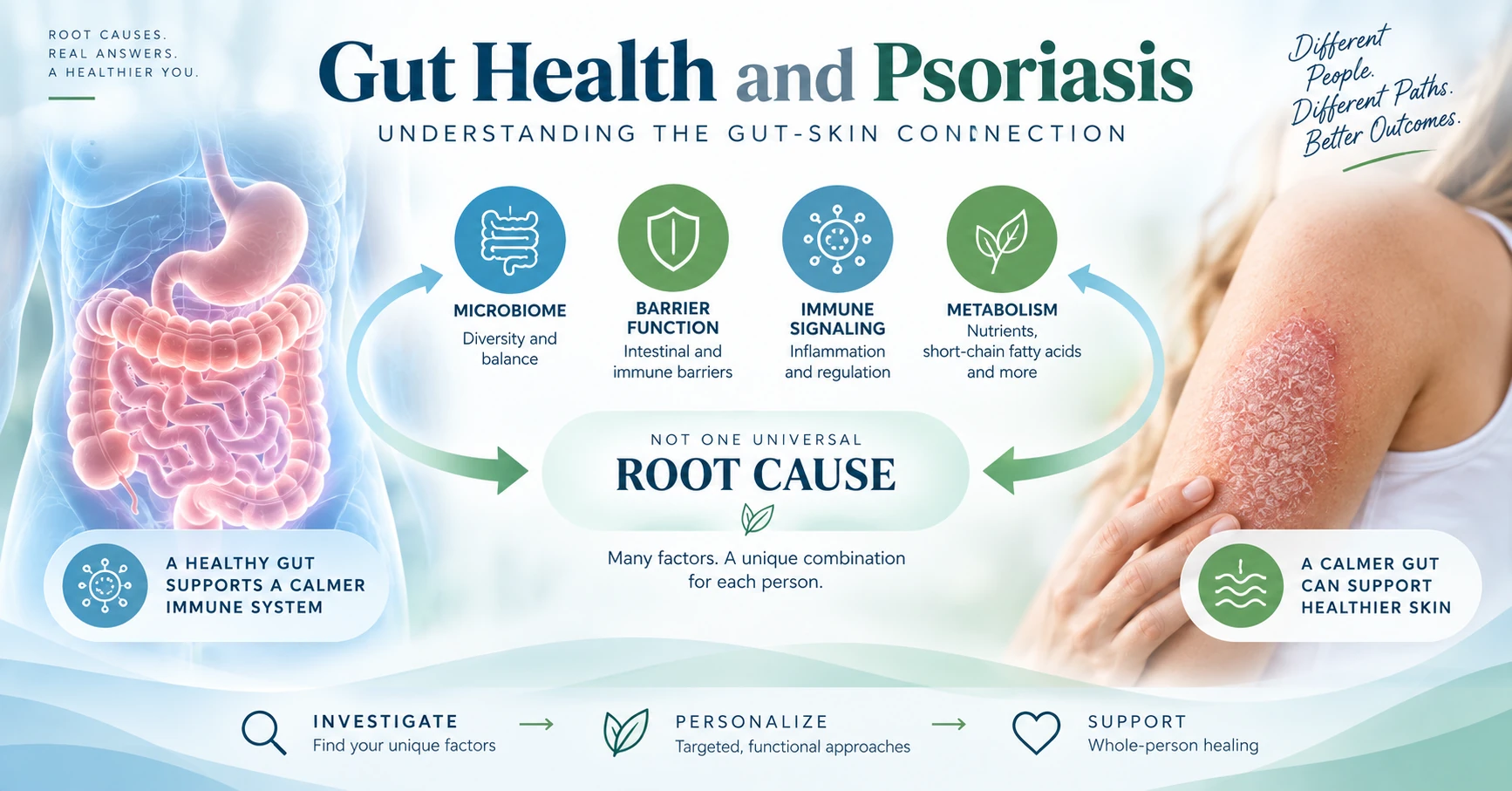
Gut Health May Be Part of the Psoriasis Picture, Not the Whole Explanation
Psoriasis is a chronic autoimmune and inflammatory disease. Genetics create susceptibility, and environmental or physiological factors can influence when the disease appears, how active it becomes, and how it changes over time.
Gut health belongs in that broader conversation because the gastrointestinal system is deeply connected to immune regulation, nutrient absorption, metabolism, and barrier function. But I do not want to replace one oversimplified story with another. Not everyone with psoriasis has the same gut problem, and not everyone needs the same gut protocol.
If digestive symptoms, antibiotic history, diet, nutrient issues, infections, inflammatory bowel disease, or other clues point toward the gut, we can investigate it. If they do not, we should not force the case into a gut-centered explanation.
For the broader framework, see psoriasis causes, triggers, and the functional medicine approach.
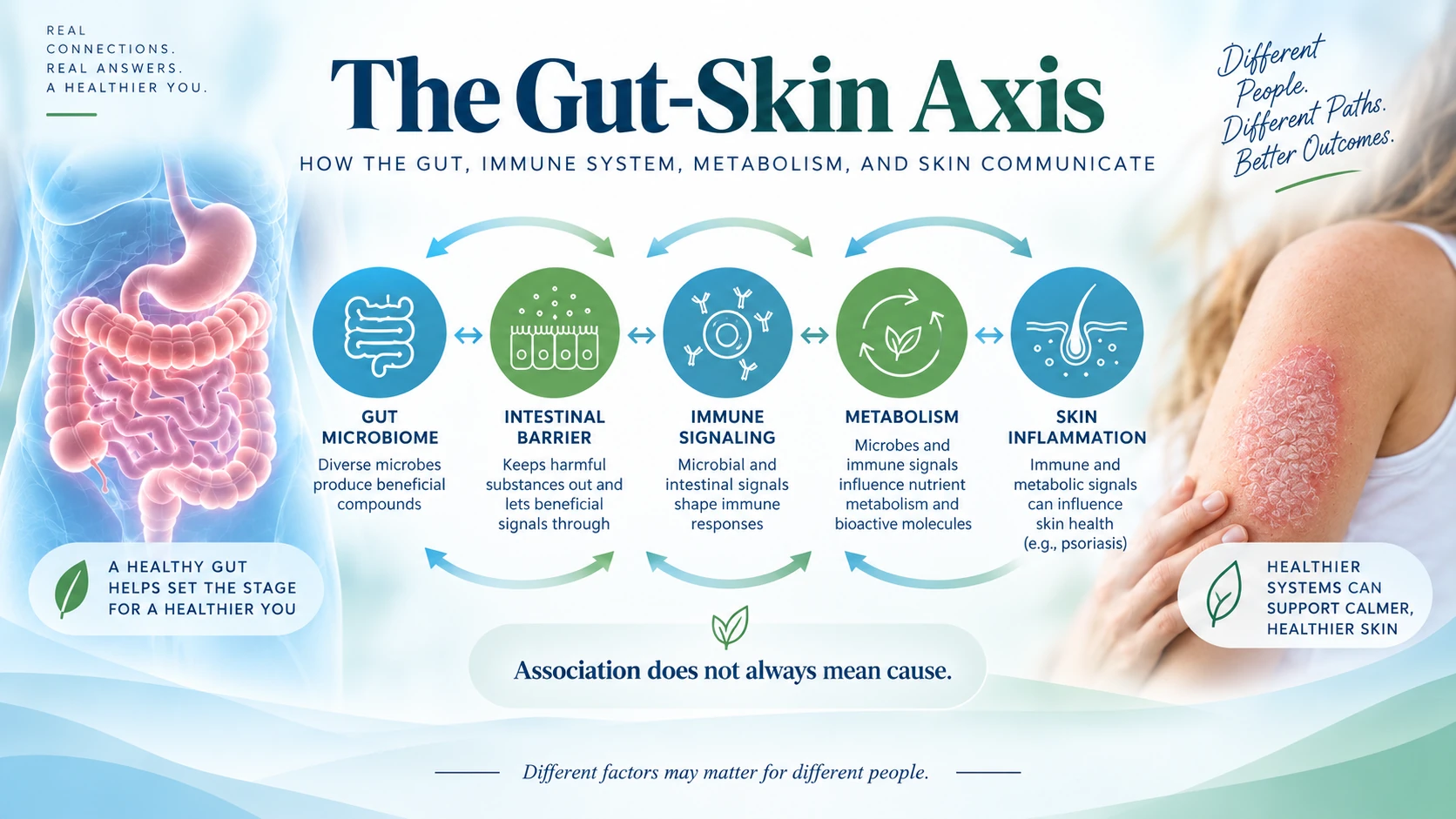
What Is the Gut-Skin Axis?
The gut-skin axis is a research framework describing communication between the gastrointestinal tract, the immune system, microbial metabolites, barrier systems, and the skin. This communication is bidirectional, which means changes in systemic inflammation or disease can also influence the gut environment.
Researchers are especially interested in short-chain fatty acids, bile acids, tryptophan metabolites, intestinal barrier integrity, and immune pathways such as the IL-23/Th17 axis because they provide plausible biological links between the gut and psoriatic inflammation.
Do People With Psoriasis Have a Different Gut Microbiome?
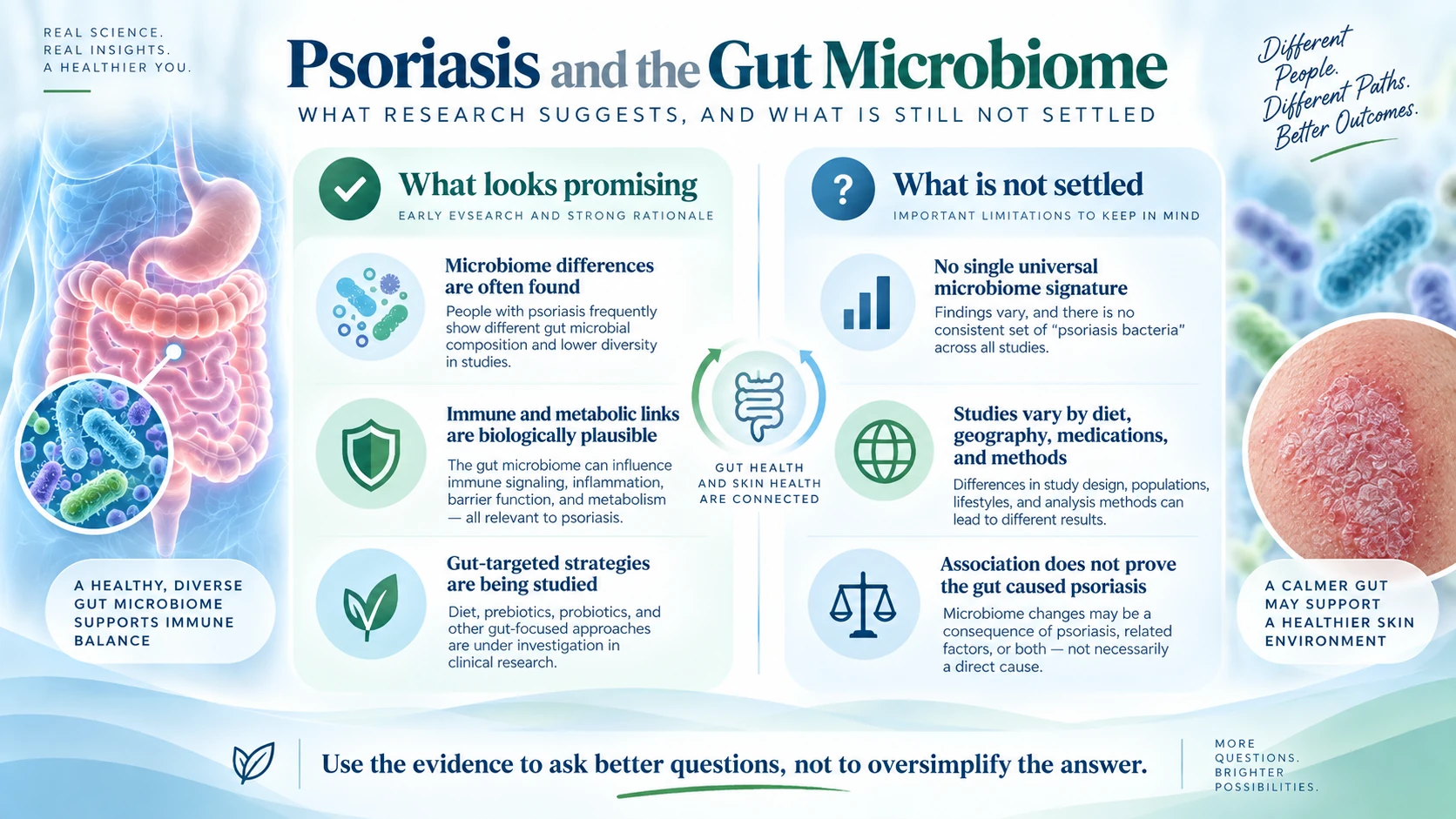
Many studies have reported differences in microbial diversity or in the relative abundance of particular organisms in people with psoriasis. That is an important signal, but it needs context.
What looks promising
Multiple studies and recent reviews support a relationship between psoriasis and altered gut microbial patterns. Researchers are actively studying how microbial metabolites, immune signaling, and barrier function may connect the gut with systemic and skin inflammation.
What is not settled
Studies do not consistently identify the same organisms or the same diversity pattern. Diet, geography, age, medication, body composition, disease severity, and testing methods can all affect microbiome results.
Does “Leaky Gut” Cause Psoriasis?
This is one of the most common claims in functional medicine, and it needs more precision.
Researchers are studying intestinal permeability and barrier dysfunction in psoriasis because increased passage of microbial products or inflammatory signals from the gut could theoretically influence systemic immune activity. That is biologically plausible and worthy of investigation.
What we cannot honestly say is that every person with psoriasis has intestinal permeability or that intestinal permeability is the single cause of psoriasis. The evidence is not there for that universal claim.
For me, barrier function is one possible piece of an Environmentally Induced Autoimmunity model. It becomes more relevant when the person's symptoms, history, medications, diet, infections, or testing give us a reason to look.
When Does a Gut-Focused Investigation Make More Sense?
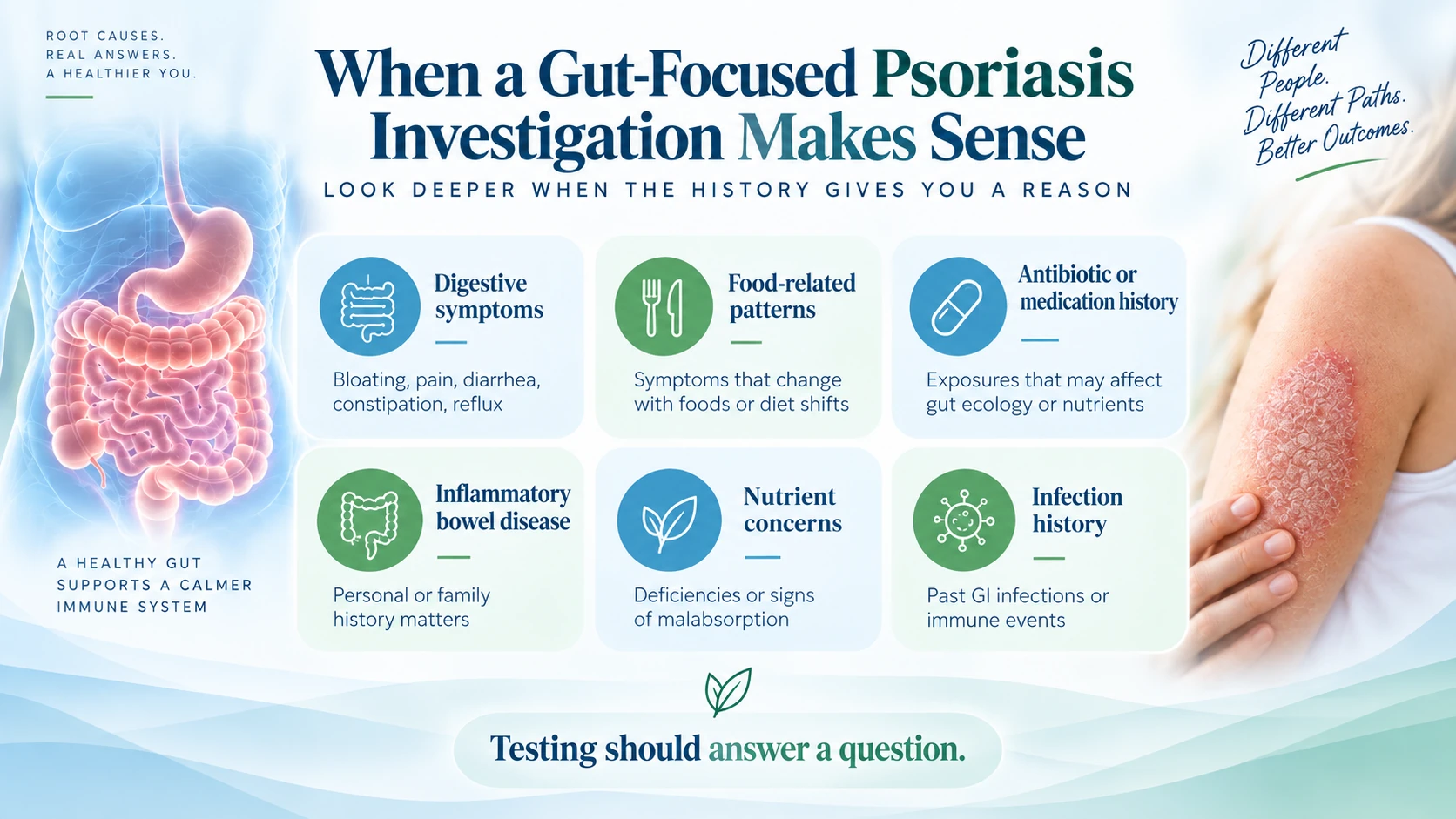
I am more interested in gut health when there are clues that make the question clinically useful.
Bloating, abdominal discomfort, reflux, diarrhea, constipation, or major changes in bowel habits.
Symptoms that consistently change with particular foods or major dietary shifts.
Repeated antibiotic exposure or medications that may influence digestion, nutrients, or microbial ecology.
A personal or family history of Crohn's disease or ulcerative colitis changes the relevance of gut symptoms.
Deficiencies, unexplained changes in iron or B vitamins, or patterns suggesting malabsorption deserve context.
Gastrointestinal infections or other immune events may be relevant when they line up with symptom changes.
Diet Can Influence Gut Health Without Becoming a One-Size-Fits-All Psoriasis Diet
Diet can shape the gut microbiome, alter metabolic signaling, affect bowel function, influence nutrient intake, and change body composition. Those are meaningful reasons to pay attention to food.
But that does not mean everyone with psoriasis should immediately remove gluten, dairy, nightshades, lectins, or a long list of foods. Those recommendations are often presented as universal when they are not.
I would rather ask: What does this person eat now? How much fiber are they getting? Are they tolerating it? Are highly processed foods dominating the diet? Are there symptoms suggesting celiac disease, food allergy, or another problem that deserves proper evaluation? What happens when we make a focused change and reassess?
What About Probiotics, Prebiotics, and Microbiome Supplements?
Probiotics and related microbiome strategies are interesting because several studies have reported improvements in psoriasis severity scores or inflammatory markers. That is encouraging, but the research is still early and products, strains, doses, and study designs vary.
I would not interpret that evidence as “everyone with psoriasis should take a probiotic.” The more useful question is whether a particular intervention makes sense for the person's symptoms, diet, bowel function, health history, and overall plan.
In other words, supplements should follow the investigation, not replace it.
If you are looking for a structured place to begin with foundational support, I created a 12-week psoriasis supplement protocol that brings together gut and digestive support, nutrients, omega-3s, vitamin D, diet, and lifestyle guidance in one organized plan.
Should You Get a Gut Microbiome Test for Psoriasis?
Not automatically. Commercial microbiome tests can generate large amounts of data, but more data does not always mean better decisions.
I use the same principle here that I use throughout functional medicine: testing should help us answer a better question. Sometimes a standard medical evaluation, basic laboratory work, celiac testing, nutrient assessment, or focused gastrointestinal testing is more useful than an expensive microbiome profile.
The test should change what we do. If it will not change the plan, it may not be the right test.
Gut Health Does Not Exist Separately From Metabolism
Psoriasis is associated with obesity, insulin resistance, cardiovascular risk, and other metabolic conditions. Diet and the microbiome can intersect with these systems through energy balance, microbial metabolites, inflammation, and nutrient handling.
That is another reason I do not want to reduce psoriasis to one gut bug or one permeability marker. The gut is part of a much larger physiological network.
Where Gut Health Fits in a Functional Medicine Approach to Psoriasis
Functional medicine gives us a new opportunity to investigate the person around the diagnosis. Gut health can be one part of that investigation, but it should earn its place based on the person's history and physiology.
For one person, digestive symptoms and nutrient issues may make gut health a major priority. For another, metabolism, stress, sleep, medication effects, infection history, or environmental exposures may be much more important.
The goal is not to prove the gut caused psoriasis. The goal is to determine whether gut-related patterns are contributing enough to deserve attention and whether changing them improves the person.
DETECT, SUPPORT, REASSESS
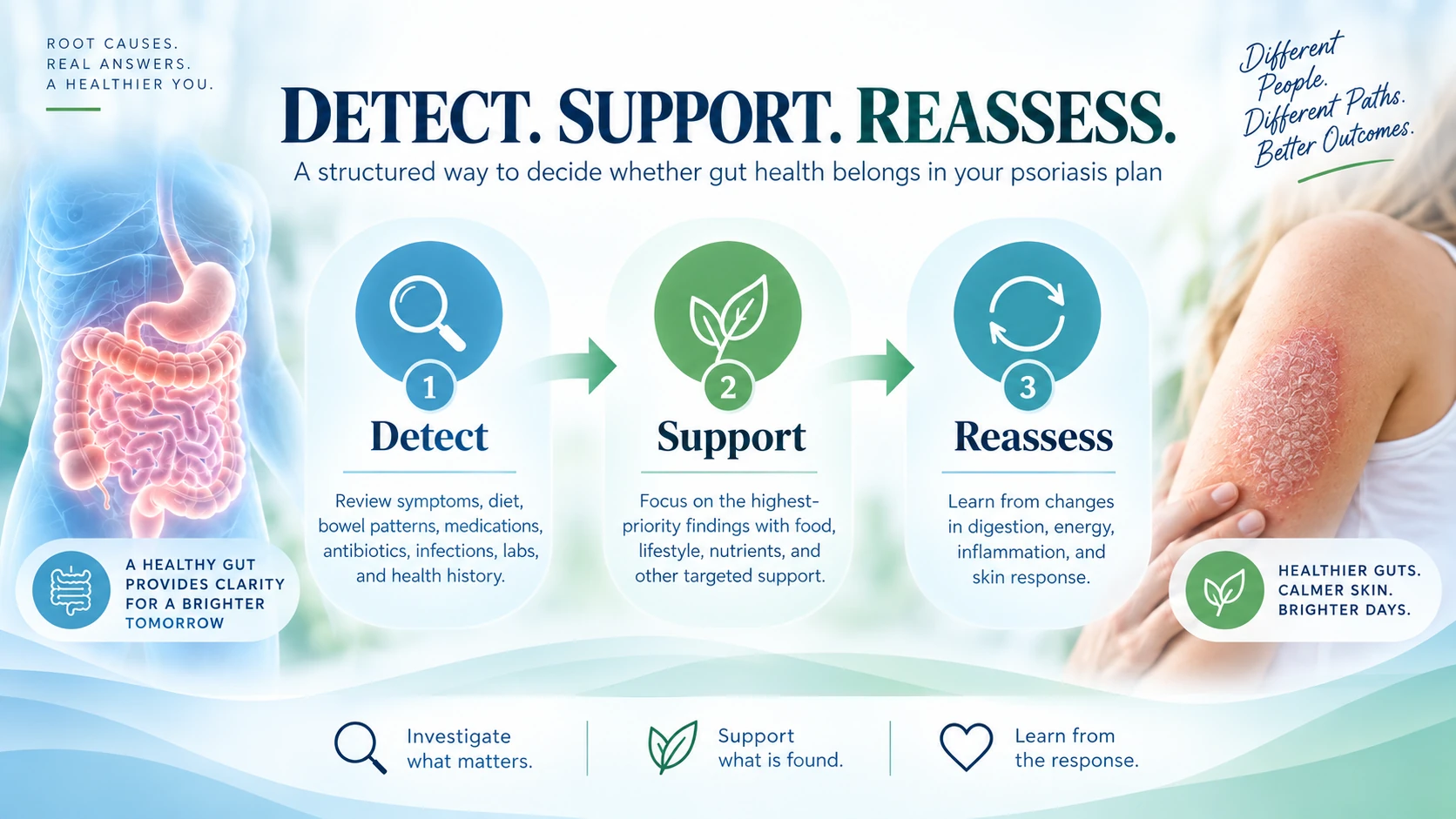
Review digestive symptoms, diet, bowel patterns, medications, antibiotics, infection history, nutrient status, labs, metabolic health, and other clues that may make gut health relevant.
Build the least complicated plan that addresses the highest-priority findings. That may involve food quality, fiber, hydration, sleep, stress, targeted nutrients, or other focused support.
Look at what changed in digestion, energy, inflammatory patterns, skin activity, laboratory markers, and quality of life. The response helps us decide what to continue, stop, or investigate next.
My 12-week psoriasis supplement protocol organizes foundational supplementation, diet, and lifestyle recommendations into one plan you can review before deciding whether it is the right place for you to begin.
Gut Health and Medical Psoriasis Treatment Do Not Have to Compete
Functional medicine should not be sold short as an afterthought. I consider it a foundational opportunity to understand the person and the factors that may be influencing the autoimmune process.
At the same time, dermatology and rheumatology care can be important when psoriasis is severe, rapidly worsening, widespread, or associated with joint symptoms. Medical treatment may be used to control active disease while we investigate and support the broader physiology.
For related treatment information, see topical and systemic medications for psoriasis and psoriatic arthritis symptoms and treatment.
Frequently Asked Questions About Gut Health and Psoriasis
Is psoriasis caused by poor gut health?
No. Psoriasis is not proven to be caused by poor gut health, and there is no single gut problem that explains every case. Research does show associations between psoriasis and differences in the gut microbiome, but the patterns are inconsistent across studies and causality is still being investigated.
What is the gut-skin axis?
The gut-skin axis describes the two-way relationship between the gastrointestinal system, the immune system, microbial metabolites, barrier function, and the skin. It is a useful research framework, but it does not mean every skin condition originates in the gut.
Do people with psoriasis have a different gut microbiome?
Many studies have found differences in gut microbial diversity or the relative abundance of certain organisms in people with psoriasis compared with healthy controls. However, studies do not yet agree on one universal psoriasis microbiome signature.
Does leaky gut cause psoriasis?
There is not enough evidence to say that increased intestinal permeability, sometimes called leaky gut, is the universal cause of psoriasis. Intestinal barrier function is an active area of research and may be relevant in some people, but it should be investigated in context rather than assumed.
Can probiotics help psoriasis?
Probiotics are being studied as a possible supportive strategy, and some small trials and reviews have reported improvements in psoriasis severity or inflammatory markers. The evidence is not yet strong enough to treat probiotics as a standard psoriasis therapy or to assume the same product will help everyone.
Should everyone with psoriasis get a microbiome test?
No. A microbiome test should not be ordered simply because someone has psoriasis. Testing should answer a useful clinical question. Gastrointestinal symptoms, diet history, antibiotic exposure, infections, nutrient issues, or other clues may make a gut-focused evaluation more relevant.
What gut symptoms matter when someone has psoriasis?
Persistent bloating, abdominal pain, diarrhea, constipation, reflux, unexplained digestive changes, food-related symptoms, or a history of inflammatory bowel disease can all be worth discussing. These symptoms do not prove that the gut is driving psoriasis, but they can help decide what deserves investigation.
Can diet improve gut health and psoriasis?
Diet can influence the gut microbiome, metabolism, nutrient status, and inflammatory signaling. A diet built around minimally processed foods, adequate fiber when tolerated, sufficient protein, and appropriate nutrient intake can support overall health. The best plan should still be individualized rather than based on one universal psoriasis diet.
How does functional medicine approach gut health in psoriasis?
I use gut health as one possible part of a larger autoimmune investigation. The goal is to DETECT relevant patterns, SUPPORT the highest-priority findings, and REASSESS what changed. Gut health may be central for one person and a minor factor for another.
Where does gut health fit with dermatology treatment?
Gut health and dermatology treatment address different parts of the picture. Dermatology may be needed to control active psoriasis, while functional medicine can investigate gastrointestinal, nutritional, metabolic, environmental, and lifestyle factors that may be relevant to the individual. They do not have to compete.
Want to Know Whether Gut Health Belongs in Your Psoriasis Investigation?
The answer should come from your history, symptoms, physiology, and response patterns, not from assuming everyone with psoriasis has the same gut problem. My process is designed to identify what deserves attention and build from there.
Important Health Information
Persistent abdominal pain, bleeding, significant unexplained weight loss, severe diarrhea, persistent vomiting, or other concerning gastrointestinal symptoms deserve appropriate medical evaluation. Psoriasis with joint pain, swelling, prolonged morning stiffness, or swollen fingers or toes also warrants evaluation for psoriatic arthritis.
Selected References & Further Reading
- Gao Y, et al. Characterization of the Gut Microbiota in Patients with Psoriasis: A Systematic Review. Pathogens. 2025.
- Memariani M, Memariani H. New horizons in the treatment of psoriasis: Modulation of gut microbiome. Heliyon. 2025.
- The Skin Microbiome and Its Role in Psoriasis: A Review.
- National Institute of Arthritis and Musculoskeletal and Skin Diseases. Psoriasis: Overview, Symptoms, and Causes.
- National Psoriasis Foundation. About Psoriasis.