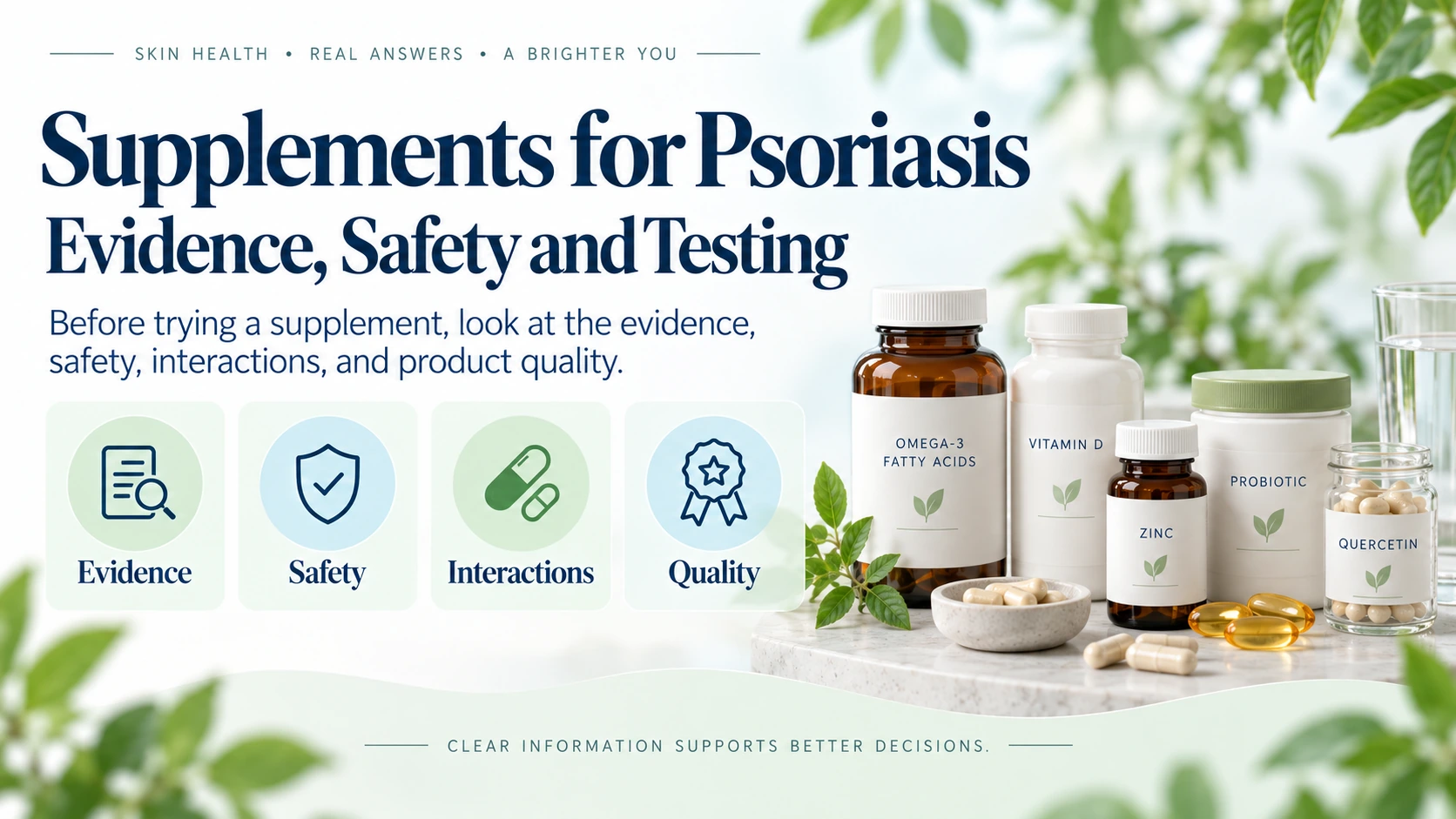
How to Decide Whether a Supplement Makes Sense
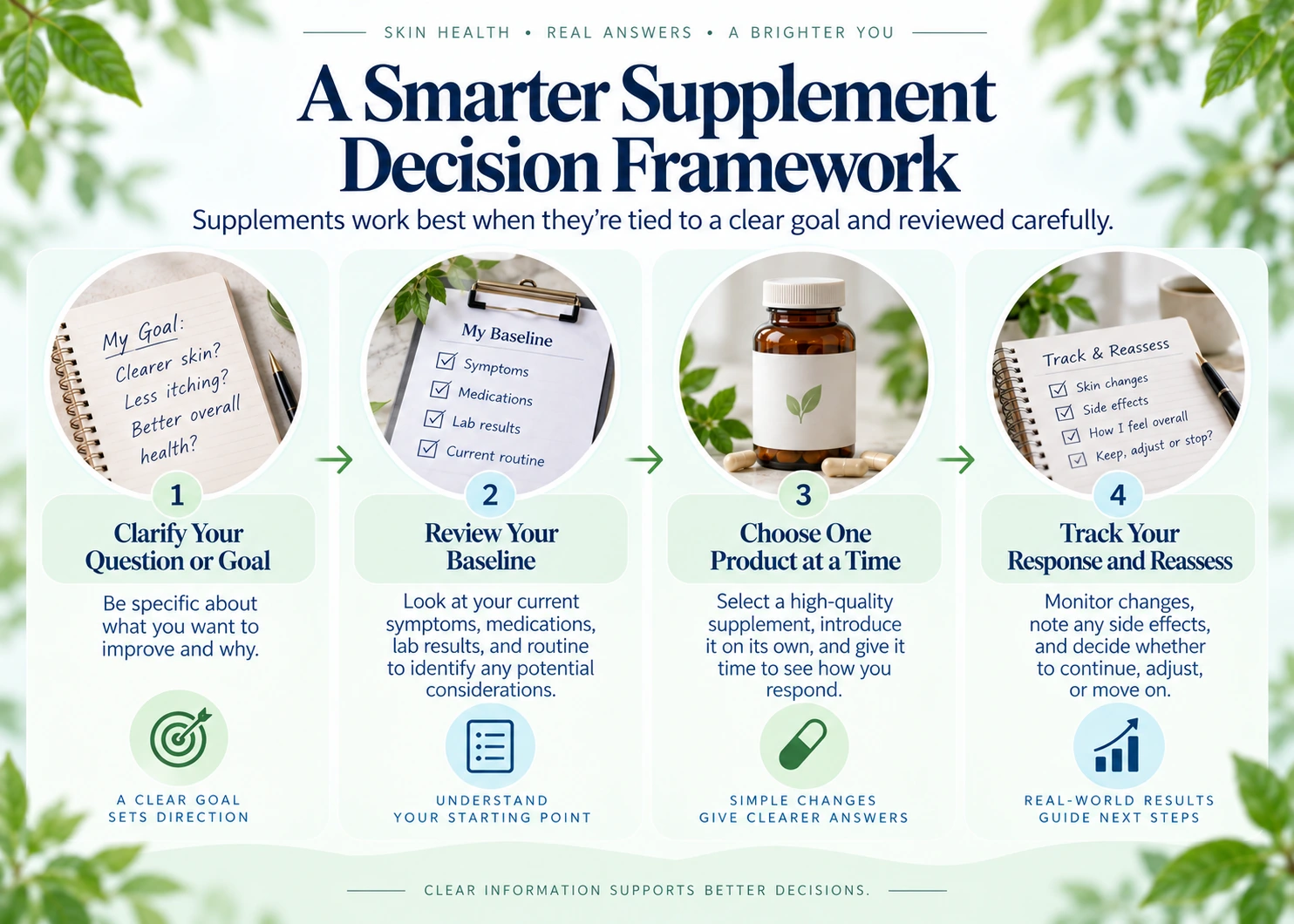
Know what you want to address
Your goal may be correcting a documented deficiency, improving dietary intake, addressing a medication-related nutrient concern, or exploring a supplement with reasonable psoriasis research.
Establish a baseline
Review your diet, symptoms, health history, medicines, current supplements, and relevant lab results before deciding what to add.
Change one thing at a time
Avoid starting several products together. Record the ingredient, form, amount, brand, lot number, and start date so you can understand what is helping or causing a problem.
Track your response
Choose a date to review your skin, symptoms, side effects, and overall progress. Continue, adjust, or stop based on how you are doing.
I created a 12-week psoriasis supplement protocol that brings together the supplements, dosing instructions, diet, and lifestyle recommendations I commonly use as a foundational starting strategy.
Vitamin D, Omega-3, Turmeric, Probiotics, Collagen, and Zinc
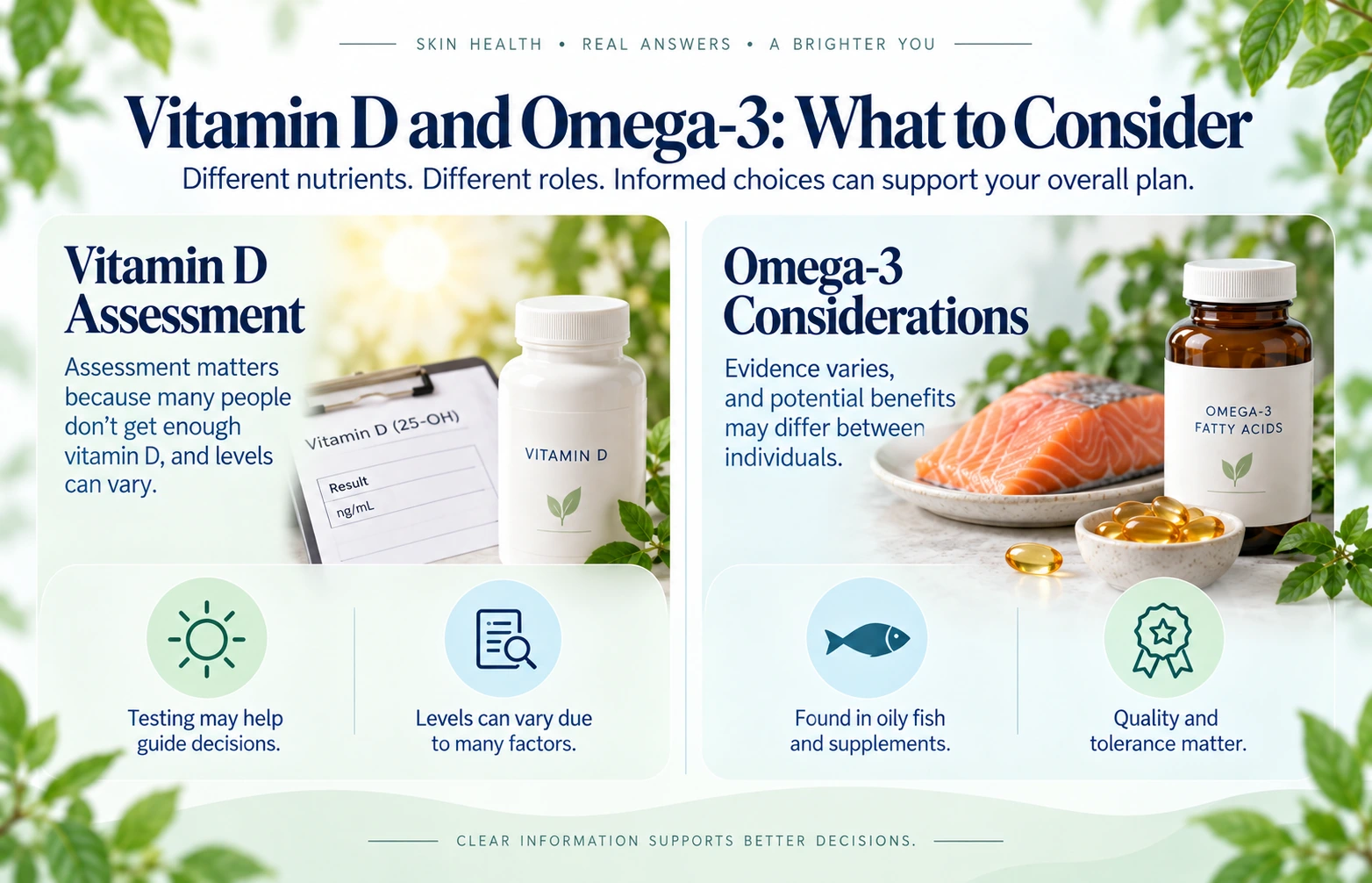
Vitamin D
Low vitamin D is common in many populations and has been associated with psoriasis in observational research, but association does not prove that high-dose supplementation treats plaques. Test when risk or a clinical decision justifies it, correct deficiency safely, and avoid excessive dosing.
Omega-3 fish oil
Trials have produced mixed results. Product dose, EPA and DHA content, oxidation, diet, and background treatment vary. Fish oil can affect bleeding risk and may not be appropriate in every medication or surgical context.
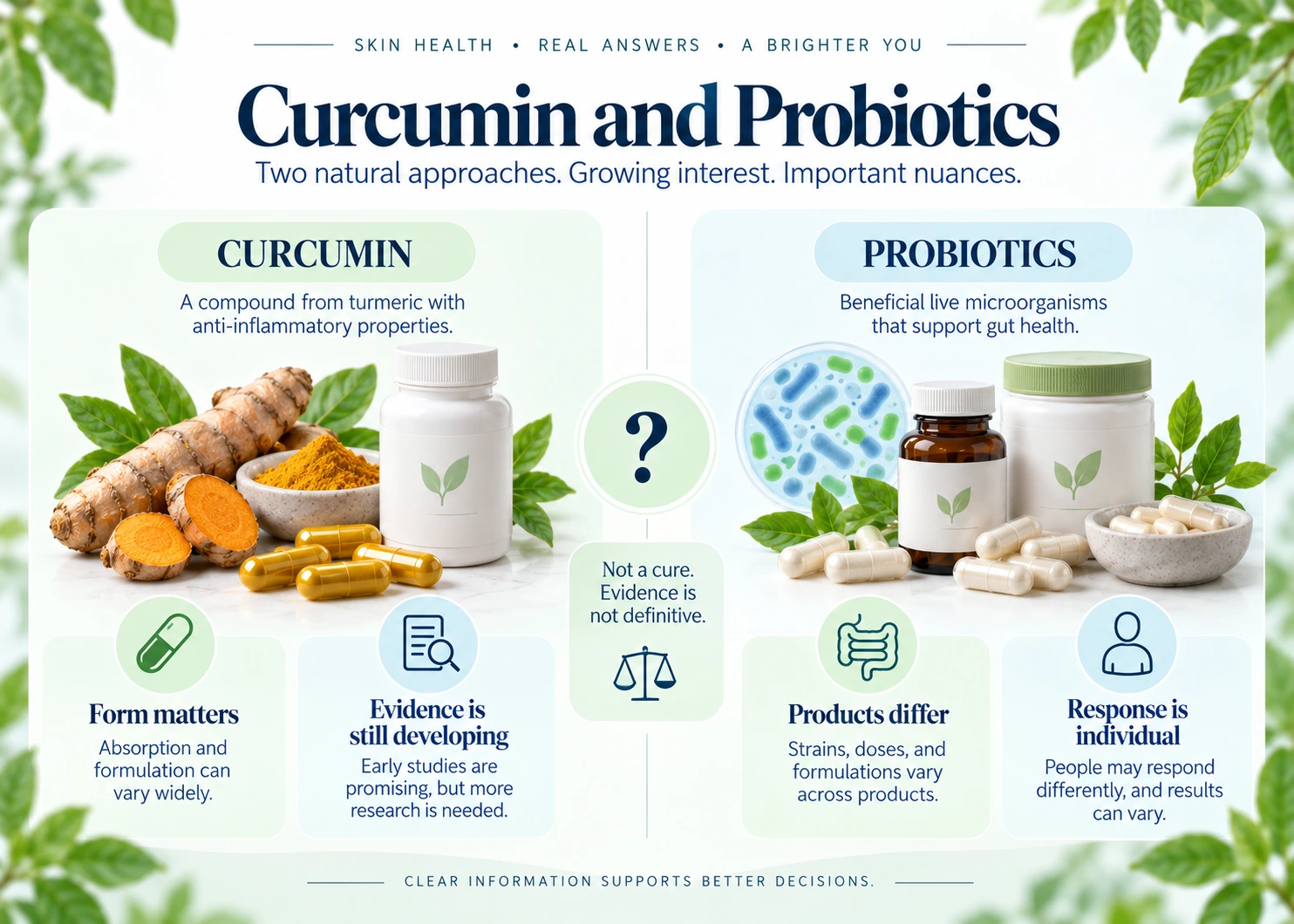
Turmeric or curcumin
Curcumin has plausible anti-inflammatory effects and limited clinical evidence, but formulations differ greatly. Consider gallbladder disease, bleeding risk, digestive side effects, pregnancy, iron status, and medication interactions. Read the turmeric and psoriasis guide for a fuller review.
Probiotics
Meta-analyses suggest possible benefit, but strains, doses, populations, outcomes, and background therapy differ. A result for one strain cannot be assigned to every probiotic. Use extra caution in severely immunocompromised or critically ill people.
Collagen
Collagen peptides may affect some skin-aging outcomes, but direct evidence that they treat psoriasis is not established. Review the collagen and psoriasis evidence guide.
Zinc and multinutrient products
Zinc deficiency should be corrected, but unnecessary high-dose zinc can cause nausea and copper deficiency. Multivitamins can duplicate nutrients across products and make adverse effects harder to identify.
Detailed Natural Remedy Reviews
Each supplement or natural remedy raises different questions about evidence, safety, product quality, and how it might fit into a broader psoriasis plan. Use these detailed guides to explore each topic more closely.
Apple cider vinegar is generally considered as a food or home remedy rather than a psoriasis supplement. CBD and hemp products raise their own questions about evidence, interactions, product quality, and use.
Interactions, Laboratory Interference, and Adverse Effects
Supplements can change the effect of prescriptions and over-the-counter medicines, increase bleeding or sedation, alter glucose or blood pressure, affect liver or kidney function, interfere with laboratory tests, and create perioperative risk.
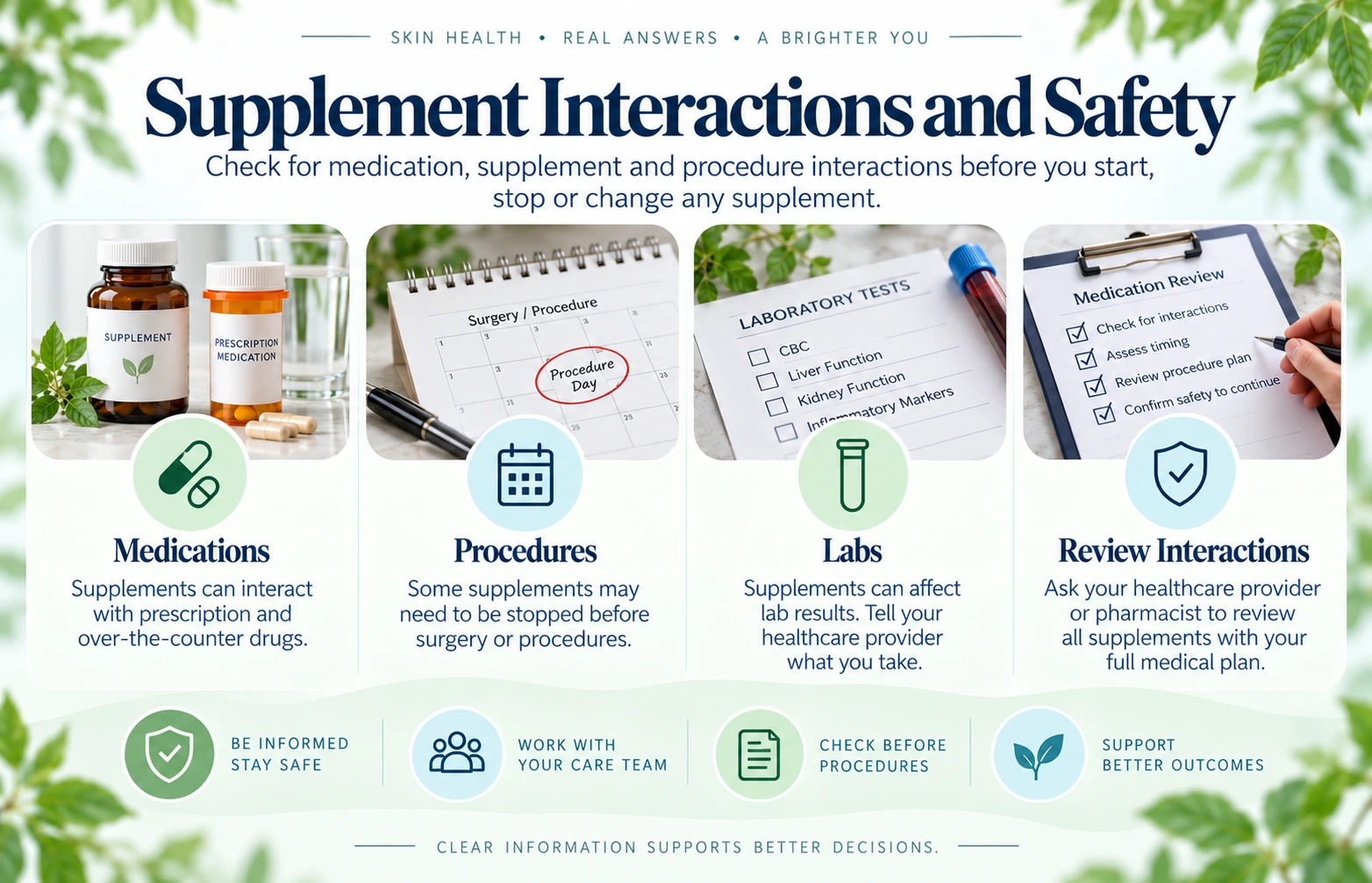
Tell your clinicians and pharmacist the exact products you take. Seek prompt help for trouble breathing, facial swelling, fainting, severe rash, persistent vomiting, yellowing of the skin or eyes, dark urine, unusual bleeding, or other serious symptoms.
How to Evaluate Product Quality
Prefer a complete Supplement Facts panel, transparent amounts, lot number, expiration date, contact information, and independent quality testing when available. Be cautious with proprietary blends, cure claims, dramatic before-and-after promises, hidden drug ingredients, and products sold only through urgency tactics.
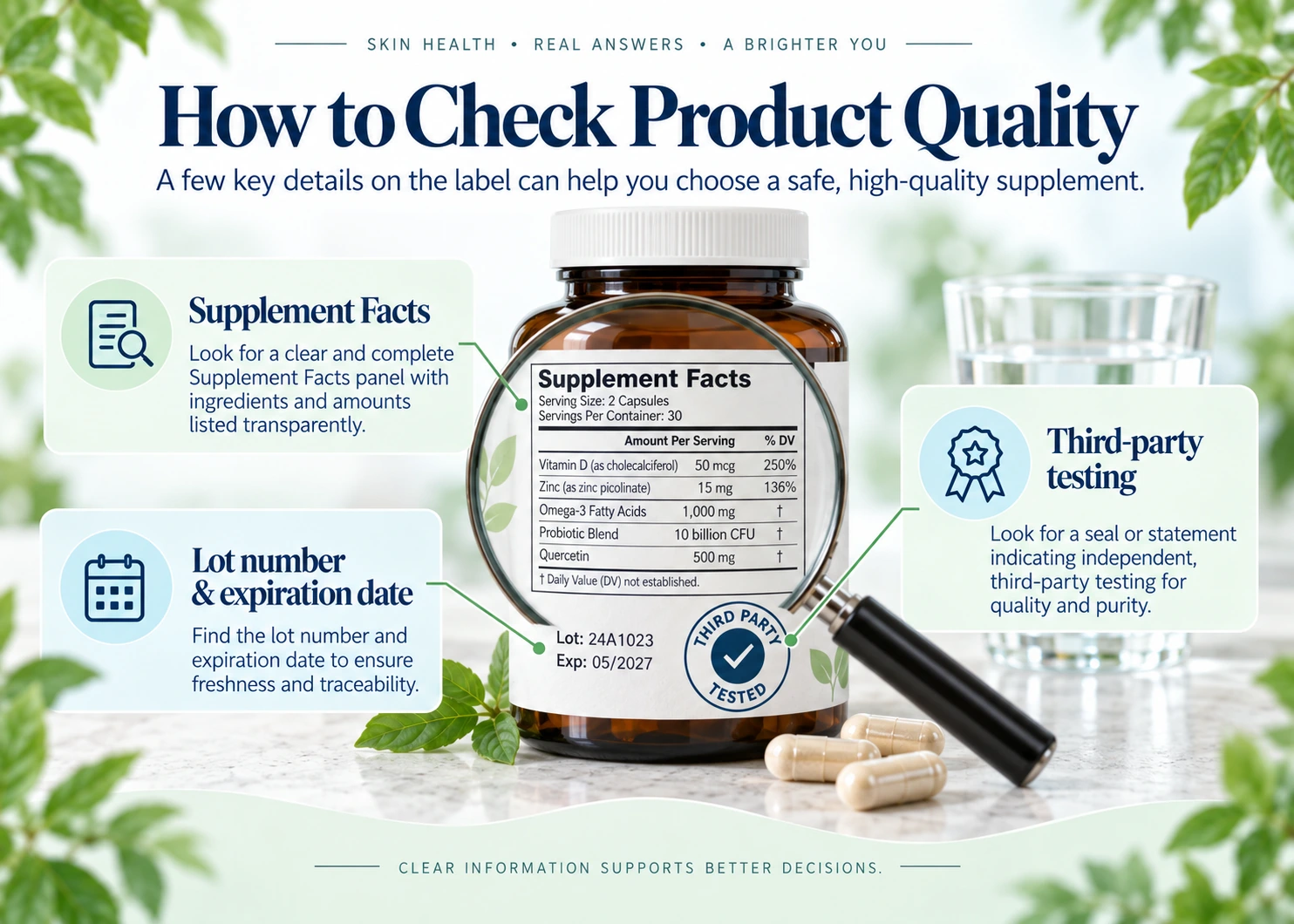
FDA regulates dietary supplements differently from conventional foods and drugs. A product being sold does not mean it was proven effective for psoriasis before marketing.
Testing and Reassessment
Testing may help identify needs involving vitamin D, iron, B12, folate, zinc, or other nutrients when your diet, symptoms, medications, digestion, health history, or another condition suggests a possible concern. Testing should help answer a clear question and guide what you do next.
The functional medicine testing guide explains how different tests may fit into a personalized psoriasis evaluation.
How Functional Medicine Personalizes Supplement Support
Dr. Shook uses the Environmentally Induced Autoimmunity model to understand how environment, diet, gut health, metabolism, nutrient status, stress, sleep, infections, exposures, medications, and individual response may influence the immune process. Supplements are considered within that larger picture instead of beginning with the same shopping list for everyone.
DETECT
Establish a baseline and identify possible triggers using your history, timeline, symptoms, health records, and lab tests.
SUPPORT
Optimize diet, lifestyle, and supplementation based on your triggers and individual needs.
REASSESS
Track your symptoms, how your skin is changing, any side effects, and your ability to follow through with the recommended changes. Then continue, adjust, or stop parts of the plan based on how you are doing.
If you want a self-directed starting point, you can review the complete 12-week psoriasis supplement protocol. If you want the DETECT and REASSESS parts individualized around your history, labs, medications, and physiology, the Application for Care remains the better path.
Frequently Asked Questions
Is there one best supplement for psoriasis?
No. Research does not support one universal psoriasis supplement. A useful choice depends on what you are trying to address, your diet and nutrient status, your medications and health history, product quality, and how you respond.
Should everyone with psoriasis take vitamin D?
No. Vitamin D needs vary with diet, sun exposure, health history, and blood levels. Testing can help identify a deficiency, and excessive dosing can be harmful.
Does fish oil clear psoriasis?
Fish oil research in psoriasis is mixed, so it should not be expected to reliably clear plaques. It can also affect bleeding risk and interact with parts of your care plan.
Can turmeric replace psoriasis medication?
Turmeric or curcumin should not be treated as a replacement for necessary psoriasis treatment. Research is limited, formulations vary, and concentrated products may cause side effects or interactions.
Do probiotics help psoriasis?
Some studies suggest that certain probiotics may help, but the results do not apply to every strain, product, or person. More consistent research is needed.
Does collagen treat psoriasis?
Direct evidence that collagen treats psoriasis has not been established. Research about skin hydration or aging should not be interpreted as proof that collagen changes psoriasis.
How can I check a supplement for interactions?
Bring the exact product label to your pharmacist or healthcare professional. Review your prescriptions, over-the-counter medicines, health conditions, pregnancy plans, upcoming procedures, and laboratory testing.
What does DETECT → SUPPORT → REASSESS mean for supplements?
DETECT means establishing a baseline and looking for possible triggers or nutrient needs. SUPPORT means choosing diet, lifestyle, and supplementation based on your individual findings. REASSESS means tracking how you feel, how your skin changes, any side effects, and whether the plan should continue or change.
My 12-week psoriasis supplement protocol gives you the complete foundational supplement plan plus diet and lifestyle guidance in one place.
Ready for a Psoriasis Plan Built Around Your Needs?
Dr. Shook's process looks at how your environment, diet, gut health, metabolism, nutrient status, stress, sleep, infections, exposures, medications, and daily patterns may be affecting you. We DETECT possible triggers and nutrient needs, SUPPORT your individual physiology, and REASSESS the plan based on how you are doing.
References and Clinical Resources
- American Academy of Dermatology. Psoriasis clinical guideline.
- FDA. FDA 101: Dietary Supplements.
- FDA. Mixing medications and dietary supplements can endanger your health.