Functional Medicine for Psoriasis: The Short Answer
Psoriasis is more than a problem on the surface of the skin. It is a chronic immune-mediated inflammatory condition influenced by genetics, immune signaling, and a variety of environmental and individual factors.[1]
A functional medicine approach asks a broader set of questions. Instead of assuming that every person with psoriasis has the same underlying problem, the goal is to understand the overall health picture, identify which modifiable factors may actually matter, prioritize them, and then reassess the response.
This may include asking what your health history tells us, whether there are factors that seem to trigger or worsen flares, what is happening with metabolic health, nutrition, sleep, stress, gastrointestinal function, and other foundational areas, and whether any testing would meaningfully change what we do next.
Functional medicine does not replace appropriate dermatologic or medical care. It can add an essential complementary layer of care by investigating potentially modifiable contributors to health and helping the individual develop a more personalized strategy.
What is Functional Medicine for Psoriasis?
Functional medicine for psoriasis is an individualized approach that considers psoriasis in the context of the whole person rather than viewing the skin in isolation.
Functional medicine is often described as a “root-cause” approach. I use that phrase cautiously. In a complex immune-mediated condition like psoriasis, there may not be one hidden root cause waiting to be discovered. Instead, several factors may contribute to disease activity or make psoriasis harder to manage, and their importance can differ substantially from one person to another.
That does not mean assuming that everything in the body causes psoriasis. It means recognizing that psoriasis occurs within a person who also has a unique genetic background, health history, metabolic state, nutritional status, gastrointestinal environment, lifestyle, exposures, medications, stress load, sleep patterns, and other health concerns.
Two people can both have psoriasis and still have very different circumstances surrounding their disease. One person may have substantial metabolic dysfunction. Another may have gastrointestinal problems. Another may notice associations with stress, infections, alcohol, smoking, medications, or weight changes. Another may have relatively few obvious modifiable factors.
This is why a thoughtful functional medicine evaluation should not begin with a predetermined psoriasis protocol. It should begin by understanding the person.
Tap or click image to enlarge
Psoriasis Is More Than a Skin Condition
Psoriasis is generally described as a chronic, inflammatory, multisystem disease. Immune cells and inflammatory signaling pathways play central roles, and psoriasis may also be associated with important health concerns beyond the skin, including psoriatic arthritis and cardiometabolic, inflammatory, and psychological comorbidities.[1]
The visible plaques are important, but the biology involves much more than abnormal skin-cell turnover. This is one reason modern therapies targeting inflammatory pathways such as TNF, IL-17, and IL-23 can be highly effective.
A functional medicine approach should not ignore the skin. It should place the skin within the context of the person's overall health.

Tap or click image to enlarge
Why Does Psoriasis Look So Different From One Person to Another?
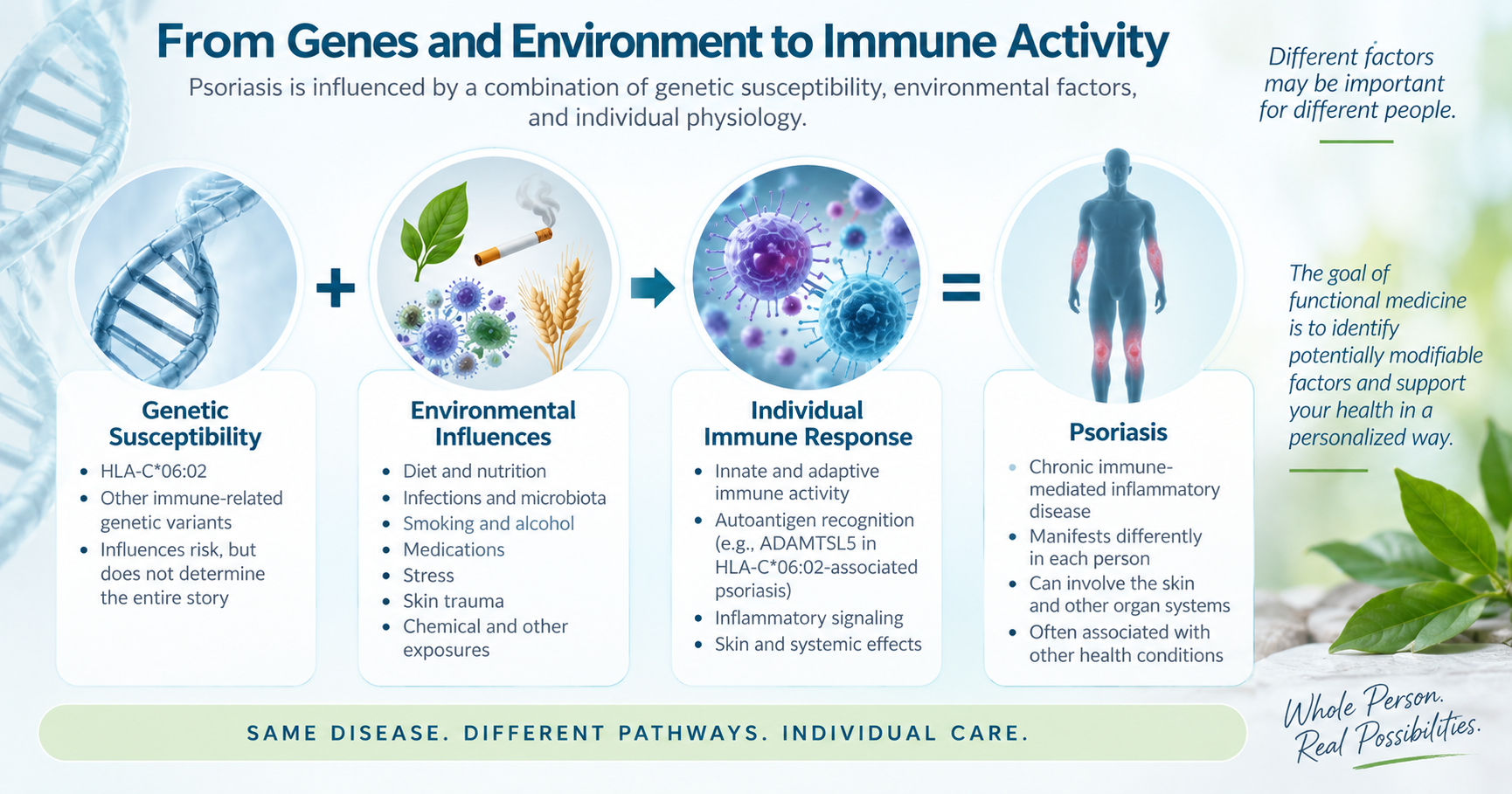
There is no single psoriasis gene and no single environmental trigger that explains every case. A useful way to think about psoriasis is:
Genetics can affect susceptibility, but genes do not act in isolation. Infections, medications, smoking, alcohol, body composition, metabolic health, psychological stress, physical injury to the skin, and other factors may influence disease expression or flares in susceptible people.[1]
The importance of each factor varies from person to person. This is one reason psoriasis is difficult to reduce to a simple formula.
Tap or click image to enlarge
What Does Research Say About Environmental Triggers and Autoimmunity in Psoriasis?
One of the most interesting areas of recent psoriasis research involves how environmental antigens may interact with autoimmune T-cell activity.
The psoriasis-associated genetic variant HLA-C*06:02 has been strongly studied. Researchers have also identified ADAMTSL5, a protein expressed by melanocytes, as one autoantigen that can be recognized by psoriasis-associated CD8+ T cells in the context of HLA-C*06:02.[2]
A 2024 study in Frontiers in Immunology took this further. Investigators found that a pathogenic psoriasis-associated T-cell receptor could recognize peptides originating from environmental sources including wheat, Saccharomyces cerevisiae or yeast, microbiota, tobacco, and pathogens. Some CD8+ T cells could recognize both the ADAMTSL5 autoantigen and environmental peptides.[3]
T-cell receptor polyspecificity
This phenomenon is called T-cell receptor polyspecificity. A T-cell receptor does not necessarily recognize only one perfectly unique antigen. In some circumstances, structurally similar peptides may activate the same or related T-cell responses.
This provides one biologically plausible mechanism through which environmental exposure could interact with autoimmune activity in a genetically susceptible individual.
The larger lesson is more interesting than a universal elimination list: the relationship between genetics, environment, and immune activity may sometimes occur at the level of antigen recognition itself.
Dr. Shook's Environmentally Induced Autoimmunity Framework
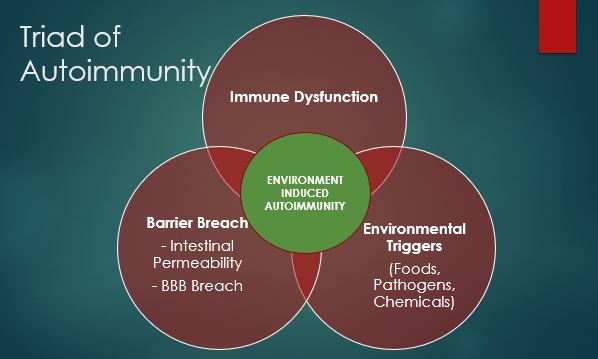
Dr. Shook uses a three-part framework to organize some of the questions that may be relevant when evaluating autoimmune and immune-mediated inflammatory conditions.
This is not intended to suggest that every person has abnormalities in all three areas. It is a way of thinking systematically about a complex case.
Environmental Triggers
Potential dietary, microbial, infectious, lifestyle, medication, smoking, alcohol, chemical, and other environmental influences are considered when the person's history makes them relevant.
Barrier Integrity
Gut, skin, respiratory, and other physiological barriers may deserve attention when history, symptoms, or other information suggests that they are relevant. Barrier dysfunction is not assumed in everyone.
Immune Dysfunction & Foundational Physiology
Inflammation, metabolic health, nutrition, oxygen delivery, glucose and insulin regulation, gastrointestinal function, sleep, stress, thyroid physiology, medications, and other health factors may shape the environment in which immune activity occurs.
Tap or click image to enlarge
What is the Focus of Psoriasis Treatment with Functional Medicine?
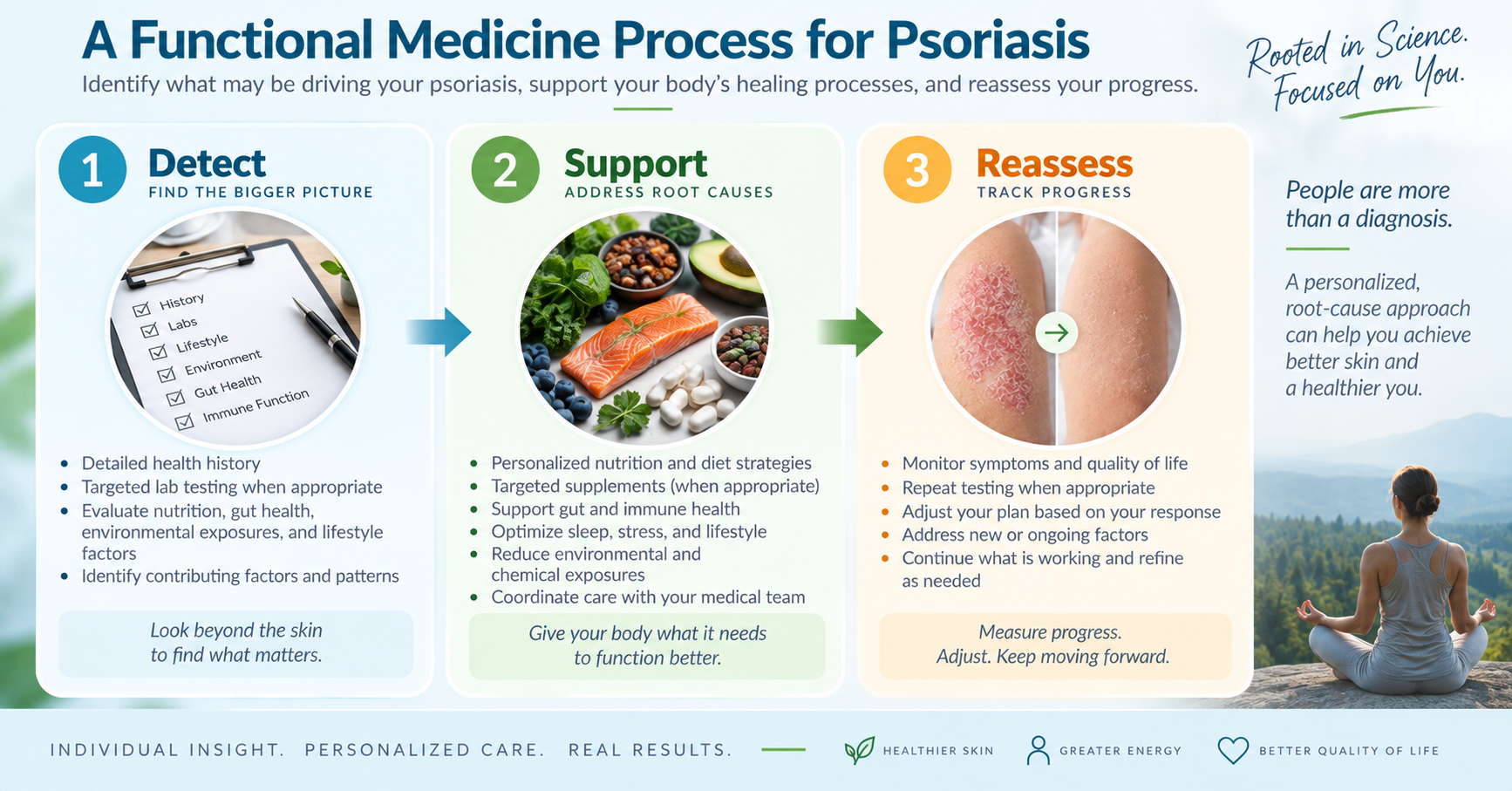
At our office, the clinical process can be summarized in three words: Detect → Support → Reassess.
This is intentionally different from a rigid sequence of tests, diets, and supplements. Autoimmune and immune-mediated conditions are too individualized for a universal protocol.
Detect
Gather enough useful information to understand the person's overall health picture and identify what deserves attention first.
Support
Address relevant modifiable factors with an individualized strategy involving diet, lifestyle, nutrition, sleep, metabolic health, GI health when relevant, and other appropriate options.
Reassess
Measure response, learn what changed, and decide what should continue, change, simplify, stop, or be investigated further.
Detect
Detect may include your health history, psoriasis timeline, symptoms and flare patterns, other conditions, medications, supplements, previous treatments, existing laboratory results, diet, sleep, exercise, stress, gastrointestinal symptoms, metabolic health, known exposures, possible triggers, and practical barriers to implementation.
Detect does not mean ordering every functional medicine test available.
Support
Support may include dietary changes, sleep, physical activity, stress management, nutritional supplementation when appropriate, metabolic health, gastrointestinal strategies when relevant, recognized triggers, and coordination with existing medical care.
Reassess
Reassessment asks what changed, what did not, what was realistic, what was tolerated, what new information was learned, and what should happen next. Functional medicine should not become an endless accumulation of diets, supplements, and testing.
Tap or click image to enlarge
Benefits of Choosing a Functional Medicine Doctor for Psoriasis
The opportunity in functional medicine is that it gives us a structured way to look beyond the visible symptoms and investigate the modifiable physiological, environmental, metabolic, lifestyle, and immunological factors that may be influencing disease activity in the individual.
Four Reasons Why a Functional Medicine Doctor for Psoriasis Can Be a Good Choice
1. A comprehensive view
Psoriasis is considered in the context of broader health rather than as an isolated skin problem.
2. Individualized priorities
Not every finding deserves equal attention. The goal is to decide what matters most and what deserves attention first.
3. Modifiable factors
Genetic susceptibility cannot be changed, but lifestyle, metabolic health, nutrition, sleep, stress, exposures, and other factors may be more modifiable.
4. Complementary care
Functional medicine can work alongside dermatologic, rheumatologic, primary-care, and other medical care. Each part of the healthcare team can contribute different expertise while functional medicine keeps the focus on understanding and supporting the modifiable factors that may be influencing immune activity.
In our office, we expect clients to maintain appropriate medical care. Functional medicine and dermatology can work together rather than competing for ownership of the whole case.
The care-options guide explains how foundational functional medicine, flare-up support, medical care, practitioner fit, and telehealth can work together.
What Does a Functional Medicine Evaluation for Psoriasis Include?
A comprehensive evaluation usually starts with information, not specialty testing.
Dr. Shook may review your detailed health history, psoriasis timeline, previous medical care, current medications and supplements, prior diets or wellness approaches, laboratory results you already have, gastrointestinal symptoms, metabolic health, thyroid and other relevant physiology, sleep, stress, physical activity, environmental exposures, flare patterns, and practical considerations such as budget and ability to implement recommendations.
The objective is to determine what information is already available, what appears most important, and what questions still need to be answered.
The same principle applies to complex cases. Foundational information often deserves attention before increasingly specialized testing.
Does Functional Medicine Testing Help Psoriasis?
Sometimes, but more testing is not necessarily better testing.
Before spending money on increasingly specialized testing, it often makes sense to understand the history, existing records, conventional blood chemistry, symptoms, medications, lifestyle, and foundational physiology.
Depending on the situation, testing might begin with conventional bloodwork or other routinely available laboratory information. Specialized testing may then be considered when it can answer a specific question or meaningfully influence the strategy.
Testing is optional. Dr. Shook does not believe every person with psoriasis needs the same panels.
Diet and Psoriasis: Is There a Best Psoriasis Diet?
There is no single scientifically established diet that is best for everyone with psoriasis.
Research has examined calorie restriction and weight reduction when appropriate, Mediterranean-style dietary patterns, gluten-free diets in selected people, omega-3 fatty acids, fiber, probiotics, prebiotics, and other dietary modifications. The quality and consistency of evidence varies among these approaches.[4]
The National Psoriasis Foundation Medical Board has strongly recommended dietary weight reduction for appropriate overweight or obese adults with psoriasis and has recommended gluten-free eating much more selectively rather than universally.[5]
The 2024 T-cell polyspecificity research involving wheat is biologically interesting, but it would be inappropriate to conclude from that study that every person with psoriasis should avoid wheat.[3]
A better question is: Is there enough reason to believe wheat, or any other food, is relevant in this particular person's case?
Sometimes the answer may come from history. Sometimes testing may contribute. Sometimes a carefully designed elimination and reintroduction strategy may be informative. And sometimes a food simply is not an important factor.
What About Gut Health and the Microbiome?
The relationship between the gastrointestinal system and psoriasis is an active area of research. Recent systematic reviews have found differences in gut microbial communities in groups of people with psoriasis compared with controls, while also finding that specific microbial signatures are inconsistent across studies.[6]
Researchers are investigating interactions among intestinal barrier function, microbial metabolites, immune regulation, systemic inflammation, and the gut-skin axis.
Gut health may matter in psoriasis. That does not mean every person with psoriasis has the same gut problem, needs a stool test, or should receive the same probiotic.
Gastrointestinal evaluation makes the most sense when the person's history, symptoms, or other findings suggest that it may be relevant.
Stress, Sleep, and Lifestyle in Psoriasis
Can Stress Affect Psoriasis?
Stress is commonly reported as a psoriasis trigger and may influence immune and inflammatory signaling, but the research is not simple. Systematic reviews have reached somewhat different conclusions about the strength and timing of the relationship between psychological stress and psoriasis onset or exacerbation.[7]
Rather than assuming stress is the cause, we consider whether the person recognizes a relationship between stress and flares and how workload, recovery, relationships, movement, and other lifestyle factors fit into the larger picture.
Does Sleep Matter in Psoriasis?
Sleep problems are common among people with psoriasis. A 2024 meta-analysis found poorer sleep quality and substantially greater odds of sleep disturbance among people with psoriasis compared with controls.[8]
Sleep can intersect with inflammation, mood, body weight, metabolic health, pain, itching, and fatigue. For some people, improving sleep may be one of the highest-value foundational interventions available.
What About Supplements for Psoriasis?
Dietary supplements can sometimes play a useful role in a broader strategy, but supplements are not the foundation of functional medicine.
A supplement should ideally have a reason for being used, such as supporting a documented nutritional need, addressing a specific physiological consideration, or serving a defined role in the strategy.
Supplements can also interact with medications, health conditions, and other supplements. They should not simply accumulate indefinitely because they were recommended once.
This is why Dr. Shook periodically reassesses whether supplements should be continued, changed, reduced, or discontinued.
Can Functional Medicine Put Psoriasis Into Remission?
Psoriasis is generally considered a chronic disease. Some people experience periods of very low disease activity or remission, but remission should not be confused with permanent cure.
A useful analogy is a dimmer switch. Immune and inflammatory activity can become more active and can also become quieter. Genetic susceptibility remains part of the picture, while many other aspects of health and environment can change over time.
The goal of functional medicine is not to promise that psoriasis can be permanently switched off. The goal is to identify relevant modifiable factors, support broader health and physiology, reduce unnecessary inflammatory or environmental burdens where possible, and work toward the best outcome reasonably achievable for the individual.
No particular response can be guaranteed.
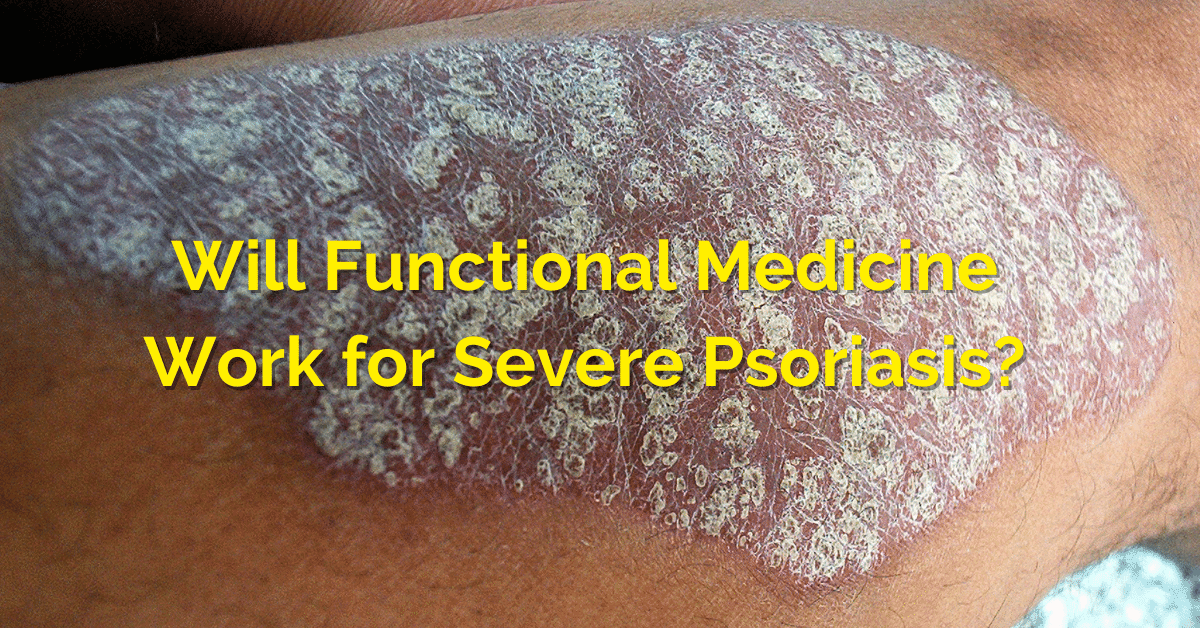
Should You Try Functional Medicine for Severe Psoriasis?
Functional medicine principles may still be relevant when psoriasis is severe. However, the more severe the disease, the more important appropriate dermatologic and medical management becomes.
Severe psoriasis can produce substantial physical and psychological burden. Modern psoriasis therapies can be highly effective at controlling inflammatory activity and should not be dismissed simply because someone is also interested in functional medicine.
Functional medicine may instead provide a complementary strategy addressing broader health, lifestyle, metabolic, nutritional, gastrointestinal, and other relevant factors.
Tap or click image to enlarge
What If You Have Joint Pain or Psoriatic Arthritis?
Psoriasis can be associated with psoriatic arthritis. Joint symptoms should not automatically be treated as a dietary or functional medicine problem.
Persistent joint pain, swelling, stiffness, swollen fingers or toes, tendon or ligament pain, or significant morning stiffness may deserve evaluation by an appropriate medical professional. Psoriatic arthritis can lead to progressive joint damage.[1]
Functional medicine may still contribute to overall health management, but it should not delay appropriate rheumatologic evaluation or treatment.
Can Functional Medicine Be Used With Psoriasis Medications or Biologics?
Yes. Functional medicine and dermatology are not mutually exclusive.
A person may use topical therapies, phototherapy, systemic medications, biologic medications, or other conventional psoriasis treatments while also addressing diet, sleep, stress, metabolic health, nutritional status, gastrointestinal health, and other relevant factors.
Dr. Shook does not prescribe or discontinue pharmaceutical medications. Medication decisions should be made with the healthcare professional responsible for prescribing and managing those medications.
The goal is not to force someone to choose between two healthcare philosophies. The goal is to use the tools that are appropriate for the individual.
Is Functional Medicine a Viable Psoriasis Treatment Option?
Yes. Functional medicine is a foundational way to investigate the factors that may be influencing the immune response and disease expression in psoriasis.
It gives you an opportunity to move upstream from the visible symptom and ask what may be contributing to the biology underneath it.
That can include metabolic health, diet, gastrointestinal function, sleep, stress, nutrient status, infections, environmental exposures, barrier-system health, and other individualized factors.
The goal is to understand which of those areas actually matter to you, support the factors that can be changed, and reassess what happens.
For many people, that creates a much more complete way to think about psoriasis because it combines symptom management with a deeper investigation of the triggers, drivers, and physiological environment influencing immune activity.
Who Is This Approach Best Suited For?
This approach is best suited for people who want to understand their psoriasis more deeply and take an active role in improving the physiological environment influencing their immune system.
That may include changes involving nutrition, sleep, physical activity, stress, metabolic health, supplementation when appropriate, selective testing when useful, and follow-up to see what is actually working.
You do not need to understand all of functional immunology before you begin. The process is designed to make the important questions clearer, identify the highest-priority areas first, and build from there.

Tap or click image to enlarge
What Working With Dr. Shook Looks Like
Working with Dr. Shook begins with an Application for Care. There is no charge to apply, and Dr. Shook personally reviews each application, typically within one business day.
If he believes the consultation process may be appropriate for you, our office will send private scheduling instructions.
Initial Consultation and Case Review
The current fee is $350. Before the consultation, Dr. Shook may spend up to approximately 60 minutes reviewing your intake, prior laboratory testing, relevant records, and history. The consultation itself is approximately 60 minutes.
Recommendations Review
A 30-minute Recommendations Review Appointment is included at no additional charge when scheduled and completed within seven days of your Initial Consultation, schedule permitting.
Optional Laboratory Testing
Testing is not automatically required. If additional testing may be useful, Dr. Shook explains what it evaluates, why it may help, how it could influence the strategy, and what it costs before you decide.
Reassessment and Follow-Up
When appropriate, follow-up may include Lab Results Review, Progress Review, Comprehensive Follow-Up, adjustment of recommendations, reassessment of supplements, or additional investigation.
You decide where to begin.
Interested In Working With Dr. Shook As A Consulting Client?
If you are looking for a more individualized way to understand your psoriasis and broader health, the first step is the Application for Care. Applying is free.
A Note From Dr. Shook
I have lived with psoriasis myself, and my interest in autoimmune and immune-mediated inflammatory conditions is both professional and personal.
One of the most important things I have learned is that these conditions are rarely as simple as we would like them to be. There is not always one trigger. There is not always one test that gives us the answer. There is not one diet that works for everyone. And there is certainly not one supplement protocol that fixes every case.
My approach is to understand as much of your overall health picture as reasonably possible, determine what deserves attention first, help you implement a practical strategy, and then learn from what happens.
That is what I mean by Detect → Support → Reassess.
Brad Shook, DC, AFMC
Tap or click image to enlarge
Frequently Asked Questions About Functional Medicine for Psoriasis
Is psoriasis an autoimmune disease?
Psoriasis is generally described as a chronic immune-mediated inflammatory disease with important autoimmune mechanisms. Research has identified autoreactive T-cell pathways, including HLA-C*06:02-associated recognition of the melanocyte autoantigen ADAMTSL5, but psoriasis biology is complex and should not be reduced to one mechanism.
What causes psoriasis from a functional medicine perspective?
There is no single functional medicine cause of psoriasis. Dr. Shook considers psoriasis within a broader interaction of genetic susceptibility, immune activity, environmental influences, lifestyle, metabolic health, and individual physiology.
Does everyone with psoriasis have leaky gut?
No. Gastrointestinal barrier function and the gut-skin axis are important areas of research, but it is not appropriate to assume that every person with psoriasis has intestinal permeability or that it is the cause of their psoriasis.
Can gut health affect psoriasis?
Possibly. Research has found differences in gut microbial communities in groups of people with psoriasis and is investigating interactions among the intestinal barrier, microbial metabolites, immune regulation, and systemic inflammation. The clinical importance varies between individuals.
What tests are used in functional medicine for psoriasis?
There is no universal psoriasis functional medicine panel. Testing depends on the person's history and the questions being investigated. Existing medical records and conventional laboratory testing may be sufficient in some cases, while specialized testing may be useful in others.
Do I need specialty functional medicine testing?
Not necessarily. Dr. Shook recommends specialized testing when he believes it can answer an important question or meaningfully influence the strategy.
Is there a best diet for psoriasis?
No single diet has been proven best for everyone with psoriasis. Dietary approaches should consider the person's health, nutritional needs, metabolic status, preferences, and individual response.
Should everyone with psoriasis avoid gluten or wheat?
No. Gluten avoidance is medically necessary for people with celiac disease and may be relevant in selected individuals. Emerging psoriasis research involving wheat-derived antigens is scientifically interesting but does not demonstrate that everyone with psoriasis should eliminate wheat.
Can supplements cure psoriasis?
No. Dietary supplements do not cure psoriasis. They may sometimes support nutritional or physiological needs as one component of a broader strategy.
Can stress trigger psoriasis?
Stress is commonly reported as a psoriasis trigger and may influence immune and inflammatory activity, but research on the strength and timing of that relationship is mixed. Stress should not be assumed to be the cause of psoriasis.
Can functional medicine cure psoriasis?
No responsible practitioner can promise a cure for psoriasis. The objective is to identify relevant modifiable factors, support broader health, and work toward the best outcome reasonably achievable for the individual.
Can psoriasis go into remission?
Periods of very low disease activity or remission can occur, but remission is not the same as permanent cure.
Should I stop my psoriasis medication if I use functional medicine?
No medication should be stopped because of information on this website. Medication decisions should be made with the healthcare professional responsible for prescribing or managing that treatment.
Can functional medicine be used with biologics?
Yes. A person can address nutrition, metabolic health, sleep, stress, gastrointestinal health, and other relevant factors while receiving biologic therapy. Functional medicine and dermatologic care can be complementary.
Is functional medicine appropriate for severe psoriasis?
It may provide a useful complementary approach, but severe psoriasis increases the importance of appropriate dermatologic care and disease control.
What if I have psoriatic arthritis?
Joint pain, swelling, stiffness, or other symptoms suggesting psoriatic arthritis should receive appropriate medical evaluation. Functional medicine should not delay rheumatologic assessment or treatment.
Does Dr. Shook work with people outside North Carolina?
Dr. Shook provides remote functional medicine consulting. Whether the consulting relationship is appropriate depends on the individual situation rather than simply where you live.
How much is the Initial Consultation and Case Review?
The current fee is $350. Applying for Care is free. Additional testing, supplements, Lab Results Reviews, or future follow-up services are separate and are discussed before you decide whether to proceed.
Research & References
The references below support key scientific points discussed on this page. Additional research is cited throughout related articles on DrBradShook.com.
- American Academy of Dermatology. Psoriasis clinical guideline. Guideline sections address psoriasis as a chronic inflammatory multisystem disease, known triggers or exacerbating factors, biologic therapies, and major comorbidities including psoriatic arthritis, cardiometabolic disease, inflammatory bowel disease, smoking, alcohol use, and psychiatric conditions.
- Arakawa A, et al. Melanocyte antigen triggers autoimmunity in human psoriasis. Journal of Experimental Medicine. 2015;212(13):2203-2212. DOI: 10.1084/jem.20151093. PMID: 26621454.
- Ishimoto T, Arakawa Y, Vural S, et al. Multiple environmental antigens may trigger autoimmunity in psoriasis through T-cell receptor polyspecificity. Frontiers in Immunology. 2024;15:1374581. DOI: 10.3389/fimmu.2024.1374581.
- Wang Q, Wang J, Sun X, et al. Evidence-based dietary recommendations for patients with psoriasis: A systematic review. Clinical Nutrition. 2025;47:68-82. DOI: 10.1016/j.clnu.2025.02.005. PMID: 39987781.
- National Psoriasis Foundation Medical Board. Dietary Recommendations for Adults With Psoriasis or Psoriatic Arthritis: A Systematic Review. 2018. PMID: 29926091.
- Gao Y, Lou Y, Hui Y, et al. Characterization of the Gut Microbiota in Patients with Psoriasis: A Systematic Review. Pathogens. 2025;14(4):358. DOI: 10.3390/pathogens14040358. PMID: 40333159.
- Stewart TJ, Tong W, Whitfeld MJ. The associations between psychological stress and psoriasis: a systematic review. International Journal of Dermatology. 2018;57(11):1275-1282. DOI: 10.1111/ijd.13956. PMID: 29516474. See also Snast I, et al. British Journal of Dermatology. 2018;178(5):1044-1055. DOI: 10.1111/bjd.16116. PMID: 29124739.
- Guo M, Su J, Zheng S, Chen B. Sleep in psoriasis: A meta-analysis. Journal of Psychosomatic Research. 2024;176:111543. DOI: 10.1016/j.jpsychores.2023.111543. PMID: 37956475.
Interested In Working With Dr. Shook As A Consulting Client?
If you are looking for a more individualized way to understand your psoriasis and broader health, the first step is the Application for Care. There is no charge to apply.
Use Google? If the feature is available in your region, you can add DrBradShook.com as a preferred source for relevant health and psoriasis updates.