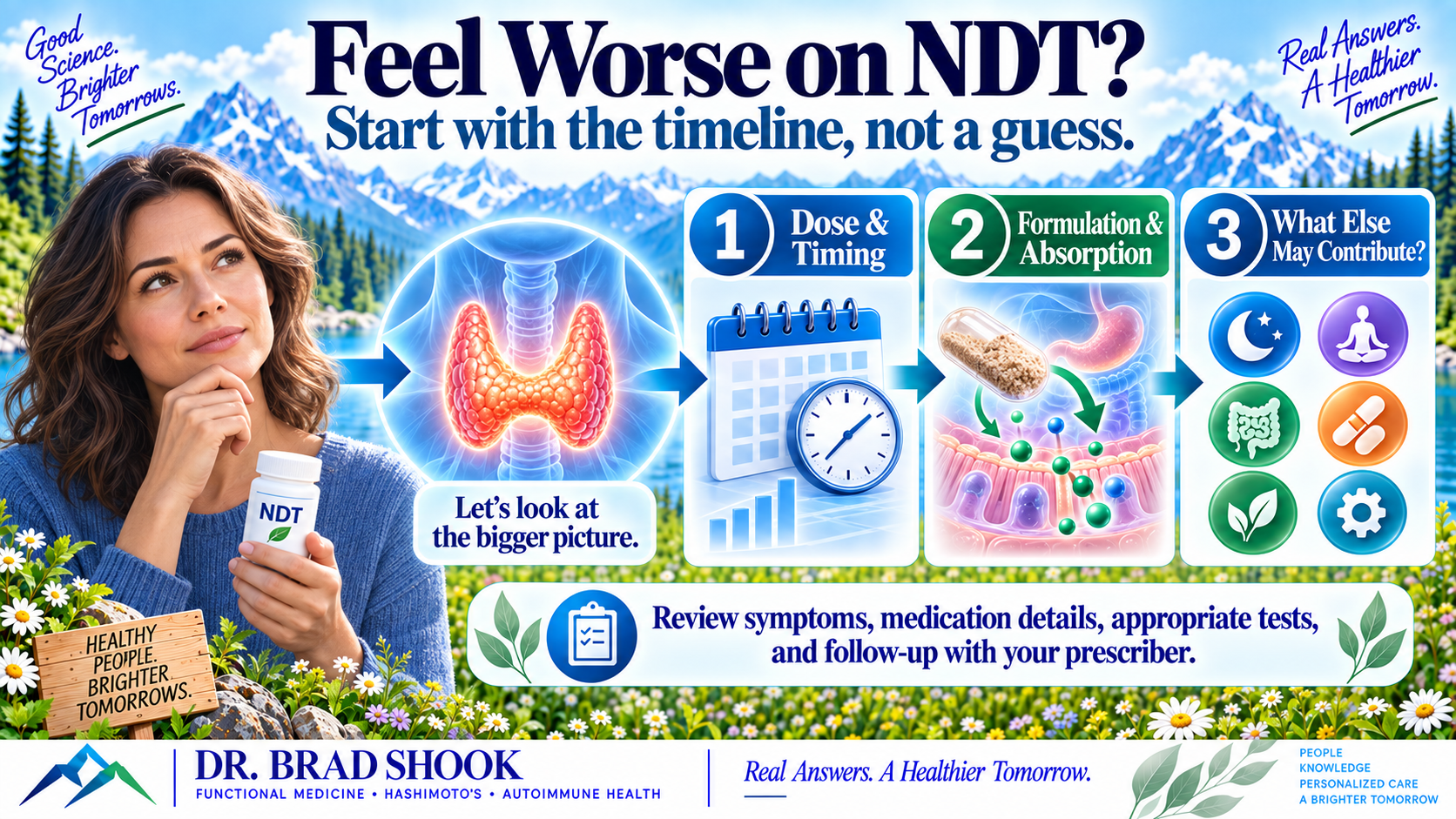
What Is Natural Desiccated Thyroid?
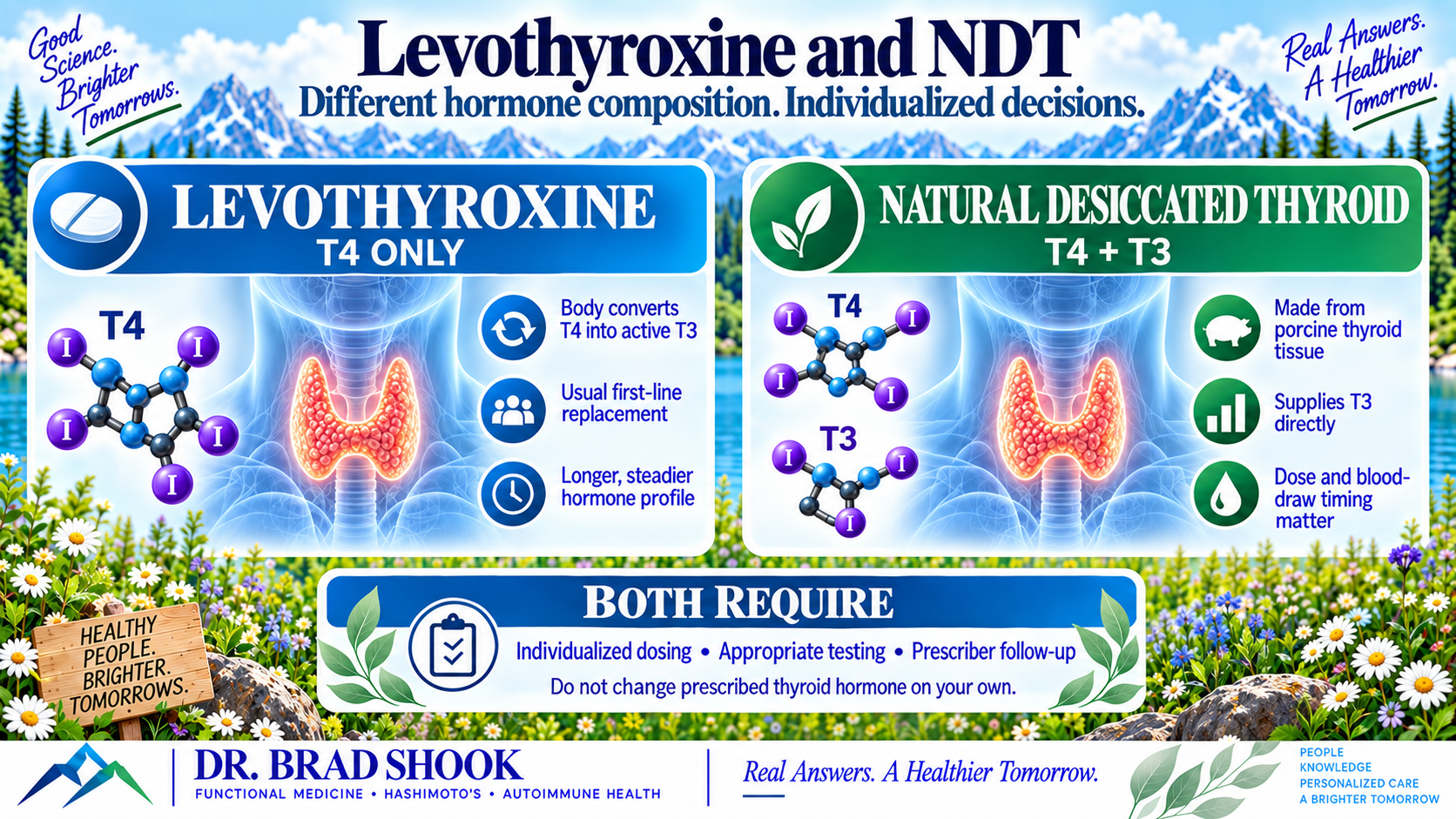
Natural desiccated thyroid, often shortened to NDT or desiccated thyroid extract (DTE), is thyroid hormone replacement made from animal thyroid tissue, usually porcine. It contains both thyroxine (T4) and triiodothyronine (T3).
That is different from levothyroxine, the commonly prescribed T4-only medication. Your own body normally converts much of its T4 into T3 in tissues. NDT supplies T3 directly, in an animal-derived T4-to-T3 ratio that differs from human thyroid secretion. A treatment that helps one person is not automatically the right fit for another.
When Hashimoto's has reduced thyroid hormone production, replacement can be essential. The goal is not to choose between medical care and investigating the rest of your health. Those questions can be addressed together through an individualized plan.
Six Reasons You Might Feel Worse on NDT
The timing of your symptoms, the medication you actually received, and the blood-test pattern matter more than assuming one cause.
1. The T3 portion feels too stimulating
Some people notice a racing heart, shakiness, sweating, nervousness, or difficulty sleeping, particularly after dosing or when the total replacement amount is excessive. T3 levels can rise and fall faster than T4 levels. Tell your prescriber if symptoms cluster after each dose.
2. The dose may not fit your current needs
Too little hormone may leave you tired, cold, or constipated. Too much can cause a fast heartbeat, heat intolerance, or anxiety. Those symptoms overlap with other conditions, so neither a symptom checklist nor one isolated test should determine a dose change.
3. A product or routine changed
A new strength, formulation, manufacturer, pharmacy substitution, missed doses, or different timing may affect consistency. Review the bottle, the exact dose, the date of the change, and how you take it with your prescriber or pharmacist.
4. Absorption or medication interactions changed
Food, iron, calcium, certain antacids, and digestive conditions can affect thyroid hormone absorption. Ask how your specific medication should be taken and separated from other products rather than improvising a schedule.
5. You may be reacting to an ingredient
Products include inactive ingredients, and some people experience a sensitivity or other adverse reaction to a formulation. A rash, swelling, wheezing, or sudden systemic symptoms warrant medical evaluation. Do not assume that an ingredient reaction means your immune system is attacking thyroid hormone itself.
6. Something else may be contributing
Sleep disruption, iron or B12 deficiency, anemia, mood disorders, changes around menopause, and other medical conditions can resemble or add to thyroid symptoms. People with Hashimoto's also have a higher chance of certain other autoimmune conditions, including celiac disease. The next step is a focused differential, not an unlimited panel of tests.
When symptoms need prompt attention: Contact your prescribing clinician about new or worsening palpitations, tremor, or significant insomnia. Seek emergency care for chest pain, fainting, severe shortness of breath, or signs of a serious allergic reaction. If you are pregnant or planning pregnancy, discuss thyroid treatment promptly with your obstetric and thyroid care team; desiccated thyroid is not recommended during pregnancy.
Can You Be Autoimmune to T4 or T3?
My original short article raised this possibility. It is important to separate an interesting laboratory phenomenon from an explanation for a person's symptoms.
Antibodies that bind thyroid hormones T4 or T3 have been documented. They may interfere with some laboratory assays, making a reported thyroid-hormone level look inconsistent with the person's TSH or clinical picture. They are not the same as the thyroid peroxidase (TPO) or thyroglobulin antibodies commonly measured in Hashimoto's.
What has not been established is that feeling worse after NDT generally means you are autoimmune to its T4 or T3, or that routine thyroid-hormone antibody testing determines which medication you can tolerate. If results and symptoms are markedly discordant, the prescriber can work with an endocrinologist and the laboratory to investigate assay interference and other explanations.
The useful question is not, “Which hidden antibody must I have?” It is, “What changed, what can we measure reliably, and which explanation actually fits my timeline?”
Is NDT Better Than Levothyroxine?
There is no one answer for every person. Levothyroxine is the usual first-line replacement for primary hypothyroidism. The American Thyroid Association recognizes that some people choose desiccated thyroid, while emphasizing that it is not its first-line recommendation.
Small randomized crossover studies have not shown a consistent overall symptom or quality-of-life advantage for desiccated thyroid over levothyroxine. Some participants preferred one treatment or another. Those findings support a thoughtful conversation about personal response, but they do not establish that NDT is superior or that a person's symptoms can be explained by “synthetic versus natural” alone.
Another important distinction: Levothyroxine contains a manufactured version of the same T4 molecule your body uses. Calling one form “synthetic” and the other “natural” does not tell us which dose, formulation, or therapy is safest or most effective for you.
What to Do If NDT Makes You Feel Worse
You do not need to arrive at your next appointment with a self-diagnosis. A clear record of what happened is far more helpful.
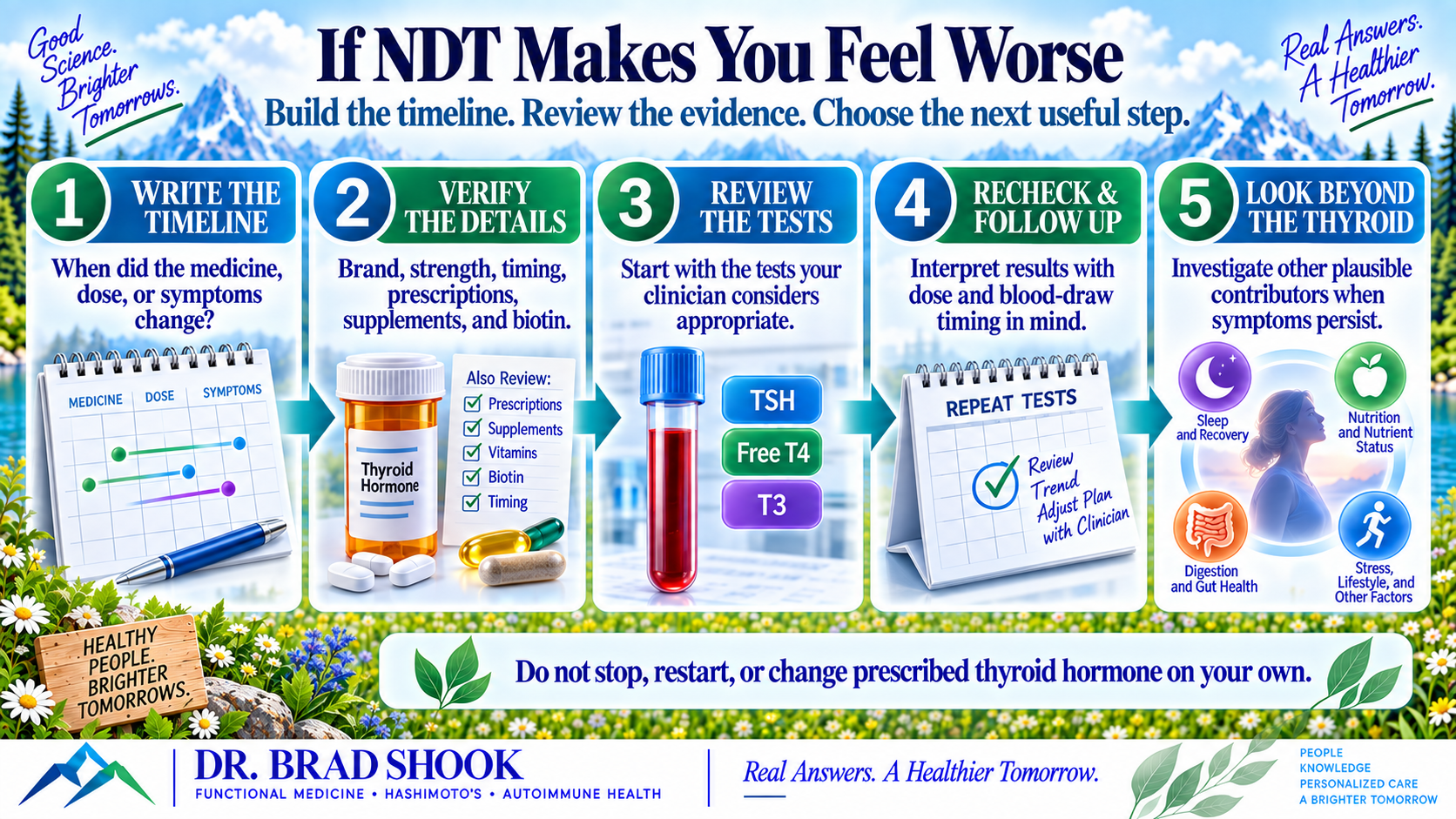
- Write down the timeline: when you started NDT or changed dose, when symptoms began, and whether they appear soon after a dose or throughout the day.
- Bring the exact medication details: brand, strength, directions, manufacturer or pharmacy changes, other prescriptions, supplements, and biotin use.
- Review appropriate tests with your clinician: TSH and free T4 commonly provide the starting point; T3 may be useful in selected people taking a T3-containing product. The time of your last dose and blood draw can matter when interpreting T3.
- Recheck after an appropriate interval: many routine thyroid-dose changes are assessed with repeat blood work after roughly six to eight weeks, though significant symptoms, pregnancy, and specific clinical situations may require earlier attention.
- Look beyond the thyroid when indicated: if hormone status is appropriate and symptoms persist, evaluate other plausible causes instead of automatically escalating thyroid hormone.
Do not stop, restart, or change prescribed thyroid hormone on your own. The prescribing clinician is responsible for medication choices and dose adjustments.
Where Functional Medicine Fits Into This Conversation
When someone tells me, “I tried thyroid medication and I still don't feel right,” I want to understand the whole story. First, we need to know whether the medication and medical follow-up are appropriate. Then we can ask what else might reasonably explain the experience.
DETECT
Review the timeline, symptoms, medical records, thyroid test history, medication routine, diet, digestion, sleep, stress, nutrient status, and relevant exposures or other conditions. Prioritize questions with a defensible reason to investigate them.
SUPPORT
Build a focused nutrition and lifestyle plan around what matters most to you and what the findings support. Coordinate with your prescribing clinician when a medication or medical issue needs attention.
REASSESS
Track symptoms, function, relevant laboratory findings, and response over time. What changed? What did not? What does that tell us about the next useful question?
Hashimoto's is an autoimmune thyroid disease, while hypothyroidism describes inadequate thyroid hormone. A diagnosis identifies a disease; it does not automatically identify every contributor to how you feel. This is the opportunity for an individualized investigation that complements, rather than replaces, appropriate thyroid care.
For a broader orientation, read the Hashimoto's guide, then understand how your thyroid works and explore why symptoms may persist despite thyroid treatment.
Want help understanding the bigger picture?
I work with clients to review their history, symptoms, available records, and relevant patterns so we can identify useful next questions and build a focused plan alongside appropriate medical care. The public first step is an application; I review each application before offering a private scheduling link.
Frequently Asked Questions
Why do I feel worse after starting natural desiccated thyroid?
There is no single explanation. The T3 portion of natural desiccated thyroid can cause noticeable symptoms, especially if the dose is too high for you. Dose changes, timing, product ingredients, absorption, and another health problem can also contribute. Review the symptom timeline and thyroid tests with your prescriber rather than adjusting the medication yourself.
Can NDT make anxiety, palpitations, or insomnia worse?
Yes. Natural desiccated thyroid contains T3, which can produce a faster rise in circulating hormone after a dose. Too much thyroid hormone can cause a racing heart, nervousness, tremor, heat intolerance, or sleep difficulty. Contact your prescribing clinician promptly about new or worsening symptoms.
Can you be allergic or autoimmune to T4 or T3?
Unusual reactions to a medication or its inactive ingredients can occur. Antibodies that bind T4 or T3 also exist and may interfere with certain laboratory tests, but they do not by themselves prove an allergy to thyroid medication or explain why someone feels worse on NDT. An endocrinologist or allergist can investigate the relevant possibilities.
Is natural desiccated thyroid better than levothyroxine for Hashimoto’s?
Not for everyone. Levothyroxine is the usual first-line hormone replacement. Some people prefer desiccated thyroid, but randomized comparisons have not established that it produces better overall symptoms or quality of life. The safest choice depends on the person and requires appropriate monitoring.
What blood tests should I ask about if NDT makes me feel worse?
Your clinician will commonly start with TSH and free T4 and may consider T3 in selected situations because NDT contains T3. The dose, timing of the last pill and blood draw, pregnancy status, other medication, and prior results all matter. A routine large thyroid panel or thyroid-hormone antibody panel is not necessary for everyone.
Should I stop natural desiccated thyroid if I feel worse?
Do not stop, raise, or lower prescribed thyroid hormone on your own. Contact the prescribing clinician for guidance. Seek urgent medical help for chest pain, fainting, severe shortness of breath, or a serious allergic reaction.
Can functional medicine help if I am still symptomatic on thyroid medication?
It can organize a focused review of your history, medication routine, nutrition, digestion, sleep, stress, and other conditions that may contribute to symptoms. This complements medical evaluation and prescribing rather than replacing needed thyroid hormone or guaranteeing a particular outcome.
Sources and Further Reading
The original September 2016 article's NDT question and reference to hormone autoimmunity have been retained as a question and examined against current evidence. The earlier off-site “4 stages” promotion is not carried forward.
- American Thyroid Association: Thyroid Hormone Treatment. Background on T4, T3, desiccated thyroid, formulation consistency, and pregnancy.
- American Thyroid Association: Statement on Desiccated Thyroid Extract (September 2025). Describes treatment choice and regulatory considerations.
- NIDDK: Hashimoto's Disease. Diagnostic and medication guidance, associated conditions, and follow-up.
- Hoang et al., 2013. Randomized crossover study of desiccated thyroid and levothyroxine.
- Shakir et al., 2021. Randomized comparison of levothyroxine, desiccated thyroid, and T4 plus T3.
- Endotext: Assay of Thyroid Hormone and Related Substances. Explains thyroid-hormone antibodies and laboratory assay interference.
- NICE: Thyroid Disease Assessment and Management. Guidance on first-line therapy and evidence limits for natural thyroid extract.