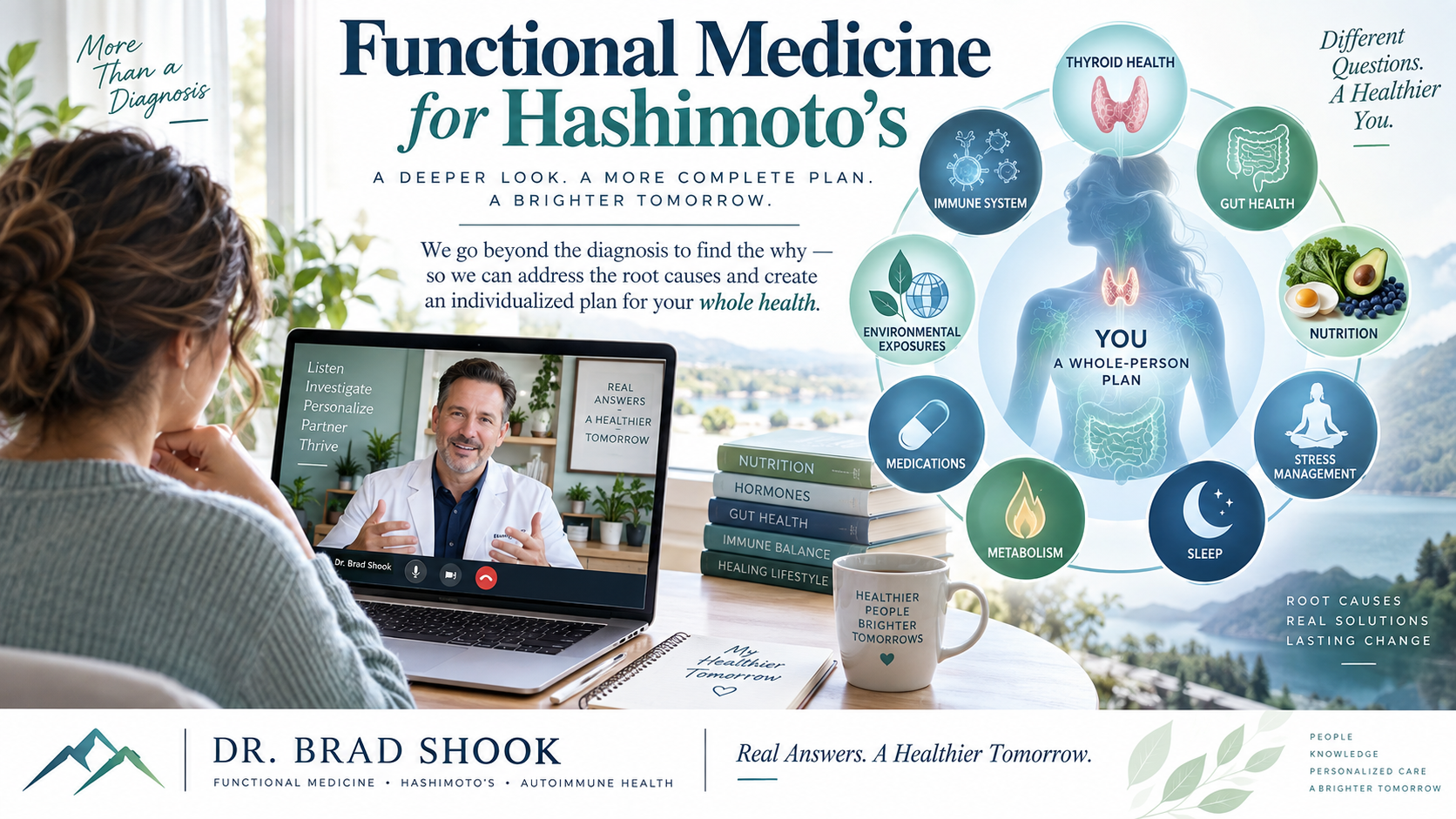
Why People With Hashimoto's Look Beyond the Diagnosis
A Hashimoto's diagnosis tells you that the immune system is reacting to the thyroid. It does not automatically explain why that reaction began, what may be sustaining it, or why fatigue, brain fog, digestive problems, pain, weight changes, or poor recovery may continue.
Some people feel substantially better once thyroid hormone is restored. Others continue to struggle even when a laboratory result such as TSH falls within its target range. That does not mean every remaining symptom comes from Hashimoto's. It means the rest of the case still deserves to be investigated.
Iron or vitamin B12 deficiency, sleep disruption, blood sugar instability, digestive dysfunction, another autoimmune process, medication effects, chronic stress, inadequate recovery, and other health problems can overlap with symptoms commonly blamed on the thyroid. A whole-person evaluation helps separate these patterns and decide where to begin.
What Functional Medicine Adds to Hashimoto's Care
I use the Environmentally Induced Autoimmunity model to understand how inherited susceptibility can interact with immune triggers, environmental exposures, barrier-system changes, and the body's interconnected physiology.
Think of Hashimoto's as part of a physiological web. Your thyroid communicates with your brain, immune system, gastrointestinal tract, liver, metabolism, and endocrine system. Changes in one area can influence several others. For example, low thyroid function can slow the digestive tract, digestive problems can affect nutrient absorption and medication consistency, and metabolic or inflammatory stress can influence energy and immune signaling.
This creates a new opportunity. Instead of using the same protocol for every person with Hashimoto's, the goal is to map the parts of the web that appear most important in your case and then decide which areas should be addressed first.
For a deeper explanation of inherited susceptibility, immune triggers, barrier systems, molecular mimicry, and environmental influences, continue with Hashimoto's disease causes and triggers.
A diagnosis names the disease. A functional medicine evaluation helps build your map. That map can include possible triggers, ongoing drivers, immune patterns, barrier-system health, nutrient status, metabolism, exposures, medication context, and the way your body responds over time.
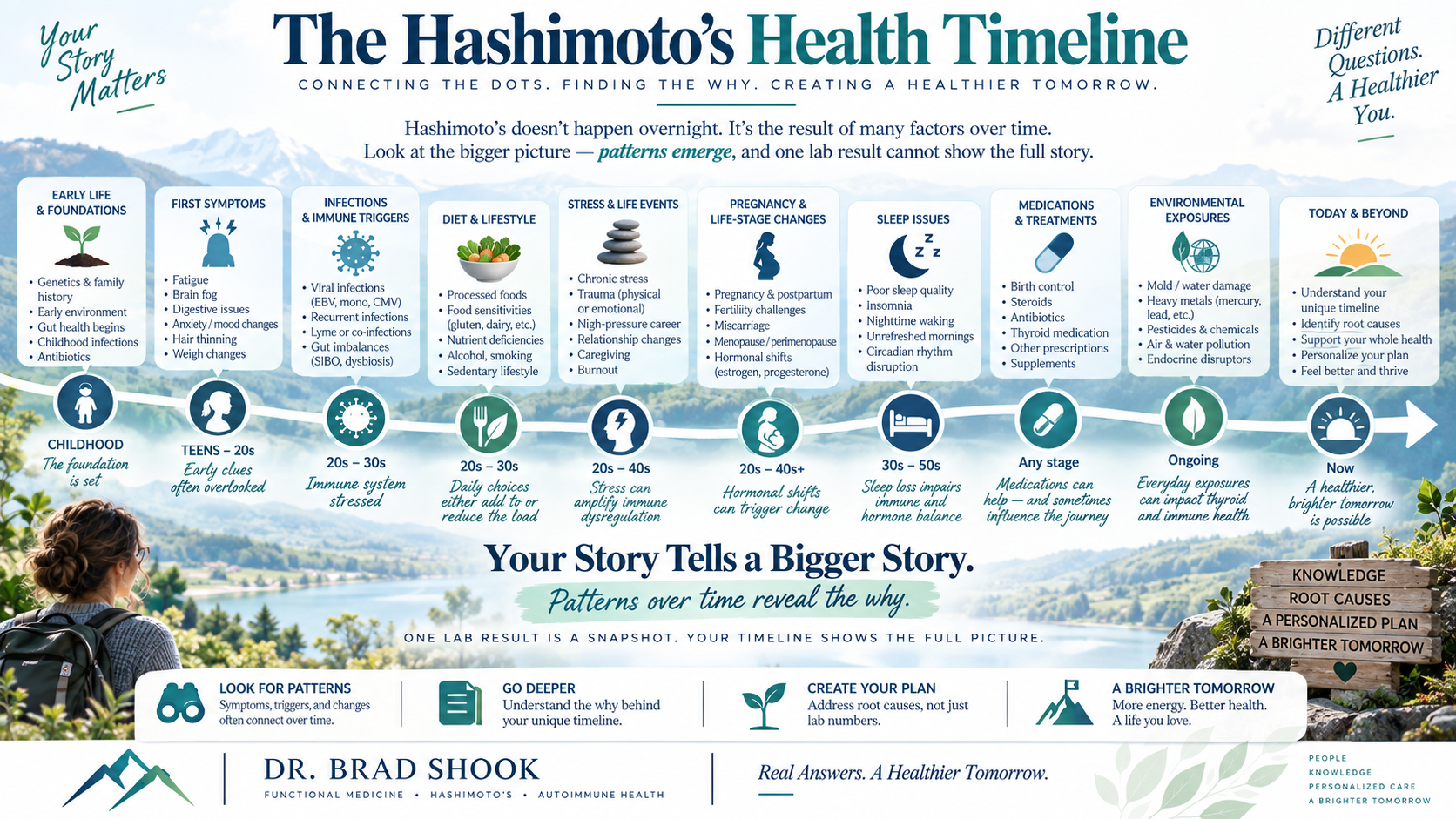
What a Thorough Functional Medicine Evaluation Includes
The first visit should bring your case together, not reduce it to one antibody result, one food, or one supplement.
The point is to identify the most important starting place. If several systems appear involved, trying to address everything at once can make it impossible to know what is helping. I prioritize the highest-priority patterns, then use follow-up to learn what changed, what did not, and what the response teaches us.
Testing the Immune and Physiological Pattern
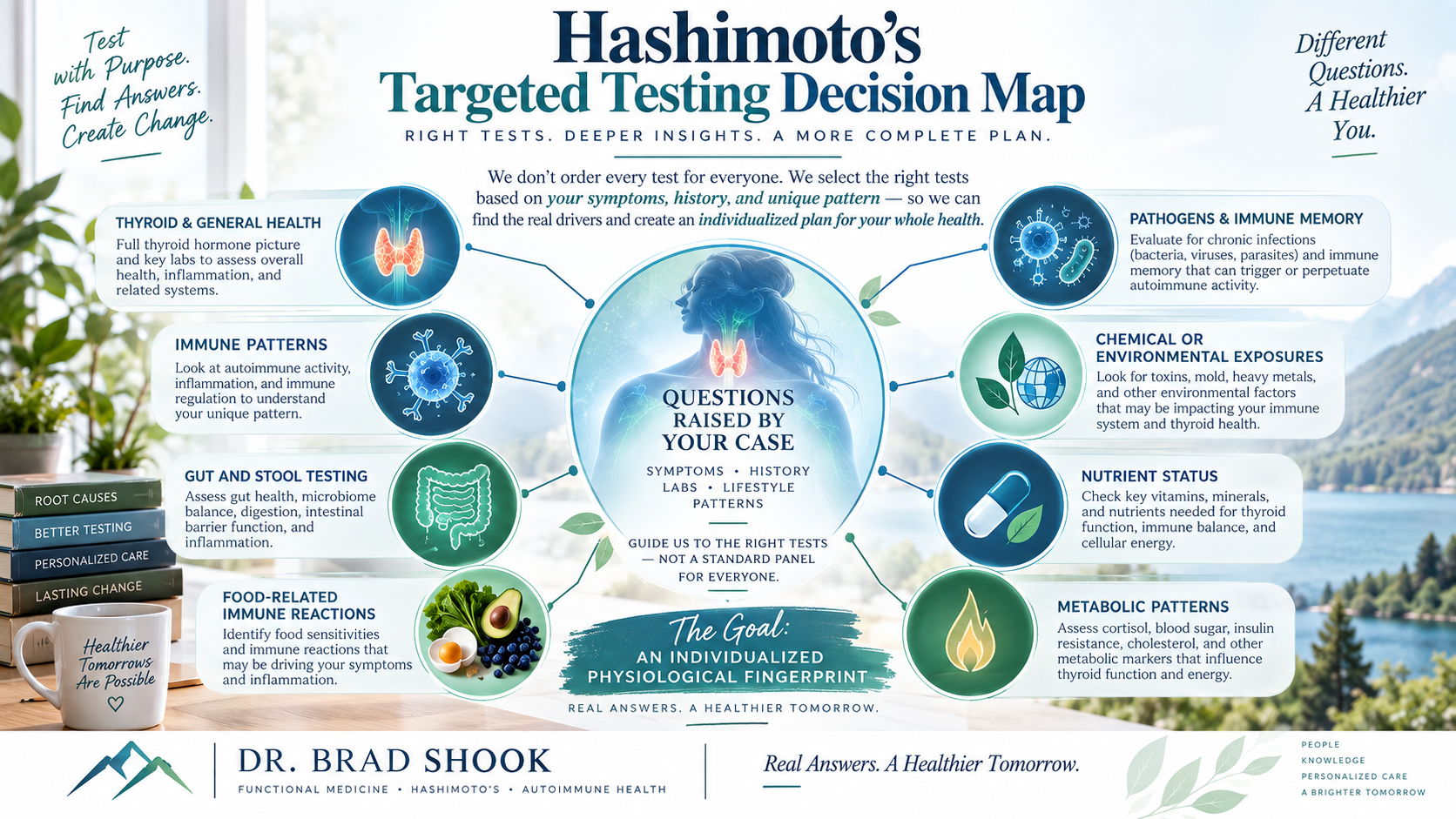
There is no single laboratory test that reveals the one root cause of Hashimoto's. The opportunity is to combine standard medical testing with more detailed functional testing when your history and symptoms point to a specific question.
I use testing to establish a baseline and create a more individual fingerprint of the reactions and body systems that may be relevant. Depending on your case, the investigation may include:
Thyroid and general health
Thyroid hormone patterns, thyroid antibodies, blood count, iron status, blood sugar, lipids, liver and kidney markers, and other foundational data.
Barrier-system health
Evidence related to the intestinal lining and other protective barriers that are meant to separate the outside world from the bloodstream.
Digestion and the gastrointestinal tract
Stool testing, digestive function, microbial patterns, intestinal inflammation, absorption, bowel function, and symptoms that may point to a gastrointestinal driver.
Food-related immune reactions
Celiac disease, wheat and gluten immune responses, reactions to other food proteins, and possible cross-reactive patterns that may help explain why one generic diet is not enough.
Pathogens and immune memory
Targeted evaluation of infections or immune reactions to pathogens when the timeline, symptoms, or exposure history make that question important.
Chemicals and environmental exposures
Testing may look at chemical burden in blood or urine, immune reactions to chemicals bound to human proteins, or both. These measure different things and must be interpreted differently.
Broader immune patterns
Multiple tissue antibody patterns and immune-cell counts, percentages, and ratios can sometimes add context about immune reactivity or expansion beyond the thyroid.
Nutrients and cell function
Vitamin and mineral status, nutrients involved in immune regulation and thyroid physiology, antioxidant capacity, and essential fatty-acid balance.
These tests do not diagnose every condition or prove that one result caused Hashimoto's. For example, an antibody to a pathogen is not the same as proving an active infection. An immune reaction to a chemical is not the same as measuring the amount of that chemical currently in the body. A tissue antibody pattern is not, by itself, a diagnosis of another autoimmune disease.
What makes the information useful is how it fits with your history, symptoms, thyroid findings, other laboratory data, and response to the plan. This is how testing can move you beyond guessing and give you a more individualized starting point.
Testing follows the questions raised by your case. The goal is not to order every available panel. The goal is to gather the objective information that can clarify your most likely triggers, drivers, and priorities. For more detail, see my functional medicine testing guide.
Hashimoto's Medication and Functional Medicine
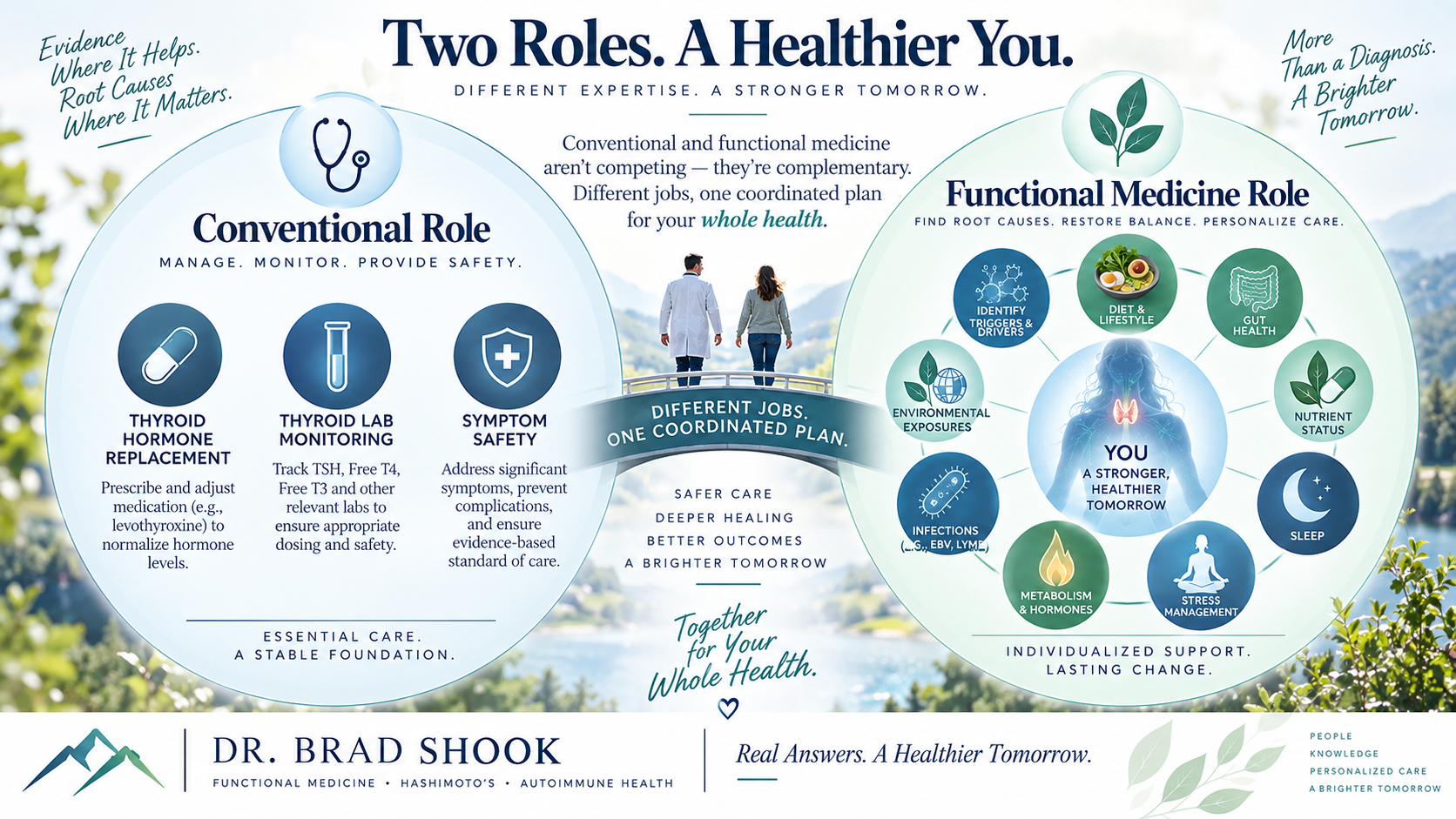
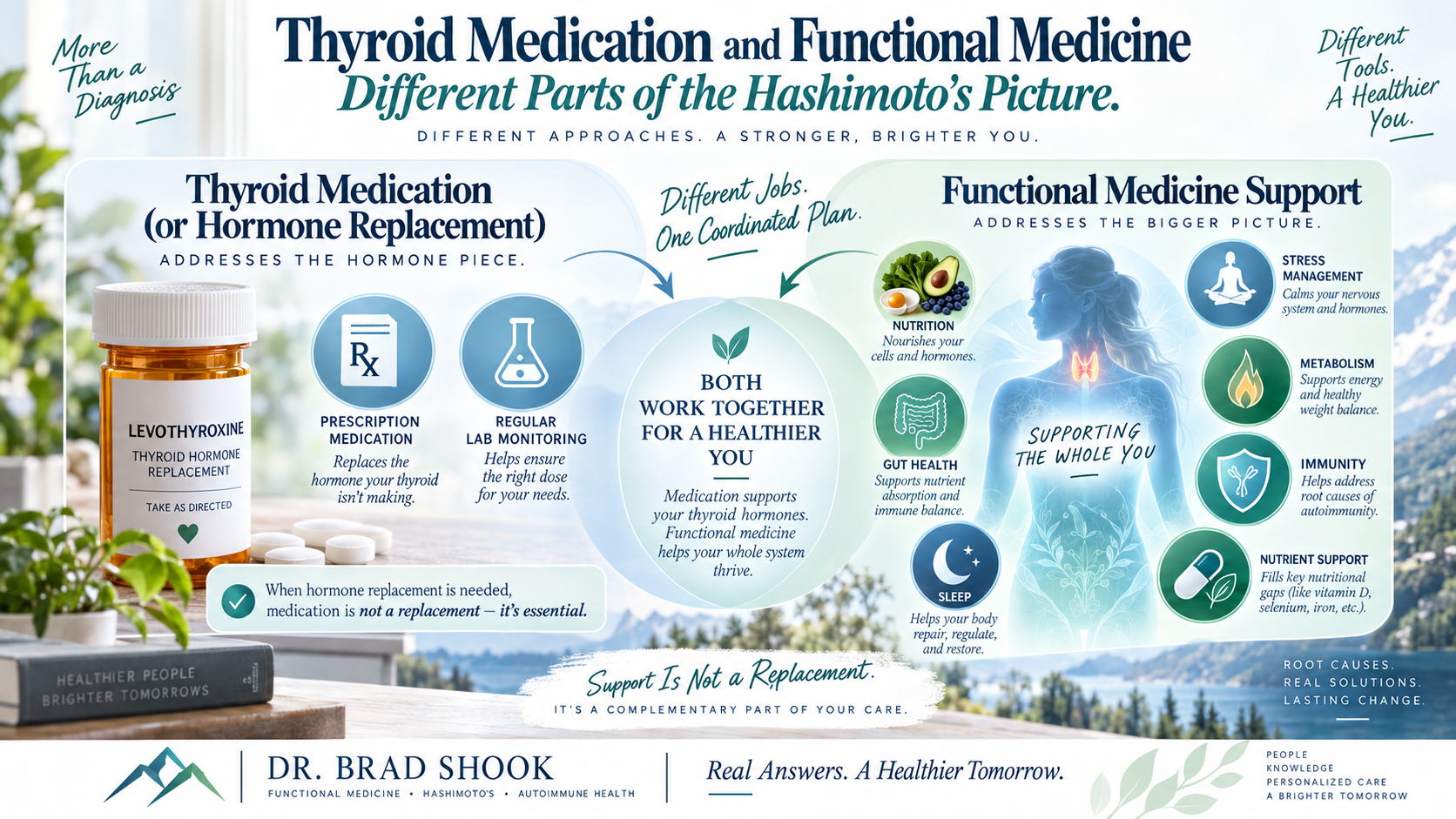
Hashimoto's can gradually damage the thyroid and reduce its ability to make thyroid hormone. When hormone production is inadequate, replacing that hormone may be essential. Functional medicine does not perform the same job as thyroid medication, and thyroid medication does not perform the same job as a whole-person autoimmune investigation.
Synthetic thyroid hormone
Levothyroxine is a synthetic form of T4 and is the most common thyroid-hormone replacement. The dose is monitored with thyroid laboratory testing and adjusted by the prescribing clinician. The aim is to restore adequate hormone availability, not to identify every immune, digestive, metabolic, nutritional, or environmental factor affecting the person.
Natural desiccated thyroid and combination therapy
Natural desiccated thyroid contains both T4 and T3. Some clinicians also use separate T4 and T3 preparations in selected situations. These options require individualized prescribing and monitoring because too much thyroid hormone can affect the heart, bones, sleep, anxiety, and other systems.
Low-dose naltrexone
Low-dose naltrexone is sometimes discussed for autoimmune conditions, but it is not a standard thyroid-hormone replacement and the evidence for Hashimoto's-specific outcomes remains limited. It is a prescription decision to discuss with a qualified prescribing clinician.
Different jobs. One coordinated plan. Thyroid medication addresses hormone replacement. My functional medicine model investigates the broader immune and physiological pattern so diet, lifestyle, testing, and support can be individualized.
Diet, Gluten, Gut Health and Metabolism
Diet matters, but there is no single Hashimoto's diet that is right for everyone. A useful plan considers immune reactions, nutrient needs, metabolic health, digestion, food quality, preferences, and the ability to sustain the changes.
Gluten deserves particular attention because celiac disease occurs more often in people with autoimmune thyroid disease, and gluten or wheat may also matter through other immune patterns. Some people without celiac disease may have wheat allergy, non-celiac wheat or gluten sensitivity, broader antibody reactions to wheat proteins, or reactions to foods that can participate in cross-reactive immune patterns. These are different reactions and require different types of evaluation.
If celiac disease is a possibility, testing is most accurate while gluten is still being eaten. Starting a gluten-free diet first can reduce the immune response and make later celiac testing harder to interpret. For people who already avoid gluten, the testing strategy needs to account for that.
Gluten exposure can also come from inactive ingredients or cross-contamination in medications and supplements. If this matters in your case, check the current product information and confirm the ingredients with the manufacturer or pharmacist. Do not stop a prescribed medication because of a suspected ingredient without discussing a safe alternative with the prescriber.
Gut health involves more than food. Low thyroid function can slow intestinal movement and contribute to constipation. Celiac disease, gastritis, poor digestion, intestinal inflammation, microbial imbalance, and impaired absorption can influence nutrient status, symptoms, and the consistency of thyroid-medication absorption.
Blood sugar, insulin resistance, liver function, muscle mass, physical activity, sleep, and stress can also affect energy, weight, inflammation, and recovery. These connections are why I evaluate diet as one part of a larger physiological web instead of handing every person the same elimination list.
Continue with the Hashimoto's thyroiditis diet guide and the deeper guide to gluten, Hashimoto's and celiac disease.
Vitamins and Supplements for Hashimoto's
Supplements can be useful when they address a documented need or a well-defined clinical goal. They are not a substitute for understanding the pattern. Starting many products at once can also make it difficult to know which one helped, caused a side effect, or changed a laboratory result.
Important areas may include vitamin D, iron, vitamin B12, folate, zinc, magnesium, selenium, essential fatty acids, and nutrients involved in antioxidant defense and thyroid physiology. The right form and amount depend on diet, symptoms, medications, laboratory results, digestive absorption, pregnancy status, and other health conditions.
Selenium has been studied in Hashimoto's and may lower some thyroid-antibody measurements in certain groups, but antibody changes do not guarantee symptom improvement or restored thyroid function. Vitamin D supplementation may also influence antibody levels in people who are deficient, although the best dose depends on the baseline level and the individual.
Iodine requires special care. It is necessary for thyroid hormone production, but excessive iodine from concentrated seaweed products or high-dose supplements can aggravate autoimmune thyroid dysfunction in susceptible people. More is not automatically better.
I use nutrient testing and the larger case picture to decide where supplementation may offer the most value, then reassess symptoms and objective findings instead of leaving a person on an expanding list indefinitely.
My Hashimoto's Method
The goal is to turn a complicated case into a clear sequence: DETECT, SUPPORT and REASSESS.
DETECT
Establish a baseline and identify potential triggers and drivers using your history, timeline, symptoms, examination findings, existing records, and laboratory testing.
SUPPORT
Build an individualized plan around the highest-priority findings involving diet, lifestyle, supplementation, physiology, nutrient needs, environment, and your practical ability to follow the plan.
REASSESS
Track your symptoms, how your energy and function are changing, objective findings, any side effects, and your ability to follow through. Continue, adjust, or stop parts of the plan based on how you are doing.
This cycle matters because your immune system, exposures, diet, stress, sleep, hormones, and daily demands can change. A plan should evolve with the information your body provides. Read the complete Hashimoto's Doctor Method or use the Hashimoto's hub to explore each topic.
Watch Me Explain the Functional Medicine Approach
These presentations preserve two important parts of this guide: how functional medicine approaches Hashimoto's and how thyroid physiology connects with symptoms and the rest of the body.
A Functional Medicine Approach to Hashimoto's
How a whole-person investigation can add context beyond the diagnosis and thyroid-hormone level.
Understanding Thyroid Physiology
Why thyroid function, conversion, immune activity, symptoms, and connected systems must be considered together.
How to Choose a Functional Medicine Doctor for Hashimoto's
A strong practitioner should understand thyroid physiology and autoimmunity, take a detailed history, review your existing records, explain why testing is being considered, and show you how the findings connect to an individualized plan. You should also know how progress will be measured and when the plan will be reassessed.
Training and certification
Functional medicine credentials vary, so ask what training a practitioner has completed and whether Hashimoto's and autoimmune cases are a central part of the practice. Also clarify the practitioner's professional scope, what services are provided, and when another clinician is needed for prescribing, imaging, pregnancy care, nodules, or urgent medical problems.
Why Work With Dr. Shook?
I began studying autoimmunity in 2005 after facing my own psoriasis and digestive problems. I have worked with clients since 2006 and focus on autoimmune and complex chronic health patterns. I am an Advanced Functional Medicine Clinician and a recipient of the Flame of Knowledge Award.
My approach is built around Environmentally Induced Autoimmunity and the DETECT, SUPPORT, REASSESS process. The purpose is to help you understand your case, establish a better starting point with objective information, and build a plan around your specific triggers, drivers, physiology, environment, and response.
Learn more about my background and approach.
Who May Be a Good Fit for This Approach?
This approach may be a good fit if you have diagnosed or suspected Hashimoto's, still do not feel like yourself, and want to understand more than the thyroid-hormone number. It is designed for people who are ready to examine diet, gut health, metabolism, nutrients, sleep, stress, infections, exposures, medications, and their own response as connected parts of one case.
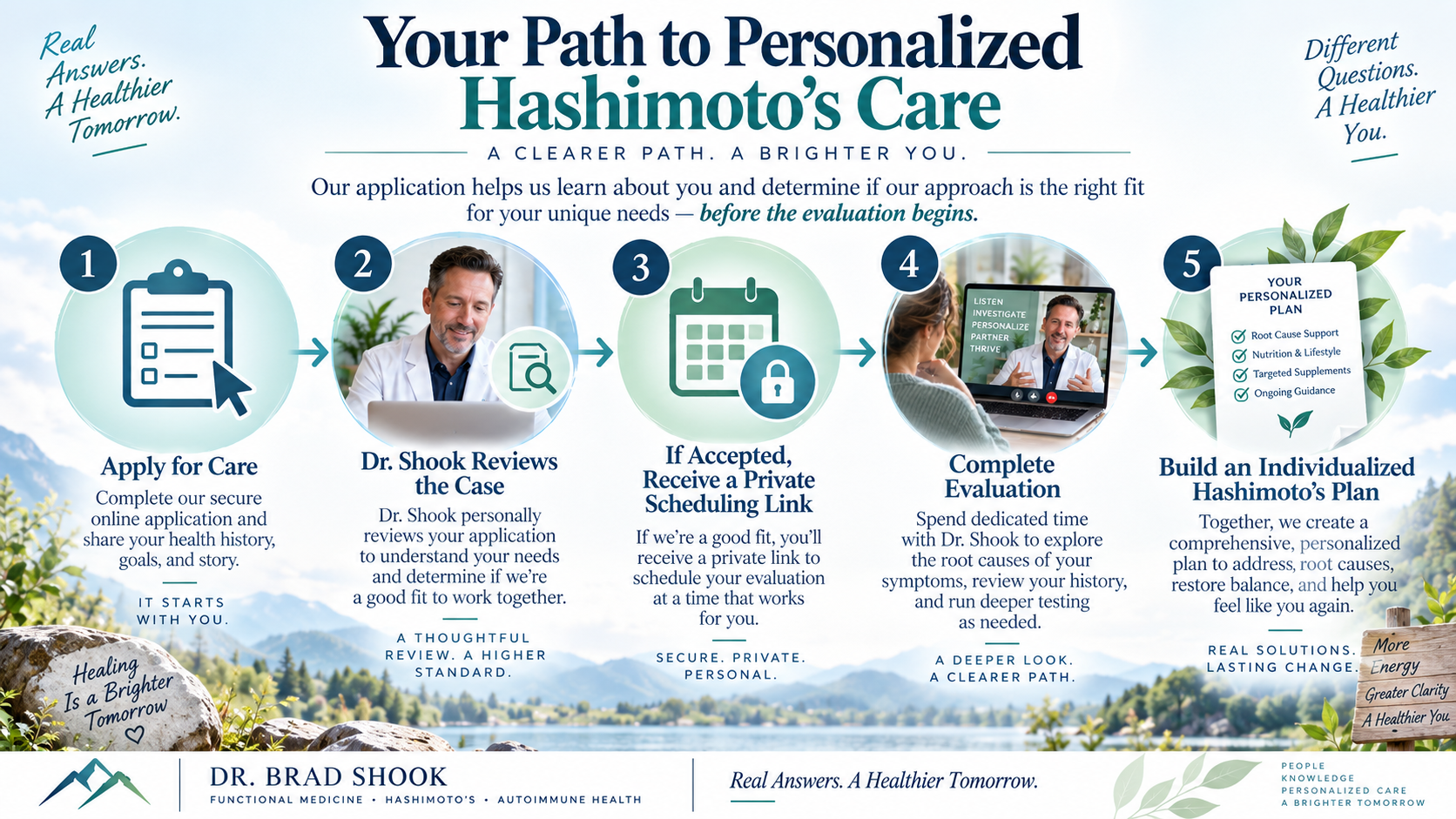
I work remotely through an application-first process. The Application for Care helps determine whether your needs and the service are a reasonable fit before moving forward.
Seek prompt medical evaluation for a rapidly enlarging neck mass, trouble breathing or swallowing, severe weakness, chest pain, fainting, confusion, pregnancy-related thyroid concerns, or symptoms that could represent a medical emergency.
Frequently Asked Questions
What can functional medicine do for Hashimoto's?
Functional medicine can help investigate the triggers, drivers, immune patterns, barrier health, diet, digestion, metabolism, nutrient status, infections, exposures, stress, sleep, medications, and individual responses that may be shaping your case. The goal is to create a more individualized starting point and measure how you respond.
Can functional medicine cure Hashimoto's disease?
No one can promise a cure for Hashimoto's. Functional medicine focuses on identifying and addressing the factors that may be influencing immune activity, thyroid function, symptoms, and overall health, then adjusting the plan according to your measured response.
Will I have to stop thyroid medication?
Not necessarily. Thyroid medication replaces hormone when your thyroid cannot make enough. Any medication change must be made with the prescribing clinician and guided by symptoms, laboratory results, and your individual medical situation.
What does Dr. Shook test for?
Testing is personalized to the questions raised by your history and symptoms. It may include thyroid and general health markers, barrier-system assessment, stool and digestive testing, food or gluten immune reactions, pathogen and chemical immune reactions, exposure testing, multiple tissue antibodies, immune-cell patterns, nutrients, essential fatty acids, and metabolic health.
Do you use food sensitivity testing?
Food testing may be considered when it matches the history and the type of immune reaction being investigated. Results are interpreted with symptoms, celiac or allergy considerations, nutrition needs, digestive health, and response to a structured dietary plan. A laboratory result alone does not prove that a food caused Hashimoto's.
Can gluten matter if I have Hashimoto's?
Yes. Celiac disease is the clearest established connection, but wheat or gluten may also matter through allergy, non-celiac sensitivity, broader wheat-protein immune reactions, or possible cross-reactive patterns. These are different reactions and require different evaluation. If celiac disease is possible, testing is most accurate while gluten is still being eaten.
Which supplements are best for Hashimoto's?
There is no universal supplement program. Selenium, vitamin D, iron, vitamin B12, zinc, magnesium, essential fatty acids, and other nutrients may be relevant for some people, but need, dose, interactions, and total intake should be individualized. Excess iodine can be harmful in susceptible people.
Can functional medicine work with my endocrinologist or primary-care doctor?
Yes. Thyroid diagnosis, hormone prescribing, pregnancy, nodules, imaging, and urgent medical problems belong with the appropriate medical clinician. Functional medicine adds a detailed investigation of the broader immune, physiological, environmental, dietary, and lifestyle pattern.
How do I choose a functional medicine doctor for Hashimoto's?
Look for training in thyroid physiology and autoimmunity, an organized evaluation process, testing selected for your individual questions, clear explanations, measurable goals, and regular reassessment. Also confirm the practitioner's scope and how medical prescribing or urgent needs are handled.
How do I apply to work with Dr. Shook?
Use the public Application for Care page. The application gives Dr. Shook's team the information needed to determine whether your needs and the remote functional medicine service are a reasonable fit.
Ready for a More Individualized Hashimoto's Evaluation?
If you are looking for more than a generic Hashimoto's protocol, my Environmentally Induced Autoimmunity model provides a structured way to investigate your complete pattern. I DETECT the most important triggers and drivers, SUPPORT the highest-priority findings, and REASSESS what changes and what your response teaches us.
References and Clinical Resources
- NIDDK. Hashimoto's Disease.
- NIDDK. Hypothyroidism (Underactive Thyroid).
- American Thyroid Association. Hashimoto's Thyroiditis.
- American Thyroid Association. Thyroid Hormone Treatment.
- Mayo Clinic investigators. Real Practice Assessment of Persistent Symptoms After Initiation of Levothyroxine. Endocrine Practice. 2024.
- Huwiler VV, et al. Selenium Supplementation in Patients with Hashimoto Thyroiditis: A Systematic Review and Meta-Analysis of Randomized Clinical Trials. Thyroid. 2024.
- Zhang J, et al. Vitamin D Supplementation and Autoimmune Thyroiditis: A Meta-Analysis of Randomized Controlled Trials. Journal of Health, Population and Nutrition. 2023.
- Ferrari SM, et al. Environmental Factors and Autoimmune Thyroiditis. 2024.
- Beidokhti MN, et al. Association of the Functional Medicine Model of Care With Patient-Reported Health-Related Quality-of-Life Outcomes. JAMA Network Open. 2019. Observational cohort study.