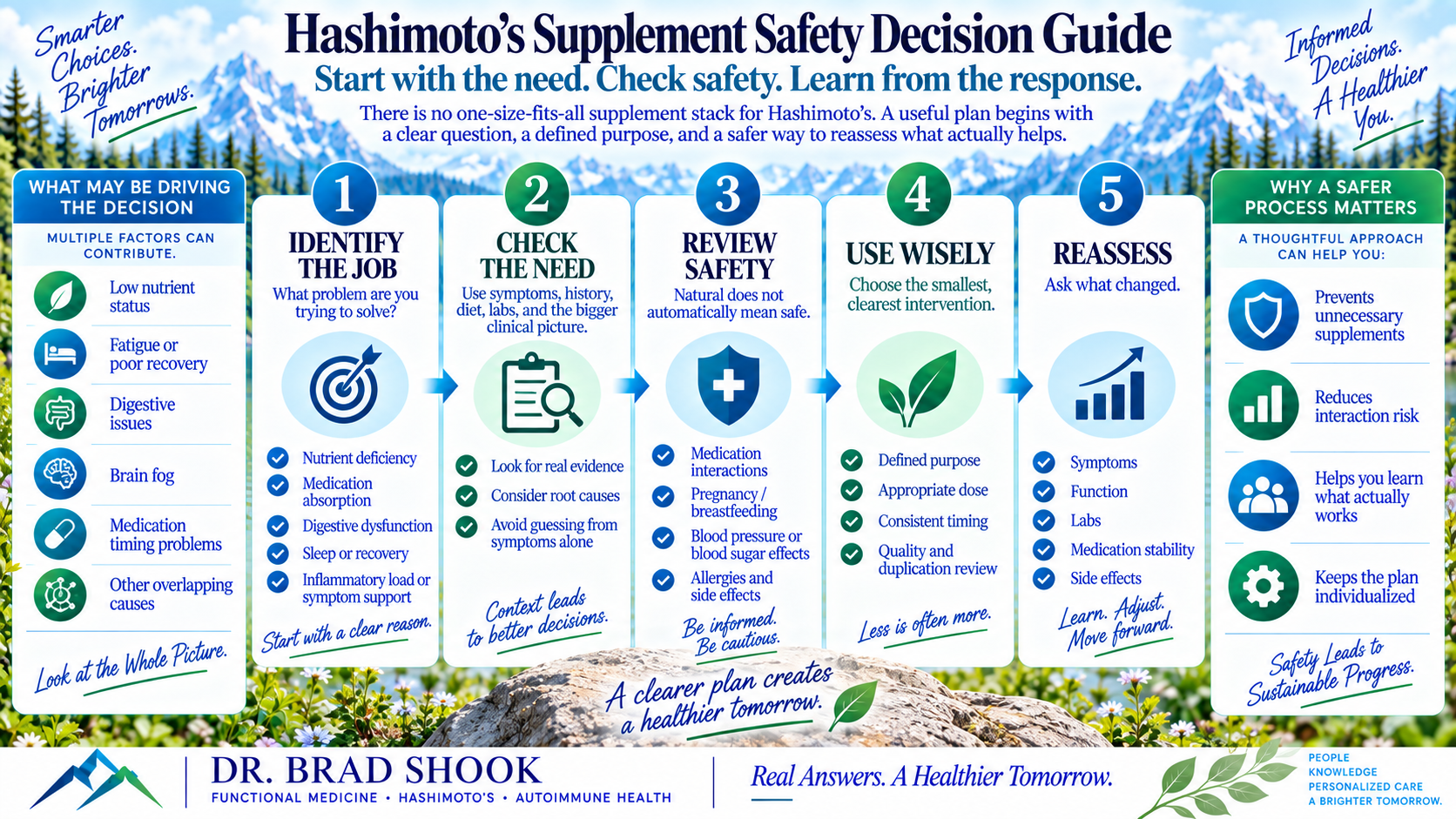
Why Supplements Can Help and Still Be the Wrong Starting Point
A supplement is an intervention. The fact that you can buy it without a prescription does not mean it is automatically appropriate, harmless, or necessary.
I see two common problems. The first is missing something the body genuinely needs, such as iron, vitamin B12, vitamin D, adequate iodine, selenium, protein, or essential fatty acids. The second is taking a long list of products without knowing what each one is supposed to change.
With Hashimoto's, that second problem gets confusing quickly because many symptoms overlap. Fatigue, hair changes, brain fog, poor recovery, constipation, anxiety, weakness and exercise intolerance can be blamed on the thyroid when the bigger issue may be medication absorption, anemia, sleep apnea, menopause, blood sugar problems, gastrointestinal disease, another autoimmune condition, or a combination of several factors.
The better question is not, “What is the best supplement for Hashimoto's?” It is, “What does the evidence in my case show that I actually need to support?”
That creates a much more useful starting point. Thyroid medication, food, sleep, movement, stress, digestion, nutrient status, infections, exposures and immune activity may all matter. Supplements can support that plan, but they work best when they have a defined job.
For the broader framework, start with the Hashimoto's disease hub.
Why TH1 and TH2 Labels Do Not Tell the Whole Story
You may have seen supplement lists that classify herbs or nutrients as “TH1 stimulating,” “TH2 stimulating,” or “immune boosting.” Those labels can be useful clues about immune biology, but they are not enough to decide whether a supplement is right for you.
The immune system is not divided into only two fixed pathways. Helper T cells include TH1, TH2, TH17, regulatory T cells, follicular helper cells and other subtypes, and those cells can change their behavior depending on cytokines, infections, tissues, metabolism and the surrounding immune environment. A person with Hashimoto's cannot be reduced to one permanent “TH1” or “TH2” identity.
That matters because two people with the same diagnosis can respond very differently to the same herb. The dose, extract, duration, medications, blood pressure, blood sugar, pregnancy status, liver function, allergy history and the reason for using the product all change the decision.
| Supplement category | Examples you may encounter | Better question to ask |
|---|---|---|
| Herbs commonly discussed around TH1 signaling | Astragalus, licorice, lemon balm, echinacea, beta-glucans | What is the actual goal, what evidence supports that use, and what are the dose, extract and interaction considerations? |
| Compounds commonly discussed around TH2 signaling | Pine bark, white willow bark, caffeine, green tea extract, grape seed, lycopene, Pycnogenol, resveratrol | Does this compound fit the person's physiology and medications rather than a simple immune label? |
| Broad immune-modulating nutrients and products | Probiotics, vitamin A, vitamin E, colostrum | What problem are we trying to solve, and how will we know whether this product helped? |
| Products used around inflammatory signaling | Boswellia, turmeric/curcumin, enzymes | Is there a defined indication, a safe dose, and a measurable reason to continue? |
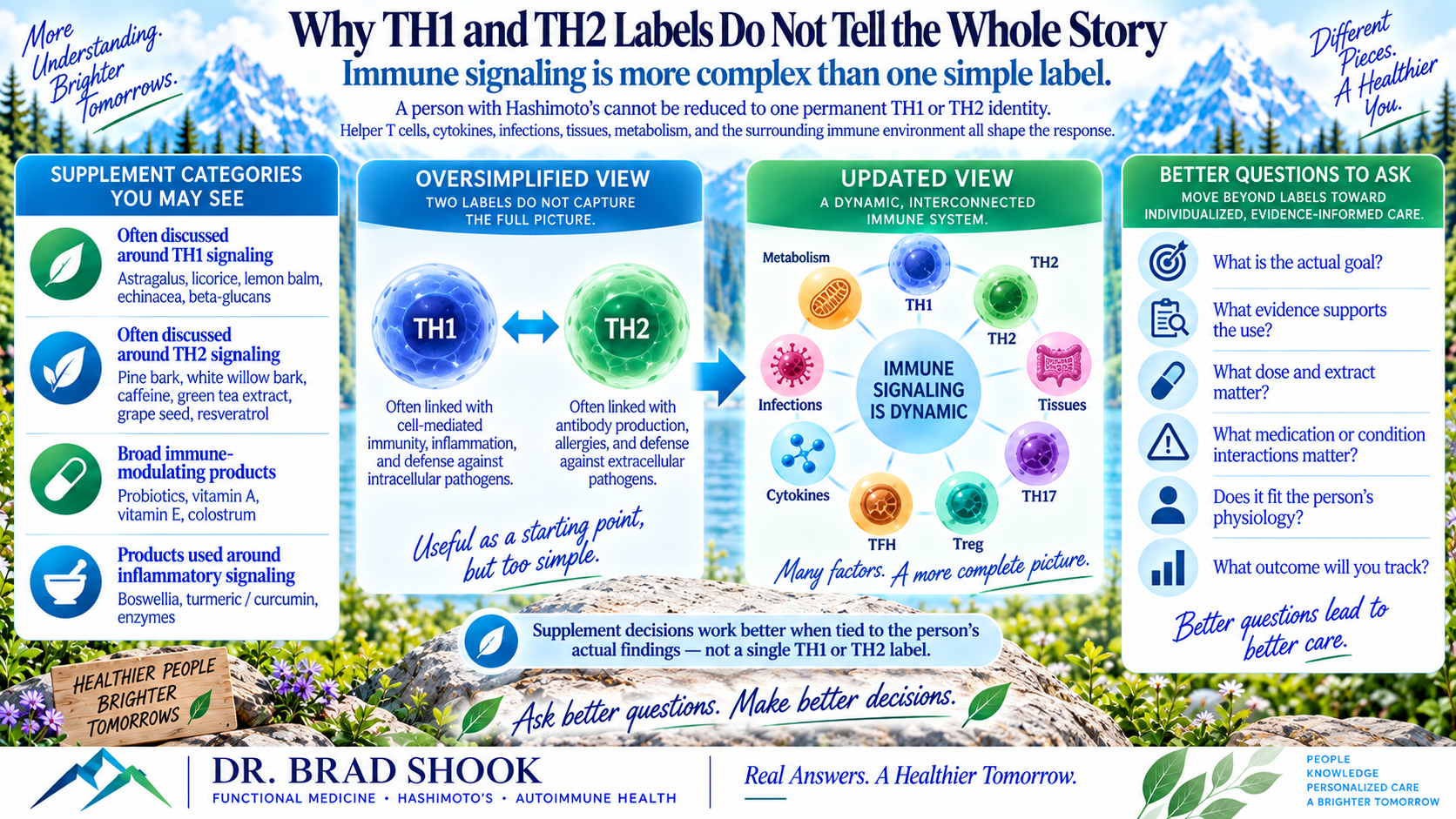
This creates a new opportunity: instead of avoiding or taking a supplement because it appears on a generic autoimmune list, we can ask what pathway or problem matters in your case and whether that intervention is likely to move it in the right direction.
Iodine, Selenium, Vitamin D, Iron and B12: Start With the Need
Nutrients are essential, but more is not automatically better. The goal is to identify a real need, use an appropriate amount, and reassess.
Iodine
Iodine is required to make thyroid hormone. Too little can be a problem, but excessive iodine can also worsen thyroid dysfunction in susceptible people, including people with autoimmune thyroid disease. High-dose iodine, kelp and concentrated seaweed products deserve particular caution.
Selenium
Selenium supports thyroid-hormone metabolism and antioxidant enzymes. Clinical trials suggest supplementation can lower thyroid antibody levels in some people, but the effect is not universal and antibody changes do not automatically mean symptoms will improve. Excess selenium can also be toxic.
Vitamin D
Vitamin D influences immune regulation, and studies suggest supplementation may reduce thyroid antibody levels in some people with Hashimoto's. The strongest reason to supplement is still a real clinical need, because excessive vitamin D can cause hypercalcemia and other complications.
Iron, B12 and folate
Iron and B12 deficiency can magnify fatigue, hair changes, weakness, shortness of breath, exercise intolerance and brain fog. The reason for the deficiency matters, including menstrual blood loss, diet, celiac disease, gastritis, medications and other absorption problems.
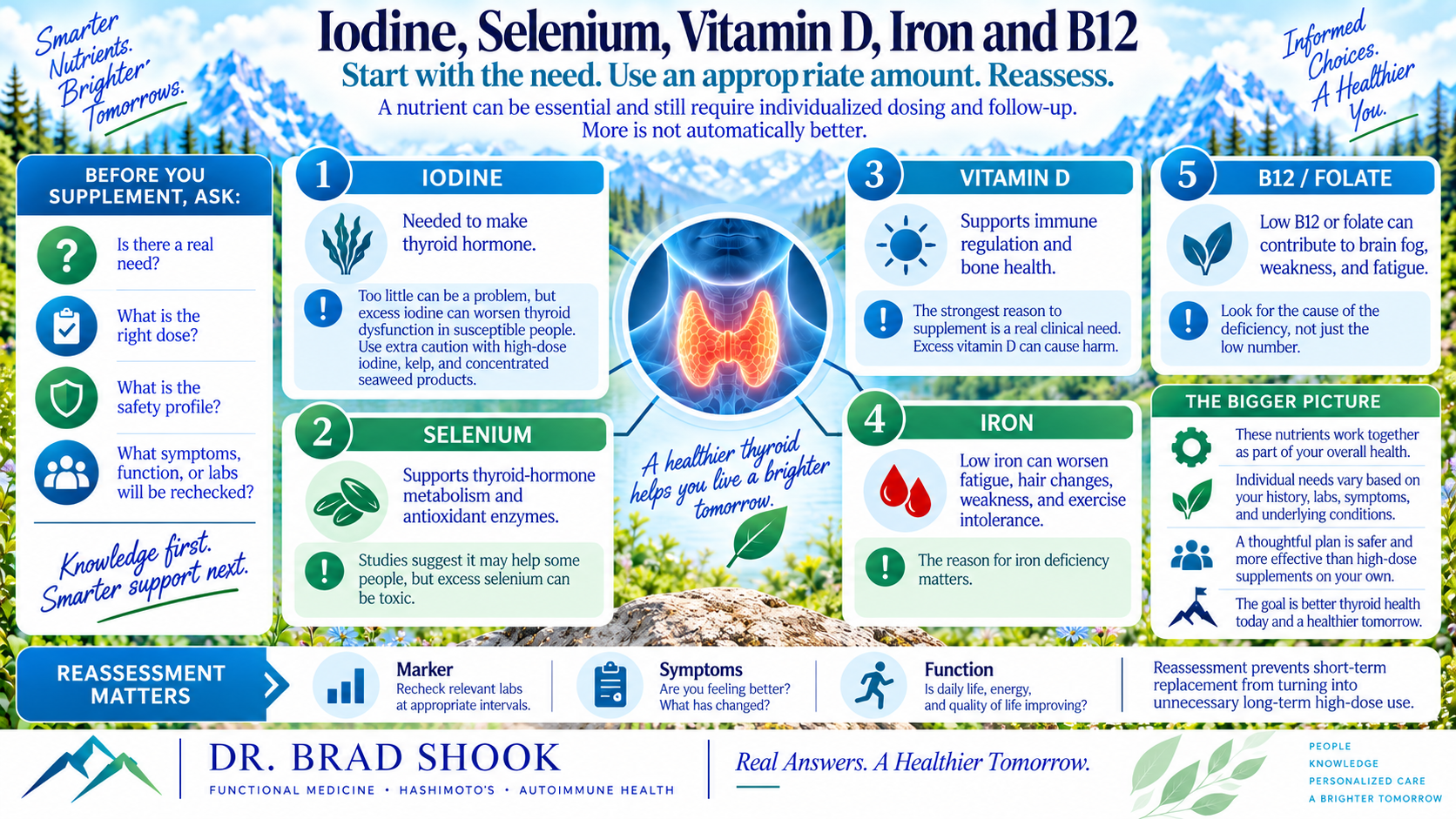
A simple rule: if a supplement is being used to correct a measurable deficiency, decide in advance when you will recheck the marker, symptoms, function, or all three. Reassessment prevents short-term replacement from quietly turning into unnecessary long-term high-dose use.
Supplements Can Change How Thyroid Medication Works
Sometimes a new supplement changes thyroid laboratory results not because Hashimoto's changed, but because the supplement changed how consistently thyroid hormone medication was absorbed.
Iron, calcium, soy, some antacids and other products can reduce absorption of thyroid hormone when taken too close to the medication. Food and coffee timing can matter too. The exact schedule should be reviewed with the physician who prescribes your thyroid medication or with your pharmacist.
This becomes especially important when TSH changes soon after someone adds a multivitamin, iron, calcium, fiber, an antacid, a new breakfast routine, or a large supplement stack. Before assuming the autoimmune process suddenly worsened, look at what changed around the medication.
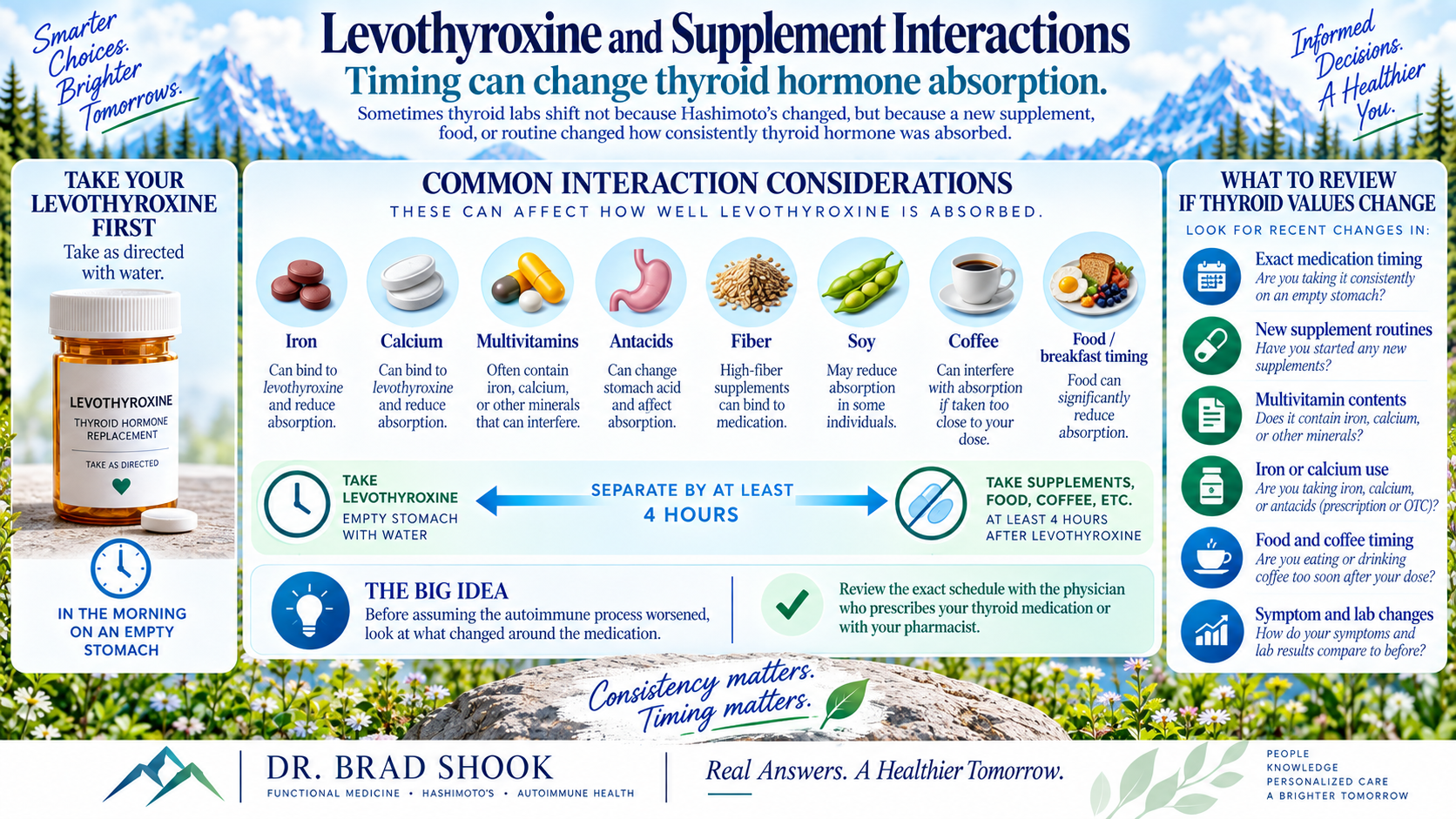
If thyroid values shift after a new supplement routine, bring the complete list and exact timing to the physician managing your thyroid medication. For more on treatment response, see how long it can take to feel better on thyroid medication.
Biotin Can Make Thyroid Blood Tests Look Wrong
Biotin is a good example of why the supplement list matters even when the supplement is not directly affecting thyroid physiology.
Biotin is commonly found in hair, skin and nail products and in some multivitamins. It can interfere with certain laboratory methods and make thyroid test results appear abnormal even when the actual thyroid hormone levels in the body have not changed.
The American Thyroid Association advises stopping biotin before thyroid blood testing. The interval can depend on the dose and laboratory method, so tell the physician and laboratory that you use biotin and follow their instructions rather than guessing.
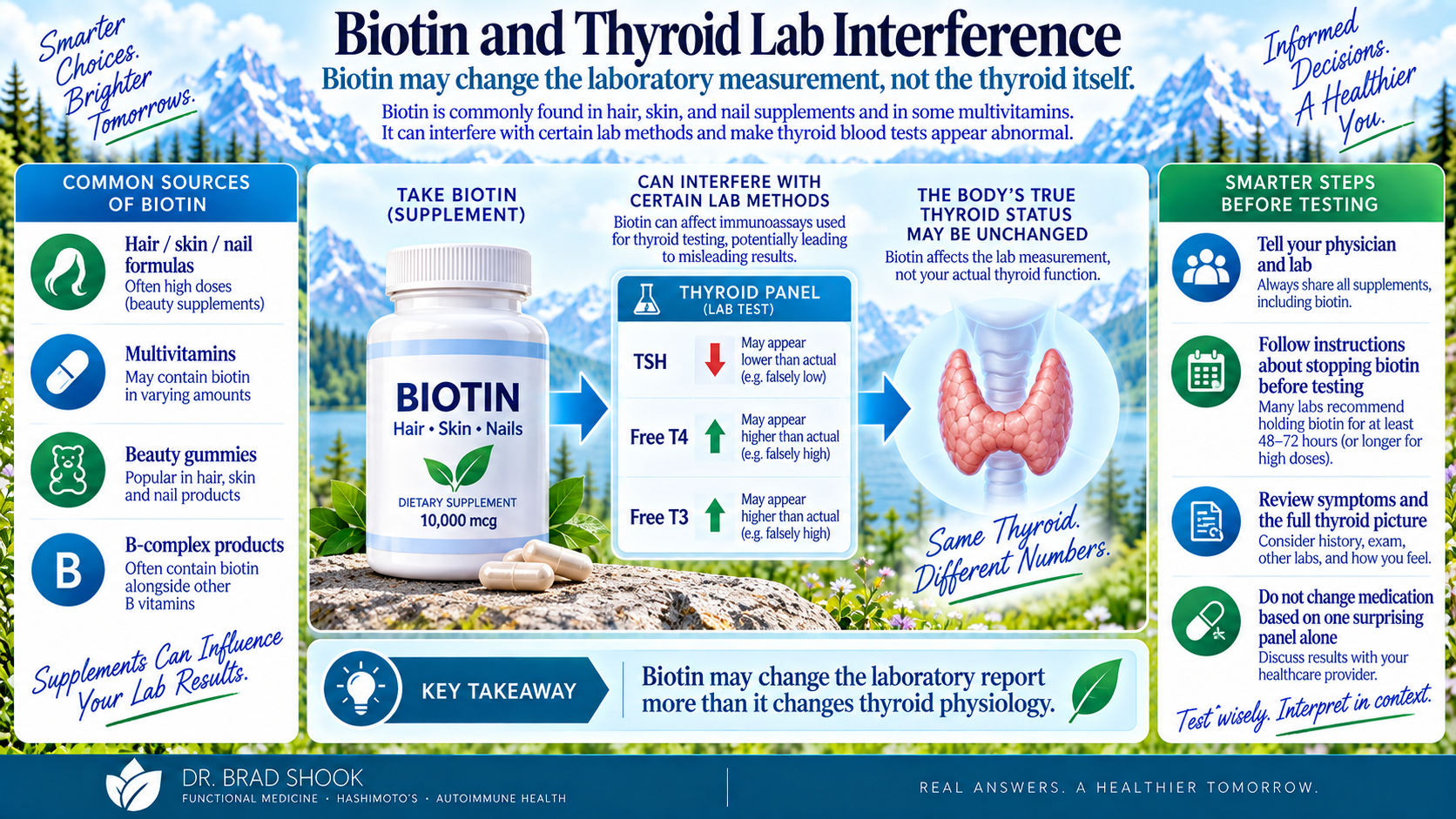
Do not change prescribed thyroid medication because of one surprising laboratory panel without reviewing supplements, timing, symptoms and the full thyroid picture with the prescribing physician.
Herbs, Antioxidants and Probiotics Need a Specific Job
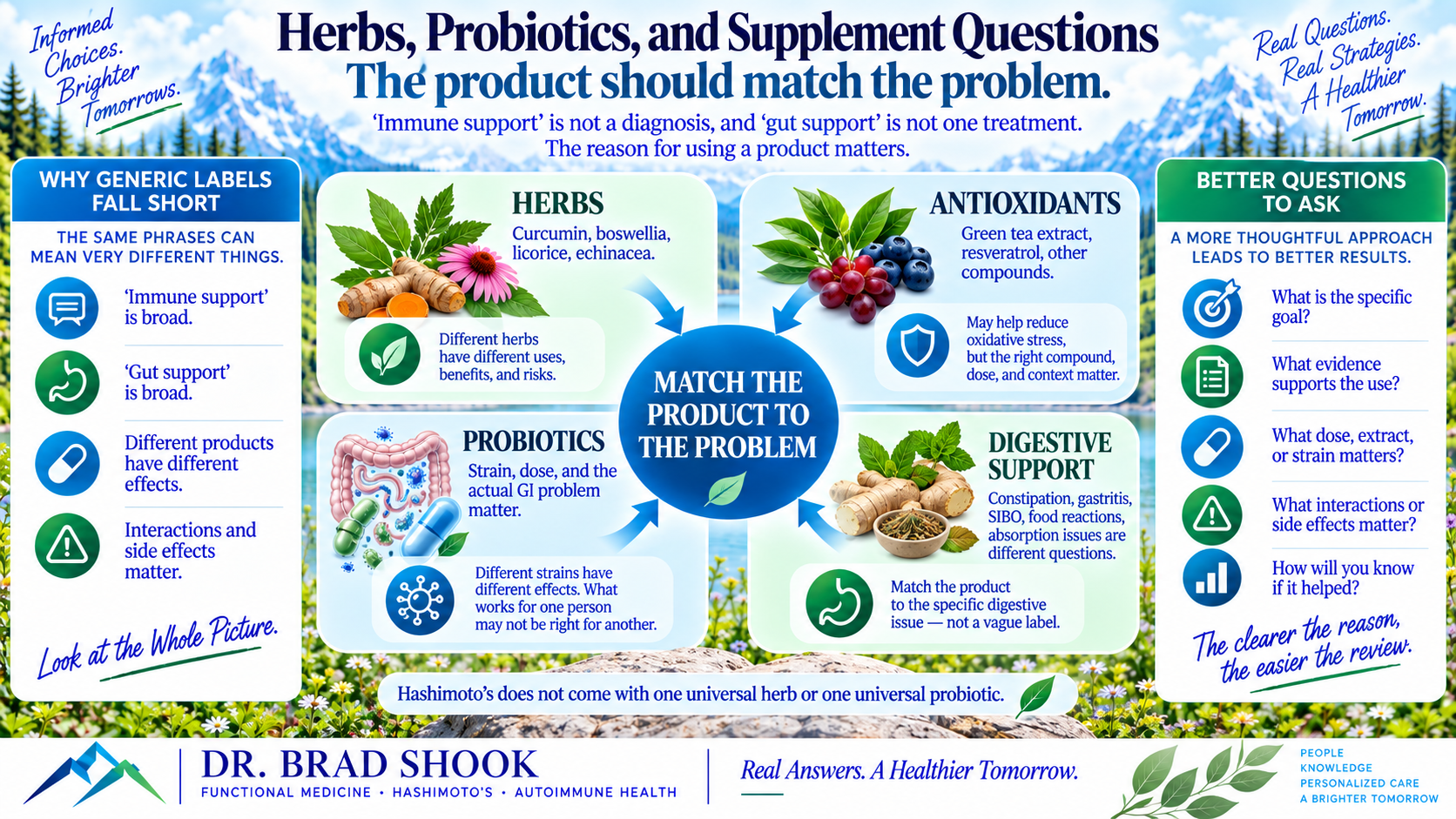
“Immune support” is not a diagnosis, and “gut support” is not one treatment.
Herbs such as curcumin, boswellia, licorice, echinacea, green tea extracts, resveratrol and others can have meaningful biological effects. Those effects can be useful in the right context, but they can also create medication interactions, blood-pressure changes, blood-sugar effects, bleeding concerns, liver concerns, allergy problems or other side effects depending on the product and the person.
Probiotics are similar. Hashimoto's can overlap with gastrointestinal conditions, but there is no single “Hashimoto's microbiome” and no one probiotic that corrects autoimmunity. Constipation, celiac disease, gastritis, SIBO, medication absorption, food reactions and intestinal-barrier problems are different questions.
I would rather know why someone is taking a probiotic or herb than simply know that it is marketed for immune or digestive support. When the reason is clear, the intervention becomes easier to evaluate.
For the broader gastrointestinal relationship, see intestinal barrier function and Hashimoto's. For food decisions, continue with the Hashimoto's diet guide.
The Bottle Matters Too: Ingredients, Dose, Quality and Duplication
People often evaluate supplements one bottle at a time, but the body experiences the total stack. A multivitamin, thyroid support formula, hair supplement, electrolyte powder and sleep product may all contain overlapping vitamins, minerals or herbs.
When I review a supplement plan, I want to know:
- Total daily dose: Is the same nutrient showing up in several products?
- Form and extract: Is the product actually similar to the form studied in research?
- Other ingredients: Does the blend contain iodine, iron, biotin, stimulants, allergens or herbs the person did not realize were included?
- Medication interactions: Could it interfere with thyroid hormone, anticoagulants, diabetes medications, blood-pressure medications or other prescriptions?
- Pregnancy, breastfeeding and surgery: Does the risk-benefit calculation change in that situation?
- Product quality: Is there credible independent testing for identity, contamination and label accuracy?
“Natural” does not automatically mean safe. Herbs and nutrients can be pharmacologically active, can interact with medications and can cause side effects. The fact that a product is sold over the counter should lower the barrier to access, not the standard for thinking.
A Better Way to Use Supplements: DETECT → SUPPORT → REASSESS
The goal is not to build the largest supplement stack. It is to build the clearest plan.
DETECT
Start with the history, symptoms, diet, thyroid medication, supplement list, thyroid labs, relevant nutrient markers, gastrointestinal history, sleep, metabolism, exposures and other findings. Identify the highest-priority problem before adding another product.
SUPPORT
Use the fewest interventions needed to address the highest-priority findings. If a supplement is chosen, define its purpose, dose, timing, interaction risks and what you expect it to change.
REASSESS
Ask what changed. Did the deficiency correct? Did symptoms improve? Did thyroid medication become more stable? Were there side effects? If nothing meaningful changed, that teaches us something and may point us toward a different part of the case.
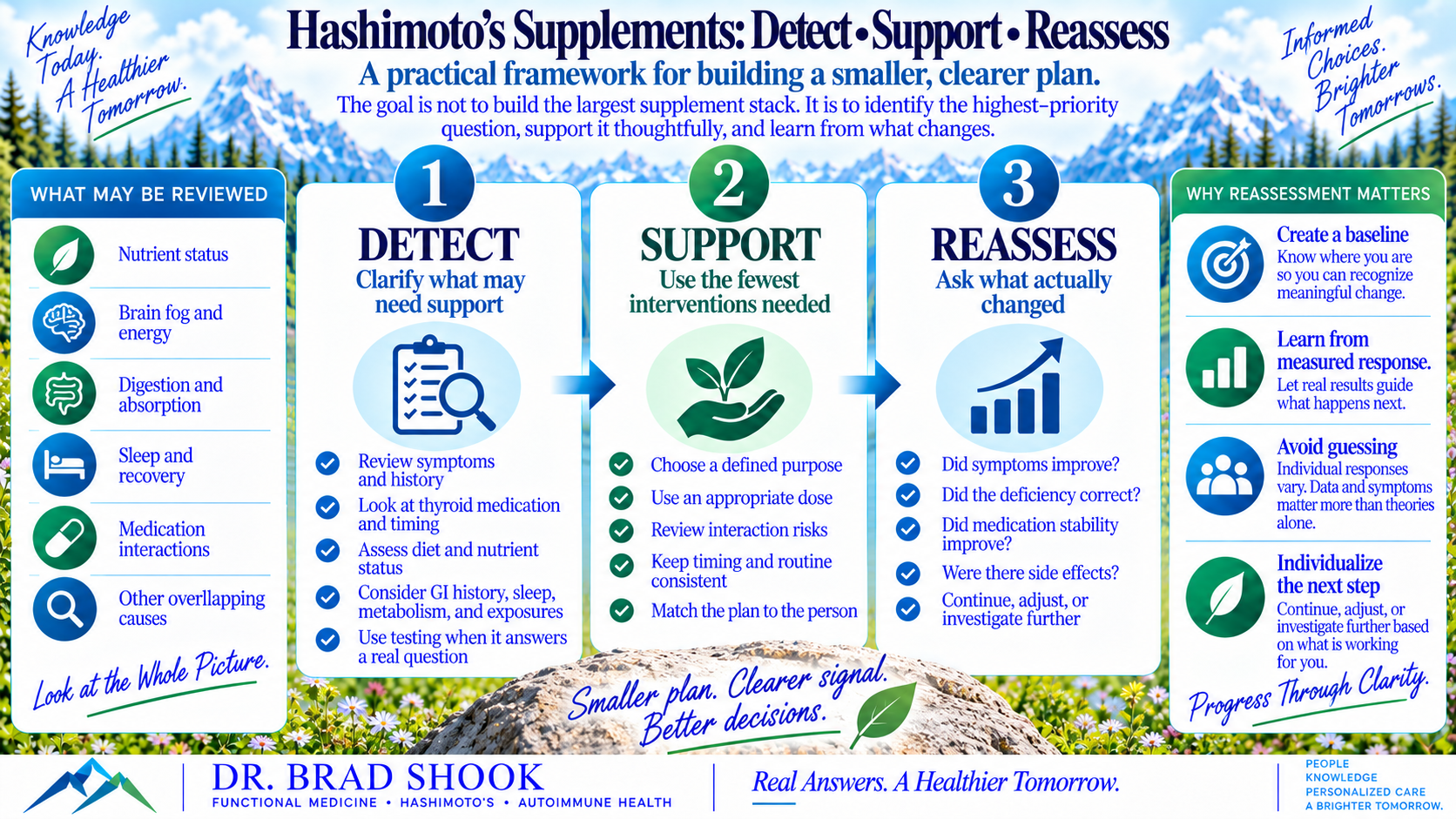
This is where functional medicine creates a new opportunity: instead of giving everyone with Hashimoto's the same products, we can investigate what appears most relevant in the individual case, support those priorities, and use the response to make the next decision more precise.
Listen: Navigating Supplements With Hashimoto's and Autoimmunity
In this episode of The Hashimoto's Doctor Podcast, I discuss why supplement decisions deserve more thought in people with autoimmune conditions and why individualized physiology matters more than a generic supplement list.
Frequently Asked Questions
What supplements should I take for Hashimoto's?
There is no universal Hashimoto's supplement stack. Start by identifying the specific problem you are trying to solve, confirm nutrient needs when possible, review medications and total doses, and reassess whether the intervention actually helped.
Is selenium good for Hashimoto's?
Selenium is essential for thyroid and antioxidant enzymes, and clinical trials suggest supplementation can lower thyroid antibody levels in some people. That does not mean everyone with Hashimoto's needs selenium, and excessive intake can cause toxicity.
Should I take iodine if I have Hashimoto's?
Iodine is essential for thyroid hormone production, but more is not necessarily better. High-dose iodine, kelp and concentrated seaweed products can worsen thyroid dysfunction in susceptible people, including some people with autoimmune thyroid disease.
Can vitamin D help Hashimoto's?
Vitamin D is important for immune and bone health, and studies suggest supplementation may reduce thyroid antibody levels in some people with Hashimoto's. The strongest reason to supplement is a real clinical need because excessive vitamin D can cause harm.
Can supplements interfere with levothyroxine?
Yes. Iron, calcium, soy, some antacids and other products can reduce thyroid-hormone absorption when taken too close to the medication. Review timing with the physician who prescribes your thyroid medication or with your pharmacist.
Can biotin affect thyroid blood tests?
Yes. Biotin can make some thyroid test results appear abnormal even when thyroid hormone levels in the body have not changed. Tell the physician and laboratory about biotin use and follow their instructions about stopping it before testing.
Should I avoid immune-stimulating herbs if I have Hashimoto's?
Not every herb can be labeled simply as safe or unsafe for all autoimmune disease. TH1 and TH2 labels do not capture the full complexity of immune signaling. Herbs should be evaluated individually for the reason they are being used, evidence, dose, extract, interactions and the person's medical context.
Are probiotics always helpful for Hashimoto's?
No. Probiotics may be useful for selected gastrointestinal problems, but Hashimoto's does not have one universal microbiome problem that one probiotic can correct. The product, strain, dose, symptoms, diet, medications and underlying gastrointestinal condition all matter.
If Your Supplement Routine Keeps Growing but You Still Do Not Feel Well
That may be a sign that the next step is not another product. It may be time to understand which parts of the case are actually driving the symptoms.
My process reviews your history, thyroid treatment, labs, diet, medications, supplements, digestion, metabolism, sleep, stress, exposures and other relevant information so we can identify the highest-priority questions and build a more focused plan.
References and Professional Education
- NIH Office of Dietary Supplements. Iodine: Health Professional Fact Sheet.
- NIH Office of Dietary Supplements. Selenium: Health Professional Fact Sheet.
- NIH Office of Dietary Supplements. Vitamin D: Health Professional Fact Sheet.
- Huwiler VV, et al. Selenium Supplementation in Patients with Hashimoto Thyroiditis: A Systematic Review and Meta-Analysis of Randomized Clinical Trials. Thyroid. 2024;34(3):295-313.
- Tang J, et al. Effects of vitamin D supplementation on autoantibodies and thyroid function in patients with Hashimoto's thyroiditis: a systematic review and meta-analysis.
- American Thyroid Association. Thyroid Hormone Treatment.
- American Thyroid Association. Thyroid Function Tests.
- Rogozynski NP, Dixon B. The Th1/Th2 paradigm: A misrepresentation of helper T cell plasticity. Immunology Letters. 2024;268:106870.
- Nakayamada S, et al. Helper T cell diversity and plasticity.
- National Center for Complementary and Integrative Health. Dietary and Herbal Supplements.
- National Center for Complementary and Integrative Health. Safe Use of Complementary Health Products and Practices.
Professional Education Behind This Approach
- Kharrazian Institute, Hashimoto's Clinical Strategies and Treatment Applications, including nutrient status, iodine, thyroid-hormone stability, immune patterns, physiological-web assessment and reassessment.
- Kharrazian Institute, Autoimmunity, including immune tolerance, inflammatory signaling, barrier systems, foods, environmental exposures, stress and individualized immune-pattern interpretation.
- Kharrazian Institute, Gastrointestinal, including digestion, absorption, microbiome patterns, intestinal barriers and gastrointestinal contributors to nutrient status and medication consistency.
- Cyrex Laboratories clinical-application and mechanistic resources concerning immune reactivity, barrier-associated antibodies, tissue antibodies, chemical-protein reactivity and the limitations of treating one laboratory result as proof of causation.
Prefer DrBradShook.com in Google
If Google Preferred Sources is available for your account, you can choose DrBradShook.com as a preferred source for future Hashimoto's and autoimmune health resources.
Educational information only. Supplements can cause side effects, interact with medications, alter laboratory testing, and be inappropriate during pregnancy, breastfeeding, surgery or certain health conditions. Thyroid-medication changes should be discussed with the physician who prescribes your medication. See the full medical disclaimer.