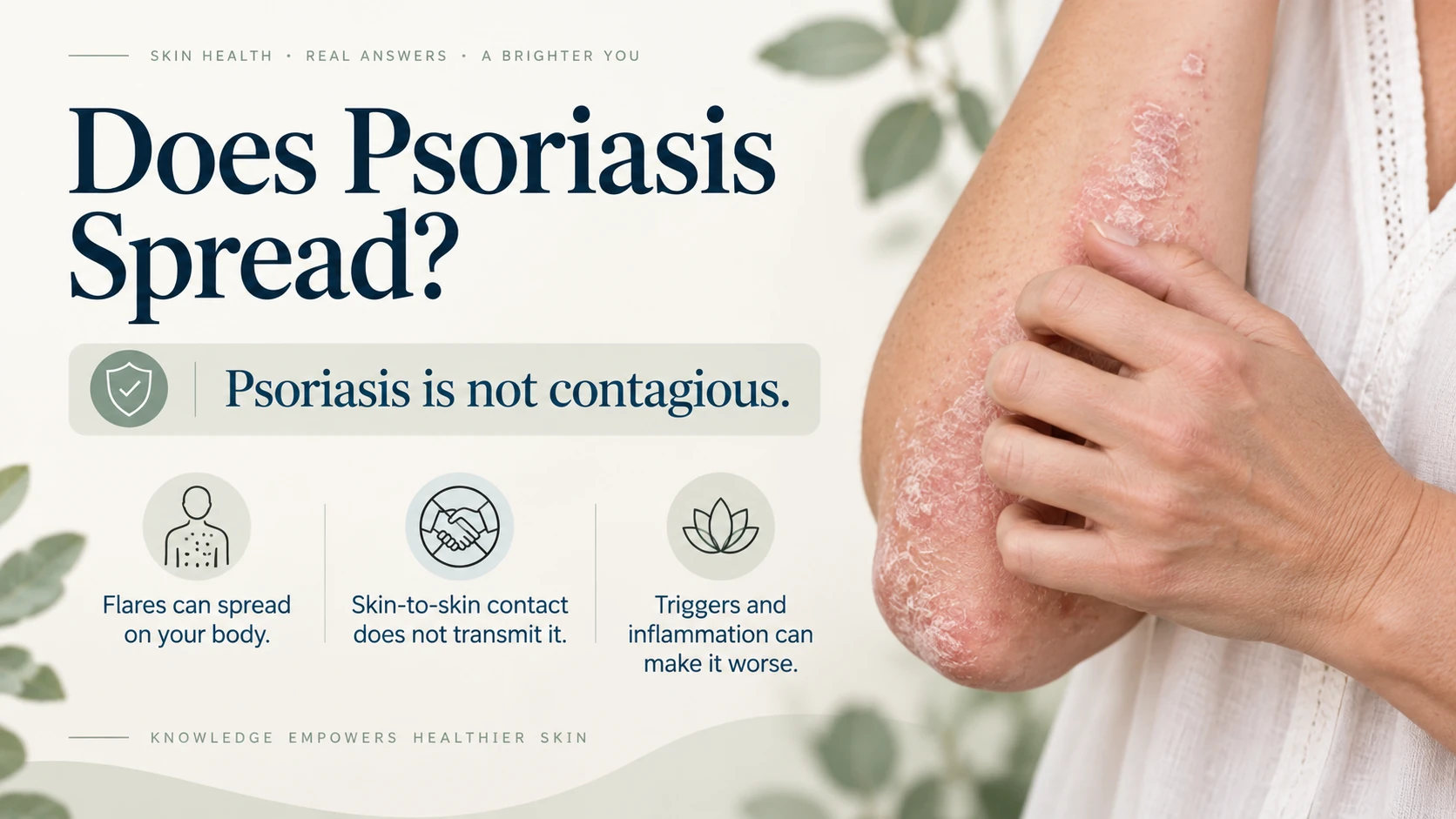
Is Psoriasis Contagious?
Psoriasis is a chronic autoimmune inflammatory disease in which immune-system activity accelerates skin-cell turnover. Those cells accumulate at the skin surface and can form plaques, scale, redness or discoloration, itching, burning, and other symptoms.
That distinction matters because people often use the word spread in two very different ways. Psoriasis does not spread between people. But it can become more active within the same person, and new lesions can appear on skin that was previously clear.
If you are trying to understand why your psoriasis seems to be changing, the more useful question is usually: what may be increasing disease activity or triggering lesions in new areas?
Can Psoriasis Spread to Other Parts of Your Body?
Yes, in the everyday sense that psoriasis can appear in new locations. But the plaques are not infectious and are not physically spreading from one patch of skin to the next.
Psoriasis can affect the scalp, elbows, knees, lower back, hands, feet, nails, face, skin folds, genitals, and other areas. Some people have only a few plaques. Others develop lesions in several locations at once, and the amount of skin involved can change over time as the disease flares and settles.
A useful way to think about it: the visible plaque is the result of the underlying autoimmune and inflammatory process. When that process becomes more active, the body may produce psoriasis lesions in additional places.
Skin injury and the Koebner phenomenon
One reason psoriasis can appear in a new place is the Koebner phenomenon. In some people with psoriasis, a cut, scrape, burn, severe sunburn, repeated friction, tattoo, bug bite, or other skin injury can trigger a psoriasis lesion where the injury occurred.
That means scratching does not make psoriasis contagious, but repeated trauma to the skin can matter. Protecting injured skin and avoiding unnecessary irritation can be an important part of reducing flares.
Why Is My Psoriasis Suddenly Spreading?
Psoriasis often behaves in cycles. It may be quiet for a period of time and then become more active. When new plaques begin appearing, it is worth looking for changes that may have occurred before the flare.
Triggers are individual. One person may flare after an infection, another during a stressful period, and another after skin injury or a medication change. This is one reason a good psoriasis history matters.
For a deeper discussion of psoriasis triggers and the autoimmune process, see Psoriasis Causes and Treatment: The Functional Medicine Approach and The Genetics of Psoriasis and Psoriatic Arthritis.
Can Psoriasis Spread All Over the Body?
Psoriasis can become widespread, but it is important not to confuse ordinary plaque psoriasis becoming more extensive with two distinct and potentially serious forms of psoriasis: generalized pustular psoriasis and erythrodermic psoriasis.
| Pattern | What it can look like | Why it matters |
|---|---|---|
| More extensive plaque psoriasis | More plaques or larger areas of scale and inflammation appear over time. | This can indicate increased disease activity and may require a treatment reassessment. |
| Generalized pustular psoriasis | Widespread sterile pustules with red or inflamed skin, sometimes with systemic symptoms. | This is a distinct severe form of pustular psoriasis and may require urgent treatment. |
| Erythrodermic psoriasis | Widespread redness or discoloration, peeling, severe itching or burning, and large areas of inflamed skin. | This can disrupt temperature regulation and fluid balance and may require emergency medical care. |
Seek urgent medical care for rapidly spreading widespread redness, peeling skin, widespread pustules, fever, chills, swelling, dehydration, severe weakness, or feeling very ill. These symptoms can signal a serious psoriasis complication rather than an ordinary flare.
For more on severe disease, see Severe Psoriasis Treatment: The Functional Medicine Approach.
Types of Psoriasis and Where They Can Appear
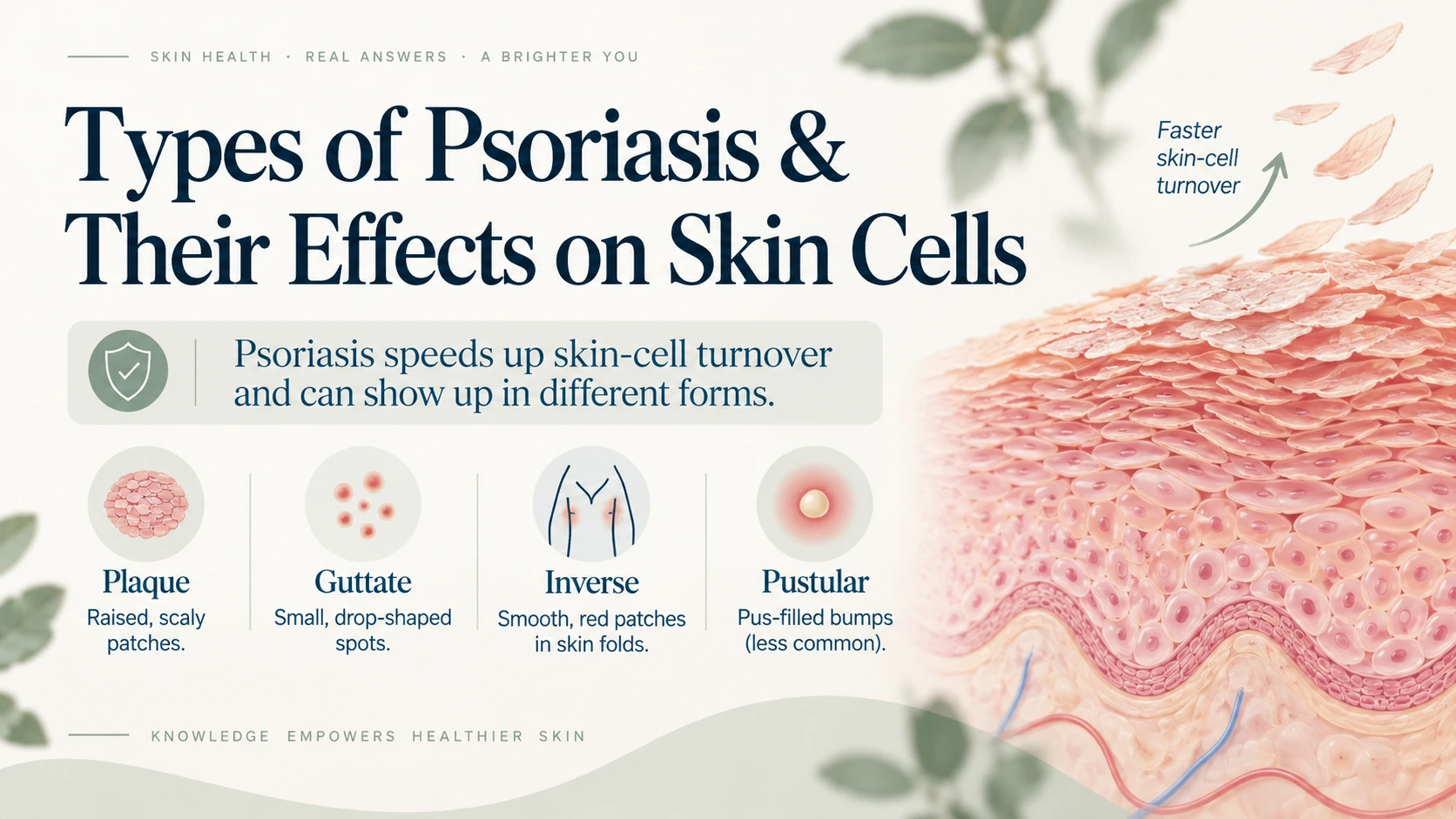
Plaque psoriasis
Plaque psoriasis is the most common form. It typically produces well-defined raised plaques with scale and often affects the scalp, elbows, knees, lower back, and other areas. Learn more about plaque psoriasis, medications, and functional medicine.
Guttate psoriasis
Guttate psoriasis usually produces many small, drop-like lesions and often follows an infection, particularly strep throat. It can appear suddenly across the trunk, arms, or legs. Infections do not make psoriasis contagious, but they can act as an immune trigger.
Inverse psoriasis
Inverse psoriasis affects skin folds such as the armpits, groin, under the breasts, and other areas where skin touches skin. The lesions are often smoother and have less scale than plaque psoriasis. Friction, heat, moisture, and sweating can make these areas more uncomfortable.
Pustular psoriasis
Pustular psoriasis produces sterile, pus-filled bumps. It may be limited to the palms and soles or occur in a generalized form. Widespread pustular psoriasis can be serious and requires prompt medical evaluation.
Erythrodermic psoriasis
Erythrodermic psoriasis is rare but potentially life-threatening. It can involve most of the skin surface and may cause intense redness or discoloration, peeling, itching, burning, fever, chills, or swelling.
Psoriatic arthritis
Psoriatic arthritis is not another skin type of psoriasis. It is a related inflammatory arthritis that can cause joint pain, stiffness, swelling, tendon or ligament pain, and other symptoms. People with psoriasis who develop persistent joint symptoms should discuss them with an appropriate medical professional.
How Do You Stop Psoriasis From Spreading or Getting Worse?
There is no guaranteed way to permanently prevent psoriasis from ever recurring, but there are meaningful ways to reduce disease activity, protect the skin, identify triggers, and improve control.
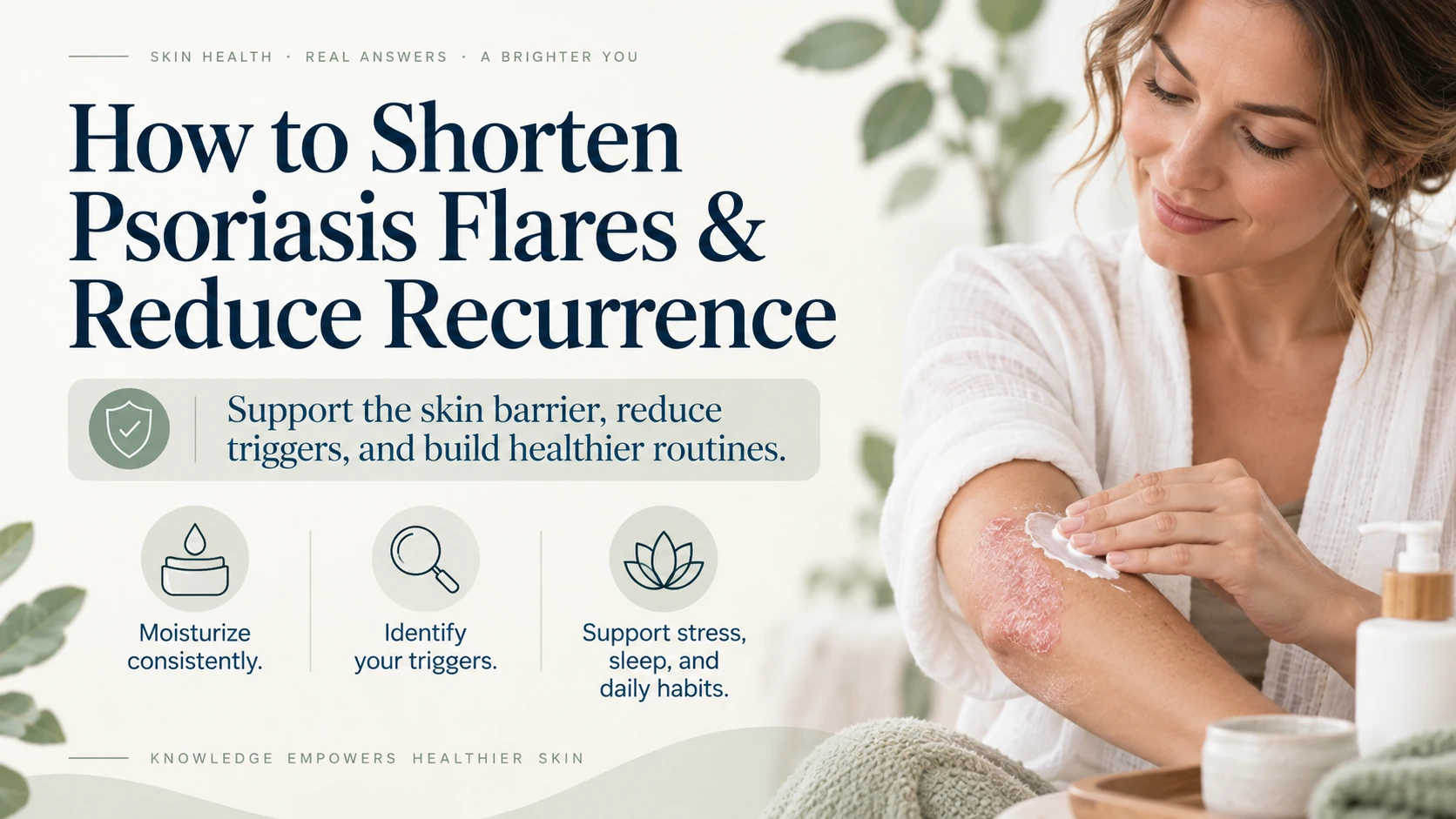
Use appropriate moisturizers, avoid unnecessary friction and scratching, treat cuts and skin injuries carefully, and protect yourself from severe sunburn.
Track infections, stress, weather, skin injury, medication changes, sleep disruption, smoking, alcohol, dietary changes or specific foods that appear to precede symptoms, and other patterns that may be relevant to your flares.
Functional medicine creates an opportunity to look beyond the visible plaques and ask what may be contributing to immune and inflammatory activity in your individual case. Depending on the person, that may include nutrition, gut health, nutrient status, metabolic health, sleep, stress, infections, exposures, medications, body composition, and other physiological patterns. The goal is to identify the highest-priority triggers and drivers, support them, and reassess how your psoriasis responds.
Topical therapies, phototherapy, oral small-molecule medications, and injectable or infused biologic therapies can all have a role depending on psoriasis type, severity, location, and medical history.
Some medication changes can worsen psoriasis. If you think a prescription is triggering a flare, talk with the prescriber before stopping it.
Some over-the-counter products can reduce dryness, scale, or itching, but they do not guarantee that psoriasis will stop appearing in new places. If disease activity is increasing, treatment should be individualized rather than relying on a single product or universal protocol.
Medical Psoriasis Treatment Options
Medical psoriasis treatment is based on the type of psoriasis, how much skin is involved, which body areas are affected, symptom severity, other health conditions, and how the person has responded to treatment in the past.
Topical treatments
Topical therapies are applied directly to affected skin. Depending on the situation, they may include corticosteroids, vitamin D analogues, retinoids, calcineurin inhibitors for selected areas, coal tar, salicylic acid, moisturizers, and other prescription or nonprescription products. These treatments can reduce inflammation, scale, dryness, and itching.
For more detail, see Medications to Treat Psoriasis and Functional Medicine.
Phototherapy
Medical ultraviolet light therapy can reduce psoriasis activity for some people. This is different from simply getting more sun. Phototherapy is delivered in controlled doses and should be used under appropriate medical guidance.
Oral and systemic medications
Prescription systemic treatment may include medicines taken by mouth, such as methotrexate, cyclosporine, acitretin, apremilast, or other newer small-molecule therapies, depending on the person's clinical situation.
Biologic medications
Biologic therapies target specific immune pathways involved in psoriasis. They are generally given by injection or infusion rather than taken as oral medications. These medicines can be highly effective for appropriate people but require individualized medical screening and monitoring.
For a broader treatment overview, see Topical and Systemic Medications for Psoriasis: How Functional Medicine Can Help.
A Functional Medicine Question: What May Be Driving Your Flares?
A diagnosis tells us that psoriasis has been identified. It does not automatically tell us why your psoriasis is becoming more active, why lesions are appearing in new areas, or which triggers and drivers may be most important in your individual case.
This is where functional medicine creates another opportunity. I use the Environmentally Induced Autoimmunity model to organize the question: what may be triggering and driving the autoimmune process in this person, and which factors can we change?
Depending on the individual, that investigation may include infection history, gastrointestinal health, nutrition, nutrient status, metabolic health, sleep, stress, environmental exposures, medications, smoking, alcohol, skin injury, weight changes, and other relevant physiological patterns.
The goal is to identify the factors that appear to be triggering and driving your unique immune response, support the highest-priority findings, and then reassess what changes. That response gives us useful information about what may matter most and where to focus next.
Detect
Identify the triggers, drivers, exposures, physiological patterns, and medical factors that deserve the most attention.
Support
Build a focused plan around the findings that appear most relevant to the individual.
Reassess
Measure what changed, what did not, and what the response teaches us about the next step.
Coordinate care
Functional medicine complements appropriate dermatology, rheumatology, primary care, and other medical treatment.
You can explore the broader psoriasis approach in the Natural Psoriasis Treatment Resource Center or read Psoriasis and Your Health.
Lifestyle Choices That Can Influence Psoriasis Flares

Lifestyle changes are an essential part of psoriasis care. Just as with medications, no diet, supplement, or exercise plan can guarantee that psoriasis will stop recurring, but lifestyle and diet can be critical to achieving the best possible outcomes.
Stress
Stress is a common psoriasis trigger. Stress-management strategies such as walking, exercise, meditation, breathing practices, therapy, time outdoors, social support, or other personally useful routines may help reduce the burden of stress.
Sleep
Consistent, restorative sleep supports overall health and can make it easier to manage stress, pain, appetite, and daily routines. If poor sleep is persistent, it deserves attention rather than simply being accepted as part of living with psoriasis.
Nutrition and metabolic health
There is no single psoriasis diet that works for everyone. Nutrition should be considered in the context of the person's overall diet quality, weight and metabolic health, food tolerances, gastrointestinal symptoms, nutrient status, and medical history. For some people, dietary change becomes an important part of a broader plan.
Smoking and alcohol
Smoking is associated with psoriasis risk and severity, and heavy alcohol use can act as a trigger for some people. Reducing or eliminating these exposures can support both psoriasis management and broader health.
Physical activity
Regular physical activity can support cardiovascular health, metabolic health, mood, stress resilience, and body composition. Because psoriasis is associated with a higher burden of several cardiometabolic conditions, these benefits matter beyond the skin alone.
For additional lifestyle discussion, see Can Turmeric Help With Managing Psoriasis? and Psoriasis Diet and Nutrition Guide.
When Should You See a Doctor About Psoriasis That Is Spreading?
Consider medical evaluation if psoriasis is becoming more widespread, painful, difficult to control, affecting high-impact areas such as the face, hands, feet, genitals, or scalp, interfering with sleep or daily function, or not improving with your current treatment.
Also discuss new joint pain, stiffness, swelling, tendon pain, or reduced range of motion because psoriasis can be associated with psoriatic arthritis.
Urgent evaluation is appropriate when psoriasis is accompanied by rapidly spreading redness or peeling, widespread pustules, fever, chills, swelling, dehydration, severe weakness, or feeling systemically ill.
If you are unsure whether a skin condition is psoriasis, rosacea, eczema, seborrheic dermatitis, a fungal infection, or something else, start with an accurate diagnosis. You may also find Psoriasis vs. Rosacea: Differences, Treatment, and Other Conditions helpful.
Frequently Asked Questions About the Spread of Psoriasis
Is psoriasis contagious?
No. Psoriasis is not contagious. You cannot catch it by touching someone, sharing a pool, having sex, or being near someone who has psoriasis.
Can psoriasis spread from one part of my body to another?
Psoriasis does not spread across the skin like an infection, but new lesions can appear in additional areas as the disease becomes more active. Skin injury can also trigger psoriasis at the site of the injury in some people.
Why is my psoriasis suddenly spreading?
A sudden increase in psoriasis can be associated with triggers such as infection, skin injury, severe sunburn, stress, cold or dry weather, smoking, heavy alcohol use, or certain medications. Triggers vary from person to person.
Does scratching psoriasis make it spread?
Scratching does not make psoriasis contagious or mechanically spread it, but repeated skin injury can trigger new psoriasis lesions in some people through the Koebner phenomenon.
Can psoriasis spread all over the body?
Psoriasis can become widespread, but generalized pustular psoriasis and erythrodermic psoriasis are distinct severe forms rather than ordinary plaques simply spreading everywhere. Rapid widespread redness, peeling, pustules, fever, chills, or feeling very ill should be evaluated urgently.
Can an infection cause psoriasis to flare?
Yes. Infections can trigger or worsen psoriasis in some people. Streptococcal infection is especially associated with guttate psoriasis.
How can I stop psoriasis from getting worse?
There is no guaranteed way to permanently stop psoriasis from recurring, but effective treatment, protecting injured skin, identifying personal triggers, moisturizing, managing stress and sleep, avoiding smoking and heavy alcohol use, and working with an appropriate medical professional can help reduce disease activity and flares.
Is rapidly spreading psoriasis dangerous?
It can be. Widespread redness, skin peeling, widespread pustules, fever, chills, swelling, dehydration, or feeling very ill may signal erythrodermic psoriasis or generalized pustular psoriasis and can require urgent medical care.
Medical References and Further Reading
Want to Understand What May Be Driving Your Psoriasis?
If your psoriasis is becoming more active, appearing in new areas, or continuing to flare despite what you have tried, the next opportunity is to look at the pattern more closely. I review each Application for Care before offering a private scheduling step.