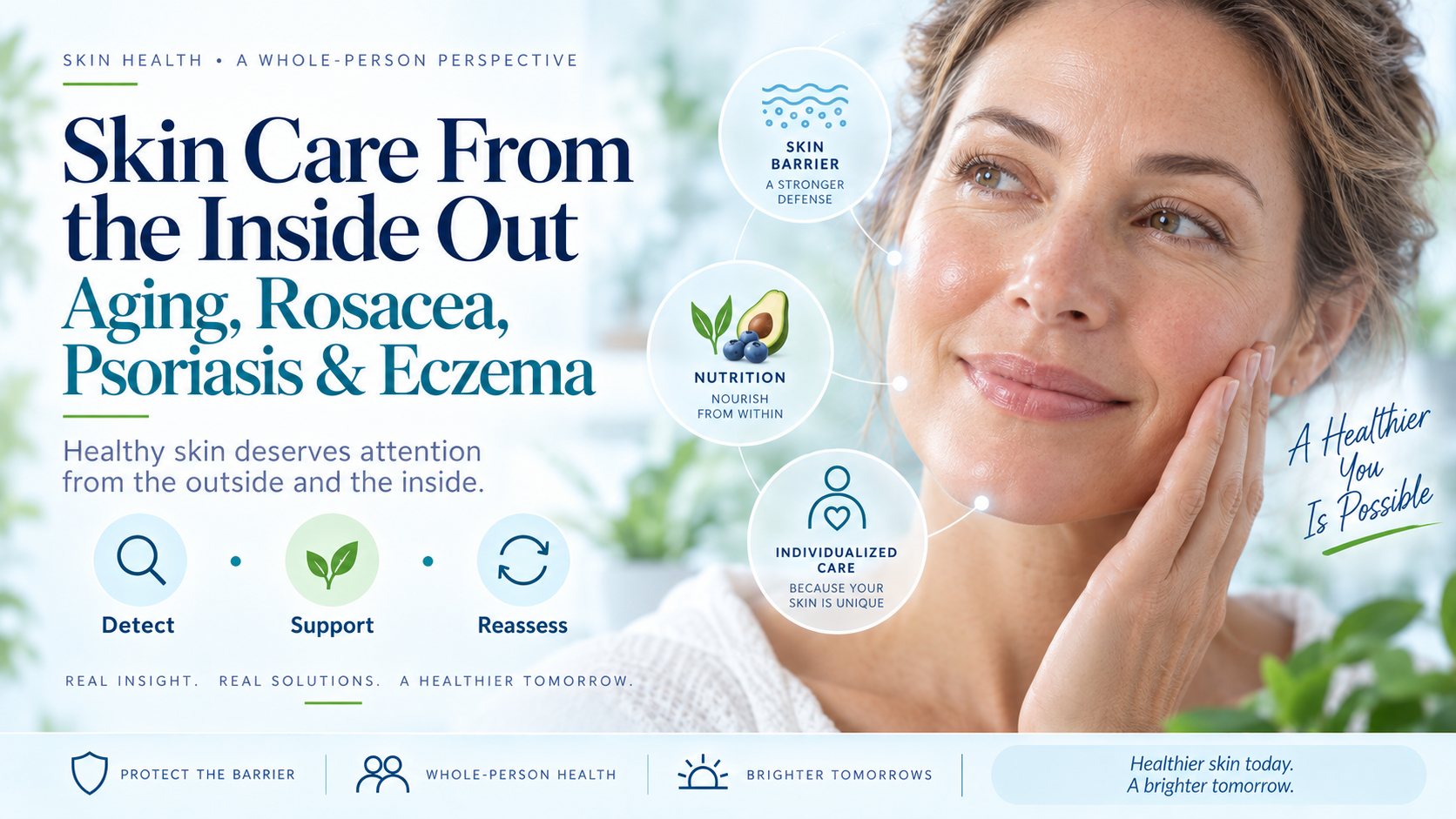
Your skin is more than a cosmetic surface
When you notice persistent redness, itchy patches, scaling, acne or skin that suddenly looks different, it is natural to reach for a new cleanser or cream. Those products can matter. So can a dermatologist's diagnosis and treatment. But I also want you to know that your skin is an active part of your body's defense system, not a separate layer that operates on its own.
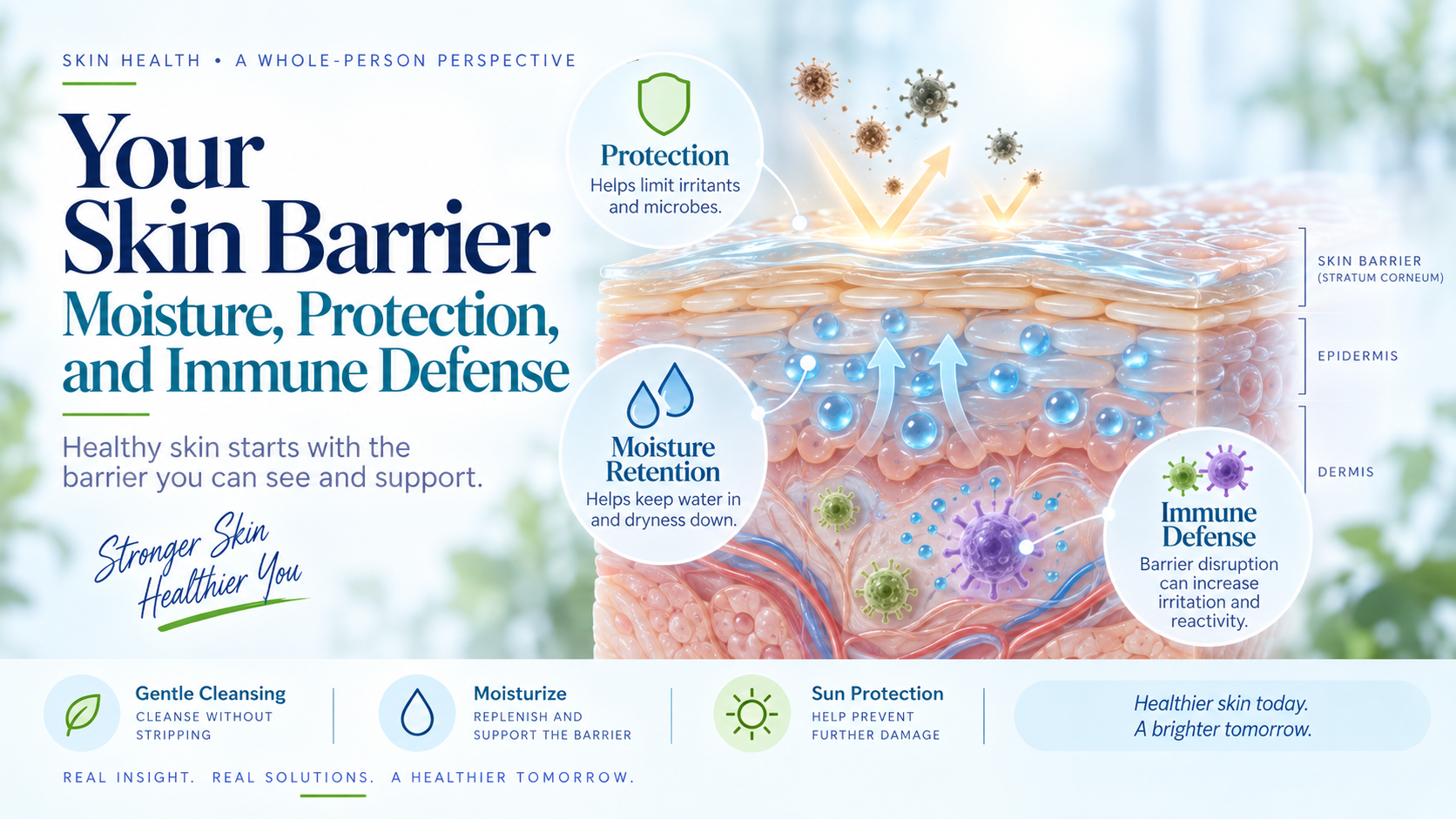
The outer skin barrier helps hold water in and limit the entry of irritants and microorganisms. Immune cells help the skin respond to threats. Blood vessels, nerves and oil glands influence temperature, sensation, flushing and comfort. Your skin also changes with age, sunlight, medications, hormones and everyday exposures.
That is the opportunity I want to explore with you. Rather than assuming everyone with a similar-looking rash needs the same diet, test or supplement, we can start with your specific history and ask which patterns actually deserve attention.
First, give the outside of your skin the care it needs
Inside-out skin care does not mean abandoning creams, prescriptions, sunscreen or procedures. A gentle cleanser, a suitable moisturizer and consistent sun protection support the barrier you already have. For rosacea and eczema, reducing irritation may help limit discomfort and flares. For psoriasis, medical treatment may be important for skin inflammation and, when relevant, joint protection. My functional-medicine psoriasis article explains how I consider individual contributing factors alongside treatment.
Sunlight is a major contributor to premature skin aging and can trigger rosacea. Broad-spectrum, water-resistant sunscreen with SPF 30 or higher, shade and protective clothing are useful basics. Choose products that suit your skin, particularly if fragrances or active ingredients cause stinging. Follow your dermatologist's treatment plan rather than stopping a medication to try an inside-out approach.
A useful starting question: Is the skin itself being irritated by heat, sun, harsh products, soaps, friction or something at work or home? Sometimes changing an external exposure is more relevant than ordering another internal test.
Skin that seems to age too quickly: what should you look at?
Aging is normal. Collagen, elasticity, oil production and skin-cell turnover change over time. Years of ultraviolet exposure can speed visible signs such as spots, wrinkles and uneven texture. Smoking, insufficient sleep and some environmental exposures may add to the picture.
I would be cautious about blaming early wrinkles on a hormone deficiency or an unhealthy gut. That conclusion does not follow from appearance alone. If your skin changes rapidly, the useful next step is to consider sun exposure, your skin-care routine, medications, weight change, nutrition and any other new symptoms. A clinician can assess suspicious spots, wounds that do not heal or sudden unexplained skin changes.
Balanced meals that provide enough protein, essential fats, vitamins and minerals help the body maintain and repair tissue. Hydration supports normal function, but drinking extra water does not erase wrinkles or replace moisturizer and sunscreen. A thoughtful plan makes room for both everyday fundamentals and an appropriate skin examination.
Rosacea, psoriasis, eczema and acne: similar skin concerns, different biology
These conditions can all change how your skin looks and feels, but they are not interchangeable. Psoriasis involves autoimmune and inflammatory pathways. Rosacea is a chronic inflammatory condition with vascular, nerve and immune features; it is not generally classified as a classic autoimmune disease. Eczema describes several forms of dermatitis, including atopic dermatitis, with barrier and immune involvement. Acne involves oil glands, follicles and inflammation, sometimes with hormonal influences.
Rosacea
Flushing, facial sensitivity, persistent redness or acne-like bumps may fluctuate with sun, heat, certain products and other individual triggers.
A diagnosis helps distinguish rosacea from look-alike conditions.Psoriasis
Inflammatory immune signaling affects skin-cell turnover. Flare patterns may relate to infections, stress, medicines, skin injury and other factors.
Explore my psoriasis guideEczema
Itching, dryness and a disrupted barrier often make the skin more sensitive to irritants. Atopic dermatitis is one common form.
Eczema and psoriasis need different diagnoses and care plans.Adult acne
Breakouts may involve oil production, blocked follicles, inflammation and, in some people, hormonal or dietary patterns.
The right evaluation depends on your symptoms.If you are not sure what you have, get an accurate diagnosis first. A persistent facial rash might be rosacea, acne, contact dermatitis or something else. Eye pain, light sensitivity or changes in vision need prompt medical attention. A spreading painful rash, fever, rapidly worsening redness or signs of infection also require medical evaluation.
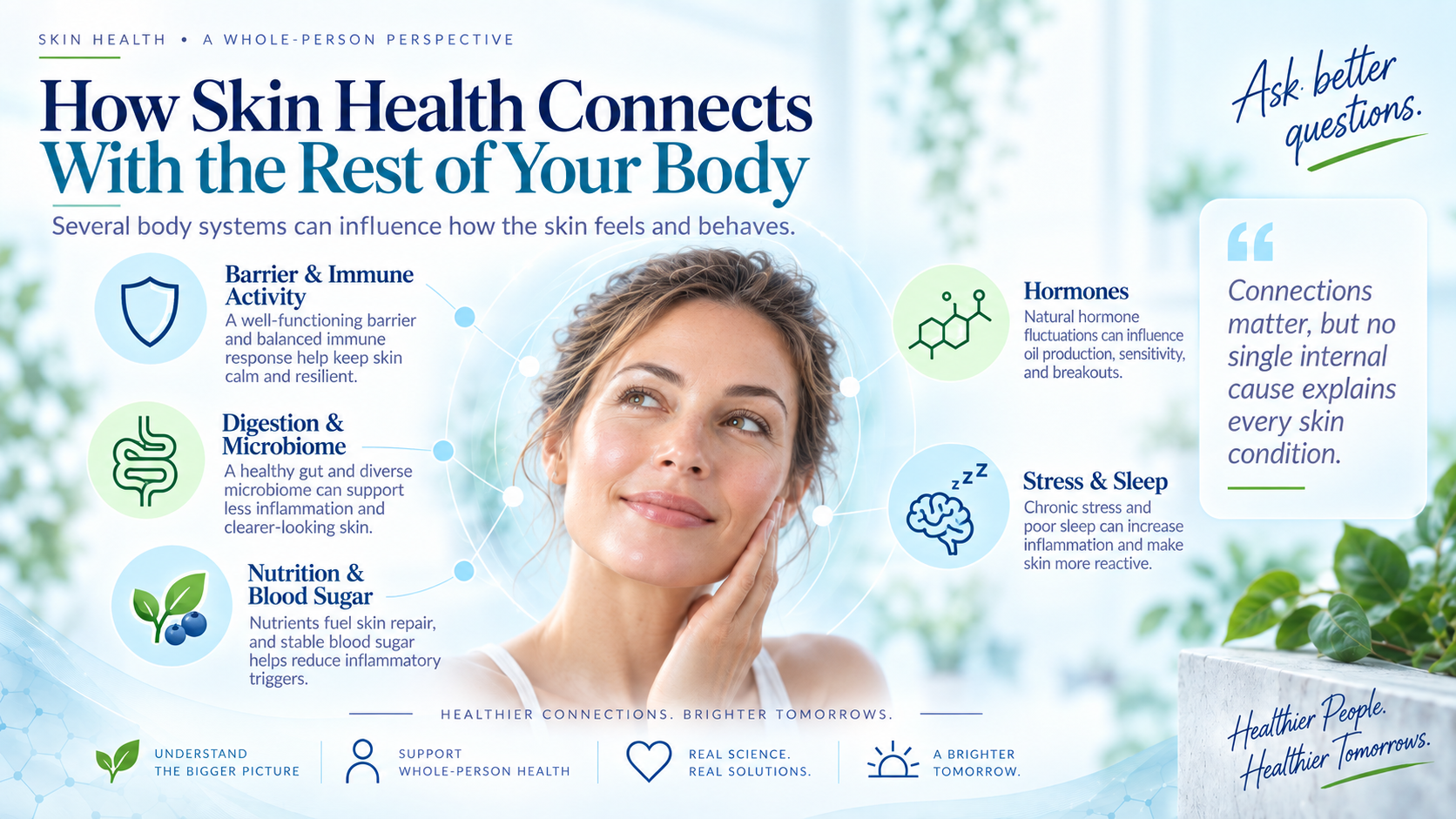
How your skin connects with the rest of your body
Here is where the inside-out perspective becomes useful. Your skin exchanges signals with other systems throughout the day. Some of those relationships are well established. Others are being studied and may not translate into a proven treatment for a particular skin disease.
Skin barrier and immune activity
The skin and digestive tract each have their own barrier and immune functions. They help distinguish what should stay out from what the body can safely tolerate. Skin inflammation can change barrier function, and barrier damage can add to irritation. Supporting an irritated skin barrier directly is often an important part of care.
Digestion, the gut and the microbiome
Your digestive tract helps absorb nutrients and contains a large community of microorganisms that interact with immune cells. Researchers are studying connections between the gut microbiome and conditions such as psoriasis, eczema and rosacea. These findings are interesting, but an association is not proof that gut bacteria caused a person's rash, or that a probiotic or a generic gut protocol will treat it.
What would make me look more closely at digestion? Ongoing diarrhea or constipation, abdominal pain, unexplained weight change, a history that suggests celiac disease, or a digestive disorder already diagnosed by a clinician. Those clues can justify a focused discussion and appropriate testing. Having rosacea or psoriasis by itself is not a diagnosis of intestinal permeability, sometimes called leaky gut.
Nutrition, nutrients and blood sugar
Skin needs energy, protein, fats and micronutrients for normal maintenance. An inadequate or highly restrictive diet can make it harder to meet those needs. Metabolic health also matters to general health; in acne, some studies suggest that a lower-glycemic eating pattern may help certain people, but results are not uniform and no one diet works for everyone.
I often start with a practical question: Are you eating enough, regularly, and with a reasonable variety of foods? If symptoms, history or medications suggest an actual deficiency or blood-sugar problem, we can discuss which standard medical tests are useful rather than guessing from the appearance of your skin.
Hormones and the nervous system
Hormonal shifts can affect oil production, dryness and acne. A pattern of new acne with irregular menstrual cycles or other symptoms may deserve medical evaluation. But wrinkles do not automatically mean low estrogen, and acne does not automatically mean high testosterone.
Stress and sleep matter, too. Stress can worsen itching, flushing or habits such as scratching, while poor sleep may make symptoms harder to cope with. I want to know when your skin changes, what else was happening at the time, and whether the same pattern appears more than once.
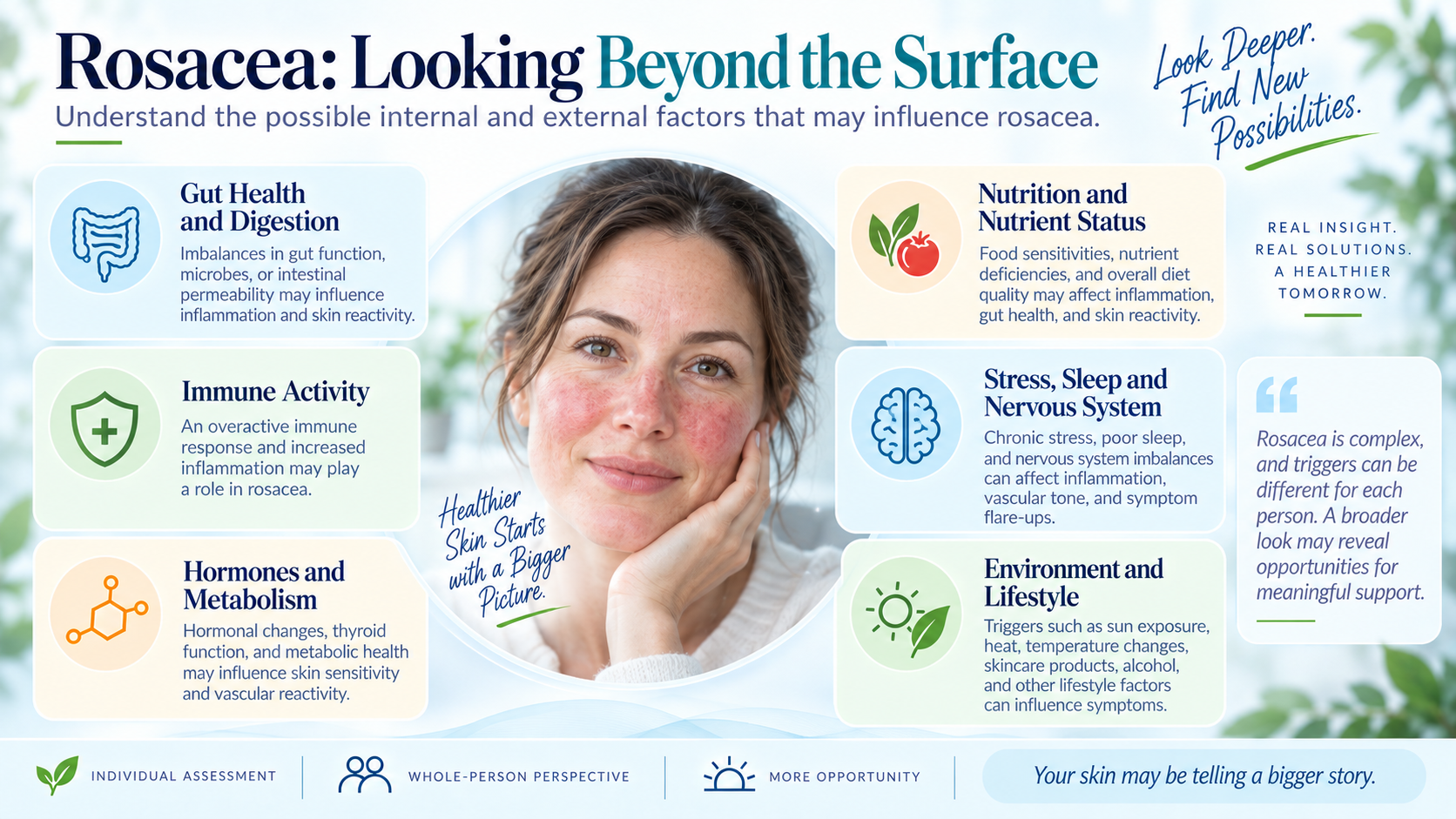
Your triggers may not be someone else's triggers
One person with rosacea notices flushing after a hot shower. Another reacts to sun exposure or a fragrance. Someone with psoriasis recalls a flare after an infection, while another sees a pattern during a prolonged stressful period. One person with eczema reacts to a detergent or a workplace exposure. A similar-looking symptom does not tell us that the same trigger is present.
That is why I prefer a short, useful record over a long list of things to eliminate. Note the timing of symptoms, new medications and supplements, skin products, sleep, stress, meals and any exposures that repeat before a flare. A diary helps us form questions. It does not, by itself, prove causation.
When food seems involved, I want a clear reason to investigate it. A medically diagnosed food allergy or celiac disease calls for specific care. A broad ban on gluten, dairy, eggs and soy for every person with a skin condition can create nutritional problems without answering the real question. Suspected allergies or complex diets deserve help from the appropriate licensed clinician or dietitian.

Not sure where to begin?
I review each prospective client's situation before offering a consultation.
The basics of skin care from the inside out
These are practical foundations, not a universal protocol and not a substitute for diagnosis or prescribed treatment.
- Protect and moisturize your skin. Choose a gentle routine that matches your condition and use sun protection. Keep recommended prescription treatment in place.
- Eat enough and eat a variety. Build meals around foods you tolerate, with adequate protein and diverse nutrient sources. Avoid unnecessary restrictions.
- Investigate digestive symptoms when they exist. Consider clinically appropriate evaluation for persistent symptoms or suspected conditions, not automatic microbiome panels for everyone.
- Consider metabolic or hormonal clues. Let your history and symptoms guide discussions about blood sugar, hormones, nutrition and possible testing.
- Make room for sleep, recovery and stress support. A repeatable routine matters more than trying to be perfect.
- Keep medications and exposures in the picture. Review new products, supplements and medicines with the appropriate clinician. Do not discontinue prescribed medicine on your own.

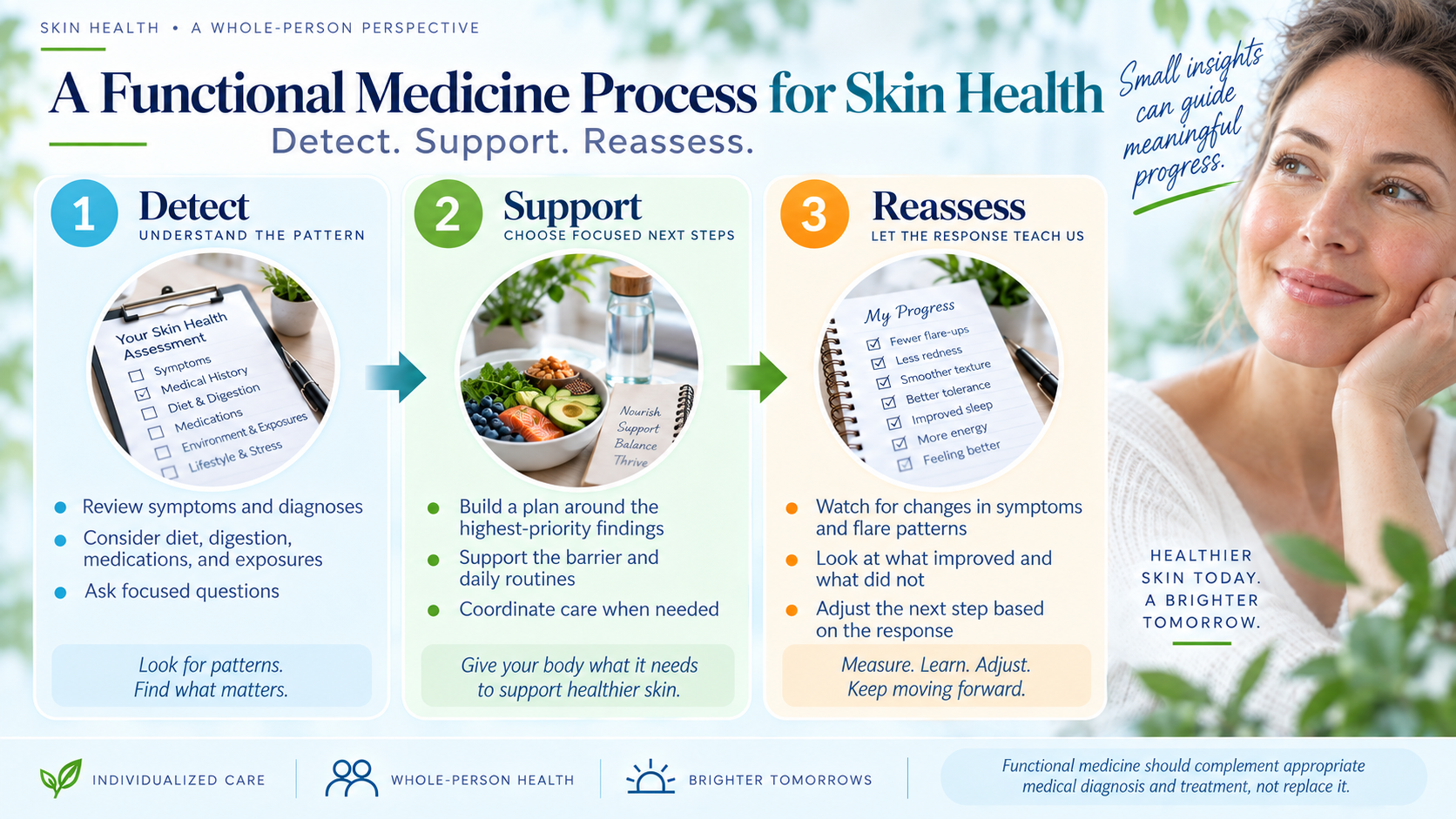
How I approach skin health with functional medicine
When we work together, I am not interested in giving every person with rosacea, psoriasis or eczema the same handout. I want to understand what you have already tried, what your medical team has diagnosed, what has changed over time and which questions are most likely to matter in your situation.
DETECT
We look closely at your skin history, symptoms, existing diagnoses, treatments, records, medications, diet, digestive health, metabolic clues, lifestyle and relevant exposures. Any testing should answer a specific question, not simply fill a large panel.
SUPPORT
We build a focused plan around the findings that are most relevant to you. That may involve nutrition, routines, identifying an irritant, addressing a documented deficiency or coordinating further medical evaluation while you continue appropriate dermatological care.
REASSESS
We look at what changed and what did not. Are symptoms or flare patterns different? Are sleep, digestion or relevant lab findings changing? The response helps us decide whether to continue, adjust or reconsider our working explanation.
Functional medicine gives us another set of questions to ask, not a promise that every skin condition has a discoverable cause or that a lifestyle plan can replace treatment. A dermatologist can diagnose your condition, rule out serious disease and offer topical medicines, systemic treatment, biologics or procedures when needed. I can help you investigate the wider picture while respecting that work.
When might working together make sense?
Maybe you already have a diagnosis and a treatment plan, but you still have questions about your flare pattern, digestion, diet, stress, metabolism or other aspects of your health. Maybe you want someone to take the time to review those pieces together and help you identify the next reasonable step.
That is the kind of conversation I can help with. It begins with an application, not an automatic appointment. I personally review the information you submit to consider whether my functional-medicine services fit your needs. If they do, you will receive a private scheduling opportunity. If a medical evaluation is needed first, that should come first.
Further reading on skin health
These resources help explain what is established in skin care and what remains under investigation.
- American Academy of Dermatology: rosacea-friendly skin care
- American Academy of Dermatology: preventing premature skin aging
- American Academy of Dermatology: eczema diagnosis and treatment
- American Academy of Dermatology: what research says about diet and acne
- Research review: rosacea, the microbiome and the gut-skin axis
Frequently asked questions
What does skin care from the inside out mean?
Skin care from the inside out means supporting your skin with appropriate topical care while also considering nutrition, sleep, stress, metabolism, hormones, digestion and other individual factors that may influence skin health.
Does rosacea mean I have leaky gut?
No. Rosacea does not prove intestinal permeability. Gut and skin biology may interact, but whether a digestive condition contributes to your rosacea requires an individual assessment.
Can changing my diet help psoriasis, eczema or rosacea?
Diet may be relevant for some people, but no single diet treats every case of psoriasis, eczema or rosacea. A balanced eating pattern is a reasonable foundation, and specific food changes should follow a meaningful pattern, diagnosis or clinical reason.
Are rosacea, psoriasis and eczema all autoimmune diseases?
No. Psoriasis involves autoimmune and inflammatory pathways. Rosacea is a chronic inflammatory condition, and eczema includes several forms of dermatitis. They do not all share one autoimmune cause.
Can blood sugar or hormones affect adult acne?
They can influence acne in some people. Acne is multifactorial, and a history suggesting hormonal or metabolic changes may justify a focused medical evaluation rather than assuming every breakout is caused by hormones or sugar.
Do I still need a dermatologist if I work with functional medicine?
Yes. Dermatology and appropriate medical care are important for diagnosis, skin cancer assessment, eye symptoms, infection and treatments. Functional medicine can complement that care by exploring your individual history, triggers, physiology and daily habits.
What happens after I submit an Application for Care?
Dr. Shook reviews your application to determine whether his functional-medicine services may be a fit. Qualified applicants are then offered a private scheduling opportunity. Submitting an application does not guarantee acceptance or an appointment.
Want to understand more of your skin's story?
If you have a diagnosis and want to explore the patterns and physiology that may matter in your case, tell me about your situation. I'll review your application and let you know whether we may be a fit.
Complete the Application for CareQualified applicants receive a private scheduling opportunity after review.