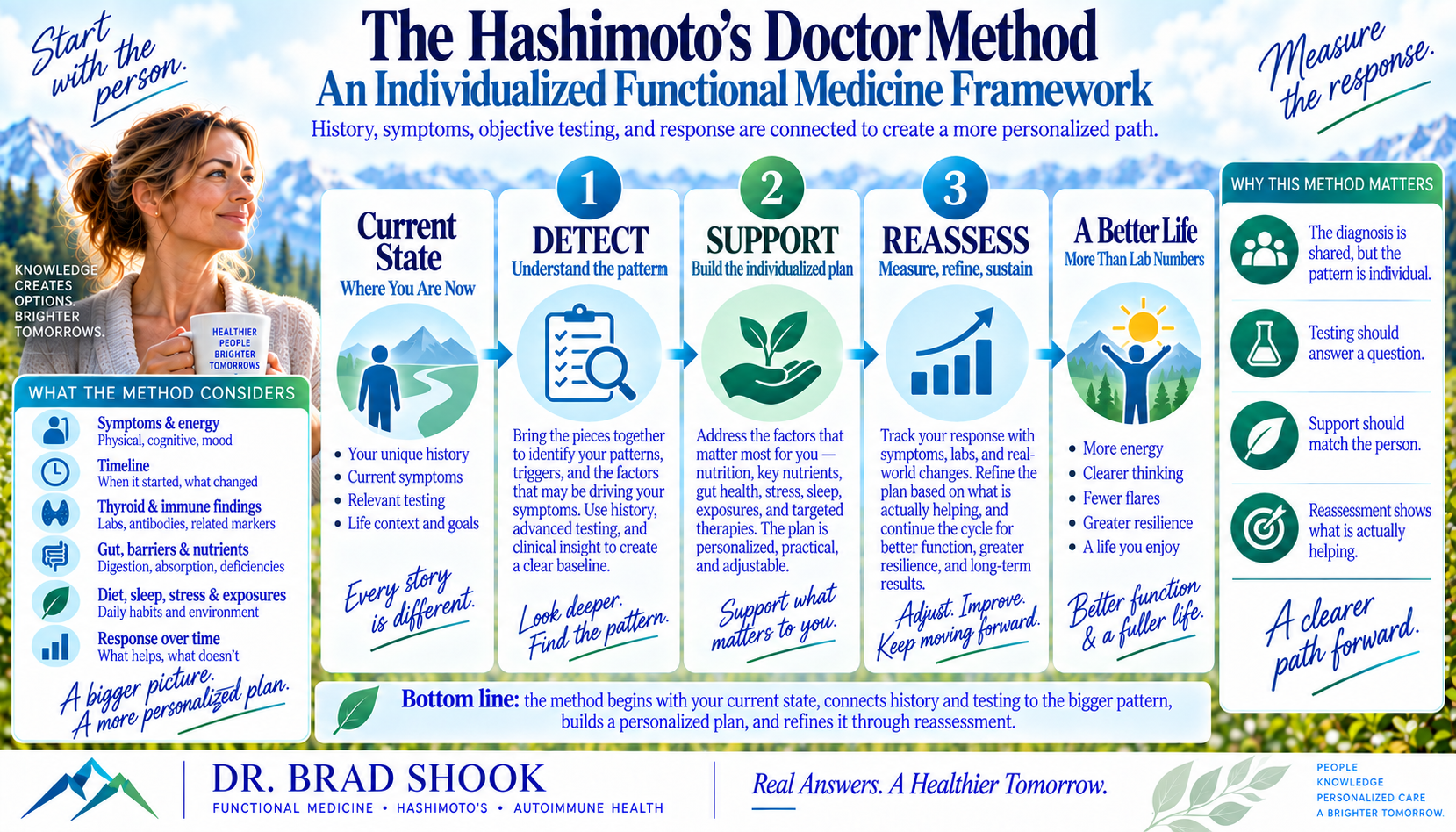
Why Hashimoto's Needs an Individualized Method
Hashimoto's develops when the immune system begins reacting to thyroid tissue as though it is foreign. The diagnosis identifies the disease, but it does not automatically explain why the immune process began, what may still be influencing it or why one person feels very different from another.
One person may have a strong family history, celiac disease and iron deficiency. Another may have digestive problems, disrupted sleep, chemical exposure and blood-sugar instability. A third person may have thyroid hormone levels that look acceptable while fatigue, brain fog, constipation or exercise intolerance continue. Giving all three people the same diet, laboratory panel and supplement program would miss the point of individualized care.
The method provides an organized pathway through that complexity. It does not begin with a supplement or a predetermined list of foods. It begins with the person, the timeline and the questions that need to be answered.
The central idea: the diagnosis may be shared, but the starting point, triggers, physiological patterns, goals and response are individual.
Environmentally Induced Autoimmunity
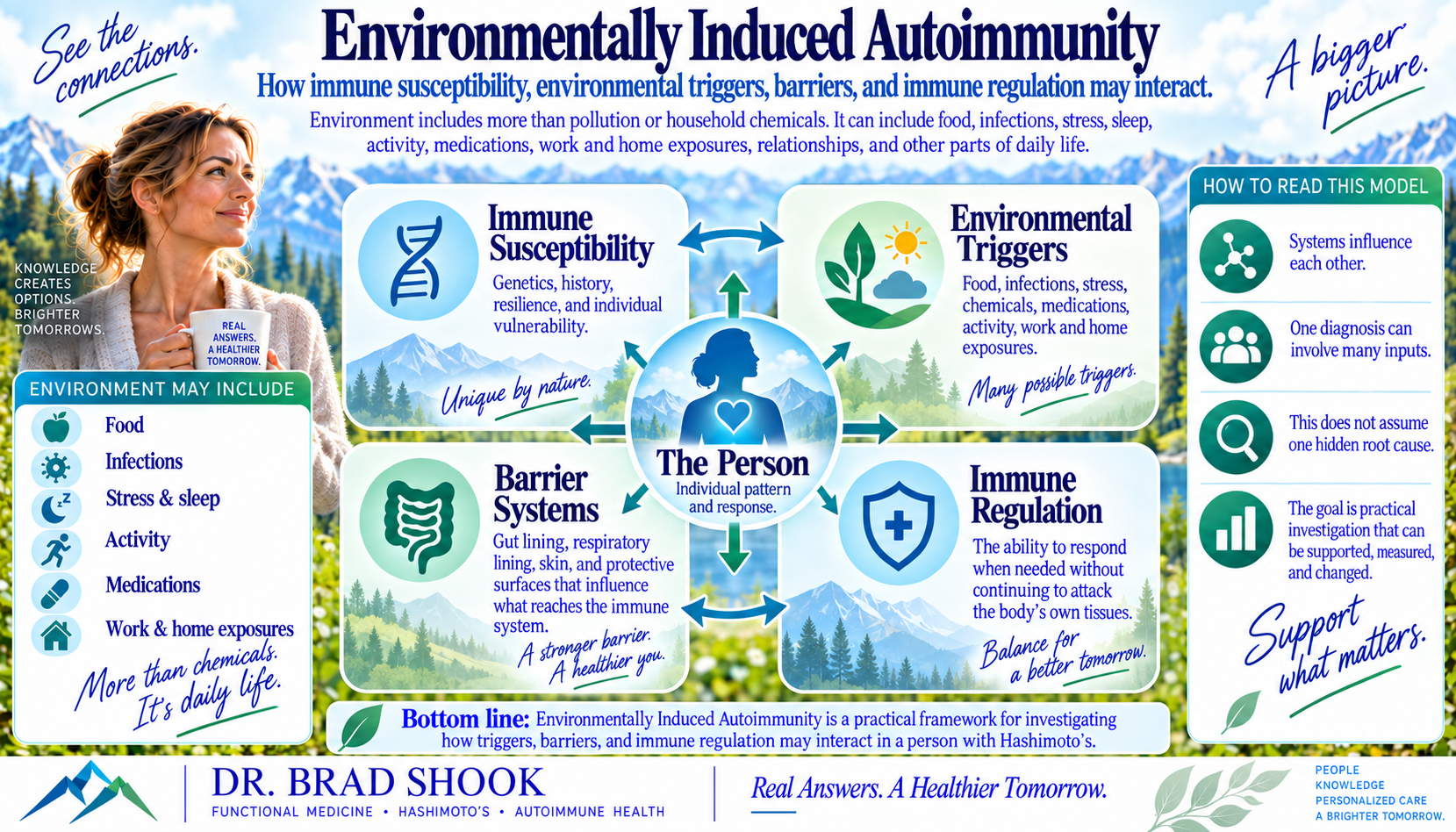
My Environmentally Induced Autoimmunity model examines how immune susceptibility, environmental triggers and the body's protective systems may interact.
The word environment includes more than pollution or household chemicals. It includes food, infections, stress, sleep, activity, medications, work, home exposures, relationships and other parts of daily life. Barrier systems include the intestinal lining, respiratory lining, skin and other protective surfaces that help control what reaches the immune system. Immune regulation is the immune system's ability to respond when needed without continuing to attack the body's own tissues.
These areas can influence each other. An infection may affect immune activity. Slow digestion may influence the intestinal environment and nutrient absorption. Stress and poor sleep may make symptoms harder to regulate. Chemical exposures may affect hormone or immune pathways. Diet may support one person while provoking symptoms or immune reactions in another.
This model does not assume that every person has one hidden root cause waiting to be discovered. It creates a practical framework for investigating the connections that can be supported, measured and changed.
For a deeper explanation of susceptibility, triggers and drivers, continue with what causes Hashimoto's disease.
Start by Understanding Where You Are Now
A pathway only helps if you know where you are starting. I look at symptoms, energy, daily function, good days, difficult days, previous efforts and what has made the pattern better or worse. This is not about assigning a permanent label. It is about choosing a realistic next step.
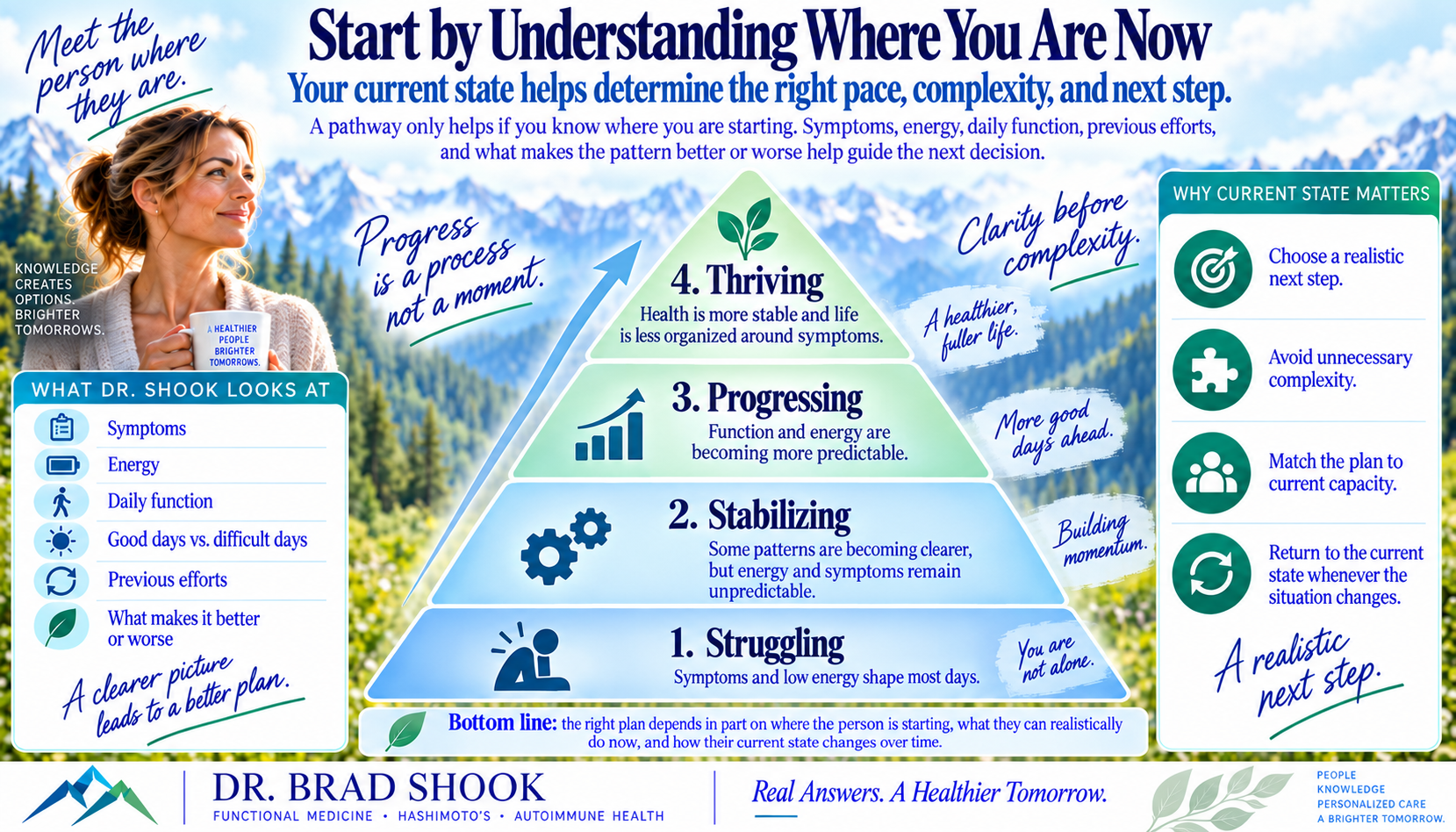
Progress is not always a straight line. A major illness, stressful season, medication change or new exposure can temporarily change your capacity. The method returns to your current state whenever the situation changes.
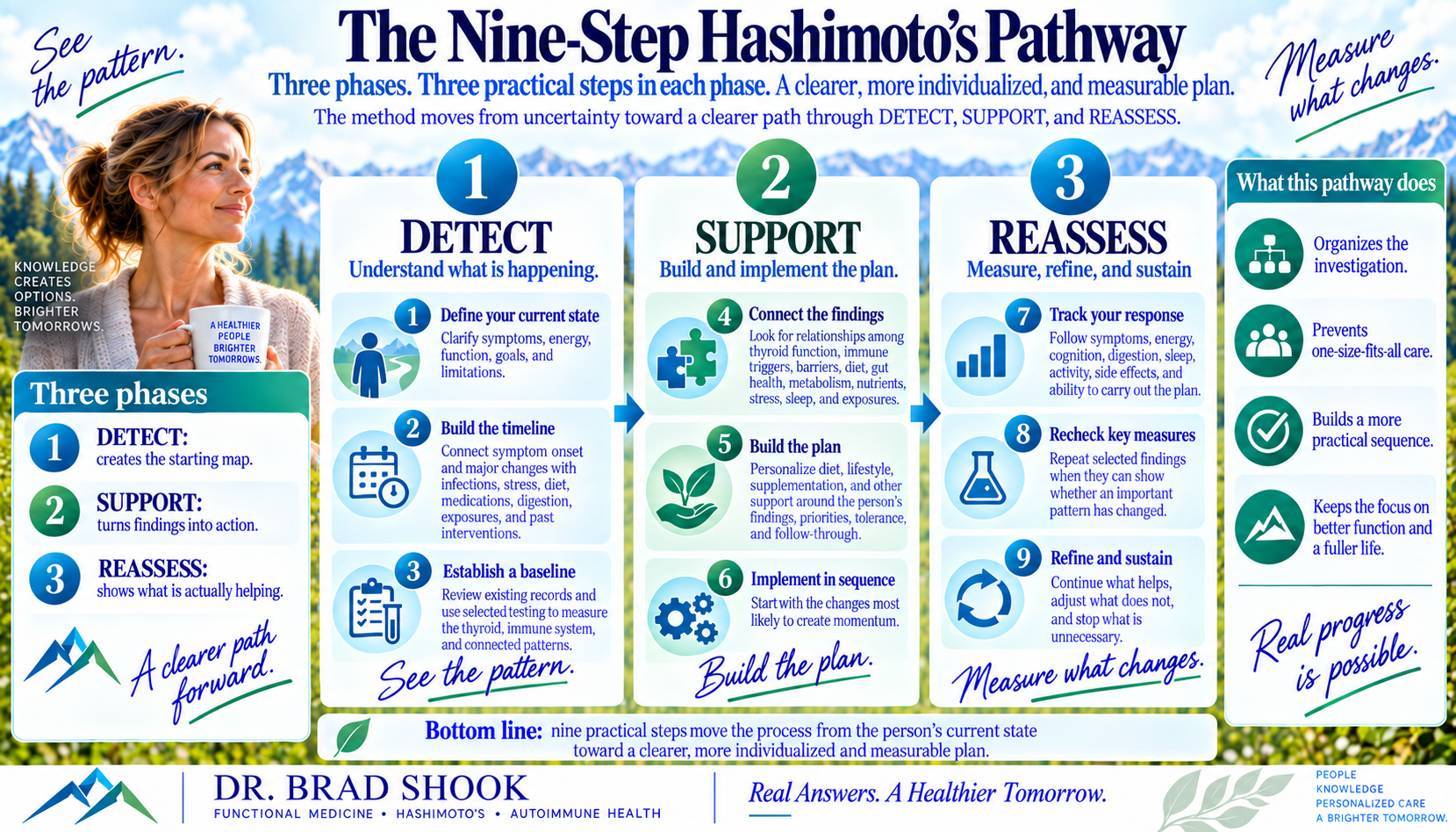
The Nine-Step Hashimoto's Pathway
The method contains three phases with three practical steps in each phase. Together, they move the process from uncertainty toward a clearer, more individualized and measurable plan.
DETECT: Understand What Is Happening
DETECT creates the starting map.
SUPPORT: Build and Implement the Plan
SUPPORT turns the findings into action.
REASSESS: Measure, Refine and Sustain
REASSESS shows what is actually helping.
How Testing Creates a More Individualized Starting Point
Objective testing can help create a unique fingerprint of the thyroid, immune system, barrier systems, metabolism, nutrient status and possible triggers. The purpose is not to order every test. It is to answer the questions raised by your history and timeline.
Thyroid function and autoimmunity
TSH, thyroid hormones, thyroid antibodies and related findings help establish the thyroid baseline and clarify what still needs investigation.
Barrier systems and gut health
Selected blood, stool and other assessments may investigate intestinal barriers, digestion, microbiome patterns, inflammation, absorption and related gastrointestinal questions.
Food immune reactions
Celiac testing, allergy evaluation, broader wheat or food immune-reactivity testing and structured elimination or reintroduction can answer different questions. They should not be treated as interchangeable.
Infections and immune activation
Testing may help distinguish current infection, past exposure and an immune-recognition pattern. An antibody result by itself does not always mean an infection is currently active.
Chemicals and other exposures
Direct chemical levels, environmental source testing and chemical immune-reactivity testing measure different things. The exposure history determines which question matters.
Nutrients and metabolism
Iron, vitamin D, B vitamins, essential fatty acids, blood sugar, lipids and other metabolic findings may influence energy, hormone function and immune regulation.
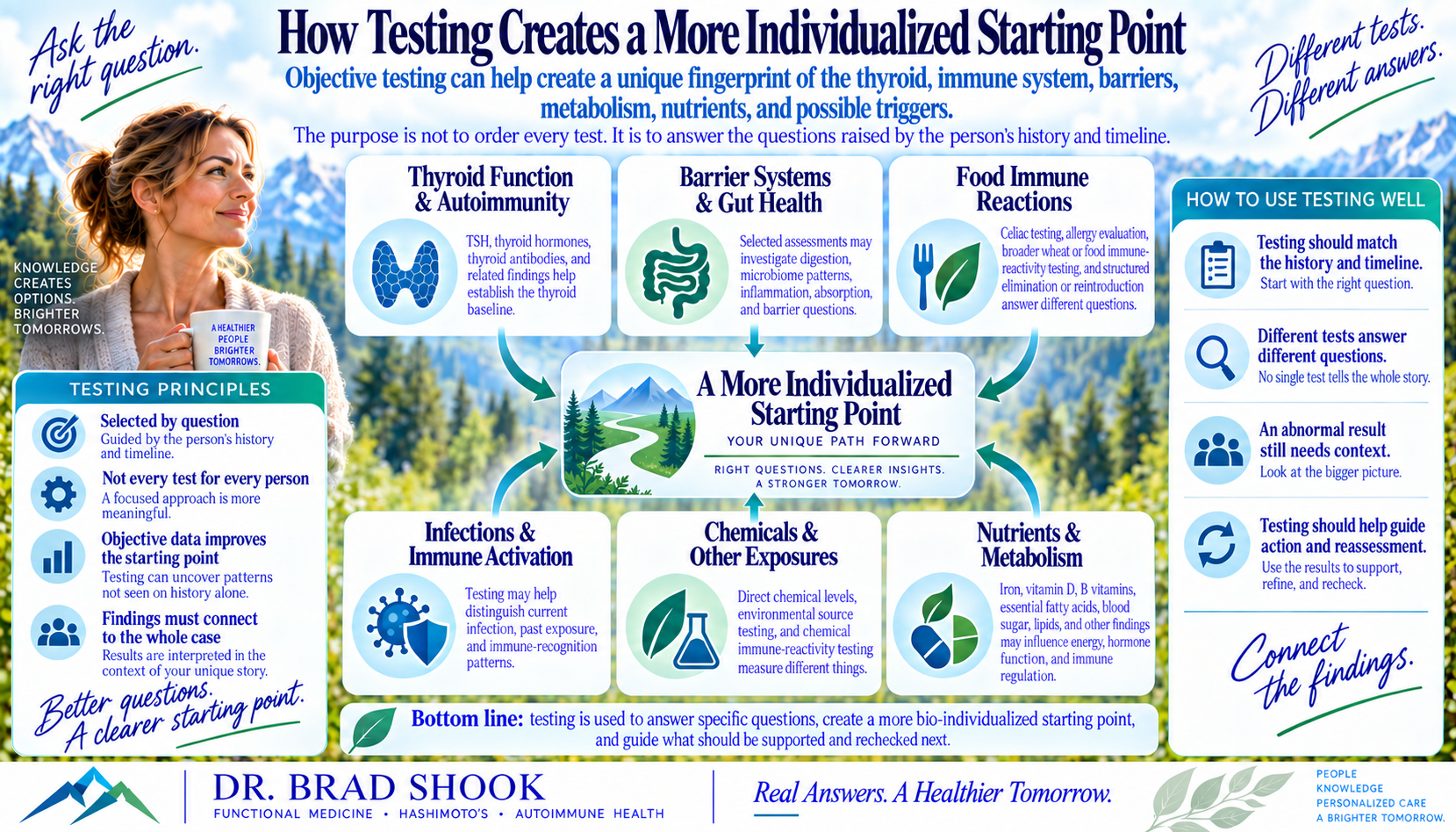
The opportunity created by testing: instead of relying only on trial and error, you can establish a better individualized starting point with objective data and then measure whether the plan changes the patterns you identified.
For a detailed explanation of test categories and what they measure, visit What Is Functional Medicine Testing?
Why Reassessment Is Essential
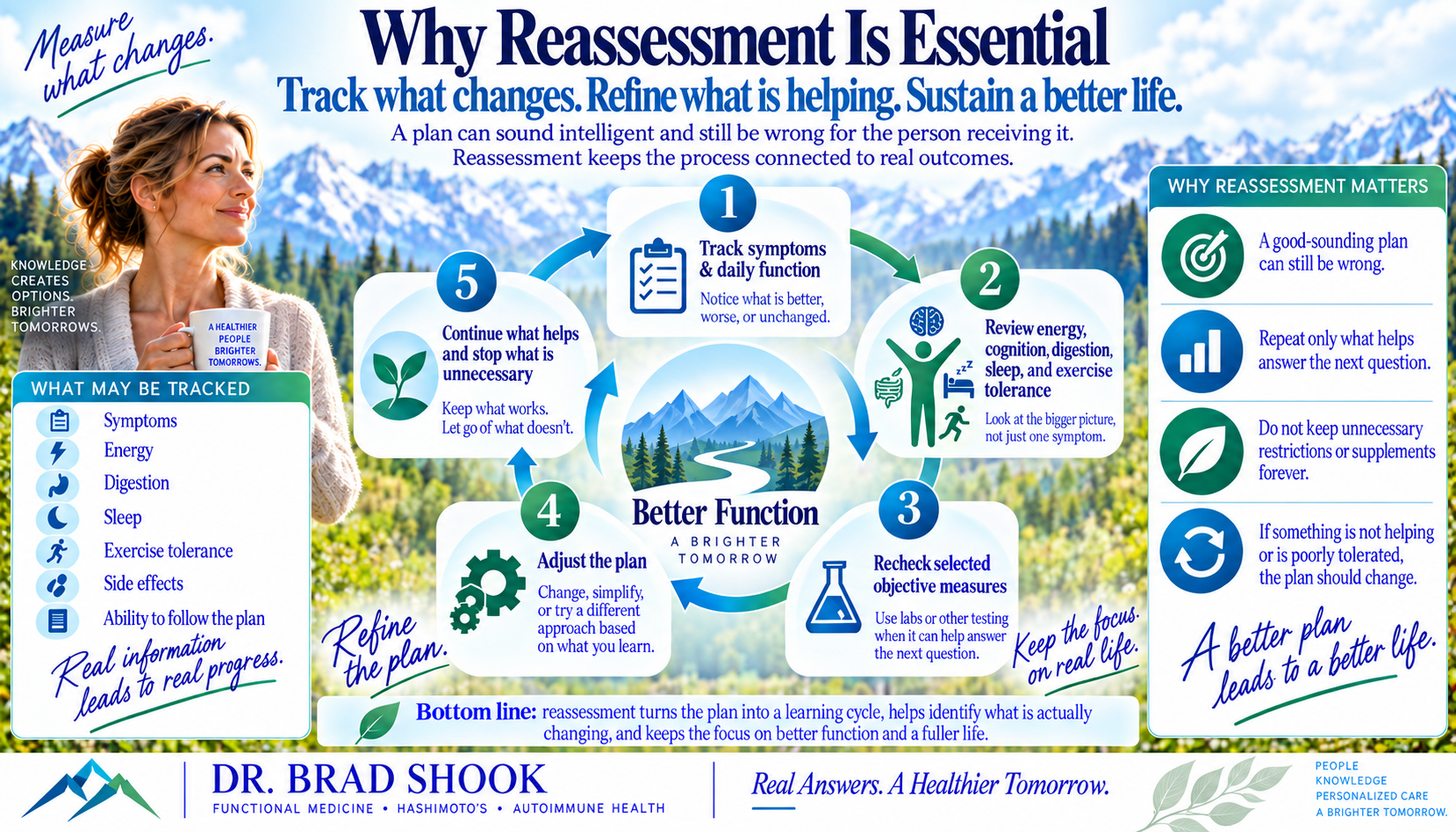
A plan can sound intelligent and still be wrong for the person receiving it. Reassessment keeps the method connected to real outcomes. It asks whether energy is improving, digestion is changing, sleep is more restorative, exercise is better tolerated, symptoms are becoming more predictable and the plan is realistic enough to follow.
Objective findings may also need to be reviewed again. The exact timing depends on what was measured and why. Some markers can change relatively quickly. Others need more time. The goal is to gather enough information to make the next decision, not to repeat every panel automatically.
Reassessment also protects the person from staying on an unnecessary restriction or supplement indefinitely. If something is not helping, is poorly tolerated or no longer serves a purpose, the plan should change.
How the Method Fits With Functional Medicine for Hashimoto's
Functional Medicine for Hashimoto's explains the broader opportunity to investigate triggers, drivers, physiology, diet, gut health, nutrients, exposures, sleep, stress and other factors that may be shaping your case.
The Hashimoto's Doctor Method answers the next question: How do I organize that investigation and determine what happens next? I begin with your current state, use testing and support selectively, measure your response and let that response guide the next decision.
Who May Benefit From This Approach?
This method may be useful when you:
- Have Hashimoto's or hypothyroidism but still do not understand the complete pattern.
- Continue to experience fatigue, brain fog, digestive problems, weight difficulty or poor exercise recovery.
- Have tried multiple diets or supplements without knowing which changes actually mattered.
- Feel overwhelmed by conflicting thyroid information and need an organized starting point.
- Want objective testing connected to a clear question rather than an unexplained list of laboratory panels.
- Want a plan that considers diet, gut health, barriers, metabolism, nutrients, stress, sleep, infections, exposures and medications together.
- Are willing to implement recommendations, track your response and return to the process of reassessment.
The method is not a promise that every symptom has one discoverable trigger or that thyroid medication will become unnecessary. It is a structured way to investigate your case more completely and make better-informed decisions over time.
Frequently Asked Questions
What is the Hashimoto's Doctor Method?
The Hashimoto's Doctor Method is my process for understanding an individual case and turning that information into a practical plan. It uses Environmentally Induced Autoimmunity and the three-part cycle DETECT, SUPPORT and REASSESS.
How is this different from standard thyroid care?
Standard thyroid care addresses diagnosis, hormone levels and medication management. My method adds a structured investigation of triggers, drivers, barrier systems, diet, gut health, metabolism, nutrients, stress, sleep, infections, exposures and individual response.
What does Environmentally Induced Autoimmunity mean?
Environmentally Induced Autoimmunity is my framework for understanding how immune susceptibility can interact with environmental triggers, barrier-system changes and immune dysregulation. Environment includes food, infections, chemicals, stress, sleep, activity, medications and other parts of a person's lived experience.
What does DETECT mean?
DETECT means understanding your current state, building a health timeline and establishing an objective baseline. History, symptoms, prior records and carefully selected tests are connected to identify the most important patterns to address first.
What does SUPPORT mean?
SUPPORT means connecting the findings, building an individualized plan and implementing it in a practical sequence. Diet, lifestyle, gut health, metabolism, nutrients, stress, sleep and supplementation can be personalized to the patterns found during DETECT.
What does REASSESS mean?
REASSESS means tracking symptoms and daily function, reviewing selected objective measures and refining the plan. I use your response to decide what should continue, what should change and what is no longer necessary.
Does everyone receive the same tests and supplements?
No. The method is designed to avoid giving everyone the same protocol. Testing and support are selected from the person's history, symptoms, prior results, likely mechanisms and goals.
Can the Hashimoto's Doctor Method cure Hashimoto's?
The method does not promise a cure. Its purpose is to identify triggers, drivers and physiological patterns that may be changed, improve health and function, and create a plan that can be measured and refined. Outcomes vary, and some people continue to need thyroid medication.
Can I use this method if my TSH is normal but I still feel unwell?
Yes, persistent symptoms can be investigated even when a TSH result is within range. The method looks at the complete thyroid pattern and other possible contributors such as sleep, anemia, nutrients, metabolism, gut health, medications, stress and additional health conditions.
Do I need to stop thyroid medication?
No. The method does not require stopping thyroid medication. Any medication change should be made with the clinician who prescribes and monitors it.
How long does the process take?
There is no universal timeline. It depends on the person's starting point, the complexity of the case, which changes are practical, how the person responds and when selected findings need to be reassessed.
How do I begin working with Dr. Shook?
Begin with the public Application for Care. It gives me the information needed to review your goals, history and whether the consulting process appears to be an appropriate fit.
Ready to Find Your Starting Point?
If you are looking for more than another generic Hashimoto's protocol, the Application for Care is the next step. Tell me about your diagnosis, symptoms, previous efforts and goals so I can determine whether this individualized consulting process appears to be a reasonable fit.
References and Clinical Resources
- National Institute of Diabetes and Digestive and Kidney Diseases. Hashimoto's Disease.
- National Institute of Diabetes and Digestive and Kidney Diseases. Thyroid Tests.
- American Thyroid Association. Hashimoto's Thyroiditis.