What Is the Autoimmune Protocol Diet?
The Autoimmune Protocol, usually called AIP and sometimes called the Autoimmune Paleo diet, is a temporary elimination and reintroduction framework. It removes several food groups, emphasizes nutrient-dense whole foods and then uses planned reintroduction to learn which foods a person tolerates.
Traditional AIP is more restrictive than a standard paleo diet. The elimination phase commonly removes gluten-containing grains and other grains, dairy, eggs, legumes, nightshades, nuts, seeds, alcohol, coffee and many food additives. Exact versions differ. In practice, I do not assume that every person needs the strictest version. A modified AIP can sometimes keep foods such as rice, selected legumes, ghee, seeds or coffee when the history, testing and response suggest they are tolerated. The goal is not the shortest possible food list. It is the broadest nourishing diet that works for you.
For a step-by-step introduction to the protocol itself, use the AIP diet beginner's guide. If you have already started AIP and feel worse, the next question is what changed and which factor is most likely to explain your response.
AIP is a tool, not a verdict. An allowed-food list cannot predict your calorie needs, your digestive capacity, your immune response to a specific food or which other factors may be affecting your Hashimoto's symptoms.
Can the AIP Diet Help Hashimoto's?
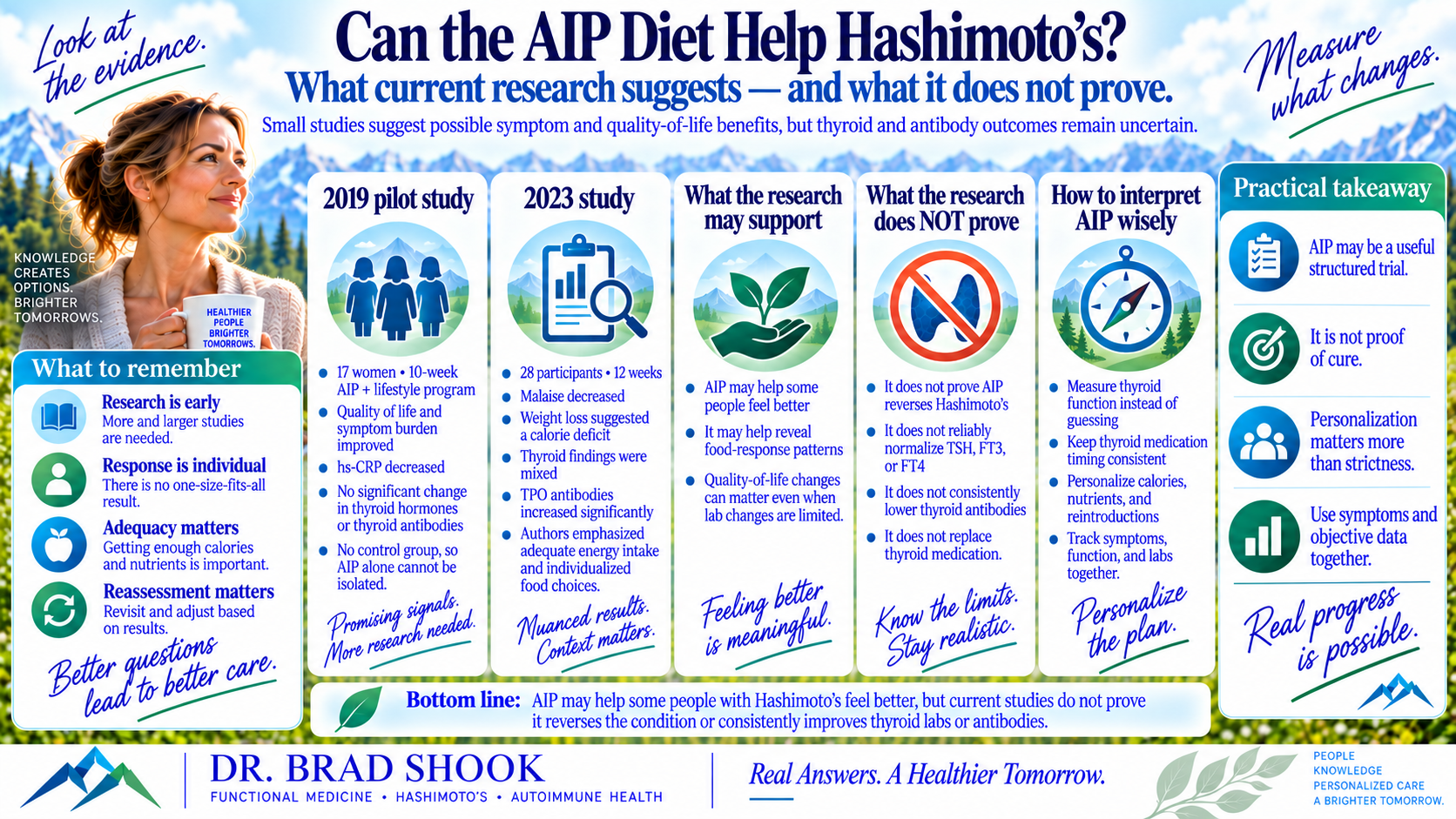
Early research is promising in some areas, but it is not strong enough to say that AIP treats every person with Hashimoto's or reliably changes thyroid antibodies.
In a 2019 pilot study, 17 women with Hashimoto's participated in a ten-week diet and lifestyle program built around AIP. Participants reported meaningful improvements in quality of life and symptom burden, and high-sensitivity C-reactive protein decreased. Thyroid hormone measurements and thyroid antibodies did not change significantly. Because there was no control group and the program included more than diet, the study cannot tell us that AIP alone caused the improvements.
A 2023 study followed 28 people with Hashimoto's for 12 weeks. Reports of malaise decreased, but the participants also lost weight in a way that suggested a calorie deficit. Thyroid results changed in mixed directions, including a significant increase in TPO antibodies. The authors emphasized personalizing food selection, energy intake and nutritional value.
The responsible conclusion is that AIP may help some people feel better and identify dietary patterns, but it is not proven to reverse Hashimoto's, normalize thyroid function or lower antibodies. Your response, nutritional adequacy and ability to reintroduce foods matter.
Thyroid Function
AIP does not guarantee an increase in T3 or T4 or an improvement in TSH. In the 2023 study, FT3, FT4 and TSH all decreased while remaining within their reference ranges. That mixed pattern is one reason thyroid function should be measured rather than inferred from how restrictive a diet feels.
Thyroid Medication
AIP is not a replacement for thyroid hormone when the thyroid cannot make enough. A major diet change may alter meal timing, fiber, soy, iron, calcium or supplements, all of which can affect how consistently levothyroxine is taken or absorbed. Keep medication use consistent and make dose changes only with the clinician who prescribes and monitors it.
Elevated Thyroid Antibodies
Thyroid antibodies can help identify an autoimmune thyroid pattern, but a short-term rise or fall does not tell the whole story. Current AIP studies do not show a consistent reduction in TPO or thyroglobulin antibodies. Track antibodies in context with thyroid function, symptoms, medication, nutritional status and the time between measurements.
AIP for Inflammatory Bowel Disease and Other Autoimmune Conditions
Small uncontrolled studies have also explored AIP in inflammatory bowel disease and reported possible symptom or quality-of-life improvements. Those results cannot be generalized to every autoimmune condition, and people with active gastrointestinal disease may have greater nutritional and medical risks from a restrictive diet. The diagnosis, disease activity, medication plan and ability to maintain adequate intake all matter.
The Top Eight Reasons You May Feel Bad on an Autoimmune Protocol Diet
The same symptom can have more than one explanation. Headache, fatigue, anxiety, poor sleep, constipation and brain fog are not specific enough to prove a food reaction, low blood sugar or a detoxification process. Start with the most practical and measurable possibilities.
You Are Not Eating Enough Total Food
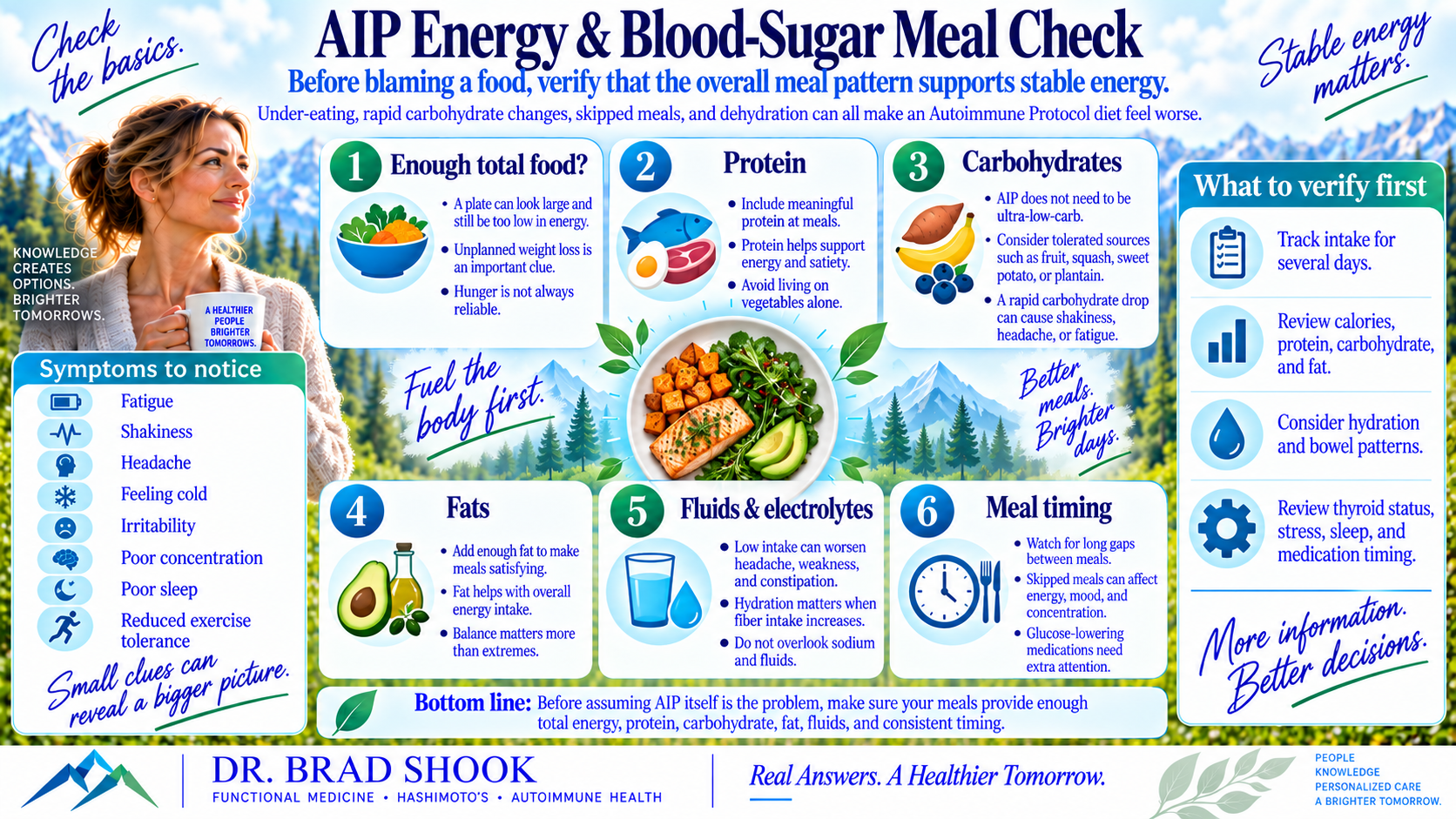
AIP removes many calorie-dense convenience foods at once. A plate may look large because it contains vegetables, yet still provide far less energy than your previous meals. Unintentional under-eating can cause fatigue, weakness, headache, feeling cold, poor concentration, irritability, disrupted sleep, constipation and reduced exercise tolerance.
Do not judge adequacy only by hunger. Some people become less hungry when stress is high or when meal choices are limited. For several days, record what and how much you eat. Look at total calories, protein, carbohydrate and fat, not just whether every food is AIP compliant. Unplanned weight loss is an important clue.
Your Carbohydrate Intake or Blood-Sugar Pattern Changed Too Quickly
AIP does not have to be a very-low-carbohydrate diet, but many people accidentally make it one when grains, dairy and processed foods disappear. Long gaps between meals, smaller portions and a sudden drop in carbohydrates can produce shakiness, headache, fatigue, hunger, palpitations, irritability or trouble concentrating.
Those symptoms do not prove true hypoglycemia. A glucose reading, medication history and the timing of symptoms help make the distinction. People who use insulin or glucose-lowering medication need particular care because a major dietary change can alter glucose needs.
A more balanced AIP meal may include adequate protein and fat plus a tolerated carbohydrate source such as squash, sweet potato, fruit, plantain or another food appropriate for your needs. The goal is stable energy, not forcing every person into the lowest carbohydrate intake possible.
Anxiety, poor sleep and mood changes can also appear when someone is under-eating, skipping meals or experiencing rapid swings in energy. It is too simplistic to call this a neurotransmitter deficiency caused by AIP. First evaluate the timing of meals, total intake, caffeine changes, thyroid status, stress and sleep itself.
Your Digestive System Is Struggling With a Rapid Change in Fiber or Fermentable Foods
Many people begin AIP by sharply increasing vegetables, fruit, coconut products, resistant starches or other fermentable carbohydrates. That change can be beneficial over time, but it can also cause gas, bloating, cramping or altered bowel movements when introduced faster than the digestive system can handle.
Hashimoto's and hypothyroidism can also be associated with slower intestinal motility and constipation. Adding more fiber without enough fluid, movement or bowel motility may make pressure and discomfort worse. The answer is not necessarily to eliminate every plant food. It may be to adjust portions, food texture, cooking method and timing while investigating digestion, motility and constipation. If this is a major part of your pattern, see the guide to intestinal permeability, Hashimoto's and the gut barrier.
You Are Reacting to a Food That AIP Allows
A food can be permitted by the protocol and still be wrong for an individual. Someone who removes eggs, dairy, grains and nuts may suddenly eat much more coconut, cassava, avocado, shellfish, sweet potato or a particular meat. Increased exposure can make an existing allergy, intolerance, digestive reaction or immune pattern easier to notice.
These reactions are not interchangeable. An immediate allergy can include hives, lip or tongue swelling, wheezing, vomiting, dizziness or anaphylaxis and requires appropriate allergy evaluation. An intolerance may involve digestion or food chemicals without an antibody response. Specialized antibody testing can sometimes identify IgG or IgA reactivity to selected foods, including differences between raw, cooked or modified food proteins, but it does not diagnose an immediate food allergy or prove that a food caused Hashimoto's.
If a broad panel shows many reactions, the useful conclusion may not be that every food must disappear forever. It may point toward a wider loss of oral tolerance, which means the immune system is reacting too easily to food proteins. That pattern makes dietary diversity, barrier health, digestive function and careful reassessment especially important.
Histamine-Rich Foods or Food Storage Patterns Are Affecting You
Some AIP meal plans emphasize bone broth, fermented vegetables, cured meat, canned fish, slow-cooked foods and repeated leftovers. These can be nourishing foods, but they may also contain or accumulate more histamine. In a susceptible person, symptoms may include flushing, itching, headache, nasal congestion, palpitations, diarrhea or abdominal discomfort.
There is no single symptom or routine laboratory result that proves histamine intolerance. The pattern can overlap with allergy, mast-cell disorders, medication effects and gastrointestinal conditions. A short, structured comparison using freshly prepared foods and carefully tracked symptoms can be more informative than removing a growing list of foods indefinitely.
The Diet Has Become Too Repetitive or Nutritionally Narrow
People with autoimmune disease often arrive at a short list of meals because those meals feel safe. AIP can narrow that list even further. Repeating the same protein and four vegetables every day may make shopping easier, but it reduces the range of fibers, plant compounds and nutrients reaching the body and gut microbiome.
Dietary diversity does not mean forcing foods that cause clear symptoms. It means rotating a wider range of tolerated vegetables, fruits, herbs, protein sources and fats, then carefully expanding the diet through reintroduction. If intake remains very limited, assess protein, calories, iron, vitamin B12, folate, vitamin D, calcium, iodine and other nutrients in the context of your health history.
Food fear is another reason to stop and reassess. If every symptom leads to another permanent restriction, the diet can become difficult to sustain and may worsen nutritional, social or emotional health.

Your Medication or Supplement Routine Changed
Changing breakfast, coffee, fiber, supplements and meal timing can change how consistently thyroid medication is taken or absorbed. Food in the stomach can affect thyroid hormone absorption. Iron, calcium, soy, some antacids and certain cholesterol-lowering medications can also interfere.
A rapid heartbeat, anxiety, insomnia, unusual fatigue or other new symptoms should not automatically be blamed on AIP. Review when you take thyroid medication, whether that routine changed and whether new supplements were added. Do not stop or change the dose on your own. Keep the routine consistent and work with the prescribing clinician when thyroid labs or medication review are needed.
The Symptoms Come From Another Cause, Not a Necessary “Die-Off”
The phrase die-off is often used to explain any unpleasant reaction after a diet or supplement change. AIP by itself does not diagnose or treat a bacterial, yeast or parasitic infection, so feeling worse does not prove that organisms are dying or toxins are being released.
New fatigue, nausea, headache, diarrhea, dizziness or brain fog may come from inadequate intake, dehydration, constipation, a food reaction, a supplement, a medication change, infection, anemia, unstable thyroid function or another condition. Treating every problem as die-off can delay the investigation that is actually needed.
Get prompt medical help for trouble breathing, swelling of the lips or tongue, fainting, chest pain, severe weakness, confusion, repeated vomiting, black or bloody stool, significant dehydration, severe abdominal pain or rapidly worsening symptoms. Severe low blood glucose can cause seizure or loss of consciousness and requires immediate treatment.

What About Casomorphins, Gluteomorphins and “Food Withdrawal”?
Digesting casein from dairy and gluten from wheat can produce small peptides. Some are called casomorphins or gluten-derived exorphins because they can show opioid-like activity in laboratory research. This is a biologically interesting mechanism, but an opioid-withdrawal syndrome caused by removing dairy or gluten is not an established clinical diagnosis.
People can experience cravings, headache, irritability, fatigue or a change in mood when familiar foods disappear abruptly. That experience is real. The explanation may involve habit, reward, caffeine or sugar changes, reduced calorie or carbohydrate intake, disrupted routines, stress or several factors at once. It is more useful to evaluate those measurable factors than to assume exorphin withdrawal is the cause.
If gluten is still part of your diet and celiac disease has not been evaluated, complete appropriate celiac testing before going gluten-free. Removing gluten can affect the accuracy of celiac blood tests and biopsy. Learn more about the connection among gluten, Hashimoto's and celiac disease.
Who Should Not Try an Autoimmune Paleo Diet Without Individual Guidance?
AIP is a major dietary change. Get personalized support before starting or continuing a strict elimination if you:
- Are pregnant, breastfeeding, a child or an adolescent.
- Are underweight, losing weight unintentionally or already struggling to eat enough.
- Have a current or previous eating disorder, intense food fear or a pattern of compulsive restriction.
- Use insulin or another medication that can lower blood glucose.
- Have kidney disease or another condition that limits protein, potassium, fluid or other nutrients.
- Have inflammatory bowel disease, severe digestive symptoms, recent gastrointestinal surgery or significant malabsorption.
- Have experienced hives, swelling, wheezing, fainting or another possible immediate food-allergy reaction.
- Already tolerate only a very short list of foods.
The question is not whether AIP is a good or bad diet. The question is whether its intensity, timing and nutritional design fit your current physiology and whether there is a plan for reassessment and reintroduction.
How to Troubleshoot Feeling Worse on AIP
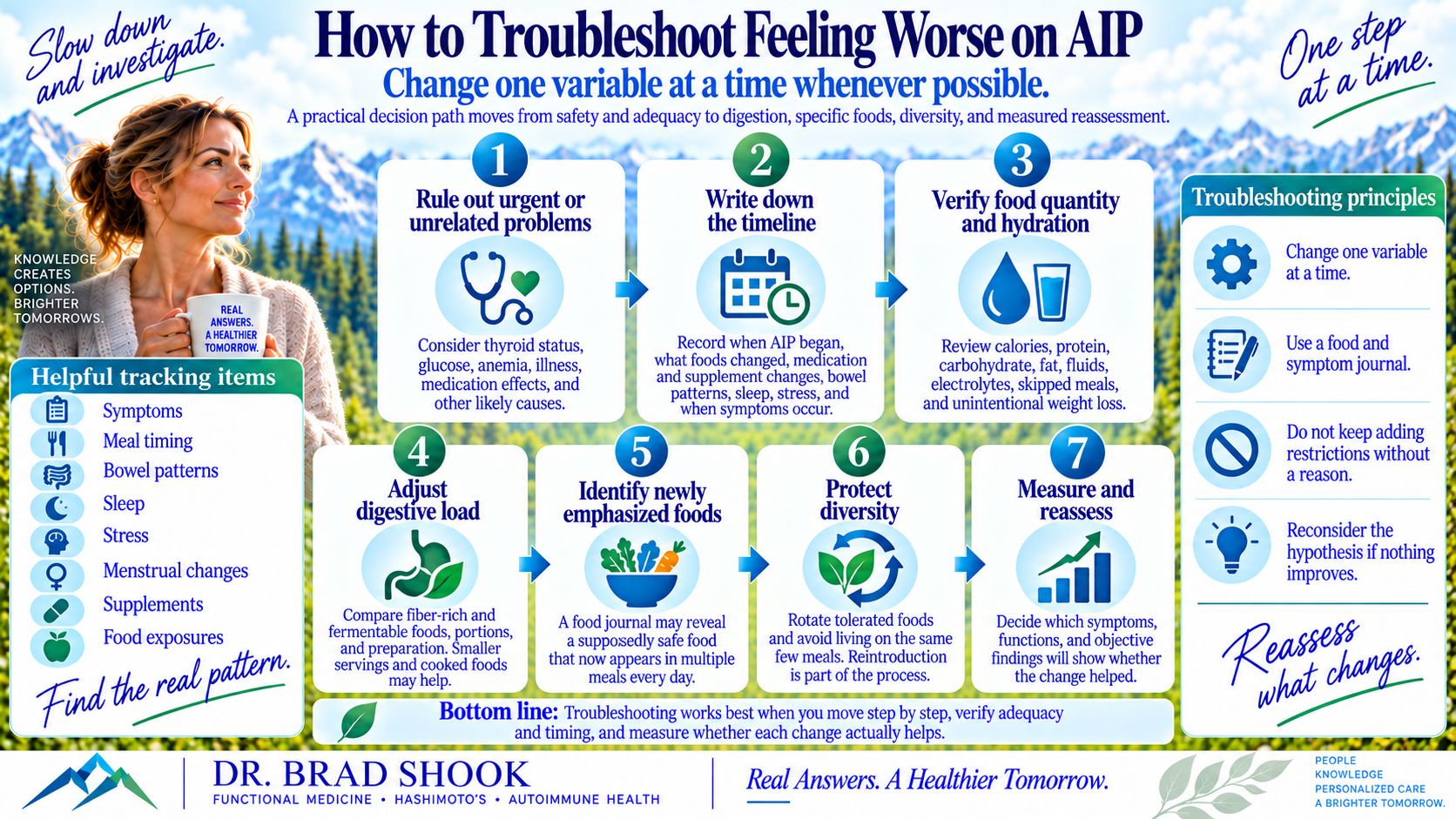
Change one variable at a time whenever possible. If you change every food, supplement and schedule on the same day, you may feel different without knowing why.
When Testing Can Help Personalize an AIP Diet
AIP can be used as a structured trial without specialty testing. Testing becomes more useful when the case is complex, the diet has become extremely narrow, reactions are inconsistent, symptoms continue despite careful implementation or you need a more objective starting point.
Foundational testing
Thyroid function, thyroid antibodies when relevant, blood glucose, complete blood count, iron status, vitamin B12, folate, vitamin D, metabolic markers and celiac evaluation can identify problems that a food list cannot answer.
Food immune-reactivity patterns
Selected antibody panels may examine IgG and IgA responses to multiple foods and, in some methods, raw, cooked, modified or combined food proteins. These findings need context and do not replace an allergy evaluation.
Barrier and gastrointestinal questions
When the history points toward digestive dysfunction, testing may investigate intestinal barrier patterns, digestive capacity, inflammation, pathogens, fermentation or other gastrointestinal factors.
Reassessment data
The value of testing is not the number of abnormal markers. It is whether the findings help build a better starting point and whether symptoms, function and selected objective measures improve after support is implemented.
A positive food antibody result does not prove that the food caused Hashimoto's or that it must be avoided forever. A negative result does not guarantee perfect tolerance. I connect testing with history, timing, food exposure and a planned removal and reintroduction rather than treating a report as a permanent banned-food list. See functional medicine testing for Hashimoto's for a deeper explanation.
A More Individualized Functional Medicine Approach
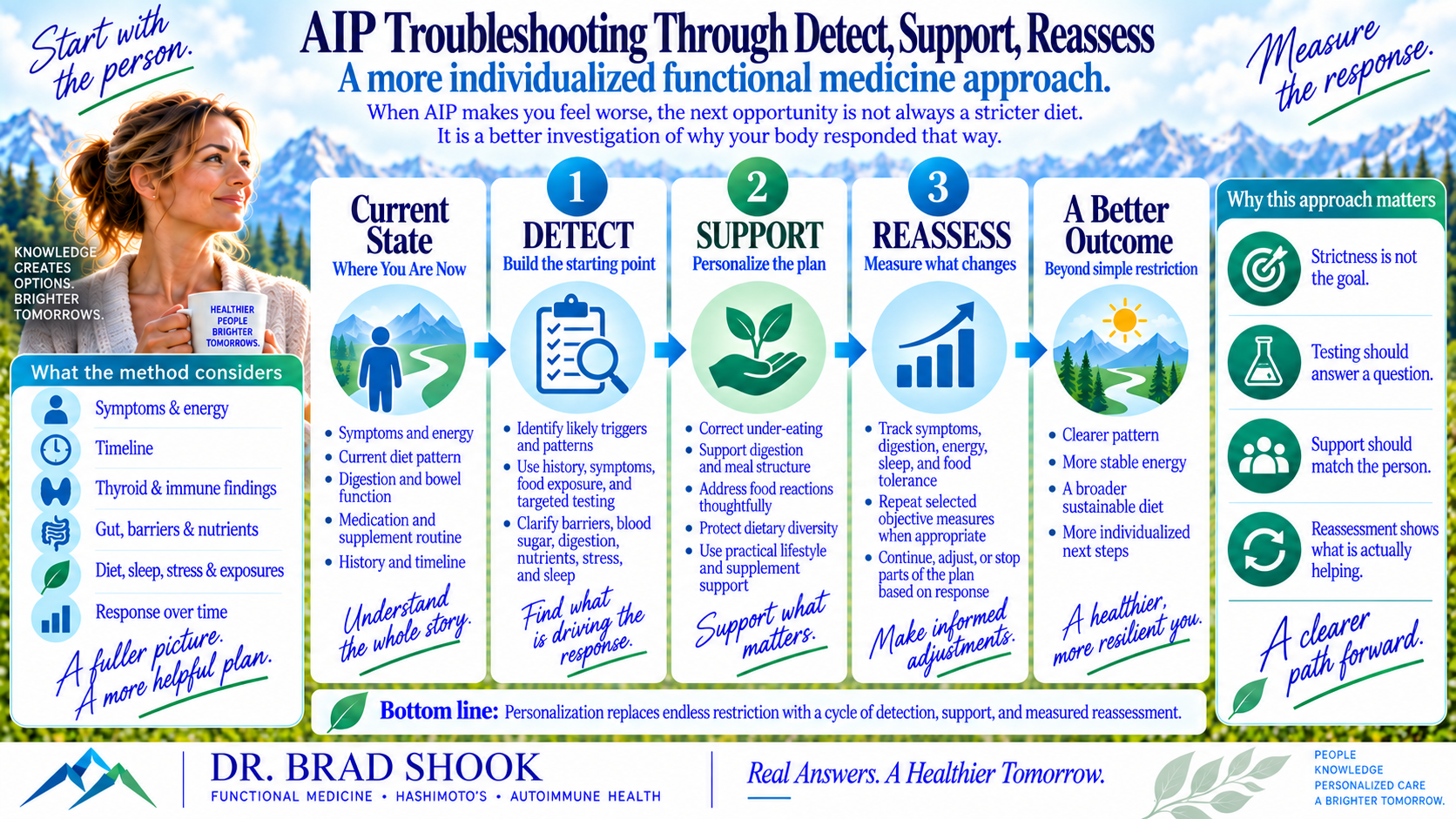
When AIP makes you feel worse, the next opportunity is not always a stricter diet. It is a more complete investigation of why your body responded that way.
I use the Environmentally Induced Autoimmunity model to examine food reactions alongside the intestinal barrier, digestive function, blood-sugar regulation, metabolism, nutrient status, stress, sleep, infections, chemical exposures, medications and your ability to follow the plan. Diet remains foundational, but it is connected to the rest of the case.
| Step | What it means for AIP troubleshooting |
|---|---|
| DETECT | Build the timeline, establish a baseline and identify likely triggers using your history, symptoms, food pattern and targeted testing. |
| SUPPORT | Build the plan around the highest-priority findings. Correct under-eating, support digestion and metabolism, protect dietary diversity and use diet, lifestyle and supplementation in a sequence you can realistically follow. |
| REASSESS | Track your symptoms, digestion, energy, sleep, food tolerance and selected objective findings. Continue, adjust or stop parts of the plan based on how you are doing. |
The broader Hashimoto's diet guide explains how dietary patterns fit within the larger immune and thyroid picture. For dairy-specific immune mechanisms and testing considerations, read dairy and Hashimoto's.
Frequently Asked Questions
Why do I feel worse on the AIP diet?
Common possibilities include eating too little, sharply reducing carbohydrates, dehydration or electrolyte changes, a rapid increase in fiber or fermentable carbohydrates, constipation, a newly emphasized food that does not agree with you, histamine-related symptoms, changes in thyroid medication or supplement timing, or a separate health problem. Feeling worse is useful feedback and should not automatically be labeled detoxification.
Is it normal to feel worse when starting AIP?
A brief adjustment to new meal patterns can occur, but significant or persistent worsening should not be treated as something you must push through. Review food quantity, hydration, digestion, medication timing, symptoms and other possible causes.
Can AIP cause low blood sugar?
AIP does not automatically cause true hypoglycemia, but eating less, skipping meals or sharply reducing carbohydrate intake can cause symptoms such as shakiness, headache, fatigue or irritability in some people. Anyone using insulin or other glucose-lowering medication needs individualized guidance because dietary changes can alter glucose needs.
Should I eat more carbohydrates on AIP if I feel tired?
Possibly. Fatigue may reflect inadequate total energy or carbohydrate intake, but it can also come from thyroid dysfunction, anemia, illness, sleep problems or other causes. Review the amount and timing of food you are eating instead of assuming that every symptom is caused by carbohydrate restriction.
Can I react to foods that are allowed on AIP?
Yes. A food being allowed by a diet does not guarantee that it is right for every person. AIP can also cause someone to eat much more of a food they rarely ate before. Symptoms, food history, conventional allergy evaluation when indicated, selective immune-reactivity testing and a structured removal and reintroduction can help clarify the pattern.
Are casomorphins or gluteomorphins causing withdrawal symptoms?
Laboratory and mechanistic research describes food-derived peptides with opioid-like activity, but an opioid-withdrawal syndrome from removing gluten or dairy is not an established clinical diagnosis. Headache, cravings, fatigue or mood changes after a sudden dietary change should be evaluated for more common explanations first.
Is feeling worse on AIP a yeast or bacteria die-off reaction?
AIP by itself does not diagnose or treat a gastrointestinal infection, so worsening symptoms should not automatically be called die-off. Inadequate food intake, dehydration, constipation, fermentable foods, medication changes, an illness or another digestive problem may provide a more useful explanation.
How long should the AIP elimination phase last?
There is no universal timeline. AIP is meant to include reassessment and reintroduction, not indefinite restriction. The duration should reflect symptom response, nutritional adequacy, health history and the ability to reintroduce foods in a structured way.
Can the AIP diet improve Hashimoto's thyroid antibodies?
Current studies are small and do not show a consistent antibody response. Some participants have reported better symptoms or quality of life, but one study found no significant change in thyroid antibodies and another reported an increase in TPO antibodies. Antibodies are only one part of the overall picture.
Do I need food sensitivity testing before trying AIP?
Not everyone needs testing before a dietary trial. Testing may be useful when the diet has become extremely restricted, reactions are inconsistent, many foods seem problematic or a more objective starting point is needed. A result should be interpreted with your history and response, not used as proof that a food caused Hashimoto's or must be avoided forever.
Should I stop thyroid medication while following AIP?
No. AIP is not a substitute for thyroid hormone when replacement is needed. Take thyroid medication consistently and discuss any dose or timing change with the clinician who prescribes it.
Who should get professional help before trying AIP?
Get individualized guidance if you are pregnant or breastfeeding, a child or adolescent, underweight, losing weight unintentionally, managing diabetes with medication, living with kidney disease or another condition that limits food choices, have a history of an eating disorder, or have experienced severe food-allergy symptoms.
When Another Food List Is Not the Answer
If AIP made you feel worse, left you with a very short list of foods or failed to answer why symptoms continue, I can review the larger pattern. The Application for Care is the next step for exploring an individualized investigation of thyroid function, triggers and drivers, diet, gut health, metabolism, nutrients, stress, sleep, exposures and your response.
References and Clinical Resources
- Abbott RD, Sadowski A, Alt AG. Efficacy of the Autoimmune Protocol Diet as Part of a Multi-disciplinary, Supported Lifestyle Intervention for Hashimoto's Thyroiditis. Cureus. 2019;11(4):e4556.
- Ihnatowicz P, Gębski J, Drywień ME. Effects of Autoimmune Protocol Diet on Changes in Thyroid Parameters in Hashimoto's Disease. Ann Agric Environ Med. 2023;30(3):513-521.
- Konijeti GG, Kim N, Lewis JD, et al. Efficacy of the Autoimmune Protocol Diet for Inflammatory Bowel Disease. Inflamm Bowel Dis. 2017;23(11):2054-2060.
- National Institute of Diabetes and Digestive and Kidney Diseases. Diagnosis of Celiac Disease.
- American Thyroid Association. Thyroid Hormone Treatment.
- National Institute of Diabetes and Digestive and Kidney Diseases. Low Blood Glucose (Hypoglycemia).
- Reese I, Ballmer-Weber B, Beyer K, et al. Guideline on Management of Suspected Adverse Reactions to Ingested Histamine. Allergol Select. 2021;5:305-314.