
What Is the Autoimmune Protocol Diet?
AIP is a more restrictive form of a paleo-style diet. It is designed to reduce dietary variables for a limited period and then use reintroduction to identify a more individualized food pattern.
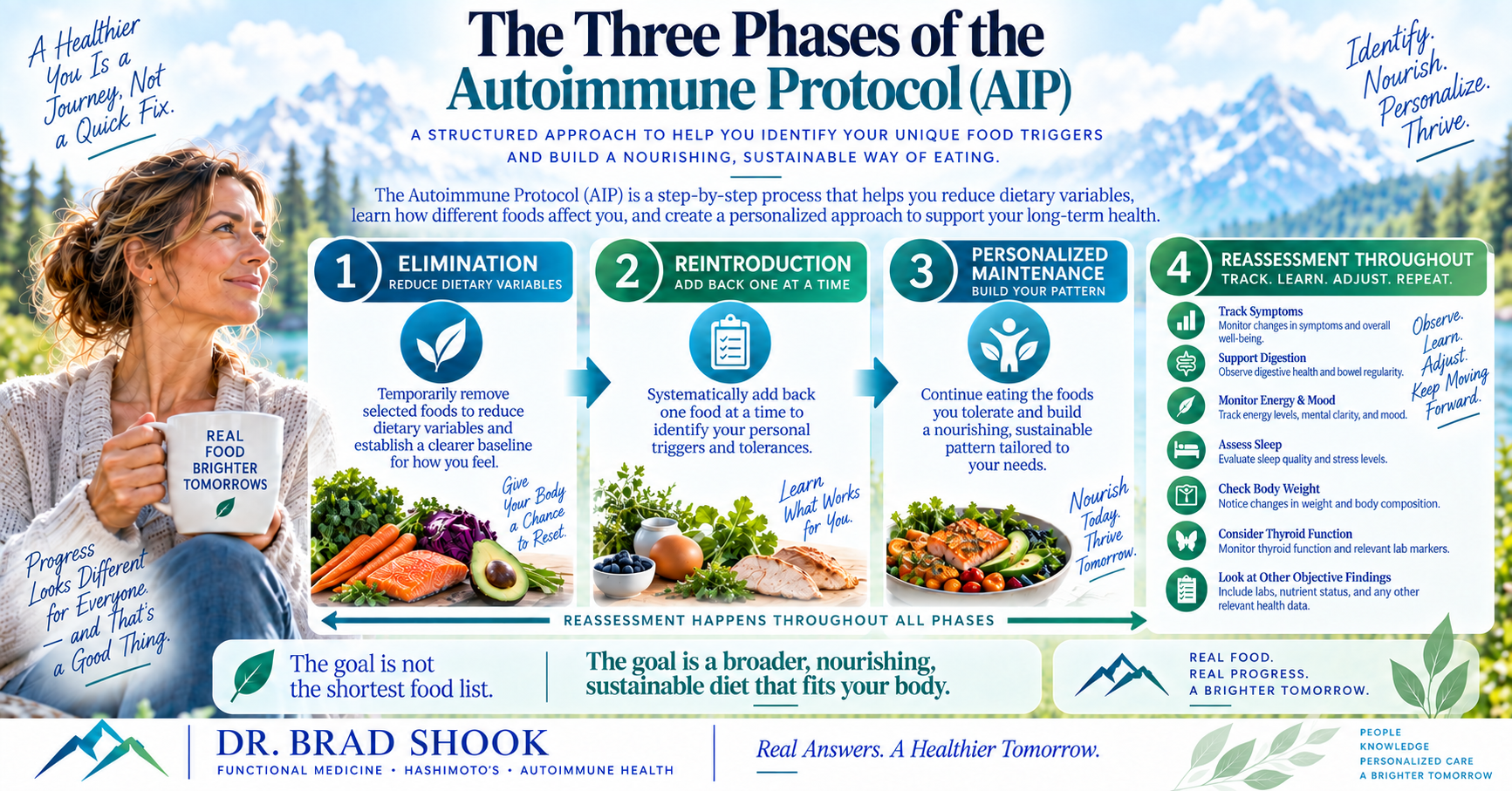
The protocol is often discussed as a list of foods to avoid, but that misses its most important feature. A complete AIP process has three parts: elimination, reintroduction and personalized maintenance. If foods are removed and never tested again, the investigation remains unfinished.
AIP may be one starting option for a highly motivated person who wants a comprehensive dietary trial. Another person may begin with a smaller change, such as addressing gluten or dairy, and only move to a broader elimination if that first step does not provide enough information. The intensity should match your symptoms, nutritional needs, resources and ability to follow through.
In my practice, I do not assume that every person needs the strictest traditional version of AIP. A modified AIP can sometimes keep foods such as rice, selected legumes, ghee, seeds or coffee when the history, testing and response suggest they are tolerated. The goal is to remove enough variables to learn something useful without creating restrictions that do not serve the person.
The goal is not the shortest food list. The goal is to identify a nourishing, diverse and sustainable diet that supports your health while removing foods that produce a meaningful individual response.
How the AIP Diet May Matter for Hashimoto's
Hashimoto's is an autoimmune condition in which the immune system reacts to thyroid tissue. Food does not explain every case, but diet can influence several parts of the larger picture: immune exposure to food proteins, intestinal barrier and digestive function, nutrient intake, blood-sugar stability, metabolism and the gut microbial environment.
Some people have a clear diagnosis that changes the diet, such as celiac disease or a food allergy. Others notice repeatable symptoms from certain foods without having celiac disease. Still others follow a strict diet and feel no better because food was not the main driver, the wrong foods were removed, the diet became nutritionally inadequate or another physiological problem was never addressed.
That is why I use AIP as one possible tool within the Environmentally Induced Autoimmunity model. Diet remains foundational, but I investigate it alongside thyroid function, the gut and other barrier systems, metabolism, nutrient status, stress, sleep, infections, chemical exposures, medications and the way your symptoms change over time.

The intestinal barrier is meant to control what crosses from the digestive tract into circulation. Changes in that barrier may alter immune exposure to food and microbial components, but the popular phrase leaky gut can refer to several different questions. Symptoms alone do not prove increased intestinal permeability, and an AIP response does not prove that a barrier problem has been healed.
What the Hashimoto's research actually shows
In a 2019 pilot study, 17 women completed a ten-week diet and lifestyle program built around AIP. Participants reported improvements in quality of life and symptom burden, and high-sensitivity C-reactive protein decreased. Thyroid hormone measurements and thyroid antibodies did not change significantly. The study had no control group and combined diet with health coaching and lifestyle support, so it cannot show that AIP alone caused the improvements.
A 2023 study followed 28 people with Hashimoto's for 12 weeks. Reported symptoms improved, but TPO antibodies increased significantly, thyroglobulin antibodies decreased only slightly, and thyroid hormone measurements changed while remaining within reference ranges. Participants also lost weight, indicating that the diet created a calorie deficit. These mixed results reinforce the need to measure response rather than assuming that a stricter diet is automatically changing the autoimmune process.
A 2024 scientific review described AIP as a personalized elimination diet with promising early findings in several autoimmune conditions, while emphasizing that larger controlled studies are still needed. The responsible conclusion is hopeful but careful: AIP may help selected people identify food patterns and improve how they feel, but it has not been proven to cure Hashimoto's.
The Three Phases of a Complete AIP Diet
1. Elimination
Remove the defined AIP food groups while building complete meals from allowed foods. Establish a symptom, food and health baseline so there is something meaningful to compare.
2. Reintroduction
Add one food back at a time in a controlled way. Watch for immediate and delayed changes while keeping the rest of the diet stable.
3. Personalized maintenance
Keep foods that support you, limit foods that produce a repeatable response and continue expanding variety when possible.
Reassessment throughout
Track symptoms, digestion, energy, sleep, body weight, thyroid function and selected objective findings. Adjust the plan when the data and your experience call for it.
Before You Start the AIP Elimination Phase
A few decisions made before elimination can protect important diagnostic information and make your results easier to interpret.
Get individual guidance before a strict elimination if you are pregnant or breastfeeding, a child or adolescent, underweight, losing weight without trying, managing diabetes with medication, living with kidney disease or another condition that limits food choices, have severe digestive disease, have a history of an eating disorder or have experienced a possible immediate food-allergy reaction.
AIP Foods to Remove and Foods to Eat
Different books and programs use slightly different rules. Pick one clearly defined version so you know what you changed. The traditional elimination phase commonly removes the following categories:
| Commonly removed during elimination | Common AIP food foundations |
|---|---|
| Wheat, barley, rye and other grains | Meat, poultry, fish and shellfish |
| Dairy products | Vegetables other than nightshades |
| Eggs | Roots and tubers such as sweet potato, cassava and plantain |
| Legumes, including soy and peanuts | Fruit in an amount that works for your energy and glucose needs |
| Nightshade vegetables and spices, including tomato, white potato, eggplant and peppers | Olive oil, avocado and coconut products if tolerated |
| Nuts, seeds and seed-based spices | Herbs, non-seed spices and mineral-rich broths |
| Alcohol, coffee, cocoa and many highly processed foods or additives | Fermented foods if tolerated and a wide variety of plant foods within the protocol |
Organ meats are sometimes emphasized because they are nutrient dense, but they are not mandatory. Bone broth is also optional. A successful plan should be nutritionally complete, practical and acceptable enough that you can follow it without turning every meal into a struggle.

How to Get Started on AIP Without Becoming Overwhelmed
The best beginner plan is not the most complicated one. It is the plan you can prepare, measure and reassess.

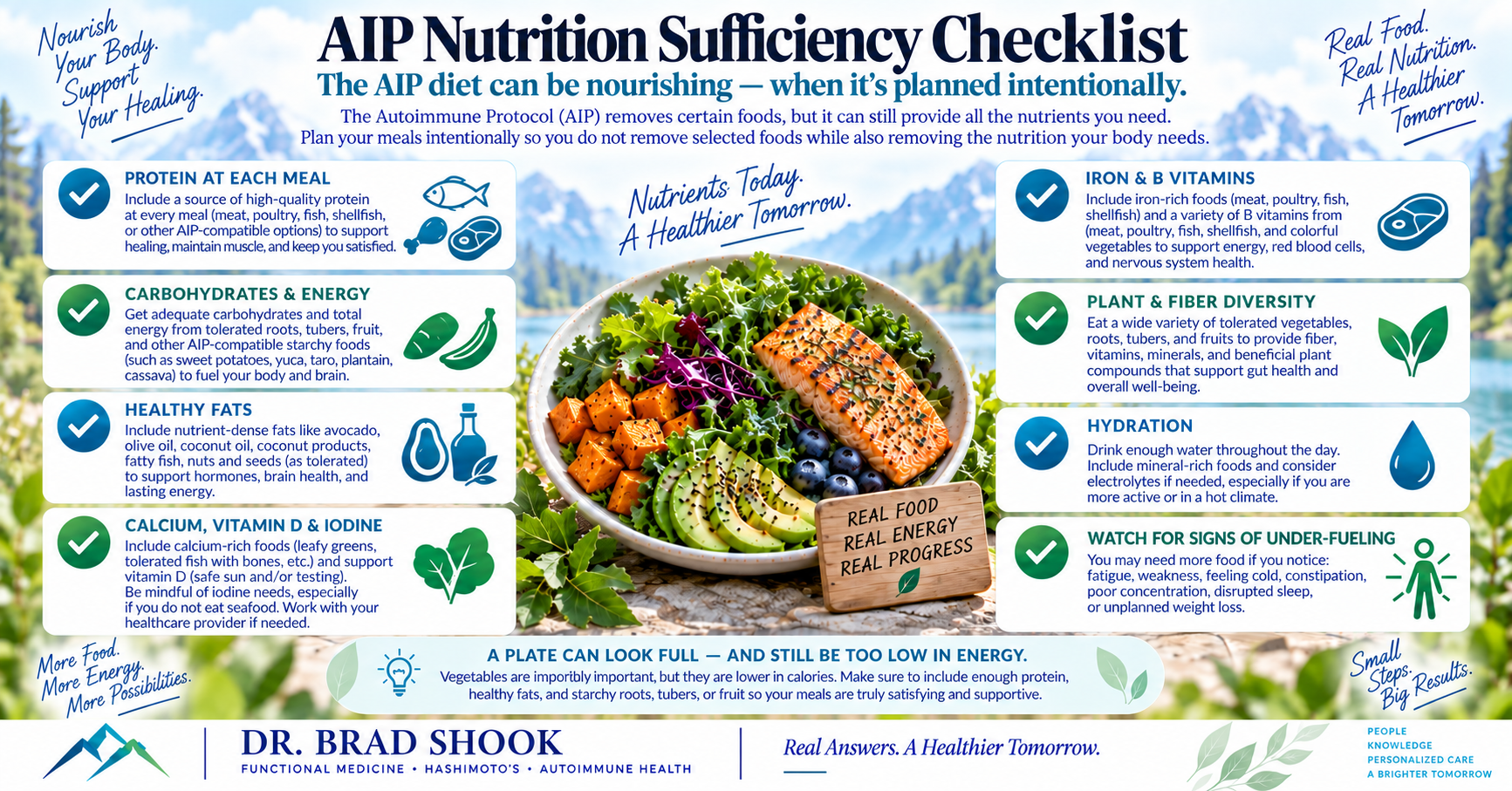
Protect Nutrition, Energy and Food Diversity
AIP can remove several major sources of calories, protein, calcium, vitamin D, iodine, iron, B vitamins, fiber and dietary variety. A plate can look full because it contains vegetables while still providing too little energy. Fatigue, weakness, feeling cold, constipation, poor concentration, disrupted sleep or unplanned weight loss may be signs that the plan needs adjustment.
Protein
Build each meal around an adequate protein source. The amount should reflect body size, activity, age, kidney health and individual goals.
Carbohydrate and energy
AIP does not have to be a very-low-carbohydrate diet. Roots, tubers, fruit, squash and plantain can help support energy when appropriate.
Calcium, vitamin D and iodine
Removing dairy can change intake of these nutrients. Do not add high-dose iodine on your own, especially with Hashimoto's.
Plant and fiber diversity
Rotate tolerated vegetables, fruits, herbs and starches instead of living on the same four foods. Diversity matters even during elimination.
Want to see how I organize nutrition and supplement foundations together? Review my 12-week Hashimoto's Supplement Protocol.
How to Reintroduce Foods After AIP
Begin reintroduction when symptoms are reasonably stable, the elimination phase has supplied enough time to observe a pattern and you can keep the rest of the diet consistent. There is no perfect universal order. Start with a food you want back and that fits your health history, nutritional needs and allergy risk.
- Choose one food and eat a small amount.
- If no immediate reaction occurs, try a larger portion later that day.
- Then remove that test food again and observe for several days.
- Record digestive, skin, energy, pain, sleep, neurological and other priority symptoms.
- If the food is tolerated, keep it in the diet or confirm it again later. If a clear reaction occurs, remove it and retest only when appropriate.
Hives, swelling, wheezing, throat tightness, fainting or other signs of an immediate allergic reaction require urgent medical attention. Do not use a home reintroduction to test a food that has caused a severe reaction.
If you begin AIP and feel worse, use the dedicated guide to eight reasons you may feel worse on the AIP diet. Worsening is feedback to investigate, not proof of detoxification or proof that the diet is working.
Weight, Cost and Real-Life Practicality
Can you lose weight on AIP?
Some people lose weight because the protocol removes many calorie-dense foods and changes meal structure. Others maintain or gain weight. AIP does not bypass energy balance, and weight loss is not proof that the autoimmune process is improving. If weight is changing when you do not want it to, measure food intake and rebuild adequate meals.
How to make AIP more affordable
- Use frozen vegetables and fruit when fresh produce is expensive or likely to spoil.
- Choose less expensive proteins such as whole poultry, canned fish, ground meat and slow-cooked cuts.
- Buy seasonal produce and compare the price per serving, not just the package price.
- Cook in batches and freeze portions to reduce waste and last-minute restaurant spending.
- Do not assume every ingredient must be organic, grass-fed or packaged as an AIP specialty product.
- Spend first on enough food and adequate nutrition, not on a long list of supplements.
When Testing Can Create a More Individualized Starting Point
A broad elimination gives everyone the same starting list. Targeted testing can help me investigate which mechanisms and food patterns are more relevant to you.
Testing is not required for every person who tries AIP. It becomes more useful when symptoms and food reactions are confusing, you already tolerate very few foods, several elimination diets have failed, or you want objective information before making a major change.
Celiac and allergy questions
Celiac blood tests and biopsy, wheat allergy evaluation, conventional allergy testing and broader food immune-reactivity testing answer different questions. The right test depends on what you are trying to understand.
Food immune fingerprint
Selected antibody testing may examine immune responses to multiple foods, including different food proteins or preparation states. This can help prioritize a more individualized starting plan.
Barrier and gastrointestinal patterns
History and targeted testing can investigate intestinal barrier markers, digestive function, microbial patterns, inflammation or pathogens when those questions fit the case.
Nutrient and metabolic baseline
Thyroid function, glucose regulation, blood count, iron status, vitamin B12, folate, vitamin D, essential fatty acids and other selected nutrients can reveal why a food list alone is not enough.
A positive food antibody result does not prove that a food caused Hashimoto's, and it should not become a permanent identity. The opportunity is to combine objective data with your history, timing, symptoms and a structured removal and reintroduction so that you have a better starting point and a measurable plan. Learn more about functional medicine testing for Hashimoto's.
Build a Plan Around Your Immune and Thyroid Pattern
AIP can reveal useful dietary information, but Hashimoto's is rarely understood by a food list alone.
I use the Environmentally Induced Autoimmunity model to look at how diet, gut health, metabolism, nutrient status, stress, sleep, infections, exposures, medications and individual immune responses connect. This gives you a way to move from trying popular diets to investigating your own pattern.
| Step | What it means for an AIP plan |
|---|---|
| DETECT | Establish a baseline and identify potential triggers using your history, timeline, symptoms and targeted laboratory testing. |
| SUPPORT | Build the plan around the highest-priority findings. Use diet, lifestyle and supplementation to support adequate nutrition, food diversity, gut health, metabolism and the nutrient needs that matter in your case. |
| REASSESS | Track your symptoms, digestion, energy, thyroid function, food tolerance, side effects and ability to follow the plan. Continue, adjust or stop parts of the plan based on how you are doing. |

For the larger dietary strategy, continue to the Hashimoto's thyroid disease diet guide. You can also explore the deeper connections involving gluten, Hashimoto's and celiac disease, dairy and Hashimoto's, and intestinal barrier health and autoimmunity. For the complete condition overview, return to the Hashimoto's disease hub.
Frequently Asked Questions
What is the AIP diet?
The Autoimmune Protocol, or AIP, is a temporary elimination and reintroduction framework. It removes several food groups for a limited period, emphasizes nutrient-dense whole foods and then reintroduces foods systematically to build a broader personalized diet.
Can the AIP diet help Hashimoto's?
It may help some people improve symptoms or identify food-related patterns, but the research is still small and preliminary. Current studies do not show that AIP reliably lowers thyroid antibodies, restores thyroid function or reverses Hashimoto's.
What foods are removed during the AIP elimination phase?
The elimination phase commonly removes grains, dairy, eggs, legumes, nightshade vegetables and spices, nuts, seeds, alcohol, coffee, cocoa and highly processed foods or additives. Exact versions differ, so use one clearly defined plan rather than mixing several lists.
What foods can you eat on AIP?
AIP meals commonly include meat, poultry, fish, shellfish, vegetables other than nightshades, fruit, roots and tubers, olive oil, avocado, coconut, herbs and fermented foods if tolerated. Organ meats and bone broth are optional, not requirements.
How long should the AIP elimination phase last?
There is no universal duration. Many structured plans use roughly 30 to 90 days, but the correct length depends on symptoms, nutritional adequacy, readiness and whether there is a clear plan for reassessment and reintroduction. AIP is not intended to remain maximally restrictive forever.
Should I be tested for celiac disease before starting AIP?
If celiac disease has not been evaluated and gluten is still in your diet, discuss testing before removing gluten. Celiac blood tests and biopsy can become falsely negative after gluten has been removed.
How do I reintroduce foods after AIP?
Reintroduce one food at a time while the rest of the diet stays stable. Begin with a small amount, increase the portion if no immediate reaction occurs, then observe symptoms for several days before testing another food. Stop and seek appropriate care for signs of an immediate allergic reaction.
Do I need food sensitivity testing before starting AIP?
Not everyone needs testing before a structured dietary trial. Testing can provide a more individualized starting point when reactions are confusing, the diet is already very narrow or you want objective information about selected immune, nutrient, barrier or gastrointestinal questions.
Can I lose weight on the AIP diet?
Weight may change if AIP changes total calorie intake, but weight loss is not guaranteed and is not the primary purpose of the protocol. Unintentional weight loss, fatigue or feeling cold can signal that the diet is not providing enough energy.
What if I feel worse after starting AIP?
Do not assume worsening symptoms mean the diet is working. Review total food and carbohydrate intake, hydration, digestion, newly emphasized foods, medication and supplement timing, thyroid status and unrelated health problems. Significant or persistent symptoms deserve individualized evaluation.
Ready for a More Individualized Hashimoto's Plan?
If you are tired of moving from one restrictive diet to another, I can help you investigate the larger pattern. The Application for Care is the next step for exploring a plan built around your thyroid function, triggers and drivers, food responses, gut health, metabolism, nutrient status, stress, sleep, exposures and measurable response.
References and Clinical Resources
- Abbott RD, Sadowski A, Alt AG. Efficacy of the Autoimmune Protocol Diet as Part of a Multi-disciplinary, Supported Lifestyle Intervention for Hashimoto's Thyroiditis. Cureus. 2019;11(4):e4556.
- Ihnatowicz P, Gębski J, Drywień ME. Effects of Autoimmune Protocol Diet on Changes in Thyroid Parameters in Hashimoto's Disease. Ann Agric Environ Med. 2023;30(3):513-521.
- Pardali EC, Gkouvi A, Gkouskou KK, et al. Autoimmune Protocol Diet: A Personalized Elimination Diet for Patients With Autoimmune Diseases. Metabol Open. 2024;25:100342.
- Konijeti GG, Kim N, Lewis JD, et al. Efficacy of the Autoimmune Protocol Diet for Inflammatory Bowel Disease. Inflamm Bowel Dis. 2017;23(11):2054-2060.
- National Institute of Diabetes and Digestive and Kidney Diseases. Diagnosis of Celiac Disease.
- American College of Gastroenterology. Celiac Disease.
- Kharrazian D, Herbert M, Vojdani A. Immunological Reactivity Using Monoclonal and Polyclonal Antibodies of Autoimmune Thyroid Target Sites With Dietary Proteins. J Thyroid Res. 2017;2017:4354723.