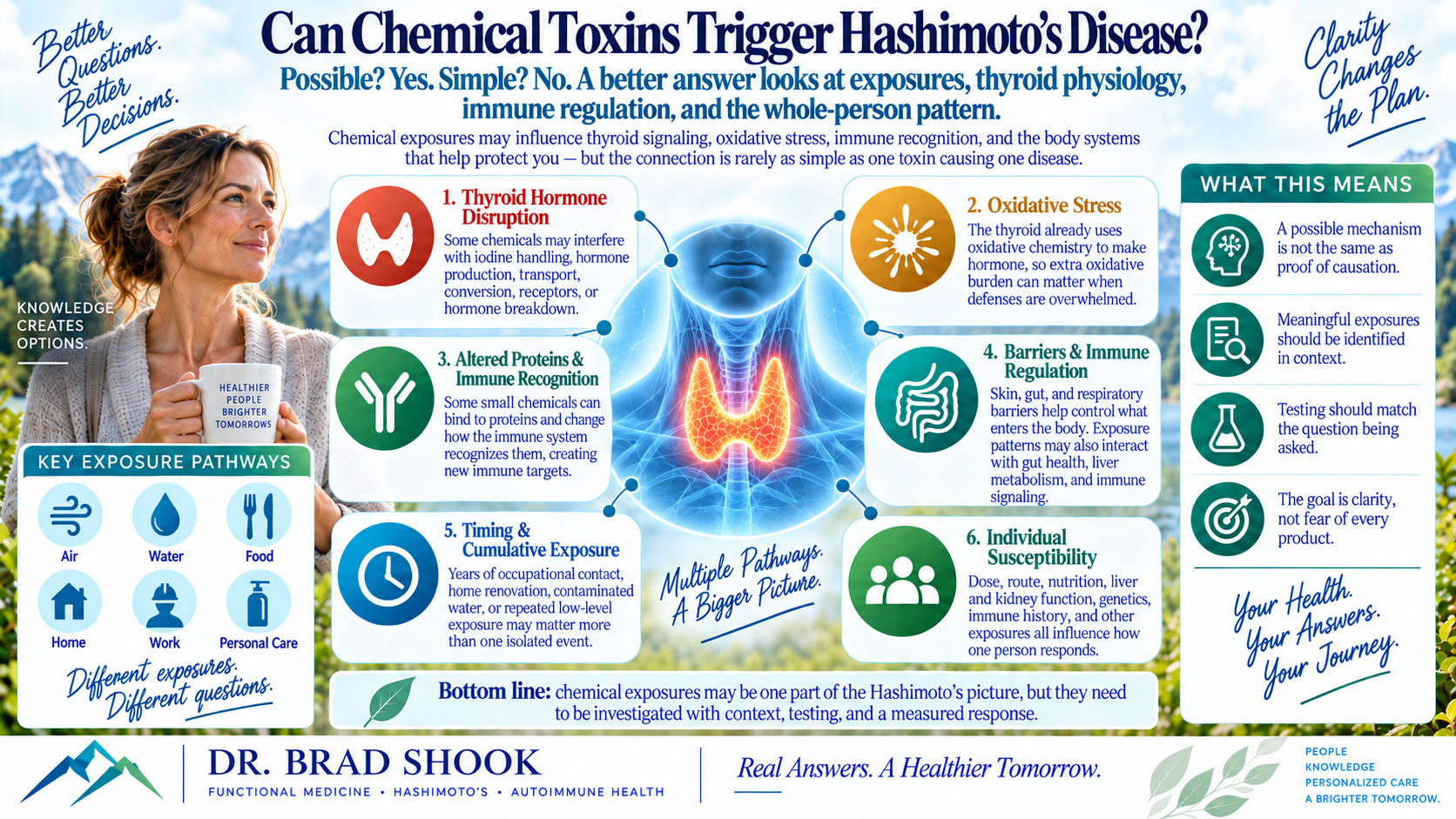
How Chemicals May Connect to Hashimoto's
Your thyroid does not function by itself. It depends on hormone production, transport through the bloodstream, conversion into active forms, receptor signaling and communication with the brain, liver, gut and immune system. A chemical may influence one or more parts of that network without being the sole cause of autoimmunity.
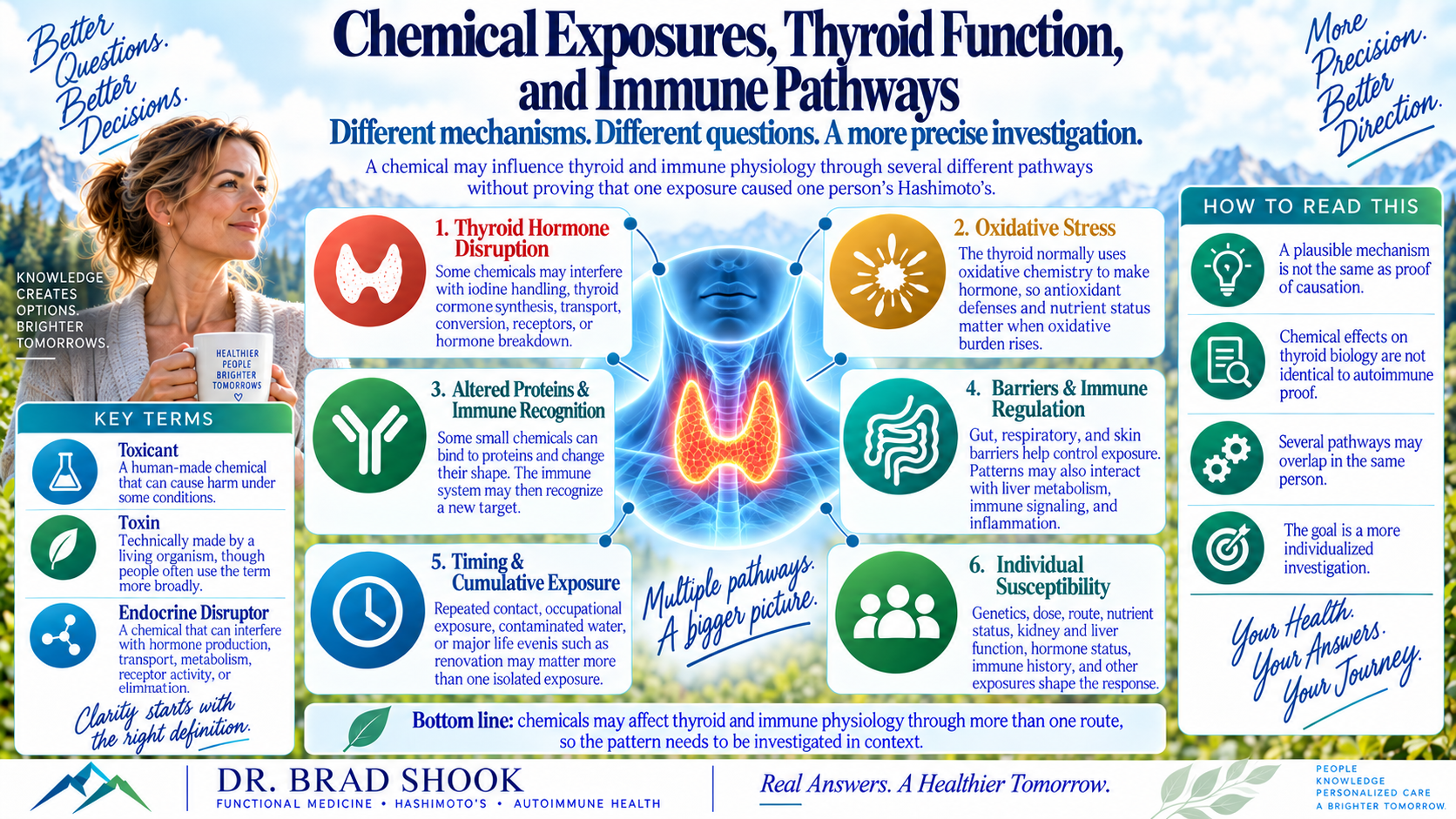
It helps to separate three terms. A toxicant is a human-made chemical that can cause harm under certain conditions. A toxin is technically made by a living organism, although people commonly use the word toxin for both. An endocrine disruptor is a chemical that can interfere with hormone production, transport, metabolism, receptor activity or elimination.
Hashimoto's is an autoimmune disease. That means the central problem is not simply low thyroid hormone. The immune system has lost normal tolerance to thyroid tissue and now reacts to it. Genetics can create susceptibility, while diet, infections, stress, sleep, nutrient status, medications, metabolism, gut health and environmental exposures can influence how that immune pattern develops and behaves. You can explore that wider framework in the Hashimoto's causes and triggers guide.
1. Thyroid hormone disruption
Some chemicals can interfere with iodine handling, thyroid hormone synthesis, transport proteins, conversion enzymes, receptors or hormone breakdown. This can change thyroid physiology even when it does not directly create autoimmunity.
2. Oxidative stress
Oxidative stress means reactive molecules are being produced faster than the body can balance them. The thyroid normally uses oxidative chemistry to make hormone, so antioxidant defenses and nutrient status are especially important.
3. Altered proteins and immune recognition
Some small chemicals can attach to human proteins and change their shape. The immune system may then recognize that chemical-protein combination as unusual. Researchers call the chemical a hapten and the changed structure a neoantigen, meaning a newly recognized immune target.
4. Barriers and immune regulation
The intestinal, respiratory and skin barriers help keep outside substances from freely entering circulation. Exposure patterns may also interact with gut health, liver metabolism, immune signaling and the nutrients needed to regulate inflammation.
5. Timing and cumulative exposure
An exposure during pregnancy, childhood, a major renovation or years of occupational contact may not have the same meaning as an occasional low-level exposure. Mixtures and repeated contact can matter more than one isolated event.
6. Individual susceptibility
Two people can encounter the same chemical and respond differently. Genetics, dose, route, nutritional status, kidney and liver function, hormone status, immune history and the presence of other exposures all shape the response.
What the Human Research Actually Shows
Research on environmental chemicals and thyroid health is important, but the evidence is not identical across chemicals. Many human studies are observational. They can show that an exposure marker and a thyroid finding occurred together, but they cannot always establish which came first or prove that the exposure caused Hashimoto's.
For example, population studies have examined PFAS, pesticides, bisphenol A and mercury in relation to thyroid hormones, hypothyroidism or thyroid antibodies. Some have reported associations, while others have found no clear association with autoimmune thyroid disease. Results can differ by sex, iodine status, antibody status, dose, timing and the specific chemical measured. That inconsistency does not mean exposures are irrelevant. It means the evidence must be used with precision.
| Exposure category | Where contact may occur | Why it is studied |
|---|---|---|
| Bisphenols and phthalates | Food-contact materials, receipts, some personal-care products and household materials | Potential effects on hormone receptors, thyroid signaling and oxidative balance |
| PFAS | Some contaminated water, stain-resistant materials, firefighting foams and certain food-contact uses | Persistence in the body and possible associations with thyroid hormone patterns |
| Pesticides | Agricultural work, pest control, contaminated surfaces and food residues | Some compounds may affect thyroid enzymes, hormone metabolism or immune signaling |
| Flame retardants and PCBs | Older building materials, furnishings, electronics, dust and legacy environmental contamination | Some structures can interact with thyroid transport and receptor systems |
| Solvents and volatile compounds | Dry cleaning, painting, fuels, adhesives, manufacturing, renovation and frequent product use | Potential endocrine, nervous-system, liver and immune effects depend on the compound and dose |
| Metals | Workplaces, contaminated water or soil, some imported products, smoking and certain foods | Mercury, lead, cadmium and arsenic can affect oxidative stress, enzymes and immune function at meaningful exposures |
| Air pollution and smoke | Traffic, wildfire smoke, combustion, indoor smoking and occupational air | Inflammation, oxidative stress and respiratory-barrier effects may influence whole-body immune load |
The important distinction: evidence that a chemical can affect thyroid biology is not the same as proof that it caused Hashimoto's in a particular person. The goal is to combine research with your exposure history, objective findings and measured response.
Your Exposome: The Total Pattern Matters
The exposome is the total pattern of exposures you experience across your life. It includes the air you breathe, water you drink, foods you eat, places you live and work, products you use, infections, medications and internal conditions such as stress and metabolism.
This broader view is often more useful than becoming focused on one bottle, fragrance or food container. A person who works with solvents, lives near contaminated water, recently renovated a home and has poor bowel regularity may need a different investigation than someone with no known occupational exposure but a strong family history of autoimmunity.
It also prevents a common mistake: assuming that a detected chemical automatically explains every symptom. We are all exposed to chemicals. The meaningful questions are which exposures are ongoing, which are present at a level that matters, which immune or physiological pathways appear affected, and which changes produce a measurable benefit for you.
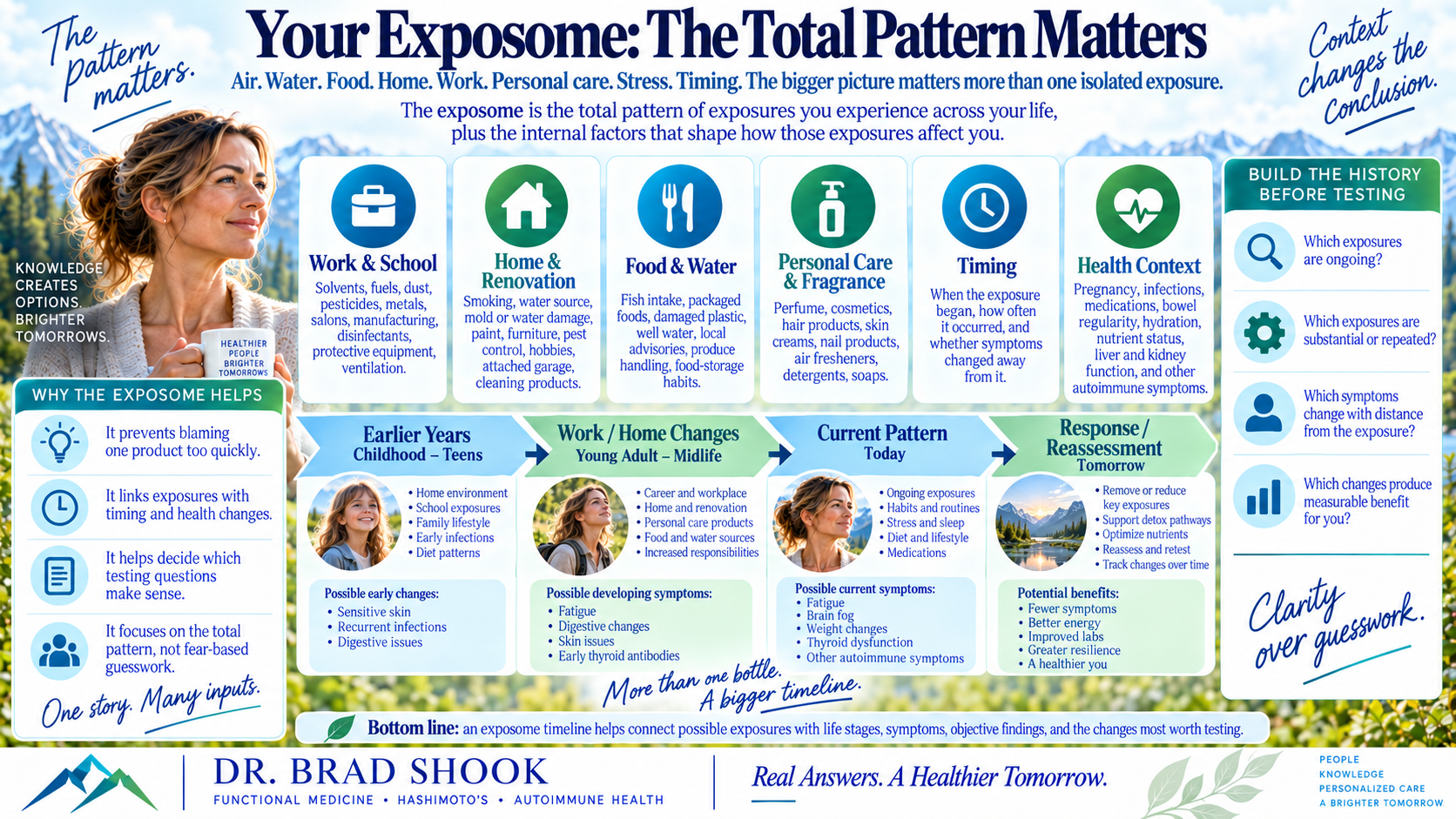
Build an exposure history before ordering tests
Testing Chemical Exposure and Immune Reactivity
Testing can give you a more individualized starting point, but only when the test matches the question. Chemical level testing and chemical immune reactivity testing are not the same thing.
| Question | Type of information | What it does not prove |
|---|---|---|
| Is a chemical or metabolite present? | Blood or urine testing may measure selected chemicals, metals or metabolites. The correct specimen depends on the substance and whether exposure was recent or persistent. | Presence alone does not prove thyroid injury, autoimmunity or the source of exposure. |
| Is there an environmental source? | Water, air, dust, soil, home or workplace assessment may help identify where contact is occurring. | A source test does not show how much entered the body or whether it caused symptoms. |
| Does the immune system recognize a chemical-bound protein? | Specialty antibody testing may look for immune reactivity to certain chemicals after they bind to human proteins and form a changed target. | It does not diagnose poisoning, measure total body burden or prove that the reaction caused Hashimoto's. |
| How is the thyroid and the rest of the case functioning? | Thyroid hormones and antibodies, blood count, metabolic markers, nutrients, barrier function, gut patterns and other targeted tests can provide context. | No single panel maps every autoimmune mechanism or replaces the clinical history. |
What chemical immune reactivity means
Some chemicals are too small to attract much immune attention on their own. When one attaches to a protein in the body, however, the combination may look different. The immune system can sometimes make antibodies that recognize the changed structure. This is called a hapten-protein or neoantigen mechanism.
That testing asks an interesting mechanistic question: is the immune system recognizing one of the chemical-bound proteins included in the panel? It does not answer every exposure question and it does not prove that a chemical initiated thyroid autoimmunity. Used in the right context, it may help create a more specific investigation and reduction plan.
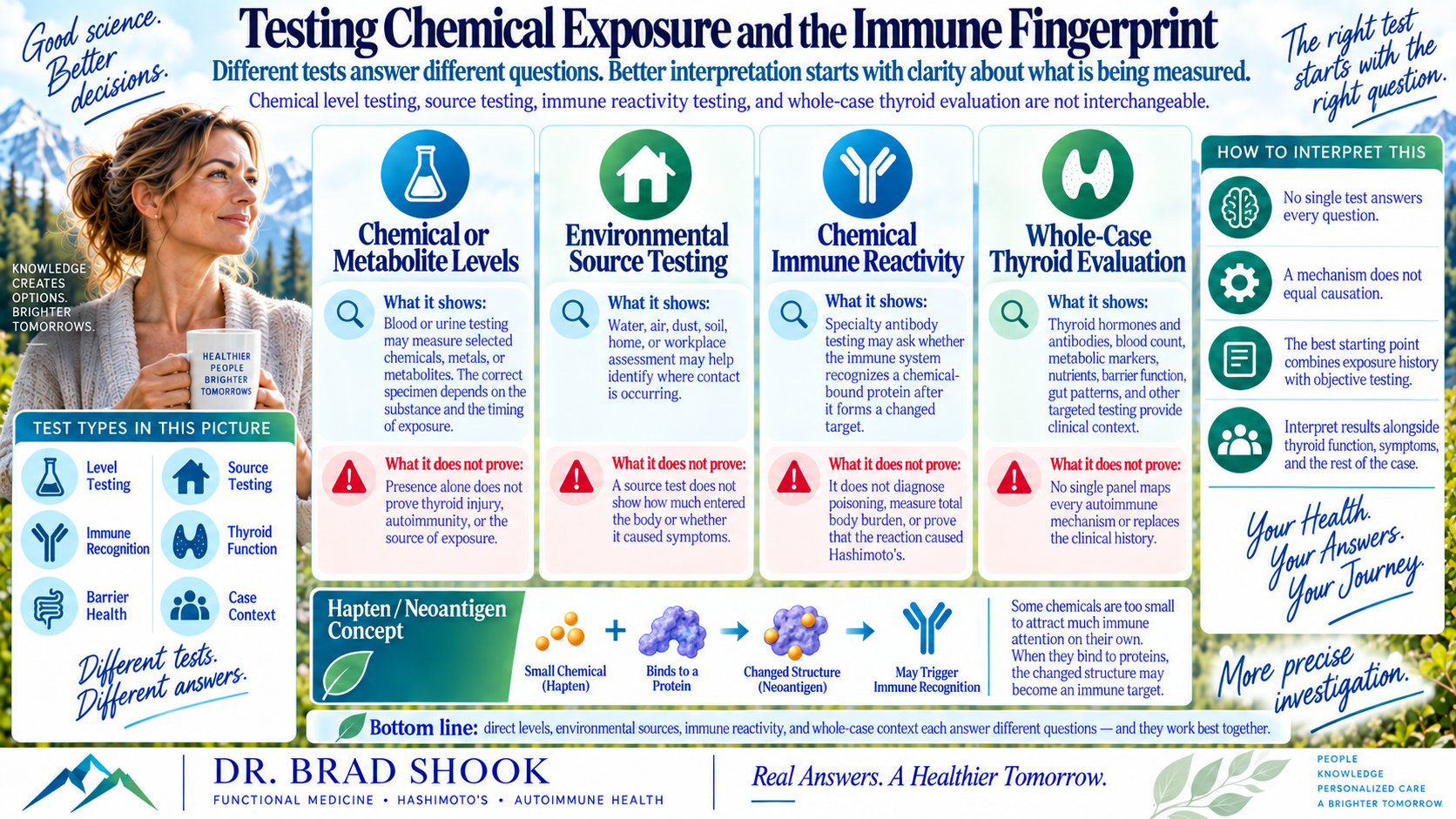
A better starting point: combine the exposure timeline with objective testing that fits the suspected chemical, then interpret it alongside thyroid function, antibodies, barrier health, nutrient status, metabolism and symptoms. This produces a more useful immune and physiological fingerprint than ordering a broad panel without a clear question.
Learn more about how I approach objective investigation in the functional medicine testing for Hashimoto's guide.
How to Reduce Meaningful Chemical Exposures
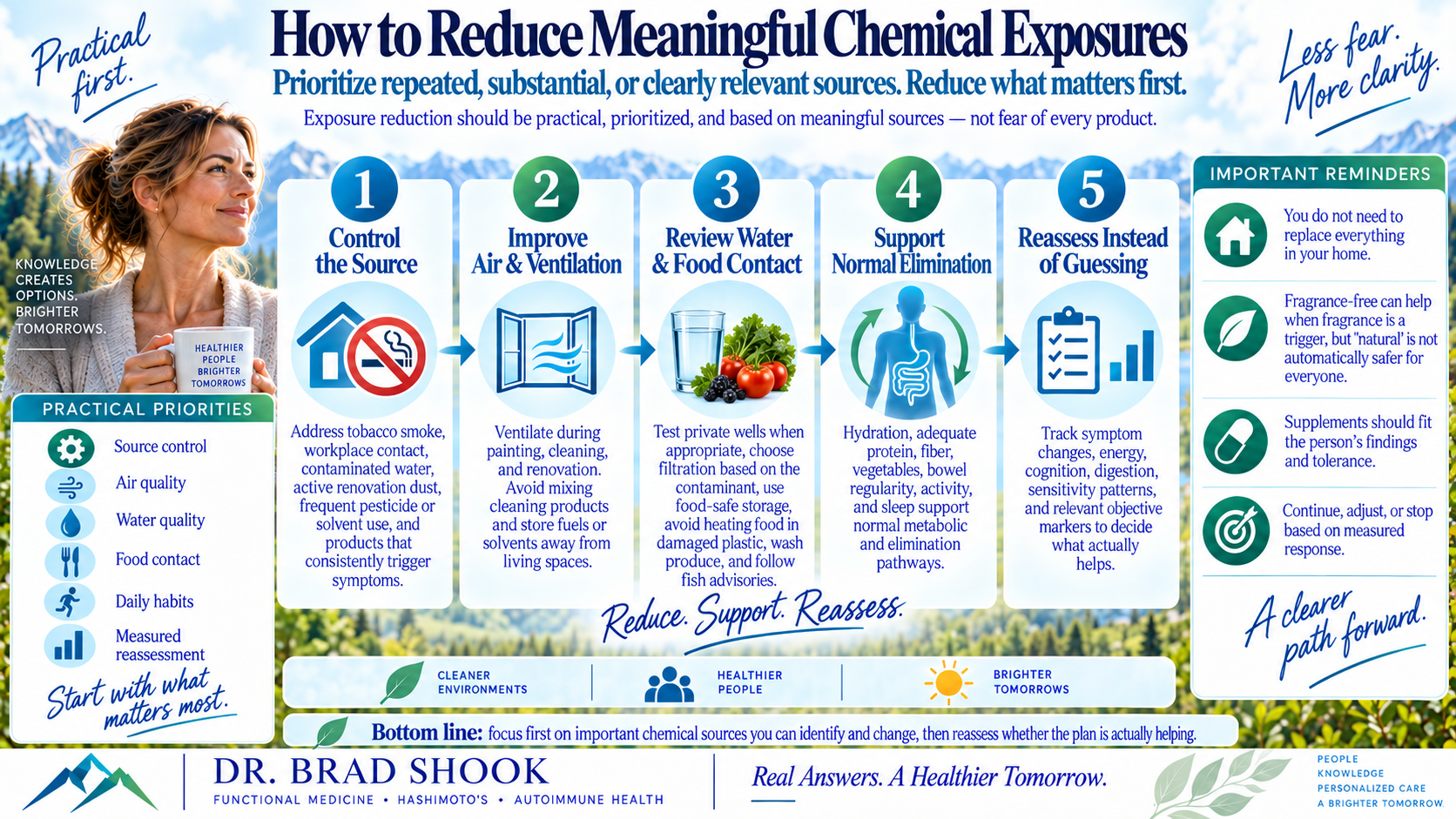
Exposure reduction should be practical and prioritized. You do not need to fear every product or replace everything in your home. Start with sources that are repeated, substantial, clearly associated with symptoms or identified through credible environmental or biological testing.
Control the source
Address tobacco smoke, workplace contact, contaminated water, active renovation dust, frequent pesticide or solvent use and products that consistently provoke symptoms. If an exposure is occupational, use the required protective equipment and workplace safety process.
Improve air and ventilation
Ventilate during painting, cleaning and renovation. Avoid mixing cleaning products. Store fuels and solvents away from living spaces and follow label instructions. Fragrance-free products can be useful when fragrance is a reliable trigger, but essential oils are not automatically safer for everyone.
Review water and food contact
Test private wells as recommended locally and choose filtration based on the contaminant, not marketing claims. Use food-safe storage, replace badly damaged plastic containers, avoid heating food in damaged plastic, wash produce and follow local fish-consumption advisories.
Support normal elimination
Hydration, adequate protein, fiber, vegetables, regular bowel movements, physical activity and sleep support the body's normal metabolic and elimination pathways. Supplements should be selected from the person's findings and tolerance rather than used as an aggressive generic detox program.
Reassess instead of guessing
Track the exposure change, symptoms, energy, cognition, digestion, sensitivity patterns, ability to follow the plan and objective markers when appropriate. Continue what helps, adjust what is not working and stop what is unnecessary or poorly tolerated.
Heavy Metals, Chelation, Sauna and Detoxification
Heavy metals deserve accurate testing and careful interpretation. The best specimen depends on the metal, the likely source and when exposure occurred. A result outside a reference range should be connected to exposure history, symptoms and accepted toxicology guidance before treatment is considered.
Chelation can be appropriate for certain confirmed poisonings, but it is not a general Hashimoto's treatment. Chelating agents can remove essential minerals, affect the kidneys and cause other serious problems. The idea that feeling worse during a detox program automatically proves that toxins are leaving the body is not a safe assumption.
Sauna and sweating can support relaxation, circulation and activity tolerance for some people. They do not replace source control, hydration, bowel regularity, appropriate nutrition or medical treatment for a confirmed poisoning. People with heat intolerance, low blood pressure, dehydration risk or cardiovascular concerns need an individualized decision.
For a suspected acute poisoning: contact emergency services or Poison Control in the United States at 1-800-222-1222. Do not wait for a wellness test or begin an unsupervised detox program.
A Functional Medicine Approach to Chemical Triggers
I use the Environmentally Induced Autoimmunity model to investigate how genes, immune triggers, physiology and environment may be interacting. Chemical exposure is one possible part of the case, not a reason to ignore diet, gut health, infections, metabolism, nutrients, stress, sleep, medications or your individual response.
Map the pattern
Build a timeline of symptoms, home and occupational exposures, diet, infections and health changes. Use targeted chemical, thyroid, immune, nutrient, metabolic, gut or barrier testing when it can clarify the pattern and establish a baseline.
Create an individualized plan
Reduce important exposure sources and build support around the highest-priority findings involving diet, hydration, bowel regularity, activity, sleep, nutrient status and your tolerance.
Measure what changes
Track symptoms, energy, cognition, digestion, sensitivity patterns, thyroid findings and the ability to follow the plan. Continue, adjust or stop based on the measured response.
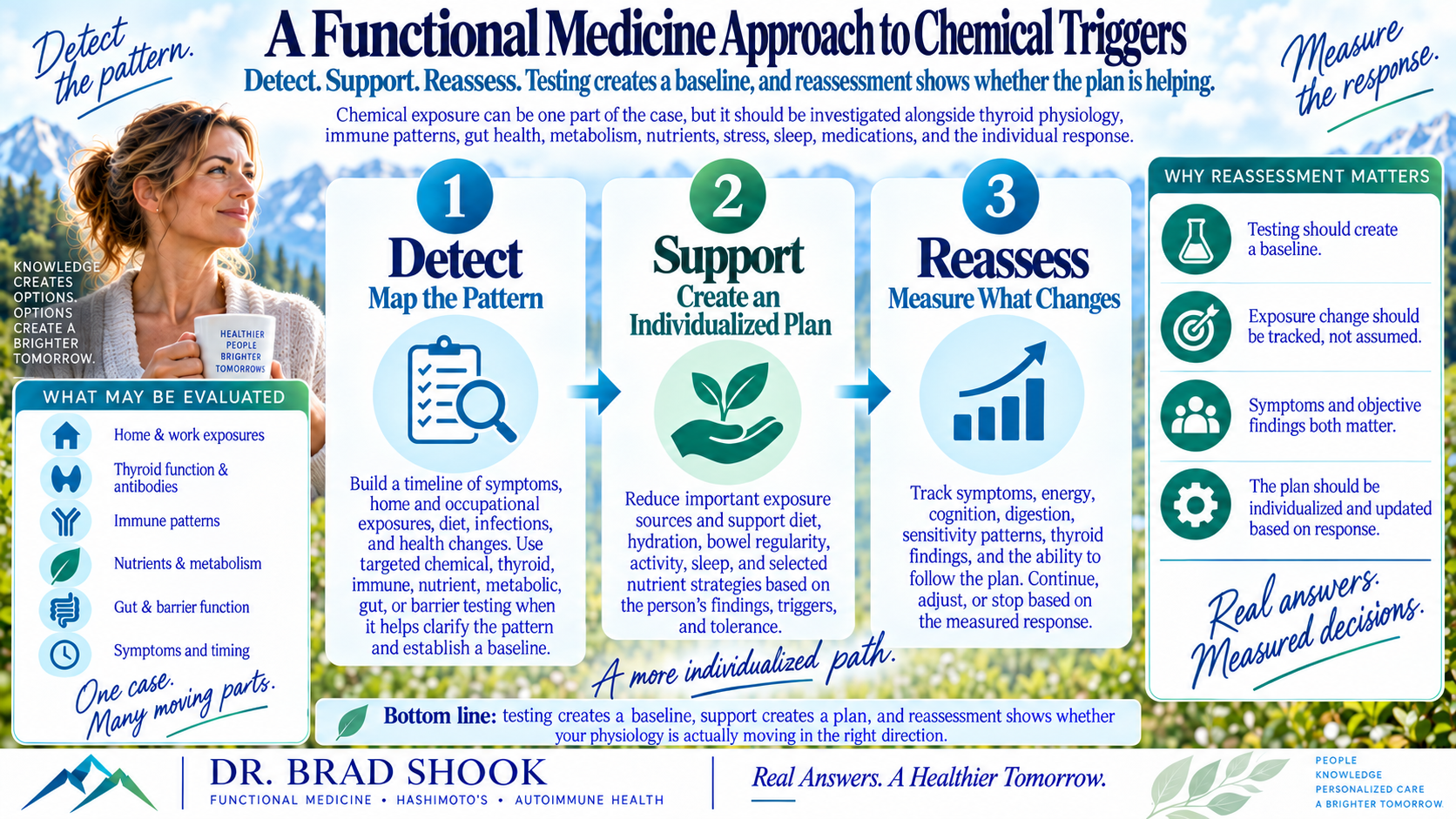
This approach creates a new opportunity beyond simply asking whether a product is toxic. It asks what is happening in your case, which mechanisms can be measured, which exposures can be changed and whether your physiology improves when the plan is implemented. For the larger process, see the Hashimoto's Doctor Method.
If scents or perfumes reliably trigger headaches, breathing symptoms, brain fog or other reactions, continue with the guide to chemical sensitivities, scents and Hashimoto's.
Frequently Asked Questions
Can chemical toxins cause Hashimoto's disease?
Certain chemicals may influence thyroid signaling, oxidative stress and immune regulation, but research usually cannot prove that one exposure caused one person's Hashimoto's. The more useful approach is to investigate credible exposures, thyroid function, immune patterns and the person's response to reducing avoidable sources.
What is an endocrine disruptor?
An endocrine disruptor is a chemical that can interfere with hormone production, transport, metabolism, receptor signaling or elimination. Because thyroid hormones help regulate energy use, temperature, growth and brain function, interference with thyroid signaling can matter even when it is not the cause of Hashimoto's.
Which chemicals have been studied in relation to thyroid health?
Research has examined bisphenols, phthalates, PFAS, pesticides, flame retardants, PCBs, solvents, air pollution and metals such as mercury, lead, cadmium and arsenic. The evidence, exposure routes and health implications differ across these categories.
What does exposome mean?
The exposome is the total pattern of exposures a person experiences over time. It can include air, water, food, work, home products, infections, medications, stress and internal metabolic conditions. It is a way to study the combined pattern instead of blaming one product without enough evidence.
Can chemical exposure testing prove what caused Hashimoto's?
No single chemical test can usually prove what caused Hashimoto's. Testing may identify a chemical or metabolite, an immune reaction involving a chemical-bound protein, or a thyroid and metabolic pattern. Those findings need to be interpreted with exposure history, timing and other clinical information.
What is chemical immune reactivity testing?
Chemical immune reactivity testing looks for antibodies that recognize certain chemicals after they have attached to proteins in the body. It may reveal an immune recognition pattern, but it does not measure every exposure, diagnose poisoning or prove that the reaction caused Hashimoto's.
Is measuring a chemical level the same as measuring an immune reaction?
No. A blood or urine level may show that a chemical or its metabolite is present. An antibody test asks whether the immune system recognizes a chemical-bound protein. These tests answer different questions, and neither result should be interpreted by itself.
Should everyone with Hashimoto's get heavy metal testing?
No. Heavy metal testing is most useful when the history, occupation, environment, symptoms or public health guidance creates a reason to investigate. The specimen and method should match the metal and the likely timing of exposure.
Can chelation treat Hashimoto's?
Chelation is not a general treatment for Hashimoto's. It may be used for specific confirmed poisonings under medical supervision, but it can cause serious side effects and should not be started from an unvalidated screening result.
Does sauna remove chemicals that trigger Hashimoto's?
Sweating and sauna may support relaxation and circulation for some people, but they have not been shown to remove the cause of Hashimoto's. Source reduction, hydration, heat tolerance and the person's medical situation matter more than assuming that more sweating means more detoxification.
What exposure reductions are most practical?
Start with important sources you can control: tobacco smoke, occupational contact, contaminated water, renovation dust, frequent solvent or pesticide use, heating food in damaged plastic and products that clearly provoke symptoms. Ventilation, protective equipment, food-safe storage and appropriate water testing can be useful first steps.
Can fragrance or perfume symptoms be related to Hashimoto's?
Fragrance can provoke irritation, headache, migraine, asthma or sensitivity symptoms in some people. That symptom pattern deserves attention, but it does not by itself prove that perfume caused Hashimoto's. A separate evaluation can help distinguish the reaction and identify practical avoidance steps.
Ready to Investigate Your Hashimoto's More Deeply?
If you have changed your diet, reduced products or tried supplements but still do not understand why your pattern persists, I can help you build a more individualized starting point. The evaluation considers your thyroid, immune patterns, exposures, gut health, metabolism, nutrient status, stress, sleep, medications and response together.
References and Clinical Resources
- National Institute of Diabetes and Digestive and Kidney Diseases. Hashimoto's Disease.
- National Institute of Environmental Health Sciences. Endocrine Disruptors.
- Webster GM, et al. Cross-sectional associations of serum perfluoroalkyl acids and thyroid hormones in U.S. adults: variation according to TPOAb and iodine status. Environmental Health Perspectives. 2016.
- Goldner WS, et al. Pesticide use and thyroid disease among women in the Agricultural Health Study. American Journal of Epidemiology. 2010.
- Gallagher CM, et al. Mercury and thyroid autoantibodies in U.S. women, NHANES 2007-2008. Environment International. 2012.
- Turan E, et al. Relationship between bisphenol A and autoimmune thyroid disease in women of childbearing age. 2024.