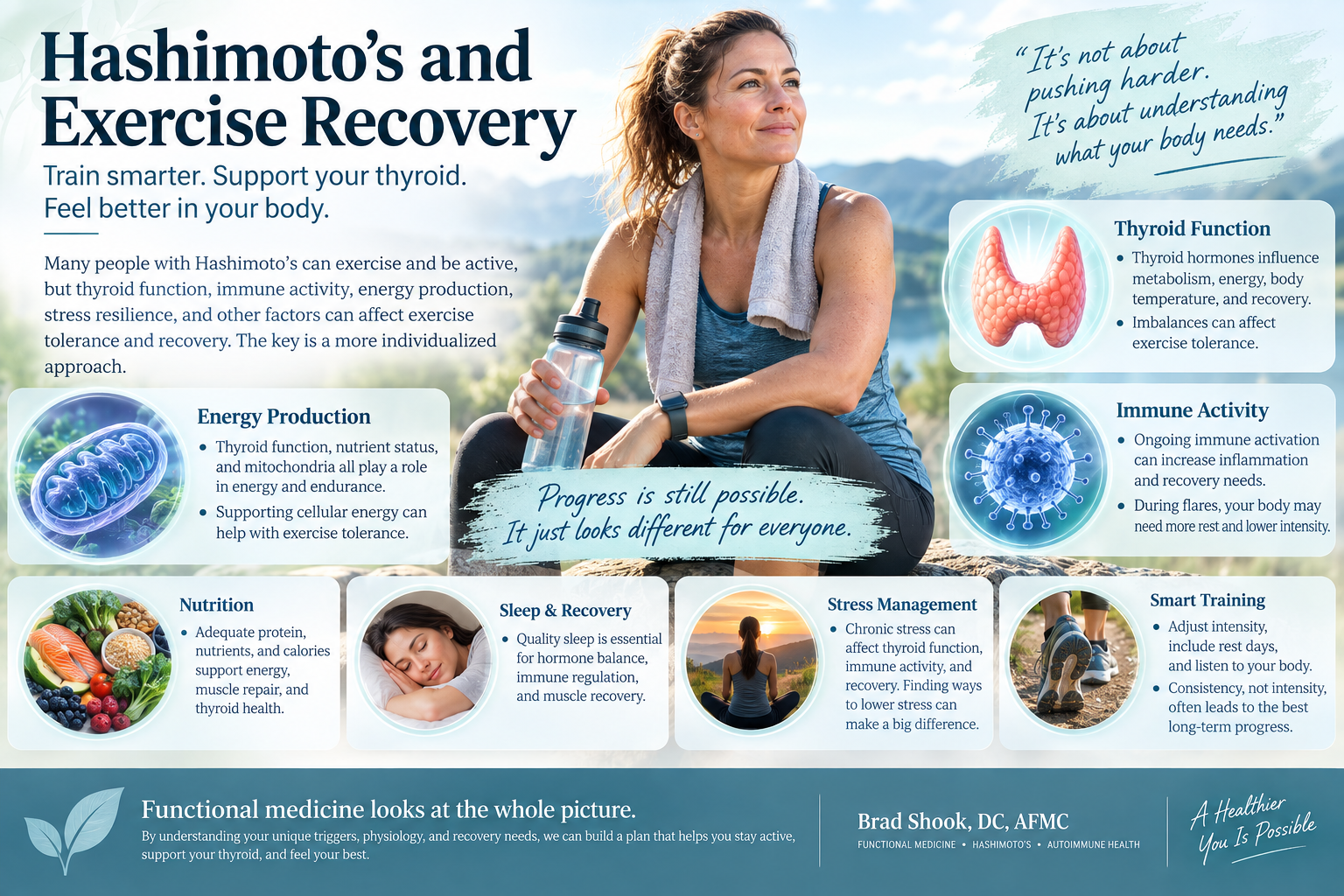
Why Exercise Recovery Can Feel Different With Hashimoto's
Thyroid hormone helps regulate how your body uses energy. When too little hormone reaches your tissues, exercise can feel harder, your heart-rate response may feel different, your muscles may fatigue sooner, and recovery may take longer.
That does not mean everyone with Hashimoto's has poor exercise tolerance. A person can have thyroid antibodies while thyroid function remains normal. Another person may have hypothyroidism that is well managed and exercise without difficulty. Someone else may have acceptable thyroid tests but still struggle because several non-thyroid factors are limiting recovery.
The first useful distinction is between effort and recovery. Effort describes how demanding the activity feels while you are doing it. Recovery describes what happens afterward: how quickly your breathing and heart rate settle, whether you can function later that day, how you sleep, how sore you become, and whether energy returns before the next planned session.
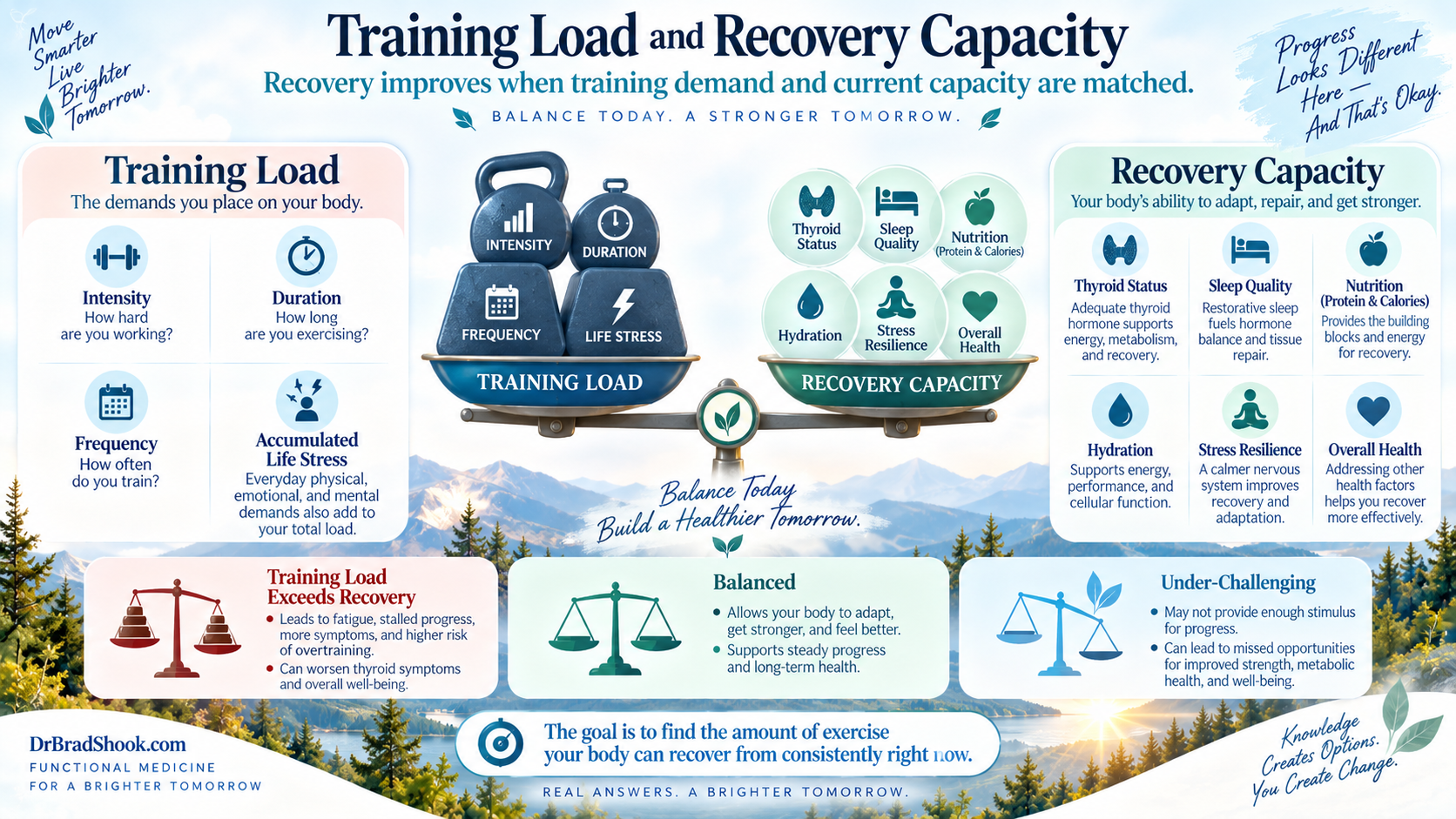
A better question than “Which exercise is bad for Hashimoto's?” is “What workload can my body recover from consistently right now?” That question creates a starting point that can improve as thyroid function, conditioning, sleep, nutrition, metabolism, and other barriers improve.
Symptoms of Disrupted Exercise Recovery Associated With Hashimoto's
One difficult workout is not the same as a persistent recovery problem. Look for a repeated pattern across several sessions. Possible signs include:
- being unable to complete workouts that were previously manageable;
- prolonged soreness, heaviness, or weakness after exercise;
- a strong urge to sleep immediately after a workout;
- fatigue that becomes worse later the same day or the following day;
- irritability, low mood, or loss of motivation as training accumulates;
- declining strength, pace, coordination, or work capacity;
- repeated sleep disruption after harder sessions;
- unexplained weight change or reduced appetite;
- loss of menstrual regularity or other cycle changes;
- more constipation, bloating, abdominal discomfort, or food intolerance;
- persistent joint, muscle, tendon, or nerve symptoms; and
- frequent illness or a sense that you never fully recover between sessions.
These findings are not specific to Hashimoto's. They can also reflect a training program that progressed too quickly, inadequate calories, low protein, dehydration, iron deficiency, sleep apnea, infection, menopause, medication effects, depression, dysautonomia, inflammatory disease, or another medical problem.
The pattern becomes more informative when you record what happened before it. Note the exercise type, duration, intensity, heat exposure, food and fluid intake, sleep, menstrual-cycle phase, medication timing, stress level, and how you felt for the following 24 to 48 hours.
Eight Factors That Can Affect Hashimoto's and Exercise Recovery
1. Your training load is higher than your current capacity
Training creates stress that the body adapts to during recovery. When the demand repeatedly exceeds what you can repair and adapt to, performance falls instead of rising. This can happen from one very hard workout, but it more often develops when frequency, duration, intensity, and life stress accumulate faster than recovery.
More exercise is not automatically better. Reducing the workload for one or two weeks can provide useful information. If energy, sleep, soreness, and performance improve, the program may have been asking too much at once.
2. The exercise plan does not fit your body right now
Walking, cycling, swimming, resistance training, yoga, and interval training create different demands. High-intensity interval training is not required for health, and it is not the right starting point for everyone. Joint pain may make low-impact conditioning more appropriate. Low strength may make resistance training a priority. Poor balance may require supervised stability work.
The best plan is the one you can perform consistently, recover from, and progress without losing function. The appropriate program can change as your health and conditioning change.
3. Thyroid function or medication consistency needs reassessment
Untreated or undertreated hypothyroidism can reduce energy, strength, exercise tolerance, and recovery. Too much thyroid hormone can also create problems, including rapid or irregular heartbeat, tremor, heat intolerance, anxiety, poor sleep, and muscle weakness.
If symptoms changed after a dose adjustment, product change, new supplement, new medication, digestive problem, pregnancy, or major weight change, review the timeline. Food, coffee, iron, calcium, some antacids, fiber supplements, and gastrointestinal conditions can change thyroid hormone absorption. Do not change the dose on your own. Bring the pattern to the prescribing clinician.
4. You are not getting enough protein or total energy
Protein provides amino acids needed to repair muscle and support many enzymes, hormones, immune functions, and tissues. People who train regularly may need more protein than a sedentary person, but the right amount depends on body size, age, kidney health, food preferences, calorie intake, and training goals.
Low overall calorie intake can be just as important. A highly restrictive diet combined with frequent exercise may leave too little energy for recovery, menstrual function, thyroid physiology, and daily life. The answer is not automatically a protein powder or a fixed gram target. It is a food plan that supplies enough energy and protein for the individual.
5. Carbohydrate intake and blood sugar do not match the training
Carbohydrates are an efficient fuel for moderate and high-intensity exercise. Too little may contribute to poor performance or prolonged fatigue in some people. Large amounts of rapidly absorbed carbohydrate without enough protein, fiber, or total meal balance can also produce uncomfortable glucose swings.
Your needs change with training intensity, duration, metabolic health, medications, and personal tolerance. A person doing gentle walking has different fuel needs from someone performing long endurance sessions or heavy resistance training. The useful approach is to connect food timing and composition to performance, symptoms, glucose patterns when measured, and recovery. If weight and metabolism are also concerns, see my guide to weight loss with hypothyroidism.
6. Sleep and circadian rhythm are limiting adaptation
Exercise does not create all of its benefits during the workout. Adaptation requires sleep and recovery. Short sleep, insomnia, sleep apnea, late alcohol use, pain, hot flashes, and an inconsistent schedule can reduce performance, increase perceived effort, and slow recovery.
Most adults benefit from roughly seven to nine hours of sleep, although individual needs vary. If you spend enough time in bed but remain unrefreshed, snore loudly, wake gasping, or struggle with severe daytime sleepiness, a sleep disorder may need evaluation.
7. Iron, vitamin B12, vitamin D, electrolytes, or other nutrients may be relevant
Iron deficiency and anemia can reduce oxygen delivery and make exertion feel unusually difficult. Vitamin B12 deficiency can affect red blood cells and nerves. Vitamin D, magnesium, and other nutrients influence muscle and bone health, although symptoms alone cannot identify a deficiency.
Hashimoto's can coexist with celiac disease or autoimmune gastritis, both of which can affect nutrient absorption. Menstrual blood loss, restrictive diets, gastrointestinal symptoms, and some medications can also change risk. Testing should be selected from the history rather than ordering every nutrient panel or taking a large supplement stack without a clear reason.
8. Stress physiology, inflammation, pain, or another condition is adding to the load
The older phrase “adrenal fatigue” is often used to describe exhaustion, but it does not identify a recognized adrenal diagnosis. Real stress physiology still matters. Psychological stress, caregiving, work demands, pain, infection, poor sleep, glucose instability, and excessive training all add to the total load the body must manage.
Inflammation can contribute to fatigue and soreness, but it should not be assumed to be the explanation for every difficult workout. Joint disease, tendon injury, anemia, cardiovascular problems, respiratory disease, neurological symptoms, and medication effects require their own evaluation. The functional medicine opportunity is to investigate the connected pattern instead of forcing every symptom into one label.
What Research Says About Exercise With Hypothyroidism
Research on exercise in people with hypothyroidism is still limited and varies in program length, exercise type, thyroid status, and outcome measures. A 2023 systematic review and meta-analysis found that exercise may improve several physical and mental health outcomes, while pooled changes in TSH, free T4, and free T3 were not statistically significant. Individual trials have reported improvements in exercise capacity and quality of life.
The practical message is important: exercise does not have to lower TSH or thyroid antibodies to be valuable. Strength, cardiovascular fitness, insulin sensitivity, mood, sleep, bone health, mobility, and confidence are meaningful outcomes. Exercise is a tool for improving health and function, not a test of willpower and not a proven cure for Hashimoto's.
Do not use thyroid antibodies as the only scorecard. A person may walk farther, lift more, sleep better, think more clearly, and recover more reliably without a dramatic change in antibodies. Those improvements still matter.
What Types of Exercise Are Best for Hashimoto's?
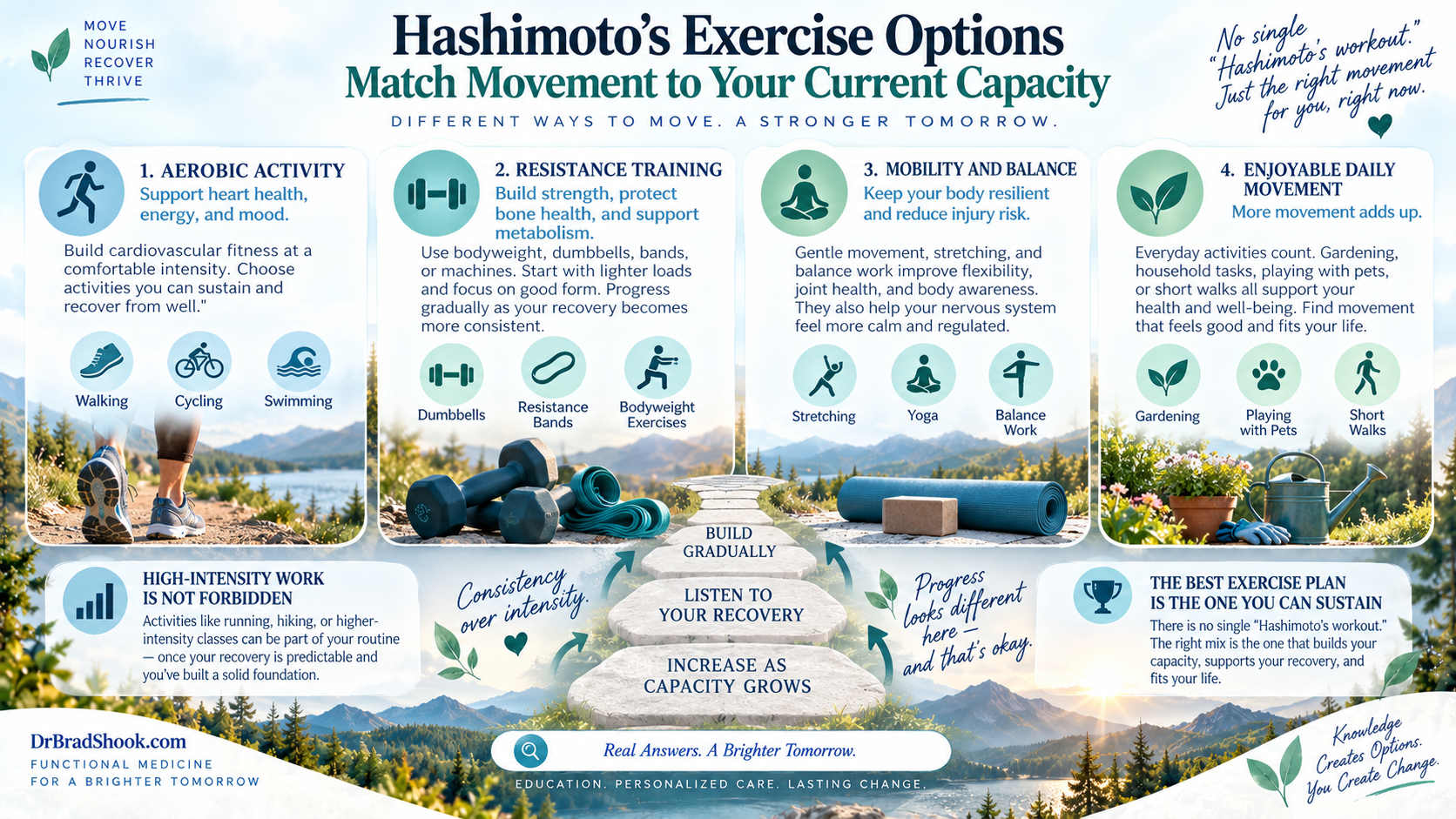
There is no single Hashimoto's workout. Most people benefit from a combination of four movement categories, scaled to current capacity.
Aerobic activity
Walking, cycling, swimming, dancing, and similar activities build cardiovascular fitness. Begin at an intensity that allows you to speak in sentences and finish with some energy left.
Resistance training
Weights, bands, machines, or body-weight movements help preserve muscle, bone, glucose regulation, and independence. Technique and gradual progression matter more than starting heavy.
Mobility and balance
Mobility, balance, and stability work can improve movement confidence and reduce unnecessary strain. They are especially useful when pain, deconditioning, or neurological symptoms affect exercise choices.
Enjoyable daily movement
Gardening, household activity, short walks, and movement breaks reduce sedentary time. They count even when they do not look like a formal workout.
High-intensity exercise is not forbidden. It is earned by building a base and confirming that recovery is predictable. If a brief interval session consistently disrupts sleep or function for several days, return to a lower intensity and investigate why capacity is limited.
A Graded Exercise and Recovery Plan
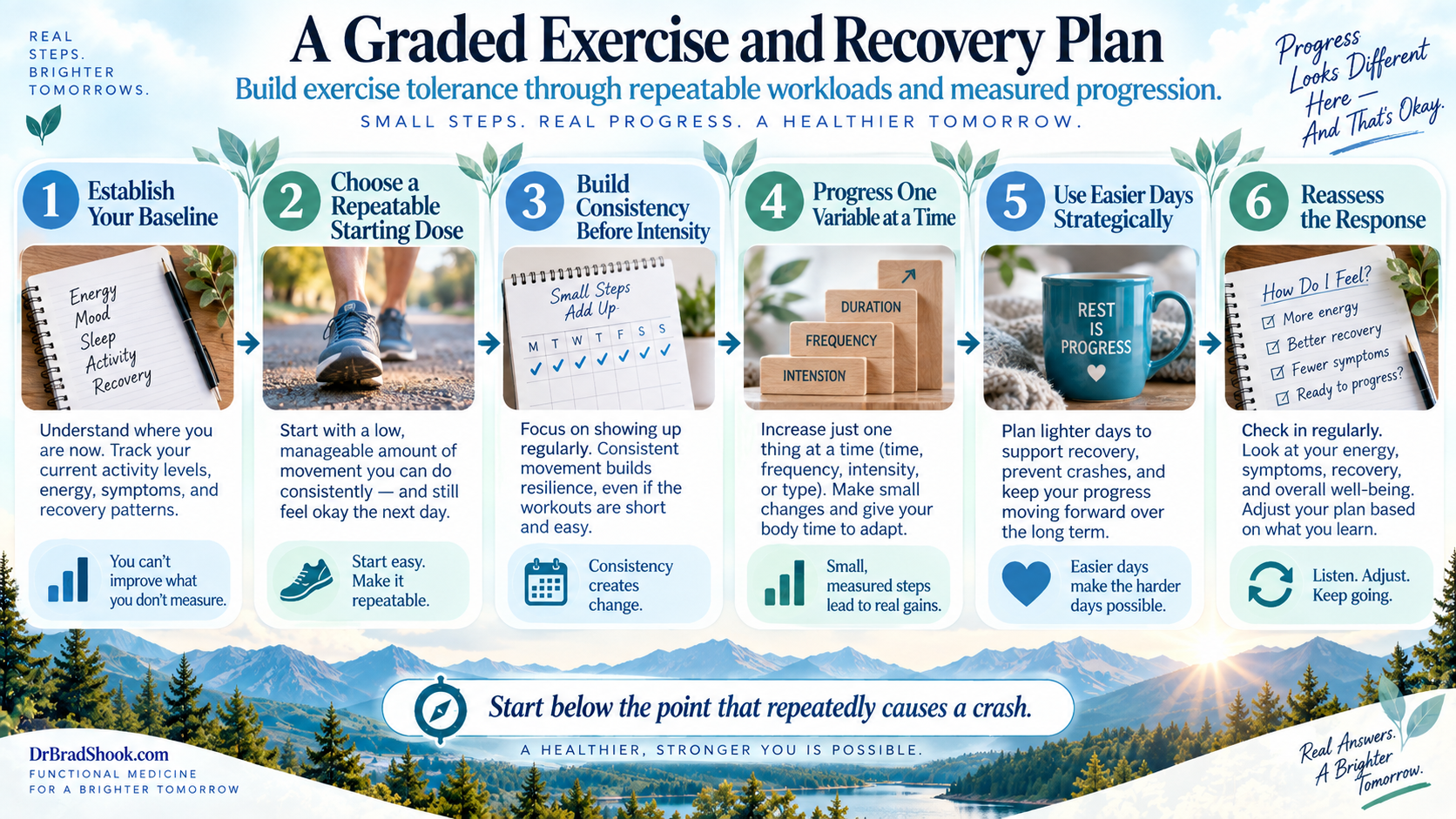
Start below the point that repeatedly causes a crash. The purpose of the first phase is not to prove what you can tolerate once. It is to find what you can recover from and repeat.
Establish your baseline
Record current daily movement, recent workouts, symptoms, sleep, soreness, heart symptoms, and how long recovery takes. If normal daily activity is already difficult, begin there rather than adding a formal training plan immediately.
Choose a repeatable starting dose
Select an activity and duration that you can complete without a major symptom increase later that day or over the next one to two days. Short sessions are legitimate starting points.
Build consistency before intensity
Repeat the manageable workload until recovery is predictable. Add basic resistance work when appropriate. Warm up, use good technique, hydrate, and eat enough to support the training.
Progress one variable at a time
Increase duration, frequency, resistance, or intensity, but not all of them in the same week. Small changes make it easier to identify what your body can adapt to.
Use easier days strategically
Alternate demanding and lighter sessions. Recovery may include gentle walking, mobility, adequate food, hydration, sleep, and time away from structured exercise.
Reassess the response
Review energy, function, sleep, soreness, mood, heart symptoms, pain, digestion, cycle changes, and performance. Continue what is working, adjust what is not, and investigate persistent limitations.
How to Know if You Are Working Out Too Much
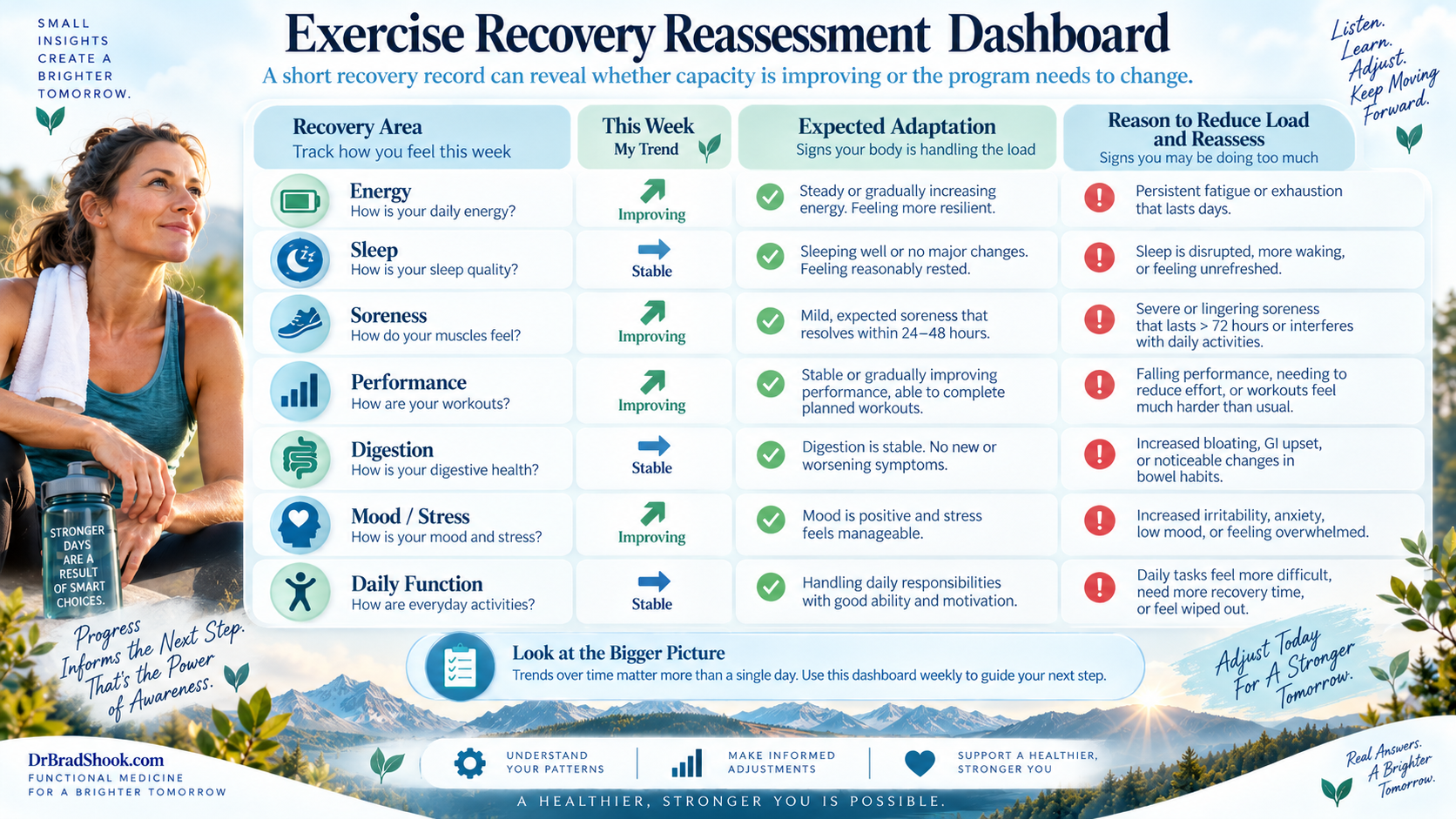
Muscle fatigue during a workout and mild soreness after a new activity can be normal. A recovery mismatch is more likely when symptoms accumulate across days or weeks and your capacity keeps declining.
| Expected adaptation | Reason to reduce load and reassess |
|---|---|
| Mild soreness that improves within a day or two | Severe or increasing soreness that repeatedly limits normal activity |
| Temporary tiredness with normal function later | Exhaustion that requires sleep or persists for several days |
| Stable or gradually improving performance | Falling strength, pace, coordination, or tolerance over several sessions |
| Sleep remains stable or improves | Hard sessions repeatedly cause insomnia or unrefreshing sleep |
| Motivation varies but returns | Persistent irritability, low mood, dread, or loss of motivation |
| Cycles remain regular for the individual | New menstrual irregularity, missed periods, or other hormonal changes |
A simple weekly record can help. Track the type and duration of exercise, your perceived effort, energy before and after, sleep quality, soreness, resting heart rate if you already monitor it, and whether you could perform normal work and family responsibilities. One number is not diagnostic. The trend is what helps guide the next decision.
What to Investigate When Exercise Leaves You Exhausted
If recovery remains poor after reducing the workload and improving sleep and fueling, the next step is to determine what is limiting capacity. Depending on the history and symptoms, important questions may include:
- Are TSH and free T4 appropriate for the current situation, and has medication timing or absorption changed?
- Is anemia, low iron availability, vitamin B12 deficiency, vitamin D deficiency, or another nutrient problem present?
- Is celiac disease, autoimmune gastritis, intestinal inflammation, constipation, poor digestion, or another gastrointestinal problem affecting nutrients or medication absorption?
- Are calories, protein, carbohydrate, essential fatty acids, fluids, and electrolytes adequate for the amount of exercise?
- Are sleep apnea, insomnia, pain, menopause, mood changes, or a medication effect reducing recovery?
- Do symptoms suggest glucose dysregulation, cardiovascular disease, respiratory disease, dysautonomia, infection, or another autoimmune condition?
- Did the pattern begin after an infection, pregnancy, a major exposure, a new medication, a diet change, or prolonged stress?
- Are food immune reactions, barrier-system problems, pathogen-related immune patterns, chemical immune reactions, or broader immune-cell patterns relevant to the individual case?
Standard laboratory testing often provides the first layer. More specialized functional or immune testing should be chosen because it helps answer a defined question, not because everyone with Hashimoto's needs every available panel. A positive antibody or immune marker is a clue that must be interpreted with the timeline, symptoms, examination, conventional testing, and response.
For broader context, review the guides to Hashimoto's diagnosis and thyroid testing, gut and barrier health, and Hashimoto's diet and nutrient foundations.
A Functional Medicine Opportunity for Better Exercise Recovery
My Environmentally Induced Autoimmunity model looks beyond the label of exercise intolerance. It asks what is limiting energy production, muscle recovery, immune regulation, and adaptation in you at this time.
The pattern may involve thyroid hormone status, medication absorption, anemia, nutrients, protein and carbohydrate availability, blood sugar, mitochondria, gut and barrier health, sleep, stress physiology, infections, exposures, pain, hormonal transitions, or the training plan itself. Several factors may be interacting.
DETECT
Establish a baseline using your history, symptom timeline, current exercise tolerance, recovery pattern, diet, sleep, medications, life stress, and targeted laboratory testing. Identify the triggers and barriers most likely to explain why recovery is disrupted.
SUPPORT
Adjust exercise to a level your body can recover from, then build a focused plan around the highest-priority findings involving diet, protein and fuel availability, sleep, stress, gut function, metabolic health, and supplementation.
REASSESS
Track your energy, strength, endurance, soreness, sleep, cognition, digestion, cycle patterns, laboratory findings, side effects, and ability to follow the plan. Then continue what is working, progress the exercise dose, adjust the plan, or stop what is unnecessary.
The objective is not permanent exercise restriction. It is to understand your current capacity, remove unnecessary barriers, and build a level of movement that expands what you can do over time.
Continue with the complete Hashimoto's guide, explore Hashimoto's causes and triggers, or see how I evaluate Hashimoto's with functional medicine.
When to Stop Exercise and Get Medical Help
Exercise-related symptoms should not automatically be labeled a Hashimoto's flare. Stop exercising and seek urgent medical evaluation for chest pain, fainting, severe or unusual shortness of breath, a sustained rapid or irregular heartbeat, sudden weakness or numbness, new confusion, or sudden changes in speech, vision, balance, or coordination.
Prompt non-emergency evaluation is also appropriate for a major unexplained decline in exercise capacity, repeated dizziness, unusual swelling, significant menstrual changes, progressive weakness, persistent fever, unexplained weight loss, or fatigue that continues despite reducing the workload.
If you are pregnant, recently postpartum, have known heart or lung disease, severe anemia, uncontrolled blood pressure, major neurological symptoms, or recently changed thyroid medication, get individualized guidance before returning to demanding exercise.
Frequently Asked Questions About Hashimoto's and Exercise
What is the best exercise for Hashimoto's?
There is no single best exercise for everyone with Hashimoto's. A balanced plan usually combines comfortable aerobic activity, resistance training, mobility, and regular daily movement. The right starting point depends on thyroid status, current capacity, symptoms, medical history, and recovery.
Can exercise make Hashimoto's worse?
Exercise does not generally cause Hashimoto's to worsen. A workout that is too demanding for your current capacity can temporarily intensify fatigue, soreness, poor sleep, pain, or other symptoms. That usually signals a mismatch between training load and recovery or a health factor that deserves investigation.
Why am I exhausted after exercise with Hashimoto's?
Possible reasons include inadequate thyroid hormone, inconsistent medication absorption, too much training, insufficient sleep, inadequate calories or protein, iron or vitamin B12 deficiency, blood sugar problems, infection, pain, medication effects, menopause, or another medical condition. The timing and duration of the fatigue help narrow the possibilities.
Should I avoid high-intensity exercise if I have Hashimoto's?
Not automatically. High-intensity exercise can be appropriate when thyroid function is stable, baseline conditioning is adequate, recovery is predictable, and no medical contraindication is present. It is usually better to earn intensity gradually than to begin with it while symptoms are unstable.
Can exercise lower thyroid antibodies or TSH?
Research has not shown a consistent effect on TSH, free thyroid hormones, or thyroid antibodies. Exercise can still improve fitness, strength, mood, metabolic health, function, and quality of life even when thyroid laboratory values do not change.
How long should recovery take after exercise?
Recovery varies with age, conditioning, workout type, sleep, nutrition, stress, and health status. Mild soreness for a day or two can be normal after a new activity. Severe symptoms, declining performance, or exhaustion that repeatedly lasts several days suggests that the workload or an underlying factor needs reassessment.
How should I restart exercise after a flare or illness?
Begin below your previous workload, choose an activity you can complete without a major symptom increase, and change only one variable at a time. Track how you feel during the session, later that day, and over the next one to two days before progressing.
When should exercise symptoms receive urgent medical evaluation?
Stop exercising and seek urgent evaluation for chest pain, fainting, severe or unusual shortness of breath, a sustained rapid or irregular heartbeat, sudden weakness or numbness, new confusion, or sudden speech, vision, balance, or coordination changes.
Ready to Understand Why Recovery Feels So Difficult?
I use the Environmentally Induced Autoimmunity model to investigate the thyroid, immune, metabolic, digestive, nutrient, sleep, stress, hormonal, medication, and training patterns affecting your recovery. The process is clear: DETECT what may be limiting capacity, SUPPORT the highest-priority findings, and REASSESS what changes and what your response teaches us.
References and Clinical Resources
- Duñabeitia I, et al. Effect of physical exercise in people with hypothyroidism: systematic review and meta-analysis.
- Ahmad AM, et al. Effects of aerobic, resistance, and combined training in women with hypothyroidism.
- Werneck FZ, et al. Exercise training and quality of life in women with subclinical hypothyroidism.
- National Institute of Diabetes and Digestive and Kidney Diseases. Hypothyroidism.
- American Thyroid Association. Hashimoto's Thyroiditis.