
Why Can Perfume and Everyday Scents Make You Feel Sick?
A scent reaches more than your sense of smell. Airborne ingredients can interact with the nose, eyes, skin, airways and the nerve pathways that detect irritation. That is why two people can enter the same room and have very different responses.
For one person, a strong fragrance is simply unpleasant. For another, it may trigger a migraine within minutes. Someone with asthma may develop coughing or chest tightness. A person with contact allergy may develop a rash where a fragranced product touched the skin. Others report a wider pattern that can include fatigue, dizziness, nausea, brain fog, palpitations or a feeling that their entire system has been overwhelmed.
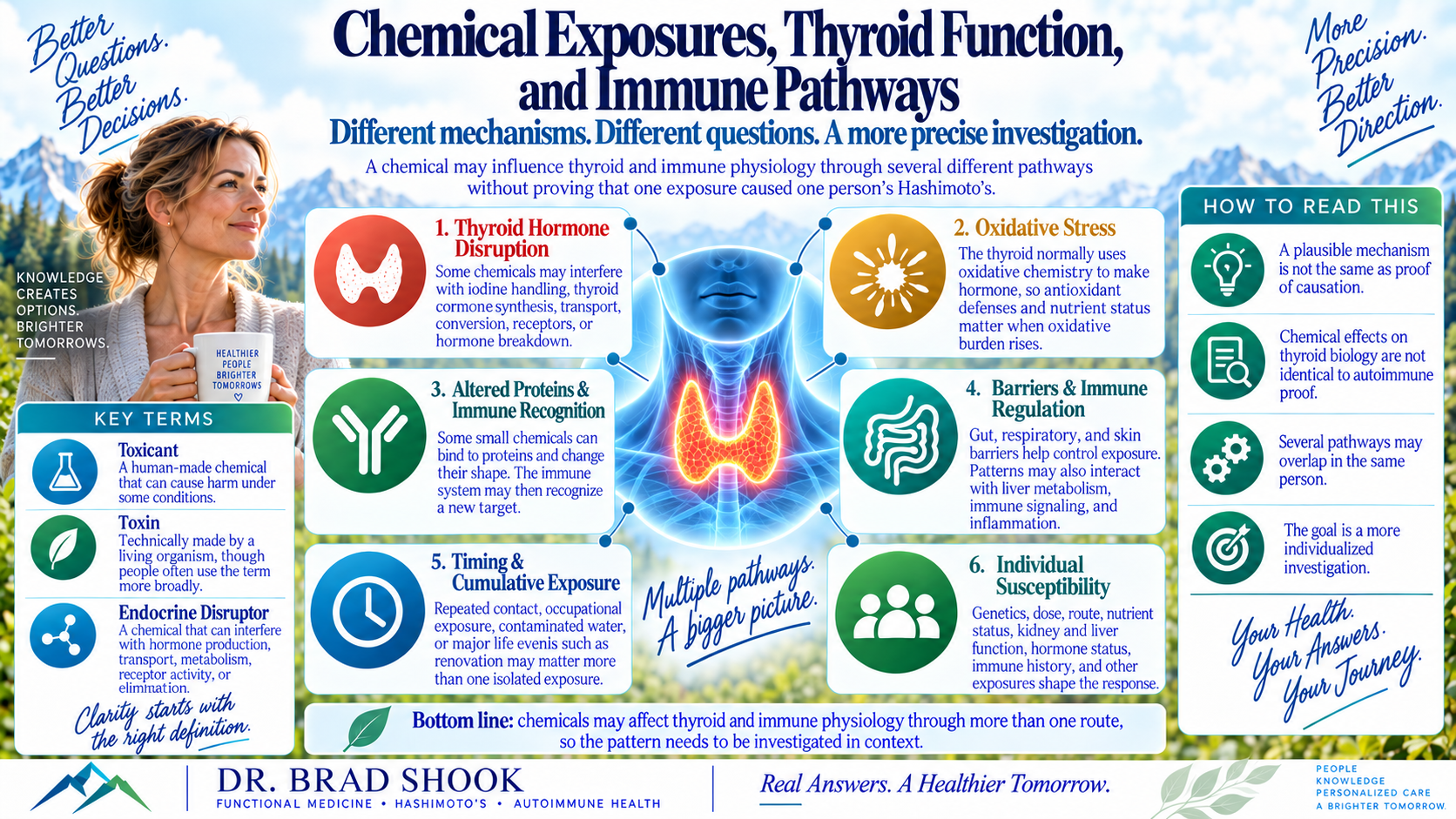
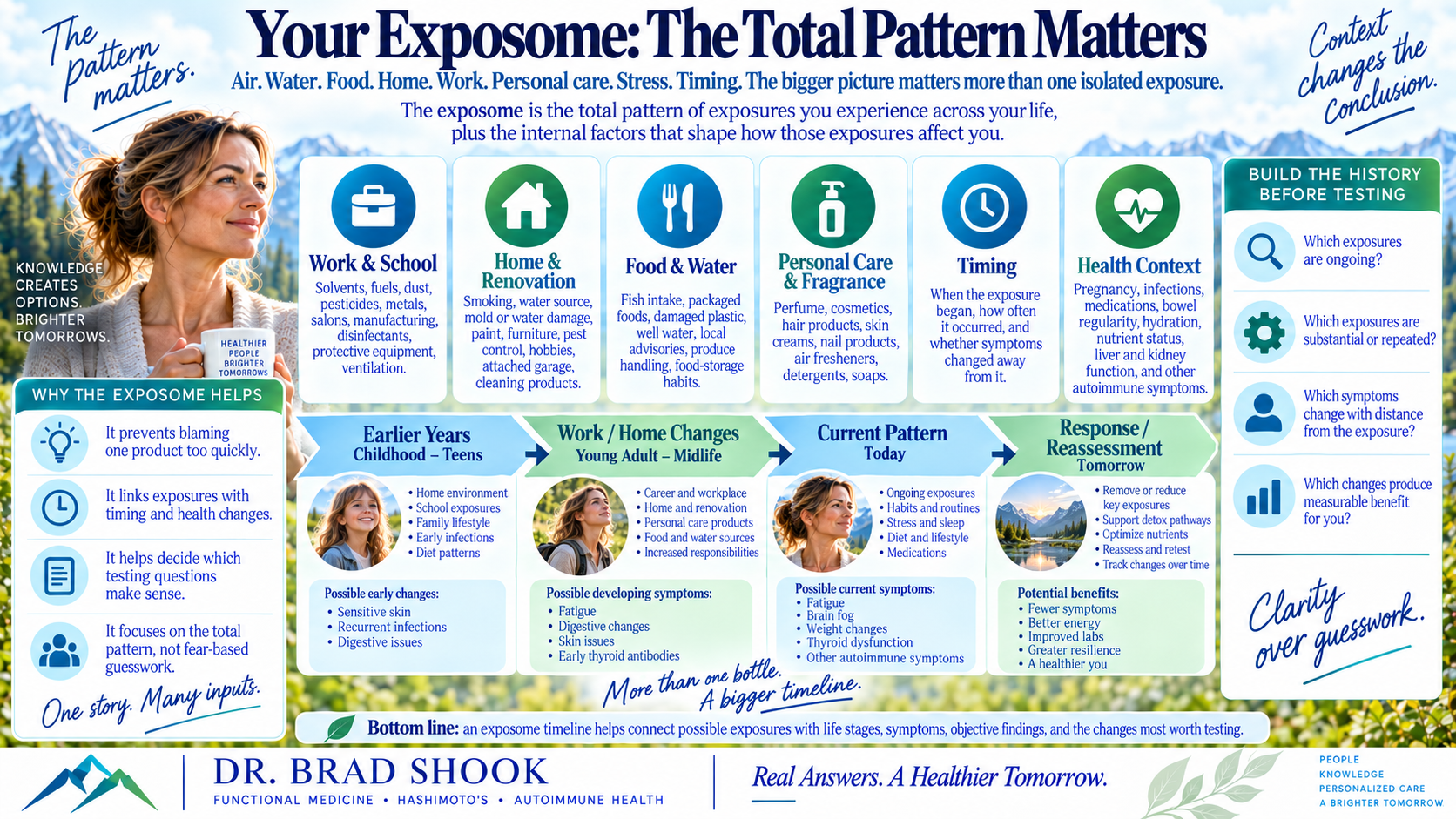
Common sources include perfume and cologne, scented laundry products, dryer sheets, plug-in air fresheners, candles, room sprays, personal-care products, cleaning products, smoke, fuel exhaust, paint, new flooring and other products that release volatile compounds into the air.
Your symptoms are real even when the mechanism is not obvious. The answer is not to assume every reaction is an allergy, a toxin buildup or an autoimmune flare. It is to determine which explanation best matches what happens to you.
What Is the Connection Between Chemical Sensitivities and Hashimoto's?
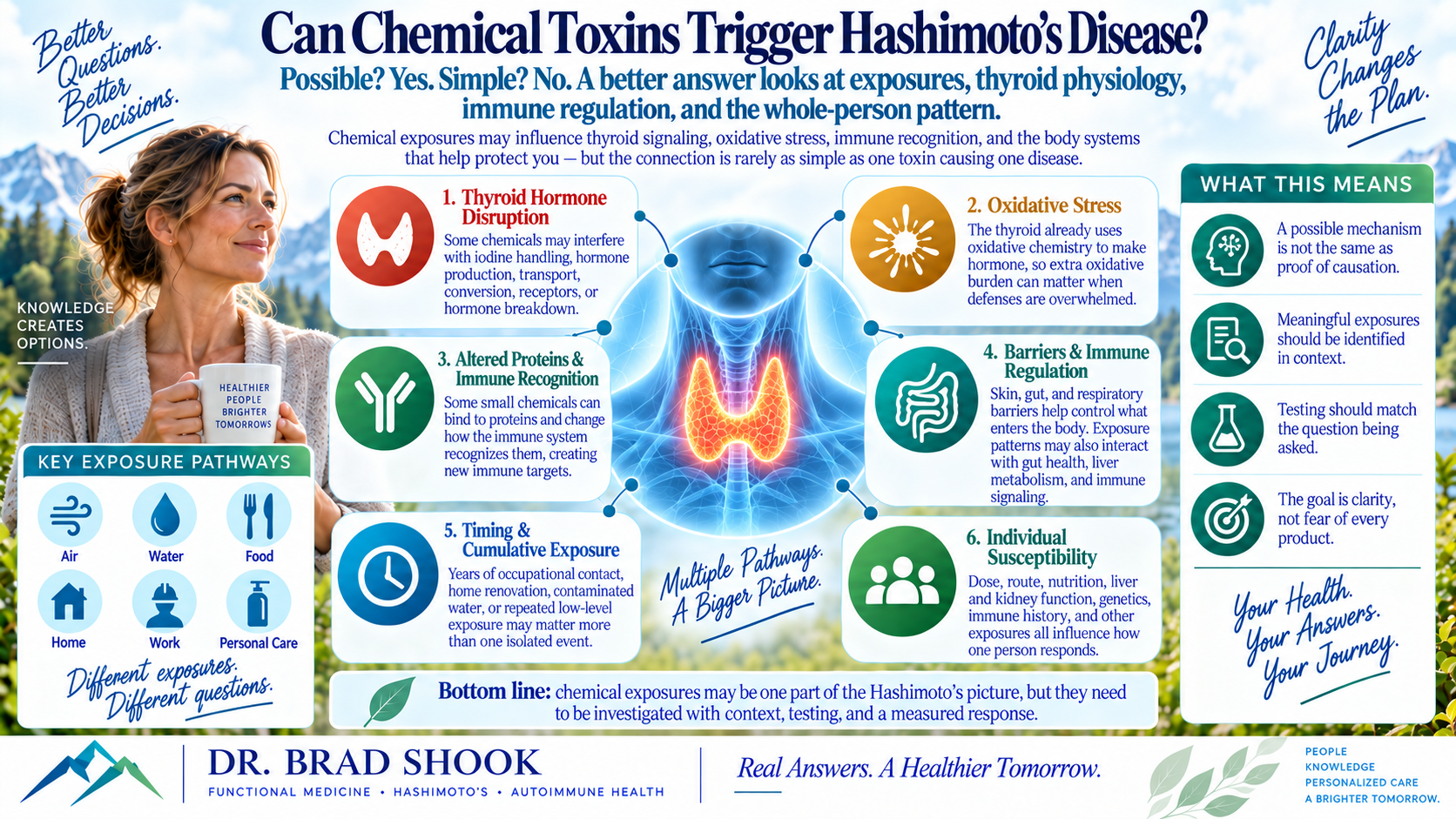
The direct connection is still uncertain. Hashimoto's is an autoimmune condition in which the immune system reacts to thyroid tissue as though it were foreign. Chemical sensitivity describes symptoms that occur around particular exposures. Having one condition does not prove that it caused the other.
There are still several reasons to look at them together:
Symptoms can overlap
Fatigue, headache, brain fog, dizziness, poor concentration and changes in energy can occur with thyroid dysfunction, migraine, sleep disruption, stress responses and chemical intolerance. Overlap can make every reaction feel like Hashimoto's even when more than one process is involved.
Environmental chemicals can affect thyroid physiology
Human studies have linked some chemical exposures with changes in thyroid hormones or thyroid regulation. Findings involving thyroid antibodies are mixed, so this evidence does not support blaming every fragranced product for thyroid autoimmunity.
Chemicals may become immune targets
Some small chemicals can attach to proteins and change how the immune system sees them. Laboratory research suggests that antibodies to certain chemical-protein complexes can react with selected thyroid-axis targets. This is a plausible mechanism, not proof of what happened in one person.
Your resilience is shaped by several systems
Airway and intestinal barriers, the nervous system, liver biotransformation, antioxidant capacity, the microbiome, sleep, stress, nutrition and total exposure can influence how well you tolerate an environment.
This page focuses on the symptom pattern that occurs around scents and everyday products. For the broader evidence on endocrine-disrupting chemicals, metals, pesticides, solvents, exposure testing and thyroid health, continue to chemical toxins and Hashimoto's.
Five Different Reactions That Can Look Like Scent Sensitivity
A person can react to a fragrance without having a single condition called fragrance allergy. The timing, symptoms and route of exposure help separate several possibilities.
| Possible pattern | Common clues | What may help clarify it |
|---|---|---|
| Irritant response | Burning eyes, nose or throat, coughing, nausea or discomfort soon after a strong exposure | Exposure history, ventilation, product and setting review |
| Migraine or osmophobia | Headache, light or sound sensitivity, nausea, dizziness or mental slowing around odors | Migraine history, neurologic pattern and a trigger diary |
| Asthma or airway hyperreactivity | Cough, wheeze, chest tightness, shortness of breath or reduced exercise tolerance | Clinical evaluation and lung-function testing when indicated |
| Allergic contact dermatitis | Delayed itching, redness, scaling or rash where a fragranced product contacts the skin | Dermatologic evaluation and patch testing when appropriate |
| Chemical intolerance or MCS | Repeatable symptoms involving several body systems and more than one low-level exposure | A detailed timeline, review of competing explanations and individualized testing |
Multiple chemical sensitivity, also called chemical intolerance or idiopathic environmental intolerance, is used to describe recurring symptoms after low-level exposures that most people tolerate. People may experience disabling symptoms, yet there is no single widely accepted test or one proven mechanism that explains every case. A careful evaluation should take the symptoms seriously while still looking for migraine, asthma, allergic disease, thyroid imbalance, medication effects, anemia, blood-sugar instability, sleep problems and other conditions that can create similar symptoms.
Seek urgent medical help for severe trouble breathing, throat or tongue swelling, fainting, blue or gray lips, chest pain, new one-sided weakness, confusion or rapidly worsening symptoms.
How a Chemical Can Become an Immune Target
A small chemical may be too small for the immune system to recognize by itself. When it attaches to one of your proteins, the combined structure can look new. The chemical is called a hapten, and the altered structure may be called a neoantigen. In simple terms, a chemical can change the appearance of a protein enough that the immune system begins reacting to the combination.
This concept matters because laboratory research has demonstrated immune reactions to chemical-protein complexes and possible cross-reactivity with selected thyroid-axis targets. It creates a reasonable question to investigate in some people. It does not mean every symptom around perfume is an antibody reaction, and it cannot prove that a specific fragrance caused Hashimoto's.
Oxidative stress and glutathione
Glutathione helps cells manage oxidative stress and participates in normal liver processing of many compounds. Chemical exposure, inflammation, a nutrient-poor diet, poor sleep and other demands can change antioxidant balance. That does not mean a low glutathione level explains every reaction, but antioxidant capacity is part of the wider physiology Dr. Shook considers.
Barrier systems and immune tolerance
The lungs, gastrointestinal tract and blood-brain barrier help control what reaches sensitive tissues and how the immune system encounters the outside world. Barrier disruption does not automatically cause chemical sensitivity, but it may change the amount and context of exposure. Gut motility, microbiome diversity and intestinal immune regulation can also influence systemic immune tolerance. Learn more in the guide to intestinal barrier health and Hashimoto's.
The nervous system can amplify the response
Odors activate smell pathways, while many airborne chemicals can also stimulate nerves that sense irritation. Migraine biology, autonomic responses and prior exposure experiences may affect how strongly the brain and body respond. Immune, endocrine and nervous-system mechanisms can overlap, which is another reason a one-cause explanation is rarely enough.
How to Investigate Chemical Sensitivity Without Guessing
The first objective is not to order every available panel. It is to decide which question your symptoms are asking.
Map the exposure and symptom timeline
Record the product or environment, route of exposure, time until symptoms begin, exact symptoms, duration, recovery and whether the response happens again. Include home, work, hobbies, renovations, smoke, water damage, cleaning products and personal-care products.
Match the evaluation to the symptoms
Airway symptoms may lead to lung-function or allergy evaluation. A delayed rash may lead to patch testing. Headache with light and sound sensitivity may point toward migraine. Fatigue and brain fog may justify reviewing thyroid status, blood sugar, anemia, sleep, medications and other overlapping factors.
Separate exposure testing from immune testing
A blood or urine test may measure a chemical or metabolite. Chemical immune reactivity testing asks whether antibodies recognize selected chemical-protein complexes. One is not a substitute for the other, and neither result alone diagnoses MCS or proves what caused Hashimoto's.
Look at the whole autoimmune environment
Thyroid function, thyroid antibodies, diet, gut health, nutrient status, metabolism, infections, sleep, stress, medications and cumulative exposures may all affect how you feel and how well you recover. If food reactions are part of the same clinical picture, food immune reactivity can be investigated as a separate question rather than assumed to explain the chemical response.
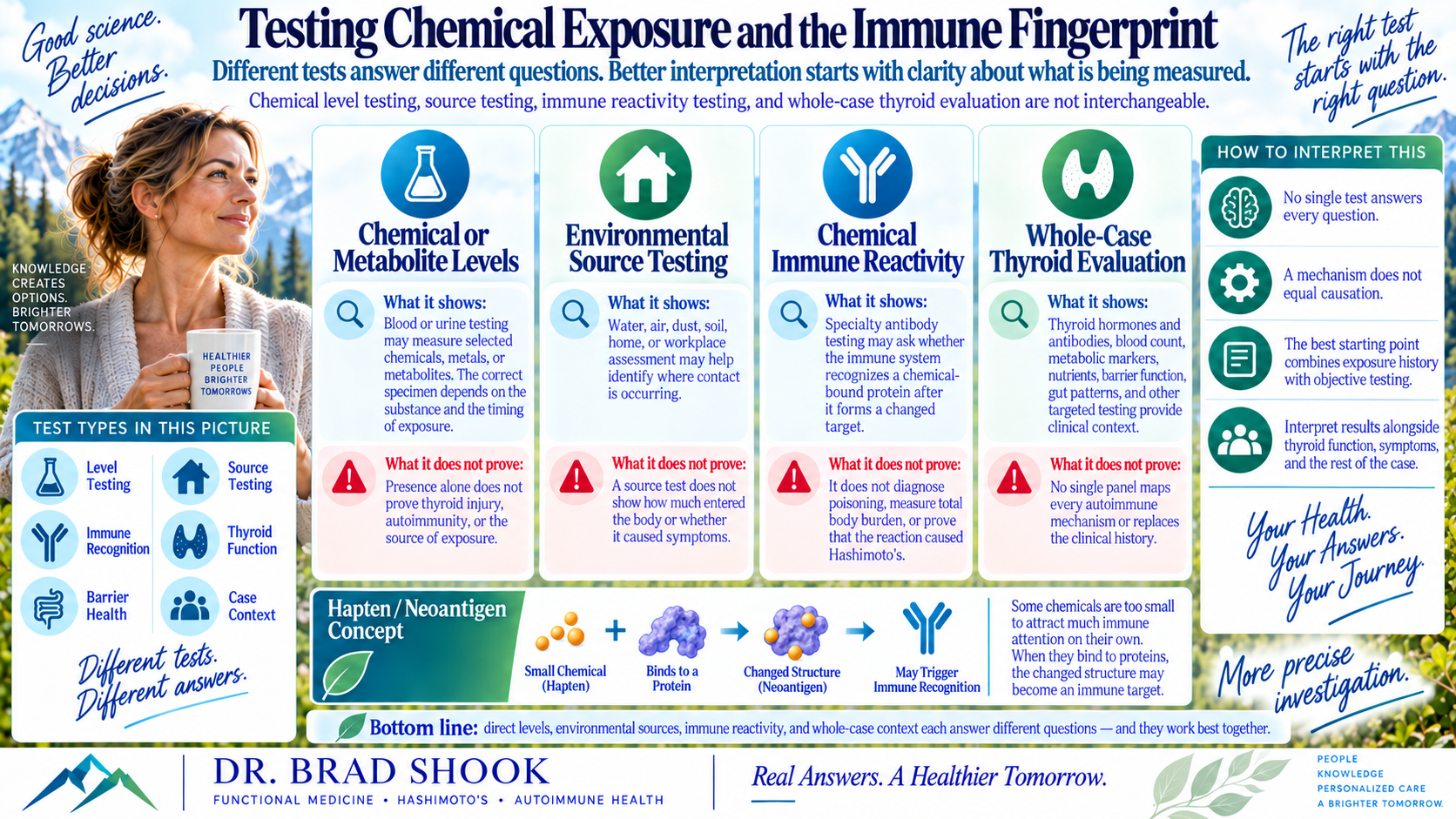
A laboratory result is most valuable when it changes the plan. The goal is a better starting point, not a longer list of abnormalities. For a deeper explanation, see functional medicine testing for Hashimoto's.
What to Do If Scents Trigger Symptoms
You do not need to replace everything in your life overnight. Start with the clearest, most repeatable sources and make changes you can evaluate.
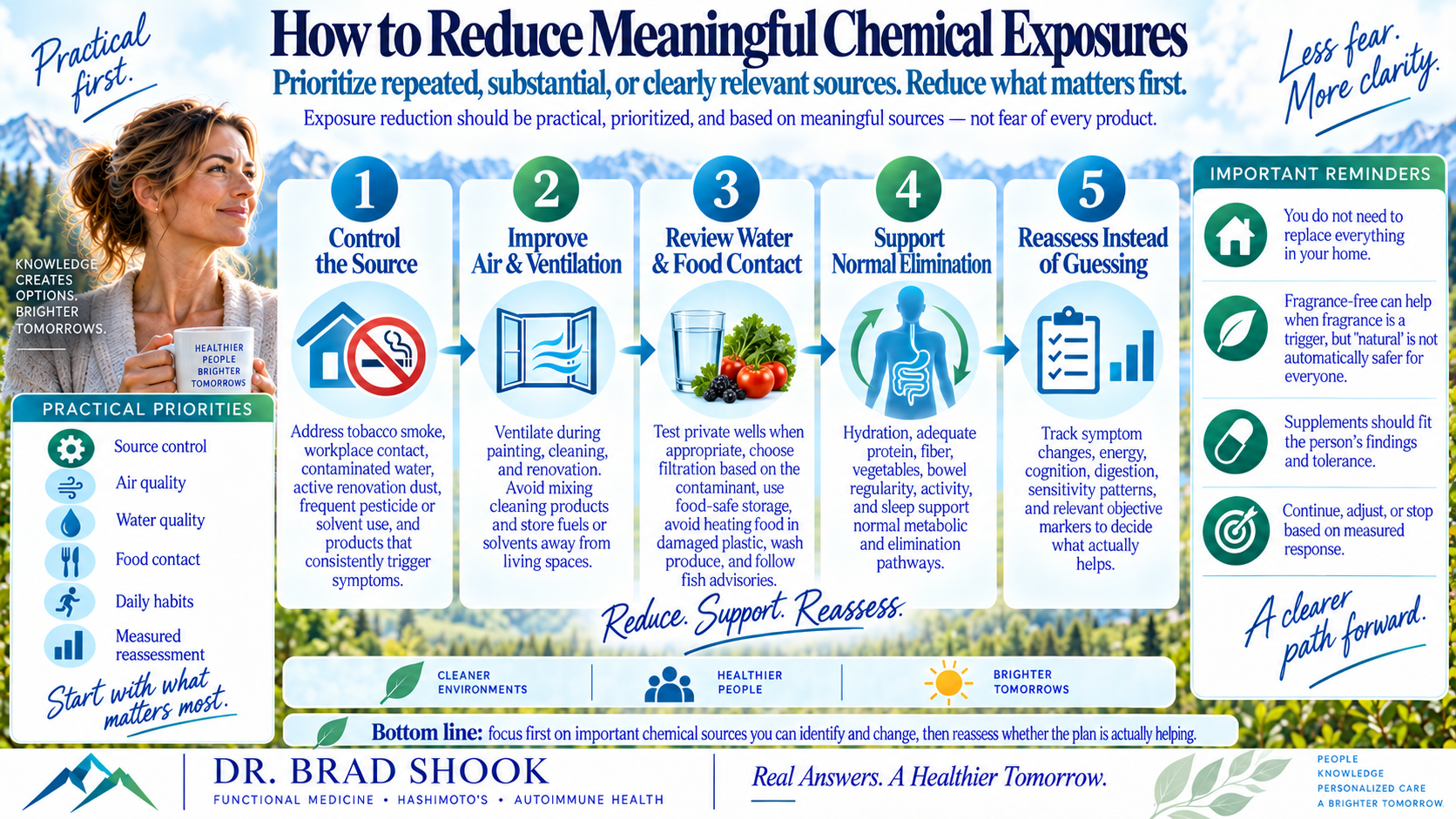
If an exposure could be hazardous, such as a workplace spill, combustion fumes, pesticide misuse or carbon monoxide, leave the area and follow emergency or poison-control guidance. Do not treat a potentially dangerous exposure as routine chemical sensitivity.
A Functional Medicine Approach to Chemical Sensitivities and Hashimoto's
I use the Environmentally Induced Autoimmunity model to understand how genetic susceptibility can interact with diet, gut health, barrier systems, metabolism, nutrient status, infections, stress, sleep, medications and environmental exposures. The goal is not to blame one scent or use a universal detox protocol. It is to identify the strongest drivers in your case and create a plan you can measure.
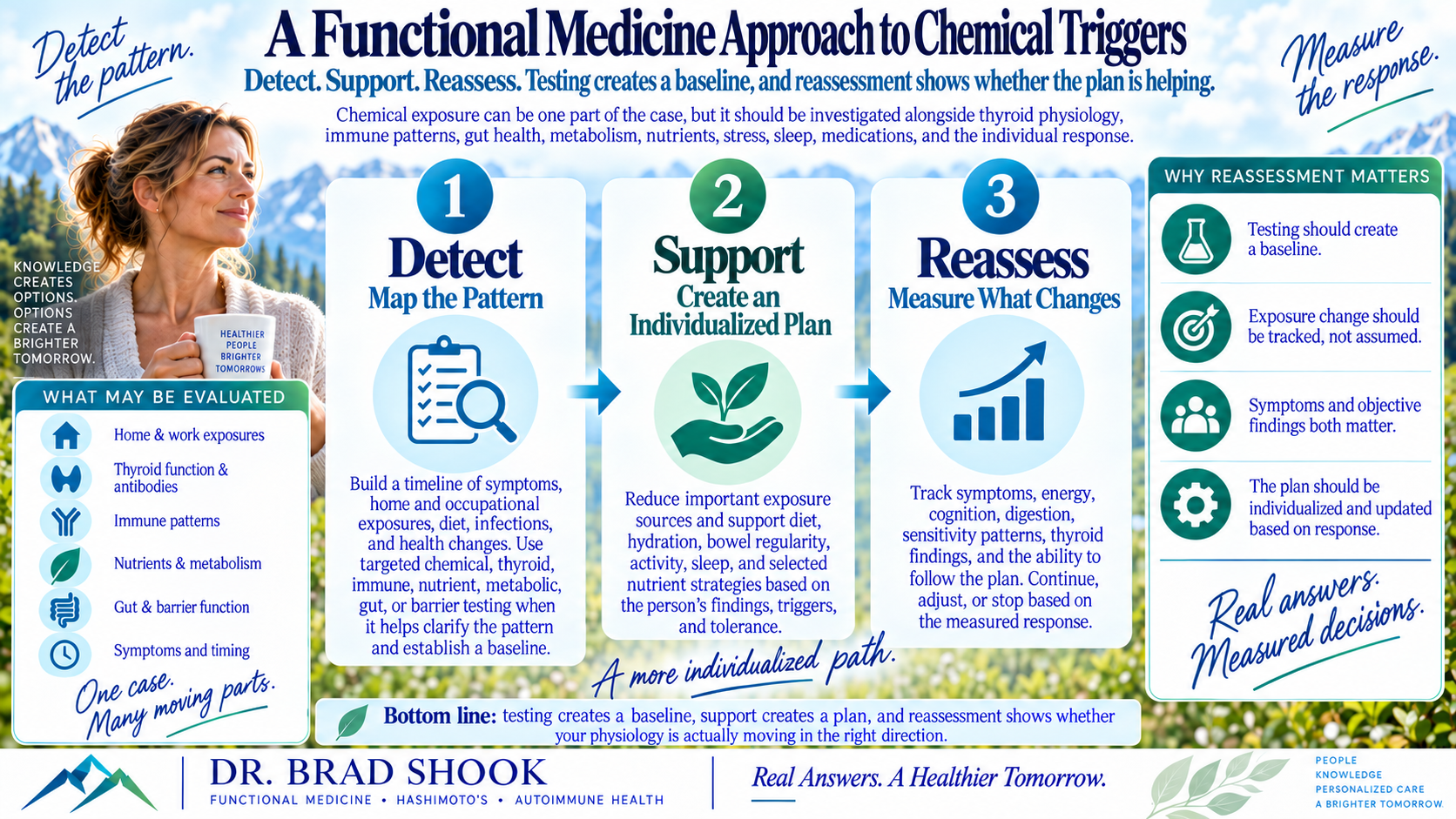
Establish your baseline
Map the exposure timeline, symptoms, thyroid status, immune patterns, barrier health, nutrient and metabolic needs, and any testing that can clarify the next decision.
Build around your pattern
Build the plan around the highest-priority findings. Reduce meaningful exposures and personalize diet, lifestyle, sleep, stress, gut, nutrient and metabolic support based on what your history and objective findings show.
Measure what changes
Track your symptoms, tolerance, recovery time, daily function, thyroid findings and ability to follow the plan. Continue, adjust or stop based on how you are doing.
This approach gives you a new opportunity to move beyond avoiding random products and wondering what each symptom means. You can learn more about Hashimoto's causes and triggers, see the Hashimoto's Doctor Method, or learn how functional medicine fits with Hashimoto's.
Listen: Chemical Sensitivities, Hashimoto's and Autoimmunity
In this episode of The Hashimoto's Doctor Podcast, Dr. Shook explains how chemical sensitivity may fit into a wider autoimmune pattern, including haptens, glutathione, barrier systems, the microbiome and individual tolerance.
Frequently Asked Questions
Can Hashimoto's cause chemical sensitivity?
Hashimoto's has not been proven to directly cause chemical sensitivity. The conditions can occur together, and thyroid imbalance, migraine, asthma, skin allergy, nervous-system sensitivity, chemical exposure and immune regulation may all affect how a person responds. The pattern needs to be investigated rather than assumed.
Why does perfume make me feel sick?
Perfume can stimulate the smell and irritant-sensing pathways, expose the airways or skin to fragrance ingredients, and trigger symptoms in susceptible people. Possible patterns include migraine, airway irritation, asthma, allergic contact dermatitis and broader chemical intolerance.
Does scent sensitivity mean I have an allergy?
Not necessarily. A scent may irritate the eyes or airways, trigger migraine, worsen asthma, cause a delayed skin allergy or produce a broader symptom pattern without a conventional allergy. The symptoms and route of exposure help determine which evaluation makes sense.
What is multiple chemical sensitivity?
Multiple chemical sensitivity, also called chemical intolerance or idiopathic environmental intolerance, describes recurrent symptoms involving more than one body system after low-level exposures that most people tolerate. The condition is real and can be disabling, but its mechanisms and diagnostic boundaries remain unsettled.
Can fragrances trigger a Hashimoto's flare?
Some people with Hashimoto's report that fragrance exposure is followed by fatigue, headache, brain fog or other symptoms. That timing is worth tracking, but it does not prove the exposure increased thyroid antibodies or directly flared the autoimmune process.
What is a hapten?
A hapten is a small chemical that may become visible to the immune system after attaching to a larger protein. The combined chemical-protein structure can act like a new immune target. This is one plausible mechanism of chemical immune reactivity, not proof that it caused Hashimoto's in a specific person.
Is chemical immune reactivity the same as chemical body burden?
No. Blood or urine chemical testing may measure a chemical or its metabolite. Chemical immune reactivity testing looks for antibodies to selected chemical-protein complexes. The tests answer different questions and neither one alone diagnoses chemical sensitivity or proves the cause of Hashimoto's.
Is there a blood test for chemical sensitivity?
There is no single widely accepted blood test that diagnoses every form of chemical sensitivity. Testing may help answer narrower questions about allergy, thyroid function, a measured exposure or immune reactivity, but the exposure history and symptom timeline remain essential.
Should I replace perfume with essential oils?
Not automatically. Natural fragrances and essential oils can also trigger migraine, airway symptoms or skin reactions. A better first step is to identify what you tolerate and choose fragrance-free products when scent itself is a consistent trigger.
How can I reduce fragrance exposure without changing everything at once?
Start with the clearest repeatable triggers and the spaces where you spend the most time. Personal fragrance, plug-ins, dryer products, room sprays and heavily scented cleaners are practical first categories. Change one group at a time, improve ventilation and track whether symptoms change.
Can chemical sensitivity improve?
Some people improve when major triggers are identified, exposure is reduced and overlapping problems such as migraine, asthma, thyroid imbalance, sleep disruption, gut dysfunction or nutrient insufficiency are addressed. Response varies, which is why reassessment matters.
When are symptoms after a scent exposure an emergency?
Get urgent help for severe trouble breathing, throat or tongue swelling, fainting, blue or gray lips, chest pain, new one-sided weakness, confusion or rapidly worsening symptoms. These signs need immediate evaluation and should not be assumed to be a routine sensitivity reaction.
Ready to Understand Your Pattern More Clearly?
If scents, cleaning products, smoke or certain environments reliably trigger symptoms, you may need more than a generic avoidance list. I evaluate the exposure pattern alongside thyroid function, autoimmunity, gut health, metabolism, nutrient status, stress, sleep and the other factors shaping your response.
References and Clinical Resources
- Rossi S, Pitidis A. Multiple Chemical Sensitivity: Review of the State of the Art in Epidemiology, Diagnosis, and Future Perspectives. Journal of Occupational and Environmental Medicine. 2018. Review the article.
- Haanes KA, et al. Perspectives on multisensory perception disruption in idiopathic environmental intolerance: a systematic review. International Archives of Occupational and Environmental Health. 2018. PubMed record.
- Vethanayagam D, et al. Fragrance materials in asthma: a pilot study using a surrogate aerosol product. Journal of Asthma. 2013. DOI record.
- Kharrazian D, et al. Cross-Reactivity between Chemical Antibodies Formed to Serum Proteins and Thyroid Axis Target Sites. International Journal of Molecular Sciences. 2020. PubMed record.
- Choi S, et al. Thyroxine-binding globulin, peripheral deiodinase activity, and thyroid autoantibody status in association of phthalates and phenolic compounds with thyroid hormones in adult population. Environment International. 2020. PubMed record.
- U.S. Food and Drug Administration. Fragrances in Cosmetics. FDA resource.
- Professional education reviewed for this article included Kharrazian Institute Hashimoto's and autoimmunity coursework addressing chemical-protein binding, immune-chemical tolerance, glutathione, barrier systems, biotransformation and individualized testing.