What should you expect after starting thyroid medication?
The medication starts supplying thyroid hormone right away, but that does not mean you will feel completely different the next morning.
Levothyroxine is a form of T4, the main hormone normally produced by the thyroid. It has a long half-life, so the amount in your body builds gradually. Your symptoms may begin to change before your follow-up blood test, but your clinician usually needs several weeks before the laboratory result can reliably show whether the dose is appropriate.
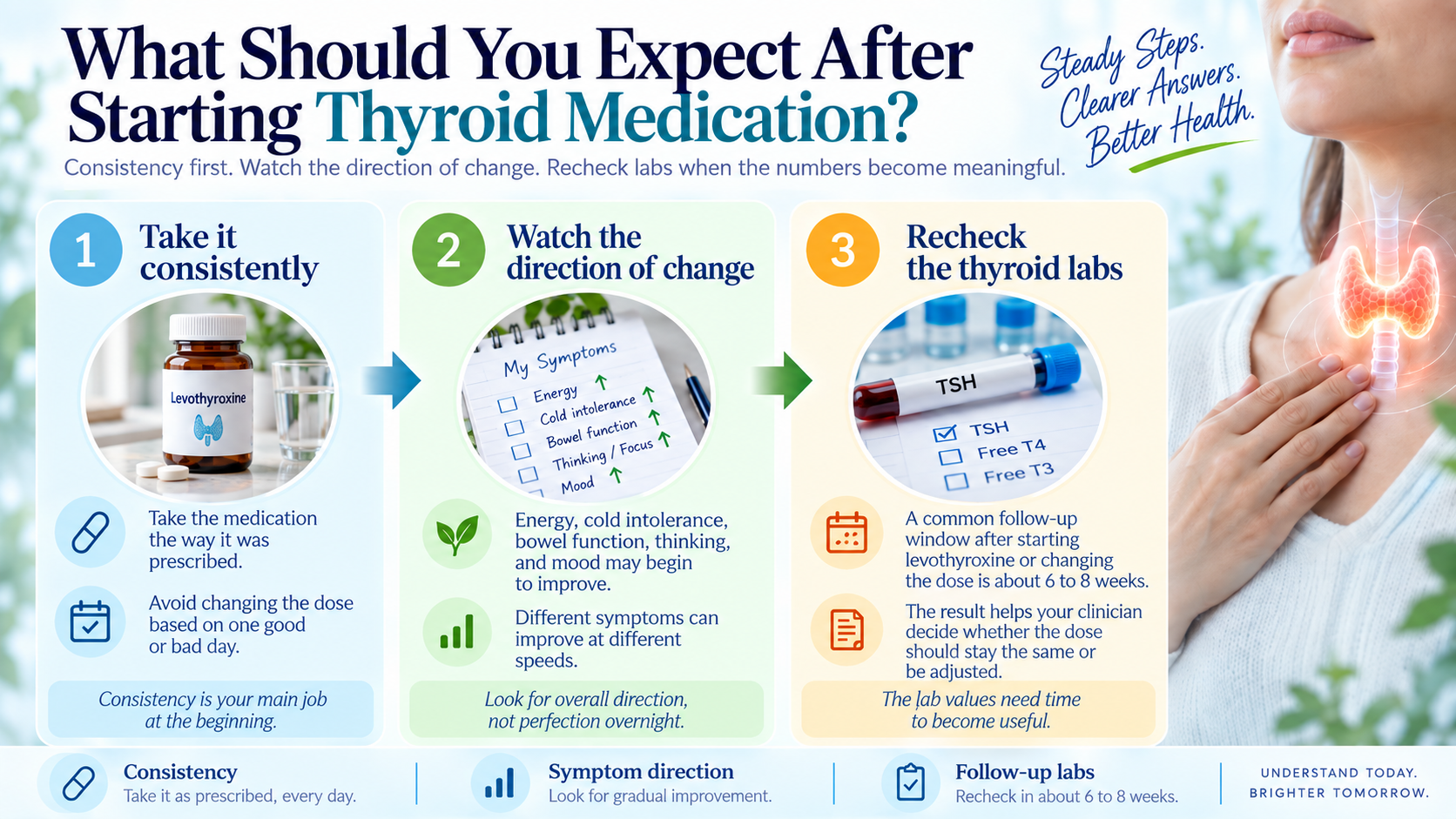
Take it consistently
Your main job at the beginning is consistency. Take the medication the way it was prescribed and avoid changing the dose based on one good or bad day.
Watch the direction of change
Energy, cold intolerance, bowel function, thinking, mood, and other symptoms may begin to improve, but different symptoms can improve at different speeds.
Recheck the thyroid labs
This is a common time to repeat thyroid blood work after starting levothyroxine or changing the dose. The result helps your clinician decide whether the dose should stay the same or be adjusted.
How do you know whether you actually need thyroid hormone?
Symptoms such as fatigue, weight gain, constipation, dry skin, hair changes, feeling cold, low mood, menstrual changes, and reduced exercise tolerance can occur with hypothyroidism. But symptoms alone are not enough to decide that you need thyroid medication because the same symptoms can come from many other problems.
Your clinician uses your history and thyroid blood tests to determine whether you are hypothyroid and whether thyroid hormone replacement is appropriate. TSH and free T4 are commonly used for primary hypothyroidism. The interpretation can be different during pregnancy, with pituitary disease, after thyroid surgery, and in other special situations.
There are several reasons thyroid function can become low. Hashimoto's disease is the most common cause of hypothyroidism in the United States. Other causes include thyroid surgery, radioactive iodine or radiation treatment, thyroiditis, certain medications, pituitary or hypothalamic disease, and problems related to iodine.
If you are not sure why your thyroid is low: see Understanding Low Thyroid: Beyond the Symptoms and Hashimoto's Disease Diagnosis.
What kinds of thyroid medication are used?
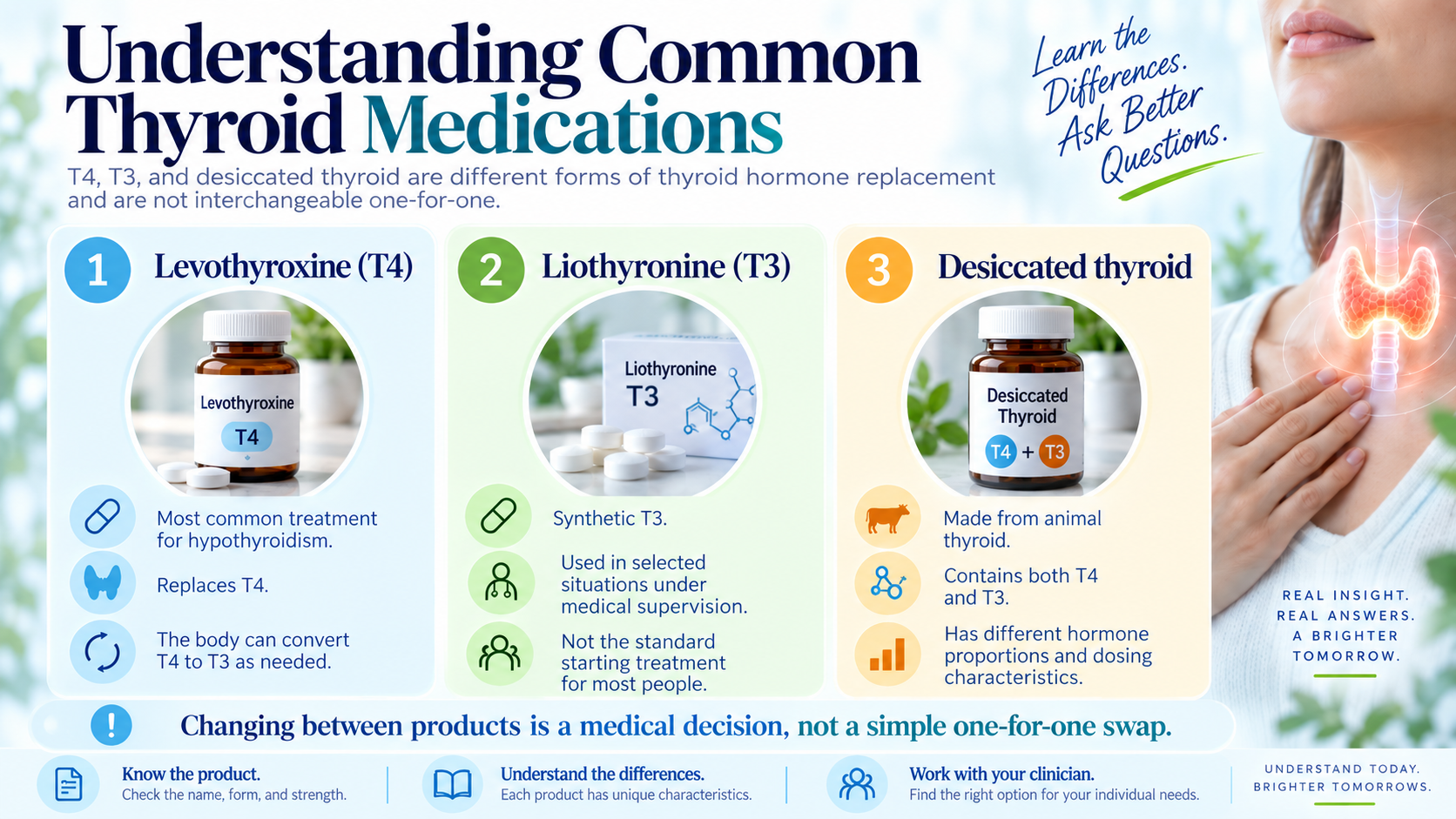
Most people with hypothyroidism are treated with levothyroxine, a synthetic form of T4. It replaces hormone your thyroid is not making in sufficient amounts. Your body can then convert T4 into T3, the more biologically active thyroid hormone, as needed in different tissues.
Liothyronine is synthetic T3. Some people use T3 in addition to T4 under medical supervision, although it is not the standard starting treatment for most people with hypothyroidism.
Desiccated thyroid products are made from animal thyroid and contain both T4 and T3. These products have different hormone proportions and dosing characteristics from human thyroid secretion, so changing between products is a medical decision rather than a simple one-for-one substitution.
Could the way you take levothyroxine be affecting how you feel?
Yes. Levothyroxine only works predictably if your body absorbs it consistently. Food and several medications and supplements can reduce or change absorption.
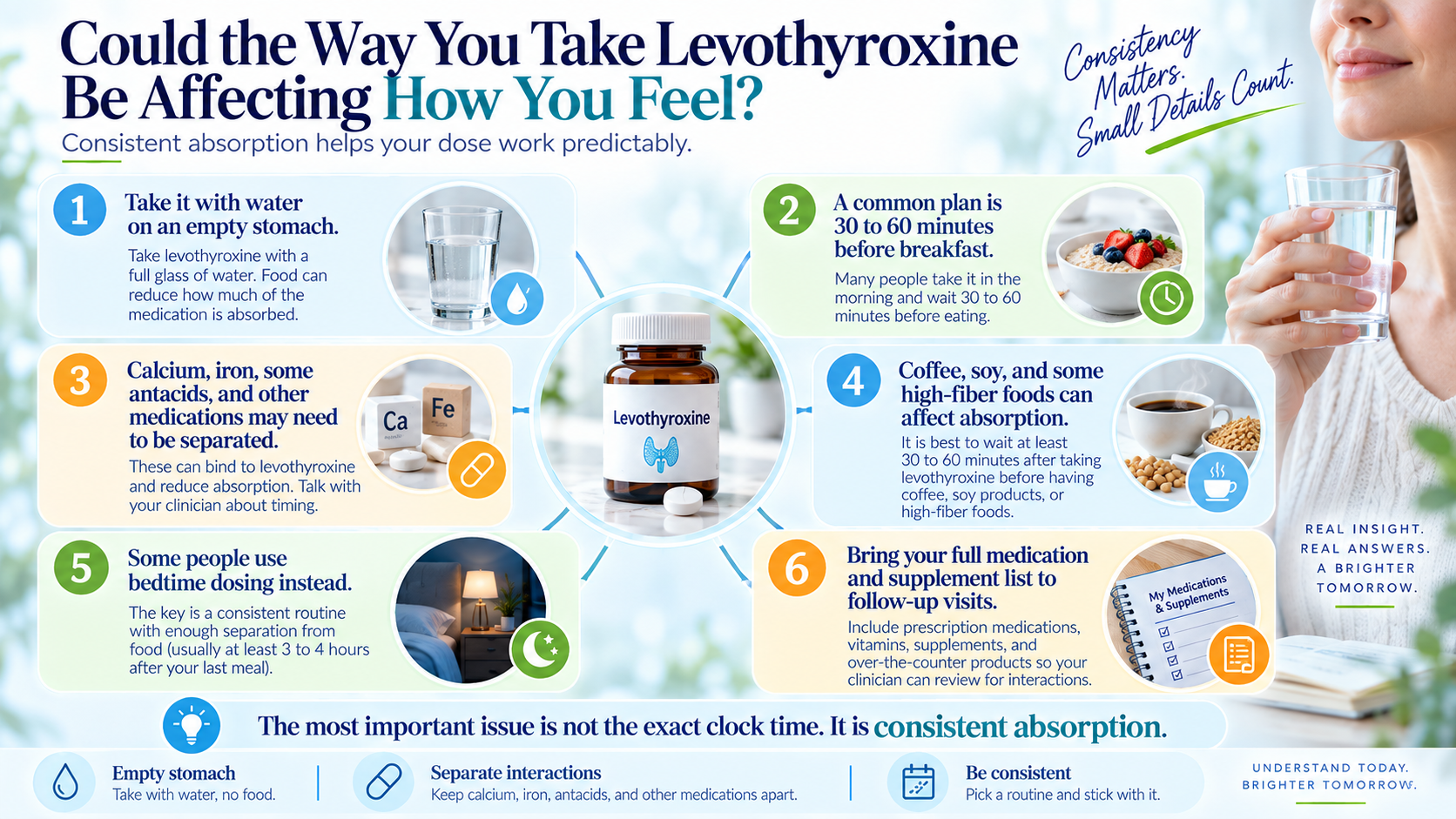
Levothyroxine is commonly taken with water on an empty stomach 30 to 60 minutes before breakfast. Calcium, iron, some antacids and other medications may need to be separated from levothyroxine. Coffee, soy and some high-fiber foods can also affect absorption in some situations.
Some people use a bedtime schedule instead. The important point is not that one clock time is best for everyone. It is that the routine is consistent and gives the medication enough separation from food and anything else that interferes with absorption. If you want to change when you take it, discuss the change with the clinician managing your thyroid medication so your follow-up testing can be interpreted correctly.
Bring your full list with you. Prescription medications, antacids, calcium, iron, multivitamins, fiber supplements, biotin, herbs, and other products can matter. Your pharmacist can also help identify medication and supplement interactions.
If supplements are part of your routine, see Supplements With Hashimoto's for a deeper look at nutrient needs, thyroid-medication interactions, product quality and reassessment.
How do you know whether your thyroid medication is working?
I would not judge the medication by symptoms alone or by a laboratory number alone. You want both pieces of information.
Your thyroid tests are moving in the right direction
Your clinician compares follow-up TSH and, when useful, free T4 with your starting values, the dose you are taking, and the reason you need thyroid replacement.
Your symptoms are moving in the right direction
You may notice improvement in energy, cold intolerance, bowel function, thinking, mood, exercise tolerance, skin, or other symptoms that were related to low thyroid function.
One reason this can be confusing is that not every symptom changes at the same speed. Hair changes, weight, menstrual patterns, cholesterol, and long-standing fatigue may not track on the same timeline as temperature tolerance or bowel function.
How can you tell if the dose may be too high or too low?
Symptoms can give you a reason to call your clinician, but they cannot tell you the correct dose by themselves. Blood testing and the rest of your medical history still matter.
Possible signs of too much thyroid hormone
A fast or pounding heartbeat, nervousness, tremor, heat intolerance, sweating, insomnia, unexplained weight loss, or diarrhea can occur when thyroid hormone levels are too high. These symptoms can also have other causes.
Possible signs that thyroid hormone is still too low
Persistent fatigue, feeling cold, constipation, slowed thinking, dry skin, low mood, weight gain, or poor exercise tolerance may continue when hypothyroidism is not adequately corrected. These symptoms are also nonspecific.
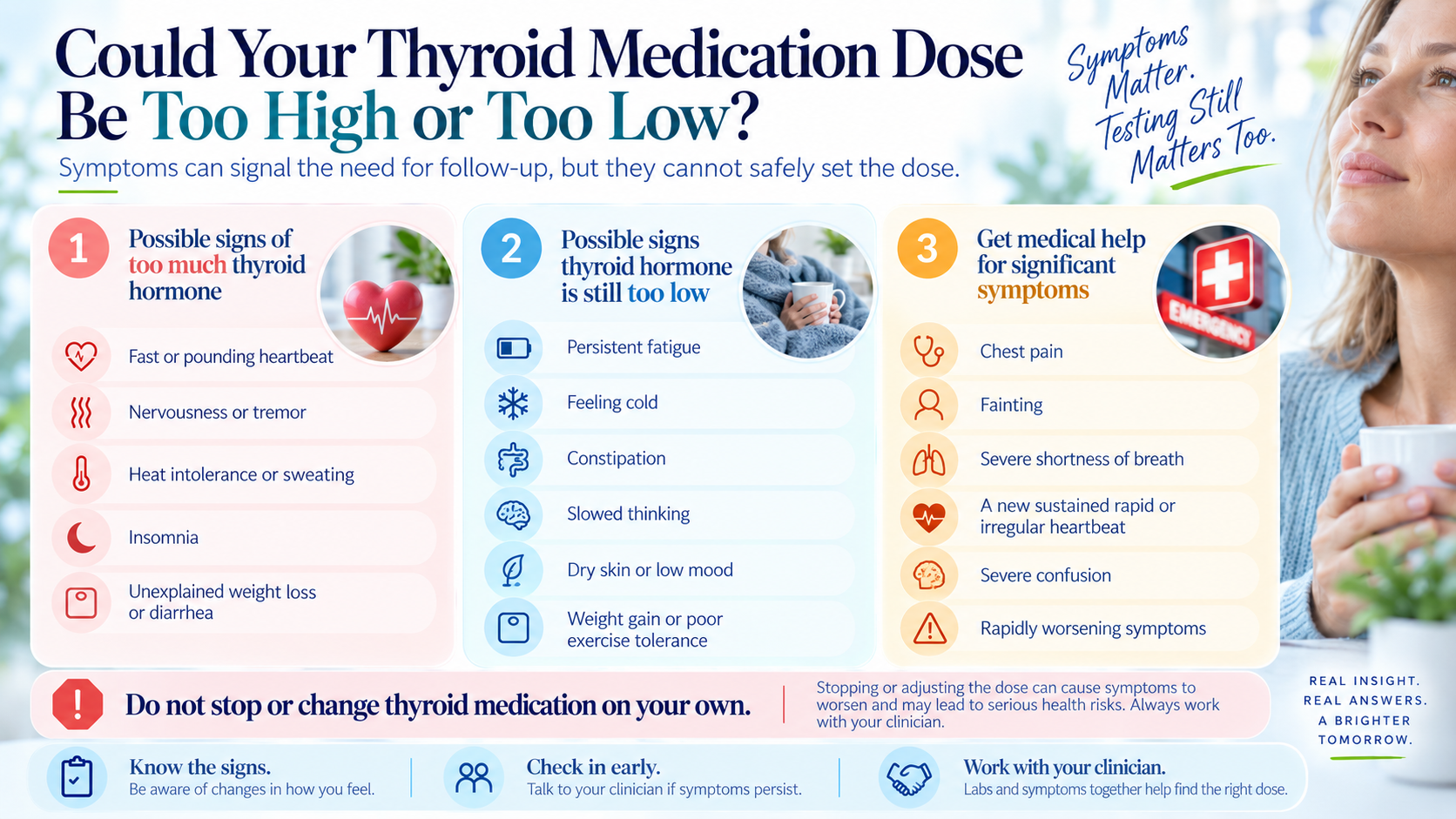
Get medical help for significant symptoms
Chest pain, fainting, severe shortness of breath, a new sustained rapid or irregular heartbeat, severe confusion, or other rapidly worsening symptoms need prompt medical evaluation. Do not stop or change thyroid medication on your own.
What if your thyroid labs look better but you still do not feel well?
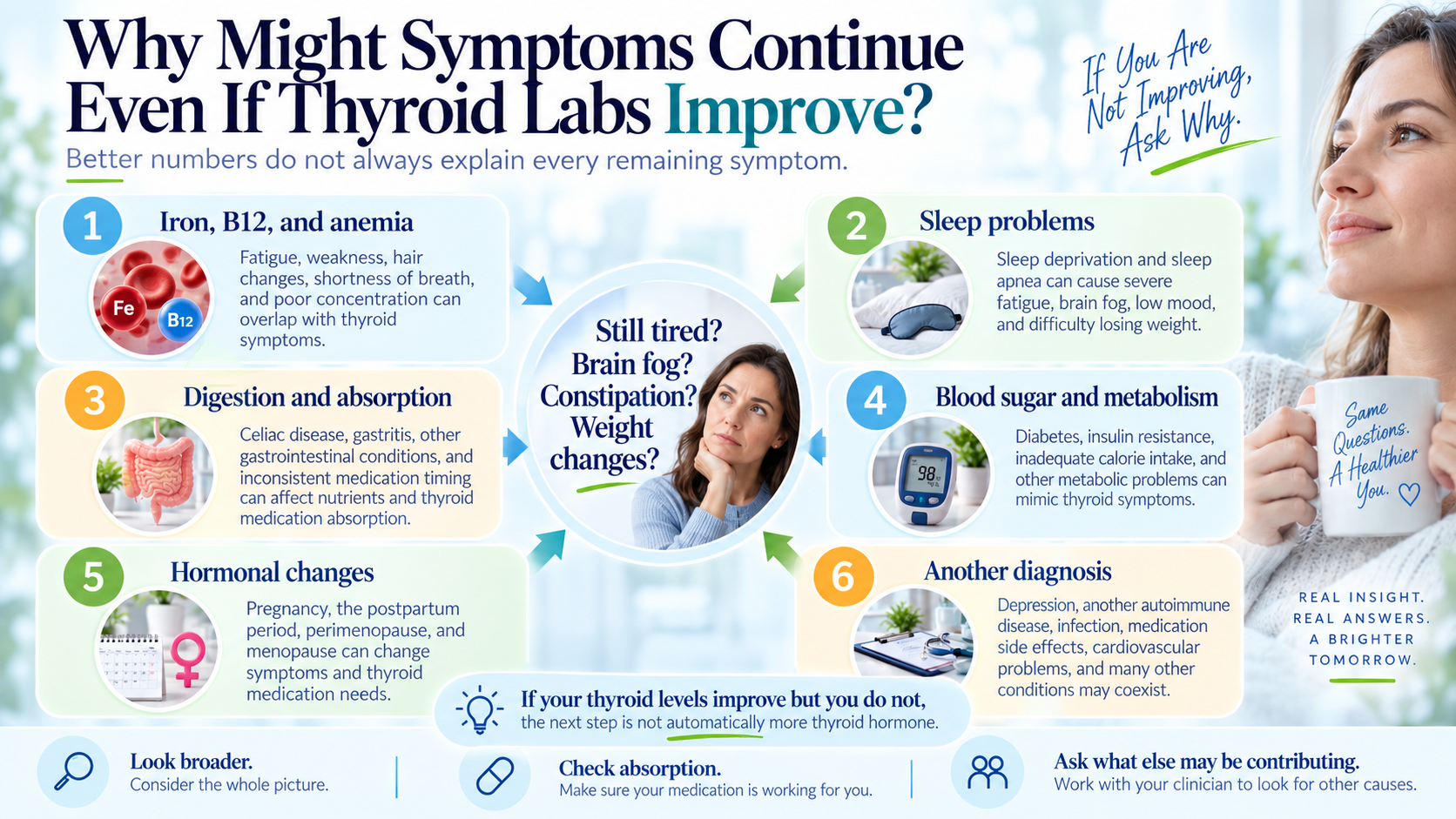
This is one of the most important questions on this page. If your thyroid levels have improved but you still feel exhausted, foggy, constipated, depressed, weak, unable to lose weight, or generally unlike yourself, it does not automatically mean you need more thyroid hormone.
First, I want to know whether the medication is being taken consistently and absorbed predictably. Then I want to know whether something else could be producing the same symptoms.
Iron, B12 and anemia
Low iron, anemia, and vitamin B12 problems can cause fatigue, weakness, hair changes, shortness of breath, and poor concentration.
Sleep problems
Sleep deprivation and sleep apnea can cause severe fatigue, brain fog, low mood, and difficulty losing weight.
Digestion and absorption
Celiac disease, gastritis, other gastrointestinal conditions, and inconsistent medication timing can affect both nutrients and thyroid medication absorption.
Blood sugar and metabolism
Diabetes, insulin resistance, inadequate calorie intake, and other metabolic problems can overlap with symptoms people often call "thyroid symptoms."
Hormonal changes
Pregnancy, the postpartum period, perimenopause, and menopause can change symptoms and may also change thyroid medication requirements.
Another diagnosis
Depression, another autoimmune disease, infection, medication side effects, cardiovascular problems, and many other medical conditions can coexist with hypothyroidism.
If brain fog is one of the symptoms that is hanging on, see Thyroid Brain Fog. If you feel worse on desiccated thyroid, see Feel Worse on NDT? Have Hashimoto's?.
What changes if Hashimoto's caused your hypothyroidism?
If Hashimoto's damaged your thyroid enough that you no longer make sufficient thyroid hormone, replacement medication may be necessary. The medication is addressing the hormone shortage.
But Hashimoto's also raises a different question: why is the immune system reacting against the thyroid, and is anything else affecting how you feel?
This is where functional medicine can add another layer without replacing appropriate thyroid care. I look at your history, thyroid and antibody results, nutrition, digestive health, infections, stress, sleep, medications, exposures, metabolic health, and other relevant findings to see which factors deserve attention in your case.
I do not assume there is one root cause or one protocol for everyone. The purpose is to understand your individual situation and find the parts we can reasonably support, then learn from how you respond.
For the broader condition overview, return to the Hashimoto's disease guide. To see how I organize this kind of case, read the Hashimoto's Doctor Method and functional medicine testing for Hashimoto's. If you are looking for a self-guided nutrition and supplement foundation, you can also review my 12-week Hashimoto's Supplement Protocol.
What if you are pregnant or trying to become pregnant?
Thyroid hormone requirements can change during pregnancy, and untreated or undertreated hypothyroidism can matter for both the pregnant person and the developing baby. If you are pregnant, planning pregnancy, or recently became pregnant, contact the clinician managing your thyroid medication rather than waiting for a routine follow-up.
Pregnancy usually requires more frequent thyroid testing and may require medication adjustment. Do not add iodine, herbs, or other thyroid-related supplements simply because you are pregnant without discussing them with your obstetric and thyroid care team.
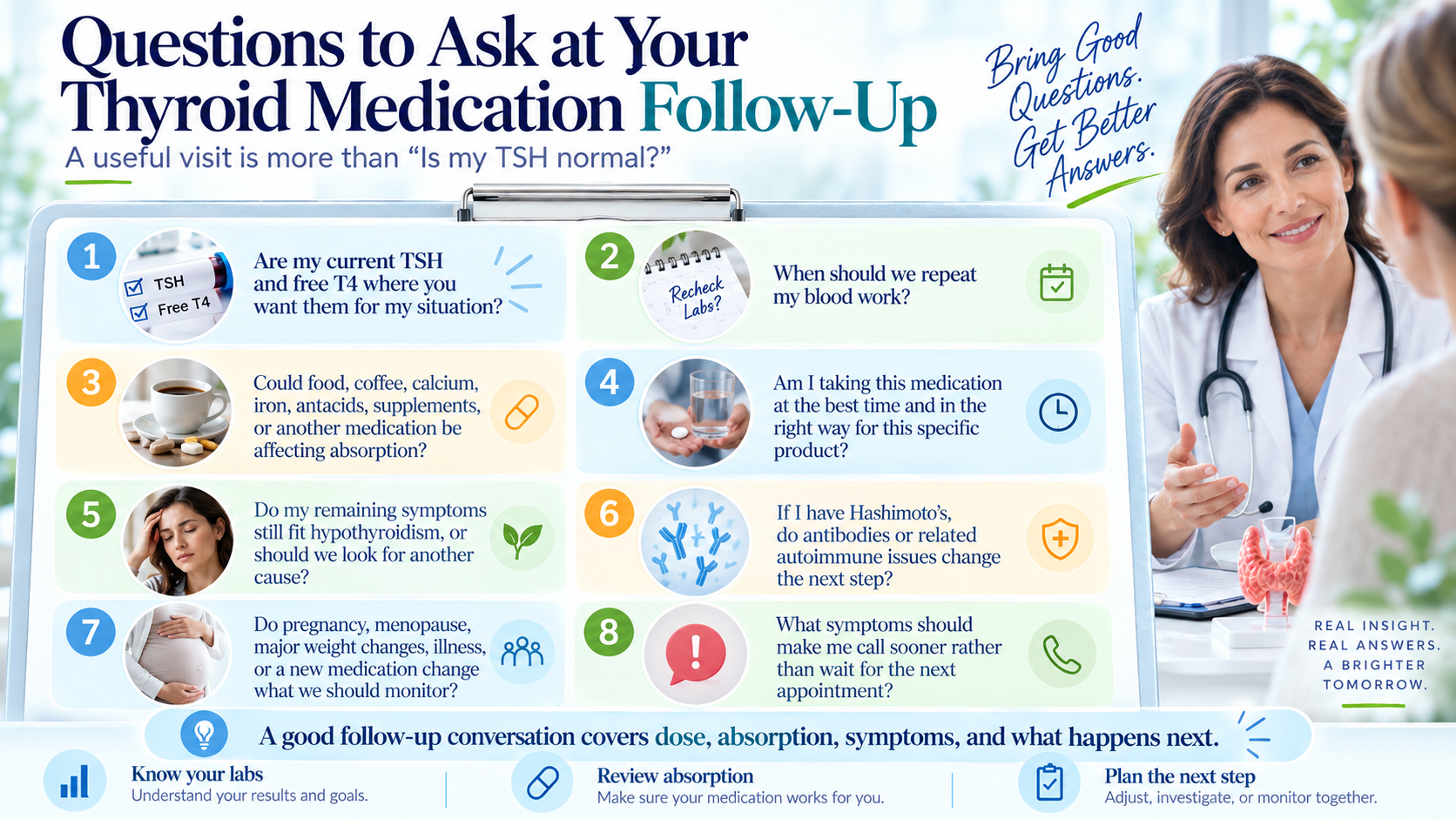
What should you ask at your thyroid medication follow-up?
You do not need to know the right dose or diagnose the problem yourself. You do need enough information to have a useful conversation.
- Are my current TSH and free T4 where you want them for my situation?
- When should we repeat my blood work?
- Could food, coffee, calcium, iron, antacids, supplements, or another medication be affecting absorption?
- Am I taking this medication at the best time and in the right way for this specific product?
- Do my remaining symptoms still fit hypothyroidism, or should we look for another cause?
- If I have Hashimoto's, are my thyroid antibodies, other autoimmune conditions, or related health problems relevant to the next step?
- Does pregnancy, menopause, a major weight change, illness, or a new medication change what we should monitor?
- What symptoms should make me call you sooner rather than waiting for the next appointment?
Still not feeling like yourself on thyroid medication?
If your thyroid medication has improved the numbers but you still have symptoms, or if you have Hashimoto's and want to understand what else may be affecting your health, this is the kind of case I help clients work through.
The Application for Care is where you can tell me what has been happening. Tell me what you were diagnosed with, what medication you take, what symptoms are still affecting you, what tests you already have, and what you want help understanding. I review each application personally. If I believe my telemedicine consulting approach may be a good fit, you will receive a private invitation to schedule an initial appointment.
Frequently Asked Questions
How long after starting thyroid medication will I feel better?
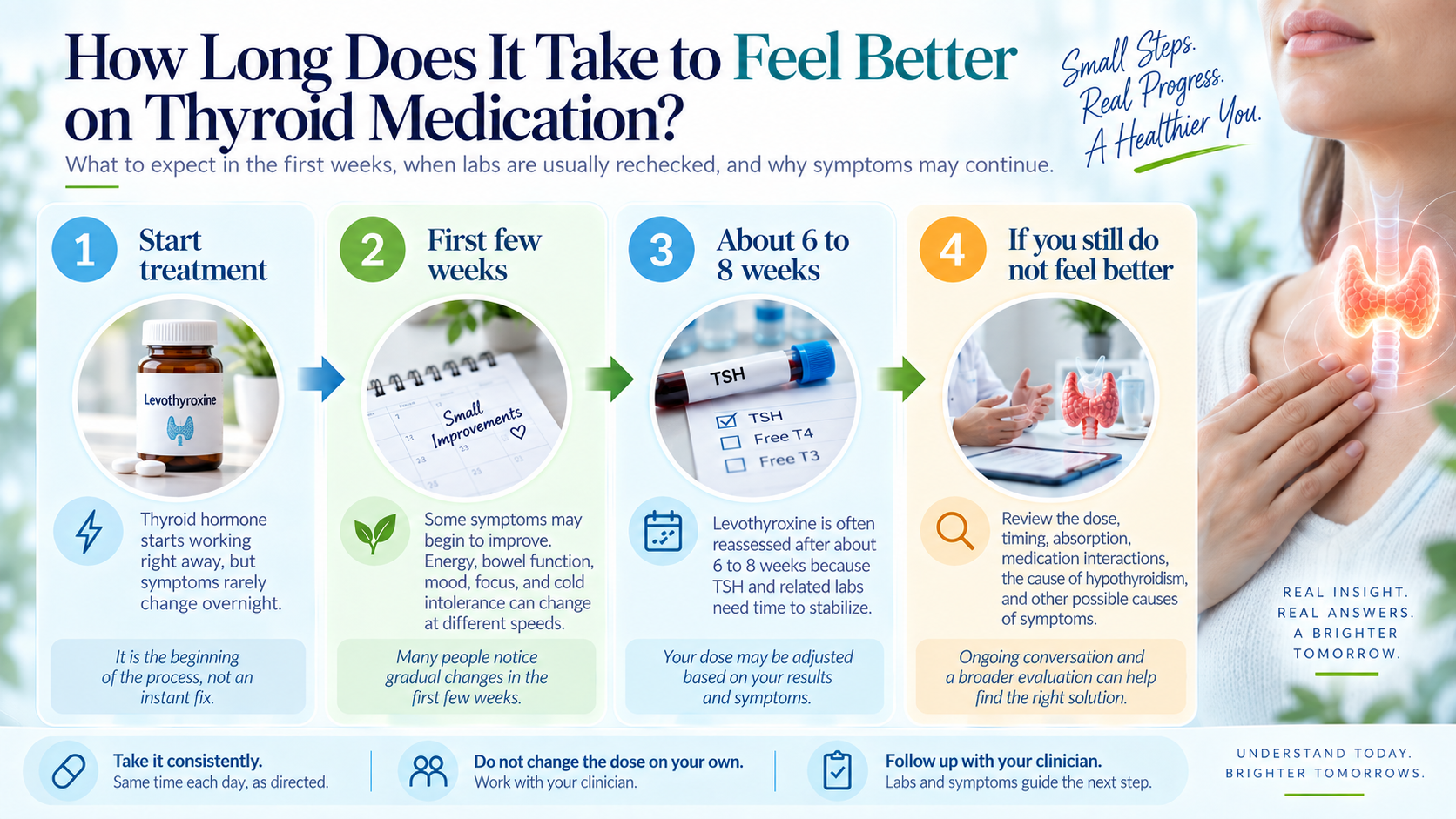
Some people begin to notice improvement within a few weeks, but there is no single timeline for every symptom. Thyroid blood tests are commonly rechecked about 6 to 8 weeks after starting levothyroxine or changing the dose because it takes time for levels to stabilize enough to judge the dose.
Why don't I feel better yet on levothyroxine?
The dose may still need adjustment, the medication may not be absorbing consistently, or some of your symptoms may have another cause. Food, calcium, iron, some medications, digestive conditions, missed doses, anemia, sleep problems, menopause, other autoimmune conditions, and other health issues can all affect the picture.
How do I know if my thyroid medication is working?
Your clinician looks at both your symptoms and your thyroid blood tests. For most people taking levothyroxine for primary hypothyroidism, TSH is an important follow-up test, often considered together with free T4 and the clinical situation.
Can thyroid medication make me feel worse at first?
New nervousness, tremor, sweating, heat intolerance, insomnia, diarrhea, or a fast or pounding heartbeat can be signs that the dose is too high or that something else needs attention. Worsening fatigue or other symptoms can also have many causes. Contact the clinician managing your thyroid medication rather than changing the dose on your own.
How long should I wait to eat after taking levothyroxine?
Levothyroxine is commonly taken with water on an empty stomach 30 to 60 minutes before breakfast. Food can reduce or change absorption. Follow the instructions for your specific medication and the plan your prescriber gave you.
Can calcium, iron, coffee, or supplements affect levothyroxine?
Yes. Calcium, iron, some foods and beverages, and several medications can interfere with levothyroxine absorption. The timing depends on the product, so review your full medication and supplement list with your prescriber or pharmacist.
Is it better to take thyroid medication in the morning or at night?
Morning dosing on an empty stomach is common. Bedtime dosing can also work for some people when it is taken consistently and sufficiently separated from food. The most important issue is a routine that gives you consistent absorption and fits the instructions for your medication.
What if my TSH is normal but I still have symptoms?
A normal TSH can be reassuring, but it does not prove that every remaining symptom is caused by or unrelated to the thyroid. Persistent fatigue, brain fog, weight changes, hair loss, constipation, low mood, and poor exercise tolerance may warrant a broader review for medication issues and non-thyroid causes.
Does thyroid medication treat Hashimoto's disease?
Thyroid hormone replacement treats the low-hormone state that Hashimoto's can cause. It does not by itself explain why the autoimmune process developed or why symptoms may continue. Those are separate questions that can be considered alongside appropriate medical thyroid treatment.
Should I change my thyroid medication dose if I still feel bad?
Do not change or stop prescription thyroid hormone on your own. Your symptoms, timing, adherence, interactions, medical history, and follow-up blood tests all matter when deciding whether a dose or medication change is appropriate.
Sources and Further Reading
- National Institute of Diabetes and Digestive and Kidney Diseases: Hypothyroidism. Causes, diagnosis, treatment, follow-up blood testing, and thyroid hormone replacement.
- National Institute of Diabetes and Digestive and Kidney Diseases: Hashimoto's Disease. Hashimoto's, levothyroxine absorption, food and supplement interactions, and monitoring.
- American Thyroid Association: Hypothyroidism. Thyroid hormone treatment, signs of too much or too little medication, follow-up, pregnancy, and medication interactions.
- American Thyroid Association: Can levothyroxine be taken with breakfast? (2026). Patient summary on levothyroxine timing, food, calcium, iron, and absorption.