Prefer to listen?
In this discussion, I explain why a low-thyroid diagnosis is only the starting point, how Hashimoto's changes the questions we ask, and why understanding the autoimmune side of the problem can matter.
What does "low thyroid" actually mean?
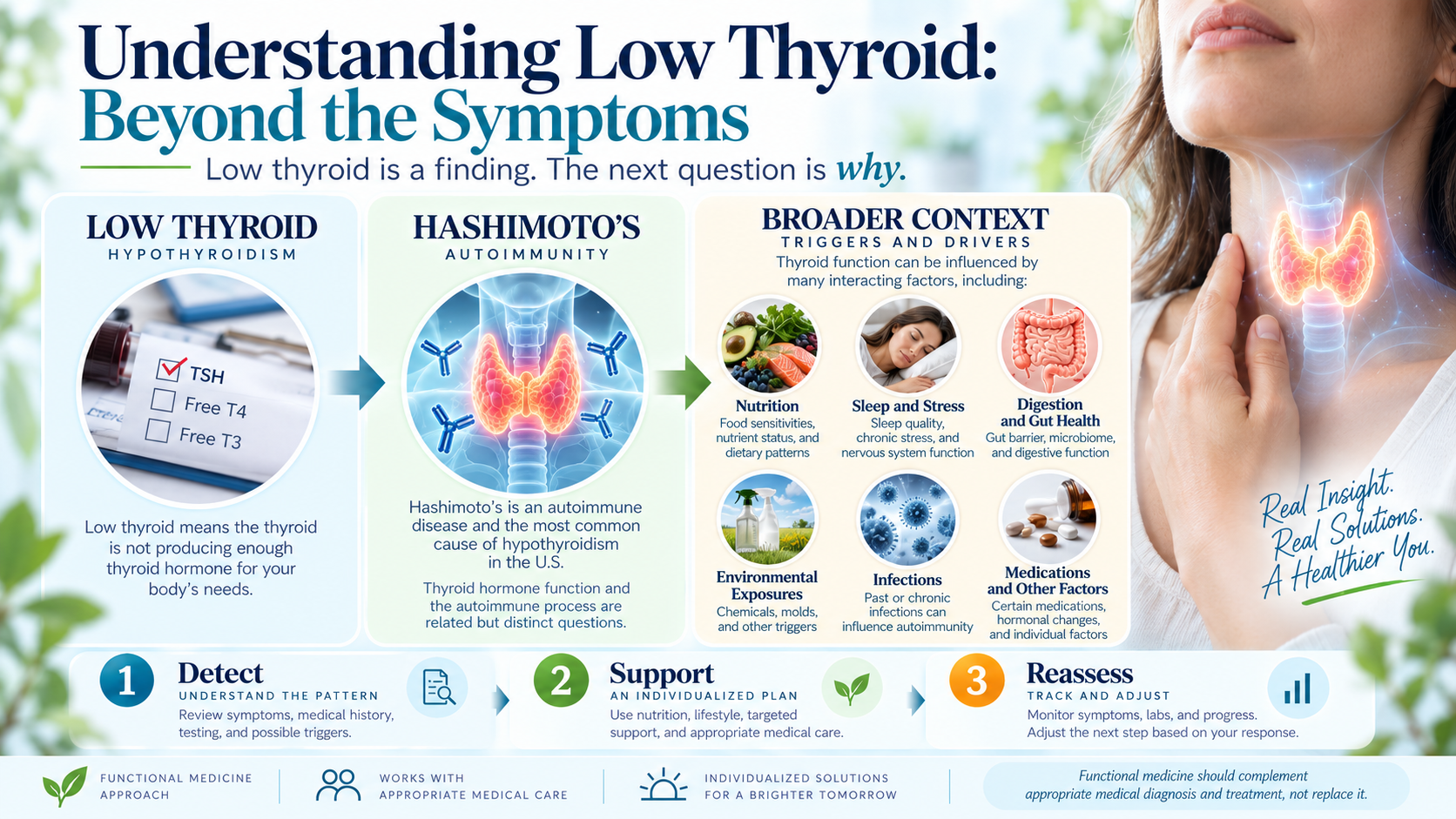
Low thyroid describes what your thyroid is doing. It does not automatically tell you why it is happening.
Your thyroid makes hormones that help regulate energy use throughout your body. When thyroid hormone is too low, you may notice fatigue, feeling cold, constipation, dry skin, hair changes, slower thinking, low mood, menstrual changes, weight gain, muscle aches, or poor exercise tolerance.
The difficulty is that these symptoms are not unique to thyroid disease. Fatigue, brain fog, weight changes, and hair loss can have many causes. That is why symptoms alone cannot tell you whether your thyroid is the problem.
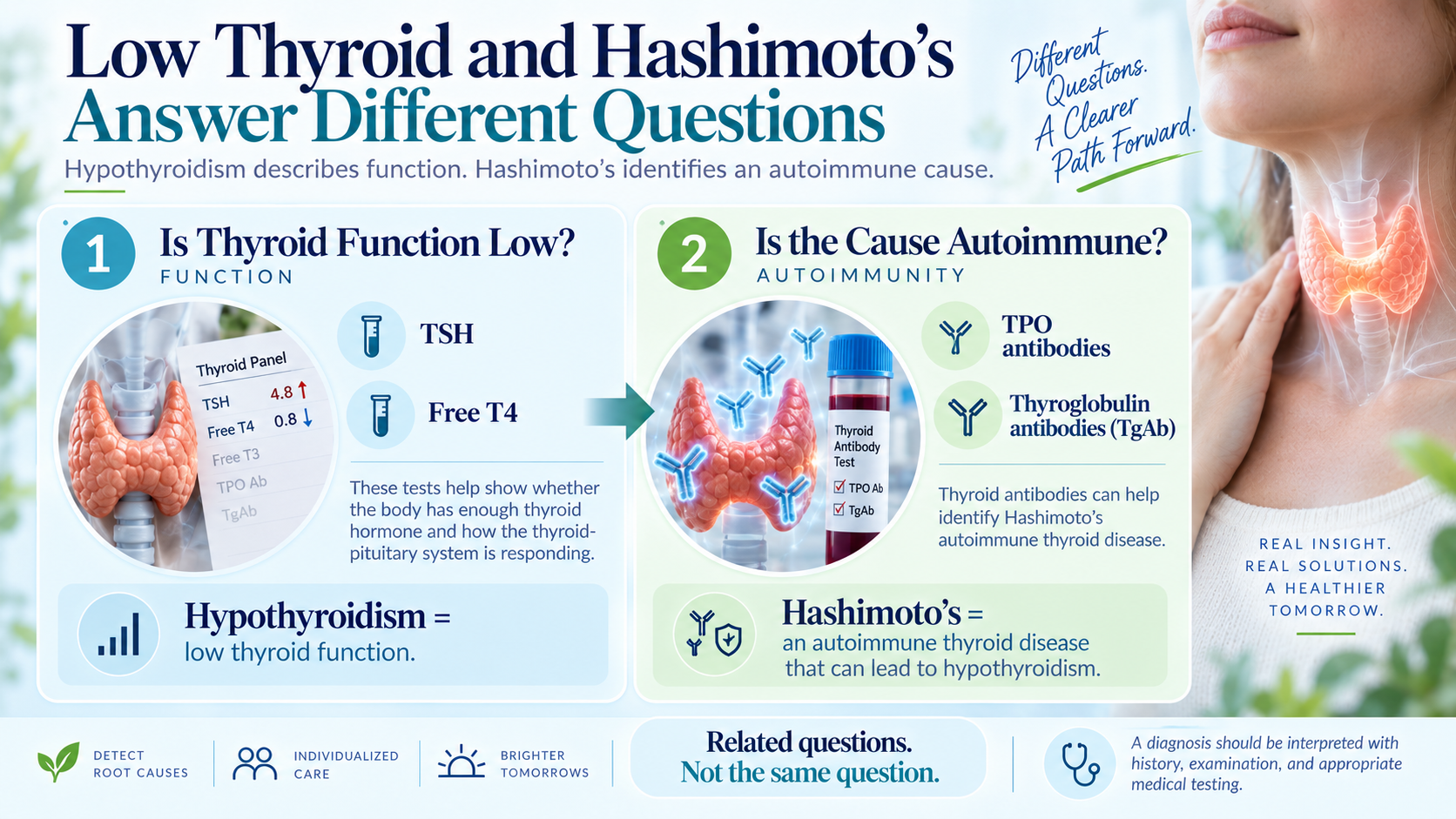
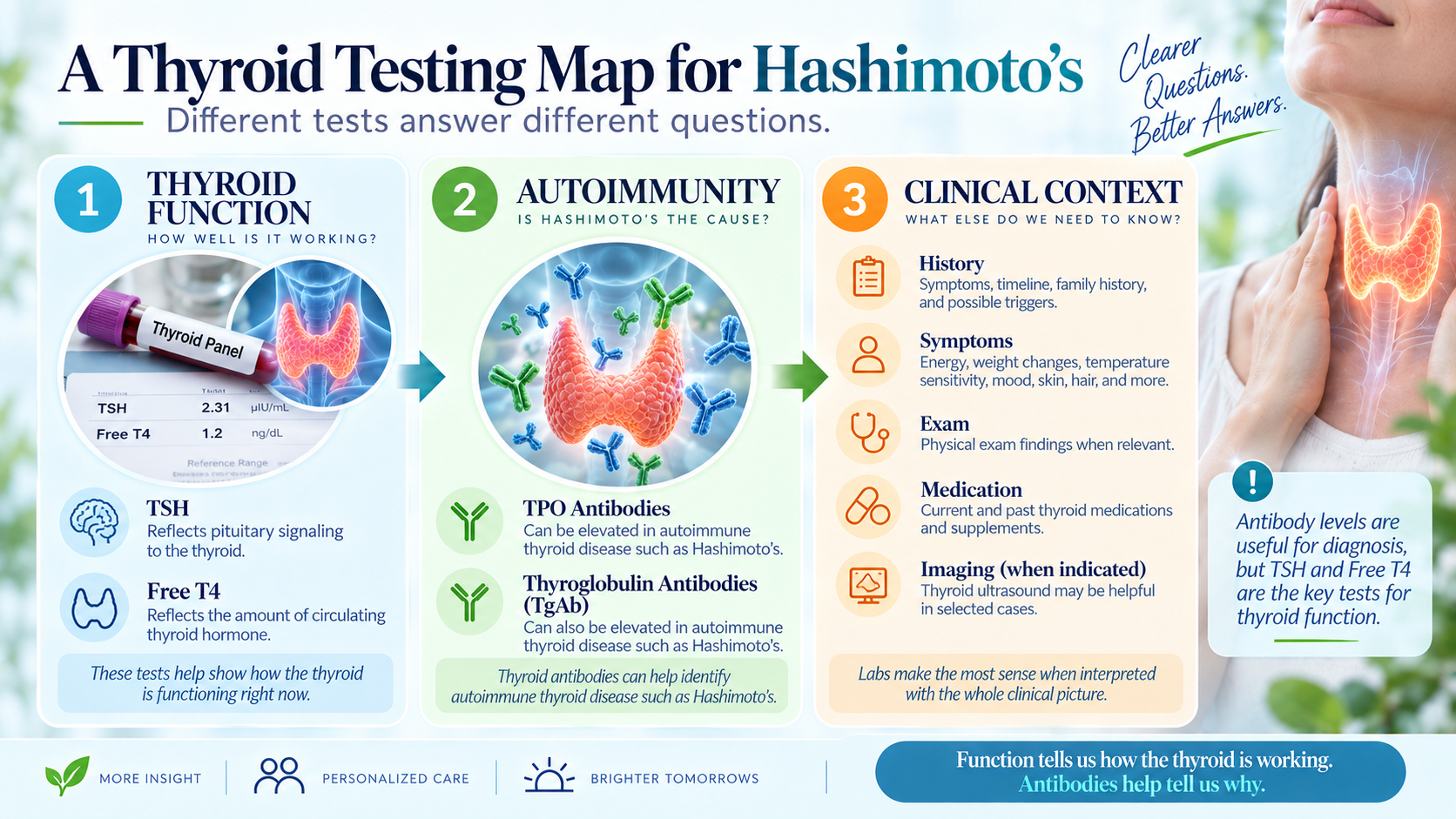
Blood tests such as TSH and free T4 help answer the first question: Is your thyroid function actually low? If it is, the next question is just as important: Why?
Could Hashimoto's be the reason your thyroid is low?
Hashimoto's is not another name for hypothyroidism. Hashimoto's is an autoimmune disease. Your immune system reacts against the thyroid, and over time that can damage the gland enough that it no longer makes the amount of thyroid hormone your body needs.
This is why I separate two questions. The first is, do you have enough thyroid hormone? The second is, is an autoimmune process damaging the thyroid? Thyroid medication can help replace hormone your body is no longer making. It does not tell us why the autoimmune process developed or what else may be affecting how you feel.
TPO antibodies and thyroglobulin antibodies are blood markers that can help identify autoimmune thyroid disease. Some people have these antibodies before their standard thyroid hormone tests become abnormal, so Hashimoto's can be present before obvious hypothyroidism develops.
Want help understanding your thyroid tests? You can also read my guides to Hashimoto's diagnosis, thyroid blood testing, and positive TPO antibodies.
What does a Hashimoto's diagnosis still leave unanswered?
A diagnosis can tell you what disease has been identified. It usually does not tell you why it developed in you.
If you have Hashimoto's, you already know your immune system is involved. The next questions are more personal: Why did your immune system begin reacting against the thyroid? Is anything still adding to that immune stress? Are there problems with sleep, digestion, nutrition, infections, medications, exposures, or other areas of your health that deserve attention?
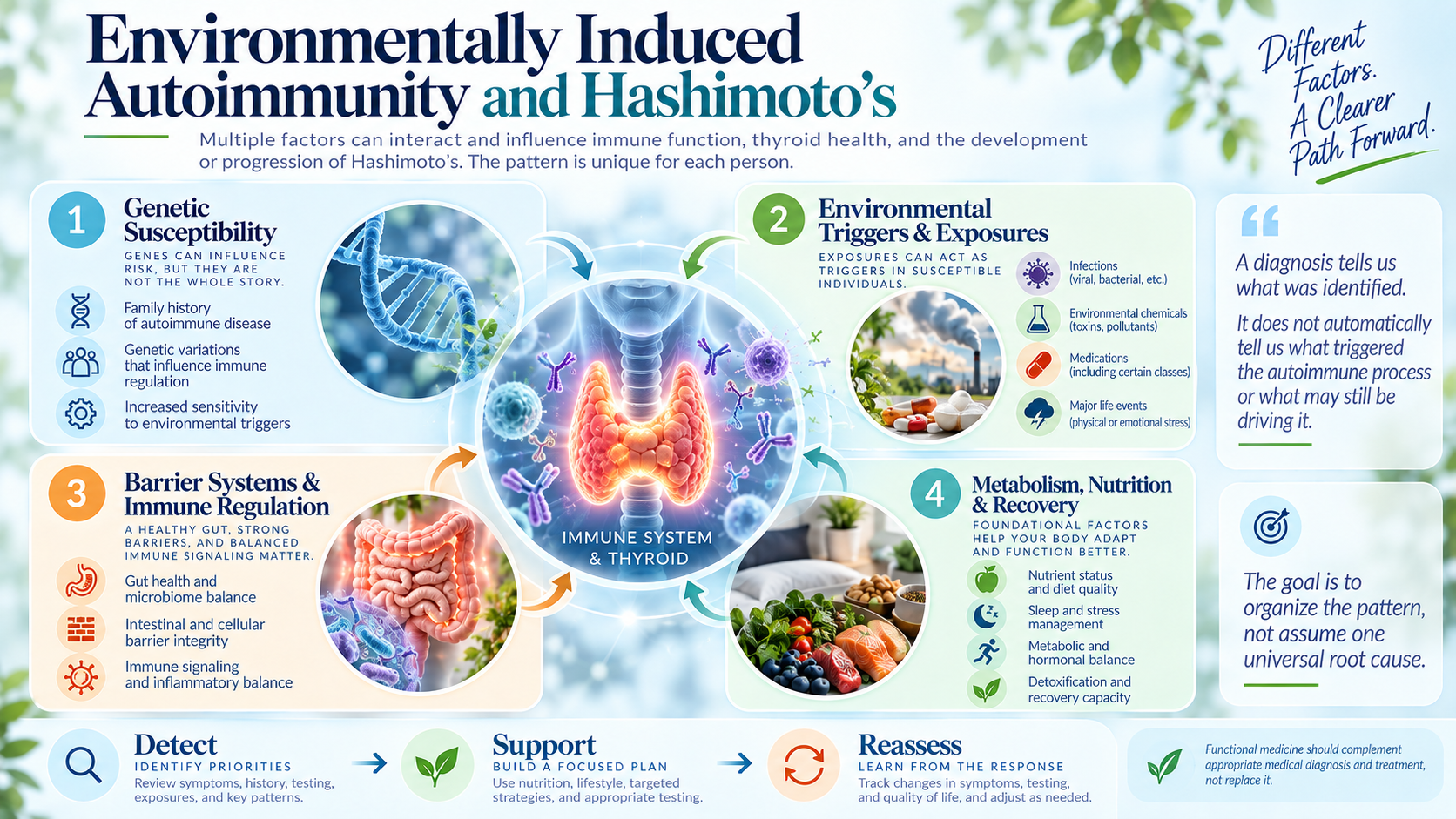
I call this way of looking at the problem Environmentally Induced Autoimmunity. In plain language, it means your genes may make you more susceptible, while things you are exposed to and the way your body responds to them may influence whether autoimmunity starts or stays active.
This does not mean there is one hidden root cause that explains every case. It also does not mean every food, infection, or chemical exposure is a problem for you. The goal is to find out which factors are actually supported by your history, symptoms, records, labs, and response to care.
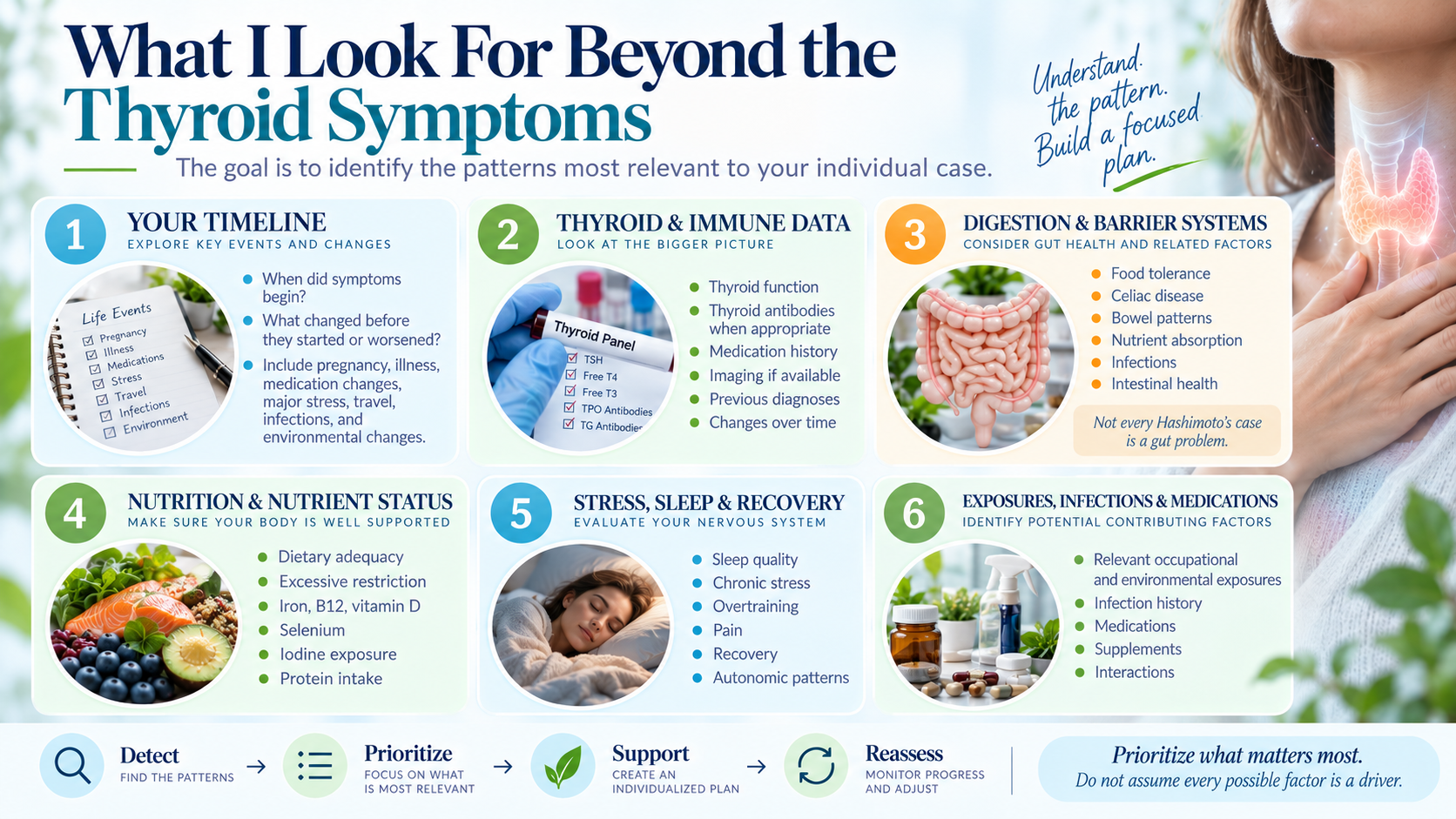
What else is worth looking at when you have Hashimoto's?
I am not trying to find problems everywhere. I am trying to answer a practical question: Which parts of your history and health could be making it harder for you to feel and function well?
What happened before you started feeling worse?
Your timeline can be surprisingly useful. I want to know when symptoms began and whether anything important happened around that time, such as pregnancy, an illness, a medication change, a major period of stress, travel, or a new exposure.
What are your thyroid tests showing over time?
One lab result rarely tells the whole story. I review thyroid function, antibody results when they are useful, medication history, prior imaging, and how those findings have changed.
Could digestion or food tolerance be affecting you?
Celiac disease, bowel problems, food reactions, poor nutrient absorption, and digestive symptoms can matter in some people. I do not assume that every person with Hashimoto's has a gut problem.
Are you getting the nutrients you need?
Iron, B12, vitamin D, selenium, iodine exposure, protein intake, and the overall quality and variety of your diet may be worth reviewing, especially if you have been restricting foods for a long time.
Are sleep, stress, or recovery working against you?
Poor sleep, prolonged stress, pain, and too much exercise for your current capacity can affect energy, digestion, blood sugar, and how well you recover from day to day.
Could medications, infections, or exposures matter?
Your medication and supplement list, infection history, work or home exposures, and changes in your environment may provide useful clues when they fit the timing of your symptoms.
Why can you still feel bad when your thyroid labs look better?
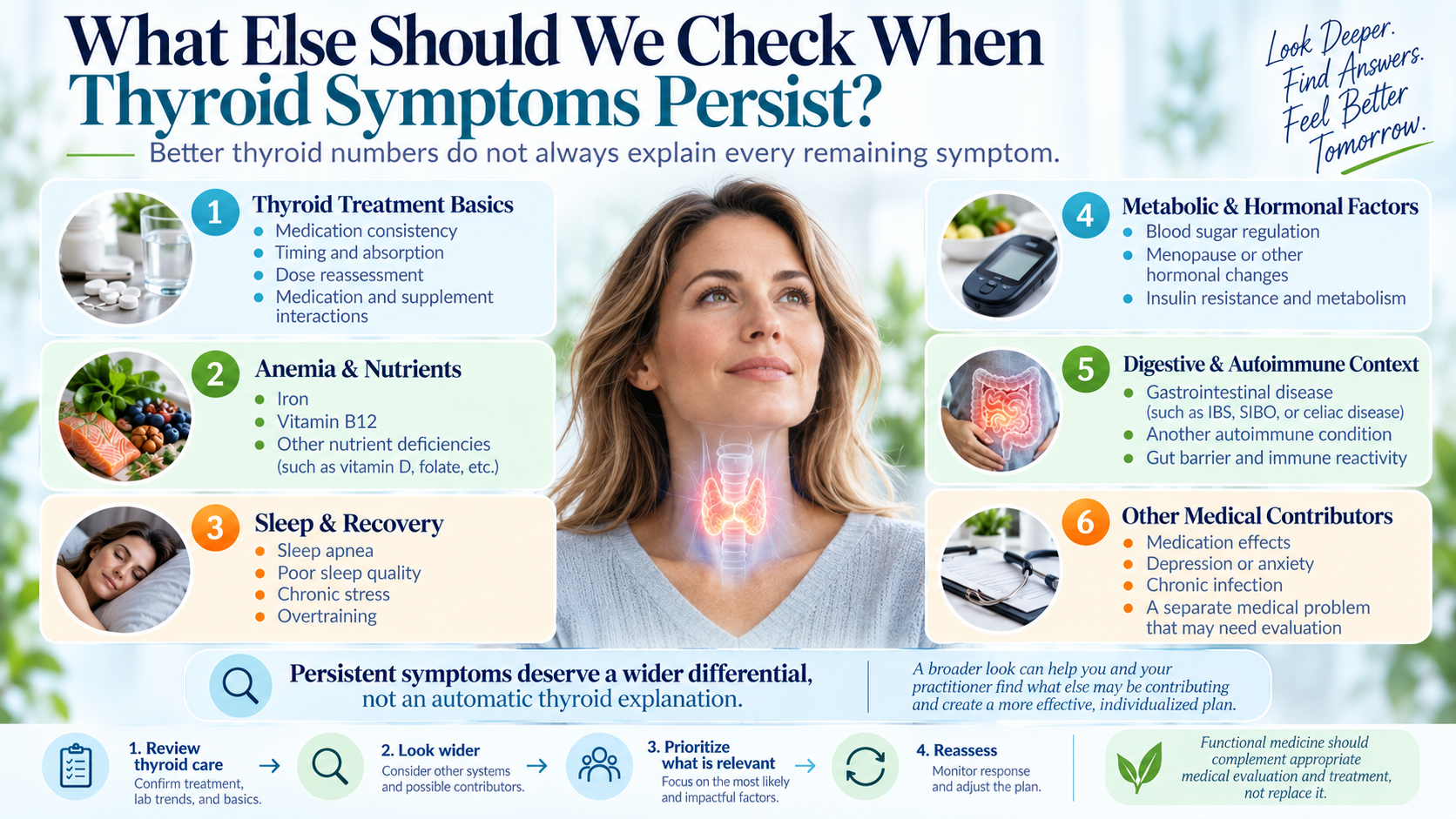
If your numbers have improved but you still have fatigue, brain fog, weight changes, hair loss, constipation, poor exercise tolerance, low mood, or sleep problems, it is reasonable to ask why.
Sometimes thyroid treatment still needs attention. Your medication dose, timing, consistency, absorption, and interactions with supplements or other medications can all matter. But it is also possible that not every symptom is coming from your thyroid.
Depending on your history, other questions may include anemia or low iron, B12 status, sleep apnea, blood sugar problems, menopause or other hormonal changes, digestive disease, another autoimmune condition, medication side effects, depression, infection, or another medical problem.
The point is not to chase every possibility. It is to stop assuming that one diagnosis must explain everything you feel.
Still symptomatic despite treatment? You may also want to read Why Your Doctor May Not Be Able to Help Your Thyroid Problem for a closer look at why symptoms can continue even after thyroid treatment has started.
What would working with me look like?
I do not start by giving every client the same diet, supplement list, or testing package. I start by figuring out what questions your case is actually asking.
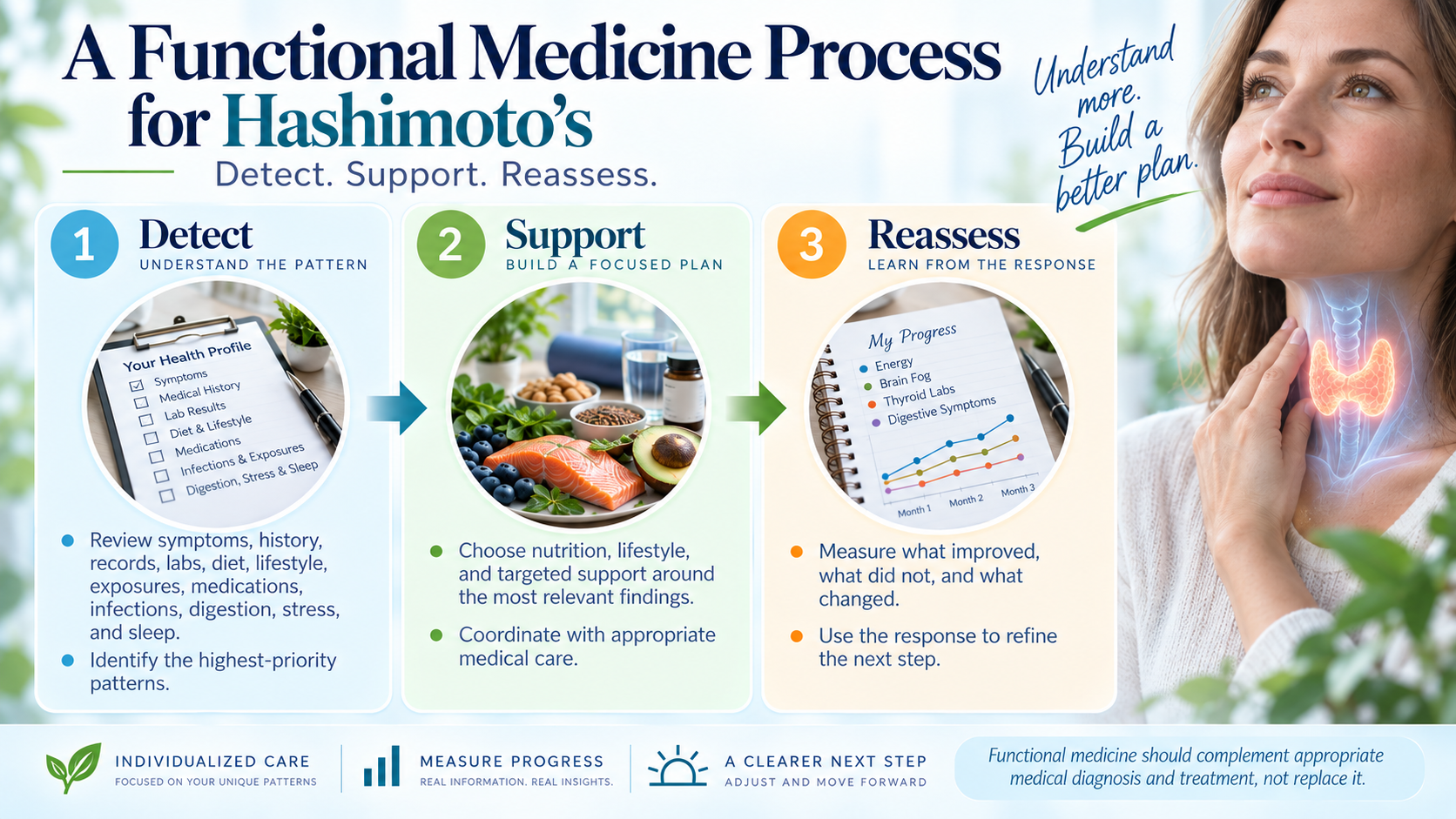
First, we figure out what deserves attention
I review your history, symptoms, diagnoses, records, labs, diet, lifestyle, medications, exposures, infections, digestion, stress, sleep, and what you have already tried.
Then we build a plan around what we found
Your plan is based on the most important findings, not a standard Hashimoto's protocol. That may include nutrition, lifestyle changes, targeted supplements when appropriate, and coordination with your medical care.
Then we see what changed
We look at what improved, what did not, and what your response teaches us. That tells us whether to stay the course, change direction, or investigate something else.
If you want to see how I decide which laboratory questions may be useful, continue to functional medicine testing for Hashimoto's. For the larger framework I use to organize these findings, see the Hashimoto's Doctor Method.
When should low-thyroid symptoms be checked medically right away?
Hashimoto's can explain a lot, but it should not become the explanation for every new symptom. Functional medicine works best alongside appropriate medical care.
Seek prompt medical evaluation
Chest pain, fainting, severe shortness of breath, a very slow or irregular heartbeat, severe confusion, marked swelling, rapidly worsening weakness, significant neck swelling, trouble swallowing or breathing, or severe symptoms during pregnancy need medical evaluation. If you take thyroid medication, do not stop it or change the dose without the clinician who manages it.
Still asking why you feel this way?
If you have Hashimoto's, low thyroid, or persistent symptoms and you feel like you still do not understand why you are struggling, this is the kind of question I help clients work through.
The Application for Care is where you can tell me your story. Tell me what has been diagnosed, what symptoms are still affecting you, what testing you already have, what you have tried, and what you want help understanding. I review each application personally. If I believe my telemedicine consulting approach may be a good fit, you will receive a private invitation to schedule an initial appointment.
Frequently Asked Questions
What does low thyroid mean?
Low thyroid usually means hypothyroidism, which means your body is not getting enough thyroid hormone for normal function. Symptoms can suggest a problem, but blood tests such as TSH and free T4 are used to determine whether thyroid function is actually low.
Is Hashimoto's the same thing as hypothyroidism?
No. Hypothyroidism describes low thyroid function. Hashimoto's is an autoimmune disease that can damage the thyroid and eventually cause hypothyroidism. You can have Hashimoto's before your thyroid hormone levels become clearly low.
How do I know if Hashimoto's is causing my low thyroid?
Your clinician may look at thyroid function tests along with thyroid antibodies such as TPO and thyroglobulin antibodies. Your history, previous test results, examination, and sometimes thyroid imaging help put those results into context.
Can I have Hashimoto's even if my TSH is normal?
Yes. Some people have thyroid antibodies or other evidence of autoimmune thyroid disease while TSH and free T4 are still within the reference range. Thyroid function can then be followed over time.
Why do I still feel bad if my thyroid labs are normal?
Because not every symptom is specific to the thyroid. Medication dose or absorption may still matter, but anemia, low iron or B12, sleep apnea, blood sugar problems, menopause, digestive disease, another autoimmune condition, medication side effects, depression, infection, or another medical problem can cause similar symptoms.
What does functional medicine add when I already have a Hashimoto's diagnosis?
A diagnosis tells us that autoimmune thyroid disease is present. Functional medicine gives me a structured way to look at your history, diet, digestion, nutrition, infections, stress, sleep, medications, exposures, and other health problems to see which factors deserve attention in your case.
Can Hashimoto's be cured naturally?
There is no scientifically established natural cure for Hashimoto's disease. There may still be useful things to address, including nutrition, sleep, stress, digestive health, medication issues, and other factors that are relevant to you, while continuing appropriate thyroid medical care.
What happens after I apply for care?
I review your Application for Care personally. If I believe my telemedicine consulting approach may be a good fit, you will receive a private invitation to schedule an initial appointment. We then review your history and records, decide what deserves attention first, build a focused plan, and see how you respond.
Sources and Further Reading
- National Institute of Diabetes and Digestive and Kidney Diseases: Hashimoto's Disease. Autoimmune thyroiditis, diagnosis, causes, treatment, and nutrition.
- National Institute of Diabetes and Digestive and Kidney Diseases: Hypothyroidism. Causes, symptoms, diagnosis, and thyroid hormone treatment.
- American Thyroid Association: Hashimoto's Thyroiditis. Patient guidance on autoimmune thyroiditis, antibodies, hypothyroidism, and monitoring.
- American Thyroid Association: Thyroid Function Tests. TSH, free T4, and thyroid antibody interpretation.